allergy Original Article
http://dx.doi.org/10.5415/apallergy.2015.5.4.210 Asia Pac Allergy 2015;5:210-215
Copyright © 2015. Asia Pacific Association of Allergy, Asthma and Clinical Immunology.
Interleukin-10 and interleukin-5 balance in patients with active asthma, those in remission, and healthy controls
Minako Tomiita1, Eduardo Campos-Alberto1, Masayuki Shima2, Masanobu Namiki1, Kazuo Sugimoto3, Hiroyuki Kojima4, Hiroko Watanabe4, Kunio Sekine4, Toshiyuki Nishimuta4, Yoichi Kohno1, and Naoki Shimojo1,*
1Department of Pediatrics, Graduate School of Medicine, Chiba University, Chiba 260-8670, Japan
2Department of Public Health, Hyogo College of Medicine, Nishinomiya, Hyogo Prefecture 663-8131, Japan
3Department of Allergy, Chiba Aoba Municipal Hospital, Chiba 260-8722, Japan
4Department of Pediatrics, Shimoshizu National Hospital, Chiba 284-0003, Japan
Background: The immunological mechanisms of asthma remission remain unclear although several reports have suggested that balance between T helper (Th) 2 cytokines and regulatory cytokines is related.
Objective: To study the balance between interleukin (IL) 10 and IL-5 in asthma clinical remission.
Methods: We measured the numbers of IL-5 and IL-10 producing cells in peripheral blood mononuclear cells stimulated with mite antigen obtained from patients with active asthma (group A, n = 18), patients in clinical remission (group R, n = 15) and nonatopic healthy controls (group H, n = 14).
Results: The numbers of IL-5 producing cells in groups A and R were significantly higher than in group H. The number of IL-5 producing cells was lower in group R than in group A, although the difference was not statistically significant. The number of IL-10 producing cells was higher in group R than in group A, although again the difference was not statistically significant. There was a significant difference in the number of IL-10 producing cells between groups A and H but not between groups R and H. The ratio of the number of IL-10 to IL-5 producing cells was highest in group H followed by groups R and A, and the differences were statistically significant for each pair of groups.
Conclusion: Our study suggests that the IL-10/IL-5 balance is related to clinical asthma. The balance differs between patients in clinical remission and healthy controls, suggesting that allergic inflammation may continue even after clinical asthma remission.
Key words: Asthma; Child; Interleukin-10; Interleukin-5; Prognosis; Peripheral Blood Mononuclear Cell
Correspondence: Naoki Shimojo
Department of Pediatrics, Graduate School of Medicine, Chiba University, 1-8-1 Inohana, Chuo-ku, Chiba 260-8670, Japan Tel: +81-43-226 2144
Fax: +81-43-226 2145
E-mail: [email protected] Received: August 13, 2015 Accepted: October 9, 2015
This is an Open Access article distributed under the terms of the Creative Commons Attribution. Non-Commercial License (http://creativecommons.
org/licenses/by-nc/3.0/) which permits unrestricted non-commercial use, distribution, and reproduction in any medium, provided the original work is properly cited.
IL-10/IL-5 balance in asthma
INTRODUCTION
Asthma is a chronic airway inflammation mediated by allergen- reactive T helper (Th) 2 cells with eosinophils and mast cells as the main effector cells that orchestrate asthmatic airway inflammation [1, 2]. The presence of eosinophils in the airway wall is a prominent feature of bronchial asthma and seems to be related to asthma severity [3]. The levels of interleukin (IL) 5, a Th2 cytokine that is important in the regulation of eosinophils and in the pathogen- esis of asthma, have been shown to correlate with the severity of asthma [4, 5].
A substantial number of patients with childhood bronchial asthma improve during adolescence [6-8]. Elucidation of the mechanism of remission of child-onset asthma is quite important for predicting the prognosis of asthma, as well as for disease in- tervention and the development of new therapeutic strategies.
Certainly, there is a possibility that changes in the immunologi- cal response to allergens are related to the severity of asthma and its remission. Decreased IL-5 production by mononuclear cells in asthma patients who are in remission has been reported [9]. Two possibilities exist regarding the suppression of Th2 cytokine re- sponse in asthma remission from the point of cytokine balance.
One is the enhanced or normalized production of a Th1 cytokine, such as interferon-γ, and the second is the enhanced production of an inhibitory or regulatory cytokine, such as IL-10. While the for- mer possibility has been proposed by several investigators [10, 11], there have been only a few studies on regulatory cytokines in asth- ma remission [12]. Akdis et al. [13] clearly showed that regulatory cytokines, especially IL-10, are involved in the active suppression of Th2 responses to allergens in nonatopic healthy subjects. They proposed that the balance between allergen-specific T regulatory (Treg) cells and Th2 cells is decisive in the development of allergy.
However, it is not clear whether Treg/Th2 balance is related to clini- cal remission of child-onset asthma. Thus, we tried to address this
issue by studying the numbers of IL-5 and IL-10 producing cells in mite antigen-stimulated peripheral blood mononuclear cells (PBMCs) from patients with active asthma, patients in remission and nonatopic healthy controls.
MATERIALS AND METHODS
Patients and controls
Subjects in this study are described in Table 1. Thirty-three atopic asthma patients with IgE to Dermatophagoides farinae were studied. The diagnostic criteria for asthma were those of the American Thoracic Society. None of the patients had acute asthma at the time of examination, and none of them were receiving oral corticosteroids. Patients were enrolled prospectively and were fol- lowed until they could be categorized into two groups (groups A and R). Group A were patients with active disease (n = 18) who experienced more than several mild-to-moderate attacks per year despite the use of medications such as inhaled corticosteroids, theophylline or leukotriene receptor antagonists. Group R, patients in remission (n = 15), were symptom-free for more than 3 years without medication. Forced expired volume values of both groups of patients were within normal limits between acute attacks of asthma and for one month prior to examination. During active period, asthma was mild-to-moderate persistent in both groups.
Fourteen healthy volunteers were also included as controls (group H). Controls had no allergic symptoms, total IgE levels below 100 IU/L, and negative CAP-RAST (Pharmacia Diagnostics, Uppsala, Sweden) scores to 3 common aeroallergens, house-dust mite (D.
farinae), Japanese cedar pollen, and cat dander. The ages of the pa- tients in each group were: group A, 19.77 ± 3.14 years old (mean ± standard d error); group R, 20.87 ± 2.68; group H, 21.64 ± 1.74. There were no differences in age among the 3 groups. Approval from the Ethics Committee of Chiba University was obtained. Informed
Table 1. Subjects profile
Subjects Age (yr) Total IgE (IU/mL) CAP-RAST* D. farinae (UA/mL)
Active (n = 18) 19.77 ± 3.14 1,363.8 (293.1–1,345.9) 235.0 (35.6–210.9)
Remission (n =1 5) 20.87 ± 2.68 586.9 (118.3–430.5) 50.3 (12.9–53.0)
Healthy (n = 14) 21.64 ± 1.74 30.1 (16.2–35.8) <0.34
Values are presented as mean ± standard error or geometric mean (95% confidence interval).
D. farinae, Dermatophagoides farina.
*CAP-RAST: Pharmacia Diagnostics, Uppsala, Sweden.
consent was received from all subjects.
Antigens and reagents
D. farinae extracts were kindly provided by Torii Pharmaceutical Co., Ltd. (Tokyo, Japan) and used as a mite antigen. Rat antimouse/
human IL-5 monoclonal antibody (mAb), biotinylated rat antihu- man IL-5 mAb, rat antihuman/viral IL-10 mAb, biotinylated rat anti- human/viral IL-10 mAb and streptavidin-alkaline phosphatase were purchased from PharMingen (San Diego, CA, USA). The BCIP/NBT Phosphatase Substrate System was obtained from Kirkegaard &
Perry Laboratories (Gaithersburg, MD, USA).
ELISPOT assays
PBMCs were separated from heparinized blood by centrifugation on a Ficoll-Paque gradient (Pharmacia). The wells of MultiScreen- HA plates (Millipore Co., Bedford, MA, USA) were coated with 100 μL of anti–IL-5 5 mAb and anti–IL-10 mAb at a concentration of 2 μg/mL. After incubation overnight at 4°C, the unbound antibody was removed, and the coated wells were blocked with 100 μL of phosphate-buffered saline (PBS) containing 5%-milk. After 2 hours incubation at room temperature, the blocking solution was dis- carded and 100 μL of assay medium (AIM-V, Gibco BRL, Paisley, UK) containing the indicated numbers of PBMCs (500,000 cells for IL-5 and 50,000 cells for IL-10) was added. One hundred micro litters of mite antigen at a final concentration of 10 μg/mL were added.
Cells were incubated at 37°C in a 5% CO2 water-saturated atmo- sphere. After 48 hours of culture, the cells were washed with dis- tilled water containing 0.05% Tween 20. Captured cytokines were detected at the site of secretion by incubation for 2 hours at room temperature with 75 μL of biotinylated anti IL-5 mAb, biotinylated anti IL-10 mAb at a 4 μg/mL in 5% milk-PBS. After washing the wells with PBS containing 0.05% Tween (PBS/T), streptavidin conjugated to alkaline-phosphatase was added. After 1 hour of incubation, the wells were washed with PBS/T, and 100 μL of BCIP/NBT solution was added. The color reaction was stopped by washing the plates under running tap water. Each well was photographed, under a microscope, and the number of spots was counted. Mite-specific spots were calculated by subtracting the number of spots in a well containing medium from that of a well containing antigen. The assay was done in duplicate.
Statistical analysis
Because of skewed distribution, the number of IL-5 and IL-10 pro- ducing cells and the ratio of IL-10/IL-5 producing cells were convert-
ed to log scale for further statistical analysis. The Bonferroni/Dunn analysis was used for multiple comparison tests. The significance was defined as p < 0.0167. The StatView software (PharMingen, San Diego, CA, USA) was used for analysis.
RESULTS
Numbers of cytokine producing cells in the three groups
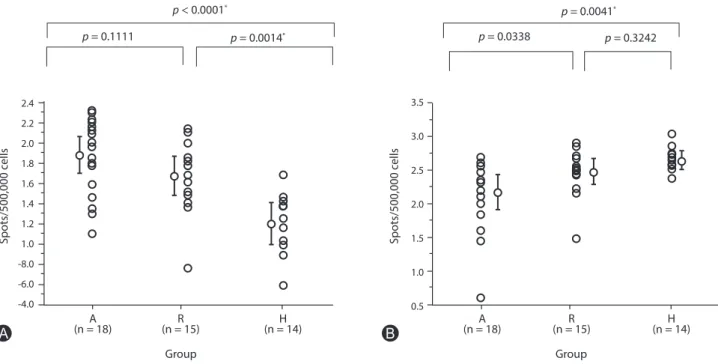
Fig. 1 shows the logarithm of numbers of cytokine producing cells among cells stimulated with mite antigen in the three groups.
The numbers of IL-5 producing cells in groups A and R were sta- tistically higher than those in group H (p < 0.0001 and p = 0.0014, respectively). The numbers of IL-5 producing cells in group R were lower than in group A, however, there was no statistically differ- ence (p = 0.1111). The number of IL-10 producing cells in group R was higher than in group A (p = 0.0338), but did not reach statisti- cal significance by The Bonferroni/Dunn analysis in which signifi- cance is defined as p < 0.0167. There was no statistical difference between groups R and H (p = 0.3242). The number of IL-10 produc- ing cells in group H was higher than that in group A (p = 0. 0041).
Cytokine balance in the three groups
In addition to the number of PBMCs that produce each cytokine, the balance of IL-10 to IL-5 was also compared among the three groups (Fig. 2). The ratio of the number of IL-10 to IL-5 producing cells was highest in group H, followed by groups R and A, and sta- tistically significant among each pair of groups (A vs. R, p = 0.0043;
R vs. H, p = 0.0019; A vs. H, p < 0.0001).
DISCUSSION
This study demonstrated the association of IL-10/IL-5 ratio with remission in asthmatics patients, and suggested that allergic in- flammation may continue even after clinical asthma remission.
The number of IL-5 producing cells upon stimulation with mite antigen was lower in patients in remission than in patients with active asthma as previously reported by Noma et al. [12], although the difference did not reach statistical significance. However, the number of IL-5 producing cells in healthy controls was significantly lower than in patients in remission, which is also compatible with the findings of Noma et al. [12]. Their data and ours indicate that
IL-10/IL-5 balance in asthma
allergen-specific IL-5 production does not reach normal levels in patients in remission. The findings that there are significantly fewer IL-10 producing cells in patients with asthma as compared to normal controls is compatible with previous reports showing lower production of IL-10 in asthma patients [14-17]. In contrast, no statistical difference in the numbers of IL-10 producing cells was found between patients in remission and those with active asthma, although the former tended to have more than the lat- ter. Altogether, the present data suggest that the number of single cytokine producing cells does not necessarily discriminate asthma in remission from active asthma. On the other hand, balance of IL- 10/IL-5 producing cells in PBMCs is significantly different between active asthma, asthma in remission, and healthy controls.
Akdis et al. [13] showed that regulatory cytokines actively sup- press Th2 responses to allergens in nonatopic healthy subjects and proposed that the balance between allergen-specific Treg cells and Th2 cells may be decisive in the development of allergy.
In the present study, we measured IL-5 and IL-10 producing cells in PBMCs. Although numbers of IL-5 producing cells in PBMCs in our study are in comparable level with those in previous studies [12, 18, 19], it is generally thought that frequency of D. farinae-specific
3.5 3.0 2.5 2.0 1.5 1.0 0.5 0
The ratio of IL-10 producing cells
Group (n = 18)A
p = 0.0043* p = 0.0019* p < 0.0001*
(n = 15)R H
(n = 14)
Fig. 2. Ratios of the numbers of interleukin (IL) 10 producing cells to the numbers of IL-5 producing cells in three groups. Group A, patients with active asthma; group R, patients in emission; group H, nonatopic healthy controls. Statistical difference was evaluated by Bonferroni/Dunn analysis by using StatView software. The significance is defined as p < 0.0167 and shown by an asterisk. The geometric mean with 95% confidence interval is shown.
2.4 2.2 2.0 1.8 1.6 1.4 1.2 1.0 -8.0 -6.0 -4.0
Spots/500,000 cells
Group (n = 18)A
p = 0.1111
p < 0.0001*
p = 0.0014*
(n = 15)R H
(n = 14)
3.5 3.0 2.5 2.0 1.5 1.0 0.5
Spots/500,000 cells
Group
(n = 18)A R
(n = 15) H
(n = 14) p = 0.0338
p = 0.0041* p = 0.3242
A B
Fig. 1. (A) Numbers of interleukin (IL)-5-producing cells, and (B) numbers of IL-10-producing cells in peripheral blood mononuclear cells stimulated with mite antigen in three groups. Group A, patients with active asthma; group R, patients in emission; group H, nonatopic healthy controls. Statistical difference was evaluated by Bonferroni/Dunn analysis by using StatView software. The significance is defined as p < 0.0167 and shown by an asterisk.
The geometric mean with 95% confidence interval is shown.
T cells are not so high. IL-5 may be produced by bystander T cells or eosinophils in addition to D. farinae-specific Th2 cells. As for IL-10 producing cells, it was reported that monocytes are major source of IL-10 in PBMCs [20]. In addition it is proposed that IL-10 is also pro- duced by regulatory B cells [21]. High frequency of IL-10 producing cells in PBMCs in our study is compatible with those observations.
Thus, IL-10 not only from Treg cells but also from monocytes and B cells may be operational in suppression of allergic inflammation in asthma. Taken together, in our enzyme-linked immunospot (ELISPOT) assay we did not count only numbers of allergen-specif- ic cytokine-producing T cells but rather enumerated all cytokine- producing cells in PBMCs upon stimulation with D. farina antigen, and showed that the balance of IL-10/IL-5 producing cells in PBMCs is associated with the clinical status of child-onset asthma.
Even though asthma is a multifactorial disease and many factors are involved in its remission and relapse, the presence or absence of allergic inflammation in the bronchi is quite important in terms of prognosis. A recent report by van den Toorn et al. [22] indicated ongoing airway inflammation and airway remodeling in adoles- cents in clinical remission of atopic asthma. The present report confirms their data and suggests that a weak but substantial Th2- skewed response driven by antigen exposure exists in patients even after they clinically outgrow asthma. This may explain why some patients who outgrow asthma in childhood relapse in adult- hood. The degree of subclinical airway inflammation may well de- termine the risk of asthma relapse later in life. However, in practical clinical settings, especially in the case of childhood asthma, it is dif- ficult to perform bronchial biopsy. Thus a surrogate marker to pre- dict the course of asthma is required. Although a larger sample size is needed to confirm our results, we propose that the ratio of IL-10/
IL-5 producing cells in PBMCs may be useful for monitoring the immune status to antigens and predicting the course of asthma.
In conclusion, our study indicates the importance of the Treg/
Th2 cytokine balance in the remission of asthma. Furthermore, this ratio remains lower in patients in remission than in nonatopic healthy controls, suggesting that allergic inflammation may con- tinue even after the clinical remission of asthma in some patients.
ACKNOWLEDGEMENTS
This work was partly supported by grants-in-aid for scientific research from Ministry of Education, Culture, Sports, Science and Technology of Japan, and Health and Labour Sciences Research
grants by the Ministry of Health, Labour and Welfare of Japan. The authors wish to thank the patients who volunteered for this study as well as Dr. Ohto for reviewing the manuscript.
REFERENCES
1. Robinson DS, Bentley AM, Hartnell A, Kay AB, Durham SR. Activated memory T helper cells in bronchoalveolar lavage fluid from patients with atopic asthma: relation to asthma symptoms, lung function, and bronchial responsiveness. Thorax 1993;48:26-32.
2. Kon OM, Kay AB. T cells and chronic asthma. Int Arch Allergy Immunol 1999;118:133-5.
3. Bousquet J, Chanez P, Lacoste JY, Barneon G, Ghavanian N, Enander I, Venge P, Ahlstedt S, Simony-Lafontaine J, Godard P, Michel FB.
Eosinophilic inflammation in asthma. N Engl J Med 1990;323:1033-9.
4. Humbert M, Corrigan CJ, Kimmitt P, Till SJ, Kay AB, Durham SR.
Relationship between IL-4 and IL-5 mRNA expression and disease severity in atopic asthma. Am J Respir Crit Care Med 1997;156(3 Pt 1):704-8.
5. Shi HZ, Li CQ, Qin SM, Xie ZF, Liu Y. Effect of inhaled interleukin-5 on number and activity of eosinophils in circulation from asthmatics. Clin Immunol 1999;91:163-9.
6. Barbee RA, Murphy S. The natural history of asthma. J Allergy Clin Immunol 1998;102(4 Pt 2):S65-72.
7. Panhuysen CI, Vonk JM, Koëter GH, Schouten JP, van Altena R, Bleecker ER, Postma DS. Adult patients may outgrow their asthma: a 25-year follow-up study. Am J Respir Crit Care Med 1997;155:1267-72.
8. Ronmark E, Jonsson E, Platts-Mills T, Lundback B. Incidence and remission of asthma in schoolchildren: report from the obstructive lung disease in northern Sweden studies. Pediatrics 2001;107:E37.
9. Noma T, Hayashi M, Kawano Y, Yoshizawa I, Ishikawa Y, Saeki T, Aoki K, Matsuura N. Functional interleukin-5 activity in peripheral blood mononuclear cells from adolescents with mite antigen asthma in remission. Clin Exp Allergy 1999;29:780-5.
10. Noma T, Yoshizawa I, Kou K, Nakajima T, Kawano Y, Itoh M, Ichikawa K, Mukouyama T, Baba M, Yata J. Pattern of cytokine production by T cells from adolescents with asthma in remission, after stimulation with Dermatophagoides farinae antigen. Pediatr Res 1995;38:187-93.
11. Smart JM, Horak E, Kemp AS, Robertson CF, Tang ML. Polyclonal and allergen-induced cytokine responses in adults with asthma:
resolution of asthma is associated with normalization of IFN-gamma responses. J Allergy Clin Immunol 2002;110:450-6.
12. Noma T, Sugawara Y, Ogawa N, Saeki T, Yamaguchi K, Kawano Y.
IL-10/IL-5 balance in asthma
Dermatophagoides-induced interleukin-10 production by peripheral blood lymphocytes from patients with asthma in remission. Pediatr Allergy Immunol 2004;15:459-68.
13. Akdis M, Verhagen J, Taylor A, Karamloo F, Karagiannidis C, Crameri R, Thunberg S, Deniz G, Valenta R, Fiebig H, Kegel C, Disch R, Schmidt- Weber CB, Blaser K, Akdis CA. Immune responses in healthy and allergic individuals are characterized by a fine balance between allergen- specific T regulatory 1 and T helper 2 cells. J Exp Med 2004;199:1567-75.
14. Borish L, Aarons A, Rumbyrt J, Cvietusa P, Negri J, Wenzel S. Interleukin-10 regulation in normal subjects and patients with asthma. J Allergy Clin Immunol 1996;97:1288-96.
15. Koning H, Neijens HJ, Baert MR, Oranje AP, Savelkoul HF. T cells subsets and cytokines in allergic and non-allergic children. II. Analysis and IL-5 and IL-10 mRNA expression and protein production. Cytokine 1997;9:427-36.
16. Takanashi S, Hasegawa Y, Kanehira Y, Yamamoto K, Fujimoto K, Satoh K, Okamura K. Interleukin-10 level in sputum is reduced in bronchial asthma, COPD and in smokers. Eur Respir J 1999;14:309-14.
17. Kandane-Rathnayake RK, Tang ML, Simpson JA, Burgess JA, Meszaros D, Feather I, Southey MC, Schroen CJ, Hopper J, Morrison SC, Giles GG, Walters EH, Dharmage SC, Matheson MC. Adult serum cytokine
concentrations and the persistence of asthma. Int Arch Allergy Immunol 2013;161:342-50.
18. Quast S, Zhang W, Shive C, Kovalovski D, Ott PA, Herzog BA, Boehm BO, Tary-Lehmann M, Karulin AY, Lehmann PV. IL-2 absorption affects IFN-gamma and IL-5, but not IL-4 producing memory T cells in double color cytokine ELISPOT assays. Cell Immunol 2005;237:28-36.
19. Guerkov RE, Targoni OS, Kreher CR, Boehm BO, Herrera MT, Tary- Lehmann M, Lehmann PV, Schwander SK. Detection of low-frequency antigen-specific IL-10-producing CD4(+) T cells via ELISPOT in PBMC:
cognate vs. nonspecific production of the cytokine. J Immunol Methods 2003;279:111-21.
20. Chen XQ, Yang J, Hu SP, Nie HX, Mao GY, Chen HB. Increased expression of CD86 and reduced production of IL-12 and IL-10 by monocyte- derived dendritic cells from allergic asthmatics and their effects on Th1- and Th2-type cytokine balance. Respiration 2006;73:34-40.
21. Bouaziz JD, Le Buanec H, Saussine A, Bensussan A, Bagot M. IL-10 producing regulatory B cells in mice and humans: state of the art.
Curr Mol Med 2012;12:519-27.
22. van den Toorn LM, Overbeek SE, de Jongste JC, Leman K, Hoogsteden HC, Prins JB. Airway inflammation is present during clinical remission of atopic asthma. Am J Respir Crit Care Med 2001;164:2107-13.