서 론
흡연은 심혈관질환, 악성종양, 각종 호흡기질환의 주요 원인으로 세계보건기구 통계에 따르면 흡연으로 인해 매년 600만명이 목숨을 잃는다고 한다.1-3) 이러한 흡연의 위험성이 많은 이들에게 잘 알려져 있음에도 불구하고 국내의 흡연율은 여전히 높은 편으로 2014년을 기준으로 한 경제협력개발기구(Organization for Economic Coopera- tion and Development, OECD) 보건통계(health statistics)에 따르면 15 세 이상 남성의 국내 흡연율은 43.3%로 일본 32.2%, 미국 14.0%에 비 하여 높은 평균 흡연율을 보이고 있다.4)
이렇게 높은 흡연율에도 불구하고 흡연자들의 절반 이상은 매년 금연을 시도하고 있고 1개월 내에 금연할 계획을 갖고 있는 경우도 25.5%에 달한다.5) 흡연자들은 금연을 위해 다양한 방법을 사용하고 있다. 니코틴 대체요법(껌, 패치, 사탕), 약물요법(bupropion, vareni- cline), 자가 금연법, 최면요법, 금연침, 전자담배, 전문가의 권유와 상 담, 금연 클리닉, 금연 전화상담 등이다. 이러한 다양한 방법들 중 전 문가의 도움 없이 본인의 의지만으로 금연을 시도한 경우 장기간 금 연을 유지하지 못하며6) 62%에서 2주 이내 다시 흡연을 시도한다고 하며7) 전문가의 적절한 도움을 받은 흡연자는 30% 이상에서 금연 성공률을 보이며6) 의사의 간단한 금연 조언만으로도 흡연자들의 금
Received July 6, 2017 Revised September 6, 2017 Accepted September 11, 2017
Corresponding author Byoungduck Han Tel: +82-2-2210-3245, Fax: +82-2-2212-2673 E-mail: [email protected]
ORCID: http://orcid.org/0000-0003-2830-1174
Copyright © 2018 The Korean Academy of Family Medicine
This is an open-access article distributed under the terms of the Creative Commons At- tribution Non-Commercial License (http://creativecommons.org/licenses/by-nc/4.0) which permits unrestricted noncommercial use, distribution, and reproduction in any medium, provided the original work is properly cited.
Original Article
https://doi.org/10.21215/kjfp.2018.8.4.601 eISSN 2233-9116
Korean J Fam Pract. 2018;8(4):601-606
Korean Journal of Family Practice
KJFP
금연 성공에 영향을 미치는 요인
정경만, 한병덕*, 조성중, 남가은, 엄도현, 김정훈, 김태륜, 이상우
삼육서울병원 가정의학과
Factors Associated with Smoking Cessation
Kyoungman Jung, Byoungduck Han*, Sung Jung Cho, Ga Eun Nam, Dohyun Eum, Junghoon Kim, Taeryun Kim, Sangwoo Lee Department of Family Medicine, Sahmyook Medical Center, Seoul, Korea
Background: Since 2015, the government has supported smoking cessation treatment through the National Health Insurance in order to reduce smoking rates. The purpose of this study was to establish a successful smoking cessation rate and identify factors related to successful smoking cessation.
Methods: Fifty-four participants who visited the SahmYook Medical Center Smoking Cessation Clinic between March 2016 and January 2017 completed a questionnaire detailing general characteristics, such as sex, age, and body mass index; smoking-related questions, such as smoking amount, smoking duration, and nicotine dependency; and psychological factors, such as depression and stress. IBM SPSS Statistics ver. 22.0 software was used for statistical data analysis, including the chi-square test and the Mann-Whitney U-test. The statistical significance is defined as P<0.05.
Results: A logistic regression was performed based on the results of univariate analysis. Results revealed that participants having depressive symptoms tended to achieve a lower smoking cessation rate than those without the symptoms. Other variables did not produce significant results.
Conclusion: The participants of the smoking cessation treatment through the National health Insurance are increasing. To maximize the effectiveness of the smoking cessation treatment, psychological factors, such as depressive mood as well as medication should be considered.
Keywords: Smoking Cessation; Beck Depression Inventory; Depressive Symptoms; Varenicline
Kyoungman Jung, et al. Factors Associated with Smoking Cessation
Korean Journal of Family Practice
KJFP
연 성공률을 76%가량 높일 수 있다고 한다.7)
따라서 금연은 더 이상 개인만의 문제가 아니며 금연에 대한 다양 한 연구와 정책이 시도되었다. 금연 성공에 영향을 미치는 다양한 요 인들에 대한 연구에서 고령인 경우, 가족 내 흡연자가 없는 경우, 기 혼자이거나8,9) 동거인이 있는 경우,10-13) 고학력인 경우,14,15) 니코틴 의 존도가 낮을수록,16) 문제음주가 없을수록, 과거 금연 시도 경험이 있 는 경우17) 금연 성공률이 높았다. Beck Depression Inventory (BDI) 점 수가 10점 이상인 경우가 10점 미만인 경우보다 금연 성공률이 낮았
으며18-20) 스트레스가 낮고 주관적 건강도가 높을수록 금연에 성공
할 확률이 높은 것으로 나타났다.8) 국내에서 시행된 금연정책에 있 어서는 1995년 국민건강증진법이 제정되면서 금연구역 지정 등의 정책이 시행되었고 2011년 개정을 통해 금연구역 지정이 확대되었으 며 2015년부터 건강보험에서 금연치료 지원사업이 시행되었다. 2015 년부터 담뱃값 인상을 통해 확대된 재정을 통해 금연상담과 약물치 료 비용의 약 80%를 건강보험을 통해 지원하고 있으며 금연프로그 램을 이수할 경우 1–2차 상담 때의 본인 부담금을 전액 환급해주는 인센티브 형태의 금연치료 지원정책이 시행되고 있다. 최근에는 스 마트폰 앱을 통한 안내 서비스를 시작하여 금연치료기관에 대한 접 근성을 높이고 있다.
금연치료를 위해 주로 사용되고 있는 약물은 니코틴 대체요법, 부 프로피온, 바레니클린 등이 있다. 이 중 바레니클린은 금연치료 단독 요법 중 금연 효과가 가장 우수한 것으로 알려져 있으며 니코틴의존 도에 상관없이 효과를 나타내는 것으로 나타났다.21) 그러나 구역, 구 토, 변비 등의 흔한 위장관 부작용과 두통, 비정상적인 꿈, 수면장애 와 같은 부작용 등이 바레니클린 사용의 제한요소로 작용하고 있 다.22) 한때 바레니클린의 사용이 조현병이나 양극성장애 등 심각한 정신건강학적 문제를 내포한 환자에 있어서 자살 사고나 시도를 증 가시킨다는 보고 등으로 이러한 환자군에게 처방을 자제하기도 하 였으나 최근의 연구들에서는 바레니클린의 사용이 이러한 환자군 에 있어서도 다른 약물보다 금연효과가 우수하고 자살 사고 및 시도 를 증가시키지 않는다고 확인되었다.23,24)
건강보험에서 금연치료 지원 사업이 시행된 후 금연 클리닉 이용 자가 점점 늘고 있기는 하지만 국가지원 금연 클리닉 이용자의 성공 률에 대한 연구는 부족하며 특히 varenicline 복용에 대한 연구는 부 족한 상황이다.
본 연구에서는 국민건강보험 금연치료 지원 사업을 통한 금연 클 리닉을 방문하여 varenicline을 처방한 환자의 12주 치료 순응도 및 금연 성공에 미친 요인들에 대하여 연구하였다.
방 법
1. 연구 대상
국민건강보험 지원 사업을 통해 2016년 3월부터 2017년 1월까지 총 11개월간 삼육서울병원 가정의학과 외래 금연 클리닉을 통해 금 연 상담 및 약물 처방을 받기 위해 내원한 흡연자 54명을 대상으로 진행되었다.
2. 연구 방법
금연 클리닉 이용자가 최초 등록시 자가 기입식 문진표를 작성하 도록 하였으며 문진표의 내용은 연령, 성별, 결혼상태, 동거인 유무 등의 인구학적 특성과 흡연시작 연령, 흡연기간, 일일 평균 흡연량, 흡 연 동기, 과거 금연시도 여부 및 금연방법, 금연 실패 이유, 가족내 흡 연자 유무, 니코틴 의존도(Fagerstrom test), 음주 횟수, 음주량 및 우 울증(BDI score), 스트레스(Korea National Health and Nutrition Ex- amination Survey short form),25) 주관적 건강인식도 등의 정신건강상
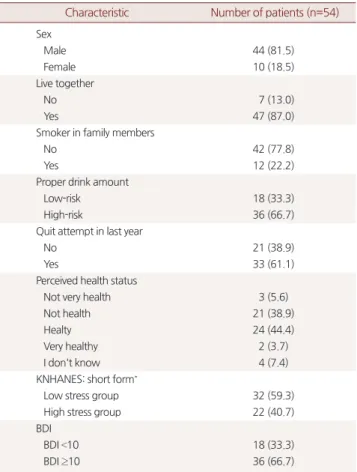
Table 1. Baseline characteristics of the populations
Characteristic Number of patients (n=54) Sex
Male 44 (81.5)
Female 10 (18.5)
Live together
No 7 (13.0)
Yes 47 (87.0)
Smoker in family members
No 42 (77.8)
Yes 12 (22.2)
Proper drink amount
Low-risk 18 (33.3)
High-risk 36 (66.7)
Quit attempt in last year
No 21 (38.9)
Yes 33 (61.1)
Perceived health status
Not very health 3 (5.6)
Not health 21 (38.9)
Healty 24 (44.4)
Very healthy 2 (3.7)
I don't know 4 (7.4)
KNHANES: short form*
Low stress group 32 (59.3)
High stress group 22 (40.7)
BDI
BDI <10 18 (33.3)
BDI ≥10 36 (66.7)
Values are presented as number (%).
KNHANES, Korea National Health and Nutrition Examination Survey; BDI, Beck Depression Inventory.
*The stress questionnaire for KNHANES.
정경만 외. 금연 성공에 영향을 미치는 요인 Korean Journal of Family Practice
KJFP
태에 대한 평가로 구성되었다.
하루 흡연량은 외래 초진 당시 1일 평균 흡연량으로 하였으며 금 연 시도 유무는 최근 1년간 금연 시도 유무로 판단하였다. 음주는 초 진 시점에서 음주 여부로 음주, 비음주로 구분하였으며 하루 평균 알코올 섭취량에 따라 세계보건기구에서 제시한 기준에 따라 여성 은 20 g 이상, 남성 40 g 이상일 경우 고위험 음주로 구분하였다.26)
금연 상담 및 약물 처방은 1주–2주–3주–3주–3주 스케쥴로 시행 하였다. 금연 시행 첫주 3일 동안(제1–3일)에는 varenicline 0.5 mg을 하루 한번 복용하였고 이후 4일 동안(제4–7일) 0.5 mg을 하루 두 번 복용 하도록 하였다. 두 번째 상담에서 환자의 지속적인 약물 복용
여부 및 부작용 등을 확인하였으며 이후부터(시작 8일 이후) vareni- cline 1.0 mg 하루 2회 복용하도록 하였다. 금연 상담을 받는 동안 매 방문 시점에서 흡연량, 금연 유지 여부 및 약물 복용 여부를 확인하 였다. 금연 성공과 실패 여부는 12주 약물 처방이 완료된 후 1회 추가 방문을 하여 금연 성공 및 실패 여부에 대한 최종 판정을 받도록 하 였으며 12주 처방을 다 받지 않고 중간에 방문이 중단된 경우 전화 를 통하여 금연 유지 및 실패 여부를 확인하였다(Table 1).
3. 통계
연구자료 및 통계분석을 위해 IBM SPSS stastistic ver. 22.0 software
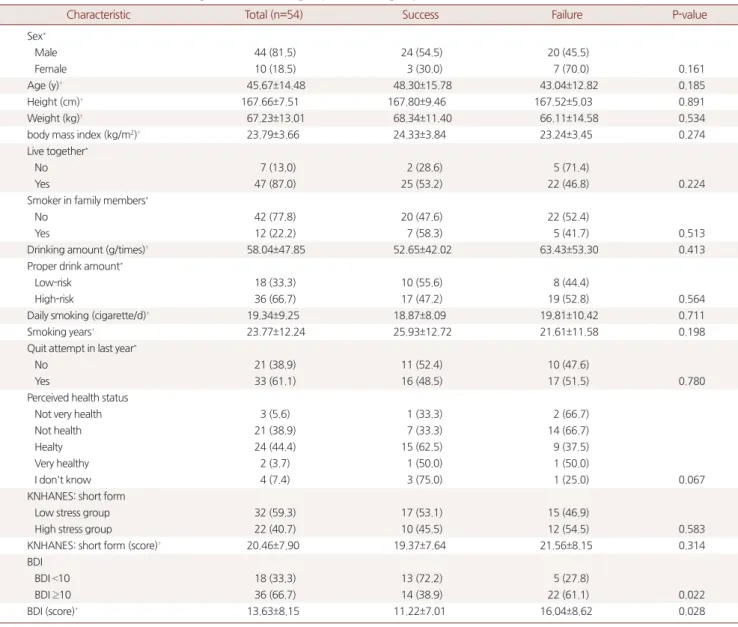
Table 2. Characteristics between smoking cessation success group and failure group
Characteristic Total (n=54) Success Failure P-value
Sex*
Male 44 (81.5) 24 (54.5) 20 (45.5)
Female 10 (18.5) 3 (30.0) 7 (70.0) 0.161
Age (y)† 45.67±14.48 48.30±15.78 43.04±12.82 0.185
Height (cm)† 167.66±7.51 167.80±9.46 167.52±5.03 0.891
Weight (kg)† 67.23±13.01 68.34±11.40 66.11±14.58 0.534
body mass index (kg/m2)† 23.79±3.66 24.33±3.84 23.24±3.45 0.274
Live together*
No 7 (13.0) 2 (28.6) 5 (71.4)
Yes 47 (87.0) 25 (53.2) 22 (46.8) 0.224
Smoker in family members*
No 42 (77.8) 20 (47.6) 22 (52.4)
Yes 12 (22.2) 7 (58.3) 5 (41.7) 0.513
Drinking amount (g/times)† 58.04±47.85 52.65±42.02 63.43±53.30 0.413
Proper drink amount*
Low-risk 18 (33.3) 10 (55.6) 8 (44.4)
High-risk 36 (66.7) 17 (47.2) 19 (52.8) 0.564
Daily smoking (cigarette/d)† 19.34±9.25 18.87±8.09 19.81±10.42 0.711
Smoking years† 23.77±12.24 25.93±12.72 21.61±11.58 0.198
Quit attempt in last year*
No 21 (38.9) 11 (52.4) 10 (47.6)
Yes 33 (61.1) 16 (48.5) 17 (51.5) 0.780
Perceived health status
Not very health 3 (5.6) 1 (33.3) 2 (66.7)
Not health 21 (38.9) 7 (33.3) 14 (66.7)
Healty 24 (44.4) 15 (62.5) 9 (37.5)
Very healthy 2 (3.7) 1 (50.0) 1 (50.0)
I don't know 4 (7.4) 3 (75.0) 1 (25.0) 0.067
KNHANES: short form
Low stress group 32 (59.3) 17 (53.1) 15 (46.9)
High stress group 22 (40.7) 10 (45.5) 12 (54.5) 0.583
KNHANES: short form (score)† 20.46±7.90 19.37±7.64 21.56±8.15 0.314
BDI
BDI <10 18 (33.3) 13 (72.2) 5 (27.8)
BDI ≥10 36 (66.7) 14 (38.9) 22 (61.1) 0.022
BDI (score)† 13.63±8.15 11.22±7.01 16.04±8.62 0.028
Values are presented as number (%) or mean±standard deviation.
KNHANES, Korea National Health and Nutrition Examination Survey; BDI, Beck Depression Inventory.
*Peason's chi-square test. †Two-sample (mean-compared) t-test. Mann-Whitney U-test.
Kyoungman Jung, et al. Factors Associated with Smoking Cessation
Korean Journal of Family Practice
KJFP
(IBM Co., Armonk, NY, USA)를 사용하였고, 명목형 변수의 비교는 chi-square test를 활용하였다. 연속형 변수의 비교는 two-sample test 를 활용하였으며, 순위척도를 활용한 변수의 비교는 Mann-Whitney U-test를 활용하여 비교하였다. 통계적인 의미의 유의수준은 P<0.05 로 정의하였다.
결 과
1. 연구 대상자들의 일반적인 특성
금연 클리닉 등록 후 8–12주 동안 6회 이내의 상담을 받고 추적 관 찰이 끝난 환자 54명 중 27명(50.0%)이 금연에 성공하였다.
참여자의 성별에 있어서 남성 44명 중 24명(54.5%)이 금연에 성공 하였으며, 여성 10명 중 3명(30.0%)이 금연에 성공하였다. 성별에 따른 금연 성공군과 실패군에서는 통계적으로 유의미한 차이는 보이지 않았다.
참여자들의 평균연령은 금연 성공군이 48.30±15.78세, 금연 실패 군이 43.04±12.82세로 성공군의 연령대가 높았으나 성공군과 실패 군 간의 통계적으로 유의한 차이를 보이지는 않았다.
참여자의 신장과 몸무게에 있어서는 성공군이 실패군에 비해 높 게 나타났으나 통계적으로 유의미한 차이를 보이지는 않았다. 체질 량지수(body mass index, BMI)에 있어서도 성공군의 BMI가 24.33±3.84로 실패군보다 크게 나타났으나 통계적으로 유의미한 차 이를 보이지는 않았다.
동거인 여부에 있어서는 동거인이 있는 참여자가 47명(87.0%)으로 높은 비중을 보이고 있었다. 그러나 실패군과 성공군에서 유의미한 차이는 나타나지 않았다. 가족 중 흡연자 유무에 있어서도 가족 중 에 흡연자가 없는 참여자가 42명(77.8%)으로 높은 비중으로 나타났 으나 성공군과 실패군 사이에 유의미한 차이를 나타내지는 않았다.
음 주 량 에 있어서 회당 음 주량 을 살펴보면 평균적으 로 58.04±47.85 g을 마시는 것으로 조사되었으며 성공군에서의 음주량 (52.65±42.02)이 실패군의 음주량(63.43±53.30)보다 낮게 관찰되었으 나 유의미한 차이를 나타내지는 않았다.
하루 흡연량에 있어서는 성공군의 흡연량이 18.87±8.09로 실패군 의 흡연량 19.81±10.42보다 낮게 나타났지만 유의미한 차이를 보이지 는 않았다. 흡연기간에 있어서는 성공군의 흡연기간이 25.93±12.72 로 실패군의 흡연기간 21.61±11.58보다 긴 것으로 나타났으나 유의미 한 차이를 보이지는 않았다.
최근 1년간 금연 시도 경험에 있어서는 금연을 시도한 경험이 있 는 인원이 33명(61.1%)으로 금연 시도 경험이 없는 인원 21명(38.9%)보 다 높게 나타났고 금연을 시도하지 않은 집단내의 성공군 비중
(52.4%)이 금연을 시도한 집단내의 성공군 비중(48.5%)보다 높게 나 타났으나 유의미한 차이를 보이지는 않았다.
동일 연령대의 다른 인원보다 자신이 건강한가를 물어보는 주관 적 건강도에 있어서는 건강한 편이다 라는 응답이 24명(44.4%)로 가 장 높은 응답을 보였으며, 주관적 건강도에 있어서 성공군과 실패군 은 유의미한 차이를 나타내지는 않았다.
저스트레스로 분류되는 참여자가 32명(59.3%)였으며 저스트레스 군의 금연 성공률이 53.1%로 고스트레스군의 금연 성공률(46.9%)에 비해 높았으나 통계적으로 유의하지 않았다.
우울증상이 있는 인원이 36명(66.7%)으로 높은 비중을 보였으며 우울증상이 없는 집단에서의 성공률이 13명(72.2%)으로 우울증상 이 있는 집단의 성공률(38.9%)보다 높아 통계적으로 유의하게 나왔 다(Table 2).
2. 금연 성공률에 영향을 미치는 요인
단변량 분석의 결과를 바탕으로 금연 성공결과를 종속변수로 하 여 로지스틱 회귀분석을 실시하였다. 그 결과 우울증상이 없는 집단 보다 우울증상이 있는 집단이 금연 성공률이 감소(0.201배)하는 것 으로 나타났다. 다른 변수들에서는 유의미한 결과를 나타내지는 않 았다(Table 3).
고 찰
본 연구는 금연 클리닉을 방문하여 상담 및 varenicline을 처방받 은 환자의 금연 성공과 실패에 영향을 미치는 요인을 분석하고자 하
Table 3. Factors related with smoking cessation rate by logistic regres- sion (n=50*)
Factors related with smoking cessation
Odds ratio
95% confidence interval P-value Stress (reference low stress group) 1.186 0.235–5.977 0.836 Depressiv mood
(reference no depressiv mood)
0.201 0.040–0.989 0.048 Proper drink amount
(reference low risk group)
0.980 0.203–4.726 0.980
Smoking years 0.981 0.874–1.100 0.744
Quit attempt in last year (reference no attempt)
0.525 0.119–2.312 0.394 Smoker in family members
(reference no member in family)
2.921 0.414–20.602 0.282
Perceived health status 1.754 0.576–5.337 0.322
Sex (reference male) 0.402 0.033–4.860 0.474
Age 1.031 0.937–1.133 0.532
Body mass index 1.213 0.961–1.531 0.104
*Four people who answered that “I don’t know” at perceived Health status were excluded.
정경만 외. 금연 성공에 영향을 미치는 요인 Korean Journal of Family Practice
KJFP
였다.
금연 프로그램의 효과를 살펴보면 보건소 금연 클리닉 이용자를 대상으로 한 연구에서 6개월 금연 성공자 중 재흡연율이 1개월 이내 9%, 3개월 이내 21%, 6개월 이내 30%, 1년 후가 39%로 나타났으며27) 또 다른 연구에서 6개월 이내 재흡연율이 24.1%인 것으로 조사되어28) 건강보험에서 지원하는 12주 내 금연 성공을 이끌어내는 것뿐만 아 니라 이후의 장기적인 금연 유지에 대한 효과는 기대에 미치지 못하 고 있는 실정이다.
이전의 연구 결과에서 나이,8,10-13) BMI, 흡연량,16) 과거 금연 성공 경 험, 음주량,17) 스트레스 등이 금연 성공에 영향을 미치는 요인으로 보고된 바 있으나 본 연구에서는 금연 성공군과 실패군에서 이전 연 구 결과와 같은 경향을 보이기는 했으나 통계적으로 유의한 차이를 보이지는 않았다. 본 연구에서는 BDI 척도를 활용한 우울증상의 경 우에서만 우울증상이 있는 집단이 없는 집단에 비해 금연 성공률 이 높게 나타났으며 집단간의 유의미한 차이가 있는 것으로 나타났 다.
본 연구의 제한점은 연구에 참가한 대상자의 수가 적어 정규분포 를 따르지 않아 비모수적인 방법으로 분석하여 결과 분석상 의미 있을 수 있으나 통계적으로 유의하지 않게 나왔을 가능성을 배제하 지 못한다는 점이다. 추후 더 많은 대상자를 상대로 연구를 진행한 다면 의미있는 결과가 나올 것으로 생각된다. 또한 금연 클리닉을 방 문한 대상자들에게 제공되었던 금연 상담에서 각각의 환자를 상담 한 의사가 동일하지 않은 경우도 있었으며 한 환자에 있어서도 상담 이 종료될 때까지 담당의사가 변경되는 경우도 있어 금연 상담시간, 상담의 질 등이 동일하지 않아 금연 상담자가 환자의 금연 실패에 미 치는 영향을 배제할 수 없다는 점이다. 추후 좀더 많은 자료를 바탕 으로 체계적이고 다양한 연구를 기대해 볼 수 있다.
본 연구에서 이러한 제한점에도 불구하고 금연 성공률에 우울증 상이 미치는 영향을 확인하였다는 점에서 향후 금연 클리닉을 통한 금연치료에 있어서 성공률을 극대화 시키기 위해서는 약물 처방뿐 아니라 금연 클리닉 참여자의 심리적 요인도 중요한 요소로 다뤄져 야 할 것으로 보인다.
요 약
연구배경:
흡연은 각종 암을 유발할 뿐만 아니라 다양한 만성질환 의 위험요인으로 알려져 있다. 정부에서도 2015년부터 흡연율을 줄 이기 위해 건강보험을 통해 금연치료를 지원하고 있다. 이에 금연 상 담을 받은 환자들의 금연 성공률과 이에 영향을 미치는 요인들을 알아보고자 하였다.방법:
2016년 3월부터 2017년 1월까지 삼육서울병원 가정의학과에 서 금연상담을 받은 54명의 환자를 대상으로 성별, 나이, BMI 등 기 본적인 환자 특성과 흡연량, 흡연기간, 니코틴 의존도 등 흡연관련 평 가와 음주횟수, 음주량 등 음주관련 평가, 우울, 스트레스 등 심리적 요소가 금연 성공률에 미치는 영향을 설문을 이용하여 조사하였다.자료 분석은 IBM SPSS Statistics ver. 22.0 프로그램을 사용하였으며, 명목형 변수의 비교는 chi-square test를 활용하였다. 연속형 변수의 비교는 two-sample test를 활용하였으며, 순위척도를 활용한 변수의 비교는 Mann-Whitney U-test를 활용하여 비교하였다. 통계적인 의미 의 유의수준은 P<0.05로 정의하였다.
결과:
단변량 분석의 결과를 바탕으로 금연 성공결과를 종속변수 로 하여 로지스틱 회귀분석을 실시하였다. 그 결과 우울증상이 없는 집단보다 우울증상이 있는 집단이 금연 성공률이 감소(0.201배)하 는 것으로 나타났다. 다른 변수들에서는 유의미한 결과를 나타내지 않았다.결론:
국민건강보험 지원 사업을 통한 금연 클리닉 이용자들이 증 가하고 있다. 금연 진료의 효과를 극대화 하기 위해 약물처방뿐만 아 니라 환자의 우울 등 심리적인 요인에 대한 접근이 중요하게 다뤄져 야 할 것이다.중심단어:
금연 성공률; 우울; 스트레스; 바레니클린REFERENCES
1. Benowitz NL. Nicotine addiction. N Engl J Med 2010; 362: 2295-303.
2. Vineis P, Alavanja M, Buffler P, Fontham E, Franceschi S, Gao YT, et al. To- bacco and cancer: recent epidemiological evidence. J Natl Cancer Inst 2004;
96: 99-106.
3. World Health Organization. WHO Report on the Global Tobacco Epidem- ic Warning about the Dangers of Tobacco. Geneva: World Health Organiza- tion; 2011.
4. Organization for Economic Cooperation and Development. Non-medical determinants of health (edition 2016) [Internet]. Paris: OECD Health Sta- tistics; 2016. [cited 2017 Mar 29]. Available from: https://stats.oecd.org/in- dex.aspx?DataSetCode=HEALTH_LVNG.
5. Korea Centers for Disease Control and Prevention. Health behavior and chronic disease statistics 2015 [Internet]. Cheongju: Korea Centers for Dis- ease Control and Prevention; 2015. [cited 2016 Nov 10]. Available from:
https://knhanes.cdc.go.kr/knhanes/sub04/sub04_04.do.
6. Lee JS, Kang SM, Kim HJ, Lee KY, Cho B, Goh E. Long-term maintenance of smoking cessation and related factors of relapse. Korean J Fam Med 2009;
30: 203-9.
7. Stead LF, Bergson G, Lancaster T. Physician advice for smoking cessation.
Cochrane Database Syst Rev 2008; (2): CD000165.
8. Kim Y, Cho WK. Factors associated with successful smoking cessation in Korean adult males: findings from a national survey. Iran J Public Health
Kyoungman Jung, et al. Factors Associated with Smoking Cessation
Korean Journal of Family Practice
KJFP
2014; 43: 1486-96.
9. Kim YJ. Predictors for successful smoking cessation in Korean adults. Asian Nurs Res (Korean Soc Nurs Sci) 2014; 8: 1-7.
10. Hymowitz N, Cummings KM, Hyland A, Lynn WR, Pechacek TF, Hartwell TD. Predictors of smoking cessation in a cohort of adult smokers followed for five years. Tob Control 1997; 6 Suppl 2: S57-62.
11. Lee CW, Kahende J. Factors associated with successful smoking cessation in the United States, 2000. Am J Public Health 2007; 97: 1503-9.
12. Derby CA, Lasater TM, Vass K, Gonzalez S, Carleton RA. Characteristics of smokers who attempt to quit and of those who recently succeeded. Am J Prev Med 1994; 10: 327-34.
13. Yang MY, Ahn KM, Sohn AR. The effects of a smoking cessation program on stress and emotional status of the Korean male office workers. Journal of the Korea Academia-Industrial Cooperation Society 2013; 14: 6364-72.
14. Borland R, Owen N, Hill D, Schofield P. Predicting attempts and sustained cessation of smoking after the introduction of workplace smoking bans.
Health Psychol 1991; 10: 336-42.
15. Hennrikus DJ, Jeffery RW, Lando HA. The smoking cessation process: lon- gitudinal observations in a working population. Prev Med 1995; 24: 235-44.
16. Kim CH, Seo HG. The factors associated with success of smoking cessation at smoking-cessation clinic. J Korean Acad Fam Med 2001; 22: 1603-11.
17. Song TM, Lee JY, Choi KS. The factors influencing on success of quitting smoking in new enrollees and re-enrollees in smoking cessation clinics.
Journal of Korean Society for Health Education and Promotion 2008; 25:
19-30.
18. Berlin I, Covey LS. Pre-cessation depressive mood predicts failure to quit smoking: the role of coping and personality traits. Addiction 2006; 101:
1814-21.
19. Pawlina MM, Rondina Rde C, Espinosa MM, Botelho C. Depression, anxi- ety, stress, and motivation over the course of smoking cessation treatment. J
Bras Pneumol 2015; 41: 433-9.
20. Chaiton M, Cohen JE, Rehm J, Abdulle M, O’Loughlin J. Confounders or intermediate variables? Testing mechanisms for the relationship between depression and smoking in a longitudinal cohort study. Addict Behav 2015;
42: 154-61.
21. Fagerström K, Hughes J. Varenicline in the treatment of tobacco depen- dence. Neuropsychiatr Dis Treat 2008; 4: 353-63.
22. Choi MK, Paek YJ. Updated information on smoking cessation manage- ment. J Korean Med Assoc 2016; 59: 872-80.
23. Stapleton JA, Watson L, Spirling LI, Smith R, Milbrandt A, Ratcliffe M, et al.
Varenicline in the routine treatment of tobacco dependence: a pre-post comparison with nicotine replacement therapy and an evaluation in those with mental illness. Addiction 2008; 103: 146-54.
24. Garcia-Portilla MP, Garcia-Alvarez L, Sarramea F, Galvan G, Diaz-Mesa E, Bobes-Bascaran T, et al. It is feasible and effective to help patients with severe mental disorders to quit smoking: An ecological pragmatic clinical trial with transdermal nicotine patches and varenicline. Schizophr Res 2016; 176:
272-80.
25. Fact sheet: Development of the Stress Questionnaire for KNHANES [Inter- net]. Cheongju: Korea Center for Disease Control and Prevention [cited 2011 Sep 6]. Available from: http://cdc.go.kr/CDC/cms/content/mo- bile/13/1613_view.html.
26. Babor TF, Higgins-Biddle JC, World Health Organization. Brief interven- tion for hazardous and harmful drinking : a manual for use in primary care.
Geneva: World Health Organization; 2001.
27. Son HK, Jung UY, Park KS, Kam S, Park SK, Lee WK. The factors implicated when an individual starts to smoke again after a 6 month cessation. J Prev Med Public Health 2009; 42: 42-8.
28. Kim HS, Bae SS. Factors associated with relapse to smoking behavior using health belief model. J Agric Med Community Health 2011; 36: 87-100.