Korean J Biol Psychiatry 2019;26(2):71-78
서
론
국내 자살률은 2011년 최고점을 기록한 뒤 서서히 감소 추 세를 보이고 있지만 현재까지도 대한민국은 OECD 기준으로 아직 높은 수준의 자살률을 보이고 있다.1)2) 자살은 개인의 생
명과 주변 사람에게 심리적 충격을 안겨주고 동시에 우리 사 회의 높은 자살률은 막대한 비용으로도 이어지고 있다.3) 이러 한 자살을 막기 위해 여러 단계의 예방법이 있을 수 있으며 그 중 하나는 자살시도자 혹은 위험군을 추려내어 선택적으로 예방하는 방법이다. 하지만 자살이라는 결과는 단순한 순간의
한국 성인의 자살태도측정도구의 요인구조 : 2013 년 자살실태조사 자료를 바탕으로
서울대학교 의과대학 정신건강의학교실,1 서울대학교병원 정신건강의학과,2 강원대학교 의학전문대학원 정신건강의학과,3
경희대학교 의과대학·의학전문대학원 예방의학교실,4 서울대학교 의학연구원 인간행동의학연구소5
홍민석1,2·박종익3 ·이상욱4 ·신민섭1,2 ·안용민1,2,5
Factor Structure of Attitudes Toward Suicide (ATTS) of Adults : Based on a Nationwide Survey in South Korea
Minseok Hong, MD,1,2 Jong-Ik Park, MD,3 Sang-Uk Lee, PhD,4 Min-Sup Shin, PhD,1,2 Yongmin Ahn, MD1,2,5
1Department of Psychiatry and Behavioral Science, Seoul National University College of Medicine, Seoul, Korea
2Department of Neuropsychiatry, Seoul National University Hospital, Seoul, Korea
3Department of Psychiatry, Kangwon National University School of Medicine, Chuncheon, Korea
4Department of Preventive Medicine, School of Medicine, Kyung Hee University, Seoul, Korea
5Institute of Human Behavioral Medicine, Seoul National University Medical Research Center, Seoul, Korea
ObjectivesZZSuicide is a complex phenomenon not only caused by the individual’s mental illness and economic situation, but also oc- curred in sociocultural contexts and relationships around the individual. Therefore, the attitudes, which include collective norms, thoughts and feelings of a population, toward suicide play a fundamental role in the prevention of suicide. Factor structure of Attitudes Toward Suicide (ATTS), developed by Renberg, is also various in different sociocultural contexts. This is the first study to investigate factor structure of ATTS along with nationwide sample of Korean adults.
MethodsZZThis study analyzed the factor structure and reliability of ATTS in 1500 regionally stratified Korean adults. Exploratory fac- tor analysis was performed by using principal axis factoring and varimax rotation.
ResultsZZThe selection of 33 ATTS items based on internal consistency and communality was conducted. Five factors were analyzed, which were named ‘Good reason,’ ‘Negative gaze,’ ‘Predictability,’ ‘Means of escape,’ and ‘Common secret,’ respectively. Explained total variance was 41.94%, and the internal consistency ranged from 0.516 to 0.740.
ConclusionsZZEach of the five factors contains different semantic dimensions. Consistent with previous studies, factors containing permissive attitude toward suicide was high in those with history of suicidal thought and of suicide attempt. It is notable that the ‘Good reason’ showed higher score in elderly. This may be related to socioeconomic or physical adversities which have been considered the ma- jor cause of suicide in elderly.
Key WordsZZSuicide ㆍATTS ㆍFactor analysis ㆍPermissive attitudes ㆍNational survey on suicide.
Received: August 14, 2019 / Revised: August 24, 2019 / Accepted: August 28, 2019 Address for correspondence: Yongmin Ahn, MD
Department of Psychiatry and Behavioral Science, Institute of Human Behavioral Medicine, Seoul National University College of Medicine, 101 Daehak-ro, Jongno-gu, Seoul 03080, Korea
Tel: +82-2-2072-0710, Fax: +82-2-744-7241, E-mail: [email protected]
반응에 불과하지 않으며, 자살사고로부터 시작되어 단계적으 로 요인들이 누적되어 만들어지는 복합적인 결과이다.4)5) 이 과정에서 자살자 본인뿐만 아니라 주변 사람들, 사회문화적 요인들이 결과에 영향을 준다.6-8) 따라서 선택적 예방법을 넘 어선 일반인구와 고위험군의 자살을 예방하기 위해 자살에 대해 어떤 규범과 인식을 가지고 있는지, 다시 말해 자살에 대해 어떠한 태도(attitudes)를 갖고 있는지는 효과적인 예방 전략을 수립하는 데 중요한 자료일 것이다.
자살에 대한 태도의 연구는 국내외적으로 매우 활발하게 진행되고 있는 주제이다. Limbacher와 Domino9)가 1986년 자살에 대한 위험요인이 있는 사람들이 좀 더 자살에 대해 허 용적 태도를 갖는다고 보고하였고, 이러한 연구 결과는 슬로 베니아, 일본, 대한민국에서 일관적으로 나타났다.10-13) 또한 이러한 자살에 대한 태도는 단순히 자살예방 프로그램을 수 강한 것으로는 유의미한 변화가 없었다.14) 따라서 자살에 대 한 태도는 자살에 대한 접근성과 위험도에 영향을 미치고, 자살에 대한 태도를 변화시키기 위해서는 보편적인 자살에 대한 일반적인 인식 홍보와는 다른 접근법이 필요함을 알 수 있다. 그렇다면 자살에 대한 태도가 자살위험을 높이는지, 자 살위험도가 자살에 대한 태도를 변화시키는지 등의 인과성 에 대한 질문과 구체적으로 어떤 개입이 자살에 대한 태도를 변화시킬 수 있는지에 대한 질문 등이 있을 수 있다. 이렇듯 이 분야의 향후 연구 과제는 산적해 있다.
한편 자살에 대한 태도는 그 개인의 특성뿐만 아니라 개인 을 둘러싼 사회문화적 맥락과도 긴밀하게 연결되어 있다. 멕 시코계 미국인은 앵글로계 미국인에 비해 자살을 종교적 타 락, 정신적 고통과 밀접하게 연결지었으며,15) 미국의 의대생보 다 일본의 의대생들은 죽음을 권리로서 받아들이는 태도를 보였다.16) 뉴질랜드와 미국, 독일과 미국을 비교한 연구에서도 역시 태도의 차이는 나타났다.17)18) 이러한 결과는 단순히 태도 에 대한 척도의 점수의 차이에 국한되지 않는다. 노르웨이, 스 웨덴, 러시아의 자살에 대한 태도를 구조방정식으로 탐색한 연구에서는 인구학적 특성, 자살위험요인들과의 상호작용이 국가별, 성별로 다르게 나타났다.19) 한국, 일본, 미국의 자살에 대한 태도를 비교한 연구에서 허용적 태도가 자살사고와 연 관되었으나 그 정도는 사회인구학적 요인에 따라 달랐다.20) 따 라서 자살에 대한 태도의 세부 차원도 사회문화적 맥락에 따 라 다르다고 봐야 한다.
국내에서 2011년 자살예방 및 생명존중문화 조성에 관한 법 률이 마련된 이후로 2013년부터 5년마다 전국적인 자살실태조 사를 시행하고 있으며 이중에는 Attitudes Toward Suicide (ATTS) 척도를 이용한 성인 일반인구 대상의 조사도 포함되 어 있다.21) 앞서 언급하였듯이 자살에 대한 태도는 지역의 사회
문화적인 맥락에 따라 다른 요인구조를 가진다. 하지만 국내에 서 시행된 ATTS의 요인분석은 청소년, 좁은 범위의 연령층, 특 정 지역주민을 대상으로 하여 일반화의 어려움이 있다.20)22)23) 2014년 Park과 Kim24)이 본 연구와 동일한 표본을 바탕으로 ATTS-20의 요인구조를 분석하였지만, 전체 문항이 아닌 1986 년에 발표된 ATTS 과거 버전에 해당하는 항목들만이 포함되 어 최신 연구들과의 비교성 및 전체 조사 항목의 정보가 충분 히 포괄되지 않았다는 점에서 한계가 있다. 따라서, 향후 5년 마다 시행될 자살실태조사 및 기타 연구에서 획득될 성인인 구의 ATTS의 자료를 해석하고 예방정책을 수립하는 데 이용 하기 위해서는 새로운 요인분석이 시행되어야 한다.
본 연구는 2013년에 시행된 자살실태조사의 자료를 바탕으 로 ATTS의 요인구조를 분석하고자 한다. 탐색적 요인분석을 통해 얻어진 요인구조는 향후 국내외 자살에 대한 태도 연구 에서 밑거름이 되고자 한다.
방
법
조사대상자와 자료의 수집
본 조사는 2013년 자살실태조사에서 시행된 총 4개의 세부 조사 중 제2 세부 자살에 대한 국민태도조사의 자료를 이용 하였다.25) 대상은 전국의 만 19~75세까지의 성인 남녀로 2010 년 인구주택총조사 결과를 바탕으로 세종시를 제외한 전국 16개 시도를 층화하여 150개의 조사구를 선정하였다. 조사구 당 10가구를 면접원이 직접 방문하여 각 가구당 임의의 1명 을 면대면 조사하여 총 1500명의 인원을 조사하였다. 본 조사 에 대해 교육을 받은 면담원이 구조화된 면담을 진행했고 조 사 과정 중 의문이 생긴 경우 연구실무자들과 실시간으로 연 락이 가능했다. 본 조사는 2013년 10~12월까지 3개월 동안 수행되었으며, 4399가구를 방문하여 응답률은 34.1%였다.
자살에 대한 국민태도조사는 강원대학교 임상윤리심의위 원회의 승인을 받았다(승인번호 : KNUH-2013-06-007-001).
보건복지부의 ‘2013년 자살실태조사’ 연구과제 연구비 지원으 로 수행되었다.
측정 도구
2003년 Renberg와 Jacobsson26)이 개발한 총 40개 문항의 ATTS라는 척도 중 5-Likert style로 채점되는 37개 문항을 이용하였다. ‘매우 동의하지 않음’이 1점, ‘매우 동의함’이 5점 으로 채점되었다. 한국어로의 번역에는 2011년 Renberg가 소폭 수정한 버전을 원저자에게 직접 받아 이를 기반으로 Lee 등12)이 시행하였다. 문항 수가 너무 많아 대규모 조사에 부 적합한 다른 자살에 대한 태도 측정도구와 비교해서 ATTS는
대규모 조사에 적절한 문항 수를 포함하고 있고, 유럽과 아시 아를 중심으로 최근 자살에 대한 태도 조사 연구에서 널리 사용되고 있다.27) 표시된 ATTS 항목별 영어 축약표현은 2003 년 Renberg와 Jacobsson26)의 연구에 실린 표현과 동일하다.
통계 분석
내적 신뢰도는 Cronbach’s α를 사용하였다. 무성의한 답변 등으로 조사의 신뢰도가 저하되는 것을 막기 위해 Likert 척 도의 중간 점수(3점 ‘잘 모르겠음’)는 결측치 처리를 하였다.
공통성(communality) 점수와 제거 시 α가 상승하는 항목들 을 추려내어 최종적으로 탐색적 요인분석에 포함될 항목들 을 선정하였다. 탐색적 요인분석 이전에 스크리 도표(Scree plot)를 이용하여 요인수를 선정하였다. 일반적으로 스크리 도표는 요인수 선정에 있어서 가장 권고되는 방법이다.28) 탐
색적 요인분석은 주축 요인추출(principal axis factoring)을 사용하였고, varimax 방법을 이용한 직각회전으로 요인축을 산출하였다. 항목당 요인부하량(factor loading) 0.3을 기준 으로 요인에 속하는지 여부를 판별하였으며, 2개 이상의 요인 에서 기준 이상의 요인부하량을 가지는 항목은 연구자가 내 적신뢰도에 미치는 영향, 질문의 의미 등을 통합적으로 판단 하여 어느 요인에 속할지를 결정했다. 만약 항목에 요인부하 량 0.3을 넘는 요인이 없는 경우 0.25를 기준으로 하였다. 마지 막으로 산출된 요인구조를 통해 성별, 연령별, 그리고 자살사 고와 시도력 유무에 따른 자살에 대한 태도의 차이를 확인해 보았다. 성별 차이는 독립 t 검정을 사용하였고, 연령별 차이 는 analysis of variance와 Bonferroni 방법을 통한 사후검정 을 시행하였다. 통계 프로그램은 IBM SPSS Statistics 25(IBM Corp., Armonk, NY, USA)를 사용하여 분석하였다.
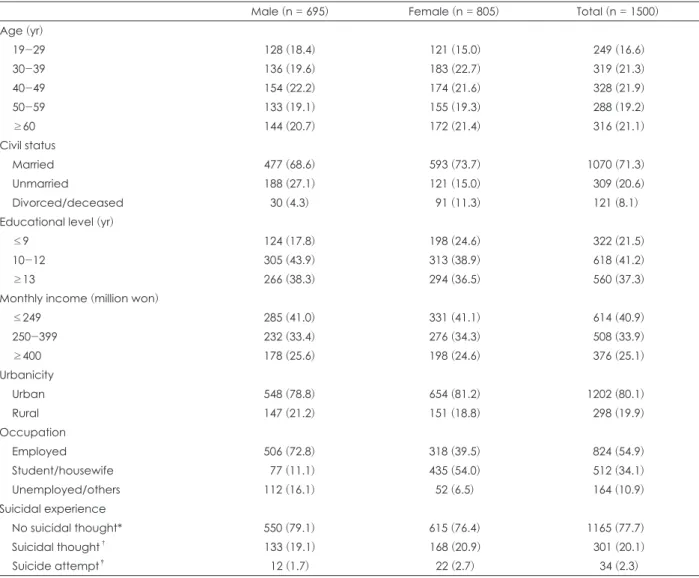
Table 1. Basic characteristics of the subjects
Male (n = 695) Female (n = 805) Total (n = 1500)
Age (yr)
19-29 128 (18.4) 121 (15.0) 249 (16.6)
30-39 136 (19.6) 183 (22.7) 319 (21.3)
40-49 154 (22.2) 174 (21.6) 328 (21.9)
50-59 133 (19.1) 155 (19.3) 288 (19.2)
≥60 144 (20.7) 172 (21.4) 316 (21.1)
Civil status
Married 477 (68.6) 593 (73.7) 1070 (71.3)
Unmarried 188 (27.1) 121 (15.0) 309 (20.6)
Divorced/deceased 30 (4.3) 91 (11.3) 121 (8.1)
Educational level (yr)
≤9 124 (17.8) 198 (24.6) 322 (21.5)
10-12 305 (43.9) 313 (38.9) 618 (41.2)
≥13 266 (38.3) 294 (36.5) 560 (37.3)
Monthly income (million won)
≤249 285 (41.0) 331 (41.1) 614 (40.9)
250-399 232 (33.4) 276 (34.3) 508 (33.9)
≥400 178 (25.6) 198 (24.6) 376 (25.1)
Urbanicity
Urban 548 (78.8) 654 (81.2) 1202 (80.1)
Rural 147 (21.2) 151 (18.8) 298 (19.9)
Occupation
Employed 506 (72.8) 318 (39.5) 824 (54.9)
Student/housewife 77 (11.1) 435 (54.0) 512 (34.1)
Unemployed/others 112 (16.1) 52 (6.5) 164 (10.9)
Suicidal experience
No suicidal thought* 550 (79.1) 615 (76.4) 1165 (77.7)
Suicidal thought† 133 (19.1) 168 (20.9) 301 (20.1)
Suicide attempt‡ 12 (1.7) 22 (2.7) 34 (2.3)
Data are presented as number (%). * : Those who have experienced neither suicidal thought nor suicide attempt, † : Those who have not experienced suicide attempt but suicidal thought, ‡ : Those who have attempted suicide
결
과
연구대상자의 일반적 특성은 표 1과 같다. 1500명의 대상자 중 여성이 53.7%(805명)으로 근소하게 더 많았다. 약 70%의 대상자가 기혼 상태였으며 80.1%가 도시에 거주하고 있었다.
무직이거나 은퇴한 대상자는 남성에서 16.1%, 여성에서 6.5%
로 나타났으며, 전체의 2.3%가 자살시도를 한 적이 있었고 20.1%
는 자살시도를 한 적은 없으나 자살사고를 가진 적이 있다고 답했다.
본 연구에서 ATTS 각 항목별 점수 평균과 표준편차는 표 2 와 같다. 5점 Likert 척도의 평균점수가 가장 높은 항목은 3번
‘대부분의 자살시도는 충동적인 행동이다.’이며 표준편차는 0.86으로 가장 낮은 항목 중 하나였다. 평균점수가 가장 낮은 항목은 34번 ‘사람들은 자신의 생명을 스스로 끊을 권리가 있 다.’이며 표준편차는 1.25이었다. Kaiser-Meyer-Olkin 척도는 0.630으로 계산되었으며 Bartlett의 구형성 검정에서 유의확 률 0.001 미만으로 나와 본 분석에 사용된 표본은 탐색적 요 인분석에 적합하였다. 탐색적 요인분석에 포함될 항목을 선정 하기 위해 시행된 주축 요인분석을 이용한 공통성 점수에서 0.4 미만의 값을 보인 12번(자살한다고 위협하는 사람들이 실 제로 자살을 하는 경우는 드물다.), 25번(사람들을 자살로 내 모는 것은 주로 외로움이다.) 항목을 제외하였다. 또한 제거
시 내적 신뢰도를 0.1 이상 올릴 수 있는 항목들을 추산하여 4번(대부분의 자살시도는 충동적인 행동이다.), 6번(누군가 자 살하겠다는 결심을 한다면 아무도 그 사람을 막을 수 없다.) 항목을 제외하였다. 최종적으로 나머지 33개 ATTS 항목을 대상으로 탐색적 요인분석을 시행하였다. 고유값(eigenvalue) 은 10번에 이르러 1에 다다르나 스크리 도표에선 5번에서 급 격한 기울기의 변화를 보였고, 저자는 분석에 사용된 항목의 수를 고려해서 요인의 수를 5개로 정하였다.
탐색적 요인분석의 결과(표 3) 제1번 요인에는 9개의 항목, 제2번 요인에는 9개의 항목, 제3번 요인에는 5개의 항목, 제4 번 요인에는 5개의 항목, 제5번 요인에는 5개의 항목이 포함 되었다. 36번 항목(만약 내가 심한 불치병으로 괴로워진다면 자살을 할 수 있게 도움을 얻고 싶을 것이다.)은 요인부하량 이 0.3 이상에 해당하는 요인이 없어 0.25 이상을 기준으로 요 인에 배정되었다. 34번 항목(사람들은 자신의 생명을 스스로 끊을 권리가 있다.)은 요인 내 다른 항목들과 다른 방향의 상 관관계를 보여 역채점된 뒤 요인부하량이 결정되었다. 각 요인 축별로 설명된 변량은 6.57~9.63%이었으며 5개 요인축의 설 명된 변량 총합은 41.94%이었다. 각 요인에 속한 항목들의 내 적 신뢰도는 모두 0.5 이상의 값으로 중등도 이상의 신뢰도를 보였다. 각 요인별 이름은 ‘합리적 이유(Good reason)’, ‘부정 적 시선(Negative gaze)’, ‘예측가능성(Predictability)’, ‘탈출 의 수단(Means of escape)’, ‘보편적 비밀(Common secret)’로 하였다. 표 4에는 요인별 평균, 표준편차와 요인 간의 상관관 계를 표시했다. 표 5에는 각 요인에 속하는 항목들의 평균점 수가 성별・연령별 차이를 보이는지 표시하였다. 자살사고와 자살시도력 유무에 따른 요인별 평균의 차이에서는(그림 1) 자살사고자, 자살시도자로 갈수록 ‘합리적 이유’, ‘탈출의 수 단’, ‘보편적 비밀’ 요인에서 비자살사고자에 비해 동의하는 편 이었다. 반면 ‘부정적 시선’, ‘예측가능성’ 요인은 자살사고자와 비자살사고자의 차이는 있었으나 자살시도자와의 점수 차이 는 유의미하지 않았다.
고
찰
본 연구는 2013년 자살실태조사에서 시행된 자살에 대한 국민태도조사의 자료를 바탕으로 ATTS의 탐색적 요인분석 을 시행하였고 총 5개의 요인을 추출했다.
제1요인인 ‘합리적 이유’는 자살에는 이유가 있고, 이유가 있는 자살은 합리적일 수 있다는 의미를 내포하고 있다. 불치 병, 정신질환, 복수심, 친한 사람과의 갈등으로 인해 자살을 시도할 수 있고, 이러한 이유들이 있을 때 자살이 유일한 합 리적 해결책일 수 있다는 것이다. Renberg와 Jacobsson26)의 Table 2. Statistics of the individual ATTS items
Item no. Mean (SD) Item no. Mean (SD)
1 3.523 (1.244) 20 2.837 (1.379)
2 4.174 (1.098) 21 3.233 (1.205)
3 4.500 (0.864) 22 3.360 (1.328)
4 2.116 (1.067) 23 3.895 (1.006)
5 2.442 (1.351) 24 2.081 (1.180)
6 2.930 (1.309) 25 3.616 (1.042)
7 2.663 (1.280) 26 3.756 (1.017)
8 3.221 (1.358) 27 4.000 (1.158)
9 4.023 (1.073) 28 3.919 (0.948)
10 3.430 (1.251) 29 2.802 (1.437)
11 2.965 (1.241) 30 3.523 (1.215)
12 3.605 (1.130) 31 3.570 (1.164)
13 3.779 (1.278) 32 3.547 (1.113)
14 3.256 (1.339) 33 3.919 (0.871)
15 3.140 (1.248) 34 2.058 (1.250)
16 2.221 (1.192) 35 2.640 (1.217)
17 2.942 (1.349) 36 2.640 (1.187)
18 2.337 (1.289) 37 4.070 (0.992)
19 4.267 (1.056)
ATTS was a 5-Likert style questionnaire scored as follows ; ‘strong- ly disagree’ as 1, ‘disagree’ as 2, ‘undecided’ as 3, ‘agree’ as 4, and ‘strongly agree’ as 5. ATTS : Attitudes Toward Suicide, SD : Standard deviation
10요인 모델과 비교했을 때 자살이 대인관계에서 비롯된다 는 8번 Relation-caused 요인과, 자살이 합리적일 수 있다는 10번 Resignation 요인의 항목을 포함하고 있으며, 자살이 권 리일 수 있다는 1번 Suicide as a right 요인과도 일부 겹치고 있다. 이 요인의 내적 신뢰도는 0.740으로 높은 수준의 신뢰도 를 보이며, 총 분산의 9.63%를 설명하여 요인모델 중 가장
많은 분산을 설명하는 요인이다. 60대 이상에서 다른 연령집 단에 비해 본 요인에 동의하는 편이었다.
제2요인인 ‘부정적 시선’은 자살은 가족에게 나쁜 짓을 하 는 것이며, 자살을 이해할 수 없고, 그렇기에 자살을 언급하거 나 해서는 안 된다는 의미를 내포하고 있다. 대체적으로 자살 에 대한 부정적 가치와 연관이 되는 것으로 보인다. 10요인 모
Table 3. Factor structure of Attitudes Toward Suicide 33 items based on 1500 Korean adults
Explained variance (%) Factor loadings Cronbach’s α
Factor 1. Good reason 9.63 0.740
5. Suicide acceptable means to end incurable disease 0.598
7. Attempts due to revenge and punishment 0.539
8. People who commit suicide have mental disorder 0.464
11. Risk to evoke suicidal thoughts if asked about 0.415
16. Situations where suicide is the only solution 0.713
17. Could express suicide wish without meaning it-myself 0.424
18. Suicide a relief 0.680
24. Suicide one’s own business 0.301
35. Attempts due to interpersonal conflicts 0.474
Factor 2. Negative gaze 8.83 0.683
2. Suicide can never be justified 0.577
3. Suicide among the worst thing to do to relatives 0.547
13. Should or would rather not talk about suicide 0.582
19. Suicides among younger people particularily puzzling 0.303
22. Suicide happens without warning 0.307
23. Most people avoid talking about suicide 0.382
26. Suicides basically signal for help 0.354
27. Not understandable that people can take their lives 0.637
34. Right to commit suicide–people* 0.466
Factor 3. Predictability 8.68 0.603
1. Can always help 0.748
9. Duty to restrain a suicidal act 0.730
30. Prepared to help a suicidal person-myself 0.500
33. People who make threats seldom complete suicide 0.463
37. Suicide can be prevented 0.657
Factor 4. Means of escape 8.23 0.727
10. Suicides considered for a long time 0.340
14. Loneliness can be a reason for suicide 0.414
20. Consider suicide if incurable disease–myself 0.531
29. Give help to commit suicide if incurable disease–people 0.676
36. Get help to commit suicide if incurable disease–myself 0.277
Factor 5. Common secret 6.57 0.516
15. Everyone has considered suicide 0.700
21. Suicide decision can’t be reversed 0.462
28. Relatives have no idea about what is going on 0.419
31. Anybody can commit suicide 0.409
32. Suicide understandable if incurable disease–people 0.588
Total explained variance 41.94
* : Reversely scored item. 4th, 6th, 12th and 25th items were excluded in the factor structure because of low communality or ad- verse effect on internal consistency
델과 비교했을 때 자살을 이해할 수 없는 것이라고 보는 2번 Incomprehensibility 요인과, 자살에 대한 부족한 인식을 보 여주는 3번 Noncommunication 요인의 항목을 포괄하고 있 다. 연령이 상승할수록 본 요인에 동의하는 비율이 높아지나 성별에 따른 차이는 보이지 않았다.
제3요인인 ‘예측가능성’은 자살사고를 가진 사람을 도와서 자살을 예방할 수 있으며, 이렇게 도움을 주는 것은 인간의 의무이며 본인이 도울 준비가 되어 있다는 의미를 내포하고 있 다. 10요인 모델과 비교했을 때 자살은 예방 가능하다는 4번 Preventability 요인과, 예방을 할 준비가 되었다는 9번 Pre- paredness to prevent 요인의 항목을 포함하고 있다. 남성이 여성보다 자살을 예측가능하다고 보는 태도가 더 강했다.
제4요인인 ‘탈출의 수단’은 심각하고 치료할 수 없는 질병, 극심한 외로움으로 오랜 기간 고통받을 때 이로부터 탈출하 는 수단으로서 자살이 이뤄지며, 또한 그렇게 이뤄진 자살은 정당할 수 있다는 의미를 내포하고 있다. 자살에 대해 가장 허 용적인 태도를 보여주는 요인축이라고 해석이며, 본 연구의 5 개 요인 중 자살이 일종의 권리일 수 있다는 10요인 모델의 1 번 Suicide as a right 요인의 항목이 가장 많이 포함되었다. 내 적 신뢰도를 나타내는 Cronbach’s α값도 0.727로 제1요인 ‘합 리적 이유’ 다음으로 높은 신뢰도를 보이고 있다. 성별과 연령에
따른 차이는 뚜렷하지 않았다.
마지막 제5요인인 ‘보편적 비밀’은 누구나 자살에 대해서 생 각을 해본 적이 있고 자살을 할 수 있으며, 그러한 생각은 쉽 게 없어지지 않고 겉으로 드러나지도 않는다는 의미를 내포하 고 있다. 더불어 고통받는 타인의 자살을 이해할 수 있다는 태 도도 포함되어 있다. 10요인 모델에서 자살이 보편적이고 흔 하다는 6번 Normal-common의 항목이 포괄되고 있다. 그러 나 설명된 분산과 내적 신뢰도는 요인구조에 속하는 5개 요인 중 가장 낮은 수준을 보이고 있다.
본 연구 결과의 응답자들은 ‘예측가능성’과 ‘부정적 시선’
태도에 동의하는 대답이 많았고, ‘탈출의 수단’과 ‘보편적 비 밀’에는 중립적인 대답을 했다. 또한 ‘합리적 이유’에 대해서는 동의하지 않는 대답이 많았다. 또한 요인별 상관관계를 볼 때
‘예측가능성’과 ‘부정적 시선’의 상관도가 높았고, ‘합리적 이 유’와 ‘보편적 비밀’ 그리고 ‘탈출의 수단’의 상관도가 높게 나 타났다. 이에 대해 전자를 자살에 대한 금지적 태도(prohib- iting attitude), 후자를 허용적 태도(permissive attitude)로 묶 는다면 우리나라 국민들은 평균적으로 자살에 대해 금지적 태도에 동의하며 허용적 태도에는 중립적이거나 동의하지 않 았다. 특히 허용적 태도는 자살사고자, 자살시도자로 갈수록 높은 점수를 보였으나 금지적 태도는 그렇지 않았다. 이러한 Table 4. Statistics of the factors and their correlation
Mean (SD) Factor 1 Factor 2 Factor 3 Factor 4 Factor 5
Factor 1. Good reason 2.589 (0.550) 1 -0.174 -0.159 0.519 0.297
Factor 2. Negative gaze 3.689 (0.520) -0.174 1 0.357 -0.171 -0.041
Factor 3. Predictability 3.718 (0.547) -0.159 0.357 1 -0.010 0.076
Factor 4. Means of escape 3.007 (0.687) 0.519 -0.171 -0.010 1 0.476
Factor 5. Common secret 3.310 (0.548) 0.297 -0.041 0.076 0.476 1
Pearson’s correlation coefficient was shown in the table. Each factor scores were computed as a mean value of the factor items.
34th item of Attitudes Toward Suicide was reversely scored with the other items ; ‘strongly disagree’ as 5 and ‘strongly agree’ as 1.
SD : Standard deviation
Table 5. Comparison among factors : gender and age
Gender (M/F) Age (19-29/30-39/40-49/50-59/60-)
Mean (SD) t p Mean (SD) F p Post hoc
Factor 1.
Good reason
2.588/2.590 (0.551/0.549)
-0.065 0.948 2.545/2.529/2.533/2.649/2.690 (0.497/0.565/0.546/0.561/0.549)
5.786 < 0.001 19-49 < 60-
Factor 2.
Negative gaze
3.689/3.689 (0.512/0.528)
0.007 0.995 3.501/3.661/3.706/3.728/3.812 (0.519/0.492/0.484/0.548/0.518)
13.697 < 0.001 19-29 < 30- 30-39 < 60- Factor 3.
Predictability
3.753/3.688 (0.564/0.530)
2.285 0.022 3.683/3.703/3.771/3.749/3.678 (0.527/0.546/0.535/0.543/0.577)
1.745 0.138
Factor 4.
Means of escape
3.008/3.006 (0.698/0.677)
0.058 0.954 2.973/2.954/3.010/3.049/3.044 (0.619/0.668/0.688/0.737/0.706)
1.134 0.339
Factor 5.
Common secret
3.268/3.345 (0.559/0.536)
-2.706 0.007 3.310/3.293/3.354/3.317/3.273 (0.515/0.572/0.536/0.593/0.517)
0.964 0.426
Comparisons over gender were conducted by independent t test. Comparisons over age groups were conducted by one-way analysis of variance. Bonferroni method was used for post hoc comparisons of age group. In post hoc analysis, the union of ‘19- 29, 30-39, and 40-49’ age groups was described by ‘19-49’. SD : Standard deviation
허용적 태도는 한국보다 자살률이 낮은 이란 쿠르드족보다 높고,29) 일본의 약사와 사회복지사보다 낮았다.11)14) 이는 자살 에 대한 허용적 태도가 자살의도를 증가시키지만 국가 및 지 역별로 그 영향의 정도가 다르다는 기존의 연구결과와 일치한
다.13)20) 또한 나이가 들수록 금지적 태도인 ‘부정적 시선’에 동
의했지만 허용적 태도에 속하는 ‘합리적 이유’의 요인 점수도 올라갔다. 기존 연구에서 한국 노인의 높은 자살률 원인으로 신체적 질병 및 사회경제적 어려움이 영향을 미친다는 점이 지적되었다.30)31) 따라서 사회경제적 및 신체적 역경이 ‘합리적 이유’ 요인과 연관될 가능성이 있으며, 특히 자살에 대해 보수 적 시각을 공유하는 노인층에서 이러한 어려움이 높은 자살 률의 원인으로 작용하는지 설명하는 변수일 수 있겠다. 향후 연구에서는 태도 요인과 사회경제적 혹은 신체적 역경, 그리 고 자살사고와 자살시도가 어떤 연관성을 갖는지 직접적으로 비교해볼 필요가 있다.
탐색적 요인분석에서 요인축을 산출했을 때 각 요인들이 독 립적이며 상관관계가 없다고 가정하는 직각회전 varimax 방 법을 사용하였다. 하지만 산출된 요인구조의 의미론적인 부 분을 고찰해보면 각 요인들이 온전히 독립적이라고 보기는 어 려운 측면들이 있다. 통계적으로도 요인별 점수를 산출하여 상관관계를 비교했을 때(표 4) 서로 간에 상당한 상관관계가 있다. 즉, 요인 간의 상관관계가 있다는 가정하에 이뤄지는 pro- max 방법이 더 적절했을 수도 있겠다. 하지만 ATTS에서 측
정하는 인간의 ‘태도’는 모호하고 예측하기 어려운 특성이 있 고,32) 때문에 요인부하량을 최대화시키는 직각회전 방법이 유 리한 부분도 있겠다. 실제로 본 연구자들이 진행한 사전분석 에서의 결과도 promax에 비해 varimax 방법이 좀 더 고르고 의미가 유사한 항목들이 모여 있는 요인구조를 산출하였다.
본 연구는 국가적 대표성이 있는 1500명 규모의 지역층화 추출 표본을 이용하여 대한민국 성인을 대상으로 ATTS 요인 구조를 분석했다는 점에서 기존의 연구에 비해 높은 일반성 을 갖는다. 또한 전 요인의 내적 신뢰도가 0.5 이상의 값을 가 지는데 이는 국내외 타 연구와 비교했을 때 높은 편이다. 마지 막으로 요인의 수가 5가지로 적절하게 요약되었다는 점은 본 연구의 강점이다. 하지만 표본에서 소아청소년이 제외되었고, 60세 이상의 대상자가 실제 인구비율에 비해서 적게 포함되 었는데, 청소년의 자살은 해마다 늘고 있고 국내 노인층 자살 률이 OECD 1위에 해당한다는 점에서 이들 연령 집단을 충분 히 포괄하지 못한 것은 제한점이라 할 수 있다.1) 또한 확인적 요인분석을 통해 요인구조를 검증해보지 못한 것도 아쉬운 부분이다. 향후 연구에서는 청소년과 노인층을 충분히 포함 한 접근과 함께 확인적 요인분석으로 본 요인구조를 검증해 보는 것이 필요하겠다. 본 연구에서 도출된 요인구조를 바탕 으로 향후 자살에 대한 태도가 자살의 기왕력이나 자살사고 의 유무에 따른 차이, 연도별 자료에 따른 차이, 지역-연령별 실제 자살사망률과의 연관성 등의 연구로 이어져 향후 좀 더 구체적인 자살예방 전략의 기반이 되길 바란다.
본 연구는 지역별 층화추출로 조사된 1500명의 대규모 표 본을 바탕으로 시행된 국내 ATTS 항목에 대한 요인분석 연 구이다. 탐색적 요인분석을 통해 5가지의 요인을 밝혔으며 각 요인은 합리적 이유가 있는 자살, 자살에 대한 부정적 시선, 예방가능한 자살, 탈출의 수단으로서 자살, 보편적 비밀인 자 살의 의미를 내포하고 있다. 본 연구에서 밝혀진 요인구조를 통해 향후 국내외 자살에 대한 태도 연구의 기반이 되길 바 란다.
중심 단어:자살・자살실태조사・요인분석・허용적 태도・
자살에 대한 태도.
Acknowledgments
This study was based on the project ‘2013 National Survey on Sui- cide’ which was supported and funded by the Ministry of Health and Welfare. The author would like to appreciate professor E. S. Renberg for providing the ATTS original text and advice. We also thank to the staff of Hankook Research who was in charge of survey’s field prac- tice, Yunsun Kim MD at Chung-Ang University Hospital, and to all participants of the study.
Conflicts of interest
Yongmin Ahn receives research support from or has served as a
4.5 4.0 3.5 3.0 2.5 2.0
Score
**
** **
****
*** ***
***
***
** *
Factor 1 Good reason
Factor 2 Negative
gaze
Factor 3 Predictability
Factor 4 Means of
escape
Factor 5 Common
secret Suicidal thought (n = 301) Suicidal attempt (n = 34) No suicidal thought (n = 1165)
Fig. 1. Responders in ‘no suicidal thought’ group had no history of suicidal thought or suicide attempt. Those in ‘suicidal thought’ group reported that they had experienced one or more suicidal thought but no suicide attempt. Responders in ‘suicide attempt’ group had one or more history of suicide attempt. One-way analysis of vari- ance and Bonferroni method was used for comparisons. Signifi- cant differences were annotated as * : p < 0.05, ** : p < 0.01, *** : p < 0.001.
speaker for Janssen Korea Ltd., Lundbeck Korea Co., Ltd, and Korea Otsuka Pharmaceutical. The other authors declare no competing in- terests.
Author Contributions
Conceptualization: Minseok Hong, Jong-Ik Park, Sang-Uk Lee, Min- Sup Shin, Yongmin Ahn. Data curation: Jong-Ik Park, Sang-Uk Lee, Yongmin Ahn. Formal analysis: Minseok Hong, Min-Sup Shin. Fund- ing acquisition: Jong-Ik Park, Sang-Uk Lee, Yongmin Ahn. Methodolo- gy: Minseok Hong, Jong-Ik Park, Sang-Uk Lee, Min-Sup Shin, Yong- min Ahn. Project administration: Yongmin Ahn. Software: Minseok Hong, Min-Sup Shin. Supervision: Yongmin Ahn. Validation: Minseok Hong, Jong-Ik Park, Sang-Uk Lee, Min-Sup Shin, Yongmin Ahn. Writ- ing—original draft: Minseok Hong. Writing—review & editing: Min- seok Hong.
ORCID iDs
Yongmin Ahn https://orcid.org/0000-0002-4458-797X Minseok Hong https://orcid.org/0000-0001-6028-8286 REFERENCES
1) Korea Suicide Prevention Center, Ministry of Health and Welfare.
2019 White Book. Seoul: Korea Suicide Prevention Center;2019.
2) OECD.Stat [homepage on the Internet] Paris: Organisation for Eco- nomic Co-operation and Development; [updated 2019 Aug; cited 2019 Aug]. Available from: https://stats.oecd.org/.
3) Hyun KR, Lee SM, Choi KC, Lee SY, Kim JY. Analysis of Socioeco- nomic Costs of Major Disease for Priority Selection of National Health Insurance Policy. Wonju: National Health Insurance Service, Health Insurance Policy Research Institute;2014.
4) Klonsky ED, May AM, Saffer BY. Suicide, suicide attempts, and sui- cidal ideation. Annu Rev Clin Psychol 2016;12:307-330.
5) Ingram E, Ellis JB. Attitudes toward suicidal behavior: a review of the literature. Death Studies 1992;16:31-43.
6) Canetto SS. She died for love and he for glory: gender myths of sui- cidal behavior. Omega (Westport) 1993;26:1-17.
7) Neeleman J, Lewis G. Suicide, religion, and socioeconomic condi- tions. an ecological study in 26 countries, 1990. J Epidemiol Com- munity Health 1999;53:204-210.
8) Domino G. Cross-Cultural Attitudes Towards Suicide: The SOQ and A Personal Odyssey. Arch Suicide Res 2005;9:107-122.
9) Limbacher M, Domino G. Attitudes toward suicide among attempt- ers, contemplators, and nonattempters. Omega (Westport) 1986;16:
325-334.
10) Arnautovska U, Grad OT. Attitudes toward suicide in the adolescent population. Crisis 2010;31:22-29.
11) Kodaka M, Inagaki M, Yamada M. Factors associated with attitudes toward suicide: among Japanese pharmacists participating in the Board Certified Psychiatric Pharmacy Specialist Seminar. Crisis 2013;34:420-427.
12) Lee SU, Jeon M, Park JI. A comparison of attitudes toward suicide among individuals with and without suicidal thoughts and suicide attempts in South Korea. Crisis 2019;40:27-35.
13) Jeon HJ, Park JH, Shim EJ. Permissive attitude toward suicide and future intent in individuals with and without depression: results from a nationwide survey in Korea. J Nerv Ment Dis 2013;201:286-291.
14) Kodaka M, Inagaki M, Poštuvan V, Yamada M. Exploration of fac- tors associated with social worker attitudes toward suicide. Int J Soc Psychiatry 2013;59:452-459.
15) Domino G. Attitudes toward suicide among Mexican American and Anglo youth. Hisp J Behav Sci 1981;3:385-395.
16) Domino G, Takahashi Y. Attitudes toward suicide in Japanese and American medical students. Suicide Life Threat Behav 1991 Winter;
21:345-359.
17) Domino G, Macgregor JC, Hannah MT. Collegiate attitudes toward suicide: New Zealand and United States. Omega (Westport) 1989;19:
351-364.
18) Domino G, Groth M. Attitudes toward suicide: German and US na- tionals. Omega (Westport) 1997;35:309-319.
19) Renberg ES, Hjelmeland H, Koposov R. Building models for the re- lationship between attitudes toward suicide and suicidal behavior:
based on data from general population surveys in Sweden, Norway, and Russia. Suicide Life Threat Behav 2008;38:661-675.
20) Park CHK, Kim B, Lee SS, Ha K, Baek C-J, Shin M-S, et al. A com- parative study of permissive attitudes toward suicide: an analysis of cross-national survey in South Korea, Japan, and the United States.
Korean J Biol Psychiatry 2016;23:157-165.
21) Seoul National University College of Medicine. 2013 National Sur- vey on Suicide. Sejong: Ministry of Health and Welfare;2014.
22) Lee KE. An examination of validity and reliability of the Korean ver- sion of Attitudes Towards Suicide (ATTS) on youth in South Korea [dissertation]. Seoul: The Graduate School of Nursing and Health Profession, Chung-Ang University;2016.
23) Kim Y, Lee SI, Kim H, Lee A, Mun KS, Kim SG, et al. Variables af- fecting to attitudes towards suicide among general adult population in the city of Bucheon. J Korean Neuropsychiatr Assoc 2016;55:376- 24) Park JI, Kim YJ. Factor Structure of Korean Version of Attitudes To-385.
ward Suicide (ATTS-20). Mental Health & Social Work 2014;42:91- 25) Kim B, Jung KJ, Lee SU, Sea J, Kim EY, Kim SH, et al. The Korea Na-113.
tional Suicide Survey (KNSS) : rationale and design. Korean J Biol Psychiatry 2015;22:1-6.
26) Renberg ES, Jacobsson L. Development of a questionnaire on atti- tudes towards suicide (ATTS) and its application in a Swedish pop- ulation. Suicide Life Threat Behav 2003 Spring;33:52-64.
27) Kodaka M, Postuvan V, Inagaki M, Yamada M. A systematic review of scales that measure attitudes toward suicide. Int J Soc Psychiatry 2010;57:338-361.
28) Costello AB, Osborne JW. Best practices in exploratory factor anal- ysis: four recommendations for getting the most from your analysis.
Pract assess res eval 2005;10:1-9.
29) Mofidi N, Ghazinour M, Salander-Renberg E, Richter J. Attitudes towards suicide among Kurdish people in Iran. Soc Psychiatry Psy- chiatr Epidemiol 2008;43:291-298.
30) Shin KM, Cho SM, Hong CH, Park KS, Shin YM, Lim KY, et al. Sui- cide among the elderly and associated factors in South Korea. Aging Ment Health 2013;17:109-114.
31) Lee SC. Socio-economic factors of elderly suicide. Korean Social Se- curity Studies 2010;26:1-19.
32) Myers D, Twenge JM. Behavior and attitudes. In: Myers D, Twenge JM, editors. Social Psychology. 12th ed. New York, NY: McGraw- Hill;2016. p.97-120.