- 712 -
Antibacterial activity of lactic acid bacteria isolated from traditional fermented foods and development of a starter for fermented milk
Jong-Hyuk Park1, Hye-Jung Moon1, Jeon-Hui Oh1, Joo-Hee Lee1, Kyung-Min Choi2, Jeong-Dan Cha2, Tae-Bum Lee3, Min-Jeong Lee3, Hoo-Kil Jung1*
1
Imsil Research Institute of Cheese Science, Imsil 566-881, Korea
2Institute of Jinan Red Ginseng, Jinan 567-801, Korea
3
Gochang Black Raspberry Research Institute, Gochang 585-943, Korea
전통발효식품에서 분리한 유산균의 항균 활성 및 발효유 스타터 개발
박종혁1․문혜정1․오전희1․이주희1․최경민2․차정단2․이태범3․이민정3․정후길1*
1임실치즈과학연구소, 2진안홍삼연구소, 3고창복분자연구소
Abstract
This study was conducted to investigate the antibacterial activity of lactic acid bacteria isolated from traditional fermented foods and to develop a new starter for fermented milk. The isolates were identified using 16S rDNA sequencing and named Lactobacillus plantarum A, Leuconostoc lactis B and L. acidophilus C. The activity of these strains to inhibit the growth of food-borne human pathogens (Escherichia coli NCTC 12923, Salmonella Typhimurium NCTC 12023, Listeria monocytogenes NCTC 11994) was measured using the paper disc method.
All these strains showed strong antibacterial activity against Li. monocytogenes NCTC 11994. The experiment groups were the fermented milks with these strains, and the control group was the fermented milk with the commercial starter (ABT 5). The change of pH, acidity and viable cell counts were measured during their aging time. All the experiment groups showed a significant difference in their aging times compared to the control group. However, the sensory test showed that the experiment groups can be used as useful starters for fermented milk. This result suggests that L. plantarum A, Leu. lactis B and L. acidophilus C have the potential to be developed as new starters for fermented milk.
Key words:fermented milk, lactic acid bacteria, antibacterial activity, fermented food
서 론
1)
발효유는 원유 또는 유가공품을 유산균으로 발효시킨 것으로 정의하고 있으며, 발효유는 완전 식품인 원유에 유 산균 starter를 첨가하여 일정한 온도에서 발효시켜 제조되 며, starter에 사용되는 유산균은 주로 Lactobacillus acidophilus,Bifidobacteria,Streptococcus thermophilus가 있 으며, 대부분이 probiotics에 해당된다(1). Probiotics는 동물 의 장내 미생물의 균형을 개선시킴으로써 유익한 효과를 주는 살아있는 미생물 제제로 주로 유산균이 많이 사용되고 있으며 그 외 Saccharomyces cerevisiae와 같은 효모 및
*Corresponding author. E-mail:[email protected] Phone:82-63-644-2181, Fax:82-63-644-2185
Aspergilllus oryzae와 같은 사상균이 사용되고 있다(2).
Probiotics는 generally recognized as safe(GRAS)로 안전 한 미생물이며, 대부분 사람의 장으로부터 유래되며, 내산 성 및 내담즙성을 가짐으로써 위장관에서 살아남아 숙주의 장내에 정착하여 숙주에게 건강적 효능을 주는 것으로 보고 되어 있다(3,4). Probiotics의 효능으로는 항생제 관련 설사, 병원성 균에 의한 장의 감염, 과민성 대장증후군 같은 위장 관 질환 개선, 아토피 피부염 감소, 고혈압 개선, 혈중 콜레 스테롤 수준 감소 및 혈중 지질상태 개선, 항비만 효과, 대장암과 위암에 대한 항암 효과 등 다양한 기능성에 대한 연구가 진행되고 있다(5-12).
최근 김치, 젓갈 및 장류와 같은 전통발효식품에서 probiotics 기능을 가지는 유산균주의 분리에 대한 연구가
이뤄지고 있으며(12-17), 그 중 발효식품 중에서 유제품의 스타터를 개발하기 위해 젓갈로부터 분리한 유산균L. casei 및L. pentosus를 이용한 요구르트 제조에 관한 연구(18), 갓김치로부터 분리한L. acidophilusGK20 및L. paracasei GK74를 이용한 연구(19)와 Oh와 In(20)은 김치로부터 Leuconostoc mesenteroides KC51을, Lee 등(21)은 L.
plantarumLHC52를 분리하여 각각 대두 발효유와 요구르
트 제조에서의 활용에 관한 연구가 이뤄졌다.
하지만 산업적 활용은 미흡하여 우리나라에서 생산되는 발효유의 대부분은 덴마크, 미국 및 일본에서 수입되는 상 업적 starter를 주로 사용하고 있어 독자적인 발효유 스타터 개발이 시급한 실정이다. 따라서, 본 연구에서는 수입되는 발효유 starter를 대체하기 위해 전통발효식품으로부터 유 산균을 분리 및 동정하여 이를 이용한 유산균주의 발효유 적합성 및 probiotics로서의 가능성을 확인하여 향후 발효유 의 starter 개발을 위한 기초자료로 사용하고자 한다.
재료 및 방법
재 료
유산균 분리를 위하여 배추김치는 전라북도 지역의 가정 에서 담근 김치를 사용하였으며, 젓갈류(새우젓) 및 장류 (고추장 및 청국장)는 각각 충청남도(광천)와 전라북도(순 창)에서 제조된 비살균 시판제품을 구입하여 실험에 사용 하였다. 발효유 제조에 사용된 원유는 임실지역 낙농가에 서 착유하여 사용하였으며, 대조구로 사용될 상업용 균주 는 Chr. Hansen사(Hørsholm, Denmark)의 ABT-5(L.
acidophilus, Bifidobacteria, Streptococcus thermophilus)를 사용하였다. 환원 탈지유는 서울우유(Seoul Milk Co., Ltd., Seoul, Korea)에서 생산된 제품을 구입하여 사용하였다.
유산균 분리 및 배양
각 시료 25 g과 멸균생리식염수 225 mL를 sterile filter bag에 넣고 Stomacher(Easy Mix, AES Chemunex, Bruz, France)를 이용하여 혼합하였다. 여기서 액상부분 1 mL를 취하여 십진 희석법으로 희석한 후 100 μL를 취해 1 N HCl을 이용하여 pH를 2.5로 조정한 MRS agar(Lactobacilli MRS agar, Difco, Detroit, MI, USA)에 도말하여 37℃에서 24시간 배양하였다. 각 시료별 배지에서 투명환을 나타내 는 단일 colony를 1차 분리하였다. 1차 분리된 균주들을 BCP agar(Eiken chemical Co., Ltd., Shimotsuga, Japan)에 획선평판법으로 접종한 후 37℃에서 24시간 배양하여 노란 색을 보이는 colony를 2차 분리하였다. 김치로부터 5종, 젓 갈에서 1종, 장류에서 5종이 분리되었으며, 이를 MRS agar 에 접종하여 37℃에서 24∼72시간 배양 후 4℃로 냉장 보관 하면서 사용하였다.
내산성 및 내담즙성 측정
내산성 측정은 Kobayashi 등(22)의 방법을 변형하여 1 N HCl를 사용하여 pH 2.5로 조정한 MRS broth(Difco)를 사용하였다. 분리된 유산균을 MRS broth에서 37℃로 24시 간 배양한 후 4,000 rpm에서 15분간 원심분리 후 상등액을 버리고 균을 회수하였다. pH를 조정한 MRS broth 10 mL에 회수한 균 1%를 접종하여, 37℃에서 2시간 배양한 후 생균 수를 측정하였다.
내담즙성은 Kang 등(23)의 방법을 변형하여 내산성과 동일한 방법으로 수행하되, Bacto oxgall(Difco)을 0.3%(w/v)를 가한 MRS broth를 사용하였으며, 37℃에서 4시간 배양한 후 생균수를 측정하였다. 위산과 담즙산에 대한 생존율은 위산 및 담즙산을 처리하기 전과 후의 생균 수를 비교하였다.
항균 활성 측정
37℃에서 24시간 배양된 병원성 미생물(Escherichia coli NCTC 12923, Salmonella Typhimurium NCTC 12023, Listeria monocytogenesNCTC 11994)을 면봉으로 Nutrient agar(Difco)에 도말하였다. 도말된 평판배지에 직경 10 mm 의 paper disc를 놓고 37℃ MRS broth에서 24시간 배양된 분리균을 각각 40 μL씩 일정하게 가한다. 37℃에서 24시간 배양한 후 disc 주위의 생육저지환 생성 여부를 확인하였다.
분리 균주의 동정
분리균은 16S rRNA 결정법으로 동정하였으며, 염기서 열 분석회사인 (주)Macrogen(Daejeon, Korea)에 의뢰하여 수행하였다. 균의 16S rRNA를 universal primer인 27F (5'-AGAGTTTGATCMTGGCTCAG-3')와 1492R(5'-TACGG- YTACCTTGTTACGACTT-3') primer를 사용하여 PCR(DNA engine tetrad 2 peltier thermal cycler, Bio-rad lab., Hercules, CA, USA)을 수행하여 증폭시켰다. PCR 산물은 BigDye Terminator v3.1 cycle sequencing kit(Applied Biosystems, Lennik, Belgium)를 이용하여 ABI Prism 3730XL analyzer(Applied Biosystems, Lennik, Belgium)로 염기서열을 분석하였다. 그 결과는 NCBI BLASTN 프로그 램(http://blast.ncbi.nlm.nih.gov/Blast.cgi)을 사용하여 유산 균을 동정하였다.
분리 균주를 이용한 요구르트 제조
MRS broth에 2회 계대배양한 선별 균주를 10%(w/v) 환 원탈지유에 1%(v/v) 접종하여 108CFU/mL 이상으로 배양 한 후 4℃로 냉장보관하며 사용하였다. 대조군은 상업용 균주인 ABT-5를 똑같은 방법으로 배양하여 발효유 제조용 starter로 사용하였다. 원유에 정백당을 5.5%(w/v)로 첨가하 여 90℃에서 10분간 혼합, 살균하였다. 그 후 starter를 접종 하였으며, 선별 균주의 경우 각각 2%(v/v)씩 접종하고 40℃
에서 6시간 배양하여 제조하였다.
pH 및 적정산도 측정
pH는 pH meter(UB-10, Denver Instrument Co., Ltd., Arvada, CO, USA)를 이용하여 2시간 간격으로 6시간까지 변화를 측정하였다. 적정산도는 시료 10 mL에 증류수 10 mL를 혼합하여 현탁액을 만든 후 0.1 N NaOH로 pH 8.3까 지 적정시키고, NaOH의 소비량에 유산의 환산계수인 0.9 를 곱한 후 시료의 무게(g)를 나누어 나타낸 값을 적정산도 (%)로 하였다. 발효 중 적정산도는 2시간 간격으로 6시간까 지 경시적인 변화를 측정하였다.
유산균수 측정
발효유의 발효 중 유산균수의 변화는 2시간 간격으로 시료 1 mL를 채취하여 멸균식염수에 십진 희석법으로 희석 한 뒤 BCP 한천배지를 이용하여 평판배양법으로 37℃에서 48시간 배양하였다. 그 후 나타난 노란색 colony 수를 측정 하여 log CFU(colony forming unit)/mL로 나타내었다.
발효유의 관능검사
발효유의 pH가 4.7에 도달하였을 때 4℃에서 24시간 냉 각하여 시료로 사용하였으며, 관능검사요원 15명을 대상으 로 색(color), 향(flavor), 맛(taste), 조직감(texture) 및 전반적
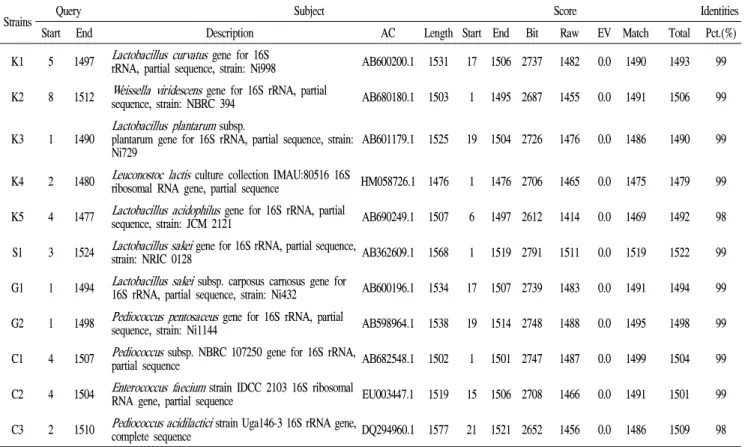
Table 1. Results of 16S rRNA sequencing of isolates from fermented food
Strains Query Subject Score Identities
Start End Description AC Length Start End Bit Raw EV Match Total Pct.(%)
K1 5 1497 Lactobacillus curvatusgene for 16S
rRNA, partial sequence, strain: Ni998 AB600200.1 1531 17 1506 2737 1482 0.0 1490 1493 99 K2 8 1512 Weissella viridescensgene for 16S rRNA, partial
sequence, strain: NBRC 394 AB680180.1 1503 1 1495 2687 1455 0.0 1491 1506 99 K3 1 1490 Lactobacillus plantarumsubsp.
plantarum gene for 16S rRNA, partial sequence, strain:
Ni729 AB601179.1 1525 19 1504 2726 1476 0.0 1486 1490 99
K4 2 1480 Leuconostoc lactisculture collection IMAU:80516 16S
ribosomal RNA gene, partial sequence HM058726.1 1476 1 1476 2706 1465 0.0 1475 1479 99 K5 4 1477 Lactobacillus acidophilusgene for 16S rRNA, partial
sequence, strain: JCM 2121 AB690249.1 1507 6 1497 2612 1414 0.0 1469 1492 98 S1 3 1524 Lactobacillus sakeigene for 16S rRNA, partial sequence,
strain: NRIC 0128 AB362609.1 1568 1 1519 2791 1511 0.0 1519 1522 99
G1 1 1494 Lactobacillus sakei subsp. carposus carnosus gene for
16S rRNA, partial sequence, strain: Ni432 AB600196.1 1534 17 1507 2739 1483 0.0 1491 1494 99 G2 1 1498 Pediococcus pentosaceusgene for 16S rRNA, partial
sequence, strain: Ni1144 AB598964.1 1538 19 1514 2748 1488 0.0 1495 1498 99 C1 4 1507 Pediococcussubsp. NBRC 107250 gene for 16S rRNA,
partial sequence AB682548.1 1502 1 1501 2747 1487 0.0 1499 1504 99
C2 4 1504 Enterococcus faeciumstrain IDCC 2103 16S ribosomal
RNA gene, partial sequence EU003447.1 1519 15 1506 2708 1466 0.0 1491 1501 99 C3 2 1510 Pediococcus acidilacticistrain Uga146-3 16S rRNA gene,
complete sequence DQ294960.1 1577 21 1521 2652 1456 0.0 1486 1509 98
인 기호도(overall acceptability)를 5점 척도법으로 평가하도 록 하였다.
결과 및 고찰
스타터 제조를 위한 유산균 분리 및 동정
발효유 제조를 위한 유산균주의 분리원은 배추김치, 젓
Fig. 1. Changes of pH during the fermentation of milk by isolated strains.
C; Fermented milk by ABT 5, LP-A; Fermented milk byLactobacillus plantarumA, LL-B; Fermented milk byLeuconostoc lactisB, LA-C; Fermented milk byLactobacillus acidophilus C.
갈 및 장류를 사용하였으며, pH를 2.5로 조정한 MRS agar를 이용하여 총 11종의 유산균주를 분리하였다(Table 1). 11종 의 유산균주는 김치에서 분리한 L. curvatus, Weissella viridescens, L. plantarum, Leu. lactis및L. acidophilus5종, 새우젓에서L. sakeisubsp. 1종, 고추장에서L. sakeisubsp.
및Pediococcus pentosaceus 2종, 청국장에서Ped. subsp., Enterococcus faecium 및 Ped. acidilactici 3종으로 16S rDNA의 염기서열을 표준 균주와 비교하여 작성한 계통수 결과 각각의 균주는 표준균주와 모두 97% 이상 일치하였다 (Table 1). Kwon 등(24)은 김치에는 30종 이상의 유산균종 이 있으며 그 중 우점종으로L. plantarum, L. brevis, Ent.
faecalis, Leu. mesenteroides으로 보고하였다. 젓갈류에는 Lactobacillus 속의 유산균주(25), 장류인 간장의 경우에는
Pediococcus 속의 유산균주가 분리 동정된다고 보고되어
있으며(26) 본 연구의 결과에서도 이와 유사한 유산균주가 분리됨을 확인하였다.
분리된 유산균의 내산성 및 내담즙성
분리된 유산균이 probiotics 및 발효유 starter가 되기 위한 필수조건으로 위장관 상부의 산성 조건 및 담즙이 존재하는 환경에서 생존되어야 장내에 부착되어 기능성을 나타낸다 고 보고되어 있다(27). 유산균주의 내산성 및 내담즙성을 확인한 결과(Table 2, 3) 내산성은Leu. lactis가 99%로 가장 높았으며, 그 다음으로L. acidophilus, Ped. acidilactici, L.
plantarum, 및 Ent. faecium이 각각 96, 95, 94, 및 92%로 Table 2. Survival rate of isolated strains after 2 hr in MRS broth (pH 2.5)
Strains Before incubation
(log CFU/mL) After incubation
(log CFU/mL) Survival rate (%)
pH 7.0 pH 2.5
K11) 7.4 3.7 50
K22) 4.7 3.5 74
K33) 8.2 7.7 94
K44) 7.9 7.8 99
K55) 8.4 8.1 96
S16) 7.6 6.7 87
G17) 8.8 5.7 64
G28) 7.0 5.8 83
C19) 7.6 6.7 88
C210) 7.7 7.1 92
C311) 7.7 7.4 95
1)Lactobacillus curvatusisolated from Kimchi; 2)Weissella viridescensisolated from Kimchi;3)Lactobacillus plantarumisolated from Kimchi;4)Leuconostoc lactisisolated from Kimchi;5)Lactobacillus acidophilusisolated from Kimchi; 6)Lactobacillus sakei subsp. isolated from salt-fermented shrimp;7)Lactobacillus sakeisubsp. isolated from Gochujang;8)Pediococcus pentosaceusisolated fromGochujang;9)Pediococcussubsp.
isolated fromCheonggukjang;10)Enterococcus faeciumisolated fromCheonggukjang;
11)Pediococcus acidilacticiisolated fromCheonggukjang.
Fig. 2. Changes of titratable acidity during the fermentation of milk by isolated strains.
C; Fermented milk by ABT 5, LP-A; Fermented milk byLactobacillus plantarumA, LL-B; Fermented milk byLeuconostoc lactisB, LA-C; Fermented milk byLactobacillus acidophilus C.
높게 나타났다. 내담즙성은Weissella viridescens를 제외하 고 모두 90% 이상의 내담즙성을 확인하였다(Table 3). Kang 등(28)은 발효식품에서 분리한 유산균의 내산성 및 내담즙 성을 분석한 결과 내담즙성은 높지만 내산성이 낮은 것으로 보고되고 있으며, 본 연구의 결과에서도 분리된 유산균주 의 대부분은 내담즙성은 높지만 내산성이 우수한 유산균주 로는 김치에서 분리한 L. plantarum, Leu. lactis 및 L.
acidophilus유산균주 3종 뿐이었다. 따라서 본 연구의 발효 Table 3. Survival rate of isolated strains after 4 hr in MRS broth containing 0.3% oxgall
Strains Before
incubation (log CFU/mL)
After incubation (log CFU/mL)
Survival rate (%)
K11) 7.4 7.2 98
K22) 4.7 4.1 87
K33) 8.2 8.1 98
K44) 7.9 7.6 97
K55) 8.4 8.3 98
S16) 7.6 7.1 93
G17) 8.8 8.0 90
G28) 7.0 6.4 91
C19) 7.6 7.4 96
C210) 7.7 7.1 92
C311) 7.7 7.4 97
1)Lactobacillus curvatus isolated from Kimchi;2)Weissella viridescensisolated from Kimchi;3)Lactobacillus plantarumisolated from Kimchi;4)Leuconostoc lactisisolated from Kimchi;5)Lactobacillus acidophilusisolated from Kimchi;6)Lactobacillus sakei subsp. isolated from salt-fermented shrimp;7)Lactobacillus sakeisubsp. isolated from Gochujang;8)Pediococcus pentosaceusisolated fromGochujang;9)Pediococcussubsp.
isolated fromCheonggukjang;10)Enterococcus faeciumisolated fromCheonggukjang;
11)Pediococcus acidilactici isolated fromCheonggukjang.
유 스타터 개발을 위한 유산균주로L. plantarum, Leu. lactis 및 L. acidophilus를 선정하였으며, 각각 L. plantarum A, Leu. lactis B 및 L. acidophilus C로 명명하였다.
선택된 유산균의 항균 활성
선택된 유산균주 L. plantarum A, Leu. lactis B 및 L.
acidophilusC의 항균 활성을 측정하기 위하여 각각의 유산
균주는 1.0×10⁸CFU/mL를 사용하여 병원성 미생물E. coli NCTC 12923, Sal. Typhimurium NCTC 12023, Li.
monocytogenes NCTC 11994에 대한 항균 활성을 조사하였 다(Fig. 3). 병원성 미생물Li. monocytogenesNCTC 11994에 대해 L. plantarumA,Leu. lactis B 및L. acidophilus C는 각각 20.1 mm 이상의 저해환을 보였고,Sal.Typhimurium NCTC 12023 및 E. coli NCTC 12923에 대해서는 L.
plantarumA가 각각 10 mm 이하의 저해환을 보였고,Leu.
lactisB 및L. acidophilusC는 저해환이 생성되지 않았다.
Kaur 등(29)은 유산균은 유기산, H2O2 등의 과산화물질, 박테리오신 등의 2차 대사산물이 유해한 균 특히 병원성 미생물을 저해한다고 보고하고 있으며, 김치의 발효과정 중 발효초기에는Aeromonas속,Erwinia속, Bacillus속 등이 검출되지만 발효 중반 이후에는 유산균만이 검출되며, 본 실험에서 사용된 배추김치는 저장 30일째의 김치로 Li.
monocytogenes에 대한 항균 활성이 우수한 유산균주가 분
리된 것으로 사료된다. Lee와 No(30)는 김치 유래 유산균이 E. coli, Salmonella subsp, Li. monocytogenes의 성장을 억제 한다고 하였으며, 본 실험에 있어서도 일부 이와 유사한 결과를 나타내었으며, 특히 병원성 미생물 중 Li.
monocytogenes의 성장 저해율이 높아 발효유제품 뿐만 아
니라 식품 및 축산식품의 병원성 미생물 억제제로 이용 가능성이 높은 것으로 생각된다.
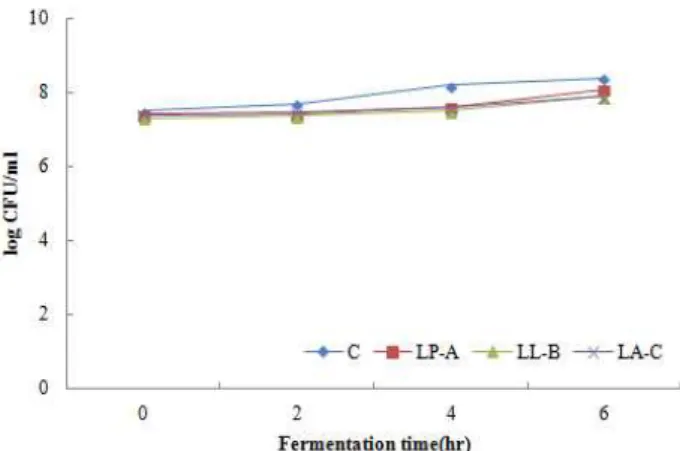
Fig. 3. Changes of viable cell counts during the fermentation of milk by isolated strains.
C; Fermented milk by ABT 5, LP-A; Fermented milk byLactobacillus plantarumA, LL-B; Fermented milk byLeuconostoc lactisB, LA-C; Fermented milk byLactobacillus acidophilus C.
Table 4. Antimicrobial activities of selected strains against food-borne pathogens
Indicator stain Activity
LP-A1) LL-B1) LA-C1) E. coliNCTC 12923 +2) + - Sal. typhimuriumNCTC 12023 + - - Li. monocytogenesNCTC 11994 +++ +++ +++
1)LP-A;Lactobacillus plantarumA, LL-B;Leuconostoc lactisB, LA-C;Lactobacillus acidophilus C
2)Degree of clarity of clear zone by growth inhibition: -; none, +; below 10 mm, ++; 10.1~20 mm, +++; above 20.1 mm
선택된 유산균주에 따른 발효유의 이화학적 특성
선택된 유산균주 L. plantarum A, Leu. lactis B 및 L.
acidophilusC를 단독으로 이용하여 발효유를 제조하였으
며, 대조구는 상업적 균주 ABT 5를 사용하여 비교하였다.
모든 실험구의 지방, 단백질, 유당 및 총고형분 함량은 각각 4.3∼4.8, 3.2∼3.5, 4.0∼4.2 및 18.0∼18.5%로 유의적인 차 이는 없었다(data not shown). 선택된 유산균주 및 상업적 스타터를 이용한 발효유의 pH의 변화를 측정한 결과 L.
plantarumA,Leu. lactisB 및L. acidophilusC는 각각 배양 6시간 이내에 pH가 4.6으로 도달하였으며, 상업적 스타터 에 비해 배양 시간이 1∼2시간 정도 더 걸린 것으로 나타났 다. 상업적 스타터인 ABT 5는L. acidophilus, Bifidobacteria, Streptococcus thermophilus3종의 유산균이 혼합배양 되어 있어 본 연구에서 사용된 단일 균주에 비해서는 빠르게 산을 생성하는 것으로 사료된다. 단독 유산균주를 사용할 경우 Lee 등(31)은L. plantarum을 이용한 발효유 제조시 pH가 상업적 스타터에 비해 유의하게 낮게 측정되었다고 보고하였으며, 이는 L. plantarum 단독으로 사용한 것이 아니라 상업적 균주 ST-B01(St. thermophilus, Chr. Hansen, Denmark)와 LH-B02(L. helveticus, Chr. Hansen, Denmark) 을 1:1:1로 사용하여 본 연구와는 상의한 결과를 나타내었 다. 또한L. plantarum으로 발효유를 제조 시 단독으로 사용 할 경우 pH를 4.08∼4.30 까지 낮춘다는 연구보고와 다르게 나타났으며, 이는 본 연구에서 분리된 유산균주의 특성에 기인된 것으로 보인다. 하지만 단일균주로 스타터를 제조 시 적정 pH에 도달하지 못하면 스타터로 이용 가능성이 낮은데 비해 본 연구에서 분리해 낸 3종의 유산균은 모두 6시간 이내로 목표 pH에 도달하여 발효유의 스타터로 사용 가능성이 높은 것으로 사료된다. 산도의 변화는 모든 실험 구에서 배양시간이 증가할수록 산도는 증가하였으며, 유산 균의 변화는L. plantarumA,Leu. lactisB 및L. acidophilus C를 첨가하여 제조한 발효유는 각각 배양 2시간까지는 변 화가 없다가 배양 6시간 때 각각 1.3×10⁸, 7.9×10⁷및 7.9×10⁷ CFU/mL로 증가하였고, 상업적 스타터 ABT 5를 사용한 발효유는 배양초기부터 증가하여 배양 6시간째 2.5×10⁸ CFU/mL로 증가하였다. L. plantarum A, Leu. lactis B 및
L. acidophilus C를 단독으로 첨가하였을 경우 상업적 스타 터인 ABT 5에 비해 낮은 증가율을 보이고 있으나 상업적 스타터의 경우는 원유를 주성분으로 하여 ABT 5에 속하는 유산균이 잘 자랄 수 있도록 조정이 된 것으로 본 연구에서 사용되는 유산균은 김치에서 분리된 유산균을 적용함으로 서 상업적 스타터와는 배양시간의 차이가 생긴 것으로 사료 된다. 따라서 본 연구에서 선택된 유산균주 3종은 발효유제 조를 위한 스타터로서의 내산성, 내담즙성 및 발효유 제조 시 이화학적 특성이 우수하며 스타터로 이용 가능이 적합하 리라 판단된다.
선택된 유산균주에 따른 발효유의 관능검사
선택된 유산균주 L. plantarum A, Leu. lactis B 및 L.
acidophilusC를 이용하여 제조한 발효유의 관능적 특성은
Table 5에 나타내었다. 대조구로는 ABT 5를 이용하여 색, 향기, 조직감, 맛 및 전체적인 기호도를 5점 척도법으로 실시하였으며, 대조구는 각각 4.5, 4.5, 4.8, 4.5 및 4.5 로 나타났다.L. plantarumA는 각각 4.0, 3.8, 4.0, 4.0 및 4.2로, Leu. lactis B는 4.1, 4.0, 3.9, 3.8 및 3.9로, L. acidophilus C는 4.0, 4.2, 4.2, 4.0 및 4.2로 나타났다. 관능검사 결과 대조구에 비해 색, 향기, 조직감 및 전체적인 기호도는 유의 하게 낮게 측정되었으며, Lee 등(31)은 풍미 및 기타 관능적 특성 저하가 일어난다고 보고하였다. 본 연구는 선택된 유 산균주 3종을 발효유 제조 시 스타터로 사용하기 위한 기초 연구로 본 연구에 사용된 유산균주가 김치에서 분리된 단일 균주임을 감안하면 색, 향기, 조직감, 맛 및 전체적인 기호도 가 상업적 스타터를 사용한 대조구 대비 80% 이상으로 발효유의 스타터로 이용 가능성이 높은 것으로 보여지며 추후 관능적 특성을 높이기 위한 복합균주에 대한 연구가 추가적으로 필요할 것으로 판단된다. 또한 Dedios 등(32)은 발효유 제조에 있어 유산균의 장내 정착이 병원성 미생물의 증식 억제와 장내 세균총에 있어서 중요한 작용을 하므로 기능성이 증진된다고 보고하였고, 향후 동물실험 모델을 통한 L. plantarumA,Leu. lactis B 및L. acidophilusC의 장내세균 변화 등의 기능성 연구가 추가적으로 필요할 것으 로 생각된다.
Table 5. Sensory characteristics of the fermented milk (n=15)
Items C1) LP-A LL-B LA-C
Color 4.5±0.392) 4.0±0.46 4.1±0.72 4.0±0.31 Flavor 4.5±0.46 3.8±0.73 4.0±0.31 4.2±0.64 Texture 4.8±0.73 4.0±0.31 3.9±0.25 4.2±0.61 Taste 4.5±0.37 4.0±0.67 3.8±0.77 4.0±0.31 Overall acceptability 4.5±0.37 4.2±0.51 3.9±0.35 4.2±0.63
1)C; Fermented milk by ABT 5, LP-A; Fermented milk byLactobacillus plantarum A, LL-B; Fermented milk by Leuconostoc lactis B, LA-C; Fermented milk by Lactobacillus acidophilus C
2)Mean±SD
요 약
본 연구에서는 수입되는 발효유 starter를 대체하기 위해 전통발효식품으로부터 유산균을 분리 및 동정하여 이를 이용한 유산균주의 발효유 적합성 및 probiotics로서의 가능 성을 확인하기 위한 기초자료로 사용하고자 실시하였다.
전통발효식품 배추김치, 젓갈 및 장류에서 분리해 낸 유산 균주는 11종이며, 이 중 내산성 및 내담즙성이 우수한L.
plantarumA,Leu. lactis B 및L. acidophilusC를 선택하여 항균활성 및 발효유제조 적용연구를 실시하였다. 3종의 균 종에 대한 항균활성은 병원성 미생물인Li. monocytogenes NCTC 11994에 대해서 높은 항균활성을 보였다. 항균활성 이 있는 3종의 유산균주를 사용하여 발효유를 제조한 결과 대조구인 ABT 5보다는 미생물학적 및 이화학적 변화가 유의적으로 차이는 났으나 관능검사 결과 색, 향기, 조직감, 맛 및 전체적인 기호도가 대조구 대비 80% 이상으로 단독 균주임을 감안하면 우수한 관능적 특성을 가지고 있고, 추 후 관능적 특성을 높이기 위한 복합균주에 대한 연구가 추가적으로 진행된다면 발효유 스타터로서의 이용 가능성 이 높을 것으로 판단된다.
감사의 글
본 연구는 산업통상자원부 지역특화융복합연구지원사 업의 지원에 의하여 이루어진 것으로 이에 감사드립니다.
References
1. Leroy F, De Vuyst L (2004) Lactic acid bacteria as functional starter cultures for the food fermentation industry. Trends Food Sci Technol, 15, 67-78 2. Fuller R (1989) Probiotics in man and animals. J Appl
Bacteriol 66, 365-378
3. Collins JK, Thornton G, Sullivan GO (1998) Selection of probiotic strains for human applications. Int Dairy J, 8, 487-490
4. Otero MC, Ocaña VS, Elena Nader-Macías M (2004) Bacterial surface characteristics applied to selection of probiotic microorganisms. Methods Mol Biol, 268, 435-440
5. Marteau PR, de Vrese M, Cellier CJ, Schrezenmeir J (2001) Protection from gastrointestinal diseases with the use of probiotics. Am J Clin Nutr, 73, 430S-436S 6. Kim JY, Park BK, Park HJ, Park YH, Kim BO, Pyo
S (2013) Atopic dermatitis-mitigating effects of new
Lactobacillus strain, Lactobacillus sakei probioics 65 isolated from Kimchi. J Appl Microbiol, 1-10 7. Aihara K, Kajimoto O, Hirata H, Takahashi R, Nakamura
Y (2005) Effect of powdered fermented milk with Lactobacillus helveticus on subjects with high-normal blood pressure or mild hypertension. J Am Coll Nutr, 24, 257-265
8. Ataie-Jafari A, Larijani B, Alavi Majd H, Tahbaz F (2009) Cholesterol-lowering effect of probiotic yogurt in comparison with ordinary yogurt in mildly to moderately hypercholesterolemic subjects. Ann Nutr Metab, 54, 22-27
9. Ooi LG, Liong MT (2010) Cholesterol-lowering effects of probiotics and prebiotics: a review of in vivoandin vitro findings. Int J Mol Sci, 11, 2499-2522
10. Kang JH, Yun SI, Park MH, Park JH, Jeong SY, Park HO (2013) Anti-obesity effect of Lactobacillus gasseri BNR17 in high-sucrose diet-induced obese mice. PLoS One, 8, 54617
11. Gianotti L, Morelli L, Galbiati F, Rocchetti S, Coppola S, Beneduce A, Gilardini C, Zonenschain D, Nespoli A, Braga M (2010) A randomized double-blind trial on perioperative administration of probiotics in colorectal cancer patients. World J Gastroenterol, 16, 167-175 12. Hwang JW, Baek YM, Yang KE, Yoo HS, Cho CK,
Lee YW, Park J, Eom CY, Lee ZW, Choi JS, Jang IS (2013) Lactobacillus caseiextract induces apoptosis in gastric cancer by inhibiting NF-κB and mTOR-mediated signaling. Integr Cancer Ther, 12, 165-173
13. Chang JH, Shim YY, Cha SK, Chee KM (2010) Probiotic characteristics of lactic acid bacteria isolated from kimchi.
J Appl Microbiol, 109, 220-230
14. Kim SY, Kim JD, Son JS, Lee SK, Park KJ, Park MS (2011) Biochemical and molecular identification of antibacterial lactic acid bacteria isolated from Kimchi.
Korean J Food Sci Technol, 43, 446-452
15. Jeon CP, Kim YH, Lee JB, Jo MS, Shin KS, Choi CS, Kwon GS (2010) Physiological characteristics and angiotensin converting enzyme inhibitory activity of Lactobacillus brevis HLJ59 isolated from salted shrimp.
Korean J Microbiol, 46, 9-14
16. Kim SJ, Ma SJ, Kim HL (2005) Properties of lactic acid bacteria and yeasts isolated from Korean traditional food, Jeot-gal. Korean J Food Preserv, 12, 184-189 17. Choi YH, Lee JS, Bae SY, Yang KJ, Yeom KW, Jo
DH, Kang OH, Baik HS (2013) Isolation of bacteria with protease activity from Cheonggukjang and purification
of fibrinolytic enzyme. J Life Sci, 23, 259-266 18. Kim JH, Rhee YH, Na HJ, Lee YK, Shin SY (1997)
Physico-chemical characteristics of yogurt by Lactobacillus sp. from pickles. Agric Chem Biotechnol, 40, 12-17
19. Lim SM (2012) Synbiotic potential of yoghurt manufactured with probiotic lactic acid bacteria isolated from mustard leaf Kimchi and prebiotic fructooligosaccharide. Korean J Microbiol Biotechnol, 40, 226-236
20. Oh NS, In MJ (2008) Production of a fermented soymilk using a new strain Leuconostoc mesenteroides KC51 isolated from Kimchi. J Korean Soc Appl Biol Chem, 51, 88-91
21. Lee SG, Han KS, Jeong SG, Oh MH, Jang A, Kim DH, Bae IH, Ham JS (2010) A study on the sensory characteristic of yogurt and antimicrobial activity of Lactobacillus plantarumLHC52 isolated from Kimchi.
Korean J Food Sci Ani Resour, 30, 328-335
22. Kobayashi Y, Tohyama K, Terashima (1974) Tolerance of the multiple antibiotic resistant strains,L. caseiPSR 3002, to artificial digestive fluids. Jpn J Microbiol, 29, 691-697
23. Kang M, Kim D, Kim TW, Park SH, Kim HJ, Jang JY, Han ES (2012) Selection of probiotic bacteria from Yulmoo Kimchiusing a stimulated human intestinal model system. J Korean Soc Food Sci Nutr, 41, 396-401 24. Kwon MS, Ryoo CR, Kang CH, Min KH, Kim WJ (2002)
Bacteriocin produced byPediococcus sp. in kimchi and its characteristics. J Microbiol Biotech, 12, 96-105 25. Jeun JH, Kim HD, Lee HS, Ryu BH (2004) Isolation
and identification of Lactobacillus sp. produced Aminobutyric acid (GABA) from traditional salt fermented anchovy. Korean J Food Nutr, 17, 72-79 26. Jung YS (1963) Microbiological studies of soysauce:
identification and isolation of bacteria from traditional soysauce. Korean J Microbiol, 1, 30-35
27. Ouwehand AC, Kirjavainen PV, Shortt C. Salminen S (1999) Probiotics; mechanisms and established effects.
Int Dairy J, 9, 43-52
28. Kang HK, Liu WL, Lee HH, Yin J, Kim IC (2013) Biological and functional characteristics of lactic acid bacteria in different kimchi. J Korean Soc Food Sci Nutr, 89-95
29. Kaur IP, Chopra K, Saini A (2002) Probiotics; potential pharmaceutical applications. Eur J Pharm Sci, 15, 1-9 30. Lee SH, No MJ (1997) Viability in arti-ficial gastric and bile juice and antimicrobial activity of some lactic acid
bacteria isolated from Kimchi. Korean J Appl Microbiol Biotecnol, 25, 617-622
31. Lee SG, Lee YJ, Kim MK, Han K, Jeong SG, Oh MH, Aera J, Kim DH, Bae IH, Ham JS (2010) A study on the yogurt manufacture suitability and antimicrobial
activity ofLactobacillus plantarumLHB55 isolated from Kimchi. J Anim Sci Technol, 52, 141-148
32. Dedios, Pozo-Olano, J, Warran JH, Gomez GG, Cavazos MG (1978) Effect of a Lactobacilli preparation on traveler's diarrhea. Gastroenterol, 74, 829-839
(접수 2013년 7월 1일 수정 2013년 8월 21일 채택 2013년 9월 3일)