듀오캐스트 Al-Mg-Si/Al 하이브리드 합금의 미세조직과 기계적 변형 특성
한지민·김종호 *·박준표 *·장시영† 한국항공대학교 항공재료공학과, *포항산업과학연구원
Microstructure and Mechanical Behavior of Al-Mg-Si/Al Hybrid Alloy by Duo-casting
Ji-Min Han, Chong-Ho Kim*, Jun-Pyo Park* and Si Young Chang† Department of Materials Engineering, Korea Aerospace University, Goyang 412-791, Korea
*New Materials Research Department, RIST, Pohang 790-600, Korea
Abstract
Al-Mg-Si/Al hybrid alloy was prepared by Duo-casting and the mechanical behavior was evaluated based on their microstructure and mechanical properties. The hybrid aluminum alloy included the Al-Mg-Si alloy with fine eutectic structure, pure Al with the columnar and equiaxed crystals, and the macro-interface existing between Al-Mg-Si alloy and pure Al. The growth of columnar grains in pure Al occurred from the macro-interface. The tensile strength, 0.2% proof stress and bending strength of the hybrid alu- minum alloy were almost similar to those of pure Al, and the elongation was much higher than the Al-Mg-Si alloy. The fracture of the hybrid alloy took place in pure Al side, indicating that the macro-interface was well bonded and the mechanical behavior strongly depends on the limited deformation in pure Al side.
Key words: Duo-casting, Al-Mg-Si/Al Hybrid Alloy, Macro-interface, Tensile Properties, Bending strength
1. 서 론
최근 에너지 문제 및 환경오염과 지구 온난화가 심각한 문 제로 제기되어, 선진국을 중심으로 인간과 자연 및 환경 문제 에 관한 오염물질의 총량 규제가 강화되고 있다. 이에 따라 재료분야에서는 사용 소재의 극소화와 자원 활용의 극대화를 위하여, 부품 소재의 단소화와 고효율화를 위한 부품 소재 연 구와 제조 공정 기술 개발 연구가 선진 각국을 중심으로 활발 히 진행되고 있다.
현재까지 대부분의 부품은 사용용도에 따라 한 종류의 소재 로 제조된 상태로 사용되어 왔다. 그러나, 용도에 따라 하나의 부품에 다른 성질을 요구하는 부품에의 적용을 위하여 이종 소재가 요구되기도 한다. 지금까지는 대부분 roll bonding [1],
diffusion bonding [2], explosive welding [3], extrusion cladding [4], spray deposition technique [5] 등을 이용한 소재간의 접 합 또는 용접으로 이종 소재 부품을 제조하여 왔으나, 주조의 단계에서부터 고상 액상 계면을 조절하여 이종 소재가 결합된 하이브리드 소재를 만들 수 있다면 그 용도는 물론 소재 발전 에도 혁신적인 일이 될 것이다. 그러나, 이러한 하이브리드 소 재는 제조 공정시에 이종 소재간의 경계가 존재하게 된다. 이 러한 계면은 물리적으로나 조직적으로 매우 민감한 영역으로서, 부분적 또는 선택적으로 사용시에 하이브리드 소재의 기계적 성질에 큰 영향을 미치게 된다.
한편, 최근에 연속주조를 응용한 전자기 듀오캐스팅 기술은 하이브리드 소재를 주조하는 기술로서 근본적으로 액상/액상 또 는 고상/액상의 계면을 자유롭게 조절하여 계면영역의 넓이와
Received: September 17, 2012 ; Accepted: November 14, 2012
†
Corresponding author: Si Young Chang Tel: +82-2-300-0168, Fax: +82-2-3158-3770 E-mail: [email protected]
Journal of Korea Foundry Society 2012. Vol. 32 No. 6, pp. 269~275 http://dx.doi.org/10.7777/jkfs.2012.32.6.269 ISSN 1598-706X
© The Korea Foundry Society, All rights reserved.
This is an Open-Access article distributed under the terms of the Creative Commons Attribution Non-Commercial License (http://creative-
commons.org/licenses/by-nc/3.0) which permits unrestricted non-commercial use, distribution, and reproduction in any medium, provided the
original work is properly cited.
및 순Al (99.5%)을 사용하여 연속주조 시스템을 이용한 듀오 캐스팅으로 Al-Mg-Si/Al 하이브리드 합금을 제조하였다. 합금 제조를 위한 용해 및 주조는 1013 K로 가열, 유지한 순Al 용 탕을 먼저 금형에 주입하기 시작한 다음에 1023 K로 가열한 Al-Mg-Si 합금 용탕을 주입한 후, 60 mm/min의 주조속도로 주조하였다. Fig. 1에 본 실험에서 사용한 듀오캐스팅 장치의 모식도를 나타내었다.
광학현미경(OM)과 전계방사주사전자현미경(FE-SEM)을 이용 하여 제조한 하이브리드 알루미늄 합금의 미세조직을 관찰하였 다. 미세조직 관찰의 경우 제조한 하이브리드 알루미늄 합금의 중앙부에서 채취한 각 시편부를 연마한 후, 2% NaOH 용액 에 1분 30초간 에칭하여 관찰하였으며, 계면 근방에서의 성분 분석은 에너지분산 분광기(EDS)를 이용하여 실시하였다. 미세 조직의 평가를 위하여 결정립의 형상인자를 사용하였다. 형상인 자(F)는 F = 4πA/L2로 정의되며, A는 결정립의 면적, L은 결 정립의 원주이다.
인장 및 굽힘시험편은 Al-Mg-Si 합금부, 순Al 합금부 및 계면이 시편의 중앙에 위치한 Al-Mg-Si/Al 하이브리드 합금부 에서 방전가공을 이용하여 제조하였으며, 시험편 채취부는 Fig.
2에 나타내었다. 인장시편은 표점거리 15 mm, 평행부 폭
길이50 mm, 너비 10 mm, 두께 5 mm가 되도록 가공하였다.
인장 및 굽힘시험은 5×10⁻²/sec의 변형속도로 실시하였으며, 인장 및 굽힘시험 후, 하이브리드 알루미늄합금의 파괴 거동을 조사하기 위하여 변형조직 및 파면을 광학현미경과 FE-SEM을 이용하여 관찰하였다. 그리고 계면을 포함한 하이브리드 알루미 늄합금의 파괴거동을 조사하기 위하여 파단한 시료의 양쪽 파 면을 모두 관찰하였다.
3. 실험 결과 및 고찰 3.1 미세조직 특성
듀오캐스팅한 Al-Mg-Si/Al 하이브리드 합금의 미세조직 관 찰 결과를 Fig. 3에 나타내었다. Fig. 3(a)에서 A영역은 Al- Mg-Si 합금부이고, C영역은 순Al영역이며, B로 표시한 영역이 두 합금의 계면을 포함한 영역이다. 순 Al영역에서는 Al-Mg-Si 합금부와 순 Al의 계면으로부터 응고가 시작되어 생긴 주상정 영역과 등축정으로 이루어진 매크로 조직을 나타내고, 이것은 주조시에 Al-Mg-Si 합금보다 응고온도가 높은 순 Al영역에서 의 온도구배가 낮아 액상/액상계면에서부터 순 Al 방향으로 열 이 방출 됨에 따라 응고가 진행되기 때문이라고 생각된다.
Fig. 3(a)의 A, B, C로 표시한 부분의 확대 미세조직(Fig.
3(b))을 보면 Al-Mg-Si 합금부인 A영역은 미세한 초정과 공정 조직을 보이고 있고, 순 Al영역(C)은 Fig. 3(a)에서와 같이 큰 결정립의 미세조직을 나타낸다. 한편, 두 합금의 경계부인 B에 서는 계면에서 두 합금의 접합이 잘 이루어진 것으로 판단되 며, 계면으로부터 응고가 시작되어 성장하는 수지상정(왼쪽, Al-Mg-Si 합금) 및 조대 결정립(오른 쪽, 순Al) 조직을 관찰 할 수 있었다. Fig. 4는 Fig. 3(b)로부터 얻어진 결정립 크기 와 형상 인자를 나타낸다. 순Al에서는 계면부근의 결정립이 내 부의 결정립보다 크고 작은 형상 인자를 나타내었다. 그러나 Al-Mg-Si 합금의 경우는 계면 부근 및 내부영역에서 결정립 크기는 약 50µm정도로 거의 일정하였고, 형상의 변화도 거의 없었다. 상대적으로 낮은 주조온도와 높은 응고온도의 순 Al은 Fig. 3(a)에서 볼 수 있듯이 우선적으로 계면에서 응고가 시작 하여 내부 쪽으로 결정이 성장하지만, Al-Mg-Si 합금은 높은
Fig. 1.
Schematic illustration of the equipment for fabrication ofhybrid aluminum alloy.
주조온도, 낮은 응고온도와 높은 온도의 계면으로 인하여 오랜 시간 동안 액상선보다 높은 온도로 유지 되기 때문이라고 생 각된다.
Fig. 5는 Fig. 3(b)의 B 영역을 EDS 분석한 결과이다. Al- Mg-Si 합금 성분인 Mg과 Si, 불순물로 함유된 Cu는 Al-Mg-
Si 합금뿐만 아니라, 계면 및 순 Al영역에서도 검출되었다. 이 결과로부터 Al-Mg-Si 합금과 순 Al의 응고시에 계면을 통한 확산이 일어났음을 알 수 있고, 그 결과 하이브리드 알루미늄 합금의 계면은 잘 접합되었음을 알 수 있다.
3.2 기계적 특성
Fig. 6에 Al-Mg-Si 합금, 순 Al 및 하이브리드 알루미늄합 금의 인장 응력-변형곡선을 나타내었다. 큰 가공경화 후 작은 변형에서 급격히 파단하는 Al-Mg-Si 합금과 달리, 하이브리드 알루미늄합금의 응력-변형곡선은 순 Al의 곡선과 유사하나 약 간 작은 변형량을 보인다. Fig. 6으로부터 구한 Al-Mg-Si 합 금, 순 Al 및 하이브리드 알루미늄합금의 인장강도, 항복강도 및 연신률을 Fig. 7에 나타내었다.
순 Al의 인장강도와 항복강도은 각각 약 60, 35 MPa정도였 으나, Al-Mg-Si 합금은 140 MPa정도의 인장강도와 95 MPa정 도의 항복강도를 나타내었다. 그리고 각 합금의 연신률은 순 Al은 30%이상, Al-Mg-Si 합금은 약 5%정도를 나타내었다.
하이브리드 알루미늄 합금은 순 Al과 거의 유사한 인장강도와 약간 높은 항복강도를 나타내었으나, 순 Al보다는 낮고 Al-
Fig. 3.
(a) Macrostructure and (b) microstructures of Al-Mg-Si/Al hybrid aluminum alloy ; A: Al-Mg-Si, B: Al-Mg-Si/Al, C: Pure Al.Fig. 4.
Grain size and shape factor of Al-Mg-Si alloy, pure Al and Al-Mg-Si/Al hybrid aluminum alloy.Fig. 5.
EDS analysis of as duo-casted Al-Mg-Si/Al hybrid alloy.Mg-Si 합금보다는 높은 20%이상의 연신률을 나타냈다.
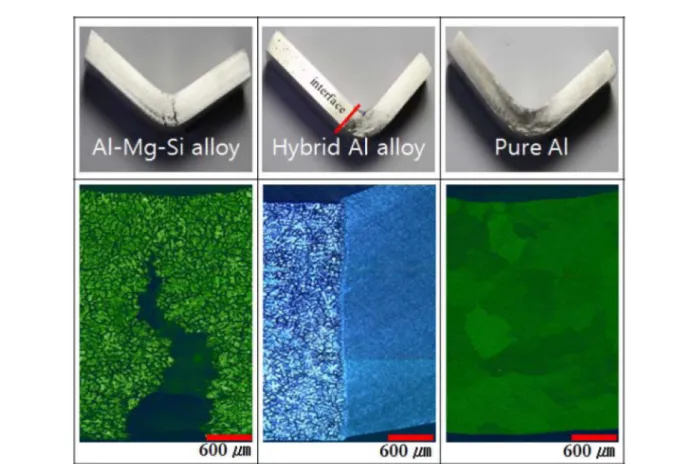
Fig. 8은 Al-Mg-Si 합금, 순 Al 및 하이브리드 알루미늄 합금의 굽힘시험 결과를 나타낸다. Al-Mg-Si 합금의 굽힘강도 가 가장 높았으며, 하이브리드 알루미늄 합금의 굽힘 강도는 순 Al과 거의 같았으나, Al-Mg-Si 합금에 비하여 매우 낮아 인장강도와 유사한 특성을 나타내었다. 이것은 Fig. 11에서와 같이 하이브리드 알루미늄 합금의 굽힘 변형이 순 Al의 변형 에 의존하기 때문이라고 생각된다.
3.3 파괴 및 변형 특성
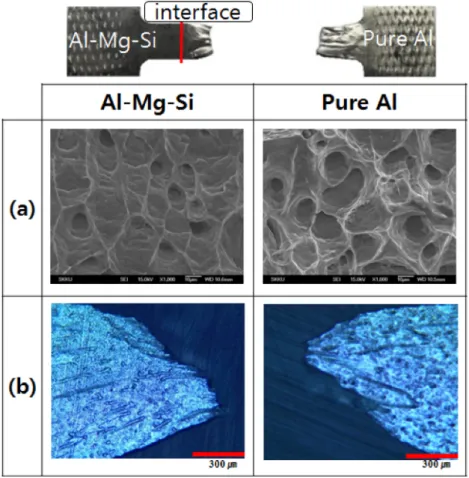
Fig. 9는 인장시험후의 Al-Mg-Si 합금 및 순 Al의 파괴 및 변형 특성을 조사하기 위해 관찰한 파면 조직(a) 및 파면 근방 의 변형 조직(b) 사진이다. 순 Al은 전형적인 딤플 파면 조직 을 나타내어 연성 파괴에 의해 큰 연신률이 얻어졌음을 알 수 있으나, Al-Mg-Si 합금의 경우는 취성적인 파면형상을 나타낸 다. 그리고 파면 근방의 변형 조직에서는 30%이상의 연신률을 나타낸 순 Al은 인장 시험 중의 단면적 감소에 의한 변형 조 직을 나타낸다. 그러나, Al-Mg-Si 합금의 경우는, 초정 α상이
크게 변형되지 않은 조직을 나타내고, 크랙이 공정조직을 통하 여 전파하여 결과적으로 낮은 연신률을 보였다고 생각된다.
Fig. 10은 하이브리드 알루미늄 합금의 파면 조직(a) 및 파 면 근방의 변형 조직(b)을 나타낸다. 인장시험 후의 시편 형상 으로부터 계면을 갖는 하이브리드 알루미늄합금의 파괴는 순 Al영역에서 일어난 것을 알 수 있다. 순 Al과 유사한 인장특 성을 보이고, 순 Al영역에서 파괴가 일어난 하이브리드 알루미 늄합금의 경우는 순 Al의 파면과 같이 양 측면 모두 같은 형 상의 딤플조직을 보인다. 또한, 파단면 근방 조직 사진을 보면 인장 변형된 순 Al에서와 같은 조직을 나타낸다. 한편, Fig.
11에 굽힘 시험후 시편의 형상 변화와 변형 및 파괴조직을 관 찰한 미세 조직을 나타내었다. 본 굽힘 시험 조건에서 순 Al 은 파괴되지 않았고, 굽힘 방향에 따라 늘어난 변형 조직을 보였으나, Al-Mg-Si 합금은 인장 시험과 마찬가지로 취성적인 공정조직을 통한 파괴가 일어났다. 그러나, 계면이 존재하는 하 이브리드 알루미늄합금은 순 Al영역에서의 변형만이 관찰되었 고, 파괴 또한 발생하지 않았다.
이상의 결과로부터 듀오캐스팅으로 제조한 Al-Mg-Si/Al 하 이브리드 합금에서의 계면은 본 실험조건에서의 인장 및 굽힘
Fig. 7.
Tensile properties of Al-Mg-Si/Al hybrid alloy compared to Al-Mg-Si alloy and pure Al ; (a) Tensile strength, yield strength and (b) elongation.Fig. 8.
Bending strength of Al-Mg-Si/Al hybrid alloy compared to Al-Mg-Si alloy and pure Al.Fig. 6.
Engineering stress-strain curves of Al-Mg-Si alloy, pure Al and Al-Mg-Si/Al hybrid alloy.Fig. 10.
(a) Fracture surfaces and (b) microstructures in the vicinity of fracture surface in Al-Mg-Si/Al hybrid alloy after tensile test.Fig. 9.
(a) Fracture surfaces and (b) microstructures in the vicinity of fracture surface in Al-Mg-Si alloy and pure Al.변형에 견딜 정도로 잘 접합되어 있음을 알 수 있다. 또한, 본 연구에서의 Al-Mg-Si/Al 하이브리드 합금의 인장, 굽힘 변 형 및 파괴 특성은 금속과 금속기 복합재료로 이루어진 계면 을 갖는 이종재료[7-9] 및 최근에 보고된 Al-Mn/Al-Si 하이브 리드 합금[10]에서의 결과와도 유사하다. 즉, 잘 접합된 계면을 갖는 이종재료의 인장특성 및 파괴는 상대적으로 강도가 약한 재료의 한정된 영역에서의 우선적인 변형에 의해 영향을 받는 다. 따라서, Al-Mg-Si/Al 하이브리드 합금의 경우도 순 Al과 거의 같은 인장강도, 항복강도 및 굽힘강도를 보이나, 한정된 순 Al에서의 우선적 변형으로 인하여 순 Al보다는 낮은 연신 률을 나타내었다고 생각된다.
4. 결 론
Al-Mg-Si 합금과 순 Al으로 이루어진 하이브리드 알루미늄 합금을 듀오캐스팅으로 제조한 후, 미세조직 관찰과 인장 및 굽힘시험을 통하여 변형, 파괴 특성을 조사하였다. Al-Mg-Si/
Al 하이브리드 합금은 주상정 및 등축정 조직의 순 Al영역, 미세한 초정 및 공정 조직을 보이는 Al-Mg-Si 합금영역 및 두 합금의 계면으로 이루어졌다. 하이브리드 알루미늄 합금은 순 Al과 거의 유사한 인장강도, 항복강도 및 굽힘 강도를 나 타내었으며, 연신률은 순 Al보다는 낮고 Al-Mg-Si 합금 보다
는 높았다. 또한, 하이브리드 알루미늄 합금의 변형 및 파괴는 계면 부근의 순 Al영역에서 발생하였다. 결과적으로, Al-Mg- Si/Al 하이브리드 합금내의 계면은 잘 접합 되었으며, 기계적 변형 및 파괴는 한정된 순 Al영역에서의 국부적인 변형에 크 게 의존하였다.
감사의 글
본 연구는 지식경제부 소재원천기술개발사업의 연구비 지원으 로 수행되었으며, 이에 감사드립니다.
참고문헌
[1] Lee SH and Lee GJ, Kor. J. Mater. Res., “Annealing charac- teristics of ultrafine grained AA1050/AA5052 complex aluminum alloy sheet fabricated by accumulative roll-bonding”, 21 (2011) 655-659.
[2] O. Yilmaz and H. Cerik, J. Mater. Process Technol., “Electrical and thermal properties of the interface at diffusion-bonded and soldered 304 stainless steel and copper bimetal”, 141 (2003) 67-76.
[3] Kacar R, and Acarer M, J. Mater. Process Technol., “An investigation on the explosive classing of 316L stainless steel- din-P355GH steel”, 152 (2004) 91-96.
Fig. 11.
Deformed Microstructures of Al-Mg-Si/Al hybrid alloy compared to Al-Mg-Si alloy and pure Al after bending test.[4] Kazanowski P, Epler ME and Misiolek WZ, Mater. Sci. Eng., A, “Bi-metal rod extrusion-process and product optimization”, 369 (2004) 170-180.
[5] Chesney P, Proc. of SDMA 2003 and ICSF V, “A new spray coating process for manufacture of stainless steel clad construction steel with resistance to corrosion by de-icing salts
& seawater”, (2003) ch.5, 3-9.
[6] Jianbo S, Jun L, Zhiming Y, Zhiquiang C and Tingju L, Proc.
of the 6th international conference on electromagnetic pro- cessing of materials, “study on preparation of clad aluminum alloy slab by electromagnetic continuous casting”, (2009) 595-598.
[7] Chang SY, Cho SJ, Hong SK and Shin DH, J. Alloys Compd.,
“Microstructure and tensilr properties of Bu-materials with
macro-interface between unreinforced magnesium and com- posite ”, 316 (2001) 275-279.
[8] Chang SY, Kim YK, Hong SK and Shin DH, Mater. Trans.,
“Effect of heat treatment on tensile properties of component with macro-interface between unreinforced magnesium and composite”, 42 (2001) 1035-1041.
[9] Chang SY, Cho HG and Kim YD, J. Kor. Powder Metall. Inst.,
“Bi-materials of Al-Mg alloy reinforced with/without SiC and Al2O3 particles; processing and mechanical properties”, 14 (2007) 354-361.
[10] Park SJ, Li T, Kim CH, Park JP and Chang SY, Kor. J. Mater.
Res., “Microstructure and tensile properties of Al-Mn/Al-Si hybrid aluminum alloy prepared by electromagnetic duo- casting”, 22 (2012) 97-102.