| Abstract |
Purpose: This study aimed to investigate the correlation between abdominal muscle strength and measures of respiratory function in stroke patients.
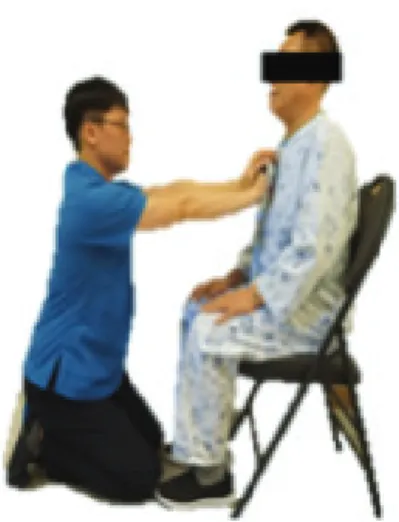
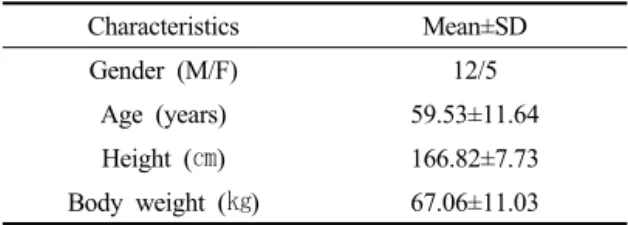
Methods: The study participants comprised 17 (male: 12, female: 5) stroke patients hospitalized at W rehabilitation hospital in Busan, South Korea. Abdominal muscle strength was assessed using a digital manual dynamometer for 5 seconds contacting the sternal notch of the participants to bend the trunk. Respiratory function (forced vital capacity, forced expiratory volume in one second, forced expiratory volume in one second/forced vital capacity, and peak expiratory flow) was assessed using a spirometer. The collected data were analyzed using Pearson’s correlation analysis, and the significance level was set 0.05.
Results: A statistically significant correlation was found between abdominal muscle strength and forced vital capacity, forced expiratory volume in one second, and peak expiratory flow. However, abdominal muscle strength and forced expiratory volume in one second/forced vital capacity were not significantly correlated.
Conclusion: This study demonstrated that there is a relationship between abdominal muscle strength and respiratory function.
Exercise programs to strengthen the abdominal muscles are therefore necessary to improve respiratory function in stroke patients.
Key Words: Stroke, Abdominal muscle strength, Respiratory function
†Corresponding Author : Dong-Wook Han ([email protected]) PNF and Movement, 2019; 17(2): 303-310
https://doi.org/10.21598/JKPNFA.2019.17.2.303
Print ISSN: 2508-6227 Online ISSN: 2508-6472
Original Article Open Access
뇌졸중 환자의 배근력과 호흡기능의 상관관계
강태욱⋅이재석
1⋅한동욱
1†1)워크재활의학과병원 물리치료실,
1신라대학교 물리치료학과
The Correlation between Abdominal Muscle Strength and Respiratory Function in Stroke Patients
Tae-Wook Kang⋅Jae-Seok Lee
1⋅Dong-Wook Han
1†Department of Physical Therapy, Walk Rehabilitation Hospital
1