http://dx.doi.org/10.4078/jrd.2013.20.1.30
30
<Received:December 13, 2012, Revised:February 6, 2013, Accepted:February 8, 2013>
Corresponding to:Yeong-Wook Song, Department of Internal Medicine, Seoul National University Hospital, 28, Yeongeon-dong, Jongno-gu, Seoul 110-744, Korea. E-mail:[email protected]
pISSN: 2093-940X, eISSN: 2233-4718
Copyright ⓒ 2013 by The Korean College of Rheumatology
This is a Free Access article, which permits unrestricted non-commerical use, distribution, and reproduction in any medium, provided the original work is properly cited.
Long-term Safety and Efficacy of Abatacept in Koreans with Rheumatoid Arthritis
Seung-Cheol Shim1, Sung-Hwan Park2, Sang-Cheol Bae3, Jung-Yoon Choe4, Yeong-Wook Song5, Pranab Mitra6, Chetan S Karyekar6
Department of Internal Medicine, Chungnam National University Hospital1, Daejeon, Seoul St Mary’s Hospital, The Catholic University of Korea2, Seoul, Department of Rheumatology, Hanyang University Hospital for Rheumatic
Diseases3, Seoul, Department of Internal Medicine, Catholic University of Daegu School of Medicine4, Daegu, Seoul National University Hospital5, Seoul, Korea, Bristol-Myers Squibb, Princeton6, New Jersey, USA
Objective. The safety and efficacy of intravenous (IV) abata- cept in patients with active RA unresponsive to methotrex- ate have been demonstrated in short-term (ST) studies in global populations and a ST, Phase III study in a Korean patient population. Abatacept’s long-term safety and effi- cacy profile has been established in open-label global studies with treatment up to 5 years. The objective of this study was to determine the long-term safety and efficacy of abata- cept in patients with RA from the ST Korean study.
Methods. This was an open-label long-term extension (LTE) of a Phase III, multicenter, randomized, double-blind, pla- cebo-controlled study in which Korean patients who had re- ceived IV abatacept or placebo in the ST trial (169 days) were given the option to receive open-label abatacept to Day 1485 with 84 days' follow-up (total 1,569 days, ∼4 years).
Results. A total of 105 patients were enrolled in the LTE (86.7% female, median age 49.0 years). Abatacept was generally well tolerated. Adverse events were mostly mild or moderate and no new safety signals were identified.
Improvement in disease activity (assessed by ACR re- sponse and DAS28 [CRP]), physical function (assessed by KHAQ-DI), and quality of life (assessed by SF-36 score) were maintained in patients initially treated with abata- cept or observed in patients who had switched to abata- cept after placebo in the ST study.
Conclusion. Long-term treatment with IV abatacept over 1485 days was generally well tolerated in Korean patients with RA. Additionally, the efficacy profile from the ST study was maintained over the LTE.
Key Words. Rheumatoid arthritis, Korea, Abatacept
Introduction
Biological therapies for rheumatoid arthritis (RA) were first approved more than a decade ago (1). Since then, a variety of agents with different mechanisms of action have been approved. Abatacept (BMS-188667) is a fully humanized, soluble, recombinant fusion protein consisting of the ex- tracellular domain of human CTLA-4 and the Fc domain of human immunoglobulin (Ig) G1. It is the first agent in a new class for the treatment of RA that selectively modulates the CD80/CD86:CD28 co-stimulatory signal involved in full T-cell
activation. Abatacept prevents T-cell activation by binding to CD80 and CD86, therefore inhibiting binding to CD28 (2).
The safety and efficacy of intravenous (IV) abatacept have been well established in the global population with both short-term (ST) and long-term studies (3-5). IV abatacept is currently approved in several countries, including the USA, and in the European Union, for the treatment of moder- ate-to-severe RA. In March 2010, IV abatacept also gained approval in Korea.
The clinical development of abatacept is ongoing in Korea.
Figure 1. Patient disposition and primary reasons for discontinua- tion over the 1485-day study pe- riod: (A) Double-blind ST study;
(B) open-label LTE. AE: adverse event, LTE: long-term extension, ST: short-term.
In a ST,169-day study involving Korean patients with RA and an inadequate clinical response to methotrexate (MTX), abata- cept improved signs and symptoms, physical function, and pa- tient quality of life and was generally well tolerated (6).
The long-term extension (LTE), open-label study described here investigated the safety, efficacy, and pharmacodynamic profile of abatacept in patients who had completed the ST study and had received abatacept for an additional 1316 days.
The LTE program aimed to assess the safety of long-term use of abatacept, the efficacy of abatacept and changes in health-related quality of life, and the immunogenicity of abata- cept in combination with MTX.
Materials and Methods Patient population
The study population consisted of Korean patients with ac- tive RA who had completed the ST (169-day), double-blind study (ClinicalTrials.gov, NCT00409838). To enter the ST study, patients were required to be Korean, ≥18 years of age,
and not pregnant or nursing. Eligible patients met the American Rheumatism Association criteria for RA (7) and the American College of Rheumatology (ACR) functional status of Class I, II, or III RA (8). Patients also had an initial diag- nosis of RA for >1 year prior to entering the study. Patients entering the ST study had to present with ≥10 swollen joints (66-joint count), ≥12 tender joints (68-joint count), and C-re- active protein (CRP) levels ≥0.45 mg/dL. Additionally, pa- tients had to have been receiving background MTX treatment (≥15 mg every 7 days) for ≥3 months, with a stable dose for 28 days prior to study entry at Day 1. All other dis- ease-modifying anti-rheumatic drugs (DMARDs), including biologicals, were discontinued ≥28 days prior to Day 1.
Additional permitted concomitant medications in the ST peri- od included oral corticosteroids equivalent to ≤10 mg pre- dnisone daily, with a stable dose for at least 25 of the 28 days prior to treatment initiation on Day 1.
All patients who completed the 169-day, ST, double-blind trial were eligible to be treated with open-label abatacept over
the long-term period.
Study design
This was an open-label extension of a multicenter, randomized, double-blind, placebo-controlled study that was conducted at seven sites in Korea from April 2007 to December 2011. The protocol and patients’ informed consent received institutional re- view board/independent ethics committee approval. The study was conducted in accordance with the Declaration of Helsinki and was consistent with the International Conference on Harmonisation Good Clinical Practice Guidelines.
In the 169-day, ST study, all patients were randomized in a 1:1 ratio to receive abatacept (ST abatacept) or placebo (ST placebo) (Figure 1A). The open-label LTE study began at Day 169 when the ST study was completed and continued until Day 1569 (LTE period), and included patients from the ST abatacept and ST placebo cohort who had agreed to con- tinue in the LTE study. Patients were followed for 28 (Day 1512), 56 (Day 1540), and 85 (Day 1569) days after the last dose of abatacept in the open-label LTE period.
IV abatacept was administered at approximately 10 mg/kg (a total of 500 mg for patients weighing <60 kg, 750 mg for patients weighing 60∼100 kg, and 1 g for patients weigh- ing >100 kg) every 28 days. The background MTX dose could be reduced, discontinued, or increased up to 25 mg weekly. In addition, background corticosteroid therapy could be changed (total equivalent prednisone dose >10 mg pro- hibited) and one DMARD (including parenteral gold, sulfasa- lazine, chloroquine, hydroxychloroquine, or azathioprine) could be added at the discretion of the investigator based on the patient’s clinical status.
Safety assessments
Safety was monitored by recording adverse events (AEs) and serious AEs (SAEs), vital signs, and clinical laboratory test abnormalities in the study participants. AEs were monitored on Days 197, 225, 253, 337, 421, 505, and at all 28-day inter- vals up until Day 1569 (follow-up visit). AEs of special inter- est for abatacept were also assessed; these included infections, autoimmune disorders (pre-specified), malignancies, and infu- sional reactions (acute reactions defined as within 1 hour after the start of infusion and peri-infusional reactions defined as within 24 hours after the start of infusion). Vital signs were monitored on Days 197, 225, 253, 337, 421, and at 28-day intervals after Day 505 until Day 1485.
Hematology, blood chemistry, and urinalysis parameters were measured in blood and/or urine samples. Samples were obtained prior to the scheduled infusion of abatacept on Days
197, 225, 253, 337, 421, 505, and every 3 months thereafter until administration of the last dose. Further samples were tak- en 28, 56, and 85 days after the last dose.
Efficacy assessments
Efficacy was measured by assessing the proportion of pa- tients achieving an ACR 20, 50, and 70 response (9) every 28 days through to Day 253 and quarterly thereafter until Day 1569. Furthermore, the 28-joint Disease Activity Score (DAS)28 (CRP) and DAS28 (erythrocyte sedimentation rate;
ESR) were measured as efficacy endpoints (10). The pro- portions of patients with a European League Against Rheumatism (EULAR)-defined Low Disease Activity Score (LDAS) (defined as DAS28 [CRP] ≤3.2) and EULAR-de- fined remission (defined as DAS28 [CRP] <2.6) were also measured (11). The EULAR-defined LDAS and EULAR-de- fined remission analyses of the DAS28 (ESR) score were not performed due to the limited use of this efficacy variable.
Changes from baseline in ESR and CRP were assessed on Days 197, 225, 253, 337, 421, 501, and quarterly thereafter until Day 1485.
Physical function was measured using the patient-reported Korean Health Assessment Questionnaire Disability Index (KHAQ-DI) (12) and measured on Days 197, 225, 253, 337, 421, 505, and quarterly thereafter until Day 1485. Health-re- lated quality of life was assessed using the 36-item Short-Form (SF-36) questionnaire on Day 505 and quarterly thereafter until Day 1485. The proportion of patients achieving a KHAQ-DI response (improvement of ≥0.3 units from base- line) was recorded (13). In addition to the eight individual components of the SF-36, changes from baseline in Physical Component Score (PCS) and Mental Component Score (MCS) were also reported (14). The Clinical Disease Activity Index (CDAI) and Simplified Disease Activity Index (SDAI) (15) for RA were used to measure disease activity. CDAI is de- fined as the sum of the tender joint count (28 joints), swollen joint count (28 joints), patient global assessment (0∼10 scale), and physician global assessment (0∼10 scale); SDAI also includes CRP level (mg/dL).
Immunogenicity
Immunogenicity was assessed by measuring antibodies to abatacept in serum on Days 337, 505, and biannually there- after until Day 1569 using enzyme-linked immunosorbent as- says (ELISAs). The assays were performed by Prevalere (ICON) Life Sciences, Inc. (Whitesboro, New York, USA).
Two types of antibodies were detected using two different ELISA methods. The first measured antibody for the whole
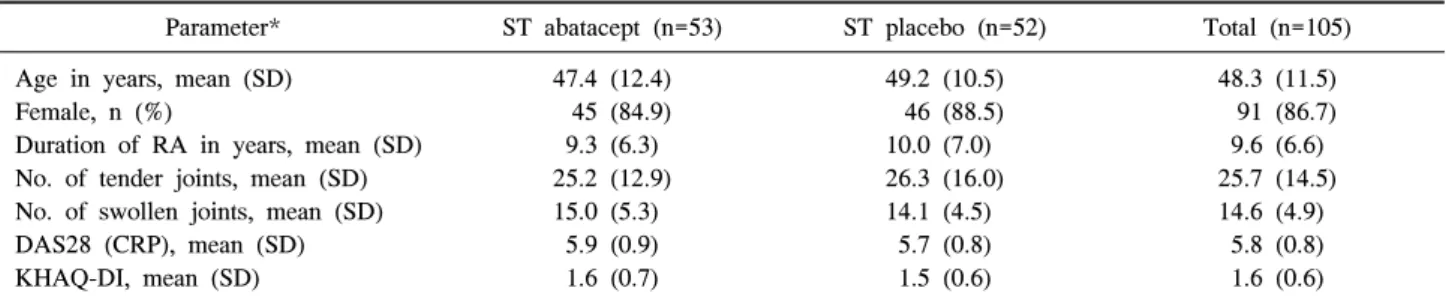
Table 1. Demographics and baseline characteristics of all treated patients in the open-label extension period
Parameter* ST abatacept (n=53) ST placebo (n=52) Total (n=105)
Age in years, mean (SD) Female, n (%)
Duration of RA in years, mean (SD) No. of tender joints, mean (SD) No. of swollen joints, mean (SD) DAS28 (CRP), mean (SD) KHAQ-DI, mean (SD)
47.4 (12.4) 45 (84.9) 9.3 (6.3) 25.2 (12.9) 15.0 (5.3)
5.9 (0.9) 1.6 (0.7)
49.2 (10.5) 46 (88.5) 10.0 (7.0) 26.3 (16.0) 14.1 (4.5)
5.7 (0.8) 1.5 (0.6)
48.3 (11.5) 91 (86.7) 9.6 (6.6) 25.7 (14.5) 14.6 (4.9)
5.8 (0.8) 1.6 (0.6)
DAS28 (CRP): 28-joint Disease Activity Score (C-reactive protein), KHAQ-DI: Korean Health Assessment Questionnaire Disability Index, RA: rheumatoid arthritis, SD: standard deviation, ST: short-term. *Demographic and baseline characteristics at entry into the study (Day 1) abatacept molecule (both the CTLA-4 and Ig portion), denoted
as the anti-abatacept antibody, and the second measured anti- body response to only the CTLA-4 portion of the molecule (denoted as CTLA-4-T). Samples were obtained on Day 169 (beginning of the LTE study) and were subsequently taken bi- annually during the LTE period. In patients who had dis- continued treatment before study termination, samples were also obtained at 28, 56, and 85 days after the last infusion.
To be included in the immunogenicity analysis, patients were also required to have had at least one serum sample collected during the LTE period.
Positive antibody samples confirmed from either ELISA as- say which had serum concentrations of abatacept ≤1 μg/mL were further characterized using an in vitro, cell-based bio- assay to determine whether the sera contained neutralizing an- tibody activity. Individual safety and efficacy results associated with antibody response were examined during the LTE period.
Statistical analysis
This LTE was not powered for statistical testing of any pre-defined efficacy hypothesis. Given the descriptive nature of the study, no formal statistical tests were performed. All randomized and treated patients completing the ST study up to Day 169 and receiving ≥1 infusion of abatacept during the LTE study were included in the analysis. Immunogenicity analyses were based on the immunogenicity analysis pop- ulation, which included all patients who had received ≥1 in- fusion of abatacept during the LTE period and had ≥1 im- munogenicity sample collected during the LTE period.
Results Patient demographics
A total of 112 patients participated in the ST study; 105 of these patients completed the study and were recruited into the LTE study (ST abatacept cohort: n=53; ST placebo cohort:
n=52, Figure 1A). During the LTE period, 14 patients (13.3%)
missed one or two scheduled infusions and 9 (8.6%) missed
≥3 infusions. No patient missed >2 consecutive infusions.
A total of 87 patients (82.9%) were still enrolled in the study at the time it was closed due to the approval of abatacept.
Eighteen patients (17.1%) discontinued the study prematurely.
The most common reason for discontinuation was AEs (n=10, 9.5%; Figure 1B).
The majority of patients who were treated in the LTE study were female (86.7%); the median age at entry into the study (Day 1) was 49.0 years (Table 1). Mean duration of RA among patients entering the LTE study was 9.6 years.
All but one of the 105 patients (99.0%) received at least one dose of MTX during the LTE study (mean approximately 4.0 mg every 7 days), which was slightly less than that at study entry (mean approximately 4.5 mg every 7 days). Other than MTX, non-steroidal anti-inflammatory drugs and cortico- steroids were the most common concomitant medications in both the ST abatacept group (n=53 [100.0%] and n=51 [96.2%], respectively) and the ST placebo group (n=51 [98.1%] and n=47 [90.4%], respectively) during the LTE period. The mean (standard deviation) exposure to abatacept therapy was 44.2 (10.4) months for the combined ST and LTE periods. A total of 38 patients (36.2%) received abatacept therapy for ≥48 months across the ST and LTE periods; max- imum duration of abatacept exposure was 55.0 months.
During this time, patients received a mean of 46.3 (range, 2–
59) infusions of abatacept.
Safety
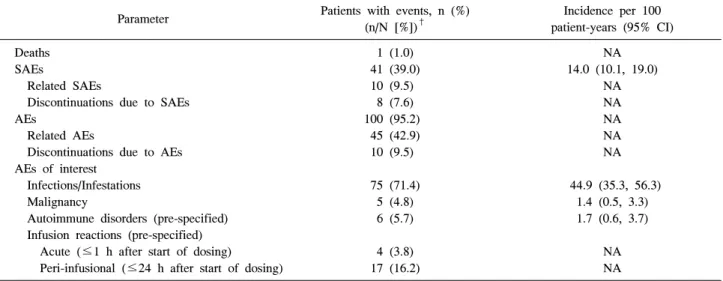
Abatacept was generally well tolerated on a background of MTX by Korean patients with active RA when administered monthly at a fixed dose of approximately 10 mg/kg (Table 2). No new safety issues associated with the use of abatacept in this population were identified during this LTE study up to Day 1569.
AEs were reported in 100 (95.2%) patients. The most com-
Table 2. Adverse events experienced in all patients treated with abatacept on background methotrexate for an average of approximately 1485 days in the open-label extension period
Parameter Patients with events, n (%)
(n/N [%])†
Incidence per 100 patient-years (95% CI) Deaths
SAEs
Related SAEs
Discontinuations due to SAEs AEs
Related AEs
Discontinuations due to AEs AEs of interest
Infections/Infestations Malignancy
Autoimmune disorders (pre-specified) Infusion reactions (pre-specified) Acute (≤1 h after start of dosing)
Peri-infusional (≤24 h after start of dosing)
1 (1.0) 41 (39.0) 10 (9.5)
8 (7.6) 100 (95.2)
45 (42.9) 10 (9.5)
75 (71.4) 5 (4.8) 6 (5.7)
4 (3.8) 17 (16.2)
NA 14.0 (10.1, 19.0)
NA NA NA NA NA
44.9 (35.3, 56.3) 1.4 (0.5, 3.3) 1.7 (0.6, 3.7)
NA NA
AE: adverse event, CI: confidence interval, NA: not available, SAE: serious adverse event. †Includes data up to 56 days after the last dose in the long-term extension period
monly reported AEs were nasopharyngitis, urinary tract in- fection, and upper respiratory tract infection. AEs assessed by the investigator to be at least possibly related to the study drug were reported in 45 patients (42.9%). The majority of the AEs were mild or moderate in intensity overall.
During the LTE period, 10 patients (9.5%) were withdrawn from the study due to an AE or multiple AEs (7 neoplasms [benign, malignant, or unspecified], 2 infections and in- festations, and 1 ectopic pregnancy). In 6 patients (5.7%), the AE leading to discontinuation was considered to be at least possibly related to the study drug by the investigator. In addi- tion, SAEs were experienced by 41 patients (39.0%) during the LTE period. The overall incidence rate for SAEs (95%
confidence interval [CI]) in patients exposed to abatacept was 14.0 (10.1, 19.0) per 100 patient-years of exposure during the LTE period. The SAEs experienced by 10 (9.5%) of these pa- tients were considered by the investigator to be at least possi- bly related to the study drug, the most common of which were serious infections (5.7%). There was 1 death (cardiac death) that occurred within 56 days of the last infusion of abatacept.
This was a 55-year-old woman with a history of diabetes mel- litus who had undergone coronary angiography and stent placement in the left anterior descending artery. Ten days after the tenth abatacept infusion (Day 236), the patient experienced syncope in the emergency department and an electrocardio- gram showed ventricular fibrillation. Despite cardiopulmonary resuscitation, the patient died on the same day. This death was assessed as being unrelated to the study drug.
Infections
AEs in the infections and infestations system organ class were reported by 75 patients (71.4%) during the LTE period and up to 56 days after the last infusion in the LTE period. The most commonly reported infection-related AEs (≥5%) were naso- pharyngitis (35.2%), upper respiratory tract infection (23.8%), onychomycosis (8.6%), urinary tract infection (8.6%), and si- nusitis (6.7%). Two patients (1.9%) discontinued the study dur- ing the LTE period due to an infection-related AE (lymph node tuberculosis [TB] and cytomegalovirus mucocutaneous ulcer).
The first was a 57-year-old man who had not received the Bacillus Calmette-Guérin vaccine. Fifteen days after his 43rd infusion on Day 1361, the patient was noted to have a right submandibular mass. He underwent an excisional biopsy on Day 1368 and was diagnosed with TB lymphadenitis. This pa- tient had his last infusion administered on the day before his diagnosis (Day 1367). The AE resolved after an unspecified anti-TB treatment regimen. The second patient reported a cyto- megalovirus mucocutaneous ulcer on Day 733, which was as- sessed as being moderate in intensity and possibly related to study treatment. The patient received two subsequent infusions of abatacept before being withdrawn from the study as a result of the AE. The AE was ongoing at the time of the last fol- low-up visit (Day 1569).
Autoimmune disorders (prespecified)
Autoimmune disorder–related AEs (pre-specified) were re- ported in 6 patients (5.7%) during the LTE period and up to 56 days after the last infusion of abatacept. Each in-
Table 3. Efficacy responses in all treated patients in the open-label extension period*
Parameter ST abatacept (n=53) ST placebo (n=52)
Day 169 Day 1485 Day 169 Day 1485
ACR response ACR 20, n/N (%) ACR 50, n/N (%) ACR 70, n/N (%) DAS28 (CRP) score LDAS,† n/N (%) Remission,‡ n/N (%) Mean change (SE) KHAQ-DI score
KHAQ response,§ n/N (%) Mean change (SE) SF-36
Physical component score, mean change (SE) Mental component score, mean change (SE) SDAI score
Baseline mean (SD) Post-baseline mean (SD) Mean change from baseline (SE) 95% CI
CDAI score
Baseline mean (SD) Post-baseline mean (SD) Mean change from baseline (SE) 95% CI
36/53 (67.9) 18/53 (34.0) 8/53 (15.1)
19/53 (35.8) 13/53 (24.5)
−2.25 (0.19)
34/53 (64.2)
−0.56 (0.08)
6.94 (1.19) 7.68 (1.64)
39.35 (12.32) 16.52 (10.99)
−2.84 (1.87) (−26.58, −19.09)
36.67 (11.65) 15.68 (10.40)
−20.99 (1.76) (−24.52, −17.46)
26/31 (83.9) 21/31 (67.7) 12/31 (38.7)
19/31 (61.3) 11/31 (35.5)
−2.97 (0.23)
24/31 (77.4)
−0.76 (0.14)
10.34 (1.80) 7.93 (2.44)
39.69 (12.04) 9.95 (7.50)
−29.74 (2.11) (−34.06, −25.43)
36.82 (11.19) 9.04 (7.01)
−27.79 (1.95) (−31.78, −23.80)
24/52 (46.2) 9/52 (17.3) 4/52 (7.7)
7/52 (13.5) 5/52 (9.6)
−1.26 (0.16)
22/52 (42.3)
−0.28 (0.06)
1.98 (1.06) 5.08 (1.66)
38.26 (10.93) 24.18 (14.00)
−14.07 (1.60) (−17.28, −10.87)
35.99 (10.49) 22.50 (13.19)
−13.49 (1.46) (−16.42, −10.56)
30/35 (85.7) 22/35 (62.9) 16/35 (45.7)
24/35 (68.6) 19/35 (54.3)
−3.13 (0.22)
21/35 (60.0)
−0.53 (0.11)
8.48 (1.57) 7.73 (3.34)
37.01 (11.67) 7.81 (6.21)
−29.20 (2.21) (−33.70, −24.70)
34.74 (11.25) 7.40 (6.08)
−27.34 (2.06) (−31.54, −23.15) ACR: American College of Rheumatology, CDAI: Clinical Disease Activity Index, CI: confidence interval, DAS28 (CRP): 28-joint Disease Activity Score (C-reactive protein), KHAQ-DI: Korean Health Assessment Questionnaire Disability Index, LDAS: Low Disease Activity Score, SD: standard deviation, SDAI: Simplified Disease Activity Index, SE: standard error, SF-36: 36-item Short-Form ques- tionnaire, ST: short-term. *Treatment groups represent treatment received in the double-blind period. As-observed analysis. †LDAS is defined as a DAS28 (CRP) score ≤3.2. ‡Remission is defined as a DAS28 (CRP) score <2.6. §KHAQ response is defined as an improvement of at least 0.3 units from baseline in the KHAQ-DI
dividual autoimmune-related AE reported in the LTE period occurred in only 1 patient and all events were assessed as being unrelated to study treatment and mild or moderate in intensity.
Malignancies
Malignant neoplasms were reported in 5 patients (4.8%);
each of these individuals presented with solid tumors (1 each with bile duct, gastric, and thyroid cancers; 2 with squamous cell carcinoma). The patients had a previous history of either neoplasm (2 patients) or a history of chronic tobacco use (remaining 3 patients). In 4 patients, the malignancy was re- ported to be resolved following surgery and/or chemo- therapy; the gastric cancer remained ongoing as of the last follow-up.
Infusion- and injection-related events
Acute infusional AEs were reported in 4 patients (3.8%) and
were all mild or moderate in intensity; none were serious and none resulted in discontinuation of treatment. Furthermore, peri-infusional AEs were reported in 17 patients (16.2%) and were mostly mild in intensity. Only 5 of these patients’ AEs (4.8%) were considered to be related to study treatment. No in- fusional AE resulted in treatment discontinuation. One event (arthralgia) was classified as serious but unrelated to study drug.
Clinical efficacy
In the ST abatacept cohort, improvements in disease activity (as assessed by ACR and DAS28 [CRP]-based remission and LDAS rate of response), physical function (as assessed by KHAQ-DI response rates), and quality of life (as assessed by SF-36 scores) achieved at the end of the double-blind ST peri- od were maintained up to Day 1485. Efficacy data were col- lected for approximately 60% of patients in each treatment co- hort at Day 1485 and approximately 30% at the end of the LTE period (Day 1569).
Figure 2. Response rates over time in all treated patients, by original, double-blind treatment group in the short-term (169 days) and open-label (1569 days) period, according to American College of Rheumatology (ACR) improve- ment criteria: (A) ACR 20, (B) ACR 50, and (C) ACR 70.
As-observed analysis. Note that all patients received open- label abatacept during the LTE. DB:
double-blind, LTE: long-term extension, ST: short-term.
ACR responses
Efficacy data were collected for approximately 60% of pa- tients in each treatment cohort at Day 1485 and approximately
30% at the end of the LTE period (Day 1569). ACR response rates were maintained from the end of the ST period (Day 169) and throughout the LTE period in the ST abatacept
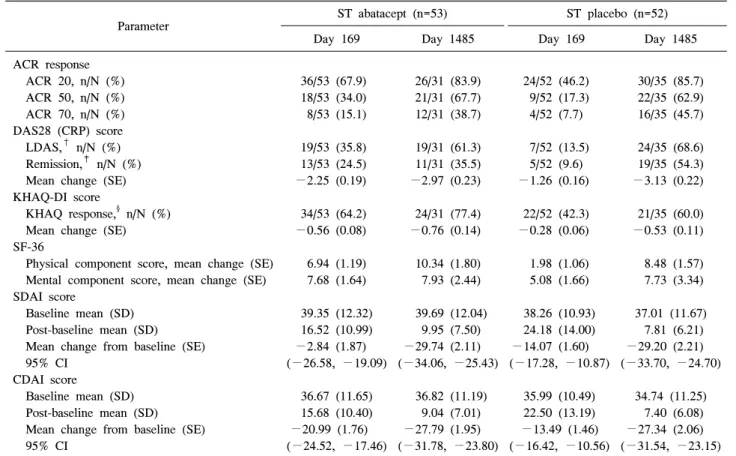
cohort. In the ST placebo group, ACR response rates in- creased after patients were switched from placebo to open-la- bel abatacept, and were estimated to be similar to those in the ST abatacept group after 84 days on treatment. The im- provements were generally maintained in this group through Day 1485. Table 3 and Figure 2 show the ACR response rates during the LTE period by ST treatment cohort.
Disease activity
In the ST abatacept cohort, disease activity measured by the mean change in DAS28 (CRP) score from baseline was reduced (i.e. improved) at Day 169 (−2.25 [95% CI: −2.63, −1.88]) and maintained through Day 1485 (−2.97 [95% CI: −3.44,
−2.51]; Table 3). In the ST placebo cohort, the mean change from baseline in DAS28 (CRP) score at Day 169 (−1.26 [95%
CI: −1.58, −0.94]) gradually improved during the LTE period and was −3.13 (95% CI: −3.58, −2.68) at Day 1485 (Table 3). In both cohorts, the majority of patients who were in re- mission at Day 169 remained in remission while receiving aba- tacept during the LTE period, and additional patients in the pla- cebo cohort achieved remission after switching to abatacept (data not shown).
The improvements in SDAI and CDAI scores observed at the end of the ST study were maintained during the LTE peri- od in the ST abatacept cohort. In the ST placebo cohort, there were reductions in CDAI and SDAI; following the switch to open-label abatacept in the LTE period, a larger improvement was observed (Table 3). These reductions were numerically larger than those achieved in the ST abatacept cohort.
Physical function
In the ST abatacept cohort, the improved KHAQ-DI score observed at the end of Day 169 was maintained until Day 1485 (Table 3). In the ST placebo cohort, improvements in KHAQ-DI scores were observed when patients were switched to open-label abatacept at the beginning of the LTE period.
The improvement observed in KHAQ-DI score for the ST pla- cebo cohort during the ST study period was numerically lower than that in the ST abatacept group. Once all patients received open-label abatacept, the improvement was numerically larger for the ST placebo group but did not reach the same values as for the ST abatacept group. At the end of the LTE period, 77.4% of ST abatacept patients (24/31; 95% CI: 62.7, 92.1) and 60.0% of the ST placebo patients (21/3595% CI: 43.8, 76.2) achieved a clinically meaningful improvement in phys- ical function (defined as the reduction from baseline [Day 1]
in KHAQ-DI score ≥0.3 units).
Health-related quality of life
In the ST abatacept cohort, the mean improvements in the SF-36 summary and component scores observed at the end of the ST period were maintained during the LTE period. In the ST placebo cohort, there was a small improvement in SF-36 components; following a switch to open-label abatacept in the LTE period, this improvement was larger than that observed in the ST period (Table 3). The mean changes in the physical and mental summary measures (PCS and MCS scores) of the SF-36 from baseline over time are summarized in Table 3.
Immunogenicity
Immunogenicity results were available for all 105 patients on treatment and for 95 patients post-treatment. Overall, the im- munogenicity rate was 13.1% (14/105) over the 1485 days of abatacept treatment and 85 days after the last dose. One pa- tient tested positive for anti-CTLA-4-T antibody and all the other patients tested positive for anti-abatacept antibody. One of the post-treatment samples was eligible to be tested for neutralizing antibodies; however, no neutralizing antibodies were detected. Most of the seropositive patients had low anti- body titers (<1,000 for anti-abatacept or <50 for an- ti-CTLA-4). In half of the seropositive patients, antibodies were present transiently only one time throughout the multiple samplings. Medical review of the safety data for all sero- positive patients indicated no association with immunogenicity and important medical or immune-mediated events. Similarly, examination of efficacy data indicated no impact of im- munogenicity on any efficacy parameters. The safety and effi- cacy profile of abatacept did not appear to be associated with the immunogenicity rates.
ESR and CRP
In the ST abatacept cohort, the mean improvements in ESR and CRP observed at the end of the double-blind ST study (Day 169) were generally maintained during the LTE period.
At Day 1485, the mean reductions from baseline in ESR and CRP were –33.41 mm/h and –1.95 mg/dL, respectively. In the ST placebo cohort, larger mean improvements in ESR and CRP were detected after treatment was switched to abatacept at the beginning of the LTE period. However, mean reductions at Day 1485 (−25.7 mm/h and −1.9 mg/dL, respectively) showed no significant difference from those in the ST abata- cept cohort.
Discussion
The ST and long-term safety and efficacy profile of IV aba- tacept in patients with RA and an inadequate response to
MTX is well established in the global population (4,5). In ad- dition, the ST study in Korean patients with RA who were inadequate responders to MTX showed that abatacept ad- ministered intravenously for up to 169 days was also generally well tolerated and effective (6).
In this Phase III, LTE, open-label study, it was found that:
(i) abatacept, at a weight-tiered dose of 10 mg/kg, ad- ministered intravenously once a month for an average of 1485 days (after the 169-day double-blind period), was generally well tolerated in Korean patients with RA and no new safety signals were identified during the LTE period; (ii) abatacept maintained improvements in the signs and symptoms of RA, physical function, and quality of life during the LTE period;
and (iii) immunogenicity rates, based on ELISAs during the LTE period, were consistent with those previously reported with long-term abatacept treatment in other clinical studies in RA populations (4,5).
The safety profile of abatacept observed in this study was consistent with that found in the previous global studies of abatacept (2,16,17). No new safety signals were identified during long-term treatment relative to a similar population of non-Korean patients treated for a comparable period of time in previous studies (4). Even with the long duration of this open-label study, the fact that 82.9% of the patients completed this 1485-day study provides an indication that abatacept was well tolerated and patients may continue treatment over the long-term in clinical practice, which is consistent with the findings of previous studies (4,18). The incidences of SAEs, infection/infestation AEs, malignant neoplasms, and auto- immune disorders (pre-specified) found in the LTE study were consistent with those reported in the global long-term study (18) and Korean ST study (6).
Only one death (cardiac death) was observed during this long follow-up period of 1569 days. This event was reported to be unrelated to study medication. No events of lymphoma or lung cancer were reported in the Korean patients. All except one reported malignant event was resolved with surgery and/or chemotherapy. Serious infections were reported rarely in the study and only two patients discontinued from the study due to an infection-related event.
The incidence of acute infusion AEs observed during the LTE period was low (3.8%); all of these events were mild or moderate in severity and one was classified as unrelated to study treatment. None of these events resulted in dis- continuation of study therapy. Infusion-related reactions over such a long period of time were, therefore, rare. Autoimmune events were also rare and none were classified as related to study drug. The clinical laboratory data were generally un-
remarkable and no safety issues were identified.
The overall immunogenicity rates (during the LTE period, on treatment, or post-treatment) were not different from those found in previous studies with treatment up to 6 years (5,6).
Medical review of the safety data for patients with sero- positive responses for both anti-abatacept and anti-CTLA-4-T indicated no association of immunogenicity with important medical events or immune-mediated toxicities.
The open-label LTE period provided an assessment of the ability of abatacept to maintain efficacy over a period of1569 days (approximately 4 years) for Korean patients in the initial ST abatacept and ST placebo cohorts. In the ST abatacept co- hort, the improvements in clinical signs and symptoms of RA and physical function achieved by the end of the ST period (Day 169) were maintained with continued abatacept treat- ment. Patients in the ST placebo cohort, on the other hand, showed notable improvements in the clinical signs and symp- toms of RA and in physical function after being switched to abatacept in the LTE period. The sustained efficacy for the ST abatacept cohort was associated with long-lasting improve- ments in health-related quality of life. This finding of sus- tained efficacy is consistent with that of the global study (18-20).
Interpretation of results should take into consideration the limitations of the study. This study, being an open-label ex- tension, creates a number of challenges for data analysis and interpretation, including bias in outcomes. In addition, the sample size of this study was small; for this reason, the find- ings of this study alone cannot be generalized to the broader community.
Conclusion
In summary, the safety and efficacy profiles of long-term abatacept treatment (over 1485 days) in Korean patients with RA are favorable and consistent with those found in previous studies. No new safety signals were identified. Additionally, the efficacy profile from the ST study was maintained over the long-term treatment period.
Acknowledgements
Professional medical writing and editorial assistance was provided by Justine Lau, PhD, of Caudex Medical, funded by Bristol-Myers Squibb.
References
1. Bulpitt KJ. Biologic therapies in rheumatoid arthritis.
Curr Rheumatol Rep 1999;1:157-63.
2. Moreland LW, Alten R, Van den Bosch F, Appelboom
T, Leon M, Emery P, et al. Costimulatory blockade in patients with rheumatoid arthritis: a pilot, dose-finding, double-blind, placebo-controlled clinical trial evaluating CTLA-4Ig and LEA29Y eighty-five days after the first infusion. Arthritis Rheum 2002;46:1470-9.
3. Westhovens R, Robles M, Ximenes AC, Nayiager S, Wollenhaupt J, Durez P, et al. Clinical efficacy and safety of abatacept in methotrexate-naive patients with early rheumatoid arthritis and poor prognostic factors. Ann Rheum Dis 2009;68:1870-7.
4. Westhovens R, Kremer JM, Moreland LW, Emery P, Russell AS, Li T, et al. Safety and efficacy of the se- lective costimulation modulator abatacept in patients with rheumatoid arthritis receiving background methotrexate: a 5-year extended phase IIB study. J Rheumatol 2009;36:
736-42.
5. Westhovens R, Kremer JM, Emery P, Russell AS, Li T, Aranda R, et al. Consistent safety and sustained improve- ment in disease activity and treatment response over 7 years of abatacept treatment in biologic-naïve patients with RA. Ann Rheum Dis 2009;68:577 (Abstract SAT0108).
6. Shim SC, Park SH, Bae SC, Song YW, Macaraeg GM, Delvaux A, et al. Efficacy and safety of abatacept in Korean patients with active rheumatoid arthritis and in- adequate response to methotrexate: A phase III, multi- centre, randomized, double-blind, placebo-controlled bridging study. 14th Congress of APLAR 2010, Hong Kong. Abstract 12-2.4-0806.
7. Arnett FC, Edworthy SM, Bloch DA, McShane DJ, Fries JF, Cooper NS, et al. The American Rheumatism Asso- ciation 1987 revised criteria for the classification of rheu- matoid arthritis. Arthritis Rheum 1988;31:315-24.
8. Hochberg MC, Chang RW, Dwosh I, Lindsey S, Pincus T, Wolfe F. The American College of Rheumatology 1991 revised criteria for the classification of global func- tional status in rheumatoid arthritis. Arthritis Rheum 1992;35:498-502.
9. Felson DT, Anderson JJ, Boers M, Bombardier C, Furst D, Goldsmith C, et al. American College of Rheumato- logy. Preliminary definition of improvement in rheuma- toid arthritis. Arthritis Rheum 1995;38:727-35.
10. Prevoo ML, van't Hof MA, Kuper HH, van Leeuwen MA, van de Putte LB, van Riel PL. Modified disease ac- tivity scores that include twenty-eight-joint counts.
Development and validation in a prospective longitudinal
study of patients with rheumatoid arthritis. Arthritis Rheum 1995;38:44-8.
11. Fransen J, van Riel PL. The Disease Activity Score and the EULAR response criteria. Rheum Dis Clin North Am 2009;35:745-57.
12. Bae SC, Cook EF, Kim SY. Psychometric evaluation of a Korean Health Assessment Questionnaire for clinical research. J Rheumatol 1998;25:1975-9.
13. Wells GA, Tugwell P, Kraag GR, Baker PR, Groh J, Redelmeier DA. Minimum important difference between patients with rheumatoid arthritis: the patient's perspec- tive. J Rheumatol 1993;20:557-60.
14. Ware JE Jr, Sherbourne CD. The MOS 36-item short-form health survey (SF-36). I. Conceptual frame- work and item selection. Med Care 1992;30:473-83.
15. Smolen JS, Breedveld FC, Schiff MH, Kalden JR, Emery P, Eberl G, et al. A simplified disease activity index for rheumatoid arthritis for use in clinical practice.
Rheumatology (Oxford) 2003;42:244-57.
16. Kremer JM, Westhovens R, Leon M, Di Giorgio E, Alten R, Steinfeld S, et al. Treatment of rheumatoid arthritis by selective inhibition of T-cell activation with fusion protein CTLA4Ig. N Engl J Med 2003;349:1907-15.
17. Kremer JM, Dougados M, Emery P, Durez P, Sibilia J, Shergy W, et al. Treatment of rheumatoid arthritis with the selective costimulation modulator abatacept: twelve- month results of a phase iib, double-blind, randomized, placebo-controlled trial. Arthritis Rheum 2005;52:
2263-71.
18. Kremer JM, Genant HK, Moreland LW, Russell AS, Emery P, Abud-Mendoza C, et al. Results of a two-year followup study of patients with rheumatoid arthritis who received a combination of abatacept and methotrexate.
Arthritis Rheum 2008;58:953-63.
19. Kremer JM, Genant HK, Moreland LW, Russell AS, Emery P, Abud-Mendoza C, et al. Effects of abatacept in patients with methotrexate-resistant active rheumatoid ar- thritis: a randomized trial. Ann Intern Med 2006;144:
865-76.
20. Kremer JM, Russell AS, Emery P, Abud-Mendoza C, Szechinski J, Westhovens R, et al. Long-term safety, effi- cacy and inhibition of radiographic progression with aba- tacept treatment in patients with rheumatoid arthritis and an inadequate response to methotrexate: 3-year results from the AIM trial. Ann Rheum Dis 2011;70:1826-30.