Review of Trends in Recent Climate Research by Korean Climatologists
Eungul Lee* · Kyoungmi Lee** · Seungho Lee***
최근 한국의 기후학 연구 동향
이은걸*·이경미**·이승호***
Abstract : This study reviewed recent trends in climate research by Korean climatologists. We analyzed
six domestic journals listed in the Korean Citation Index and four international journals listed in the Science Citation Index during 2001-2011. Research on climate change has rapidly increased during the study period and studies on precipitation variability have been given continual attentions among Korean climatologists. In climate change research, meteorologists focused on characteristics, prediction, and causes while geographers were more interested in characteristics and impacts of climate change. In applied climatology and bioclimatology, research on the impacts of climate change on agriculture, livestock, vegetation, and human health has increased under recent climate change. While there has been steady interest in climatography by Korean climatologists, the number of papers has generally decreased over the recent period.
Key Words : Climatology, Korean climatologists, Climate journals, Climate change
요약 : 이 연구에서는 최근의 한국인에 의한 기후 연구 경향을 파악하고자 하였다. 이를 위해 한국연구재단 등
재 학술지 6종과 국제학술지 4종을 분석하였으며, 연구기간은 2001년부터 2011년까지이다. 최근 기후변화에 대한 연구가 급증하였으며, 강수량 변동에 대한 연구는 꾸준히 이루어지고 있다. 기후변화 연구 중 기상학자는 특성과 예측에, 지리학자는 특성과 영향에 집중하였다. 응용 및 생물기후학 분야에서는 기후변화에 관한 관심 의 증대로 농업, 축산업, 식생, 보건 등에 대한 기후변화의 영향 연구가 증가하였다. 기후지 분야의 연구는 꾸 준히 수행되고 있으나 최근 감소 추세이다.
주요어 : 기후학, 한국의 기후학자, 기후 학술지, 기후변화
* Assistant Professor, Department of Geology and Geography, West Virginia University, [email protected]
** Researcher, Climate Research Laboratory, National Institute of Meteorological Research, KMA, [email protected]
*** Professor, Department of Geography, Konkuk University, [email protected]
1. Introduction
Climatology is the study of climatic phenomena closely related to human life in diverse natural envi-
ronment. Climatology is classified as a sub-discipline
of geography and atmospheric sciences. In contrast
to atmospheric sciences, which focus on physical pro-
cesses of climatic phenomena, climatology in geogra-
phy focuses on the causes and characteristics of climate
elements and their impacts on human life and regional landscapes.
Climatology has a long history because the climatic environment has direct impacts on race/ethnic char- acteristics, culture, industry, food, energy, and health in human life. Classical climatology comprehensively considered climatic phenomena on the basis of an average of climatic elements. Recent developments in scientific technology such as observational equipment, satellites and computers make possible the advanced climate research incorporating enormous amounts of data and improved analysis techniques. Since the industrial revolution, industrialization and popula- tion growth have caused various environmental issues such as global warming, air pollution, a lack of food security, and growing demand for energy, which draws more attention to climate change.
The first climate-related paper in Korea is ‘Review of climate classification’ by Kwon, Sunchan published in Journal of Pusan National University College of Art and Sciences in 1958 (Lee, 1996). Since the mid-1960s, a variety of climate research has been published with in- creasing frequency in scientific journals such as Journal of Korean Geographical Society and Asia-Pacific Journal of Atmospheric Sciences. Climate studies published from the early 20
thcentury to 2002 were reviewed by Kim (1976), Lee (1987), Lee, H.-Y. (1996), and Yang (2002).
As new climate data sets and re-analysis products have become available over the last few decades, new insights into the climatological characteristics of the climate system have emerged (McGregor, 2006). Ac- cording to McGregor (2006), there has been a move away from classification and regional description, and recent climatology is concerned with climate mod- eling, climate prediction, mechanisms of climatic variability, climate change, the construction of ho- mogenous historical climate data series and statistical analysis of climate events from a variety of sources.
The objective of the study is to review recent trends in Korean climate research published in selected do- mestic and international journals. In section 3, we briefly recapitulated Korean climate studies during the 20
thcentury based on Kim (1976), Lee (1987), Lee, H.- Y. (1996) and Yang (2002). In section 4, we reviewed the domestic journals from 2001 to 2011 to identify recent trends in Korean climate research. Finally, stud- ies published in the international journals by Korean climatologists during the recent period were reviewed in section 5.
2. Data and Methods
Kim (1976), Lee (1987; 1996), and Yang (2002) re- viewed the trend of climate research mainly published in domestic journals by geographers. The main focus of this study is the papers published in domestic and international journals done by both Korean geogra- phers and meteorologists. During the study period of 2001-2011, we analyzed the domestic journals listed in the Korean Citation Index (KCI) by the Korean Research Foundation and the international journals listed in the Science Citation Index (SCI).
Domestic journals included Journal of Korean Geo-
graphical Society, Journal of the Korean Association of
Regional Geographers, Journal of the Korean Association
of Professional Geographers, Asia-Pacific Journal of At-
mospheric Sciences (Journal of the Korean Meteorological
Society, before 2008), Journal of the Korean Earth Sci-
ence Society, and Journal of Climate Research. Although
Journal of the Korean Meteorological Society has been
an international journal after 2008 (vol 44) with the
change of its title to Asia-Pacific Journal of Atmospheric
Sciences, it was considered as a domestic journal in
this study. In this case, we included the papers by
international scholars published in the journal after
2008. The climate-related studies published in Jour- nal of Climate Research were considered from the year 2009 when it started to be listed in KCI. During 2001- 2011, the number of papers published in the domestic journals totaled 161. Fifty-seven papers were published in Asia-Pacific Journal of Atmospheric Sciences and 42 papers were in Journal of Korean Geographical Society.
Both have been known as major journals in meteorol- ogy and geography in Korea, and the rest (14-18 papers per journal) were in other domestic journals (Table 1).
During the study period, 89 papers were published by geographers and 72 papers were published by meteo- rologists. Geographers published their papers in all the domestic journals mentioned above except for Journal of the Korean Earth Science Society, and meteorologists published in Asia-Pacific Journal of Atmospheric Sci- ence, Journal of the Korean Earth Sciences Society, and Journal of Climate Research.
For this study, international journals included Climatic Change, International Journal of Climatol- ogy, Journal of Climate, and Theoretical and Applied Climatology. We considered 105 papers shown in those journals during the study period 2001-2011. Of the total of 105 papers published by Korean climatolo- gists, 80 papers (76.2%) were published in Journal of Climate (44.8%) and International Journal of Clima- tology (31.4%), which were defined as high-impact journals by Quiring (2007). The remaining 25 papers were published in Theoretical and Applied Climatology
(15.2%) and Climatic Change (8.6%). Five out of the 6 articles published by geographers appeared in Interna- tional Journal of Climatology, which is considered to be a “geographer friendly” journal (Quiring, 2007).
First, we classified the articles from the domestic and international journals into the subdivisions of Hidore et al. (2010): Applied Climatology, Bioclima- tology, Climatography, Climate Change, Dynamic Climatology, Paleoclimatology, Physical Climatology, and Urban Climatology. Then, the articles were clas- sified by climate elements and study areas. Climate elements included air temperature, precipitation, winds, humidity, and the day of weather phenomena.
When a paper dealt with the overall climate rather than a specific climate element, we considered it as a
‘general climate’. Papers on climate elements with low frequency were considered as ‘others’. Study areas were North and South Korea, Korean peninsular, mesoscale region, and large-scale region including Asia or other global regions. Studies on particular countries were considered as ‘other countries’.
3. Climate Research during the 20
thcentury
During the 20
thcentury, the most popular area of climatological study was Climatography (Lee, H.-Y., Table 1. Numbers of papers on the climate study published in the domestic journals during 2001-2011
Journal Total (%) By geographers By meteorologists
Journal of Korean Geographical Society 42 (26.1) 42 0
Journal of the Korean Association of Regional Geographers 15 (9.3) 15 0
Journal of the Korean Association of Professional Geographers 15 (9.3) 15 0
Asia-Pacific Journal of Atmospheric Sciences 57 (35.4) 7 50
Journal of the Korean Earth Science Society 14 (8.7) 0 14
Journal of Climate Research 18 (11.2) 10 8
Total 161 (100) 89 72
1996). Korean climate research started with climate classification. In the early period, Korean climatolo- gists applied the methods of Köppen and Thornth- waite to the classification of the climate regions in Korea (Kim, 1963; Song, 1966; Heo, 1970). Since the 1980s, they have classified the climate regions by using statistical methods of clustering and principal component analysis with univariate or multivariate climate factors (Park, 1987; Kim, Y.-M., 1990; Moon, 1990). Korea has diverse climate characteristics due to complex topography. With respect to spatial distribu- tions of climate elements in Korea, there were studies on distribution of snowfall (Lee, 1979) and fog (Heo and Lee, 1998). Some studies focused on local climate characteristics such as strong winds in Yeong-Dong district (Lee, 1984), Foehn in winter over the Yong- dong region (Kang, 1989), Foehn type wind over the Young Suh region (Lee, 1994), and prevailing wind in Cheju Island (Lee, S., 1996).
Dynamic Climatology was the second most popu- lar field to Korean climatologists. Most studies in this subdivision were synoptic climatology combined with statistical methods. Since the 1970s, most stud- ies of synoptic climatology in Korea have investigated the characteristics of seasonal climate. Those studies included Changma (Lee, B.-S., 1976; Lee and Kim, 1983), precipitation distributions and frequency (Lee, 1983; Park, 1996a; Park and Yoon, 1997; Yang, 1999;
Lee, 1999), air pressure patterns and natural seasons (Kang, 1979, Moon and Um, 1980; Kang, 1981; Lee, 1995), heavy snowfall (Choi, 1985; Jeong, 1999; Kwak and Yoon, 2000), and droughts (Lee, 1990; Yang, 1998; 2000).
Research on Climate Change typically used statis- tical approaches. For example, Ho and Kang (1988) analyzed the variability of precipitation in Korea.
Ryoo et al. (1993b) performed time series analysis of the summer rainfall in South Korea, and Kang, M.-S.
(1998) analyzed the variability of the air temperature
in Korea. Choi et al. (2000) analyzed the variations of summer temperature in the central area of Korea dur- ing the 20
thcentury.
Analysis of historical documents by Kim in the 1980s (1984a; 1984b; 1987; 1990) has been seminal in the study of Paleoclimatology. She developed chro- nologies of climate and reconstructed the climate con- ditions during the Little Ice Age, the Koryo Dynasty, and the Joseon Dynasty. Park (1998) reconstructed pa- leoclimate conditions in the U.S. Central Great Plains by analyzing environmental magnetism and stable isotopes.
Applied Climatology included weather disasters, urban climate, agricultural climate, and water balance.
Weather disasters have been actively studied because most natural disasters in Korea were associated with weather events. Suh (1988) and Kang (1992) analyzed the regional characteristics and causes of heavy rainfall using statistical methods, and Lee and Lee (1992) ex- amined the characteristics of heavy rains over the cen- tral area of Korea in 1990. In addition to the research on heavy rainfall, there were studies of intensity and frequency of droughts (Yang 1996), summer thunder- storms in the central area of Korea (Lee and Lee, 1991), and typhoon precipitation and the spatial distribution of typhoon disasters (Tak, 1987; Lee and Lee, 1998).
As for research on water balance, there were studies on water balance of Korea according to Thornthwaite’s method (Kim, 1970) and water balance of the Na- kdong river basin (Lee, 1975). With respect to agricul- tural climate, there were studies on the relationships of crop growth and yield with climate factors (Chung et al., 1980; Choi et al., 1984; Oh, 1995; Yun et al., 1997). In addition, studies on physioclimate were per- formed by Kang, C.-S. (1997; 1998).
Since the late 20
thcentury, the urban climate has
been increasingly different from the surrounding
areas since urbanization and industrialization have
rapidly grown. Research on the urban climate started
in the late 1970s. Lee, B.-G. (1976) investigated urban climates in the major cities in Korea and Lee (1989) analyzed the extent, intensity, and change of unban heat islands over the metropolitan Seoul area by using remote sensing techniques. Air temperature changes due to urbanization in Korea (Cho et al., 1988; Ryoo et al., 1993a; Park 1996b) and urban effect on the change of relative humidity (Um et al., 1997) were also ex- amined. Choi and Henderson (1995) determined the effects of urban areas on precipitation modification in the southern United States using trend surface analy- sis.
Studies on Bioclimatology were relatively less com- mon than those of other subfields in climatology.
Chung and Kong (1984) investigated the distribution and associated climatic controls of the Thea sinensis Linnaeus in Korea, and Kong (1999) examined the ef- fects of warming climate on alpine plants on Mt. Hal- la, Cheju Island by analyzing the vertical and seasonal distributions of air temperature, and the thermal am- plitude of alpine plants. Kim (2000) created a map of Korean vegetation types with use of NOAA/AVHRR data.
4. Recent Climate Research
published in the Domestic Journals
1) Applied Climatology
During the study period 2001-2011, there were 11 research papers in applied climatology which comprised 6.8% of the total papers published in the domestic journals during this period. In comparison, Lee, H.-Y. (1996) reported that 8.8% of the total cli- matology papers during 1945-1995 were in applied climatology.
The number of studies on physioclimate (6 papers)
has increased compared with that of Lee, H.-Y. (1996).
Choi and Kang (2002) calculated winter daytime and nighttime temperature and classified the spatial distribution patterns of wintertime physioclimate in South Korea with air temperature, wind speed, and solar radiation in January. Kang, C.-S. published nu- merous studies on physioclimate. For example, Kang (2008) classified physioclimate types by temperature- humidity index, and Kang (2004) and Kang (2005) studied clo-unit (a unit for measuring thermal insula- tion) distributions in North Korea and South Korea, respectively. In addition, Heo et al. (2004) and Choi (2010) analyzed weather stress index (with a func- tion of temperature, humidity and wind speed) and heat waves, respectively, and Choi (2005) analyzed temporal and spatial variability of heating and cool- ing degree-days in South Korea. Ha, J.-S. et al. (2003), Kim et al. (2011), and Gu and Lee (2010) explained the relationships of climate with agricultural and livestock activities such as crop distribution, major forage crop productivity, and milk yield by altitude, respectively.
A study by Yun et al. (2010) was the only research in applied climatology by meteorologists, which analyzed wind energy resources with synoptic observational data in North Korea.
Hidore et al. (2010) considered urban climatology as a subdivision of climatology. However, we included three studies of urban climate in applied climatology, as in Lee, H.-Y. (1996). Kwon and Lee (2001) identi- fied the influence of urban green spaces on ambient air temperature in and around urban parks in Seoul.
A distinctive feature of their study was that they ana- lyzed the data obtained from several field observations.
Goggins and Choi (2008) examined the relationship between urban size and surface temperature by using remote sensing data, and Oh et al. (2004) investigated the impact of urbanization on climate change in Ko- rea.
The studies in applied climatology generally used
temperature data. Data of humidity and winds were additionally used. The study areas were confined to the Korean peninsular. One of the remarkable changes in applied climatology was that there have been increased studies on physioclimate and climate change. This was different from Lee (1996), in which weather disaster was a dominant research topic. There will be more at- tention to the topics of applied climatology in relation to climate change.
2) Bioclimatology
Research papers in bioclimatology totaled 6 (3.7%) among 161 papers from the domestic journals dur- ing the study period. They were published in various journals such as Asia-Pacific Journal of Atmospheric Sciences and Journal of Korean Geographical Society.
Most of them studied the effects of climate change on vegetation, which has been one of the most discussed issues. Chun et al. (2009) and Chun et al. (2011) ex- amined the relation of structure and dynamics of Ab-
ies nephrolepis community with climate conditions.
Park et al. (2010) analyzed the movement of evergreen broad-leaved forest zone due to climate change in South Korea. Kong (2005) identified vulnerable in- dicator plants in Korea by global warming. Koo et al.
(2001) examined the distribution of evergreen broad- leaved plants and climate factors. As a meteorologist, Suh et al. (2005) examined the relationship between seasonal change of vegetation and climate elements.
Research on bioclimatology was rarely mentioned in the previously reviewed studies of Lee, H.-Y. (1996) and Yang (2002). However, studies on bioclimatology have recently increased since it is closely related to the increased attention to vegetation changes under recent global warming.
3) Climate Change
In the previous study of Lee, H.-Y. (1996), research on climate change comprised only 13.0% of the pa- pers categorized. However, the number of papers on
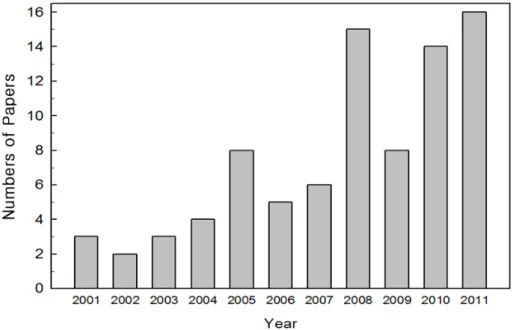
Figure 1. Numbers of papers on climate change published in selected domestic journals
climate change was 82 (50.6%) during 2001-2011, and research in this area seems to have rapidly increased since 2008 (Figure 1). Climate change research in- cluded the characteristic, prediction, cause and impact on climate change, and studies have been published in various journals such as Journal of Korean Geographi- cal Society, Asia-Pacific Journal of Atmospheric Sciences, and Journal of Climate Research.
Thirty-nine papers (47.6%) studied the character- istic of climate change out of the total of 82 papers published on climate change in general during the study period (Figure 2). Twenty-three studies out of 39 (56.1%) were done by geographers while 16 stud- ies (39.0%) were done by meteorologists. Research on climate prediction came next with 20.7% (17 papers) followed by studies on the cause of climate change (14 papers, 17.1%) and on the impact of climate change (12 papers, 14.6%). Meteorologists most studied the cause (12 papers) and prediction (12 papers) of climate change (29.3%, respectively), while geographers main- ly studied the impact of climate change (11 papers, 26.8%). Some studies on the prediction of climate change by geographers were performed on collabora-
tions with meteorologists (5 papers, 12.2%).
Among the 39 studies on the characteristic of cli- mate change, 15 papers focused only on precipitation as one of climate elements. If studies about effects of climate change on precipitation with temperature or any other climate elements were counted, the number of studies on precipitation increased to 23. The large number of studies on precipitation was related to the characteristics of precipitation patterns with large sea- sonality and spatial differences in Korea. Papers by ge- ographers included Lee et al. (2011), Park et al. (2008), and Lee and Kwon (2004). Papers by meteorologists included Kim et al. (2010), Byun et al. (2008), and Lu et al. (2007). Lee et al. (2011) explained the variability of extreme precipitation by basin in South Korea using the extreme climate index (STARDEX index). Inter- estingly, they analyzed precipitation in the context of water management. Park et al. (2008) and Lee and Kwon (2004) identified the recent increase of August precipitation in Korea by analyzing changes in the characteristics of summer precipitation. In addition, Choi et al. (2011) explored the characteristics and changes of extreme precipitation events in Korea dur- Figure 2. Areas of focus of climate change research published in selected domestic journals
( a: All studies, b: Comparison of studies by geographers with meteorologists)
ing 1954-2010.
The study areas of climate change in meteorology included Korea, Asia and other regions elsewhere, even though those in geography were mainly centered on Korea. For example, Lu et al. (2007) examined the East Asian precipitation increase under global warm- ing, and Shahid and Khairulmaini (2009) analyzed the spatio-temporal variability of rainfall over Bangla- desh during 1969-2003. Studies on drought by meteo- rologists have been actively published in the domestic journals. Lee and Byun (2009), Byun et al. (2008), and Kim and Byun (2006) studied periodicities of droughts.
There were 13 papers about temperature change in Korea, a topic of increasing interest due to the in- creased concern regarding global warming. Both geog- raphers and meteorologists examined the temperature change mainly in Korea rather than the global scale, as in precipitation research. There were studies on ex- treme temperatures (Lee and Heo, 2011; Choi et al., 2008; Choi and Kwon, 2005; Choi, 2004), unusual temperatures (Heo and Lee, 2006), and change in diurnal temperature (Heo and Lee, 2011). Park (2011) examined the change in seasonal trend of wintertime daily mean temperature in Seoul, Korea.
Studies about the causes of climate change and the climate changes in atmospheric circulation have been mainly led by meteorologists. The study areas were not confined to the Korean peninsular, but were expanded to include regions more generally in Asia and else- where. There were studies on the relationship between El Niño and climate variation in Korea (Kug et al., 2010; Jang and Ha, 2008; Cha, 2007; Ha et al., 2001;
Byun et al., 2001), the relationship between solar cycle and midlatitude precipitation (Moon and Jhun, 2006), and the large-scale atmospheric circulation related to climate in Korea (Kim and Ahn, 2010; Heo and Lee, 2006; Kim, D.-W. et al., 2005; Kim, S. et al., 2005).
Research on climate prediction has been mainly led
by meteorologists. Climate modeling and the outputs from the simulations were used to predict future cli- mate. Lee, S.-M. et al. (2008) analyzed the change in the western North Pacific summer monsoon due to the CO
2increase in IPCC AR4 CGCMs, and Ho et al. (2011), Min and Jhun (2010), and Yun et al. (2008) also performed climate model simulations to predict future climate in East Asia. Choi et al. (2009) pre- dicted a seasonal frequency of tropical cyclone using a statistical model. Kwon et al. (2007; 2008) predicted change in natural seasons in South Korea using the A1B scenario data, and Choi and Kwon (2008) exam- ined likely future changes in the type of wintertime precipitation in South Korea.
Research on the impact of climate change in Korea has been mainly performed by geographers while the one study in the United States has been done by a me- teorologist (Oh, 2005). Also, a study by geographer (Franczyk and Chang, 2007) analyzed the economic impacts of climate change on water resources in Or- egon, the United States and Rio Grande river basin.
Other domestic studies on impacts of climate change were led by researchers in the Konkuk University Climate Research Institute (Lee et al., 2009; Lee and Kim, 2008; Heo and Lee, 2008; Lee, S., 2008).
Hidore et al. (2010) considered paleoclimatology
as a subdivision of climatology. However, since only
5 research papers focused on paleoclimatology, we
included it in climate change category, as in Lee, H.-
Y. (1996). Four out of 5 papers were published by me-
teorologists. Paleoclimate studies mostly analyzed the
historical documents such as the Annals of the Chosun
Dynasty (Kim, 2009; Chung et al., 2004; Lim and
Shim, 2002). Chung et al. (2004) analyzed paleocli-
mate conditions at Seogwipo, Cheju island using paly-
noflora from quaternary sediments.
4) Climatography
Climatography has been considered as one of the major subdivisions in climatology among Korean cli- matologists, even though focus has recently shifted to climate change. There were 36 papers on climatogra- phy during the study period, which was 22.2% of total papers considered. Overall interest in this topic seems to have declined since Lee, H.-Y. (1996) categorized 43.5% of papers as being on climatography, papers on this topic have been steadily published every year, expect for 2004 (Figure 3). The research climaxed in 2005 by 10 papers being published and then, has been decreased. Geographers led those studies with addi- tional contributions by meteorologists (15 papers).
As for research on climatography by geographers, there were studies of climate classification (Park et al., 2009; Hussain and Lee, 2009; Park et al., 2006; Lee et al., 2005; Ko et al., 2005; Park, 2005; Park and Ryu, 2005), spatial distribution and difference of climate (Lee et al., 2009; Kwon, 2006; Lee, 2003; Lee and
Chun, 2003), distribution of unusual weather such as heat and cold waves (Kim and Lee, 2007; Choi and Park, 2010; Kwon et al., 2005), and characteristics of folk houses influenced by climates (Lee, 2002; Lee and Kim, 2001). Kim and Lee (2009) studied the occur- rence of Asian Dust and its controlling factors in Korea by analyzing atmospheric circulations. Research on climatography by meteorologists focused on unusual climatic characteristics in an abnormal year (Lee et al., 2007; Cassardo et al., 2007), local meteorological characteristics (Kim, 2005; Gang et al., 2005; Kim and Min, 2001), and seasonality (Yoon et al., 2006; Ha et al., 2005b).
5) Dynamic Climatology
During 2001-2011, there were 15 papers on dynamic climatology (9.3%), which was the third-most pub- lished subfield in the domestic journals. The propor- tion was much smaller than that reported by Lee, H.-Y.
(1996) (34.7%). This decline may be due in part to the
Figure 3. Numbers of papers on climatography published in selected domestic journals
retirement of leading scholars in this field (e.g. Yang, J.-S.). In addition, the recent increased research on climate change has been at the cost of less attention on dynamic climatology. Nine papers on dynamic clima- tology were published by meteorologists and 6 papers were by geographers. The research by meteorologists included climate in the Korean peninsula and general circulation in East Asia through analysis of climate patterns in Asian and global scales. Kim, K.-O. et al.
(2005) analyzed the characteristics of atmospheric cir- culation over East Asia and unusual climate of Korea in summer 2003, and Ha, K.-J. et al. (2003) and Im and Ahn (2004) identified the relationship between climate in the Korean peninsula and its associated large-scale atmospheric circulation.
The study areas of dynamic climatology by geog- raphers were mainly centered on Korea. Yang (2005;
2003) explained climatic characteristics of Korea such as winter droughts and spring rainfall by analyzing synoptic climatological patterns in Korea. Park (2010) and Choi and Kim (2010) identified the difference
of synoptic characteristics according to spatial dis- tribution of precipitation in Korea. However, Choi et al. (2008) analyzed prevailing synoptic patterns for persistent positive temperature anomaly in the United States.
5. Recent Climate Research pub- lished in the International Journals
The number of papers published in the four interna- tional journals by Korean climatologists has notably increased during the study period (Figure 4). The aver- age number of papers published per year in the second half of the period (13.0 papers per year for 2007-2011) was about double of that in the first half (6.6 papers per year for 2001-2005).
In analyzing the international journals, we com- bined dynamic climatology and physical climatology into a single group, Dynamic and Physical Climatol-
Figure 4. Numbers of papers published in selected international journals by Korean climatologists
during 2001-2011
ogy. During the study period, the papers related to dynamic and physical climatology numbered 55 out of a total 105 published in the international journals by Korean climatologists (52.4%). About 42% of the studies on dynamic and physical climatology (23 out of 55) were about El Niño-Southern Oscillation (ENSO) climate and 21.8% (12 out of 55) were about monsoon climate. ENSO studies have focused on mechanisms (An and Wang, 2001; Kang et al., 2002;
Kug et al., 2009; Kim and An, 2011; Kug et al., 2011), variability (Lee et al., 2002; Ye and Kirtman, 2009;
An, 2009), and feedbacks with other climate com- ponents (Kug and Kang, 2006; Choi et al., 2009). In addition, Korean climatologists identified the effects of ENSO on the climate in Asia including the Korean peninsula (Yoo et al., 2004; Kim, K.-Y. et al., 2008).
The atmospheric anomalies for the 1997/98 ENSO pe- riod were analyzed and intercompared using the data simulated by 11 different atmospheric general circula- tion models (Kang et al., 2002). An (2009) studied the interdecadal changes in the nonlinearities of ENSO conditions identified in the previous studies.
Most of monsoon studies by Korean climatologists have considered summer monsoon patterns in Korea (Kim, B.-J. et al., 2002; Ha et al., 2005a) and Asia (Lim et al., 2002; Kim and Hong, 2007; Yhang and Hong, 2008; Song et al., 2010). The reason for this fo- cus was that summer monsoon rainfall is crucial to wa- ter resources in agricultural and industrial activities in Asian countries and also that monsoons are associated with flooding disasters and societal disruption. Some studies considered both ENSO and monsoon climates (Lee, E.-J. et al., 2005; Lim and Kim, 2007; Lee, E.
et al., 2008). Other researches in the field of dynamic and physical climatology (20 out of 55 papers; 36.4%) were about Madden-Julian Oscillation (Kim, H.-M.
et al., 2008; Seo et al., 2009; Kang and Kim, 2010 ), Arctic Oscillation (Gong et al., 2007; Park, T.-W. et al., 2011), tropical cyclone activity (Kim, J.-H. et al.,
2005; Choi et al., 2010b), and radiative forcing (Park, S.-U. et al., 2010). Two monsoon studies were done by geographers over East Asia (Lee, E. et al., 2008) and India (Lee, E. et al., 2009). Lee, E. et al. (2009) exam- ined the effects of irrigation and vegetation activity on the Indian summer monsoon.
Climate Change was the second most published field in the selected international journals by Korean climatologists (29 out of 105 papers, 27.6%). 20 stud- ies out of 29 (69.0%) examined the characteristics of climate change (Ho et al., 2003; Ho et al., 2004;
Ryoo et al., 2004; Han, 2006; Jung et al., 2001; Ha and Ha, 2006; Cho et al., 2008; Choi et al., 2010a;
Kim and Roh, 2010; Park, J.-S. et al., 2011), followed by the subjects of future climate prediction (20.7%) (Min and Hense, 2007; An et al., 2008; Kim and Byun, 2009; Lee, J. et al., 2011) and impacts of climate change (10.3%) (Kim, J. et al., 2002; Lee, H. W. et al., 2011). In the field of climate change, two studies were led by geographers (Choi, G. et al., 2009; Jung et al., 2011) and two studies (Jung et al., 2002; Griffiths et al., 2005) were published in collaboration with a geographer (Choi, Y.). Choi, G. et al. (2009) examined changes in extreme events of temperature and precipi- tation at 143 weather stations across ten Asia-Pacific Network countries for the 1955-2007 period.
The papers in the field of Applied Climatology numbered 14 out of 105, which was 13.3% of the total papers analyzed. Nine papers out of 14 in the field (64.3%) studied urban climate (Kim and Baik, 2004;
Chung, U. et al., 2004; Um et al., 2007; Rim et al., 2009; Jeong et al., 2011; Chung, Y.-S. et al., 2004).
In addition, there were studies of seasonal forecasting
(Kim et al., 2004; Hwang et al., 2001), artificial show-
ery rain (Lee and Byun, 2011), and phenology (Chung,
U. et al., 2004). Two studies led by geographers were
about human radiation exchange model (Park and
Tuller, 2011) and temperature bias in urban weather
stations (Choi et al., 2003).
Lastly, the number of articles in Climatography was 7 out of 105 papers (6.7%). Studies in the field exam- ined the climate conditions in a typical year such as drought (Hong and Kalnay, 2002). In addition, the spatial and temporal relationships of drought occur- rence and intensity between Korea and East Asia were studied in collaboration of meteorologists and a geog- rapher (Min et al., 2003).
While we considered the four popular international publication outlets, Korean climatologists have been increasingly favoring other international journals, such as Journal of Geophysical Research-Atmospheres, Climate Dynamics, and Geophysical Research Letters. For the overall review of trends in climate research by Korean climatologists, other international journals should be considered in the further analysis.
6. Summary and Conclusions
This study reviewed trends in Korean climate research published in selected domestic and interna- tional journals during 2001-2011. We analyzed six domestic journals listed in KCI and four international journals listed in SCI. Overall, the recent climate research focused on the characteristics of unstable pat- terns in precipitation over Korea and increasing global temperature. Research on climate change increased remarkably over the 11 years studied, while studies on precipitation patterns and variability have been given steady attention from Korean climatology community.
Meteorologists focused on the characteristics, predic- tion, and causes of climate change, while geographers paid attention to the characteristics and impacts of climate change. In applied climatology, there was more attention paid to physioclimate and impacts of climate change on agricultural and livestock industries. These studies were also related to recent climate change.
Research on the impact of climate change on vegeta- tion in the field of bioclimatology has increased under recent global warming. Studies on climatography have been steadily done by Korean climatologists, although they have generally decreased over the recent period.
While the total numbers of papers published in the selected domestic journals during the study period were balanced in their authorships between geogra- phers (89 articles) and meteorologists (72 articles), the number of papers published in the selected in- ternational journals by geographers was only 6 out of the 105 papers analyzed in this study. This small proportion of the papers published in international journals by geographers may relate to a focus on the local- and regional-scales rather than continental- and global-scales by geographers. For example, 62% of the published papers in the selected international journals by Korean climatologists had regional study areas in Asia and elsewhere. Another possible reason was due to the sub-field of studies published in the international journals. More than half of the international papers published by Korean climatologists were studies on dynamic and physical climatology, an area to which meteorologists gave more attention than geographers.
Climate studies at the regional scale (country level) and local scale (province and city levels) increasingly appeared in international journals. Thus, Korean ge- ographer-climatologists need to consider international outlets when deciding where to publish their research.
The efforts will demonstrate that Korean geographers are actively engaged with international community.
Acknowledgments
We gratefully acknowledge Sunyoung Kim and
Myung-Chan Ko in the Konkuk University Climate
Research Institute for their assistant in an analysis of
domestic and international journals used in this study.
We wish to thank Tim Warner in the Department of Geology and Geography at West Virginia University and Hyun Jung Yang in the Intensive English Program at West Virginia University for reading and editing the manuscript, and also the anonymous reviewers for helpful comments.
References