Pharmacological and Mechanical Thromboprophylaxis in Critically Ill Patients: a Network Meta-Analysis of 12 Trials
Thromboprophylaxis for venous thromboembolism is widely used in critically ill patients.
However, only limited evidence exists regarding the efficacy and safety of the various thromboprophylaxis techniques, especially mechanical thromboprophylaxis. Therefore, we performed meta-analysis of randomized controlled trials (RCTs) that compared the overall incidence of deep vein thrombosis (DVT) for between unfractionated heparin (UFH), low- molecular-weight heparin (LMWH), and intermittent pneumatic compression (IPC) in critically ill patients. A Bayesian random effects model for multiple treatment comparisons was constructed. The primary outcome measure was the overall incidence of DVT at the longest follow-up. The secondary outcome measure was the incidence of major bleeding, as defined by the original trials. Our analysis included 8,622 patients from 12 RCTs. The incidence of DVT was significantly lower in patients treated with UFH (OR, 0.45; 95% CrI, 0.22-0.83) or LMWH (OR, 0.38; 95% CrI, 0.18-0.72) than in patients in the control group. IPC was associated with a reduced incidence of DVT compared to the control group, but the effect was not statistically significant (OR, 0.50; 95% CrI, 0.20-1.23). The risk of DVT was similar for patients treated with UFH and LMWH (OR, 1.16; 95% CrI, 0.68-2.11).
The risk of major bleeding was similar between the treatment groups in medical critically ill patients and also in critically ill patients with a high risk of bleeding. In critically ill patients, the efficacy of mechanical thromboprophylaxis in reducing the risk of DVT is not as robust as those of pharmacological thromboprophylaxis.
Keywords: Deep Vein Thrombosis; Venous Thrombosis; Meta-Analysis Jonghanne Park,1* Joo Myung Lee,2*
Jeong Seok Lee,3 and Young-Jae Cho4
1Department of Internal Medicine and Cardiovascular Center, Seoul National University Hospital, Seoul, Korea; 2Division of Cardiology, Department of Internal Medicine, Heart Vascular Stroke Institute, Samsung Medical Center, Seoul, Korea; 3Department of Internal Medicine, Seoul National University Hospital, Seoul, Korea;
4Division of Pulmonary and Critical Care Medicine, Department of Internal Medicine, Seoul National University Bundang Hospital, Seongnam, Korea
* Jonghanne Park and Joo Myung Lee contributed equally to this study.
Received: 9 March 2016 Accepted: 12 August 2016 Address for Correspondence:
Young-Jae Cho, MD
Division of Pulmonary and Critical Care Medicine, Department of Internal Medicine, Seoul National University Bundang Hospital, 82 Gumi-ro, 173-beon-gil, Bundang-gu, Seongnam 13620, Korea
E-mail: [email protected]; [email protected]
http://dx.doi.org/10.3346/jkms.2016.31.11.1828 • J Korean Med Sci 2016; 31: 1828-1837
INTRODUCTION
Venous thromboembolism (VTE), including deep vein throm- bosis (DVT) and pulmonary embolism (PE), is a common pre- ventable complication experienced by critically ill patients hos- pitalized in intensive care units (ICUs). The increased risk of VTE is due to immobilization related to severe illness, sedating medications, and invasive procedures (1). The estimated inci- dence of DVT in critically ill patients varies from 13% to 31%, depending on study design. DVT is responsible for most cases of PE, a potentially life-threatening condition that has a report- ed 30% mortality rate in the ICU (2,3).
Currently, prevention techniques for VTE in critically ill pa- tients include pharmacological thromboprophylaxis and me- chanical thromboprophylaxis. Pharmacological thrombopro- phylaxis, which is often used in medical critically ill patients, in- cludes unfractionated heparin (UFH) and low-molecular-weight heparin (LMWH). The 9th American College of Chest Physicians (ACCP) Antithrombotic Therapy and Prevention of Thrombosis Guidelines suggest the use of UFH or LMWH based on low-qual- ity evidence (Grade 2C) (4). In a recent meta-analysis, Alhazzani
et al. (5) reported that thromboprophylaxis with any type of heparin reduced the rates of DVT to half (pooled risk ratio, 0.51;
95% CI, 0.41-0.63). The efficacy of mechanical prophylaxis in critically ill patients, compared to pharmacological prophylaxis, is based on even weaker evidence. The ACCP guidelines sug- gest the use of mechanical prophylaxis in critically ill patients who are bleeding or at high risk for major bleeding (Grade 2C) based on a systematic review of two randomized clinical trials (RCTs) that included patients who underwent major orthope- dic surgery (4,6-8). In a recent retrospective audit of 28 North American ICUs, guideline concordance with use of pharmaco- logical thromboprophylaxis was 95.5%. However, when consid- ering the absolute proportion of each prophylactic interven- tion, approximately one-fourth (9.5% mechanical prophylaxis alone, 15.3% no prophylaxis) of the patients did not receive pharmacological prophylaxis. The lack of pharmacological pro- phylaxis was mainly attributed to clinical bleeding or risk of bleeding, which together accounted for approximately 71% of the reasons for not using an anticoagulant (9). Up to 80% of critically ill patients experience at least one or more episodes of bleeding, so the actual utilization rate of mechanical prophy- Emergency & Critical Care Medicine
laxis is expected to be quite high, despite the lack of evidence for efficacy and safety in this special population.
Until now, no meta-analysis has compared the efficacy and safety of various approaches to thromboprophylaxis, including both pharmacological and mechanical interventions, in criti- cally ill patients. Recently, two RCTs have reported results of tri- als evaluating the role of mechanical prophylaxis in the critical- ly ill (10,11).
Therefore, we performed a comprehensive Bayesian network meta-analysis to compare the efficacies and safety profiles of UFH, LMWH, mechanical prophylaxis, and no prophylaxis. We aimed to compare the efficacies of current thromboprophylaxis interventions and their effects on major bleeding, with particu- lar attention paid to comparisons between intermittent pneu- matic compression (IPC) and various types of heparin and be- tween IPC and the control group.
MATERIALS AND METHODS Data sources and searches
We searched PubMed, EMBASE, the Cochrane Central Register of Controlled Trials, and the United States National Institutes of Health Registry of Clinical Trials (www.clinicaltrials.gov) for pertinent published and unpublished studies. Our detailed search strategy is presented in the Online-Only Supplements.
Additional data sources included conference proceedings from the American Thoracic Society (1994-2014), the Society of Criti- cal Care Medicine (1994-2013), the European Society of Inten- sive Care Medicine (1994-2014), the American College of Chest Physicians (1994-2014), and the International Symposium on Intensive Care and Emergency Medicine (1997-2014). The elec- tronic search strategy was complemented by a manual review of the reference list of each included article. Reference lists of recent reviews, editorials, and meta-analyses were also exam- ined. No restrictions were imposed on language, study period, or sample size (12).
Study selection
We included RCTs that assessed the efficacy and safety of throm- boprophylaxis for VTE, including DVT or PE, whose study pop- ulation consisted of medical or surgical critically ill patients, in- cluding patients with major trauma. We defined critically ill pa- tients as those who received care in an ICU setting. Pharmaco- logical thromboprophylaxis included any form of heparin (UFH or LMWH) and mechanical prophylaxis included IPC or se- quential compression devices. To be included in our analysis, clinical outcomes of efficacy (the incidence of DVT) and safety (the incidence of major bleeding) at the most recent available follow-up were clearly reported. We excluded RCTs that includ- ed pediatric patients and randomized crossover trials that as- signed patients to multiple treatment arms simultaneously.
Data extraction and quality assessment
For our analysis, we examined summary data reported in the published articles. A standardized form was used to extract the following information for each study: trial characteristics; study design, including generation of randomization sequence, allo- cation concealment, crossover between assigned groups, num- ber of post-randomization withdrawals, and loss to follow-up;
number of study patients; age of patients; cause of ICU admis- sion and underlying co-morbidities; inclusion and exclusion criteria for the trial; detailed protocols of each intervention, such as the dose, duration, and route of administration of phar- macological thromboprophylaxis or application duration of mechanical thromboprophylaxis; diagnostic modality and time point for evaluation of VTE; length of follow-up; and clinical outcomes regarding efficacy (the incidence of DVT) or safety (the incidence of major bleeding) reported on an intention-to- treat basis. The quality of eligible RCTs was assessed using the Cochrane Collaboration’s tool for assessing the risk of bias for RCTs (Supplementary Table 1) (13). We also reported the Jadad score for quantitative comparison among the included trials (14). Two investigators independently screened the titles and abstracts, identified duplicates, reviewed full articles, and de- termined eligibility for this analysis. Disagreements were re- solved by a thorough discussion. The last search was performed in June 2014.
Outcomes and definitions
The primary outcome measure was overall incidence of DVT at the longest available follow-up. The secondary outcome mea- sure was the incidence of major bleeding, as defined by the original trials. We defined four treatment groups: UFH, LMWH, IPC, and control. The control group included patients who re- ceived no thromboprophylaxis or who were treated only with gradual compression stockings. All patients and outcomes were analyzed according to the group in which they were assigned in the original study.
Data synthesis and analysis
A Bayesian random effects model for multiple treatment com- parisons was constructed to compare the primary outcome (the incidence of thromboembolism) among the four groups (LMWH, UFH, IPC, and control). We used a Bayesian extension of the hierarchical random effects model proposed by Lumley for networks of multi-arm trials (15). Odds ratios (ORs) with 95% credible intervals (CrIs) are presented as summary statis- tics. Non-informative prior distributions were selected to allow the data to dominate the final results. We performed Markov chain Monte Carlo samplers in WinBUGS v.1.4.3 (MRC Biosta- tistics Unit, Cambridge, UK), and we ran four chains with dif- ferent starting values. A burn-in phase of 10,000 iterations was followed by 50,000 updates; the number of burn-in iterations
was chosen according to the Brooks-Gelman-Rubin method for convergence checks (16). Pair-wise ORs were estimated from the median of the posterior distribution, with CrIs obtained from the 2.5th and 97.5th percentiles. Results were considered significant if the CrIs of the ORs did not include 1. Pair-wise in- consistency and inconsistency between direct and indirect ef- fect estimates were assessed with the node-splitting method, followed by an evaluation of inconsistency among P values.
Heterogeneity across trials was evaluated by I2 statistics, which is consistent with a frequentist meta-analysis. In a pooled anal- ysis of the secondary outcome (the risk of major bleeding), we stratified all of the included trials according to the baseline risk of bleeding. Since the trials showed heterogeneous risks for ma-
jor bleeding, we separately evaluated the pooled risk of bleed- ing for each treatment group in trials that enrolled medical criti- cally ill patients and trials that enrolled patients with major trau- ma or a high-risk of bleeding, such as patients with overt coagu- lopathy or active bleeding. Statistical analysis was performed with WinBUGS v.1.4.3 and R programming language, version 3.0.2 (R Foundation for Statistical Computing, Vienna, Austria).
The к statistic was used to assess agreement between investiga- tors for study selection. The present study was performed in compliance with the Preferred Reporting Items for Systematic Reviews and Meta-Analyses (PRISMA) guidelines and the re- view protocol has not been registered (Supplementary Table 2) (17).
UFH (n = 3,197)
LMWH (n = 3,079)
5 Studies
2 Studies 2 Studies
2 Studies
2 Studies One
3-arm trial
Control (n = 1,778)
IPC (n = 568)
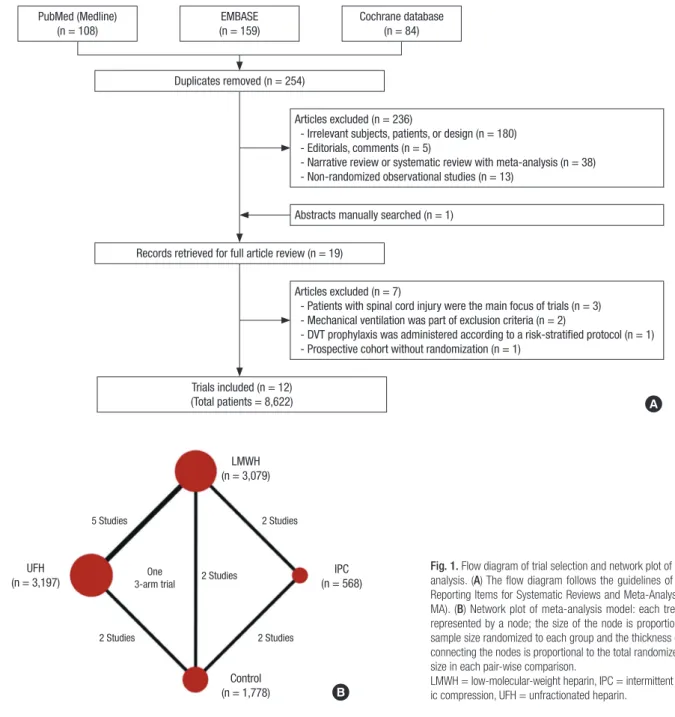
Fig. 1. Flow diagram of trial selection and network plot of the meta- analysis. (A) The flow diagram follows the guidelines of Preferred Reporting Items for Systematic Reviews and Meta-Analyses (PRIS- MA). (B) Network plot of meta-analysis model: each treatment is represented by a node; the size of the node is proportional to the sample size randomized to each group and the thickness of the line connecting the nodes is proportional to the total randomized sample size in each pair-wise comparison.
LMWH = low-molecular-weight heparin, IPC = intermittent pneumat- ic compression, UFH = unfractionated heparin.
PubMed (Medline) (n = 108)
EMBASE (n = 159)
Cochrane database (n = 84)
Duplicates removed (n = 254)
Records retrieved for full article review (n = 19)
Trials included (n = 12) (Total patients = 8,622)
Articles excluded (n = 236)
- Irrelevant subjects, patients, or design (n = 180) - Editorials, comments (n = 5)
- Narrative review or systematic review with meta-analysis (n = 38) - Non-randomized observational studies (n = 13)
Abstracts manually searched (n = 1)
Articles excluded (n = 7)
- Patients with spinal cord injury were the main focus of trials (n = 3) - Mechanical ventilation was part of exclusion criteria (n = 2)
- DVT prophylaxis was administered according to a risk-stratified protocol (n = 1) - Prospective cohort without randomization (n = 1)
A
B
Table 1. Characteristics of included trials Trial (Ref)Involved populationInclusion criteriaExclusion criteriaIntervention (No. of patients)Control (No. of patients)Other measures of prophylaxisIntervention periodFollow-up periodOutcome assessmentDefinition of major bleeding Cade et al. (20)Single center (Australia) Patients admitted to general ICUAge <40 yr; impaired hemostasis; unable to undergo leg scanningUFH 5,000 U SC bid (60)Placebo: isotonic saline SC bid (59) N.R.From <24 hr to 10 days or fully ambulant or VTE occurrence 4 to 10 daysDaily leg scanning using 125I-labeled fibrinogen
N.R. Geerts et al. (18)
Single center (Canada) Adult; severe injury, ISS ≥9ISS <9; frank intracranial bleeding; bleeding that remained uncon- trolled for 36 hr; systemic coagu- lopathy; anticoagulation indicated
LMWH: Enoxaparin 30 mg bid (136)UFH 5,000 U SC bid (129)Not allowedFrom <36 hr to 14 days14 daysVenography be- tween days 10 and 14; daily clinical assess- ment; venogra- phy conducted if suspicious Dop- pler USG findings Hb decrease ≥2.0 g/dL; transfusion of ≥2 packs RBC; intracranial or retroperitoneal bleeding; need for surgical inter- vention Kapoor et al. (25)
Single center (US) Patients admitted to MICU Patients requiring full dose anticoag- ulation; bleeding disorderUFH 5,000 U SC bid (401)Placebo (390)N.R.During ICU stayUntil dis- chargeVenous duplex study every 72 hr;±V/Q scan
N.R. Fraisse et al. (23)
34 MICUs (France)AE-OPD requiring MV; age 40-80 yr; weight 45-110 kg Confirmed DVT; bleeding lesion; he- patic or renal failure; uncontrolled HTN; coagulation disorder; history of heparin-related side effects LMWH: Fraxiparin 3800 AXa IU for 45 to 70 kg SC qd; 5,700 AXa IU for 71 to 110 kg, SC qd (84) Placebo: isotonic saline SC qd (85) N.R.Until MV weaning; maximum 20-22 days 20 to 22 daysDaily PE; Doppler USG once week- ly; venography at end of study; ±pulmonary angiography
Hb drop >2.0 g/ dL; transfusion of ≥2 packs RBC; intracranial or retroperitoneal bleeding; treat- ment halted Goldhaber et al. (21)28 institu- tions (US)MICU patientsN.R.LMWH: Enoxaparin 30 mg SC bid (156)
UFH 5,000 U SC bid (154)GCSN.R.14 daysDoppler USG on days 3, 7, 10, 14N.R. Shorr et al. (26)Multination- al, multi- center
Age >18 yr; severe sepsis; multiple organ failure; APACHE II score >25 Concurrent need for other anticoagu- lant medication; renal failure; not expected to survive 28 days; lack of commitment for aggressive management (1) LMWH: Enoxa- parin 40 mg SC qd (478) (2) UFH 5,000 U SC bid (498) Placebo: isotonic saline SC bid (959) Mechanical methods (not specified)
Initial 4 days28 daysDoppler USG on days 4, 6, 28N.R. De et al. (22)Single cen- ter (India)Critically ill patients (required ICU care >1 day); age >40 yr; scheduled for major elective surgery (re- quired GA and >6 days of hospitalization)
Bleeding diathesis; hepatic or renal failure; HIT; hemorrhagic stroke; GI bleeding; pregnancy or lactation LMWH: Enoxaparin 40 mg SC qd (81) UFH 5,000 U SC bid + placebo (isotonic saline) (75) Not allowedFrom 1-12 hr be- fore surgery to minimum of 6 days postopera- tively; discontin- ued when fully mobile 6 monDoppler USG be- tween days 5 and 7; outpatient follow-up at 4 wk and 6 mon
GI bleeding diag- nosed on stool test or upper GI endoscopy; any bleeding episode requiring reoper- ation (Continued to the next page)
Trial (Ref)Involved populationInclusion criteriaExclusion criteriaIntervention (No. of patients)Control (No. of patients)Other measures of prophylaxisIntervention periodFollow-up periodOutcome assessmentDefinition of major bleeding PROTECT (19)Multination- al, multi- center Age >18 yr; weight >45 kg; expected to remain in ICU >3 days Major trauma; neurosurgery or or- thopedic surgery; need for thera- peutic anticoagulation; heparin ad- ministration in the ICU for at least 3 days; pregnancy; life-support limitation LMWH: Dalteparin 5,000 U SC qd + placebo SC qd (1,873)
UFH 5,000 U SC bid (1,873)Per protocol; al- ternative anti- coagulant agent or me- chanical pro- phylaxis (GCS or IPC) was applied During ICU stay100 daysDoppler USG within 2 days after ad- mission and twice weekly
Hb decrease ≥2.0 g/dL; transfusion of ≥2 packs RBC; intracranial or retroperitoneal bleeding; need for surgical inter- vention Ginzburg et al. (24)
Single center (US) Adult; severe injury, ISS >9; one arm and one leg available for IPC Need for systemic anticoagulation; unlikely to survive or remain in hospital >7 days; renal failure; pregnancy; BMI >25 kg/m2
LMWH: Enoxaparin 30 mg SC bid (218) IPC* (224)Not allowedFrom <24 hr af- ter trauma until independent walking or dis- charge 30 daysDoppler USG within 24 hr and weekly thereafter or as indicated when DVT was sus- pected
Hb decrease ≥2.0 g/dL; transfusion of ≥2 packs RBC; intracranial or retroperitoneal bleeding; need for surgical inter- vention Kurtoglu et al. (27)
Single center (Turkey) Patients with severe head/spinal trauma in ICU Age <14 yr; hepatic or renal failure; spinal cord injury; history of DVT; high bleeding risk; regular use of anticoagulant LMWH: Enoxaparin 40 mg SC qd (60) IPC† (60)All patients were placed on IPC on admission to ICU
From <24 hr af- ter admission for 7-10 days Until 1 week post dis- charge Doppler USG on admission to ICU, weekly, and one week after dis- charge
Macroscopic he- maturia without renal injury; overt bleeding; and Hb decrease ≥2.0 g/dL Zhang et al. (10)
Single center (China) Patients admitted to ICURegular use of anticoagulantIPC‡ (79)No thrombopro- phylaxis (83)Not allowed28 days after ICU admission28 daysDoppler USG on days 1, 3, and 7, then once a week
N.R. Vignon et al. (11)
Multicenter (France)Age >18 yr; high risk of bleeding on ICU admis- sion: (1) symptomatic bleeding; (2) organic lesion likely to bleed; (3) PLT <50,000, aPTT ratio >2, PT% <40%
History of DVT; ICU stay of >36 hr or likely to be <72 hr; life-support limitation; mechanical heart valve; contraindications to mechanical prophylaxis (i.e., severe limb arteri- opathy) IPC§ and GCS (205)GCS (202)Not allowed6 days after ICU admissionFollow up on days 30 and 90
Compression ultra- sonography on day 6
N.R. AE-COPD=acute exacerbated chronic obstructive pulmonary disease, BMI=body mass index, bid=twice daily, DVT=deep vein thrombosis, GA=general anesthesia, GCS=graduated compression stocking, GI=gastrointestinal, Hb=hemoglobin, HIT=heparin-induced thrombocytopenia, HTN=hypertension, ICU=intensive care unit, IPC=intermittent pneumatic compression, ISS=injury severity score, LMWH=low molecular weight heparin, MICU=medical ICU, MV=mechanical ventilation, N.R.=Not reported, PE=physical examination, qd=once daily, RBC=red blood cells, SC=subcutaneous injection, UFH=unfractionated heparin, USG=ultrasonography, VTE=venous thrombo- embolism. *Flowtron, Huntleigh Healthcare; †Flowtron Excell, Huntleigh Healthcare or AV Impulse System Duo, Novamedix; ‡Lympha-Tron type air pressure wave therapeutic apparatus, Daesung Maref; §SCD EXPRESS compression system with adapted tubing sets and thigh sleeves, Covidien.
Table 1. Continued
RESULTS Search results
We identified 254 citations, retrieved 19 studies for detailed eval- uation, and obtained 12 RCTs that met our inclusion criteria (Fig. 1A) (10,11,18-27). The characteristics and reasons for ex- clusion of the seven eliminated studies are summarized in the supplementary materials. The inter-observer agreement for study selection was high (к = 0.91). The 12 RCTs included a to- tal of 8,622 critically ill patients. The interventions for thrombo- prophylaxis were UFH in 3,197 patients (37.1%), LMWH in 3,079 patients (35.7%), and IPC in 568 patients (6.6%). The control group included 1,778 patients (20.6%) who did not receive any of these interventions for thromboprophylaxis. One trial was a 3-arm trial comparing UFH, LMWH, and control groups (Fig.
1B) (26).
Trial characteristics
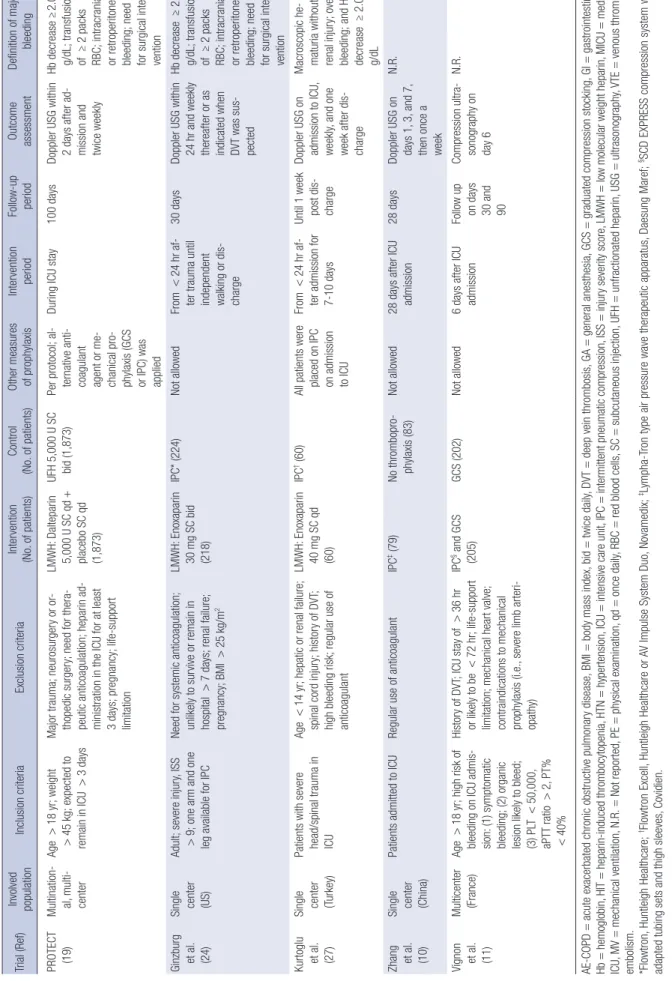
The main characteristics of the individual studies are summa- rized in Table 1. Six of the 12 trials included patients in the med- ical ICU (10,21,23,25,26) and three trials involved trauma pa- tients admitted to the ICU (18,24,27). One trial included surgi- cal critically ill patients (22) and two trials included both medi- cal and surgical critically ill patients (11,19). One trial did not specify the type of ICU (20). Fraisse et al. (23) reported a trial conducted in patients with acute exacerbations of COPD and Shorr and Williams (26) presented a post-hoc analysis regard- ing the efficacy of thromboprophylaxis from a trial conducted with sepsis patients. In all included trials, patients in the UFH groups were treated with 5,000 U of UFH subcutaneously twice daily. In the LMWH groups, three different preparations, fraxi- parin, enoxaparin, and dalteparin, were administered. The dos- ages and schedules of LMWH preparations varied among the trials (Table 1). In all but one study, the occurrence of DVT was
measured with Doppler ultrasonography (USG); the remaining trial employed daily leg scanning using 125I-labeled fibrinogen (20). Supplementary Fig. 1 shows the risk of bias graph and il- lustrates the proportion of studies with each of the judgments for each entry in the Cochrane Collaboration’s tool. A full de- scription of the summary of risk of bias judgments of each study is available in Supplementary Fig. 2 and Supplementary Table 1.
Four trials with an IPC arm showed a high-risk of bias for the blinding procedure (10,11,24,27). However, blinding of patients and caregivers was inherently impossible in these trials and bias from the lack of double-blinding would likely not change the results of the current meta-analysis, since the diagnostic modalities and methods for DVT were objective methods and would not be influenced by the lack of blinding.
Comparison of overall risk of DVT
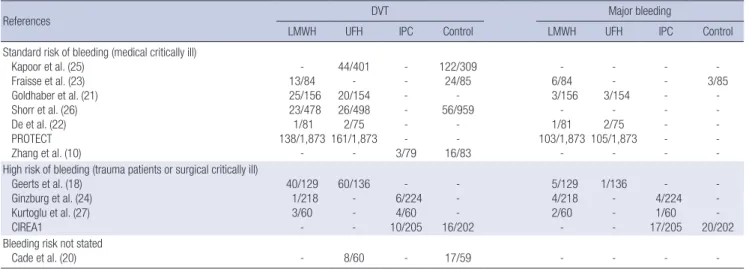
In all, the 12 trials included 8,622 patients with identified DVT (Table 2) (10,11,18-27). In a pooled analysis of overall incidence of DVT, the use of LMWH or UFH was associated with a signifi- cantly lower risk of DVT than the control group (LMWH: OR, 0.38; 95% CrI, 0.18-0.72; UFH: OR, 0.45; 95% CrI, 0.22-0.83). The efficacy of LMWH in reducing the risk of DVT was similar to the efficacy of UFH (OR, 0.86; 95% CrI, 0.47-1.48). IPC showed a trend toward lowering the DVT risk compared to the control group, but this difference was not significant (OR, 0.50; 95% CrI, 0.20-1.23) (Supplementary Table 3). Although LMWH and UFH showed lower risks of DVT than IPC, the differences were not statistically significant (LMWH: OR, 0.76; 95% CrI, 0.28-1.92;
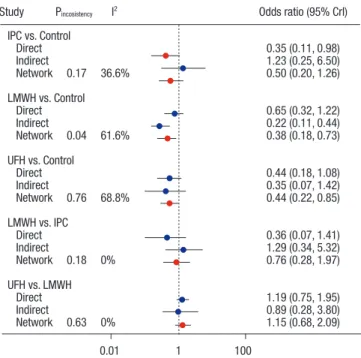
UFH: OR, 0.89; 95% CrI, 0.31-2.41; Fig. 2A). The significant ben- efit of LMWH or UFH compared to the control group was con- sistently observed in both direct and indirect estimates of the comparisons, with acceptable ranges of statistical heterogene- ity. In a ranking probability analysis, LMWH showed the highest probability of reducing the risk of DVT (48.6%; Fig. 2B and 3).
Table 2. Incidence of DVT and major bleeding in each trial
References DVT Major bleeding
LMWH UFH IPC Control LMWH UFH IPC Control
Standard risk of bleeding (medical critically ill) Kapoor et al. (25)
Fraisse et al. (23) Goldhaber et al. (21) Shorr et al. (26) De et al. (22) PROTECT Zhang et al. (10)
- 13/84 25/156 23/478 1/81 138/1,873
-
44/401 - 20/154 26/498 2/75 161/1,873
-
- - - - - - 3/79
122/309 24/85
- 56/959
- - 16/83
- 6/84 3/156
- 1/81 103/1,873
-
- - 3/154
- 2/75 105/1,873
-
- - - - - - -
- 3/85
- - - - - High risk of bleeding (trauma patients or surgical critically ill)
Geerts et al. (18) Ginzburg et al. (24) Kurtoglu et al. (27) CIREA1
40/129 1/218 3/60
-
60/136 - - -
- 6/224
4/60 10/205
- - - 16/202
5/129 4/218 2/60
-
1/136 - - -
- 4/224
1/60 17/205
- - - 20/202 Bleeding risk not stated
Cade et al. (20) - 8/60 - 17/59 - - - -
DVT = deep vein thrombosis, LMWH = low molecular weight heparin, UFH = unfractionated heparin, IPC = intermittent pneumatic compression.
Fig. 2. Comparative efficacy of thromboprophylaxis interventions in the prevention of deep vein thrombosis (DVT). (A) Estimated odds ratios (ORs) and 95% credible intervals (CrIs) for DVT from network meta-analysis for different thromboprophylaxis interventions, according to a Bayesian network meta-analysis with random effects model. The circles and horizontal lines indicate pair-wise OR and 95% CrI, respectively. (B) Rank probability of each treatment arm for the risk of DVT. The number on the horizontal axis is the possible rank of each treatment, from best to worst according to the outcome. The size of each bar corresponds to the probability of each treatment being at a specific rank.
LMWH = low-molecular-weight heparin, IPC = intermittent pneumatic compression, UFH = unfractionated heparin.
Comparison Odds ratio (95% Crl)
LMWH vs. Control 0.38 (0.18, 0.72)
UFH vs. Control 0.45 (0.22, 0.83)
IPC vs. Control 0.50 (0.20, 1.23)
LMWH vs. IPC 0.76 (0.28, 1.92)
UFH vs. IPC 0.89 (0.31, 2.41)
Control vs. IPC 2.15 (0.95, 5.05)
LMWH vs. UFH 0.86 (0.47, 1.48)
IPC vs. UFH 1.12 (0.41, 3.24)
Control vs. UFH 2.25 (1.20, 4.46)
UFH vs. LMWH 1.16 (0.68, 2.11)
IPC vs. LMWH 1.31 (0.52, 3.64)
Control vs. LMWH 2.62 (1.39, 5.52)
0.05 1 20
Favors first treatment Favors second treatment
1 2 3 4
100
80
60
40
20
0 (%)
20.6
54.5
24.9
45.4 33.4
9.9 50.2
6.5
93.1
0.0 0.3
0.7
6.0 0.2
35.4
18.9
Control IPC LMWH UFH
A B
IPC vs. Control
Direct 0.35 (0.11, 0.98)
Indirect 1.23 (0.25, 6.50)
Network 0.17 36.6% 0.50 (0.20, 1.26) LMWH vs. Control
Direct 0.65 (0.32, 1.22)
Indirect 0.22 (0.11, 0.44)
Network 0.04 61.6% 0.38 (0.18, 0.73) UFH vs. Control
Direct 0.44 (0.18, 1.08)
Indirect 0.35 (0.07, 1.42)
Network 0.76 68.8% 0.44 (0.22, 0.85) LMWH vs. IPC
Direct 0.36 (0.07, 1.41)
Indirect 1.29 (0.34, 5.32)
Network 0.18 0% 0.76 (0.28, 1.97)
UFH vs. LMWH
Direct 1.19 (0.75, 1.95)
Indirect 0.89 (0.28, 3.80)
Network 0.63 0% 1.15 (0.68, 2.09)
Study Pincosistency I2 Odds ratio (95% Crl)
0.01 1 100
Fig. 3. Analysis of consistency and heterogeneity in the network meta-analysis model for the risk of deep vein thrombosis.
LMWH = low-molecular-weight heparin, IPC = intermittent pneumatic compression, UFH = unfractionated heparin.
Comparison of overall risk of major bleeding
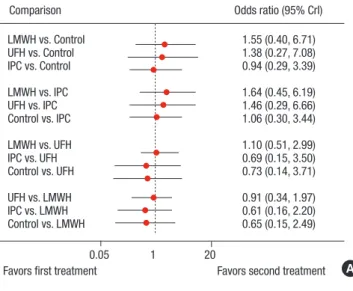
The incidence of major bleeding was reported in eight of the 12 trials (Table 2) (11,18,19,21-24,27). A network meta-analysis of the eight trials showed an insignificant trend of increased major bleeding in LMWH and UFH groups compared to the IPC and control group (Fig. 4A and Supplementary Table 3). However, the eight trials included four RCTs in the medical ICU and three RCTs with trauma patients and one RCT which included pati- ents with high risk of bleeding. Since the two groups of trials
showed different risks of major bleeding, we separately analyzed the risk of major bleeding in medical and surgical critically ill patients, according to the baseline risk of major bleeding. In medical critically ill patients with a standard bleeding risk, UFH and LMWH conferred insignificant trend of increased major bleeding compared with the control group (Fig. 4B). In surgical critically ill patients with a high risk of bleeding, UFH showed a tendency toward a decreased incidence of major bleeding com- pared with LMWH, IPC, and control groups. However, statisti- cal significance was not observed (Fig. 4C).
DISCUSSION
In this network meta-analysis, we aimed to compare the effica- cy and safety of current techniques for thromboprophylaxis in critically ill patients. We observed a significant reduction of DVT risk with pharmacologic prophylaxis, including UFH and LMWH, compared to the control group. The efficacies of thrombopro- phylaxis of UFH and LWMH were similar. The risk of DVT in patients who had mechanical thromboprophylaxis was mar- ginally lower, but the trend was statistically insignificant. The risk of major bleeding was not significantly different among the UFH, LMWH, IPC and control groups in critically ill patients re- gardless of their risk of bleeding.
To our knowledge, this is the first network meta-analysis of contemporary thromboprophylaxis interventions in critically ill patients and we performed multiple treatment comparisons that were previously unavailable. Two previous meta-analyses separately compared the efficacy of heparin to placebo (5) and mechanical thromboprophylaxis to LMWH (28). Alhazzani et al. (5) reported that the use of any heparin preparation was as- sociated with a 50% reduction in the risk of DVT (pooled risk
Fig. 4. Comparative safety of thromboprophylaxis interventions for the risk of major bleeding. (A) Estimated odds ratios (ORs) and 95% credible intervals (CrIs) for major bleeding from eight trials reporting the incidence of major bleeding. (B) Estimated OR and 95% CrI for major bleeding from four trials that included medical critically ill pa- tients with a standard risk of bleeding. (C) Estimated OR and 95% CrI for major bleeding from four trials that included surgical or trauma critically ill patients with a high risk of bleeding. The circles and horizontal lines indicate Bayesian ORs and 95%
CrIs, respectively.
Comparison Odds ratio (95% Crl)
LMWH vs. Control 1.55 (0.40, 6.71)
UFH vs. Control 1.38 (0.27, 7.08)
IPC vs. Control 0.94 (0.29, 3.39)
LMWH vs. IPC 1.64 (0.45, 6.19)
UFH vs. IPC 1.46 (0.29, 6.66)
Control vs. IPC 1.06 (0.30, 3.44)
LMWH vs. UFH 1.10 (0.51, 2.99)
IPC vs. UFH 0.69 (0.15, 3.50)
Control vs. UFH 0.73 (0.14, 3.71)
UFH vs. LMWH 0.91 (0.34, 1.97)
IPC vs. LMWH 0.61 (0.16, 2.20)
Control vs. LMWH 0.65 (0.15, 2.49)
0.05 1 20
Favors first treatment Favors second treatment
Comparison Odds ratio (95% Crl)
LMWH vs. Control 2.14 (0.46, 14.7)
UFH vs. Control 2.29 (0.44, 17.1)
LMWH vs. UFH 0.95 (0.46, 1.82)
Control vs. UFH 0.44 (0.06, 2.29)
UFH vs. LMWH 1.06 (0.55, 2.19)
Control vs. LMWH 0.47 (0.07, 2.18)
0.05 1 20
Favors first treatment Favors second treatment Medical critically ill or standard risk of bleeding
Comparison Odds ratio (95% Crl)
LMWH vs. Control 1.06 (0.10, 13.2)
IPC vs. Control 0.82 (0.15, 4.71)
LMWH vs. IPC 1.28 (0.24, 7.57)
LMWH vs. UFH 7.42 (0.60, 227)
IPC vs. UFH 5.90 (0.26, 258)
Control vs. UFH 7.29 (0.20, 450)
0.05 1 20
Favors first treatment Favors second treatment Trauma or high risk of bleeding
A
B
C
ratio 0.51; 95% CrI, 0.41-0.63; P < 0.001; I2= 77%) compared to placebo. The difference in DVT risks between UFH and LMWH was not significant. In the current meta-analysis, we evaluated 12 RCTs, 10 of which included any heparin. Like the previous analysis, we observed a significant reduction in the risk of DVT with heparin compared with the control group (LMWH: OR, 0.38; UFH: OR, 0.45). Since the last evidence synthesis, no addi- tional trial directly comparing the efficacy of heparin to the con-
trol group was reported, so the greater estimated risk reduction reported in our results is likely attributable to the indirect com- parison of LMWH to the control group via IPC. We observed comparable efficacies of UFH and LMWH, which was also in agreement with the previous analysis.
Contrary to pharmacologic thromboprophylaxis, little evi- dence is available to guide clinicians in the efficacy of mechani- cal thromboprophylaxis. Current ACCP guidelines are based on two RCTs that compared the effect of IPC plus anticoagulation vs. anticoagulation alone in patients undergoing major ortho- pedic surgery, not in critically ill patients (4,6-8). Despite the extensive use of mechanical prophylaxis in critically ill patients, evidence is limited to only one meta-analysis that included only two RCTs comparing IPC and LMWH (28).
In our current analysis, the efficacy of IPC in preventing DVT was evaluated more precisely than in the previous meta-analy- sis. We included two recent trials (10,11) that directly compared the efficacy of IPC to a control group and also indirectly com- pared IPC to a control group via LMWH arms. Additional inclu- sion of recent trials and indirect comparison via network model in our analysis expanded the evidence for evaluating the effica- cy of IPC as thromboprophylaxis. We observed a trend of re- duced DVT risk with IPC compared to the control group, but the reduction was not statistically significant. The use of IPC is relatively widespread and unrestricted in routine practice, but our results question the evidence of thromboprophylactic effi- cacy of IPC. Moreover, recent report of a prospective cohort shows that nonleg venous thromboses are found in 2.2% of med- ical-surgical critically ill patients, primarily in deep veins and proximal veins (29). It could be explainable that the relatively inferior efficacy of IPC to systemic pharmacological thrombo- prophylaxis might be attributable to the increased incidence of nonleg venous thrombosis.
The risk of major bleeding is an important outcome of throm- boprophylaxis in critically ill patients, since major bleeding events can be potentially life-threatening. Additionally, both bleeding itself and subsequent discontinuation of thromboprophylaxis adversely affect clinical outcomes in the ICU. The risk of bleed- ing is one of the main determinants of thromboprophylaxis strat- egy, so we separately analyzed this outcome in medical and surgical critically ill patients. In patients with a standard risk of bleeding (medical critically ill patients), the LMWH, UFH, and control groups did not show differences in the risk of major blee- ding. In patients with a higher risk of major bleeding (surgical critically ill patients, including trauma patients), UFH was insig- nificantly associated with less major bleeding than the LMWH, IPC, or control groups. However, this result is primarily driven by the results of one RCT that compared LMWH and UFH in patients with major trauma. After reviewing all six major bleed- ing episodes (1 with heparin vs. 5 with LMWH), the percentage of patients who required a transfusion, and the amount of trans-
fusion needed, the authors of the trial concluded that the differ- ence in major bleeding risk between UFH and LMWH was not significant.
In the current guidelines, as well as in routine daily practice, the choice of thromboprophylaxis largely depends on a patient’s risk of bleeding. Therefore, the current analysis should be ap- plied to patients according to individual bleeding risk. In criti- cally ill patients with a standard risk of bleeding, pharmacologic thromboprophylaxis with any form of anticoagulant is likely the intervention of choice.
On the basis of our results, we are concerned that mechani- cal thromboprophylaxis is over-used in critically ill patients with a high risk of bleeding. As shown in the current meta-analysis, the evidence supporting the efficacy of IPC in DVT prophylaxis is not as robust as the evidence supporting pharmacological thromboprophylaxis. Moreover, patients with trauma and ma- jor surgical procedures did not show significantly increased risks of major bleeding with pharmacological thromboprophy- laxis. Further, mechanical thromboprophylaxis can cause the spread of nosocomial infections, induce mechanical problems of the lower extremity, and dislodge pre-formed DVT that can result in fatal PE (30-32). Such potential safety issues are more pronounced in critically ill patients. In addition, the routine use of IPC places a higher economic burden on the healthcare sys- tem, especially in developing countries with limited resources for critical care medicine. Therefore, in patients without evidence of active bleeding or risk of life-threatening bleeding, pharma- cological thromboprophylaxis could be a more effective, equal- ly safe, and less expensive measure for the prevention of VTE.
Patients currently categorized as having a high risk of bleeding may be better sub-categorized according to their actual bleed- ing risk. The actual risk of major bleeding in various patient groups, such as critically ill patients with bleeding risk due to trauma, post-surgical patients, not including intracranial or in- traocular surgery, and patients with a recent history of major bleeding in an internal organ, should be further tested in future trials. In addition, given the limited evidence regarding the effi- cacy of mechanical thromboprophylaxis, more studies evaluat- ing the role of mechanical prophylaxis are required in critically ill patients, especially those who cannot tolerate systemic anti- coagulation.
Our analysis has some important limitations. First, this meta- analysis included clinically and methodologically diverse stud- ies. Although we included only RCTs in the final analysis and achieved insignificant statistical heterogeneity, the study designs and populations differed. In addition, this was a study-level me- ta-analysis, so data from individual patients were not included and, therefore, we could not adjust for patient-level confound- ers. Second, different diagnostic methods were used for the eval- uation of DVT. Although most of the studies reported results of Doppler ultrasonography, one trial used 125I-labeled fibrinogen
leg scans and another trial performed venography at the end of the study. Third, the follow-up durations were diverse among the trials, ranging from 14 days to 6 months. Fourth, the defini- tion of major bleeding varied slightly among the included trials.
Finally, we focused on DVT as the primary outcome. Reduced risk of DVT cannot directly correlate with reduced risk of PE.
However, PE was not diagnosed by universal screening of pa- tients and all trials that reported the incidence of PE performed confirmative diagnostic tests only in patients who were clini- cally suspected of having a PE. Therefore, the pooled analysis with PE is prone to bias.
In critically ill patients, the efficacy of mechanical thrombo- prophylaxis in reducing the risk of DVT is not as robust as those of pharmacological thromboprophylaxis. The risk of bleeding does not appear to be significantly influenced by the use of hep- arin, even in patients with a high risk of bleeding. The choice of best thromboprophylaxis technique still needs further investi- gations.
ACKNOWLEDGMENT
We thank Prof. J. Patrick Barron at Tokyo Medical University for his critical review of this manuscript.
DISCLOSURE
The authors have no potential conflicts of interest to disclose.
AUTHOR CONTRIBUTION
Study design: Park J, Lee JM. Data acquisition: Park J, Lee JM, Lee JS. Data analysis: Lee JS, Cho YJ. Statistical analysis: Park J, Lee JM. Writing: Park J, Lee JM. Review and revision: Park J, Lee JM, Lee JS, Cho YJ. Final approval: all authors.
ORCID
Jonghanne Park http://orcid.org/0000-0002-8860-8445 Joo Myung Lee http://orcid.org/0000-0002-2178-4014 Jeong Seok Lee http://orcid.org/0000-0001-8261-7044 Young-Jae Cho http://orcid.org/0000-0001-6943-4462 REFERENCES
1. Moser KM, LeMoine JR, Nachtwey FJ, Spragg RG. Deep venous thrombo- sis and pulmonary embolism. Frequency in a respiratory intensive care unit. JAMA 1981; 246: 1422-4.
2. Geerts W, Cook D, Selby R, Etchells E. Venous thromboembolism and its prevention in critical care. J Crit Care 2002; 17: 95-104.
3. Cook DJ, Donadini MP. Pulmonary embolism in medical-surgical criti- cally ill patients. Hematol Oncol Clin North Am 2010; 24: 677-82, vii.
4. Kahn SR, Lim W, Dunn AS, Cushman M, Dentali F, Akl EA, Cook DJ, Bale- kian AA, Klein RC, Le H, et al. Prevention of VTE in nonsurgical patients:
antithrombotic therapy and prevention of thrombosis, 9th ed: American college of chest physicians evidence-based clinical practice guidelines.
Chest 2012; 141: e195S-e226S.
5. Alhazzani W, Lim W, Jaeschke RZ, Murad MH, Cade J, Cook DJ. Heparin thromboprophylaxis in medical-surgical critically ill patients: a systemat- ic review and meta-analysis of randomized trials. Crit Care Med 2013; 41:
2088-98.
6. Kakkos SK, Caprini JA, Geroulakos G, Nicolaides AN, Stansby GP, Reddy DJ. Combined intermittent pneumatic leg compression and pharmaco- logical prophylaxis for prevention of venous thromboembolism in high- risk patients. Cochrane Database Syst Rev 2008: CD005258.
7. Silbersack Y, Taute BM, Hein W, Podhaisky H. Prevention of deep-vein thrombosis after total hip and knee replacement. Low-molecular-weight heparin in combination with intermittent pneumatic compression. J Bone Joint Surg Br 2004; 86: 809-12.
8. Eisele R, Kinzl L, Koelsch T. Rapid-inflation intermittent pneumatic com- pression for prevention of deep venous thrombosis. J Bone Joint Surg Am 2007; 89: 1050-6.
9. Lauzier F, Turgeon AF, Boutin A, Shemilt M, Côté I, Lachance O, Archam- bault PM, Lamontagne F, Moore L, Bernard F, et al. Clinical outcomes, predictors, and prevalence of anterior pituitary disorders following trau- matic brain injury: a systematic review. Crit Care Med 2014; 42: 712-21.
10. Zhang C, Zeng W, Zhou H, Zheng BX, Cheng JC, Li XY, Jiang YP, Jiang LD, Li XJ. The efficacy of intermittent pneumatic compression in the preven- tion of venous thromboembolism in medical critically ill patients. Zhong- guo Wei Zhong Bing Ji Jiu Yi Xue 2011; 23: 563-5.
11. Vignon P, Dequin PF, Renault A, Mathonnet A, Paleiron N, Imbert A, Chat- ellier D, Gissot V, Lhéritier G, Aboyans V, et al. Intermittent pneumatic compression to prevent venous thromboembolism in patients with high risk of bleeding hospitalized in intensive care units: the CIREA1 random- ized trial. Intensive Care Med 2013; 39: 872-80.
12. Egger M, Zellweger-Zähner T, Schneider M, Junker C, Lengeler C, Antes G. Language bias in randomised controlled trials published in English and German. Lancet 1997; 350: 326-9.
13. Higgins JP, Green S. Cochrane handbook for systematic reviews of inter- ventions version 5.1.0 [Internet]. Available at http://handbook.cochrane.
org [updated March 2011; accessed on 4 September 2016].
14. Jadad AR, Moore RA, Carroll D, Jenkinson C, Reynolds DJ, Gavaghan DJ, McQuay HJ. Assessing the quality of reports of randomized clinical trials:
is blinding necessary? Control Clin Trials 1996; 17: 1-12.
15. Lumley T. Network meta-analysis for indirect treatment comparisons.
Stat Med 2002; 21: 2313-24.
16. Gelman A, Rubin DB. Inference from iterative simulation using multiple sequences. Stat Sci 1992; 7: 457-72.
17. Moher D, Liberati A, Tetzlaff J, Altman DG; PRISMA Group. Preferred re- porting items for systematic reviews and meta-analyses: the PRISMA state- ment. Ann Intern Med 2009; 151: 264-9, W64.
18. Geerts WH, Jay RM, Code KI, Chen E, Szalai JP, Saibil EA, Hamilton PA. A comparison of low-dose heparin with low-molecular-weight heparin as
prophylaxis against venous thromboembolism after major trauma. N Engl J Med 1996; 335: 701-7.
19. Cook D, Meade M, Guyatt G, Walter S, Heels-Ansdell D, Warkentin TE, Zytaruk N, Crowther M, Geerts W, Cooper DJ, et al. Dalteparin versus un- fractionated heparin in critically ill patients. N Engl J Med 2011; 364: 1305- 14.
20. Cade JF. High risk of the critically ill for venous thromboembolism. Crit Care Med 1982; 10: 448-50.
21. Goldhaber SZ, Kett DH, Cusumano CJ, Kuroki CA. Low molecular weight heparin versus minidose unfractionated heparin for prophylaxis against venous thromboembolism in medical intensive care unit patients: a ran- domized controlled trial. J Am Coll Cardiol 2000; 35: A325.
22. De A, Roy P, Garg VK, Pandey NK. Low-molecular-weight heparin and unfractionated heparin in prophylaxis against deep vein thrombosis in critically ill patients undergoing major surgery. Blood Coagul Fibrinoly- sis 2010; 21: 57-61.
23. Fraisse F, Holzapfel L, Couland JM, Simonneau G, Bedock B, Feissel M, Herbecq P, Pordes R, Poussel JF, Roux L, et al. Nadroparin in the preven- tion of deep vein thrombosis in acute decompensated COPD. Am J Respir Crit Care Med 2000; 161: 1109-14.
24. Ginzburg E, Cohn SM, Lopez J, Jackowski J, Brown M, Hameed SM; Mi- ami Deep Vein Thrombosis Study Group. Randomized clinical trial of in- termittent pneumatic compression and low molecular weight heparin in trauma. Br J Surg 2003; 90: 1338-44.
25. Kapoor M, Kupfer YY, Tessler S. Subcutaneous heparin prophylaxis sig- nificantly reduces the incidence of venous thromboembolic events in the critically ill. Crit Care Med 1999; 27: A69.
26. Shorr AF, Williams MD. Venous thromboembolism in critically ill patients.
Observations from a randomized trial in sepsis. Thromb Haemost 2009;
101: 139-44.
27. Kurtoglu M, Yanar H, Bilsel Y, Guloglu R, Kizilirmak S, Buyukkurt D, Gra- nit V. Venous thromboembolism prophylaxis after head and spinal trau- ma: intermittent pneumatic compression devices versus low molecular weight heparin. World J Surg 2004; 28: 807-11.
28. Limpus A, Chaboyer W, McDonald E, Thalib L. Mechanical thrombopro- phylaxis in critically ill patients: a systematic review and meta-analysis.
Am J Crit Care 2006; 15: 402-10.
29. Lamontagne F, McIntyre L, Dodek P, Heels-Ansdell D, Meade M, Pem- berton J, Skrobik Y, Seppelt I, Vlahakis NE, Muscedere J, et al. Nonleg ve- nous thrombosis in critically ill adults: a nested prospective cohort study.
JAMA Intern Med 2014; 174: 689-96.
30. Lachmann EA, Rook JL, Tunkel R, Nagler W. Complications associated with intermittent pneumatic compression. Arch Phys Med Rehabil 1992;
73: 482-5.
31. Won SH, Lee YK, Suh YS, Koo KH. Extensive bullous complication associ- ated with intermittent pneumatic compression. Yonsei Med J 2013; 54:
801-2.
32. Siddiqui AU, Buchman TG, Hotchkiss RS. Pulmonary embolism as a con- sequence of applying sequential compression device on legs in a patient asymptomatic of deep vein thrombosis. Anesthesiology 2000; 92: 880-2.