Print ISSN: 2288-4637 / Online ISSN 2288-4645 doi:10.13106/jafeb.2021.vol8.no11.0253
The Adoption of Using Mobile Payment During COVID-19 Pandemic: An Empirical Study in Vietnam*
Man The NGUYEN
1Received: July 30, 2021 Revised: October 09, 2021 Accepted: October 16, 2021
Abstract
The COVID-19 pandemic has imposed a number of restrictions on the lives of people and services, forcing them to adopt a “New Normal”
way of living. Contactless technologies provide a mechanism to reduce the risk of infection, encouraging people to use touchless payment methods. The aim of this study is to develop an integrated framework based on the Health Belief Model and the Unified Theory of Acceptance and Use of Technology to justify the use of mobile payment during the COVID-19 pandemic in Vietnam. Based on a survey of 434 samples, the proposed conceptual model was empirically justified using structural equation modeling (SEM). This study found that performance expectancy, effort expectancy, enjoyment, perceived severity, and perceived susceptibility significantly and positively influenced behavioral intention of using contactless payment technologies. In addition, this study discovered that effort expectancy, perceived severity, and perceived susceptibility all have a positive impact on performance expectancy, while enjoyment triggered users’
effort expectancy. By adding novel insights into the literature on the acceptance of technology during the pandemic, this study makes a major contribution to justifying how contactless payment technologies can reduce the risk of getting infected by COVID-19.
Keywords: Mobile Payment, Unified Theory of Acceptance and Use of Technology, Health Belief Model, COVID-19, Vietnam JEL Classification Code: L86, M15, F65, G41, M13
activities, and such radical changes in daily life are expected to continue even after the pandemic ends. Meanwhile, non-pharmaceutical interventions of governments were adopted to slow down the speedy escalation of SARS- CoV-2 (Seale et al., 2020). These interventions result in major imbalances in countries’ economies and then leading to slow global economic development (Carracedo et al., 2021). Fortunately, due to the achievements of information and communication technologies, especially the Internet, people around the world are more interconnected than ever during this pandemic. With the digitization of banking and financial services, implementing safety and preventive measures to decrease the spread of COVID-19 and save people’s lives has become easier than ever. Simultaneously, the pandemic shifted consumer preferences away from traditional payment methods and toward digital/mobile payment tools (Aji et al., 2020). As a result, financial institutions are paying greater attention to new consumer behavior trends and focusing on novel mobile payment achievements to meet consumer needs.
E-wallets and smart banking, which are popular in emerging nations like Vietnam, use electronic instruments
*Acknowledgements:
I thank my family and friends for the support they have given me during this research. Especially a big thanks to Thu Dau Mot University for funding and supporting my research paper during the process.
1
First Author and Corresponding Author. Lecturer, Department of Finance and Banking, Faculty of Economics, Thu Dau Mot University, Binh Duong Province, Vietnam [Postal Address: 06 Tran Van On Road, Phu Hoa Ward, Thu Dau Mot City, Binh Duong Province, Vietnam] Email: [email protected]
© Copyright: The Author(s)
This is an Open Access article distributed under the terms of the Creative Commons Attribution Non-Commercial License (https://creativecommons.org/licenses/by-nc/4.0/) which permits unrestricted non-commercial use, distribution, and reproduction in any medium, provided the original work is properly cited.
1. Introduction
COVID-19 was declared as a global pandemic by the World Health Organization (WHO) on March 11, 2020.
COVID-19 has had a negative impact on practically every
aspect of human life due to the rapid speed with which it is
spreading all over the world. In response to the pandemic,
people embraced a new method of conducting their daily
like a computer or smartphone to conduct online financial transactions (Le et al., 2020). Mobile payments obviate the need for physical payments and connect to bank accounts through a virtual platform. It should be noted that the role of digital financial services is of greater importance when the COVID-19 pandemic emerges (Daragmeh et al., 2021).
The advances in electronic payments, financial technology services, and online banking can offer significant benefits to the consumers. The World Health Organisation (WHO)’s report conveys that consumers should limit the use of cash and contact-based payments as a cause of infection and switch to mobile payment as a preferential choice (Auer et al., 2020). This indicates that the SARS-CoV-2 virus could exist on surfaces of cash and banknotes for two to four days (Pal & Bhadada, 2020). Therefore, mobile payment can be an alternative form of protective measure in the context of pandemics. Daqar et al. (2021) suggested that the adoption of the digital financial services as touchless/mobile payment could help prevent the spread of the COVID-19 and its severity. This viewpoint helps policymakers to concentrate on the efforts and decisions to promote digital/
mobile payments and less depend on contact-based payment (Daragmeh et al., 2021).
The pandemic’s impact on people’s behavior and expectations appear to be more visible in the setting of the pandemic, explaining why individuals prefer contactless payment methods to face-to-face payment methods (Khanra et al., 2021). Because it is unclear not only when the pandemic will end, but also whether contact-based behaviors will still be preferred, it’s crucial to find out what factors influence people’s decision to use and continue utilizing electronic payments. In the meantime, there is a growing body of scientific research publications with reference to the pandemic COVID-19.
Of which, studies related to health science unsurprisingly constitute a high percentage of COVID-19 publications (e.g. 88.23%) (Daragmeh et al., 2021). Many research in the sectors of education (Rizun & Strzelecki, 2020), health (Rahi et al., 2021), commerce (Alessa et al., 2021), banking (Shahabi et al., 2021), and others have stressed the importance of determining the determinants influencing the adoption of information systems (Al-Maroof et al., 2020). In studies looking at the adoption of Fintech in the context of pandemic (Al Nawayseh, 2020; Puriwat &
Tripopsakul, 2021), the health threat of COVID-19 was taken into account. According to Al Nawayseh (2020), the fear of people due to the health risk of COVID-19 went beyond their fear of technology-related risks, and then the technology-related risks were the insignificant trigger for FinTech adoption in Jordan.
To the best of our knowledge, research pertaining to the users’ intention to use mobile payment remains unexplored, especially during the COVID-19 pandemic.
Puriwat and Tripopsakul (2021) developed a framework incorporating Health Belief Model (HBM) and Expectation Confirmation Model (ECM) to depict users’ intention to continue using touchless payment technologies during the COVID-19 pandemic in Thailand. Although the framework is appropriate for understanding continuation intention, it did not focus on other additional variables such as Effort Expectancy, Performance Expectancy, Perceived Enjoyment (Khalilzadeh et al., 2017; Singh & Srivastava, 2018).
Furthermore, they also included two additional variables featuring perceived health threats towards COVID-19, such as perceived susceptibility (P-SUS) and perceived severity (P-SEV). Such variables were also investigated in this study but consisted of different questionnaires from that of Puriwat and Tripopsakul (2021). This study is based on the questionnaires of Daragmeh et al. (2021) to characterize the variable of perceived health threat. Unlike Daragmeh et al. (2021), this study aimed to analyze users’ behavioral intention to use mobile payment through a unified theoretical lens of the Health Belief Model (HBM) and Unified Theory of Acceptance and Use of Technology and focused on answering the question of what factors influenced behavioral intention of using mobile payment at the height of the fourth wave of the pandemic in Vietnam.
Vietnam’s economy is rapidly rising, and the demand for financial services is growing dramatically. Due to the growth of several E-wallets such as Momo, Zalopay, Viettelpay, Moca, and banks payment applications, mobile payment has become very popular in this country. Furthermore, the cashless attitude is becoming more popular among Vietnamese people, and mobile payment service providers and retail stores are collaborating to expand their payment network in a win-win situation (Duy Phuong et al., 2020;
Nguyen et al., 2021a). The benefit of mobile payment involves multi-functions serving cashless transaction settle- ments (e.g, paying utility bills). Such usefulness of mobile payment is more inherent in the wave of COVID-19 pandemic in Vietnam when people adopt digital payment as the main method to prevent SAR-CoV-2 disease (Nguyen et al., 2021b).
Furthermore, massive investment by large high-tech
corporations, including foreign investors (e.g., Samsung)
and domestic investors (Vingroup, Viettel, Vnpay), in
upgrading mobile payment tools to attract new users has
resulted in fierce competition in the market share of mobile
payment in Vietnam (Duy Phuong et al., 2020). As a
result, Vietnam is an ideal research subject for determining
which factors influence behavioral intentions to use
touchless payment technology. This research was carried
out in Vietnam during the fourth wave of the COVID-19
pandemic, and it is expected that the empirical findings will
be used to help fintech companies meet more expectations
from Vietnamese people in the “new normal” way of living.
2. Literature Review and Theoretical Background
2.1. Health Belief Model (HBM)
In health behavior studies, the HBM has remained a significant theoretical and research hub (Norman
& Conner, 2016). In the early 1950s, a group of social psychologists in the United States developed the concept.
Their goal was to explain the underlying rationales that prevent people from implementing preventative health measures (Carpenter, 2010; Janz & Becker, 1984). The psychosocial factors that define a specific health-related behavior are the focus of HBM (Kim & Kim, 2020).
The model offers valuable insight into how to educate individuals to deal with health hazards and analyze their behaviors to control a health problem (Shang et al., 2021;
Chandler & Krajcsák, 2021). In the assumption of the model, people predicting a health threat are prone to accept a specific health behavior (Champion & Skinner, 2008). According to Daragmeh et al. (2021), perceived health threat includes perceived susceptibility (P-SUS) and perceived severity (P-SEV). In line with Glanz et al.
(2008), people are more willing to conduct a specific action if they suppose that such an action will attenuate a severe disease.
The popularity of HBM in the technology adoption literature has been confirmed (Alaiad et al., 2019; Melzner et al., 2014; Wei et al., 2021). According to Alaiad et al.
(2019), the HBM only reflects the factors influencing the use of health-related technology from a health perspective. Sari et al. (2019) investigated the factors influencing Malaysian employees’ adoption of mobile health devices by integrating the Extended Unified Theory of Acceptance and Use of Technology (UTAUT2) and the HBM. The study addressed the adoption factors from technology acceptance and health behavior perspectives.
In the context of the COVID-19 epidemic, Harasis et al.
(2018) used HBM with the expectation-confirmation model (ECM) to investigate the intention to use mobile payment technology. According to ECM, confirmation is a factor in real performance/adoption (Harasis et al., 2018). Conforming to their study, mobile payment adoption in the context of the COVID-19 can be a form of health-protective attitude. In people’s expectation, mobile payment is adopted to contain the risk of the SAR- 2 virus’s spread. Owing to the inevitable use of mobile payment during the pandemic, the study considers the perceived threat of COVID-19, which includes perceived susceptibility and severity, as one of the key factors of behavioral intention to utilize mobile payment.
2.2. Unified Theory of Acceptance And Use of Technology (UTAUT)
Venkatesh et al. (2003) had developed UTAUT, which includes performance expectancy, effort expectancy, and social influence, as antecedents of behavioral intention to use a new technology system. UTAUT has been used in various technology adoption contexts (Zhao & Bacao, 2021). Additional variables have been added to the model to depict users’ behavioral intention (Cao & Niu, 2019). For instance, Khalilzadeh et al. (2017) incorporated security- associated determinants into the UTAUT model and maintained that security and trust strongly affect customers’
adoption intention of Near Field Communication mobile payment in the restaurant industry. Marinković et al. (2020) reshaped the UTAUT model with additional variables (perceived trust and satisfaction) to gauge customers’
usage intention of e-commerce. Di Pietro et al. (2015) incorporated TAM, DOI, and UTAUT to analyze mobile payment adoption intention. Oliveira et al. (2014) added the initial trust model and task-technology fit model into UTAUT to examine users’ behavioral intention to adopt mobile banking in Portugal. However, UTAUT focuses solely on technological expectations rather than health- protective expectations, resulting in a skewed interpretation of how users’ expectations affect their technology adoption behavior during a pandemic (Puriwat & Tripopsakul, 2021).
Therefore, integrating UTAUT with HBM to depict users’
technological and health-protective perceptions is a necessity for analyzing the usage intention of mobile payment during the COVID-19 pandemic.
3. Research Framework and Hypotheses 3.1. Revisiting UTAUT
3.1.1. Performance Expectancy (PE)
According to Venkatesh et al. (2003), performance expectancy is found to be the main determinant of the Unified Theory of Acceptance and Use of Technology.
Performance has been conceptually characterized by several attributes associated with the system’s efficiency, speed, and accuracy in task accomplishment (Venkatesh et al., 2012).
Especially in the context of the COVID-19 pandemic, users’
concern toward payment expectancy and accuracy becomes more apparent. Specifically, performance expectancy is positively associated with users’ adoption intention in a variety of contexts (Liébana-Cabanillas et al., 2018; Pham
& Ho, 2015). To avoid being infected by the SARS-CoV-2,
they will accordingly select mobile payment rather than a
traditional payment. Therefore, this study develops the following hypothesis:
H1: Performance expectancy is positively associated with behavioral intention to adopt mobile payments during the COVID-19 pandemic.
3.1.2. Effort Expectancy
Based on UTAUT, effort expectancy is defined as “the extent of ease related to the use of the system” (Venkatesh et al., 2003). Effort expectancy has an influence on users’
behavioral intention to adopt mobile payment (De Luna et al., 2019), indicating a higher impact than performance expectancy (Pal et al., 2015). Moreover, effort expectancy is found to be the most important determinant influencing users’ intention of adopting mobile payment in the public transportation industry (Liébana-Cabanillas et al., 2018).
Additionally, effort expectancy has also been shown to positively influence performance expectancy in several technology adoption contexts (Alalwan et al., 2017;
De Luna et al., 2019). Thus, the following hypotheses are suggested:
H2: Effort expectancy has a positive influence on behavioral intention to adopt mobile payment during the COVID-19 pandemic.
H3: Effort expectancy has a positive influence on performance expectancy during the COVID-19 pandemic.
3.1.3. Perceived Enjoyment
Variables characterizing rational, cognitive processes are the main components of the Technology Acceptance Model and original UTAUT model (Koenig-Lewis et al., 2015). Davis et al. (1989) deemed perceived enjoyment as the extent to which the activity of using a specific technology is perceived to be enjoyable, aside from any performance consequences resulting from technology use.
While is the subjective perception of users where they believe that using certain technologies can improve the performance of their work. That is perceived enjoyment is a kind of intrinsic motivation contrasting with perceived usefulness as a kind of extrinsic motivation. In particular, intrinsic motivation is defined as doing an activity for its inherent satisfactions rather than for some separable consequences, whereas extrinsic motivation refers to behavior that is driven by external rewards (Davis et al., 1989).
Nevertheless, researchers have proposed that consumers accept new technologies not just as gadgets to boost performance but also as a means of enjoyment. Venkatesh et al. (2012) added hedonic motivation into the UTAUT2
model and construed it as “the fun or pleasure stemming from utilizing a technology”. Furthermore, hedonic motivation is conceptually termed as “perceived enjoyment”
in the literature and appeared to be a significant predictor of people’s technology acceptance (Venkatesh et al., 2012;
Teo & Pok, 2003; Cox et al., 2005; Csikszentmihalyi &
Csikzentmihaly, 1990).
It is proposed that perceived enjoyment can serve as an antecedent of effort expectancy and performance expectancy, indicating that an enjoyable technology is also found to be easier to use and more useful (Agarwal &
Karahanna, 2000; Van Der Heijden, 2004; Venkatesh et al., 2012). The hypotheses are as follows:
H4: Perceived enjoyment has a positive effect on behavioral intention to adopt mobile payment during the COVID-19 pandemic.
H5: Perceived enjoyment has a positive effect on performance expectancy during the COVID-19 pandemic.
H6: Perceived enjoyment has a positive effect on effort expectancy during the COVID-19 pandemic.
3.2. Revisiting Health Belief Model
One of the determinants of protective health behavior is
perceived threat, which suggests that an individual adopts
a protective health behavior only when it reduces disease
risk (Paige et al., 2018). The fundamental constructs of
perceived threat include perceived severity and perceived
susceptibility, which make people take protective actions
(Rosenstock, 1974). Perceived severity refers to a person’s
feelings on the seriousness of contracting an illness or
disease (or leaving the illness or disease untreated). There
is wide variation in a person’s feelings of severity, and
often a person considers the medical consequences (e.g.,
death, disability) and social consequences (e.g., family
life, social relationships) when evaluating the severity
(Gaube et al., 2019). Similarly, perceived susceptibility
(also referred to as perceived vulnerability or perceived
likelihood) refers to a person’s subjective perception of
the risk of acquiring an illness or disease. There is wide
variation in a person’s feelings of personal vulnerability to
an illness or disease. (Gaube et al., 2019). A growing body
of studies has verified the impact of perceived severity and
vulnerability on the intention to use and actual adoption
of mobile health technologies (Wei et al., 2021; Zhao
et al., 2018). Alaiad et al. (2019) had maintained that
patients who recognize the usefulness of mobile health
apps exhibit positive attitudes towards the usage of such
technologies when they anticipate health threats. The
impact of perceived health constructs on performance
expectancy when utilizing health-related technology has
also been found in other studies (Wei et al., 2021).
Furthermore, the direct effect of perceived severity and vulnerability on perceived usefulness/performance expectancy in the UTAUT model of mobile payment has been recently confirmed (Daragmeh et al., 2021; Puriwat &
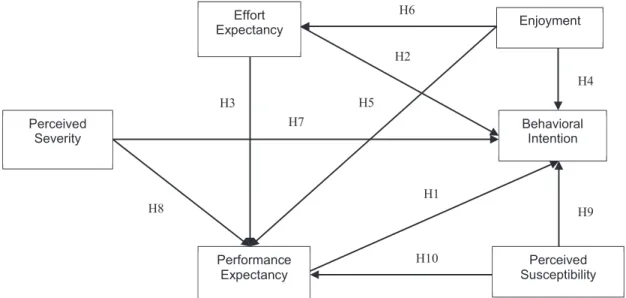
Tripopsakul, 2021). Specifically, both constructs indirectly affect users’ behavioral intention to adopt mobile payment services via perceived usefulness/performance expectancy (Sreelakshmi & Prathap, 2020). The study hypothesizes that users desire to adopt mobile payment as a protective behavior to avoid the health risks associated with using cash or contact-based payment methods (Figure 1).
H7: The perceived severity of COVID-19 has a positive effect on behavioral intention to use mobile payment during the COVID-19 pandemic.
H8: The perceived severity of COVID-19 has a positive effect on the performance expectancy of mobile payment during the COVID-19 pandemic.
H9: The perceived susceptibility to COVID-19 has a positive effect on behavioral intention to use mobile payment during the COVID-19 pandemic.
H10: The perceived susceptibility to COVID-19 has a positive effect on the performance expectancy of mobile payment during the COVID-19 pandemic.
4. Research Methodology
The structural Equation Modelling (SEM) method is used to examine the proposed model. Such a method is applied by several researchers in the research domain of mobile payment (Daragmeh et al., 2021; Le et al., 2020;
Puriwat & Tripopsakul, 2021). To confirm the research
hypotheses, a web-based questionnaire covering two parts was established. The first part concentrated on the demographic data of the participants with close-ended questions, including gender, age, education, occupation, and mobile-payment experience. The second part was generated by formulating constructs and items from prior studies, comprising 22 items as indicators to expound performance expectancy, effort expectancy, perceived enjoyment, perceived severity, perceived susceptibility, and behavioral intention to use. Performance expectancy and effort expectancy were measured by 4 items, while enjoyment, perceived severity, and perceived susceptibility were measured by 3 items. Last, the behavioral intention was measured by 5 items. To save time and reduce confusion, the item measurements were rated based on a five-point Likert scale ranging from 1 “strongly disagree”
to 5 “strongly agree”. Such measurement items of the constructs were obtained from the literature and slightly revised to suit the context of this study.
The main survey participants of this study were smartphone users who used or intend to use mobile payment services in Vietnam during the fourth wave of the COVID-19 pandemic. To avoid wording inaccuracies due to the impact of culture and language discrepancies, each construct item’s language was translated into the Vietnamese language by a local professional translator, and then re-translated into English with the support of the English translator. The questionnaire data was collected via Facebook social network platform, Gmail, and a Vietnamese social media platform, named Zalo. In accordance with the N: q rule, an ideal sample size-to-parameters ratio would be higher than 20:1 As a result, the sample size of the study
Figure 1: The Proposed Research Framework Effort
Expectancy Enjoyment
Performance
Expectancy Perceived
Susceptibility Behavioral
Intention Perceived
Severity
H8
H1 H2
H3
H4 H5
H6
H7
H9
H10
should be higher than 140 (Zhao & Bacao, 2021). A total of 500 online questionnaires via Facebook, Gmail, and Zalo, were distributed and 446 questionnaires were received.
After deleting the answers with missing values, a total of 436 valid questionnaires were selected, obtaining a final response rate of 87.2%.
5. Results and Discussion
The demographic allocation of the sample was 31,88%
males and 68,12% females. Such allocation is reversely equivalent to the studies of Alalwan et al. (2017) with 65,6%
of the male respondents compared to 34,4% of the female respondents and Shankar and Datta (2018) with 76% and 24% respectively. Broadly speaking, female respondents are more enthusiastic to adopt electronic devices-based mobile payment than male respondents. 41,3% of participants were below 25 years; followed by 29,6% and 18,6%
between 25 and 30, and between 30 and 35, respectively.
Besides, 34,8% of participants had a bachelor’s degree and were most likely to adopt mobile payment (this group is more active on social media and so more likely to fill in the questionnaire). 36,1% of participants surveyed are students, indicating that they are the most enthusiastic about experimenting with technological advancements.
achievements. 35% of the respondents had income under
5 million VND and find it easy to adopt mobile payment as one of the main payment methods. In relation to the frequencies of using mobile payment, most people prefer the experience at least once per week (e.g. 35,9%).
5.1. Assessment Measurement Model
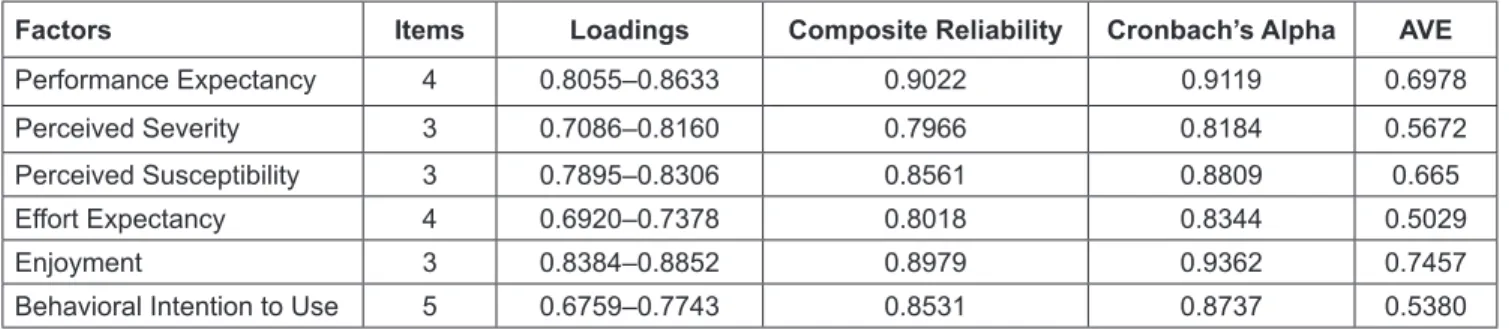
To confirm the measurement of this study, factor loadings, internal consistency, construct reliability, conver- gent validity, and discriminant validity were performed, and the results are exhibited in Tables 1 and 2. First, a Cronbach’s alpha test was carried out to test internal consistency, that is, how closely related a set of items are as a group. The general rule of thumb is that a Cronbach’s alpha of 0.70 and above is good. Based on the results, Cronbach’s alpha values of all the constructs were higher than 0.7. Second, construct reliability was represented through composite reliability scores. The results show that the composite reliability scores of all constructs exceed the recommended threshold of 0.70. Third, convergent validity was examined by calculating the average variance extracted (AVE) and indicator loadings. As shown in Table 3, all AVE values surpassed the recommended minimum threshold of 0.5. The factor loadings of all the items exceeded the recommended threshold of 0.6. Collectively, such measurement scores were above the critical values for a
Table 1: Summary Indicators of the Measurement Model
Factors Items Loadings Composite Reliability Cronbach’s Alpha AVE
Performance Expectancy 4 0.8055–0.8633 0.9022 0.9119 0.6978
Perceived Severity 3 0.7086–0.8160 0.7966 0.8184 0.5672
Perceived Susceptibility 3 0.7895–0.8306 0.8561 0.8809 0.665
Effort Expectancy 4 0.6920–0.7378 0.8018 0.8344 0.5029
Enjoyment 3 0.8384–0.8852 0.8979 0.9362 0.7457
Behavioral Intention to Use 5 0.6759–0.7743 0.8531 0.8737 0.5380
Table 2: HTTM Scores for Discriminant Validity
Item PE EE SEV SUS ENJ BI
PE 0.835
EE 0.139 0.709
SEV 0.109 0.037 0.753
SUS 0.118 0.120 0.469 0.735
ENJ 0.036 0.383 0.301 0.113 0.863
BI 0.154 0.268 0.388 0.178 0.290 0.733
Notes: Italic diagonal elements are the square root of AVE for each construct. Off-diagonal elements are the correlations
between constructs.
good fit. Discriminant validity is achieved when the square root of the AVE of each construct exceeds its correlation coefficients with other constructs. As shown in Table 2, the square roots of the AVEs were above the inter-construct correlations shown in the off-diagonal entries, suggesting discriminant validity.
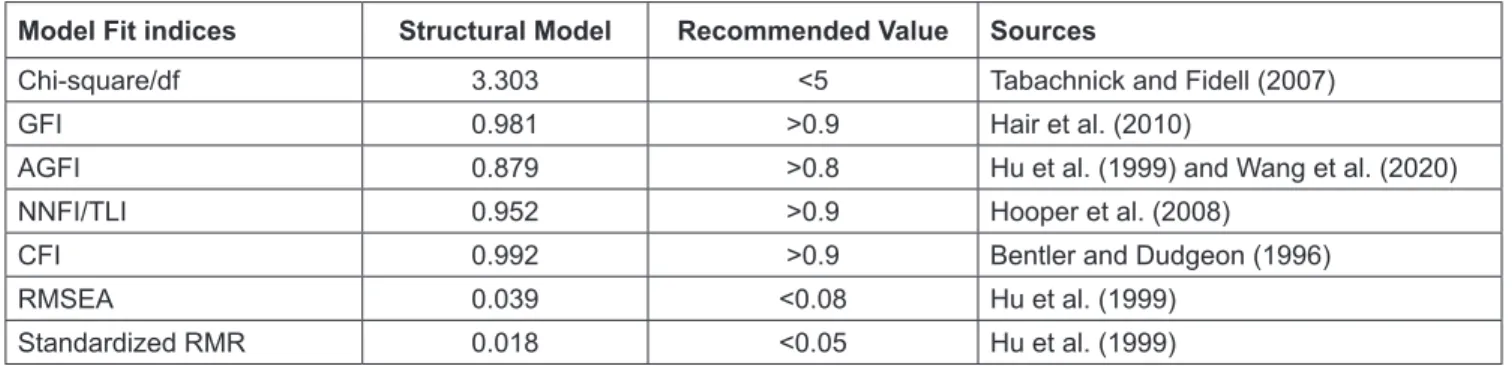
To examine the model goodness of fit in Table 3, this study analyzed fit indices, namely goodness of fit index (GFI), adjusted goodness of fit index (AGFI), comparative fit index (CFI), normal chi-square to degree-of-freedom (CMIN/DF), root mean square error of approximation (RMSEA), standardized root mean squared residual (SRMR), and non-normal-fit index (NNFI) or also referred to as TLI (Tucker-Lewis index). The results show that the model’s overall fit is satisfactory, as all of the fit indices are within the recommended threshold (Table 3).
5.2. Assessment Structural Model
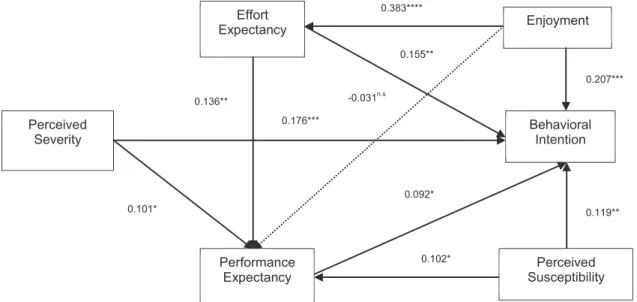
Regarding the results of path coefficients, nine hypotheses were supported, and one was rejected as shown in Table 4.
The findings support the proposed model. Particularly, performance expectancy positively influences the behavioral intention to use mobile payment (beta = 0.092 and p-value
< 0.05). This implies that performance expectancy became the pivotal driving force for users’ intention to use mobile payment during the COVID-19 pandemic This finding conforms to the study of Zhao et al. (2021). Effort expectancy also has a significant and positive influence on behavioral intention and performance expectancy (beta = 0.155 and 0.136 respectively at p-value < 0.01). Such a finding partially contrasts with that of Zhao et al. (2021), who found a significant association between effort expectancy and performance expectancy, but no significant impact of effort expectancy on behavioral intention to use mobile payment during the pandemic. In summary, two fundamental constructs in UTAUT, such as performance expectancy and effort expectancy, were found to be the critical antecedents of mobile payment usage behavior in Vietnam This finding is consistent with the Unified Theory of Acceptance and Use of Technology (UTAUT) model (Venkatesh et al., 2003) and many empirical studies on Table 3: Goodness-of-Fit Indicators
Model Fit indices Structural Model Recommended Value Sources
Chi-square/df 3.303 <5 Tabachnick and Fidell (2007)
GFI 0.981 >0.9 Hair et al. (2010)
AGFI 0.879 >0.8 Hu et al. (1999) and Wang et al. (2020)
NNFI/TLI 0.952 >0.9 Hooper et al. (2008)
CFI 0.992 >0.9 Bentler and Dudgeon (1996)
RMSEA 0.039 <0.08 Hu et al. (1999)
Standardized RMR 0.018 <0.05 Hu et al. (1999)
Table 4: Model’s Path Coefficient
Hypothesis Relationship Path Coefficient T-Statistics Sig.level (p) Results
H1 PE → BI 0.092 2.08 0.037 Supported
H2 EE → BI 0.155 3.27 0.001 Supported
H3 EE → PE 0.136 2.68 0.007 Supported
H4 ENJ → BI 0.207 4.51 0.000 Supported
H5 ENJ → PE –0.031 –0.62 0.536 Rejected
H6 ENJ → EE 0.383 9.75 0.000 Supported
H7 P-SEV → BI 0.176 4.10 0.000 Supported
H8 P-SEV → PE 0.101 2.18 0.029 Supported
H9 P-SUS → BI 0.119 2.72 0.007 Supported
H10 P-SUS → PE 0.102 2.17 0.03 Supported
*p < 0.05; **p < 0.01; ***p < 0.001, N.S: not significant.
mobile technology adoption using the UTAUT framework (Alaiad et al., 2019; Alalwan et al., 2017; Cao & Niu, 2019;
Khalilzadeh et al., 2017).
Enjoyment is found to be a strong predictor of behavioral intention and effort expectancy (beta = 0.207 and 0.383, respectively, at p-value0.001). This implies the variable enjoyment that has received less attention from researchers, is also empirically justified in facilitating technology adoption through the pleasure of using mobile payment applications. This result is consistent with the findings of To and Trinh (2021) who stated that enjoyment is a key driver of the behavioral intention to use mobile payment services. In addition, this result is also consistent with Koenig-Lewis et al. (2015) who stated that perceived enjoyment positively affected perceived ease of use (also known as effort expectancy in the UTAUT model (Venkatesh et al., 2012)) for users when adopting mobile payment. Therefore, this result extends the study of Alalwan et al. (2017) by validating enjoyment (also known as hedonic motivation) in the UATUT model. Furthermore, this study found no empirical evidence on the relationship between enjoyment and performance expectancy (beta = –0.031 at p-value > 0.05).
Also, both constructs of the Health Belief Model (perceived severity and perceived susceptibility) are included in the UTAUT model to jointly explain users’
behavioral intention of using mobile payment during the pandemic. In particular, perceived severity and perceived susceptibility have a joint positive influence on behavioral intention (beta = 0.176 at p-value < 0.001 and beta = 0.119 at p-value < 0.01 respectively). Similarly, this study found the positive impact of both constructs on
performance expectancy (beta = 0.101 and 0.102 at p-value
< 0.05 respectively). This result agrees with Daragmeh et al.
(2021), suggesting that perceived severity and perceived susceptibility positively influenced perceived usefulness (also known as performance expectancy in the UTAUT model (Venkatesh et al., 2012). Therefore, perceived severity and perceived susceptibility become the key drivers of driving behavioral intention by increasing users’ perceived usefulness (performance expectancy).
This study adds to the growing literature on technology acceptability during pandemics (Daragmeh et al., 2021;
Puriwat & Tripopsakul, 2021) by combining the Unified Theory of Acceptance and Use of Technology with the Health Belief Model to examine the associated variables that directly and indirectly influence users’ behavior of mobile payment usage at the height of the pandemic in Vietnam. Table 4 and Figure 2 show the significant and insignificant relationships among constructs, and the table describes the results of accepting and rejecting the research hypotheses.
6. Conclusion
This research provides insights into the factors that influence the usage of mobile payment applications by consumers. Hence, mobile payment service providers can easily improve their customer retention and attract new customers by understanding the determinants that contribute to the usage of mobile payment. Based on the facilitating role of performance expectancy and effort expectancy, the findings suggest that providers should promote or upgrade mobile payment applications with
Figure 2: Path Structural Relationship
-0.031n.s
Effort
Expectancy
0.383****Enjoyment
0.155**
0.207***
Behavioral Intention Perceived
Severity
0.136**
0.176***
0.101*
0.092*
0.119**
Performance Expectancy
0.102*