ABSTRACT
Objective: Recent studies have raised concern about the cardiovascular safety of dipeptidyl
peptidase-4 (DPP4) inhibitors. We performed a systematic review through meta-analysis to compare cardiovascular outcomes of sulfonylurea (SU) versus DPP4 inhibitors when used in combination with metformin.
Methods: After searching for trials using combination therapy of metformin with DPP4
inhibitor or SU in PubMed, Cochrane Library, and Embase, one prospective observation study and 15 randomized controlled studies were selected.
Results: Regarding the primary analysis endpoint, there were no significant differences
in the risk of all-cause mortality between SU and DPP4 inhibitors as an add-on therapy to metformin (random-effect relative risk [RR], 1.14; 95% confidence interval [CI], 0.98–1.33;
p=0.811; I2
=0%). Cardiovascular death was also similar between the two drug classes in the five studies which reported outcomes (random-effect RR, 1.03; 95% CI, 0.83–1.27; p=0.517;
I
2=0%). Furthermore, there were no significant differences in major adverse cardiac events (MACE), coronary heart disease, myocardial infarction, ischemic stroke and heart failure.
However, there were less hypoglycemic events and weight gain in the DPP4 inhibitor group as compared with the SU group (random-effect RR, 3.79; 95% CI, 1.53–9.39; p<0.001; I
2=98.2 and weighted mean difference, 1.68; 95% CI, 1.07–2.29; p<0.001; I
2=94.7, respectively).
Conclusion: As add-on therapy to metformin, there were no significant differences in all-
cause mortality and cardiovascular mortality between DPP4 inhibitors and SUs.
Keywords: Diabetes mellitus; Sulfonylurea compounds; DPP4 inhibitor; Cardiovascular risk
INTRODUCTION
Guidelines recommend metformin and comprehensive life style modification as first-line therapy in the treatment of type 2 diabetes mellitus (T2DM).
1-4This recommendation is based on the benefits of metformin compared to other class of oral hypoglycemic agents such as sulfonylureas (SUs), thiazolidinediones, and dipeptidyl peptidase-4 (DPP4) inhibitors, with regard to the combined effect on hemoglobin A1c (HbA1c), weight gain, hypoglycemic side effects, socioeconomic burden, and long-term cardiovascular disease.
5Original Article
Received: Nov 25, 2020 Revised: Jan 2, 2021 Accepted: Jan 11, 2021 Correspondence to Kyung Woo Park
Department of Internal Medicine and Cardiovascular Center, Seoul National University Hospital, 101 Daehak-ro, Jongno-gu, Seoul 03080, Korea.
E-mail: [email protected]
Copyright © 2021 The Korean Society of Lipid and Atherosclerosis.
This is an Open Access article distributed under the terms of the Creative Commons Attribution Non-Commercial License (https://
creativecommons.org/licenses/by-nc/4.0/) which permits unrestricted non-commercial use, distribution, and reproduction in any medium, provided the original work is properly cited.
ORCID iDs Won Kyeong Jeon
https://orcid.org/0000-0003-4632-912X Jeehoon Kang
https://orcid.org/0000-0002-9078-2231 Hyo-Soo Kim
https://orcid.org/0000-0003-0847-5329 Kyung Woo Park
https://orcid.org/0000-0003-2432-4432 Funding
None.
Conflicts of Interest
The authors have no conflicts of interest to declare.
Won Kyeong Jeon , Jeehoon Kang , Hyo-Soo Kim , Kyung Woo Park
Department of Internal Medicine and Cardiovascular Center, Seoul National University Hospital, Seoul National University College of Medicine, Seoul, Korea
Cardiovascular Outcomes Comparison of Dipeptidyl Peptidase-4 Inhibitors versus Sulfonylurea as Add-on
Therapy for Type 2 Diabetes Mellitus:
a Meta-Analysis
Author Contributions
Conceptualization: Kang J, Park KW; Data curation: Jeon WK, Kang J; Formal analysis:
Jeon WK; Methodology: Park KW; Supervision:
Kim HS, Park KW; Validation: Kang J; Writing - original draft: Jeon WK, Kang J, Kim HS, Park KW; Writing - review & editing: Jeon WK, Kang J, Kim HS, Park KW.
In cases where the maximal dose of a single agent cannot maintain HbA1c below 6.5%, combination therapy is recommended.
6-8Although the recommended specific agent differs according to baseline risk stratification, DPP4 inhibitors, SUs, thiazolidinediones, α-glucosidase inhibitors, and sodium-glucose cotransport-2 (SGLT-2) inhibitors can be used as a combination therapy with metformin.
9When there is a compelling need to minimize hypoglycemia, DPP4 inhibitor can be considered. For patients whose major issue is cost, SUs or thiazolidinediones could be a good choice. For patients with atherosclerotic cardiovascular disease, heart failure or chronic kidney disease, treatment with glucagon-like peptide-1 (GLP1) receptor agonists or SGLT2 inhibitors as combination therapy should be preferred according to individual status. In Korea, DPP4 inhibitor and SU are the most commonly used drugs for add-on therapy with metformin.
DPP4 inhibitor acts by decreasing degradation of GLP1 and glucose-dependent insulinotropic peptide.
10It has been shown to effectively control blood glucose levels and lower level of HbA1C with minimal risk of hypoglycemia and good tolerability.
11,12However, previous studies have shown concerns of increased risk of heart failure.
13,14On the other hand, SU, a secretagogue of insulin, can effectively decrease blood glucose with neutral effects on the cardiovascular system, but hypoglycemia and weight gain are common side effects.
15,16In this current study, we conducted a systematic review through meta-analysis to compare the cardiovascular risk of DPP4 inhibitors with that of SUs during combination therapy with metformin.
MATERIALS AND METHODS
1. Data sources and searches
We performed systemic electronic search of MEDLINE, Cochrane Library, and Embase, with no language limits, using search terms as following: “Diabetes mellitus,” “Sulfonylurea,”
“glimepiride,” “Glipizide,” “gliclazide,” “glibenclamide,” “glyburide,” “gliguidone,”
“Dipeptydil peptidase-4 inhibitor,” “DPP4 inhibitor,” “Sitagliptin,” “Vildagliptin,”
“Linagliptin,” “Saxagliptin,” “Alogliptin,” and “Dutogliptin.”
2. Study selection
Two reviewers (W.K. Jeon and J. Kang) independently searched the articles with the following inclusion criteria: 1) Both randomized control trials (RCTs) and non-randomized trials examining efficacy of combination therapy of metformin with DPP4 inhibitor compared to SU were searched, except case-control studies; 2) The study should analyze cardiovascular risks of combination therapy, including cardiovascular death, myocardial ischemia, and heart failure; and 3) Each study should propose incidence rate of mortality or morbidities.
Disagreed articles were resolved by discussion (Supplementary Table 1).
3. Data extraction and quality assessment
Two reviewers independently extracted data from the included articles using a standardized
form. By comparing data from each reviewer, internal consistency was examined and
inconsistent data was corrected by discussion. Extracted data was all-cause mortality,
cardiovascular death, ischemic stroke or transient ischemic attack, serious cardiovascular
or cerebrovascular adverse event reported in the study which was regarded as major adverse
cardiac events (MACE), coronary heart disease, myocardial infarction, heart failure,
hypoglycemic event and weight change.
In case of RCTs, quality was assessed by using the Cochrane Collaboration’s tool for assessing the risk of bias 2.0 for RCTs. Random sequence generation, allocation concealment, blinding of participants, blinded outcome assessment, complete follow-up, and selective reporting were assessed. In case of non-randomized trials, the Strengthening The Reporting of Observational studies in Epidemiology (STROBE) checklist was used.
4. Data synthesis and analysis
Meta-analysis was performed based on the random-effect model. To qualitatively assess for small study bias, funnel plots were constructed. To quantitatively assess, Egger's linear regression method was used. If small study bias was found, the trim and fill method was used. Cochran's Q via a χ
2test and I
2statistics were used to evaluate statistical heterogeneity.
The p-values were two-tailed and statistical significance was considered when p<0.05. STATA/
SE 12.0 (Stata Corp LP, College Station, TX, USA) were used in statistical analysis.
RESULTS
1. Identification and selection of studies
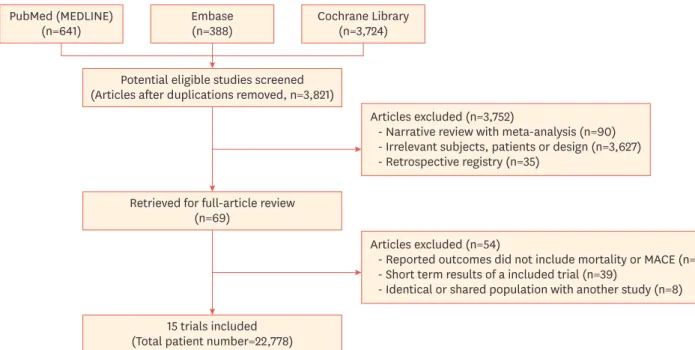
Our first search yielded 4753 studies from PubMed, Cochrane Library, and Embase (641, 388, and 3,724 studies respectively). After removal of duplicated, irrelevant, or retrospective studies, and short follow-up duration under 1 year, 15 studies were included in our current analysis. Among the studies, one was a prospective observational study and 14 were RCTs.
The study selection process is summarized in Fig. 1.
2. Description of included trials
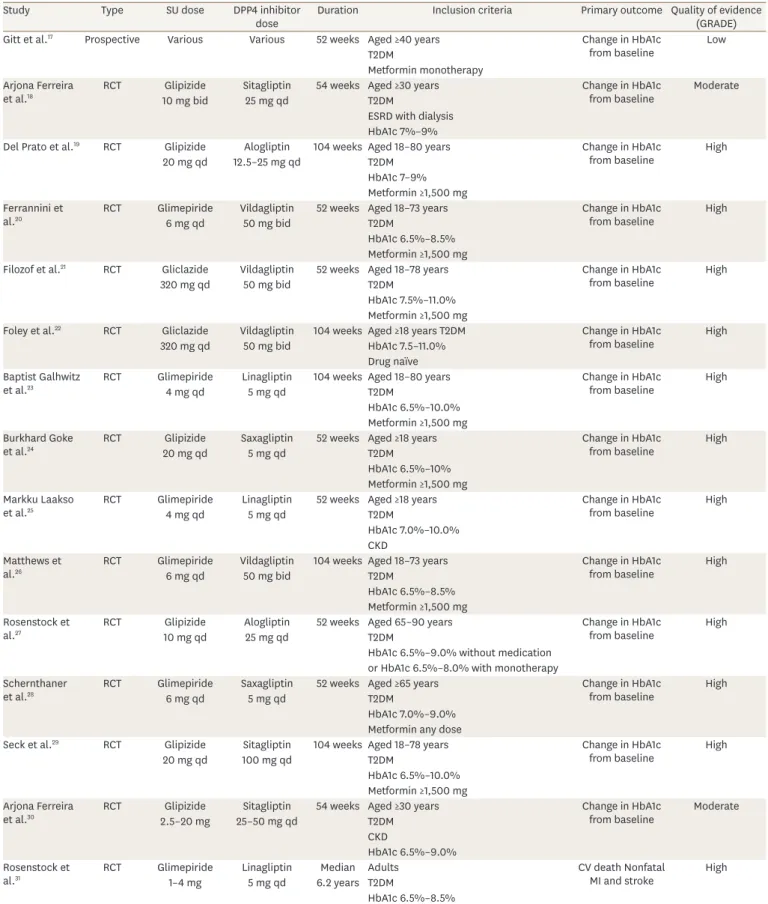
The characteristics of included studies are summarized in Table 1. Among the RCTs, 6 studies exclusively used glipizide as the SU, 6 used glimepiride, and 2 used gliclazide. For DPP4 inhibitors, 4 studies exclusively used vildagliptin, 3 used sitagliptin or linagliptin, and 2 used
PubMed (MEDLINE)
(n=641) Embase
(n=388)
Potential eligible studies screened (Articles after duplications removed, n=3,821)
Articles excluded (n=3,752)
- Narrative review with meta-analysis (n=90) - Irrelevant subjects, patients or design (n=3,627) - Retrospective registry (n=35)
Articles excluded (n=54)
- Reported outcomes did not include mortality or MACE (n=7) - Short term results of a included trial (n=39)
- Identical or shared population with another study (n=8) Retrieved for full-article review
(n=69)
15 trials included (Total patient number=22,778)
Cochrane Library (n=3,724)
Fig. 1. Diagram for study selection.
Table 1. Characteristics of included studies
Study Type SU dose DPP4 inhibitor
dose Duration Inclusion criteria Primary outcome Quality of evidence (GRADE)
Gitt et al.17 Prospective Various Various 52 weeks Aged ≥40 years Change in HbA1c
from baseline Low
T2DM
Metformin monotherapy Arjona Ferreira
et al.18 RCT Glipizide Sitagliptin 54 weeks Aged ≥30 years Change in HbA1c
from baseline Moderate
10 mg bid 25 mg qd T2DM
ESRD with dialysis HbA1c 7%–9%
Del Prato et al.19 RCT Glipizide Alogliptin 104 weeks Aged 18–80 years Change in HbA1c
from baseline High
20 mg qd 12.5–25 mg qd T2DM
HbA1c 7–9%
Metformin ≥1,500 mg Ferrannini et
al.20 RCT Glimepiride Vildagliptin 52 weeks Aged 18–73 years Change in HbA1c
from baseline High
6 mg qd 50 mg bid T2DM
HbA1c 6.5%–8.5%
Metformin ≥1,500 mg
Filozof et al.21 RCT Gliclazide Vildagliptin 52 weeks Aged 18–78 years Change in HbA1c
from baseline High
320 mg qd 50 mg bid T2DM
HbA1c 7.5%–11.0%
Metformin ≥1,500 mg
Foley et al.22 RCT Gliclazide Vildagliptin 104 weeks Aged ≥18 years T2DM Change in HbA1c
from baseline High
320 mg qd 50 mg bid HbA1c 7.5–11.0%
Drug naïve Baptist Galhwitz
et al.23 RCT Glimepiride Linagliptin 104 weeks Aged 18–80 years Change in HbA1c
from baseline High
4 mg qd 5 mg qd T2DM
HbA1c 6.5%–10.0%
Metformin ≥1,500 mg Burkhard Goke
et al.24 RCT Glipizide Saxagliptin 52 weeks Aged ≥18 years Change in HbA1c
from baseline High
20 mg qd 5 mg qd T2DM
HbA1c 6.5%–10%
Metformin ≥1,500 mg Markku Laakso
et al.25 RCT Glimepiride Linagliptin 52 weeks Aged ≥18 years Change in HbA1c
from baseline High
4 mg qd 5 mg qd T2DM
HbA1c 7.0%–10.0%
CKD Matthews et
al.26 RCT Glimepiride Vildagliptin 104 weeks Aged 18–73 years Change in HbA1c
from baseline High
6 mg qd 50 mg bid T2DM
HbA1c 6.5%–8.5%
Metformin ≥1,500 mg Rosenstock et
al.27 RCT Glipizide Alogliptin 52 weeks Aged 65–90 years Change in HbA1c
from baseline High
10 mg qd 25 mg qd T2DM
HbA1c 6.5%–9.0% without medication or HbA1c 6.5%–8.0% with monotherapy Schernthaner
et al.28 RCT Glimepiride Saxagliptin 52 weeks Aged ≥65 years Change in HbA1c
from baseline High
6 mg qd 5 mg qd T2DM
HbA1c 7.0%–9.0%
Metformin any dose
Seck et al.29 RCT Glipizide Sitagliptin 104 weeks Aged 18–78 years Change in HbA1c
from baseline High
20 mg qd 100 mg qd T2DM
HbA1c 6.5%–10.0%
Metformin ≥1,500 mg Arjona Ferreira
et al.30 RCT Glipizide Sitagliptin 54 weeks Aged ≥30 years Change in HbA1c
from baseline Moderate
2.5–20 mg 25–50 mg qd T2DM
CKD
HbA1c 6.5%–9.0%
Rosenstock et
al.31 RCT Glimepiride Linagliptin Median Adults CV death Nonfatal
MI and stroke High
1–4 mg 5 mg qd 6.2 years T2DM
HbA1c 6.5%–8.5%
High CV risk
SU, sulfonylurea; DPP4, dipeptidyl peptidase-4; T2DM, type 2 diabetes mellitus; RCT, randomized controlled trial; bid, twice a day; qd, once a day; ESRD, end- stage renal disease; HbA1c, hemoglobin A1C; CKD, chronic kidney disease; CV, cardiovascular; MI, myocardial infarction.
alogliptin or saxagliptin, respectively. The only non-randomized study permitted various SUs and DPP4 inhibitors. Duration of patient follow-up ranged from 52 weeks to over 312 weeks. All patients were diagnosed as T2DM and seven studies required a minimum dose of metformin to be 1,500 mg before considering combination therapy.
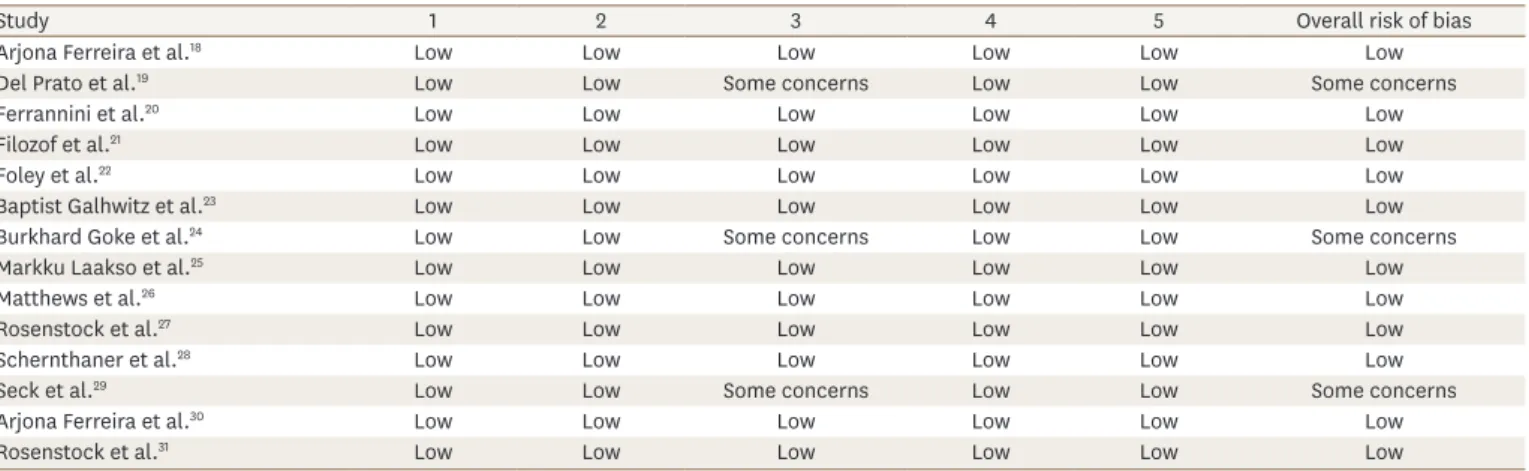
The result of Cochrane collaboration's risk assessment is shown in Table 2. One prospective cohort study
17was assessed by the STROBE checklist and scored 19.
3. Analysis endpoint outcomes
The primary analysis endpoint of the meta-analysis was all-cause mortality. All-cause mortality data was achieved from 13 studies while Rosenstock et al.
31reported no mortality events during follow-up and thus was excluded in the analysis. There was no significant difference in all-cause mortality among 12 studies comparing SU and DPP4 inhibitor as an add-on therapy to metformin (random-effect relative risk [RR], 1.14; 95% confidence interval [CI], 0.98–1.33; p=0.811; I
2=0%) (Fig. 2). Cardiovascular death also showed no significant difference in an analysis of 5 studies which reported cardiovascular death as one of the outcomes (random-effect RR, 1.03; 95% CI, 0.83–1.27; p=0.517; I
2=0%) (Fig. 2).
Regarding morbidity events, DPP4 inhibitors were associated with a higher risk of ischemic stroke or transient ischemic attack from an analysis of six studies which reported such outcomes (random-effect RR, 2.78; 95% CI, 1.06–7.30; p=0.065; I
2=51.9%) (Fig. 3). However, there was no significant difference in MACE (random-effect RR, 1.05; 95% CI, 0.91–1.23;
p=0.568; I2
=0%), coronary heart disease (random-effect RR, 0.96; 95% CI, 0.79–1.17;
p=0.742; I2
=0%), myocardial infarction (random-effect RR, 1.04; 95% CI, 0.83–1.29; p=0.640;
I
2=0%) and heart failure (random-effect RR, 0.90; 95% CI, 0.73–1.12; p=0.839; I
2=0%) in analysis of studies which reported outcomes (Fig. 3).
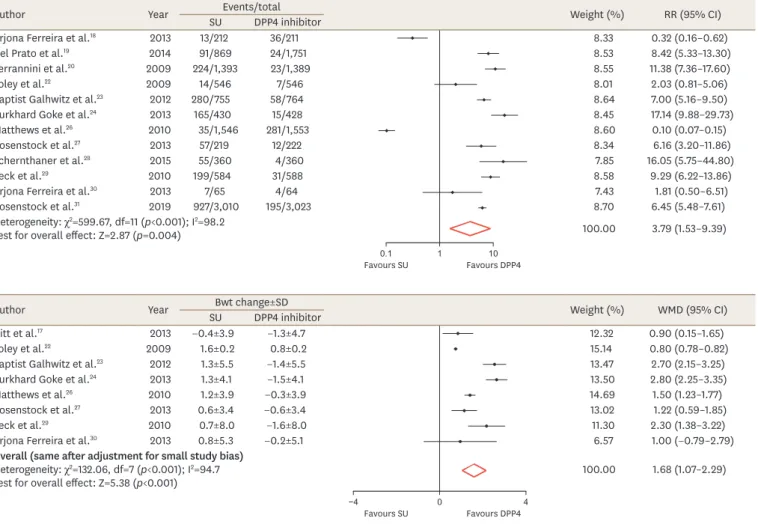
Regarding the representative side effects of specific agents, DPP4 inhibitors showed significantly lower risk of hypoglycemic events in analysis of twelve studies which reported such outcomes (random-effect RR, 3.79; 95% CI, 1.53–9.39; p<0.001; I
2=98.2%) (Fig. 4) and weight gain in analysis of eight studies which reported such outcomes (weight mean difference, 1.68; 95% CI, 1.07–2.29; p<0.001; I
2=94.7%) (Fig. 4).
Table 2. Cochrane risk of bias tools 2.0
Study 1 2 3 4 5 Overall risk of bias
Arjona Ferreira et al.18 Low Low Low Low Low Low
Del Prato et al.19 Low Low Some concerns Low Low Some concerns
Ferrannini et al.20 Low Low Low Low Low Low
Filozof et al.21 Low Low Low Low Low Low
Foley et al.22 Low Low Low Low Low Low
Baptist Galhwitz et al.23 Low Low Low Low Low Low
Burkhard Goke et al.24 Low Low Some concerns Low Low Some concerns
Markku Laakso et al.25 Low Low Low Low Low Low
Matthews et al.26 Low Low Low Low Low Low
Rosenstock et al.27 Low Low Low Low Low Low
Schernthaner et al.28 Low Low Low Low Low Low
Seck et al.29 Low Low Some concerns Low Low Some concerns
Arjona Ferreira et al.30 Low Low Low Low Low Low
Rosenstock et al.31 Low Low Low Low Low Low
1, bias due to randomization process; 2, bias due to deviations from the intended interventions; 3, bias due to missing outcome data; 4, bias in measurement of the outcome; 5, bias in selection of the reported result.
4. Analysis of small study bias
The presence of small study bias was assessed and confirmed by funnel plot asymmetry and Egger's linear regression method. The funnel plot test of primary analysis end point was presented in Supplementary Fig. 1. The only found small study bias in the analysis was ischemic stroke (bias coefficient=1.387; SE=0.444; t=3.12; p=0.036; 95% CI, 0.153–2.621).
After adjustment through the trim and fill method, there was no significant difference in ischemic stroke between SU and DPP4 inhibitor (random-effect RR, 1.28; 95% CI, 0.50–3.29;
p=0.612) (Fig. 3).
DISCUSSION
We conducted systematic review of one prospective study and 14 RCTs including the CAROLINA trial, one of the most recent and largest studies with long-term follow-up.
31All of the studies compared the efficacy and safety of add-on therapy on top of metformin between DPP4 inhibitors and SUs for adults diagnosed with T2DM. In our analysis, we found no significant differences in all-cause mortality and cardiovascular mortality between DPP4 inhibitor and SU. Morbidities like MACE, coronary heart disease, myocardial infarction, ischemic stroke and heart failure also showed no significant differences. There was a slight difference in ischemic stroke, but after correction for small study bias, the difference was not significant. There were some endpoints that did show differences between the two drug classes. One was the rate of hypoglycemic event, which was significantly lower with DPP4 inhibitors, and the other was weight gain, which was significantly lower with DPP4 inhibitors. Such favorable results regarding hypoglycemia and weight gain are consistent with
Author Year SUEvents/totalDPP4 inhibitor Weight (%) RR (95% CI)
All cause mortality
Arjona Ferreira et al.18 2013 7/212 3/211 1.26 2.37 (0.60–9.28)
Del Prato et al.19 2014 5/869 6/1,751 1.66 1.68 (0.51–5.53)
Ferrannini et al.20 2009 3/1,393 2/1,389 0.73 1.50 (0.25–8.97)
Filozof et al.21 2010 1/494 1/513 0.30 1.04 (0.06–16.65)
Foley et al.22 2009 9/546 6/546 2.17 1.51 (0.53–4.27)
Baptist Galhwitz et al.23 2012 4/755 4/764 1.22 1.00 (0.25–4.02)
Burkhard Goke et al.24 2013 2/430 4/428 0.81 0.50 (0.09–2.72)
Matthews et al.26 2010 6/1,546 7/1,553 1.97 0.86 (0.29–2.57)
Schernthaner et al.28 2015 1/360 1/360 0.30 1.00 (0.06–16.05)
Seck et al.29 2010 8/584 1/588 0.54 8.15 (1.02–65.39)
Arjona Ferreira et al.30 2013 6/65 4/64 1.36 1.53 (0.41–5.68)
Rosenstock et al.31 2019 336/3,010 308/3,023 87.69 1.11 (0.94–1.30)
Heterogeneity: χ2=6.85, df=11 (p=0.811); I2=0.0
Test for overall effect: Z=1.66 (p=0.097) 100.00 1.14 (0.98–1.33)
Cardiovascular mortality
Del Prato et al.19 2014 4/869 4/1,751 2.39 2.02 (0.50–8.09)
Ferrannini et al.20 2009 1/1,393 2/1,389 0.80 0.50 (0.05–5.50)
Burkhard Goke et al.24 2013 2/430 1/428 0.80 2.00 (0.18–22.09)
Seck et al.29 2010 3/584 0/588 0.52 7.08 (0.37–137.45)
Rosenstock et al.31 2019 168/3,010 169/3,023 95.49 1.00 (0.80–1.24)
Heterogeneity: χ2=3.25, df=4 (p=0.517); I2=0.0
Test for overall effect: Z=0.23 (p=0.817) 100.00 1.03 (0.83–1.27)
1
0.1 10
Favours SU Favours DPP4 Fig. 2. Meta-analyses for all-cause mortality and cardiovascular mortality.
SU, sulfonylurea; DPP4, dipeptidyl peptidase-4; RR, relative risk; CI, confidence interval; df, degrees of freedom.
Author Year SUEvents/totalDPP4 inhibitor Weight (%) RR (95% CI) Stroke/TIA
Gitt et al.17 2013 3/153 1/463 12.27 9.24 (0.95–89.50)
Del Prato et al.19 2014 3/869 5/1,751 20.67 1.21 (0.29–5.07)
Ferrannini et al.20 2009 7/1,393 0/1,389 8.77 15.03 (0.86–263.46)
Baptist Galhwitz et al.23 2012 10/755 1/764 13.95 10.13 (1.29–79.33)
Burkhard Goke et al.24 2013 1/430 0/428 7.35 2.99 (0.12–73.68)
Rosenstock et al.31 2019 153/3,010 129/3,023 37.01 1.20 (0.95–1.53)
After adjustment for small study bias 100.00 2.78 (1.06–7.30)
Heterogeneity: χ2=10.39, df=5 (p=0.065); I2=51.9
Test for overall effect: Z=2.07 (p=0.039) 1.28 (0.50–3.29)
MACE
Filozof et al.21 2010 12/494 7/513 2.58 1.80 (0.70–4.61)
Markku Laakso et al.25 2015 8/122 3/113 1.25 2.57 (0.67–9.95)
Rosenstock et al.27 2013 2/219 1/222 0.39 2.04 (0.18–22.63)
Schernthaner et al.28 2015 0/360 1/360 0.22 0.33 (0.01–8.19)
Arjona Ferreira et al.30 2013 6/65 5/64 1.49 1.20 (0.35–4.15)
Rosenstock et al.31 2019 362/3,010 356/3,023 94.07 1.02 (0.88–1.20)
Heterogeneity: χ2=3.87, df=5 (p=0.568); I2=0.0
Test for overall effect: Z=0.68 (p=0.496) 100.00 1.05 (0.91–1.23)
Coronary heart disease
Gitt et al.17 2013 1/153 2/463 0.66 1.52 (0.14–16.84)
Baptist Galhwitz et al.23 2012 20/755 16/764 8.60 1.26 (0.65–2.45)
Rosenstock et al.27 2013 0/219 1/222 0.37 0.34 (0.01–8.30)
Rosenstock et al.31 2019 189/3,010 202/3,023 90.38 0.94 (0.76–1.15)
Heterogeneity: χ2=1.25, df=3 (p=0.742); I2=0.0
Test for overall effect: Z=0.42 (p=0.675) 100.00 0.96 (0.79–1.17)
Myocardial infarction
Gitt et al.17 2013 0/153 2/463 0.51 0.60 (0.03–12.59)
Del Prato et al.19 2014 4/869 5/1,751 2.27 1.61 (0.43–6.03)
Ferrannini et al.20 2009 7/1,393 5/1,389 3.56 1.40 (0.44–4.42)
Baptist Galhwitz et al.23 2012 10/755 5/764 4.05 2.02 (0.69–5.92)
Burkhard Goke et al.24 2013 1/430 0/428 0.46 2.99 (0.12–73.68)
Schernthaner et al.28 2015 0/360 1/360 0.46 0.33 (0.01–8.19)
Seck et al.29 2010 3/584 0/588 0.54 7.08 (0.37–137.45)
Rosenstock et al.31 2019 148/3,010 153/3,023 87.70 0.97 (0.77–1.22)
Heterogeneity: χ2=5.12, df=7 (p=0.640); I2=0.0
Test for overall effect: Z=0.31 (p=0.755) 100.00 1.04 (0.83–1.29)
Heart failure
Gitt et al.17 2013 3/153 8/463 2.49 1.14 (0.30–4.34)
Ferrannini et al.20 2009 2/1,393 2/1,389 1.16 1.00 (0.14–7.09)
Baptist Galhwitz et al.23 2012 2/755 3/764 1.39 0.67 (0.11–4.00)
Burkhard Goke et al.24 2013 0/430 1/428 0.44 0.33 (0.01–8.15)
Markku Laakso et al.25 2015 6/122 7/113 3.55 0.78 (0.26–2.40)
Rosenstock et al.27 2013 0/219 2/222 0.48 0.20 (0.01–4.21)
Schernthaner et al.28 2015 1/360 6/360 0.99 0.16 (0.02–1.37)
Arjona Ferreira et al.30 2013 2/65 2/64 1.13 0.98 (0.13–7.21)
Rosenstock et al.31 2019 155/3,010 166/3,023 88.36 0.93 (0.75–1.17)
Heterogeneity: χ2=4.20, df=8 (p=0.839); I2=0.0
Test for overall effect: Z=0.94 (p=0.345) 100.00 0.90 (0.73–1.12)
1
0.1 10
Favours SU Favours DPP4
Fig. 3. Meta-analyses for various morbidities; ischemic stroke, MACE, coronary heart disease, myocardial infarction, and heart failure.
MACE, major adverse cardiac events; SU, sulfonylurea; DPP4, dipeptidyl peptidase-4; RR, relative risk; CI, confidence interval; df, degrees of freedom.
previous reports.
32Collectively, our data showed no differences between DPP4 inhibitors and SUs regarding hard clinical endpoints, but regarding side effects, DPP4 inhibitors showed beneficial effect, suggesting the safety and good feasibility of DPP4 inhibitors when add-on therapy is needed on top of metformin.
Several previous placebo-controlled randomized studies have been reported using DPP4 inhibitors as add-on therapy to metformin.
14,33-37Although the risk of hospitalization for heart failure was increased in the SAVOR-TIMI 53 trial,
14most studies showed non-inferior cardiovascular outcomes of DPP4 inhibitors compared to placebo. There was no difference in hospitalization for heart failure in the CARMELINA
34and TECOS trials.
37Some researchers had concern about the harmful effect of SU on cardiovascular risk and mortality.
38,39Because this concern was not supported always,
40this controversial finding had been debated for a long time.
The results of head-to-head comparisons with DPP4 inhibitor and SU in previous meta- analyses have not been consistent. Some studies showed lower cardiovascular mortality with DPP4 inhibitors,
38,41while others showed no significant differences.
42,43DPP4 inhibitors
1
0.1 10
Favours SU Favours DPP4
0
−4 4
Favours SU Favours DPP4
Author Year SUEvents/totalDPP4 inhibitor Weight (%) RR (95% CI)
Arjona Ferreira et al.18 2013 13/212 36/211 8.33 0.32 (0.16–0.62)
Del Prato et al.19 2014 91/869 24/1,751 8.53 8.42 (5.33–13.30)
Ferrannini et al.20 2009 224/1,393 23/1,389 8.55 11.38 (7.36–17.60)
Foley et al.22 2009 14/546 7/546 8.01 2.03 (0.81–5.06)
Baptist Galhwitz et al.23 2012 280/755 58/764 8.64 7.00 (5.16–9.50)
Burkhard Goke et al.24 2013 165/430 15/428 8.45 17.14 (9.88–29.73)
Matthews et al.26 2010 35/1,546 281/1,553 8.60 0.10 (0.07–0.15)
Rosenstock et al.27 2013 57/219 12/222 8.34 6.16 (3.20–11.86)
Schernthaner et al.28 2015 55/360 4/360 7.85 16.05 (5.75–44.80)
Seck et al.29 2010 199/584 31/588 8.58 9.29 (6.22–13.86)
Arjona Ferreira et al.30 2013 7/65 4/64 7.43 1.81 (0.50–6.51)
Rosenstock et al.31 2019 927/3,010 195/3,023 8.70 6.45 (5.48–7.61)
Heterogeneity: χ2=599.67, df=11 (p<0.001); I2=98.2
Test for overall effect: Z=2.87 (p=0.004) 100.00 3.79 (1.53–9.39)
Author Year SUBwt change±SDDPP4 inhibitor Weight (%) WMD (95% CI)
Gitt et al.17 2013 −0.4±3.9 −1.3±4.7 12.32 0.90 (0.15–1.65)
Foley et al.22 2009 1.6±0.2 0.8±0.2 15.14 0.80 (0.78–0.82)
Baptist Galhwitz et al.23 2012 1.3±5.5 −1.4±5.5 13.47 2.70 (2.15–3.25)
Burkhard Goke et al.24 2013 1.3±4.1 −1.5±4.1 13.50 2.80 (2.25–3.35)
Matthews et al.26 2010 1.2±3.9 −0.3±3.9 14.69 1.50 (1.23–1.77)
Rosenstock et al.27 2013 0.6±3.4 −0.6±3.4 13.02 1.22 (0.59–1.85)
Seck et al.29 2010 0.7±8.0 −1.6±8.0 11.30 2.30 (1.38–3.22)
Arjona Ferreira et al.30 2013 0.8±5.3 −0.2±5.1 6.57 1.00 (−0.79–2.79)
Overall (same after adjustment for small study bias) Heterogeneity: χ2=132.06, df=7 (p<0.001); I2=94.7
Test for overall effect: Z=5.38 (p<0.001) 100.00 1.68 (1.07–2.29)
Fig. 4. Meta-analyses for hypoglycemia and weight gain.
SU, sulfonylurea; DPP4, dipeptidyl peptidase-4; RR, relative risk; CI, confidence interval; df, degrees of freedom; SD, standard deviation; WMD, weighted mean difference.
showed favorable trend regarding myocardial infarction in two previous meta-analyses,
38,44but others reported negative findings.
42,43Regarding MACE, 2 studies showed lower risk with DPP4 inhibitors,
32,42while one other study showed no significant difference.
45These inconsistent results could be explained by different character of included studies. There is more possibility that studies which are including observational studies have potential bias, than the studies which analyzed only randomized trials. Some studies analyzed in previous meta-analysis showed too much wide CI, which lower reliability of the results. Moreover, most of the studies included in previous meta-analyses were designed to analyze the effect of treatment, not mortality or MACE.
There are several limitations in this study. First, our meta-analysis was not a patient-level but rather a study-level meta-analysis, and thus we did not have individual patient data.
Therefore, although we identified 15 studies, not all studies could be included in each analysis.
Certain studies reported different combinations of outcomes that we analyzed in the present study. Second, there were significant differences in the weight of the studies included. For example, our analysis heavily depended on the CAROLINA trial because it was the largest trial with the longest follow-up study among the 15 studies. However, we performed a sensitivity analysis excluding the CAROLINA study, and found consistent results across all studies outcomes except for ischemic stroke (Supplementary Figs. 2-4). Third, Most of RCTs were sponsored or funded by pharmaceutical company. Fourth, we did not distinguish each individual drugs within the same class or the different drug doses. Therefore, we could not differentiate whether our findings are a class effect or an effect of a certain individual drug.
Efficacy and safety can be different in each individual drugs of same class or by doses of same drugs. Although linagliptin, alogliptin, and sitagliptin showed no significant difference in cardiovascular event or hospitalization for heart failure,
33-36saxagliptin showed increased hospitalization for heart failure.
14Finally, we did not consider other medications which might affect patient's cardiovascular status, like antihypertensive drugs or statins.
In conclusion, there were no significant differences in major cardiovascular outcomes between DPP4 inhibitors and SUs when used on top of metformin. There were slightly beneficial effects of DPP4 inhibitors such as lower rates of hypoglycemia and less weight gain, suggesting good safety and feasibility of the drugs. DPP4 inhibitors can be a good option as add-on therapy to metformin in patients with T2DM. Also, regarding cardiovascular risk and cost-effectiveness, SU can be a reasonable alternative.
SUPPLEMENTARY MATERIALS
Supplementary Table 1 List of excluded studies
Click here to viewSupplementary Fig. 1
The Funnel plot test of all-cause mortality.
Click here to view
Supplementary Fig. 2
Meta-analyses for all-cause mortality and cardiovascular mortality after removal of CAROLINA study.
Click here to view
Supplementary Fig. 3
Meta-analyses for various morbidities after removal of CAROLINA study; ischemic stroke, MACE, coronary heart disease, myocardial infarction, and heart failure.
Click here to view
Supplementary Fig. 4
Meta-analyses for hypoglycemia after removal of CAROLINA study.
Click here to view
REFERENCES
1. American Diabetes Association. Standards of medical care in diabetes--2010. Diabetes Care 2010;33 Suppl 1:S11-S61.
PUBMED | CROSSREF
2. Nathan DM, Buse JB, Davidson MB, Ferrannini E, Holman RR, Sherwin R, et al. Medical management of hyperglycemia in type 2 diabetes: a consensus algorithm for the initiation and adjustment of therapy: a consensus statement of the American Diabetes Association and the European Association for the Study of Diabetes. Diabetes Care 2009;32:193-203.
PUBMED | CROSSREF
3. Canadian Diabetes Association Clinical Practice Guidelines Expert Committee, Cheng AY. Canadian Diabetes Association 2013 clinical practice guidelines for the prevention and management of diabetes in Canada. Introduction. Can J Diabetes 2013;37 Suppl 1:S1-S3.
PUBMED | CROSSREF
4. International Diabetes Federation Guideline Development Group. Global guideline for type 2 diabetes.
Diabetes Res Clin Pract 2014;104:1-52.
PUBMED | CROSSREF
5. Bennett WL, Maruthur NM, Singh S, Segal JB, Wilson LM, Chatterjee R, et al. Comparative effectiveness and safety of medications for type 2 diabetes: an update including new drugs and 2-drug combinations.
Ann Intern Med 2011;154:602-613.
PUBMED | CROSSREF
6. Warren RE. The stepwise approach to the management of type 2 diabetes. Diabetes Res Clin Pract 2004;65 Suppl 1:S3-S8.
PUBMED | CROSSREF
7. Chan JC, Deerochanawong C, Shera AS, Yoon KH, Adam JM, Ta VB, et al. Role of metformin in the initiation of pharmacotherapy for type 2 diabetes: an Asian-Pacific perspective. Diabetes Res Clin Pract 2007;75:255-266.
PUBMED | CROSSREF
8. Consoli A, Gomis R, Halimi S, Home PD, Mehnert H, Strojek K, et al. Initiating oral glucose-lowering therapy with metformin in type 2 diabetic patients: an evidence-based strategy to reduce the burden of late-developing diabetes complications. Diabetes Metab 2004;30:509-516.
PUBMED | CROSSREF
9. Davies MJ, D'Alessio DA, Fradkin J, Kernan WN, Mathieu C, Mingrone G, et al. Management of hyperglycemia in type 2 diabetes, 2018. A consensus report by the American Diabetes Association (ADA) and the European Association for the Study of Diabetes (EASD). Diabetes Care 2018;41:2669-2701.
PUBMED | CROSSREF
10. Deacon CF, Holst JJ. Dipeptidyl peptidase-4 inhibitors for the treatment of type 2 diabetes: comparison, efficacy and safety. Expert Opin Pharmacother 2013;14:2047-2058.
PUBMED | CROSSREF
11. Scheen AJ. DPP-4 inhibitors in the management of type 2 diabetes: a critical review of head-to-head trials.
Diabetes Metab 2012;38:89-101.
PUBMED | CROSSREF
12. Gallwitz B. Clinical use of DPP-4 inhibitors. Front Endocrinol (Lausanne) 2019;10:389.
PUBMED | CROSSREF
13. Monami M, Dicembrini I, Mannucci E. Dipeptidyl peptidase-4 inhibitors and heart failure: a meta- analysis of randomized clinical trials. Nutr Metab Cardiovasc Dis 2014;24:689-697.
PUBMED | CROSSREF
14. Scirica BM, Bhatt DL, Braunwald E, Steg PG, Davidson J, Hirshberg B, et al. Saxagliptin and cardiovascular outcomes in patients with type 2 diabetes mellitus. N Engl J Med 2013;369:1317-1326.
PUBMED | CROSSREF
15. Inzucchi SE, Bergenstal RM, Buse JB, Diamant M, Ferrannini E, Nauck M, et al. Management of hyperglycemia in type 2 diabetes, 2015: a patient-centered approach: update to a position statement of the American Diabetes Association and the European Association for the Study of Diabetes. Diabetes Care 2015;38:140-149.
PUBMED | CROSSREF
16. Bailey T. Options for combination therapy in type 2 diabetes: comparison of the ADA/EASD position statement and AACE/ACE algorithm. Am J Med 2013;126:S10-S20.
PUBMED | CROSSREF
17. Gitt AK, Bramlage P, Binz C, Krekler M, Deeg E, Tschöpe D. Prognostic implications of DPP-4 inhibitor vs. sulfonylurea use on top of metformin in a real world setting - results of the 1 year follow-up of the prospective DiaRegis registry. Int J Clin Pract 2013;67:1005-1014.
PUBMED | CROSSREF
18. Arjona Ferreira JC, Corry D, Mogensen CE, Sloan L, Xu L, Golm GT, et al. Efficacy and safety of sitagliptin in patients with type 2 diabetes and ESRD receiving dialysis: a 54-week randomized trial. Am J Kidney Dis 2013;61:579-587.
PUBMED | CROSSREF
19. Del Prato S, Camisasca R, Wilson C, Fleck P. Durability of the efficacy and safety of alogliptin compared with glipizide in type 2 diabetes mellitus: a 2-year study. Diabetes Obes Metab 2014;16:1239-1246.
PUBMED | CROSSREF
20. Ferrannini E, Fonseca V, Zinman B, Matthews D, Ahrén B, Byiers S, et al. Fifty-two-week efficacy and safety of vildagliptin vs. glimepiride in patients with type 2 diabetes mellitus inadequately controlled on metformin monotherapy. Diabetes Obes Metab 2009;11:157-166.
PUBMED | CROSSREF
21. Filozof C, Gautier JF. A comparison of efficacy and safety of vildagliptin and gliclazide in combination with metformin in patients with type 2 diabetes inadequately controlled with metformin alone: a 52- week, randomized study. Diabet Med 2010;27:318-326.
PUBMED | CROSSREF
22. Foley JE, Sreenan S. Efficacy and safety comparison between the DPP-4 inhibitor vildagliptin and the sulfonylurea gliclazide after two years of monotherapy in drug-naïve patients with type 2 diabetes. Horm Metab Res 2009;41:905-909.
PUBMED | CROSSREF
23. Gallwitz B, Rosenstock J, Rauch T, Bhattacharya S, Patel S, von Eynatten M, et al. 2-year efficacy and safety of linagliptin compared with glimepiride in patients with type 2 diabetes inadequately controlled on metformin: a randomised, double-blind, non-inferiority trial. Lancet 2012;380:475-483.
PUBMED | CROSSREF
24. Göke B, Gallwitz B, Eriksson JG, Hellqvist Å, Gause-Nilsson I. Saxagliptin vs. glipizide as add-on therapy in patients with type 2 diabetes mellitus inadequately controlled on metformin alone: long-term (52- week) extension of a 52-week randomised controlled trial. Int J Clin Pract 2013;67:307-316.
PUBMED | CROSSREF
25. Laakso M, Rosenstock J, Groop PH, Barnett AH, Gallwitz B, Hehnke U, et al. Treatment with the dipeptidyl peptidase-4 inhibitor linagliptin or placebo followed by glimepiride in patients with type 2 diabetes with moderate to severe renal impairment: a 52-week, randomized, double-blind clinical trial.
Diabetes Care 2015;38:e15-e17.
PUBMED | CROSSREF
26. Matthews DR, Dejager S, Ahren B, Fonseca V, Ferrannini E, Couturier A, et al. Vildagliptin add-on to metformin produces similar efficacy and reduced hypoglycaemic risk compared with glimepiride, with no weight gain: results from a 2-year study. Diabetes Obes Metab 2010;12:780-789.
PUBMED | CROSSREF
27. Rosenstock J, Wilson C, Fleck P. Alogliptin versus glipizide monotherapy in elderly type 2 diabetes mellitus patients with mild hyperglycaemia: a prospective, double-blind, randomized, 1-year study.
Diabetes Obes Metab 2013;15:906-914.
PUBMED | CROSSREF
28. Schernthaner G, Durán-Garcia S, Hanefeld M, Langslet G, Niskanen L, Östgren CJ, et al. Efficacy and tolerability of saxagliptin compared with glimepiride in elderly patients with type 2 diabetes: a randomized, controlled study (GENERATION). Diabetes Obes Metab 2015;17:630-638.
PUBMED | CROSSREF
29. Seck T, Nauck M, Sheng D, Sunga S, Davies MJ, Stein PP, et al. Safety and efficacy of treatment with sitagliptin or glipizide in patients with type 2 diabetes inadequately controlled on metformin: a 2-year study. Int J Clin Pract 2010;64:562-576.
PUBMED | CROSSREF
30. Arjona Ferreira JC, Marre M, Barzilai N, Guo H, Golm GT, Sisk CM, et al. Efficacy and safety of sitagliptin versus glipizide in patients with type 2 diabetes and moderate-to-severe chronic renal insufficiency.
Diabetes Care 2013;36:1067-1073.
PUBMED | CROSSREF
31. Rosenstock J, Kahn SE, Johansen OE, Zinman B, Espeland MA, Woerle HJ, et al. Effect of Linagliptin vs glimepiride on major adverse cardiovascular outcomes in patients with type 2 diabetes: the CAROLINA randomized clinical trial. JAMA 2019;322:1155.
PUBMED | CROSSREF
32. Zhang Y, Hong J, Chi J, Gu W, Ning G, Wang W. Head-to-head comparison of dipeptidyl peptidase-IV inhibitors and sulfonylureas - a meta-analysis from randomized clinical trials. Diabetes Metab Res Rev 2014;30:241-256.
PUBMED | CROSSREF
33. Rosenstock J, Perkovic V, Johansen OE, Cooper ME, Kahn SE, Marx N, et al. Effect of linagliptin vs placebo on major cardiovascular events in adults with type 2 diabetes and high cardiovascular and renal risk: the CARMELINA randomized clinical trial. JAMA 2019;321:69-79.
PUBMED | CROSSREF
34. McGuire DK, Alexander JH, Johansen OE, Perkovic V, Rosenstock J, Cooper ME, et al. Linagliptin effects on heart failure and related outcomes in individuals with type 2 diabetes mellitus at high cardiovascular and renal risk in CARMELINA. Circulation 2019;139:351-361.
PUBMED | CROSSREF
35. Zinman B, Wanner C, Lachin JM, Fitchett D, Bluhmki E, Hantel S, et al. Empagliflozin, cardiovascular outcomes, and mortality in type 2 diabetes. N Engl J Med 2015;373:2117-2128.
PUBMED | CROSSREF
36. White WB, Cannon CP, Heller SR, Nissen SE, Bergenstal RM, Bakris GL, et al. Alogliptin after acute coronary syndrome in patients with type 2 diabetes. N Engl J Med 2013;369:1327-1335.
PUBMED | CROSSREF
37. Green JB, Bethel MA, Armstrong PW, Buse JB, Engel SS, Garg J, et al. Effect of sitagliptin on cardiovascular outcomes in type 2 diabetes. N Engl J Med 2015;373:232-242.
PUBMED | CROSSREF
38. Bain S, Druyts E, Balijepalli C, Baxter CA, Currie CJ, Das R, et al. Cardiovascular events and all-cause mortality associated with sulphonylureas compared with other antihyperglycaemic drugs: a Bayesian meta-analysis of survival data. Diabetes Obes Metab 2017;19:329-335.
PUBMED | CROSSREF
39. Azoulay L, Suissa S. Sulfonylureas and the risks of cardiovascular events and death: a methodological meta-regression analysis of the observational studies. Diabetes Care 2017;40:706-714.
PUBMED | CROSSREF
40. Palmer SC, Mavridis D, Nicolucci A, Johnson DW, Tonelli M, Craig JC, et al. Comparison of clinical outcomes and adverse events associated with glucose-lowering drugs in patients with type 2 diabetes: a meta-analysis. JAMA 2016;316:313-324.
PUBMED | CROSSREF
41. Wang F, He Y, Zhang R, Zeng Q, Zhao X. Combination therapy of metformin plus dipeptidyl peptidase-4 inhibitor versus metformin plus sulfonylurea and their association with a decreased risk of cardiovascular disease in type 2 diabetes mellitus patients. Medicine (Baltimore) 2017;96:e7638.
PUBMED | CROSSREF
42. Monami M, Genovese S, Mannucci E. Cardiovascular safety of sulfonylureas: a meta-analysis of randomized clinical trials. Diabetes Obes Metab 2013;15:938-953.
PUBMED | CROSSREF
43. Lee G, Oh SW, Hwang SS, Yoon JW, Kang S, Joh HK, et al. Comparative effectiveness of oral antidiabetic drugs in preventing cardiovascular mortality and morbidity: a network meta-analysis. PLoS One 2017;12:e0177646.
PUBMED | CROSSREF
44. Chou CY, Chang YT, Yang JL, Wang JY, Lee TE, Wang RY, et al. Effect of long-term incretin-based therapies on ischemic heart diseases in patients with type 2 diabetes mellitus: a network meta-analysis.
Sci Rep 2017;7:15795.
PUBMED | CROSSREF
45. Wu S, Cipriani A, Yang Z, Yang J, Cai T, Xu Y, et al. The cardiovascular effect of incretin-based therapies among type 2 diabetes: a systematic review and network meta-analysis. Expert Opin Drug Saf 2018;17:243-249.
PUBMED | CROSSREF