624 https://doi.org/10.9713/kcer.2020.58.4.624
PISSN 0304-128X, EISSN 2233-9558
Experimental and Modeling Studies for the Adsorption of Phenol from Water Using Natural and Modified Algerian Clay
Ismahane Djemai*,† and Belkacem Messaid**
*Laboratoire de Recherche en Hydraulique Appliquée, Département d’Hydraulique, Université de Batna 2, 53 Route de Constantine, Fesdis 05078–Algeria
**Laboratoire de Recherche en Hydraulique Appliquée, Département d’Hydraulique, Université de Batna 2, 53 Route de Constantine, Fesdis 05078–Algeria
(Received 3 June 2020; Received in revised from 24 June 2020; Accepted 2 July 2020)
Abstract − The ability of natural and modified clay to adsorb phenol was studied. The clay samples were analyzed by different technical instruments, such as X-ray fluorescence (XRF), X-ray diffraction (XRD) and FT-IR spectroscopy.
Surface area, pore volume and average pore diameter were also determined using B.E.T method. Up to 73 and 99% of phenol was successfully adsorbed by natural and activated clay, respectively, from the aqueous solution. The experiments carried out show that the time required to reach the equilibrium of phenol adsorption on all the samples is very close to 60 min.
The amount of phenol adsorbed shows a declining trend with higher pH as well as with lower pH, with most extreme elimination of phenol at pH 4. The adsorption of phenol increases proportionally with the initial phenol concentration.
The maximum adsorption capacity at 25 °C and pH 4 was 29.661 mg/g for modified clay (NaMt). However, the effect of temperature on phenol adsorption was not significant. The simple modification causes the formation of smaller pores in the solid particles, resulting in a higher surface area of NaMt. The equilibrium results in aqueous systems were well fitted by the Freundlich isotherm equation (R2> 0.98). Kinetic studies showed that the adsorption process is best described by the pseudo-second-order kinetics (R2> 0.99). The adsorption of phenol on natural and modified clay was spontaneous and exothermal.
Key words: Phenol, Clay, Adsorption; Langmuir model, Freundlich model, Temkin model
1. Introduction
Surface waters are waters that incorporate all waters circulating or stored on the surface of continents (rivers, lakes, ponds, dams). The chemical composition of surface water depends on the character of the land crossed by these waters throughout their course, altogether watersheds. These waters area unit the seat, in most cases, of the event of a microbic life owing to the waste that is poured there and of the vital surface of contact with the external atmosphere. These waters are infrequently drinkable with no treatment. During the preparation of drinking water, all these substances must be removed by treatment before dissemination of drinking water to customers [1,2]. Connections among water and shakes are the fundamental procedures controlling hydrochemical properties of surface water in the considered zone (Timgad Basin). Timgad Basin is a part of the North-East Algerian Saharan Atlas located about 40 Km East from the city of Batna, Algeria. The hydrochemical properties of surface water sample collected from the Timgad Basin are exhibited in Table 1.
Phenol, present in surface water, represents a real danger for
humans because it is quickly absorbed by all routes of exposure [3].
Phenol is a solid eye and respiratory aggravation and it is dangerous to skin upon direct contact [4]. The usage of phenol-contaminated waters causes protein degeneration, tissue disintegration, loss of motion of the focal sensory system and furthermore harms the noble organs in human bodies [5]. As per the suggestion of World Health Organization (WHO), the admissible convergence of phenolic substance in consumable waters is 1µg/L [6], and the guidelines by the Environmental Protection Agency (EPA) call for bringing down phenol content in wastewaters to under 1mg /L [7]. It is consequently important to decrease or eliminate phenols from water and wastewater.
The determination of a specific treatment strategy depends on the nature of the effluent, waste sort and concentration, presence of other compounds, level of removal required and financial matters [8]. The treatment of phenolic water with natural and modified clay is considered to be a successful strategy because of its large surface area, micro- porous nature, high adsorption level, high purity and availability in large quantities [9-11]. These last years, the use of natural clay minerals such as montmorillonite, kaolinite and illite for the absorption of toxic metals and certain organic pollutants from aqueous solutions has attracted a great deal of interest [12-18]. Bentonite consists basically of clay minerals of the smectite (montmorillonite) type and has large industrial applications, including clarification of mineral oils, cosmetics, paints, and pharmaceuticals [19]. Various studies
†To whom correspondence should be addressed.
E-mail: [email protected]
This is an Open-Access article distributed under the terms of the Creative Com- mons Attribution Non-Commercial License (http://creativecommons.org/licenses/by- nc/3.0) which permits unrestricted non-commercial use, distribution, and reproduc- tion in any medium, provided the original work is properly cited.
have been conducted to examine the possible use of natural clays as an effective adsorbent for the elimination of rare earth elements and heavy metals from aqueous solutions [20,21]. There are some studies concerning the phenol adsorption on natural and modified bentonite [22-31]; the potential of bentonite to remove phenol from an aqueous solution was evaluated and the adsorption of phenol on activated clay was better than adsorption on natural clay.
The prime objective of this work was to explore, in an experimental way, the capacity of natural and modified clay to remove phenolic pollutants involving phenol as a model compound. Kinetics and isotherm studies were led to estimate the adsorption potential of natural and modified clay. The effects of contact time, pH, temperature, adsorbent mass, and initial phenol concentration were studied.
2. Experimental
2-1. Materials and methods
2-1-1. Chemicals and sample preparation
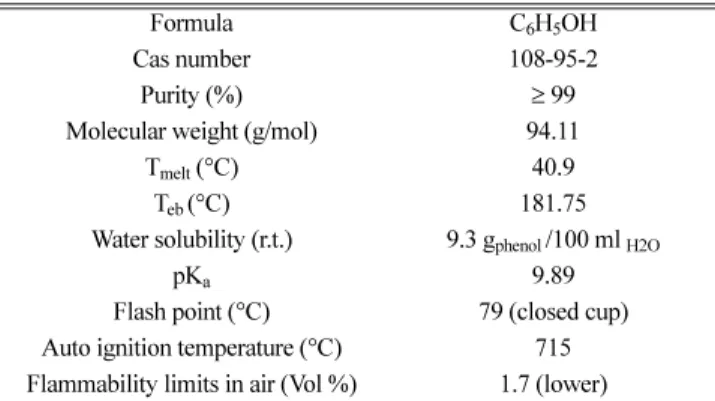
Phenol purchased from Merck Chemicals was used for all the adsorption studies. Some properties of phenol are given in Table 2.
The bentonite samples used in this study were taken from the Touggourt clay deposits (Bildet Omar quarry, Touggourt, South Est Algeria). The chemical constituents of the original and the modified samples were analyzed by XRF and given in Table 3. The chemical analysis of native bentonite listed in Table 3 showed enrichment in silica and alumina. The mass ratio SiO2/Al2O3 is about 4.026, reveals its montmorillonite character. For these materials, the cation exchange capacity (CEC) = 40 was assumed. The montmorillonite (Mt) was converted to sodium montmorillonite (NaMt) according to the following protocol: 30 g of montmorillonite was alloyed with 1 M NaCl solution and stirred for 24 h. After three successive operations, the mixture (Mt + NaCl) was dialyzed in distilled-deionized water
until it was free of chloride [32]. At that point it was separated by centrifugation to exterminate all other solid phases (quartz, cristoballite and calcite) [33]. The Na+-montmorillonite noted NaMt (fraction < 2 µm) was recovered by decantation and dried at 80 °C.
2-1-2. Analysis of phenol
Before investigation, the calibration curves between absorbance and the concentration of the phenol solution were established. The absorbance calibration curve as a function of the phenol concentration shows a linear plot. The concentration of phenol in the aqueous solution was determined at wavelength 270 nm using a UV spectrophotometer (SP-UV500DB, Spectrum Instruments GmbH, Germany).
2-1-3. Adsorption procedure
The adsorption of phenol on natural and modified montmorillonite was accomplished in a batch system. Adsorption experiments were performed by allowing a precisely measured mass of clay to reach equilibrium with phenol solutions of well-known concentrations.
The initial phenol concentration was maintained between 5 and 30 mg/l. The pH was corrected using dilute solutions of HCl or NaOH.
Known weights of bentonite (50 mg) were added to narrow-necked flasks each containing 50 ml of solution. The bottles were then capped and shaken in an agitator in a temperature-controlled water bath. Kinetic experiments showed that the adsorption equilibrium was attained in 48 h. The quantity of phenol adsorbed per gram of solid adsorbent is given by the following expression:
Table 1. Hydrochemical properties of surface water from Timgad Basin (Collected on 21/3/2018 at 10H45)
T(°C) pH Conductivity (µSiemens/cm) NH4 (mg/l) NO2 (mg/l) NO3 (mg/l) HCO3 (mg/l) SO4 (mg/l) Cl (mg/l)
13 8.03 1120 0.05 0.049 0 134.2 380 70
Mg (mg/l) Na (mg/l) K (mg/l) Ca (mg/l) Mn (mg/l) Cu (mg/l) Zn (mg/l) Pb (mg/l) Phenol (mg/l)
49.06 61 4 102.2 0.013 / / / 5.25
Table 2. Chemical and physical proprieties of phenol
Formula C6H5OH
Cas number 108-95-2
Purity (%) ≥ 99
Molecular weight (g/mol) 94.11
Tmelt (°C) 40.9
Teb (°C) 181.75
Water solubility (r.t.) 9.3 gphenol /100 ml H2O
pKa 9.89
Flash point (°C) 79 (closed cup) Auto ignition temperature (°C) 715 Flammability limits in air (Vol %) 1.7 (lower)
Table 3. Chemical composition of natural and modified clay Parameter Natural clay Modified clay (NaMt)
CEC, meq/100 g 40.0 81.0
pH Porosity Specific gravity (g/cm3)
8.30 0.37 0.976
8.00 0.49 0.828 Elemental oxides, wt.%
SiO2 45.98 53.3
Al2O3 11.42 21.40
Fe2O3 5.10 8.37
CaO 10.02 5.61
MgO 1.85 3.28
K2O 1.69 2.67
Na2O 0.38 0.03
SO3 0.17 000
Cl 0.04 0.02
SiO2/ Al2O3 4.026 2.4906
LOI 23.35 5.32
LOI : loss on ignition at 1000oC
where C0 is the initial concentration of the phenol solutions (mg/
l), Ct is the concentration of the solution of phenol at any time t (mg/l), m is the weight of adsorbent (g) and V is the volume of solution (ml). The isotherms of adsorption were carried out with a big interval of phenol initial concentration (5–30 mg/l). Flasks were shaken in 400 rpm for 60 minutes, this time of optimum con- tact was sufficient to attain adsorption equilibrium.
The quantity of adsorption at equilibrium time, qe (mg/g), was calculated by:
Ce (mg/l) is the phenol concentration at equilibrium time. The data of adsorption equilibrium were then fitted by using three different models of isotherm: Langmuir, Freundlich and Temkin.
3. Results and Discussion
3-1. X-ray diffraction
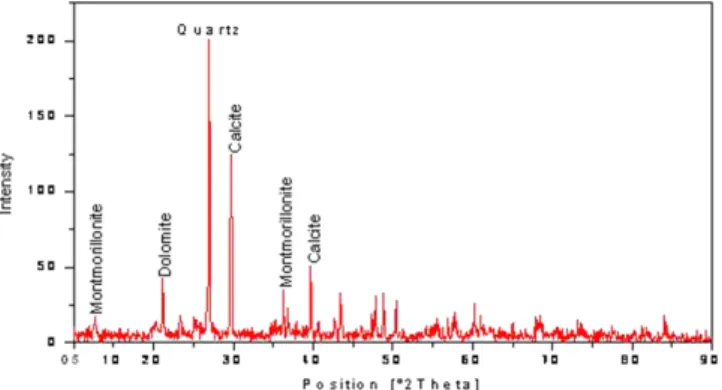
X-ray diffraction results were obtained using a Philips PW 1730 diffractometer equipped with Cu-Kα radiation (40 kV, 30 mA). The characteristics of montmorillonite type were confirmed by the X-ray diffraction patterns of the sample clay. It shows impurities, such as quartz, dolomite and calcite. Fig. 2 clearly appears that the d-spacing of clay expanded from 7.45 to 12.65 Å, which can be credited to the modified clay. This value shows that some water molecules were adsorbed in the space between the layers. Quartz (reflection at 2θ = 26.70°, d = 3.34 Å) and calcite (reflection at 2θ = 36.01°, d = 2.49 Å) were the main impurities. The purified clay with Na-exchange indicates inter-reticular distance of the 001 plan (reflection at 2θ = 7.20°, d = 12.65 Å), which characterizes sodium and kaolinite (reflection at 2θ
= 37.91°, d = 2.37 Å).
3-2. FTIR and Scanning Electron Microscopy analysis To acquire correlative proof for the intercalation of modified clay (NaMt) into the silicate lattice, FTIR spectra were recorded in the
region 500–4000 cm-1. In reality, IR techniques have been utilized by numerous researchers to recognize natural clay minerals [34]. The specific bands of kaolinite appeared at 3,618.67, 3,641.59, 1,100.39, 907.602, 830.38, 758.355, 521.24, and 456.84 cm-1 [35]. The band at 1060.85 cm-1 is attributed to Si–O stretching; the high intensity of this peak gives us an indication of the large amount of this mineral in the sample to be analyzed. The bands at 923.90 cm-1 and 711.73, 659.65 cm-1 are assigned to Si–O–Al and Si–O–Mg, Si–O–Fe, respectively. This demonstrated that most portion of the layer charge comes from trivalent (Al3+, Fe3+) to bivalent (Mg2+) ion substitution in the octahedral sheet. The functional groups mentioned above are shown in silicate minerals such as montmorillonite and kaolinite.
Obviously, the band seen at 3423.65 cm-1 is alloted to stretching vibrations of adsorbed water molecules. Generally between 1650 and 1600 cm-1 a medium band appears; this characterizes the bending vibrations of the adsorbed water. We see that the stretching vibrations of the surface hydroxyl groups (Al–Al–OH or Si–Si–OH) are found at 3626.86 and 3622.32 cm-1. The absorption bands at 1032.34 and 470 cm-1 can correspond to montmorillonite-Na [35]. The bands at 1032.34 cm-1 are attributed to the Si–O stretching vibrations, and at 470 cm-1 assigned to Si–O–Si bending vibrations [36]. Fig. 3 presents the spectra IR of natural and modified clay.
m C V C qt=( 0− t)×
m C V C qe=( 0− e)×
Fig. 1. X-ray diffraction patterns of the natural clay. Fig. 2. X-ray diffraction patterns of the modified clay (NaMt).
Fig. 3. Represents the IR spectra of our clay sample between 500 and 4000 cm-1.
Scanning electron microscopy (SEM) makes it possible to observe the texture of the clay samples and to characterize the mineralogical assemblies. The figures obtained by SEM of the clay samples with different magnifications are shown in Fig. 4. The results of this analysis show that the shape of natural clay is a smoothed surface, the biggest constituent composition is SiO2 and Al2O3 with an average of 45.98% and 11.42% by weight, carbon and its compound others as summarized in Table 3. The SEM image of modified clay (NaMt) shows that the adsorbent has an abundant porous structure, and the size of the pores on the surface is about 3 to 5 µm. Its porous structure provides new adsorption sites from inner cavities to accommodate phenols.
3-3. Surface area
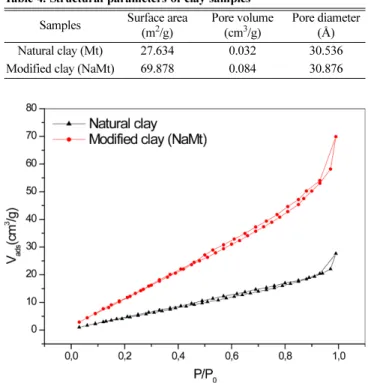
After degassing under vacuum at 100 °C for 1 h, the specific surface area was measured by nitrogen gas adsorption–desorption isotherms using a Quanta Chrome instrument (NOVA model, version 11.03) at 77.35 K. The specific surface area was calculated by the B.E.T method [37] and the pore size was determined by the Barrett-Joyner- Halenda (BJH) method using the adsorption and desorption isotherms, respectively [38]. The BET specific surface area, pore volume and pore diameter data for the samples are summarized in Table 4. It is observed that the specific surface of natural clay is increased after modification, as shown by the BET specific surface values. The specific surface area of the montmorillonite modified (NaMt) increased to Fig. 4. SEM micrographs of different samples: (A): Natural clay, (B): Modified clay (NaMt).
69.878 m2/g. Table 4 shows an increase in the porous volume from 0.032 to 0.084. The increase in porosity is due to the intercalation in interlayer space that maintains an open structure accessible to the nitrogen molecules. The profile and hysteresis loop of the isotherm is similar to the type IV [39,40], which implies that the clay sample studied can be characterized as mesoporous material (Fig. 5). The hysteresis loop of isotherms was H3 type, which indicates the presence of slit-shaped pores [39]. Isotherms with this profile have been observed for the adsorption of N2 and O2 in montmorillonite clays [41]. The volume adsorbed in the region of very low relative pressures, P/P0 below 0.058, indicates some presence of micropores.
The slope in the region of low relative pressures, 0.058–0.45 range, was attributed to monolayer-multilayer adsorption. The second slope indicates adsorption by capillary condensation. The rapid increment of the amount adsorbed from a relative pressure close to 0.8 was caused by the filling of the mesopores of the largest size as well as those located at the external surface.
3-4. Adsorption equilibrium
3-4-1. Effect of contact time and adsorption kinetics
The adsorption data for the elimination of phenol as a function of the contact time at various initial concentrations are presented in Fig.
6. Experiments show that the equilibrium time required for the adsorption of phenol on both samples is nearly 60 min. However, for subsequent experiments, the samples were left for 24 h to guarantee equilibrium. Therefore, the result in this present study is in agreement with the other reported findings. Up to 55 and 75% of phenol was effectively adsorbed by natural and activated clay from the aqueous
solution. This affirms the important application of activated natural clay as an effective adsorbent [25,42].
The kinetic studies provided important information on the phenol adsorption mechanism. The kinetic curves of different samples were comparative, and the amount of adsorbed phenol increased with the contact time during the first 10 min (Fig. 6). The fast adsorption of Phenol occurred in the first 50 min, then the rate decreased, and the adsorption process reached equilibrium after approximately 60 min (Fig. 5). These results are in accord with those previously reported in the literature [22-27,43]. Huge contrasts were observed in the saturated adsorption amounts of different samples (Fig. 6). The saturated adsorption amount for NaMt was the largest, which may be ascribed to NaMt being an expanding clay with large surface area [25,44].
The pseudo-first-order kinetic adsorption equation was suggested by Lagergren [45] for the sorption of solid/liquid systems and can be expressed in integrated and linear form using the following equation:
t k q q
qe t) ln e 1
ln( − = −
Table 4. Structural parameters of clay samples Samples Surface area
(m2/g)
Pore volume (cm3/g)
Pore diameter (Å)
Natural clay (Mt) 27.634 0.032 30.536
Modified clay (NaMt) 69.878 0.084 30.876
Fig. 5. N2 adsorption–desorption isotherms of natural and modified clay.
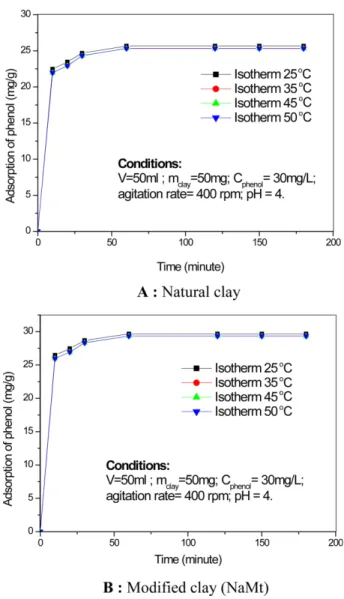
Fig. 6. Effect of time contact on phenol adsorption.
Fig. 7. Fit pseudo-first order of adsorption of phenol on natural and modified clay.
where k1 is the rate constant of adsorption (min-1), qe and qt are the adsorption loading of phenol (mg/g) at equilibrium and at time t (min), respectively. In this case, a plot of ln (qe-qt) versus t should provide a straight line from which k1 and predicted qe can be deter- mined from the slope and intercept of the plot, respectively (Fig. 7).
The pseudo-second order model is presented in the following equation [46]:
where k2 (g/mg min) is the rate constant of the second-order model. The plot of t/qt as a function of t (Fig. 8) should give a straight line and qe and k2 can be calculated from slope and inter- cept of the curve, respectively.
The intraparticle diffusion equation is expressed as [47]:
where ki (mg g-1 min-1/2) is the rate constant of the intraparticle diffusion model. The values of ki and c can be found from the slope and intercept of the straight line of qt as a function of t1/2, respec- tively (Fig. 9).
In this part, the pseudo-first-order, pseudo-second-order and intraparticle diffusion models were used to evaluate the kinetics of phenol–clay interactions. The rate constant k1 and the value of qe of pseudo-first-order test were calculated from the plot of ln (qe−qt) as a function of t, and the results are given in Table 5. The correlation coefficient (R2) is relatively low, which may be indicative of a bad
correlation. In addition, qe, cal determined from the model is not in a good agreement with the experimental value of qe, exp. Therefore, the adsorption of phenol onto both samples is not suitable for the first- order reaction. The results in Table 5 show that correlation coefficient values for the pseudo-second-order kinetic model were over 0.99 for all cases, indicating the applicability of the model to describe the adsorption process. The experimental qe values agree well with the calculated values obtained from the pseudo-second order. The constant
“c” was found to increase from 0.78 to 10.78 mg/g for natural and modified clay, respectively, which indicates the increase of the thickness of the boundary layer and decrease of the chance of the external mass transfer and consequently increase the process of internal mass transfer [18,48]. The regression coefficients demonstrate that the pseudo-second-order model fitted the experimental data better than the other two kinetic models (see Table 5).
3-4-2. Effect of pH on solution adsorption
The adsorption of phenol by both clay samples was studied at different pH areas of the phenol solution from 2 to 12 (Volume = 50 mL, C phenol = 30 mg/L, agitation rate = 400 rpm). The pH was measured before and after the adsorption process and it was found that the difference between the two measured values of pH was less than 0.3 for all samples. The amount of phenol adsorbed shows a downward trend with higher and lower pH, with maximum elimination of phenol at pH 4 (Fig. 10). This decrease in the adsorption of phenol may be due to the suppression by hydrogen ions (at lower pH), and hydroxyl ions (at higher pH). It is important to note that at pH of 4, the q t
q k q
t
e e t
1 1
2 2
+
=
c t k qt= i0.5+
Fig. 8. Fit pseudo-second order of adsorption of phenol on natural and modified clay (NaMt) at 25 °C.
Fig. 9. Intraparticle diffusion plots of adsorption of phenol on nat- ural and modified clay (NaMt) at 25 °C.
Table 5. Parameters of pseudo-first-order, pseudo-second-order and intraparticle diffusion models
pH m (mg) T (K) qe,exp mg/g Pseudo- first-order Pseudo- second-order Intraparticle diffusion qe,cal (mg/g) k1 (min-1) R2 qe,cal (mg/g) k2 (g/mg.min) R2 ki (mg·g-1·min-1/2) c (mg/g) R2 Mt
4 50 298.15 25.533 20.967 0.00791 0.948 21.0084 0.0015762 0.996 1.58555 0.78143 0.966
NaMt
4 50 298.15 29.785 16.418 0.00772 0.915 24.8016 0.0035211 0.998 1.76545 10.77921 0.956
modified clay (NaMt) removes about 99.28% of phenol per gram;
natural clay removes 85% of phenol per gram. In this work, phenol could be removed up to 80% with modified clay (NaMt) at pH 9 (Fig. 10).
3-4-3. Effect of adsorbent mass
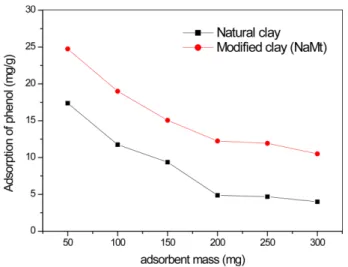
The adsorption of phenol on natural and modified clay was studied by modifying the mass of adsorbent (50, 100, 150, 200, 250 and 300 mg). The experiments were kept at pH 4, temperature of 25±2 °C and initial phenol concentration of 30 mg/L. As observed from Fig. 11, the quantity adsorbed per unit mass showed a decrease. The decrease in adsorption density may be due to a large adsorbent amount, which effectively reduces the unsaturated sites of the adsorption [49]. On the other hand, the increase in the adsorbent weight from 20 to 50 mg increased the removal of phenol from 12 to 15%. This result can be attributed to increased surface area and consequently the adsorption sites [48].
3-4-4. Effect of Initial phenol concentration
Additionally, the effect of initial phenol concentration in the solution
on the capacity of adsorption on natural and modified clay was studied and shown in Fig. 12. Adsorption experiments were carried out with a constant mass of adsorbent (50 mg), pH (4.0), temperature (25±2 °C) and at different initial concentrations of phenol (5, 10, 15, 20, 25 and 30 mg/L). The amount of phenol adsorbed per unit mass of adsorbent increased from 9 to 33 mg/g with increase in phenol concentration from 5 to 30 mg/L indicating that the initial phenol concentration plays a significant role in the adsorption of phenol onto natural and modified clay. Phenol present in solution at higher concentrations cannot interact with the active adsorption sites of both clay samples due to their saturation [50,51].
3-4-5. Effect of temperature on phenol adsorption
To study the effect of temperature on phenol adsorption, equilibrium experiments were carried out at 25, 35, 45 and 50 °C. From Fig. 13, which represents the influence of temperature variation on phenol adsorption, we note that an increase in the temperature leads to a small increase in the adsorbed quantity for both adsorbents; after the equilibrium time, the adsorbed amount increases slightly in a regular way with the temperature for sodium purified clay better than the raw clay, and the increase of the temperature in the range studied for the phenol causes a small decrease in the adsorption capacity of the phenol on the clays at equilibrium. This small decrease means that the adsorption process of the phenol on clays is exothermic.
Therefore, there is not a great difference between the maximum amounts adsorbed at different temperatures; it is shown essentially that the increase in temperature gently influences the adsorption process.
3-5. Adsorption isotherms
The adsorption data obtained were analyzed with the Langmuir, Freundlich and Temkin isotherm equations to describe how solute interacts with adsorbent. The best fitting isotherm was tested by determination of the nonlinear regression, and the parameters of the isotherms were obtained.
Fig. 10. Effect of pH solution on phenol adsorption.
Fig. 11. Effect of adsorbent mass.
Fig. 12. Effect of initial phenol concentration on the adsorption pro- cess.
3-5-1. Langmuir isotherm
The well-known expression of the Langmuir model is [52]:
The linear form of the Langmuir isotherm model can be presented as [52]:
where qe is the equilibrium phenol concentration on adsorbent (mg/g), Ce is the equilibrium phenol concentration in solution (mg/L), qm is the monolayer capacity of the adsorbent (mg/g), KL
is the Langmuir adsorption constant (L/mg), qmax is the Langmuir constant related to the maximum monolayer adsorption capacity (mg g−1), and b is the constant related the net enthalpy of adsorp- tion (L mg−1). The Langmuir equation is applicable to homoge- neous sorption [53]. The fundamental assumptions of the Langmuir isotherm model can be expressed in terms of ‘RL’ a dimensionless
constant, separation factor, which is defined as a function of the initial phenol concentration (C0), by the following formula [54]:
3-5-2. Freundlich isotherm
The Freundlich isotherm is an empirical equation which can be used for nonideal sorption in multilayers that involves heterogeneous surfaces [55]. The Freundlich isotherm is commonly given by the following equation [55]:
The Freundlich model in linear form:
where qe is the equilibrium phenol concentration on adsorbent (mg/g), Ce is the equilibrium phenol concentration in solution (mg/L), KF (mg/g) and 1/n are the Freundlich constants characteristic of the system studied, which represent the capacity of adsorption and the intensity of adsorption, respectively.
3-5-3. Temkin isotherm
Temkin isotherm equation [56] is given by:
where B = RT/b; b = Temkin energy constant (J/mol); and KT= factor that explicitly takes into account the interaction between the adsorption systems. The plot between qe and Ce allows the determination of isotherm constants b, B, and KT. R is the ideal gas constant (8.314 J/mol K), and T is the temperature (K).
3-5-4. Equilibrium modeling analysis
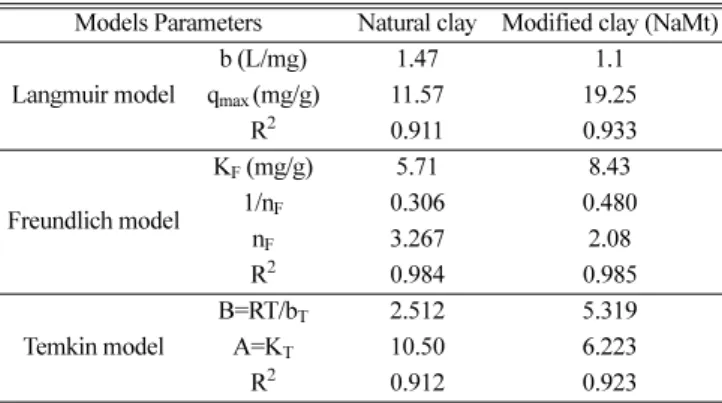
The equilibrium data obtained by the adsorption of phenol on natural and modified clay have been used for the testing of applicability of various isotherm models. The isothermal adsorption data shown in Fig. 14 are fitted to obtain the Langmuir, Freundlich and Temkin isotherm model parameters. The model parameters are listed in Table 6. The high values of R2 (>91%) for the three isotherms and for the two adsorbents indicate that the adsorption of phenol could be well described by the linear, Langmuir Freundlich and Temkin isotherms.
KF and nF are the Freundlich constants characteristic of the adsorption system. Value of nF greater than 1 corresponds to favorable adsorption conditions [57,58].
Fig. 14 illustrates the linear curve of the Freundlich model, a straight line is given with a slope of 1/n and this for the two clay samples tested. The value of 1/n is 0.306 and 0.480 for the natural clay and NaMt, respectively. This result indicates the favorable adsorption of phenol on the both adsorbents. Moreover, the higher value of KF was determined to be 8.43 for the modified clay (NaMt).
The Maximum monolayer adsorption capacity, qmax from the Langmuir model was found to be 11.57 mg/g and 19.25 mg/g for natural clay
L m
e L
e mq K
C K q q
= + 1
max max
1 q b q
C q
C e
e e
+ ⋅
=
1 0
1 C RL b
⋅
= +
en F
e K C
q = ⋅ 1/
e F
e K n C
q ln 1/ ln
ln = + ⋅
e T
e B K B C
q = ln + ln
Fig. 13. Temperature effect on phenol adsorption.
and Modified clay (NaMt), respectively. The results suggest that the phenol is favorably adsorbed by modified clay (NaMt). The dimensionless separation factors calculated for phenol adsorption at 25 °C are: RL = 0.0221 for adsorption of phenol on natural clay and RL = 0.0294 for adsorption of phenol on NaMt. RL values indicating favourable adsorption for the two processes. According to the R2 values (Table 6) and also the fitting plots (Fig. 14), it can be concluded that Freundlich model is the best model to describe adsorption isotherms of phenol onto both samples.
The Temkin isotherm was studied to explore the Gibbs free energy change as:
The value of ΔGo was 0.987 kJ/mol and 0.466 kJ/mol for natural clay and NaMt, respectively. These results were lower than 10 kJ/
mol showing a physical adsorption type [25].
3-6. Thermodynamic parameters
The achievability of the adsorption process was evaluated by the thermodynamic parameters, including free energy change (ΔGo), enthalpy (ΔHo), and entropy (ΔSo). ΔGo was calculated from the following equation:
ΔGo=−RT ln Kd
where R is the universal ideal gas constant (8.314 Jmol−1 K−1), T is the temperature (K), and Kd is the distribution coefficient.
The Kd value was calculated using the ifollowing formula:
where qe and Ce are the equilibrium concentration of phenol on adsorbent (mg L−1) and in the solution (mg L−1), respectively.
The enthalpy change (ΔHo), and entropy change (ΔSo) of adsorp- tion were estimated from the following equation:
This equation can be written as:
The thermodynamic parameters of ΔHo and ΔSo were obtained from the slope and intercept of the plot between ln Kd versus 1/T, respectively (Fig. 14). The values of ΔGo, ΔHo, and ΔSo for the adsorption of phenol onto natural and modified clay at different temperatures are given in Table 4. The negative values of ΔGo in the temperature range of 25–50oC indicate that the adsorption process was spontaneous. In addition, the negative value of ΔSo suggests decreased randomness at the solid/liquid interface during the adsorption of phenol onto natural and modified clay. The change in enthalpy and Gibbs free energy values for the physical adsorption is generally
Δ °
= G
B RT
e
d Ce
K = q
°
°
°=Δ − Δ
ΔG H T S
RT H R Kd=ΔS°−Δ ° ln
Fig. 14. Adsorption isotherms of phenol on natural and modified clay, (A) Langmuir.
Table 6. Langmuir, Freundlich, and Temkin isotherm model parameters for the adsorption of phenol on natural and modified clay Models Parameters Natural clay Modified clay (NaMt)
Langmuir model
b (L/mg) 1.47 1.1
qmax (mg/g) 11.57 19.25
R2 0.911 0.933
Freundlich model
KF (mg/g) 5.71 8.43
1/nF 0.306 0.480
nF 3.267 2.08
R2 0.984 0.985
Temkin model
B=RT/bT 2.512 5.319
A=KT 10.50 6.223
R2 0.912 0.923
in the range of nil to −30 and −42 kJ/mol respectively. For the chemisorption ΔGo and ΔHo are in the range of −80 to −400 kJ/mol and −42 to −125 kJ/mol respectively. The values of ΔHo and ΔHo in this study showed that the adsorption of phenol onto natural clay could be considered as a physical adsorption. However, the adsorption of phenol on modified clay (NaMt) is a chemical adsorption. (Chemisorption).
4. Conclusions
This paper established that the natural and modified clay may be used as raw adsorbent for the elimination of phenol from potentially potable water. Natural clay stands as low-cost adsorbent and it shows the feasibility to remove up to 73% of phenol, for initial concentration.
The activation of this material with sodium chloride 1 M gives high amelioration in the adsorption capacity. The higher adsorption capacity was about 29.661 mg/g and corresponds to the following conditions:
pH 4, Initial phenol concentration 30 mg/l and mass of modified clay (NaMt) 0.05 g. However, the effect of temperature on phenol adsorption was not significant.
Analysis of the equilibrium data showed that the Freundlich isotherm described efficiently the adsorption (R2>0.98), suggesting that phenol adsorption onto the both adsorbents occurs in multiple layers. Although, Langmuir and Temkin isotherms give accepted linearity. The data obtained suggest that the adsorption of phenol onto natural clay could be considered as a physical adsorption. The negative value of enthalpy (ΔHo) for the adsorption on modified clay (NaMt) is higher than 40 kJ mol-1, indicating the chemical nature of the sorption (chemisorption). The adsorption of phenol on natural and modified clay is spontaneous and exothermal. The data clearly show that the adsorption kinetics follow the pseudo-second order rate (R2>0.99). Finally, the results reveal that natural clay can be successfully used as cheap, efficient and eco-friendly adsorbent for removal of phenol from water, especially potable water.
Acknowledgments
The authors would like to acknowledge University of Batna2 for financial and instrumental support.
References
1. Legube, B., Le traitement des eaux de surface pour la produc- tion d’eau Potable, Guide technique, Agence Loire, Bretagne, France(1996).
2. Degrémont, S. A., Mémento technique de l’eau, 10th Edition Lavoisier, Rueil-Malmaison, in two vols(2004).
3. Agency for toxic substances and disease registry (ATSDR), Tox- icological profile for phenol, Atlanta, GA: U.S., Department of health and human services, Public health service(2008).
4. Michalowicz, J. and Duda, W., Polish J. of Environ. Stud., 16(3), 347(2007).
5. Knop, A. and Pilato, L. A., Phenolic resins: chemistry, applications and Performance, Springer Science & Business Media(2013).
6. World Health Organization (WHO), Guidelines for Drinking Water Quality, Health Criteria and Supporting Information, World Health Organization, vol. 2, Geneva, Switzerland(1984).
7. Dutta, N. N., Brothakur, S. and Baruah, R., Water Environ. Res., 70, 4(1998).
8. Ghodbane, I., Nouri, L., Hamdaoui, O. and Chiha, M., J. Haz- ard. Mater., 152(1), 148(2008).
9. Huang, F. C., Lee, J. F., Lee, C. K. and Chao, H. P., Coll. Surf. A, 239, 41(2004).
10. Vimonses, V., Lei, S., Jin, B., Chowd, C. W. K. and Saint, C., Chem. Eng. J., 148, 354 (2009).
11. Özcan, A., Öncü, E. M. and Özcan, A. S., J. Colloid Interface Sci., 280, 44(2004).
12. Naseem, R. and Tahir, S. S., Water Res., 35, 3982(2001).
13. Özcan, A. S. and Özcan, A., J. Colloid Interface Sci., 276, 39 (2004).
14. Witthuhn, B., Klauth, P., Klumpp, E., Narres, H. D. and Marti- nius, H., Appl. Clay Sci., 28, 55(2005).
15. Gonen, Y. and Rytwo, G., J. Colloid Interface Sci., 299, 95(2006).
16. Bhattacharyya, K. G. and Sen Gupta, S. J. Colloid Interface Sci., 310, 411(2007).
17. Koyuncu, H., Appl. Clay Sci., 38, 279(2008).
18. Shu, Y., Li, L., Zhang, Q. and Wu, H., J. Hazard. Mater., 173, 47(2010).
19. Christidis, G., Applied Clay Sci., 13, 79(1998).
20. Hassani, A. H., Seif, S., Javid, A. H. and Borghei, M., Int. J. Envi- ron. Res., 2(3), 239(2008).
21. Aghamohammadi, N., Hamidi, A. A., Hasnain, I. M., Zinatizadeh, A. A., Nasrollahzadeh Saravi, H. and Ghafari, Sh., Int. J. Environ.
Res., 1, 96(2007).
22. Banat, F. A., Al-Bashir, B., Al-Asheh, S. and Hayajneh, O., Envi- Table 7. Thermodynamic parameters for the adsorption of phenol on natural and modified clay
Natural clay ΔG° (KJ. mol-1) ΔH° (kJ. mol-1)a ΔS° (J. mol-1)a
298.15 K -5.3466
-11.446 -19.837
308.15 K -5.49273
318.15 K -4.79066
323.15 K -5.06739
Modified clay (Na-Mt) ΔG° (KJ. mol-1) ΔH° (kJ. mol-1)a ΔS° (J. mol-1)a
298.15 K -13.535
-124.569 -376.99
308.15 K -5.374
318.15 K -6.189
aMeasured between 298.15 and 323.15 K.
ron. Pollut., 107, 391(2000).
23. Juang, R. S., Lin, S. H. and Tsao, K. H., J. Colloid Interface Sci., 254(2002).
24. Ramos Vianna, M. M. G., Franco, J. H. R., Pinto, C. A., Valenzu- ela Díaz, F. R. and Büchler, P. M., Braz. J. Chem. Eng., 21(2), 239(2004).
25. Djebbar, M., Djafri, F., Bouchekara, M. and Djafri, A., Applied Water Science, 2, 77(2012).
26. Diaz-Nava, M. C., Olguin, M. T. and Solache-Rios, M., J. Incl.
Phenom Macrocycl Chem., 74, 67(2012).
27. Hank, D., Azi, Z., Ait Hocine, S., Chaalal, O., Hellal, A., J. Ind.
Eng. Chem., 20, 2256(2014).
28. Xu, Y., Khan, M. A., Wang, F., Xia, M. and Lei, W., Appl. Clay Sci., 162, 204(2018).
29. Ren, S., Deng, J., Meng, Z., Wang, T., Xie, T. and Xu, S., Powder Technol., 356, 284(2019).
30. Ouallal, H., Dehmani, Y., Moussout, H., Messaoudi, L., Azrour, M., Heliyon, 5, e01616(2019).
31. Bouiahya, K., Es-saidi, I., El Bekkali, C., Laghzizil, A., Robert, D., Nunzi, J. M. and Saoiabi, A., Colloids Interface Sci. Com- mun., 31, 100188(2019).
32. Khalaf, H., Bouras, O. and Perrichon, V., Microp. Mater., 8, 141 (1997).
33. Boutahala, M. and Tedjar, F., Solid States Ionics, 61, 257(1993).
34. Hajjaji, M., Kacim, S., Alami, A., El-Bouadili, A. and El Moun- tassir, M., Appl. Clay Sci., 20, 1(2001).
35. Madejova, J., Vib. Spectrosc., 31, 1(2003).
36. Gadsden, A., Infrared spectra of minerals and related inorganic compounds, The Butterworth group, UK(1975).
37. Brunauer, S., Emmet, P. H. and Teller, E., J. Am. Chem. Soc., 60, 309(1938).
38. Barrett, E. P., Joyner, L. G. and Halenda, P. H., J. Am. Chem.
Soc., 73, 373(1951).
39. Thommes, M., Kaneko, K., Neimark, A. V., Olivier, J. P., Rodri-
guez-Reinoso, F., Rouquerol, J. and Sing, K. S. W., Pure Appl.
Chem., 87, 1051(2015).
40. Novikova, L., Ayrault, P., Fontaine, C., Chatel, G., Jérôme, F.
and Belchinskaya, L., Ultrason. Sonochem., 31, 598(2016).
41. Rouquerol, F., Rouquerol, J. and Sing, H., Adsorption by powders and porous solids: principles - methodology and applications, Aca- demic Press London(1999).
42. Tahani, A., Karroua, M., El Farissi, M., Levitz, P., van Damme, H., Bergaya, F. and Margulies, L., J. Chem. Phys., 96, 464(1999).
43. He, J., Zhou, Q. H., Guo, J. S. and Fang, F., Environ. Sci. Pol- lut. R., 25, 22224(2018).
44. Acisli, O., Karaca, S. and Gurses, A., Appl. Clay. Sci., 142, 90(2017).
45. Lagergren, S. and Vetenskapsakad, K. S., Handl. Band., 24, 1 (1898).
46. Ho, Y. S. and McKay, G., Process. Biochem., 34, 451(1999).
47. Weber, W. J. and Morris, J. C., Proc. Int. Conf., Water Pollution Symposium, vol. 2. Pergamon, Oxford, pp. 231(1962).
48. El Nemr, A., Abdelwahab, O., El-sikaily, A. and Khaled, A., J.
Hazard. Mater., 161, 102(2009).
49. Shukla, A., Zhang, Y. H., Dubey, P., Margrave, J. L. and Shukla, S. S., J. Hazard. Mater., 95, 137(2002).
50. Hameed, B. H., Colloid Surf. A: Physicochem. Eng. Aspects, 307, 45 (2007).
51. Srivastava, V. C., Swamy, M. M., Mall, I. D., Prasad, B. and Mishra, I. M., Colloids Surf. A, 272, 89(2006).
52. Langmuir, I., J. Am. Chem. Soc., 40, 1361(1918).
53. Langmuir, I., J. Am. Chem. Soc., 38, 2221(1916).
54. Hall, K. R., Eagleton, L. C., Acrivos, A. and Vermeulen, T., Ind.
Eng. Chem. Fundam., 5, 212(1966).
55. Freundlich, H. M. F., Z. Phys. Chem., 57, 385(1906).
56. Temkin, M. I. and Pyzhev, V., Acta Physiochim., 12, 327(1940).
57. Fu, Q., Deng, Y., Li, H., Liu, J., Hu, H., Chen, S. and Sa, T., Appl.
Surf. Sci., 255(8), 4551(2009).
58. Aksu, Z., Tatli, A. I., and Tunc, O., Che. Eng. J., 142, 23(2008).