• 검색 결과가 없습니다.

Gender Differences in the Clinical Characteristics of Psychotic Depression: Results from the CRESCEND Study

N/A
N/A
Protected

Academic year: 2021

Share "Gender Differences in the Clinical Characteristics of Psychotic Depression: Results from the CRESCEND Study"

Copied!
7
0
0

로드 중.... (전체 텍스트 보기)

전체 글

(1)

256

Clinical Psychopharmacology and Neuroscience 2015;13(3):256-262 Copyright2015, Korean College of Neuropsychopharmacology

Received: February 2, 2015 / Revised: March 22, 2015 Accepted: April 22, 2015

Address for correspondence: Yong Chon Park, MD, PhD Department of Psychiatry, Hanyang University Guri Hospital, 153 Gyeongchun-ro, Guri 11923, Korea.

Tel: +82-31-560-2273, Fax: +82-31-554-2599 E-mail: [email protected]

This is an Open-Access article distributed under the terms of the Creative Commons Attribution Non-Commercial License (http://creativecommons.org/licenses/by-nc/4.0) which permits unrestricted non-commercial use, distribution, and reproduction in any medium, provided the original work is properly cited.

Gender Differences in the Clinical Characteristics of Psychotic Depression:

Results from the CRESCEND Study

Seon-Cheol Park

1,2

, Søren Dinesen Østergaard

3,4

, Jae-Min Kim

5

, Tae-Youn Jun

6

, Min-Soo Lee

7

, Jung-Bum Kim

8

, Hyeon-Woo Yim

9

, Yong Chon Park

10

1

Department of Psychiatry, Yong-In Mental Hospital, Yongin,

2

Institute of Mental Health, Hanyang University, Seoul, Korea,

3

Department of Clinical Medicine, Aarhus University Hospital, Risskov, Denmark,

4

The Lundbeck Foundation Initiative for Integrative Psychiatric Research (iPsych), Denmark,

5

Department of Psychiatry, Chonnam National University School of Medicine, Gwangju,

6

Department of Psychiatry, College of Medicine, The Catholic University of Korea, Seoul,

7

Department of Psychiatry, Korea University College of Medicine, Seoul,

8

Department of Psychiatry, Keimyung University School of Medicine, Daegu,

9

Department of Preventive Medicine, College of Medicine, The Catholic University of Korea, Seoul,

10

Department of Psychiatry, Hanyang University Guri Hospital, Hanyang University College of Medicine, Guri, Korea

Objective: To test whether there are gender differences in the clinical characteristics of patients with psychotic depression (PD).

Methods: Using data from the Clinical Research Center for Depression (CRESCEND) study in South Korea, we tested for potential gender differences in clinical characteristics among 53 patients with PD. The Psychotic Depression Assessment Scale (PDAS) and other psychometric scales were used to evaluate various clinical features of the study subjects. Independent t-tests were performed for normally distributed variables, Mann-Whitney U-tests for non-normally distributed variables, and χ

2

tests for discrete variables. In addition, to exclude the effects of confounding variables, we carried out an analysis of covariance (ANCOVA) for the normally distributed variables and binary logistic regression analyses for discrete variables, after adjusting the effects of marital status.

Results: We identified more prevalent suicidal ideation (adjusted odds ratio [aOR]=10.316, p=0.036) and hallucinatory behavior (aOR=8.332, p=0.016), as well as more severe anxiety symptoms (degrees of freedom [df]=1, F=6.123, p=0.017), and poorer social and occupational functioning (df=1, F=6.265, p=0.016) in the male patients compared to the female patients.

Conclusion: Our findings suggest that in South Korean patients with PD, suicidal ideation, hallucinatory behavior, and anxiety is more pronounced among males than females. This should be taken into consideration in clinical practice.

KEY WORDS: Psychotic depression; Gender; Suicidal ideation; Hallucinatory behavior; Illness burden.

INTRODUCTION

Psychotic depression (PD) is characterized by depres- sion accompanied by both positive and negative psychotic symptoms.

1-5)

Because the severity-psychosis hypothesis proposed that the psychotic symptoms resulted from the severity of depression, the specifier of ‘with psychotic features’ was confined to severe major depression in the Diagnostic and Statistical Manual of Mental Disorders 4th edition (DSM-IV). However, several studies have now demonstrated that psychotic symptoms can also accom-

pany milder depressive states. Therefore, the specifier of

‘with psychotic features’ can now accompany mild, mod- erate and severe major depression, as well as dysthymia, according to the recently published DSM-5.

6-9)

In addition to psychotic symptoms, several clinical features including psychomotor disturbance (agitation or retardation), anxi- ety symptoms, suicidal behavior, deficits in executive function, psychiatric comorbidity, and conversion to man- ic episodes have been reported to be more prevalent or greater in PD than in non-PD.

1,10,11)

Gender has been regarded as a significant factor influ-

encing depression rate, symptom profile, treatment re-

sponse, and illness course in depression, especially in

non-PD. Hence, some gender-specific symptom con-

stellations of non-PD have been identified. For example,

in non-PD, depressed men are less likely than depressed

women to suffer from increased appetite, weight gain,

(2)

anxiety, interpersonal sensitivity, and somatic com- plaints.

12-14)

Although many disagree with the idea, the concept of male depression syndrome has been proposed in non-PD.

15)

However, it appears that potential differences in the clinical features of men and women with PD have been studied to a much lesser extent.

16-19)

Fennig et al.

16)

showed that female patients with PD were characterized by more frequent fatigue, psychomotor agitation, and sys- tematized and mood-incongruent delusions than males, whereas male PD patients were characterized by more fre- quent feelings of worthlessness than females. In their 6-year follow-up of community death registers in the Amsterdam Study of the Elderly (AMSTEL). Welham et al.

18)

showed that male patients with affective psychoses had a younger modal age-at-first-registration than females. In addition, Deligiannidis et al.

19)

reported that female gender was as- sociated with more frequent comorbid anxiety disorders as well as more frequent hallucinations and delusions with disorganization. However, they found no significant gen- der difference in treatment response. Finally, findings by Schoevers et al.

17)

suggested that the mortality risk in males with PD was greater than that of females.

The aim of the present study was to cast further light on potential gender differences in the clinical characteristics of patients with PD, based on an analysis of data from the South Korean Clinical Research Center for Depression (CRESCEND) study.

4,5,7)

METHODS

Study Overview

As described elsewhere,

4,5,7)

the CRESCEND study was the first large, prospective, observational clinical study of a nationwide sample of patients with depressive disorder in South Korea. The study subjects were re- cruited from 1,183 patients with first-onset or recurrent depressive disorder (major depression, dysthymia, and other non-specified depressive disorder), who were be- ginning psychiatric treatment, from January 2006 to August 2008, and were enrolled at one or other of the 18 participating centers in the CRESCEND study (16 uni- versity-affiliated hospitals and two general hospitals across South Korea). The CRESCEND study was ap- proved by the institutional review board of The Catholic Medical Center (receipt number: CUMC07U001). All the study subjects gave written informed consent. Certified research coordinators collected and evaluated the demo- graphic and clinical data of the study subjects under the supervision of clinical psychiatrists at each of the research

centers.

4,5,7)

Psychotic Depression

Following the proposals of Keller et al.,

10)

Lichtenberg and Belmaker,

20)

and Østergaard et al.,

1)

we defined PD, regardless of severity, as depressive disorder accom- panied by delusions and/or hallucinations. The inclusion criteria were as follows: (i) age ≥18 years; (ii) diagnosis of major depression, dysthymia, or other non-specified depressive disorder within DSM-IV

8)

confirmed by a Structured Clinical Interview for DSM-IV Axis I Disorders (SCID-I);

21)

(iii) recorded presence of definite delusions and/or hallucinations; and (iv) availability of the fully completed Hamilton Depression Rating Scale (HAMD)

22)

and Brief Psychiatric Rating Scale (BPRS).

23)

The Psychotic Depression Assessment Scale (PDAS)

Since the HAMD mainly focuses on depressive symp-

toms rather than psychotic symptoms, it is primarily use-

ful for evaluating the symptom severity of the depressive

domain of PD.

22)

Conversely, the BPRS predominantly

concentrates on psychotic symptoms, and only one item

covers depressive symptoms.

23)

Therefore, the 11-item

PDAS, which combines the 6-item melancholia subscale

(HAMD-6) of the HAMD (depressive mood, guilt feel-

ings, work and activities, psychomotor retardation, psy-

chic anxiety, and general somatic symptoms items) and

the 5-item BPRS-5 subscale (hallucinatory behavior, un-

usual thought content, suspiciousness, blunted affect, and

emotional withdrawal items), has been developed to as-

sess the overall severity of the entire PD syndrome. The

clinical validity, responsiveness and unidimensionality of

the PDAS have been demonstrated, and the total score is

therefore a valid measure for the symptom severity of

PD.

2,3,24)

In addition, the PDAS has been validated for dif-

ferential diagnosis of PD and non-PD.

4)

With a cut-off val-

ue of one, the total score on the BPRS-5 subscale of the

PDAS reliably differentiates PD from non-psychotic de-

pressive disorder.

5)

Moreover, the HAMD-6 subscale is

regarded as a ‘depression ruler’ and valid scale for out-

come measures in clinical trials of depression.

2,25)

Most

items of the HAMD are scored on a 0-4 point Likert scale,

whereas all items of the BPRS are scored on a 1-7 point

Likert scale. Therefore, when calculating the total score

on the BPRS-5 and the PDAS in the present study, scores

on the BPRS-5 items were converted from scores from 1-7

to scores from 0-4 using the following formula: (BPRS

score−1)×2/3 in the PDAS. Similarly, when calculating

the total score on the HAMD-6 and the PDAS, scores on

(3)

Table 1. Gender differences in demographic and clinical characteristics of patients with psychotic depression

Characteristic Total sample

(n=53)

Men (n=17)

Women (n=36)

Statistical coefficients

Unadjusted p value

Adjusted p value*

Age (yr) 40.7±15.2 38.0±16.4 42.0±14.7 U=258.000 0.360 -

Unmarried 17 (33.3) 10 (58.8) 7 (20.6) χ

2

=7.456 0.006 -

Unemployed 37 (72.5) 13 (76.5) 24 (70.6) χ

2

=0.197 0.657 0.570

Education attainment (yr) 12.2±4.0 13.4±3.0 11.7±4.3 U=238.500 0.194 -

Religious affiliation 33 (62.3) 10 (58.8) 23 (63.9) χ

2

=0.126 0.723 0.984

Monthly income <USD 2,000 33 (62.3) 11 (64.7) 22 (61.1) χ

2

=0.604 0.801 0.518

DSM-IV diagnosis χ

2

=0.147 0.701 0.803

Major depressive disorder 49 (92.5) 16 (94.1) 33 (91.7)

Depressive disorder not otherwise specified 4 (7.5) 1 (5.9) 3 (8.3)

Age at onset (yr)

28.6±14.1 27.7±14.1 29.1±14.4 U=169.000 0.471 -

Outpatient enrollment 35 (66.0) 9 (52.9) 26 (72.2) χ

2

=1.914 0.167 0.324

History of depressive episode 43 (79.2) 14 (82.4) 28 (77.8) χ

2

=0.147 0.701 0.981

Current suicidal ideation 35 (70.0) 15 (93.8) 20 (58.8) χ

2

=6.320 0.012 0.036

History of attempted suicide 25 (47.2) 10 (58.8) 15 (41.7) χ

2

=1.364 0.243 0.422

Comorbid physical disease(s) 19 (35.8) 7 (41.2) 12 (33.3) χ

2

=0.309 0.578 0.430

Values are presented as mean±standard deviation or number (%).

DSM-IV, Diagnostic and Statistical Manual of Mental Disorders 4th edition.

*Adjusted for the effect of marital status;

n=42.

the general somatic item (range 0-2) were multiplied by 2.

2,3)

In the statistical analyses, each of the scores on the PDAS items were transformed to a dichotomous variable (score of 0=absence of symptom, score of 1-4=symptom present).

Other Psychometric Scales

Structured interviews including the HAMD,

22)

BPRS,

23)

Hamilton Anxiety Rating Scale (HAMA),

26)

Clinical Global Impression of severity (CGI-s),

27)

and Social and Occupational Functioning Assessment Scale (SOFAS)

28)

were used to evaluate depressive symptoms, positive and negative symptoms, anxiety symptoms, global severity, and social function, respectively. With a formal consensus meeting to guarantee the accurate application of psycho- metric assessments, all the evaluators undertook a training program twice a year. In addition, self-questionnaires in- cluding the World Health Organization Quality of Life questionnaire-abbreviated version (WHOQOL-BREF)

29)

and the Alcohol Use Disorder Identification Test (AUDIT)

30)

were used to evaluate quality of life and alco- hol use, respectively. All psychometric scales have been formally translated into Korean and validated as reliable assessment tools in the relevant Korean populations.

31-36)

Higher scores on the HAMD,

22)

BPRS,

23)

HAMA,

26)

CGI-s,

27)

and AUDIT

30)

represent greater severity for each of symptoms, whereas lower scores on the SOFAS

28)

and WHOQOL-BREF

29)

represent poorer social function and quality of life, respectively.

Statistical Analyses

The distributions of continuous variables were tested for normality by the Kolmogorov-Smirnov test. The sig- nificance of gender differences in demographic and clin- ical characteristics and assessment scale scores were eval- uated using the independent t-test for normally distributed variables, the Mann-Whitney U-test for non-normally dis- tributed variables and the χ

2

test for discrete variables.

The effects of potential confounding variables on gender differences were adjusted by means of analysis of co- variance (ANCOVA) for normally distributed variables, and binary logistic regression analysis for discrete variables. In the binary logistic regression analysis, the fe- male group was defined as the reference category of the covariate. In our study we found that the proportion of un- married individuals was significantly greater among males than among females (Table 1). Since it has been re- ported that marriage has a moderating effect on the preva- lence and psychological consequences of depression.

37-40)

To exclude such an effect, we treated marriage as a co- variate in our ANCOVA and binary logistic regression analysis. Statistical significance was set at p<0.05. All statistical analyses were performed with PASW Statistics 18.0 for Windows (IBM Co., Armonk, NY, USA).

RESULTS

Comparison of Demographic and Clinical Characteristics

A total of 53 PD patients from CRESCEND met the in-

clusion criteria for this study. Table 1 shows a comparison

of the clinical characteristics of male and female PD

(4)

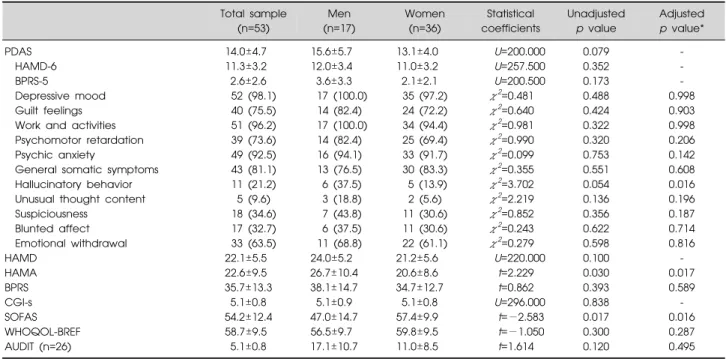
Table 2. Gender differences in assessment scale scores of patients with psychotic depression Total sample

(n=53)

Men (n=17)

Women (n=36)

Statistical coefficients

Unadjusted p value

Adjusted p value*

PDAS 14.0±4.7 15.6±5.7 13.1±4.0 U=200.000 0.079 -

HAMD-6 11.3±3.2 12.0±3.4 11.0±3.2 U=257.500 0.352 -

BPRS-5 2.6±2.6 3.6±3.3 2.1±2.1 U=200.500 0.173 -

Depressive mood 52 (98.1) 17 (100.0) 35 (97.2) χ

2

=0.481 0.488 0.998

Guilt feelings 40 (75.5) 14 (82.4) 24 (72.2) χ

2

=0.640 0.424 0.903

Work and activities 51 (96.2) 17 (100.0) 34 (94.4) χ

2

=0.981 0.322 0.998

Psychomotor retardation 39 (73.6) 14 (82.4) 25 (69.4) χ

2

=0.990 0.320 0.206

Psychic anxiety 49 (92.5) 16 (94.1) 33 (91.7) χ

2

=0.099 0.753 0.142

General somatic symptoms 43 (81.1) 13 (76.5) 30 (83.3) χ

2

=0.355 0.551 0.608

Hallucinatory behavior 11 (21.2) 6 (37.5) 5 (13.9) χ

2

=3.702 0.054 0.016

Unusual thought content 5 (9.6) 3 (18.8) 2 (5.6) χ

2

=2.219 0.136 0.196

Suspiciousness 18 (34.6) 7 (43.8) 11 (30.6) χ

2

=0.852 0.356 0.187

Blunted affect 17 (32.7) 6 (37.5) 11 (30.6) χ

2

=0.243 0.622 0.714

Emotional withdrawal 33 (63.5) 11 (68.8) 22 (61.1) χ

2

=0.279 0.598 0.816

HAMD 22.1±5.5 24.0±5.2 21.2±5.6 U=220.000 0.100 -

HAMA 22.6±9.5 26.7±10.4 20.6±8.6 t=2.229 0.030 0.017

BPRS 35.7±13.3 38.1±14.7 34.7±12.7 t=0.862 0.393 0.589

CGI-s 5.1±0.8 5.1±0.9 5.1±0.8 U=296.000 0.838 -

SOFAS 54.2±12.4 47.0±14.7 57.4±9.9 t=−2.583 0.017 0.016

WHOQOL-BREF 58.7±9.5 56.5±9.7 59.8±9.5 t=−1.050 0.300 0.287

AUDIT (n=26) 5.1±0.8 17.1±10.7 11.0±8.5 t=1.614 0.120 0.495

Values are presented as mean±standard deviation or number (%).

*Adjusted for the effect of marital status.

PDAS, Psychotic Depression Assessment Scale; HAMD-6, Hamilton 6-Item Melancholia Subscale; BPRS-5, Brief Psychiatric Rating Scale (BPRS)-5 Subscale of the Psychotic Depression Assessment Scale; HAMD, Hamilton Depression Rating Scale; HAMA, Hamilton Anxiety Rating Scale; CGI-s, Clinical Global Impression of severity; SOFAS, Social and Occupational Functional Assessment Scale; WHOQOL-BREF, World Health Organization Quality of Life assessment instrument-abbreviated version; AUDIT, Alcohol Use Disorder Identification Test.

patients. Current suicidal ideation was significantly more likely to be reported in men than women (adjusted odds ra- tio [aOR]=10.316, degrees of freedom [df]=1, p=0.036).

However, there were no significant gender differences in diagnosis (aOR=1.376, df=1, p=0.803), age at onset of first-onset depressive episode (U=238.500, p=0.194), outpatient enrollment (aOR=0.516, df=1, p=0.324), his- tory of depressive episodes (aOR=1.020, df=1, p=0.981), history of attempted suicide (aOR=1.685, df=1, p=0.422) and comorbid physical disease (aOR=1.708, df=1, p=0.430).

Comparison of PDAS Items

Table 2 presented a comparison of absence/presence of the various PDAS items among male and female PD patients. Hallucinatory behavior was significantly more likely to be reported in men than women (aOR=8.322, df=1, p=0.016). However, there were no significant gen- der differences in presence/absence of depressive mood (aOR=20,823,301.982, df=1, p=0.998), guilt feelings (aOR=0.904, df=1, p=0.903), work and activities (aOR=5,082.147, df=1, p=0.998), psychomotor retardation (aOR=2.769, df=1, p=0.206), psychic anxiety (aOR=6.750, df=1, p=0.142), general somatic symptoms (aOR=0.658, df=1, p=0.608), unusual thought content (aOR=3.840,

df=1, p=0.196), suspiciousness (aOR=2.500, df=1, p=0.187), blunted affect (aOR=0.759, df=1, p=0.714), and emotional withdrawal (aOR=1.175, df=1, p=0.816).

In addition, there were no significant gender differ- ences in the summed scores on the PDAS (U=200.000, p=0.079), HAMD-6 subscale (U=257.500, p=0.352) and BPRS-5 subscale (U=200.500, p=0.173).

Comparison of Assessment Scale Scores

Table 2 also compared the assessment scale scores of male and female PD patients. Men had significantly high- er scores than women on the HAMA (F=6.123, df=1, p=0.017) and lower score on the SOFAS (F=6.265, df=1, p=0.016). However, there were no gender differences in total scores on the HAMD (U=220.000, p=0.100), BPRS (F=0.295, df=1, p=0.589), CGI-s (U=296.000, p=0.838), WHOQOL-BREF (F=1.167, df=1, p=0.287), and AUDIT (F=0.482, df=1, p=0.495).

DISCUSSION

In summary, this study of PD patients from the

CRESCEND study showed that, after adjusting for the ef-

fects of marital status, male PD patients were more likely

to display suicidal ideation and hallucinatory behavior,

(5)

had greater severity of anxiety symptoms, and poorer so- cial and occupational functioning than female PD patiens.

Our finding of a higher prevalence of current suicidal ideation in men than women is consistent with the results of prior studies.

16,41-43)

In addition, it could be part of the explanation as to why mortality rates in PD appears to be greater in men than in women.

16)

However, we found no significant gender difference regarding the history of at- tempted suicide.

Of the 11 items of the PDAS, only hallucinatory behav- ior differed according to gender, with a higher prevalence among male patients. Conversely, in the study of pharma- cotherapy of psychotic depression (STOP-PD), Deligian- nidis et al.

19)

found that the prevalence of hallucinations and delusions with disorganization were higher in women than in men. Although female gender was significantly as- sociated with divorced or widowed marital status in the study of them, the authors did not the effects of marital sta- tus on clinical presentations. Hence, the difference be- tween the results of this study and that of Deligiannidis et al.

19)

may be due to a potential confounding effect of mar- ital status.

The greater severity of overall anxiety symptoms in men than in women detected in our study also appears to be inconsistent with Deligiannidis et al.’s finding

19)

of more common comorbid anxiety disorders in women compared to men. As mentioned above, this discrepancy could be caused by a confounding effect of marital status.

Furthermore, in their reanalysis of data from the Sequenced Treatment Alternatives to Relieve Depression (STAR*D) cohort, Cassano et al.

44)

found a significant as- sociation between hallucinations and anxiety disorders, including posttraumatic stress disorder and panic disorder.

Thus, in the light of the results from Deligiannids et al.

19)

(hallucinations and anxiety more prevalent among wom- en), Cassano et al.

44)

(significant association between hal- lucinations and anxiety disorders in PD), and the results of the present study (higher prevalence of hallucinatory be- haviour and higher severity of anxiety in men), we spec- ulate that there may be a relationship between hallucina- tions and anxiety in PD, irrespective of gender.

The poorer social and occupational functioning in men compared to females detected in our study could be an epi- phenomenon of the more severe psychopathology profile of the male patients (hallucinations, suicidal ideation and anxiety). Zaninotto et al.

45)

reported that psychosis during the course of depression was significantly associated with poorer functioning in the areas of visual and verbal learn- ing and execution. Thus, it may be that poorer cognitive

functioning represents the explanatory link between the more severe psychopathology profile and the poorer so- cial functioning in men with PD in the present study.

Our study has several limitations. Firstly, since our sample was small, the power to detect gender differences was limited. Secondly, because we did not adjust for mul- tiple comparisons, the possibility of type II errors was increased. Thirdly, the study design was cross-sectional rather than longitudinal. Finally, since the rates of co- morbid personality disorders and other mental disorders were not evaluated in the CRESCEND study, their poten- tial effects on gender differences in clinical characteristics could not be taken into account. Despite these limitations, our study has the virtue of exploring gender differences in the clinical characteristics of patients with PD, a poorly in- vestigated area. Our findings suggest that in South Korean patients with PD, suicidal ideation, hallucinatory behav- ior, and anxiety is more pronounced among males than females. This should be taken into consideration in clin- ical practice.

This study was supported by a grant from the Korea Healthcare Technology R&D Project, Ministry of Health and Welfare, Republic of Korea (Grant No. HI10C2020).

The Ministry of Health and Welfare had no role in the study design; in the collection, analysis, and interpretation of data; in the writing of the report, or in the decision to submit the paper for publication.

REFERENCES

1. Østergaard SD, Rothschild AJ, Uggerby P, Munk-Jørgensen P, Bech P, Mors O. Considerations on the ICD-11 classi- fication of psychotic depression. Psychother Psychosom 2012;81:135-144.

2. Østergaard SD, Meyers BS, Flint AJ, Mulsant BH, Whyte EM, Ulbricht CM, et al; STOP-PD Study Group. Measuring psychotic depression. Acta Psychiatr Scand 2014;129:211-220.

3. Østergaard SD, Meyers BS, Flint AJ, Mulsant BH, Whyte EM, Ulbricht CM, et al; STOP-PD Study Group. Measuring treatment response in psychotic depression: the Psychotic Depression Assessment Scale (PDAS) takes both depressive and psychotic symptoms into account. J Affect Disord 2014;160:68-73.

4. Park SC, Choi J, Kim JM, Jun TY, Lee MS, Kim JB, et al. Is the Psychotic Depression Assessment Scale a useful diagnostic tool? The CRESCEND study. J Affect Disord 2014;166:79-85.

5. Park SC, Østergaard SD, Choi J, Kim JM, Jun TY, Lee MS, et al. Is the BPRS-5 subscale of the psychotic depression assessment scale a reliable screening tool for psychotic depression?: Results from the CRESCEND study. J Affect Disord 2015;174:188-191.

6. Østergaard SD, Bille J, Søltoft-Jensen H, Lauge N, Bech P.

The validity of the severity-psychosis hypothesis in

Acknowledgments

(6)

depression. J Affect Disord 2012;140:48-56.

7. Park SC, Lee HY, Sakong JK, Jun TY, Lee MS, Kim JM, et al. Distinctive clinical correlates of psychotic major depression: The CRESCEND Study. Psychiatry Investig 2014;11:281-289.

8. American Psychiatric Association. The diagnostic and statis- tical manual of mental disorders: DSM-IV. 4th ed.

Washington, DC:American Psychiatric Press;1994.

9. American Psychiatric Association. The diagnostic and statistical manual of mental disorders, the fifth edition (DSM-5). Washington, DC:American Psychiatric Press;2013.

10. Keller J, Schatzberg AF, Maj M. Current issues in the classification of psychotic major depression. Schizophr Bull 2007;33:877-885.

11. Østergaard SD, Bertelsen A, Nielsen J, Mors O, Petrides G.

The association between psychotic mania, psychotic depression and mixed affective episodes among 14,529 patients with bipolar disorder. J Affect Disord 2013;147:44-50.

12. Marcus SM, Young EA, Kerber KB, Kornstein S, Farabaugh AH, Mitchell J, et al. Gender differences in depression:

findings from the STAR*D study. J Affect Disord 2005;87:141-150.

13. Schuch JJ, Roest AM, Nolen WA, Penninx BW, de Jonge P. Gender differences in major depressive disorder: results from the Netherlands study of depression and anxiety. J Affect Disord 2014;156:156-163.

14. Park SC, Lee MS, Shinfuku N, Sartorius N, Park YC.

Gender differences in depressive symptom profiles and patterns of psychotropic drug usage in Asian patients with depression: Findings from the Research on Asian Psychotropic Prescription Patterns for Antidepressants (REAP-AD) Study. Aust N Z J Psychiatry 2015. doi:

10.1177/0004867415579464. [Epub ahead of print]

15. Azorin JM, Belzeaux R, Fakra E, Kaladjian A, Hantouche E, Lancrenon S, et al. Gender differences in a cohort of major depressive patients: further evidence for the male depression syndrome hypothesis. J Affect Disord 2014;167:

85-92.

16. Fennig S, Bromet E, Jandorf L. Gender differences in clinical characteristics of first-admission psychotic depression. Am J Psychiatry 1993;150:1734-1736.

17. Schoevers RA, Geerlings MI, Beekman AT, Penninx BW, Deeg DJ, Jonker C, et al. Association of depression and gender with mortality in old age. Results from the Amsterdam Study of the Elderly (AMSTEL). Br J Psychiatry 2000;177:336-342.

18. Welham JL, Thomis R, McGrath JJ. Age-at-first-registration and heterogeneity in affective psychoses. Aust N Z J Psychiatry 2003;37:66-69.

19. Deligiannidis KM, Rothschild AJ, Barton BA, Kroll- Desrosiers AR, Meyers BS, Flint AJ, et al; STOP-PD Study Group. A gender analysis of the study of pharmacotherapy of psychotic depression (STOP-PD): gender and age as predictors of response and treatment-associated changes in body mass index and metabolic measures. J Clin Psychiatry 2013;74:1003-1009.

20. Lichtenberg P, Belmaker RH. Subtyping major depressive disorder. Psychother Psychosom 2010;79:131-135.

21. First MD, Spitzer RL, Gibbon M, Williams JB. Structured clinical interview for DSM-IV axis disordersPatient Edition. New York:Biometrics Research Department, New York State Psychiatric Institute;1995.

22. Hamilton M. A rating scale for depression. J Neurol Neurosurg Psychiatry 1960;23:56-62.

23. Overall JE, Gorham DR. The brief psychiatric rating scale.

Psychol Rep 1962;10:779-812.

24. Østergaard SD, Pedersen CH, Uggerby P, Munk-Jørgensen P, Rothschild AJ, Larsen JI, et al. Clinical and psychometric validation of the psychotic depression assessment scale. J Affect Disord 2015;173:261-268.

25. Østergaard SD, Bech P, Miskowiak KW. Fewer study participants needed to demonstrate superior antidepressant efficacy when using the Hamilton melancholia subscale (HAM-D6) as outcome measure. J Affect Disord 2014. doi:

10.1016/j.jad.2014.10.047. [Epub ahead of print]

26. Hamilton M. The assessment of anxiety states by rating. Br J Med Psychol 1959;32:50-55.

27. Guy W. Early clinical drug evaluation unit (ECDEU) assessment manual for psychopharmacology. Washington, DC:US Department of Health, Education, and Welfare Publication, National Institute of Mental Health;1976.

28. Goldman HH, Skodol AE, Lave TR. Revising axis V for DSM-IV: a review of measures of social functioning. Am J Psychiatry 1992;149:1148-1156.

29. The WHOQOL Group. Development of the World Health Organization WHOQOL-BREF quality of life assessment.

Psychol Med 1998;28:551-558.

30. Saunders JB, Aasland OG, Amundsen A, Grant M. Alcohol consumption and related problems among primary health care patients: WHO collaborative project on early detection of persons with harmful alcohol consumption--I. Addiction 1993;88:349-362.

31. Yi JS, Bae SO, Ahn YM, Park DB, Noh KS, Shin HK, et al. Validity and reliability of the Korean version of the Hamilton Depression Rating Scale (K-HDRS). J Korean Neuropsychiatr Assoc 2005;44:456-465.

32. Yi JS, Ahn YM, Shin HK, An SK, Joo YH, Kim SH, et al.

Reliability and validity of the Korean version of the Positive and Negative Syndrome Scale. J Korean Neuropsychiatr Assoc 2001;40:1090-1105.

33. Lee JY, Cho MJ, Kwon JS. Global assessment of functioning scale and social and occupational functioning scale. Korean J Psychopharmacol 2006;17:122-127.

34. Kim JM, Stewart R, Glozier N, Prince M, Kim SW, Yang SJ, et al. Physical health, depression and cognitive function as correlates of disability in an older Korean population. Int J Geriatr Psychiatry 2005;20:160-167.

35. Min SK, Lee CI, Kim KI, Suh SY, Kim DK. Development of Korean version of WHO quality of life scale abbreviated version (WHOQOL-BREF). J Korean Neuropsychiatr Assoc 2000;39:571-579.

36. Joe KH, Chai SH, Park A, Lee HK, Shin IH, Min SH.

Optimum cut-off score for screening of hazardous drinking using the Korean version of alcohol use disorder identi- fication test (AUDIT-K). J Korean Acad Addict Psychiatry 2009;13:34-40.

37. Frech A, Williams K. Depression and the psychological benefits of entering marriage. J Health Soc Behav 2007;48:149-163.

38. Gazmararian JA, James SA, Lepkowski JM. Depression in black and white women. The role of marriage and socioe- conomic status. Ann Epidemiol 1995;5:455-463.

39. Alanen YO, Kinnunen P. Marriage and the development of schizophrenia. Psychiatry 1975;38:346-365.

40. Saugstad LF. Social class, marriage, and fertility in schizo- phrenia. Schizophr Bull 1989;15:9-43.

41. Schaffer A, Flint AJ, Smith E, Rothschild AJ, Mulsant BH,

Szanto K, et al. Correlates of suicidality among patients

with psychotic depression. Suicide Life Threat Behav

(7)

2008;38:403-414.

42. Leadholm AK, Rothschild AJ, Nielsen J, Bech P, Ostergaard SD. Risk factors for suicide among 34,671 patients with psychotic and non-psychotic severe depression. J Affect Disord 2014;156:119-125.

43. Alexopoulos GS, Bruce ML, Hull J, Sirey JA, Kakuma T.

Clinical determinants of suicidal ideation and behavior in geriatric depression. Arch Gen Psychiatry 1999;56:1048- 1053.

44. Cassano P, Chang T, Trinh NH, Baer L, Fava M, Mischoulon D. Differential impact of isolated psychotic symptoms on treatment outcome of major depressive disorder in the STAR*D cohort of Whites, Blacks and Latinos. J Affect Disord 2013;150:578-584.

45. Zaninotto L, Guglielmo R, Calati R, Ioime L, Camardese G,

Janiri L, et al. Cognitive markers of psychotic unipolar

depression: a meta-analytic study. J Affect Disord

2015;174:580-588.

수치

Table  1.  Gender  differences  in  demographic  and  clinical  characteristics  of  patients  with  psychotic  depression
Table  2.  Gender  differences  in  assessment  scale  scores  of  patients  with  psychotic  depression Total  sample (n=53) Men (n=17) Women(n=36) Statistical  coefficients Unadjustedp  value Adjusted p  value* PDAS 14.0±4.7 15.6±5.7 13.1±4.0 U=200.000 0

참조

관련 문서

Purpose: This study was designed to evaluate the clinical characteristics and the treatment of colonoscopic perforation and the availability of

The authors here intended to describe clinical characteristics of gastrointestinal bleeding in scrub typhus, and then to evaluate the clinical significance

This study the changes in structure and mechanical characteristics by the analysis on mechanical characteristics of the welding part and the post weld

Differences in the volume fraction calculated from the OD values with the measured Ke of 10.0 are attributed to the optical response characteristics of

The analysis results of differences in tenacity according to the career of winning a prize indicate some differences in desire for victory, fighting spirit,

The index is calculated with the latest 5-year auction data of 400 selected Classic, Modern, and Contemporary Chinese painting artists from major auction houses..

1 John Owen, Justification by Faith Alone, in The Works of John Owen, ed. John Bolt, trans. Scott Clark, "Do This and Live: Christ's Active Obedience as the

Second, the analysis of the differences in sports participation time showed statistically significant differences in the operation of the competition and