29
<원례보저>
Salmonella Typhimurium의 돼지 호중구내 연속노출에 따른 특성변화
이희수1,*·김애란1·윤 민1·이지연1·임숙경1·강호영2·유한상3·박중원1·위성환1·정석찬1
1농림수산검역검사본부, 2부산대학교 자연과학대학, 3서울대학교 수의과대학 (접수: 2012년 4월 10일, 수정: 2012년 12월 11일, 게재승인: 2012년 12월 27일)
Changes of characterization of Salmonella Typhimurium isolate following sequential exposures to porcine neutrophil
Hee-Soo Lee
1,*, Aeran Kim
1, Min Youn
1, Ji-youn Lee
1, Suk-Kyung Lim
1, Ho-Young Kang
2, Han Sang Yoo
3, Jung-Won Park
1, Sung-Hwan Wee
1, Suk-Chan Jung
11Animal, Plant and Fisheries Quarantine and Inspection Agency, Anyang 430-016, Korea
2Department of Microbiology, College of Natural Sciences, Pusan National University, Pusan 609-735, Korea
3Department of Infectious Diseases, College of Veterinary Medicine, Seoul National University, Seoul 151-742, Korea (Received: April 10, 2012; Revised: December 11, 2012; Accepted: December 27, 2012)
Abstract : To develop a live vaccine candidate using an attenuated strain of Salmonella Typhimurium (ST), biochemical properties, plasmid profile, PFGE patterns and pathogenic analysis of the ST isolate were carried out after sequential passage of the ST isolate in porcine neutrophils. By the passage, the ability of the neutrophil-adapted isolate to utilize d-xylose was lost, while the ability of the strain to ferment trehalose was delayed after 2 or more days of the culture.
Also, changes including deletion of the gene fragments were observed in PFGE analysis of the neutrophil-adapted isolates. Two plasmids, 105kb and 50kb, were cured in the strain passaged over 15 times in porcine neutrophils. The 50% of lethal dose (LD50) of the parent strain was changed from 1 × 10⁵ LD50 to 6 × 10⁶ LD50 by the passage in intraperitoneal injection of the strains into mice. These results suggested that bacterial genotypic and phenotypic responses might be globally altered depending on the inside environment of neutrophils.
Keywords : live vaccine, neutrophil, plasmid curing, Salmonella Typhimurium
서 론
Salmonella Typhimurium은 동물이나 사람에서 발생되는 살모넬라 감염증의 주요 원인균이며 [5, 10], 감염특성이 통 성 세포내 기생체로서 치료약제에 의한 완치가 어렵고, 질병 예방을 위한 면역형성에 있어서 체액성 면역 및 세포성 면 역 모두의 활성이 중요하다 [7, 13, 14, 23].
살모넬라 백신의 세포성 면역의 활성화는 사균백신 보다 는 세포를 구성하는 세포외막단백질(outer membrane protein;
OMP)이나 [13, 14], 생균백신이 효과적이다 [7, 12, 17, 23]. 이러한 이유로 살모넬라의 병원성 관련 특정 유전자의 결손이나 변이유발 [15, 18, 23], large plasmid의 curing를 통한 약독주를 작성하여 생균백신으로 이용하려는 많은 연 구들이 있어왔다 [6, 9, 25].
살모넬라는 식세포와의 상호작용에 의하여 생존을 위한 유
전적인 변이를 일으킬 수 있으며 [19], 일부 변이주는 wild- type parent에 비해 저항성이 강하거나, 생존 및 증식 능력을 획득하는 것으로 보고되고 있다 [4, 15, 19].
호중구는 대식구와 함께 체내의 중요한 식세포로서 병원 체가 침입되면 가장먼저 탐식하여 파괴하거나 면역기관에 항 원정보를 제공하는 항원인식세포(antigen presenting cell:
APC)로서 중요하다 [22].
일반적으로 호중구는 혈류나 조직내에서 대식구에 비해 짧 은 반감기(a half-life)를 가지며 [19, 22], 병원체가 호중구에 적응되어 살아남는 경우 효과적으로 면역능을 획득하게 하 고, 세포 밖으로 병원체를 용이하게 노출시켜, 다른 식세포 에 탐식의 기회를 제공하는 잇점이 있다 [19, 24].
본 연구에서는 Salmonella Typimurium을 돼지 호중구에 반복노출시킴으로서 생물·유전적인 특성 및 병원성의 변화 를 유도하고 궁극적으로 약독 변이주를 작성하여 백신주로
*Corresponding author
Tel: +82-31-467-1801, Fax: +82-31-467-1814 E-mail: [email protected]
서의 이용가능성을 평가하고자 하였다.
재료 및 방법
살모넬라 균주
농림수산검역검사본부에 보관중인 돼지 분변 및 병변으로 부터 분리된 Salmonella Typhimurium 주를 이용하여 Bauer 등 [2]의 disk diffusion method에 의해 ampicillin 등 17종의 약제내성검사를 실시하여 모든 약제에 대하여 감 수성을 가진 균주를 선발하여 시험균주로 사용하였다.
돼지 호중구 분리
살모넬라 항체 음성 돼지를 선정하여 Roof 등 [20]의 방 법을 변형하여 호중구를 분리하였다. 즉, 6~10 mL의 혈액을 채혈하여 항응고제가 coating된 용기에 넣고 혈액이 응고되 지 않게 하였다. 15 mL conical tube에 Histopaque-1119 (Sigma) 용액 3 mL을 넣고, 그 위에 Histopaque 1077 (Sigma) 용액 3 mL을 가한 다음, 그 위에 다시 6 mL의 혈 액을 주의 깊게 가하고 원심분리하였다(700× g, 30 min, 18~26oC). 원심한 시험관에서 2층의 흰 밴드를 확인하고 위 에 있는 층(mononeuclea cell/platelet)을 배제하고, 아래층 (granulocyte)을 취하였다. 맨 아래의 적혈구층이 있고, 그 위 에 H-1119 층이 있으며, 그 다음의 흰 밴드를 취하여 10 mL 의 Hanks’ balanced salts solution(HBSS, Sigma)으로 2회 세정(200× g, 10 min) 하였다. 이때 혈액 등의 이물질이 함 유되어 있는 경우는 위의 방법에 따라 재 원심하여 순수한 호중구층을 얻을 수 있었으며, 5% fetal bovine serum이 함 유된 RPMI 1640 medium(Gibco)으로 풀어 5 × 10⁷cell/mL 이 되게하여 시험에 이용하였다.
살모넬라균 계대 배양
호중구내 살모넬라균의 적응계대 배양은 Roof 등 [19]의 방법에 준하여 실시하였으며, 상세히 기술하면 다음과 같다.
15 mL conical tube에 돼지 호중구가 함유된 RPMI medium 을 2 mL 분주하고, Brain Heart Infusion(BHI) broth(Difco) 에 4~5시간 배양한 균액 100 µL를 접종하고 30분간(37oC) 배양하였다. 세포밖의 살모넬라를 시멸시키기 위하여 gentamycin(100 µg/mL) 및 kanamycin(100 µg/mL)을 가하여 1시간 동안 방치한 후 원심하여 호중구 층을 침전시키고 상 층액을 제거하였다. 침전된 호중구 층을 phosphate buffered saline(PBS)로 3회 washing하고 재부유시킨 다음, 부유액의 100 µL를 취하고 멸균증류수를 가하여 호중구를 용해시켜 살 모넬라를 방출시켰다. 시료를 PBS로 희석하여 MacConkey (Difco)에 도말 배양하여 균집락을 선발하였다. 이 방법을 반 복시험하여 여러 가지 생화학적 및 유전학적 성상변화를 조 사하였다.
생화학적 특성조사
호중구에 연속 계대배양한 살모넬라 균주를 1%의 xylose
및 trehalose 등이 함유된 당배지에 72시간 배양하면서 이용 능에 대한 변화를 관찰하였다.
Plasmid profile 조사
살모넬라의 plasmid 검사는 Kodo 및 Liu [11]의 방법에 준하여 시험하였다. 즉, L-broth에 24시간 배양한 균액을 1 mL를 취하여 원심하고, TE buffer 200 mL에 부유시킨 다 음 400 µL의 lysing solution을 가하고 55oC에서 1시간 배 양시켰다. 600 µL phenol-chloroform 용액을 가하고 천천히 흔들어 혼합하고 원심하여 상층액을 새로운 tube에 옮기고 2 배용량의 ethanol과 1/10 용량의 3 M sodium acetate 용 액을 가하고, –20oC에서 하룻밤 정치시겼다. 원심하여 침 전물에 15 µL의 TE buffer를 가하여 용해하고, 0.25%
bromocresol purple 및 50% glycerol-0.5M Tris-acetate으로 조성된 loading buffer(pH 7.9) 3 µL를 가한 후 0.7%의 agarose gel을 이용하여 전기영동을 수행한 후 plasmid를 확 인하였다.
Pulse-field gel electrophoresis(PFGE) 조사
추출한 살모넬라 DNA를 제한효소인 XbaI 및 AvrII을 사용하여 처리한 후 CHEF-Mapper 분석장치(Bio-Rad, Fingerprinting II informatix)를 이용하여 PFGE pattern를 조사하였다.
마우스에 대한 병원성 측정
4주령의 BALB/c mice를 이용하여 호중구에 계대배양한 균주를 BHI broth에 24시간 배양한 후 원심하여 상층액을 버리고 PBS로 단계별로 희석하여 복강내에 0.2 mL씩 접종 하고 10일 동안 관찰하였으며, Reed 및 Muench [16]의 방법 에 따라 반수치사량(50% Lethal dose, LD50)을 산출하였다.
병원성 복귀시험
4주령의 BALB/c mice를 이용하여 호중구에 20회 계대순 화된 ST31-N20-12균주를 마우스 복강에 접종하고 5일이 경 과하여 간 등 실질장기로부터 균을 분리하여 다시 반복적으 로 5회 및 10회 계대배양하였다. 이들 균에 대한 마우스에서 의 LD50의 변화와 plasmid의 복귀여부를 조사하여 안전성을 확인하였다.
결 과
살모넬라 균주 선발
돼지의 설사 분변 및 병변에서 분리한 Salmonella Typhimurium 균주 중에서 공시한 17종의 항생제에 대하여 감수성 있는 균주로서 ST06-전남31(ST31)를 선발하였다 (Table 1).
생화학적 특성변화
Salmonella Typhimurium을 돼지 호중구에 계대배양 후
Table 1. Antimicrobial susceptibility of Salmonella Typhimurium isolates from pigs
Strains Antimicrobial susceptibility
Am Amc CF CZ Cfx Ctx Sm Gm An N K Na Cl C T Tmp Sxt
STD173-1 S S S S S S R S S S S S S S R S S
STD311-1 S S S S S S R S S S S S S S R S S
STD327 S S S S S S R S S S S S S S R R S
STD45-1 R S S S S S R S S R R S S R R R R
STD373-1 S S S S S S R S S S S S S S R S S
STD339-1 S S S S S S R S S S S S S S R S S
ST06-Jeon nam31 (ST31) S S S S S S S S S S S S S S S S S
ST55 R S S S S S I S S S S R S S S R S
Am: ampicillin, Amc: amoxicillin/clavulanic acid, CF: cephalothin, Cz: Cefazolin, Cfx: Cefoxitin, Ctx: Cefotaxime, Sm: streptomycin, Gm:
gentamicin, An: amikacin, N: neomycin, K: kanamycin, Na: Nalidixic acid, Cl: colistin, C: chloramphenicol, T: tetracycline, Tmp:
trimethoprim, SXT: trimethoprim/sulfamethoxazole.
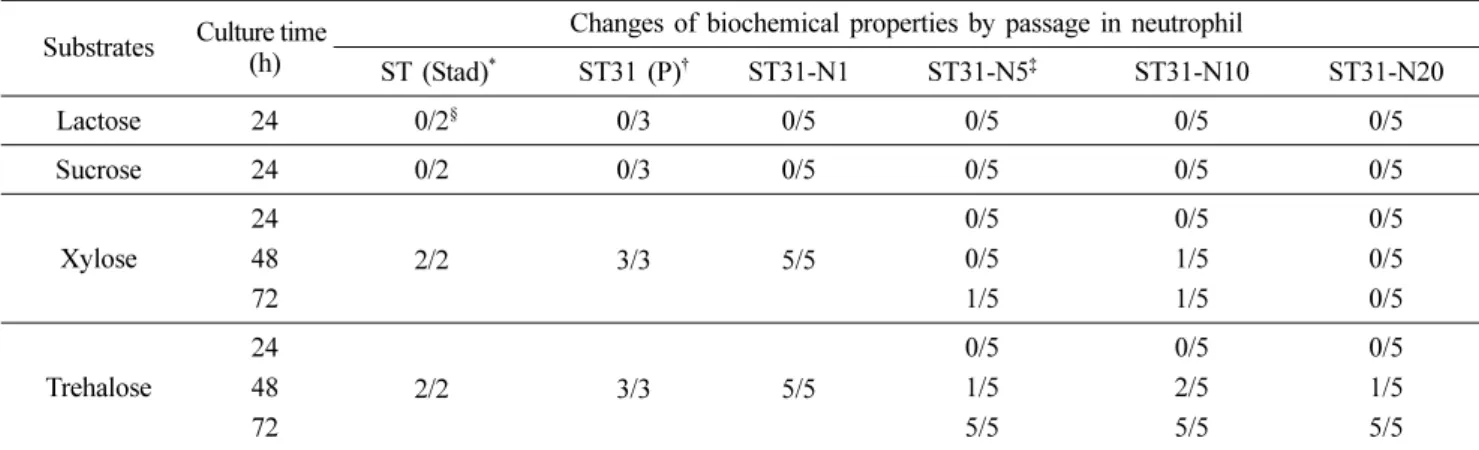
Table 2. Changes of biochemical properties of Salmonella Typhimurium isolates by passage in porcine neutrophils
Substrates Culture time (h)
Changes of biochemical properties by passage in neutrophil
ST (Stad)* ST31 (P)† ST31-N1 ST31-N5‡ ST31-N10 ST31-N20
Lactose 24 0/2§ 0/3 0/5 0/5 0/5 0/5
Sucrose 24 0/2 0/3 0/5 0/5 0/5 0/5
Xylose
24
2/2 3/3 5/5
0/5 0/5 0/5
48 0/5 1/5 0/5
72 1/5 1/5 0/5
Trehalose
24
2/2 3/3 5/5
0/5 0/5 0/5
48 1/5 2/5 1/5
72 5/5 5/5 5/5
*Standard strains of Salmonella Typhimurium (ATCC 2501, S-13). †Isolated strain of Salmonella Typhimurium (ST06-Jeonnam 31: ST31).
‡Strain passaged 5 times by ST31 in porcine neutrophils. §No. of positive/ No. of tested.
Fig. 1. Changes of PFGE patterns of porcine neutrophil-adapted Salmonella Typhimurium. A: digested with XbaI, B: digested with AvrII. ST31 (parent): ST06-Jeonnam 31, -N10th: passaged 10 times in neutrophils, -N10th-B10th: passaged 10 times in neutrophils and passaged 10 times in blood agar, -1, 2, 3: order of colony.
생화학적인 특성을 조사한 결과 xylose 및 trehalose에 대한 성상변화를 관찰할 수 있었다. Xylose의 경우 5회 및 10회 계대배양한 일부 균주에서 48시간 이후 양성으로 나타내는 경우도 있었으나 20회 배양균주는 시험한 모든 균주가 음성 이었다. Trehalose는 시험한 모든 균주에서 배양 48시간 이 후에 양성으로 나타내었다. 반면, 살모넬라균의 특징적인 생 화학적 성상인 lactose 및 sucrose의 음성에 대한 성상변화는 관찰되지 않았다(Table 2).
PFGE 패턴변화
호중구 계대균주의 유전자 변화를 알아보기 위하여 제한 효소인 XbaI 및 AvrII를 처리한 후 PFGE 분석에 의해서 확인한 결과 계대균주는 원균주(ST31)에 비해 일부 유전자 의 소실을 관찰할 수 있었으며, XbaI 처리의 경우 88.9%의 상동성을, AvrII 처리시는 51.1%의 상동성을 가지는 것으로 나타내어 처리효소에 따른 차이를 확인할 수 있었다. 이들
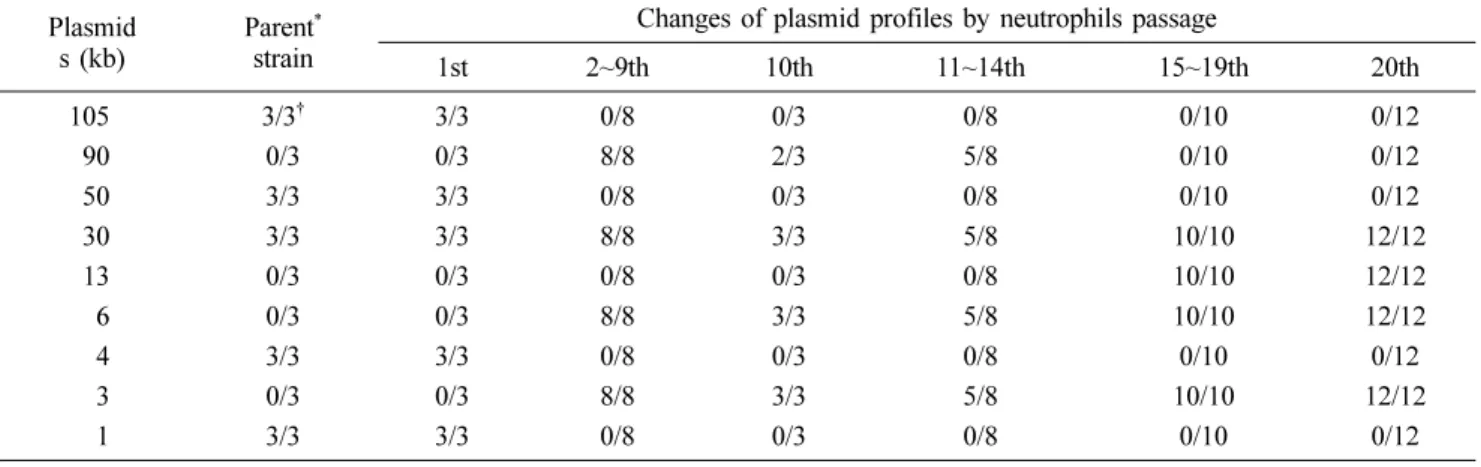
Table 3. Changes of plasmid profiles of Salmonella Typhimurium isolates by passage in porcine neutrophils
Plasmid s (kb)
Parent* strain
Changes of plasmid profiles by neutrophils passage
1st 2~9th 10th 11~14th 15~19th 20th
105 3/3† 3/3 0/8 0/3 0/8 0/10 0/12
90 0/3 0/3 8/8 2/3 5/8 0/10 0/12
50 3/3 3/3 0/8 0/3 0/8 0/10 0/12
30 3/3 3/3 8/8 3/3 5/8 10/10 12/12
13 0/3 0/3 0/8 0/3 0/8 10/10 12/12
6 0/3 0/3 8/8 3/3 5/8 10/10 12/12
4 3/3 3/3 0/8 0/3 0/8 0/10 0/12
3 0/3 0/3 8/8 3/3 5/8 10/10 12/12
1 3/3 3/3 0/8 0/3 0/8 0/10 0/12
*Isolated strain of Salmonella Typhimurium (ST06-Jeonnam 31: ST31). †No. of positive/ No. of tested.
Fig. 2. Plasmid profiles of Salmonella Typhimurium by passage in porcine neutrophils. Lane 1: high range marker, 2:
ST06-Jeonnam 31 (ST31, parent strain), 3: ST31-N5th (strain passaged 5 times by ST31 in neutrophils), 4: ST31-N10th (strain passaged 10 times in neutrophils), 5: ST31-N10th- B10th (strain passaged 10 times in neutrophils and blood agar, respectively), 6: ST31-N20th-B10th (strain passaged 20 times in neutrophils and 10 times in blood agar, respectively), 7:
large size marker.
Table 4. Changes of pathogenicity of neutrophil-adapted Salmonella Typhimurium in mice
Strains* Bacteria cultured (CFU/mL)
Dilution times
No. of mice
No. of mice died at day after inoculation LD50† (cfu, i.p.)
1~4 5~6 7~8 9~10 Totals
ST31(P) 4.5×10⁸
4×10⁻² 3 – 3 – – 3
1.0×10⁵
1×10⁻³ 3 – 2 – – 2
2×10⁻³ 3 – – – – 0
-N5-1 3.3×10⁸
1×10⁻² 3 – 2 1 – 3
4.5×10⁵
2×10⁻² 3 – – – 1 1
4×10⁻² 3 – – – – 0
-N10-1 2.9×10⁸
2×10⁻¹ 5 2 1 2 – 5
7.5×10⁵
5×10⁻¹ 5 – 1 3 – 4
1×10⁻² 3 – – 1 – 1
2×10⁻² 3 – – – – 0
-N20-12 2.8×10⁸
2×10⁻¹ 4 3 1 – – 4
6.0×10⁶
5×10⁻¹ 4 – 1 – – 1
1×10⁻² 5 – 1 – – 1
*ST31 (P): isolated strain (ST06-Jeonnam 31), -N5-1, N10-1 and N20-12: strains passaged 5 times, 10 times and 20 times by ST31 in neutrophils, respectively, and -1, -12: order of colony. †Challenged intraperitoneally with 0.2 mL per mouse at 4 weeks of age.
균주를 혈액배지에 10회 계대 후의 PFGE 패턴은 차이없이 나타내었다(Fig. 1).
Plasmid 양상 변화
호중구 계대배양 균주의 plasmid profile 조사에서 2회부터 20회계대의 모든 균주에서 원균주에서 관찰되는 105 kb 및 50 kb plasmid의 소실을 관찰할 수 있었다. 반면, 원균주에서 음성인 90kb의 plasmid가 2~14회 계대주에서 새로이 관찰되 었으나, 15회 이후 20회 계대의 모든 균주에서는 소실되어 나타내었다. 또한 2회 이상의 계대주는 13 kb, 6 kb 및 3 kb 의 plasmid가 새로이 발현되어 변동없이 유지하는 특성을 보 였다(Table 3, Fig. 2).
마우스에서의 병원성 변화
마우스에 대한 병원성시험에서 호중구내 20회 계대배양한 균주는 복강내 접종시의 LD50에서 6.0 × 10⁶ CFU으로서 원균 주의 1.0 × 10⁵ CFU에 비해 16배 병원성이 크게 감소된 것 으로 나타내었다. 반면, 5회 및 10회 계대배양 균주는 각각 4.5배 및 7.5배 병원성이 감소된 것으로 나타내었다(Table 4).
마우스에 계대에 따른 병원성 회복능
호중구 20회 계대균주(ST31-N20-12)를 마우스에 5회 (M5th) 및 10회(M10th) 반복계대한 후 얻은 분리주의 병원 성 복귀여부 조사에서 마우스에 대한 LD50가 각각 4.8 × 10⁶ CFU 및 4.0 × 10⁶ CFU으로서, 호중구 20회계대주 1.3 × 10⁶ CFU에 비교하여 다소 약화된 것으로 나타나 마우스 계대에 따른 안전성을 확인할 수 있었다. 또한 이들 균주는 소실된 105kb 및 50kb 등 병원성 관련 large plasmid의 복귀는 관 찰되지 않았다(Table 5).
고 찰
Salmonella Typhimurium을 식세포인 돼지 호중구에 반복 적으로 계대 배양한 결과 이 균이 가지고 있던 병원성 관련 large plasmid의 제거와 유전자 패턴의 변화 및 마우스에 대 한 병원성을 크게 약화시킨 약독화된 변이주를 작성할 수 있 었다. 즉, 탐식세포로 잘 알려진 호중구를 분리하여 Salmonella Typhimurium 분리주를 연속 계대한 후의 생화학 적인 특성조사에서 계대균주들은 원균주가 가지고 있던 당 의 일종인 xylose의 분해능이 소실되었으며, trehalose은 48 시간 이후에 늦게 이용하는 특성변화가 관찰되었다. 이와같 은 결과는 Roof 와 Kramer [18]의 Salmonella Choleraesuis 를 돼지 호중구내 5차례 계대배양 후의 성상변화인 d- xylose(음성)에서 양성으로 변한 특성과 상반된 것이나, 원균 주의 생화학적 특성에 변화를 가져왔다는 점에서 공통점이 있다. 또한 이들 균주를 제한효소인 XbaI 및 AvrII 처리한 후 PFGE pattern 조사에서 계대균주들은 원균주에 비해 일 부 유전자의 소실과 XbaI 처리시는 88.9%의 상동성을, AvrII 처리시는 51.1%의 상동성을 각각 나타내어 유전적인 돌연변이를 유발한 것으로 확인되었다. 다만, 이와같은 결과 는 처리 효소간에 큰 차이를 나타내어 향후 유전자 수준에 서의 추가적인 시험과 관찰이 요구되는 부분이다.
살모넬라를 또다른 식세포인 대식구와 반응시킨 결과 세 균의 생존과 관련되는 GroEL 및 DnaK 등 30여종의 heat shock protein을 생성시킨 보고가 있으며 [3, 4], Miller 와 Mekalanos [15]는변이주의 경우 원균주보다 phoP gene 등 의 변화를 유발하여 virulence를 약화시키고, 대식구내에서의 생존력을 강화시킨 것으로 보고하였다. Roof 등 [19]은 Salmonella Choleraesuis를 돼지 호중구에 5대 계대배양하여 호중구내에서의 생존율과 H2O2에 대한 저항성을 증가시킨 Table 5. Safety of neutrophil-adapted Salmonella Typhimurium by passage in mice
Strains
Bacteria cultured (CFU/mL)
Dilution times
No. of mice
No. of mice died at day after inoculation
LD50* (cfu, i.p.)
Plasmids 1~2 3~4 5~6 7~10 Totals (kb)
ST31-N20-12 6.0×10⁸
10−1 4 1 1 2 – 4
1.3×10⁶ 30, 13, 6, 3
10−2 4 – – 1 1 2
10−3 4 – – – – 0
-M5th† 6.5×10⁸
10−1 4 1 2 1 – 4
4.8×10⁶ 30, 13, 6, 3
10−2 4 – – 1 – 1
10−3 4 – – – – 0
-M10th† 5.5×10⁸
10−1 4 – 2 1 1 4
4.0×10⁶ 30, 13, 6, 3
10−2 4 – – – – 1
10−3 4 – – – – 0
ST31(P) 5.8×10⁸ 10−3 3 – 1 2 – 3 Less than
5.6×10⁴ 105, 50, 4, 1
2×10⁻³ 3 –- 1 1 1 3
*Challenged intraperitoneally with 0.2 mL per mouse at 4 weeks of age. †M5th and M10th: strains passaged 5 times and 10 times by ST31- N20-12 in mice, respectively.
반면, Verocell invasion은 크게 감소시킨 것으로 보고하였다.
따라서 본 연구에서 작성된 Salmonella Typhimurium 변이 주는 PFGE pattern에서의 변화뿐만아니라 실제적인 세균의 유전자 발현과 그 결과로 나타나는 단백질 생성의 변화가 크 게 예측되는 부분이다.
사람과 동물에 질병을 유발하는 많은 혈청형의 살모넬라 균종은 통상 2~200 kb의 다양한 크기의 plasmid를 가지며, 그중에서도 50~100 kb의 large plasmid가 virulence와 관련 이 깊고 [6, 10, 21], 특히 숙주의 세망내피계 세포내에서 균의 생존 및 증식능력에 결정적인 역할을 하는 것으로 보 고된 바 있다 [1, 8]. 본 연구에서의 이들 계대균주들의 plasmid profile 조사에서 2회 이상 계대주는 원균주가 가지 고 있던 105 kb의 소실을, 15회 이상 계대주는 병원성 관련 large plasmid로 볼 수 있는105 kb, 90 kb 및 50 kb가 모든 균주에서 소실되어 나타났다. 반면 5회 이상의 계대주들의 경우 원균주에서 발견되지 않던 13 kb와 5 kb 및 3 kb의 small plasmid가 발현되어 계대 횟수에 관계없이 비복귀성으 로 유지하는 특성이 관찰되었다. 이와 같은 결과는 Roof 등 [19]의 Salmonella Choleraesuis를 호중구에 5회 계대하여 병원성 관련 50kb plasmid의 소실한 보고와 유사한 결과이 나, 본 연구에서는 Salmonella Typhimurium를 15대 이상 계대한 균주들에서 50 kb 이상의 large plasmid가 완전히 소 실됨을 확인할 수 있었다.
마우스에 대한 병원성시험에서 호중구내 20회 계대배양균 주는 복강내 접종 LD50에서 6.0 × 10⁶ CFU으로서 원균주의 1.0 × 10⁵ CFU에 비해 병원성을 16배로 크게 감소시킬 수 있었다. 반면에 5회 및 10회 계대주는 4.5배 및 7.5배 감소 된 것으로 나타내어 계대횟수에 따른 병원성의 차이가 확인 되었다. 이는 50 kb 이상크기의 병원성 관련 plamid를 모두 소실하는 데는 15회 이상 계대배양이 필요했던 상기의 결과 와 관련성이 예측되는 부분이다. 통상적으로 살모넬라의 경 우 마우스 복강내 접종시 병원성이 없는 것으로 판정하는 기 준을 LD50(mouse, ip) 5 × 10⁵ CFU으로 제시된 바 있다 [8, 9]. 본 연구의 10회 및 20회 계대균주의 7.5 × 10⁵ CFU 및 6.0 × 10⁶ CFU의 경우는 여기에 부합되는 안전한 수준으로 볼 수 있다. 일반적으로 약독화된 생균백신주에서 안전성 문 제는 항상 우려되는 사항이다. 본 연구의 돼지 호중구 20회 계대주인 ST31-N20-12주의 병원성 회복능 시험에서 마우스 에 5회 및 10회 계대한 결과, LD50으로서의 병원성이나 소 실된 병원성 관련 50kb 이상의 large plasmid의 복귀 없이 안전성이 확인되어 향후 백신주로서의 이용가능성을 높게 하 였다.
참고문헌
1. Barrow PA, Lovell MA. Functional homology of virulence plasmids in Salmonella Gallinarum, S. Pullorum, and S.
Typhimurium. Infect Immun 1989, 57, 3136-3141.
2. Bauer AW, Kirby WM, Sherris JC, Turck M. Antibiotic susceptibility testing by a standardized single disk method.
Am J Clin Pathol 1966, 45, 493-496.
3. Buchmeier NA, Heffron F. Induction of Salmonella stress proteins upon infection of macrophages. Science 1990, 248, 730-732.
4. Christman MF, Morgan RW, Jacobson FS, Ames BN.
Positive control of a regulon for defenses against oxidative stress and some heat-shock proteins in Salmonella typhimurium.
Cell 1985, 41, 753-762.
5. Clarke RC, Gyles CL.
Salmonella. In: Gyles CL, Thoen CO
(eds.). Pathogenesis of Bacterial Infections in Animals. 2nd ed. pp. 133-153, Iowa State University Press, Ames, 1993.6. García-Quintanilla M, Prieto AI, Barnes L, Ramos- Morales F, Casadesús J. Bile-induced curing of the virulence plasmid in Salmonella enterica serovar Typhimurium. J Bacteriol 2006, 188, 7963-7965.
7. Garmory HS, Brown KA, Titball RW. Salmonella vaccines for use in humans: present and future perspectives. FEMS Microbiol Rev 2002, 26, 339-353.
8. Gulig PA, Curtiss R 3rd. Plasmid-associated virulence of Salmonella typhimurium. Infect Immun 1987, 55, 2891-2901.
9. Hackett J, Kotlarski I, Mathan V, Francki K, Rowley D.
The colonization of Peyer's patches by a strain of Salmonella typhimurium cured of the cryptic plasmid. J Infect Dis 1986, 153, 1119-1125.
10. Jones GW, Rabert DK, Svinarich DM, Whitfield HJ.
Association of adhesive, invasive, and virulent phenotypes of Salmonella typhimurium with autonomous 60-megadalton plasmids. Infect Immun 1982, 38, 476-486.
11. Kado CI, Liu ST. Rapid procedure for detection and isolation of large and small plasmids. J Bacteriol 1981, 145, 1365- 1373.
12. Kramer TT, Roof MB, Matheson RR. Safety and efficacy of an attenuated strain of Salmonella choleraesuis for vaccination of swine. Am J Vet Res 1992, 53, 444-448.
13. Lee HS, Kim SJ, Kim KS, Mo IP, Woo YK, Kwon YK, Kim TJ. Immunogenicity of outer membrane protein extracted from Salmonella gallinarum in chickens. Korean J Vet Res 1997, 37, 555-568.
14. Lee HS, Lim SK, Cho YS, Joo YS, Kim JH, Kim JM.
Protective effects of mix-crude outer membrane protein Salmonella vaccine against salmonellosis in chickens and pigs. Korean J Vet Res 2007, 47, 147-155.
15. Miller SI, Mekalanos JJ. Constitutive expression of the PhoP regulon attenuates Salmonella virulence and survival within macrophages. J Bacteriol 1990, 172, 2485-2490.
16. Reed LJ, Muench H. A simple method of estimating fifty percent endpoints. Am J Hyg 1938, 27, 493-497.
17. Roof MB, Doitchinoff DD. Safety, efficacy, and duration of immunity induced in swine by use of an avirulent live Salmonella Choleraesuis-containing vaccine. Am J Vet Res 1995, 56, 39-44.
18. Roof MB, Kramer TT. Porcine neutrophil function in the presence of virulent and avirulent Salmonella choleraesuis.
Vet Immunol Immunopathol 1989, 23, 365-376.
19. Roof MB, Kramer TT, Roth JA, Minion FC. Characterization of a Salmonella choleraesuis isolate after repeated neutrophil exposure. Am J Vet Res 1992, 53, 1328-1332.
20. Roof MB, Kramer TT, Kunesh JP, Roth JA. In vivo isolation of Salmonella choleraesuis from porcine neutrophils.
Am J Vet Res 1992, 53, 1333-1336.
21. Rychlik I, Gregorova D, Hradecka H. Distribution and function of plasmids in Salmonella enterica. Vet Microbiol 2006, 112, 1-10.
22. Stabel TJ, Fedorka-Cray PJ, Gray JT. Neutrophil phagocytosis following inoculation of Salmonella choleraesuis into swine. Vet Res Commun 2002, 26, 103-109.
23. Tang IK, Ji DD, Chou CF, Lin HC, Liao CL, Sytwu HK, Wang JJ, Liu YT. Characterization of a highly attenuated Salmonella enterica serovar Typhimurium mutant strain. J
Microbiol Immunol Infect 2002, 35, 229-235.
24. Tükel Ç, Raffatellu M, Chessa D, Wilson RP, Akçelik M, Bäumler AJ. Neutrophil influx during non-typhoidal salmonellosis: who is in the driver's seat? FEMS Immunol Med Microbiol 2006, 46, 320-329.
25. Van der Walt ML, Vorster JH, Steyn HC, Greeff AS.
Auxotrophic, plasmid-cured Salmonella enterica serovar Typhimurium for use as a live vaccine in calves. Vet Microbiol 2001, 80, 373-381.