Access Control as a Service for Information Protection in Semantic Web based Smart
Environment ☆
Isma Farah Siddiqui
1Scott Uk-Jin Lee
2*ABSTRACT
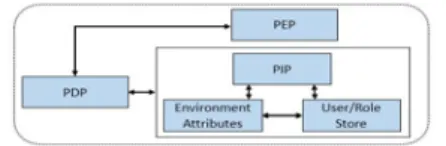
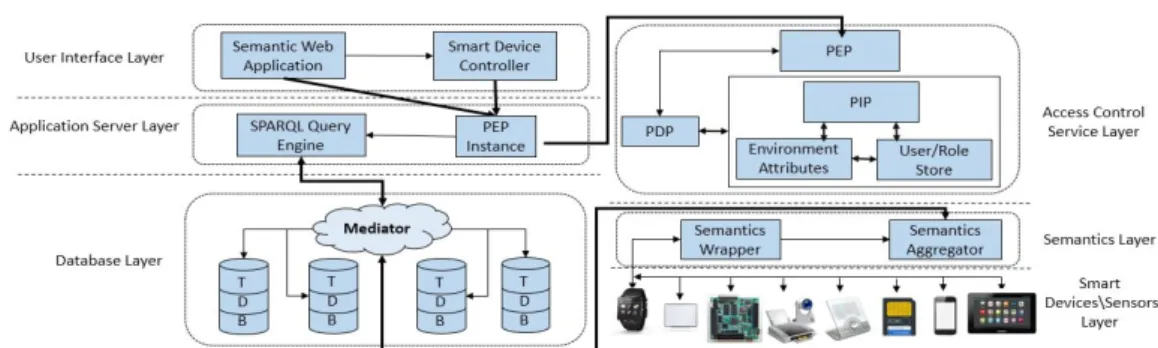
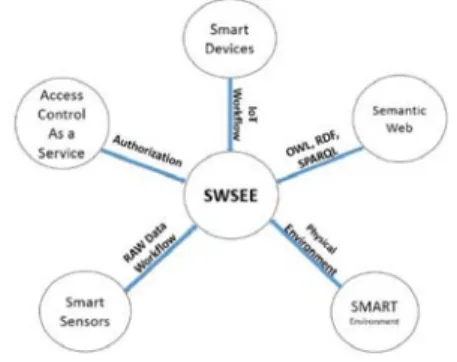
Pervasive computing and Internet of Things (IoT) have recently received considerable interest to deploy solutions for the future Internet. Smart environments are integrated with Semantic Web to provide context-awareness to the processed information. Self-learning techniques have been adopted within smart solutions for efficient retrieval of data but do not process data with privacy parameters for in-place authorization. To overcome this issue, we present a novel approach of deploying access control as a service mechanism within Semantic Web based smart environment by using eXtensible Access Control Markup Language (XACML). The proposed XACML as a Service (XACMLaaS) approach offers fine-grained access control for protecting information within smart environment. In this paper, we have defined mathematical rules for each components of proposed access control service layer. These rules are for implementation of access control using XACML. The proposed approach allows the adaptation of authorization of information at component level and provides scalable solution for authorization policies and rule enforcement within smart environment.
☞ keyword : Access Control, Smart Environment, Semantic Web, XACML.
1. Introduction
Smart information has become a vital resource with the deployment of heterogeneous smart sensors and devices over Internet. The emergence of wireless sensor networks within smart environment aims to provide “anytime-anywhere” computing [1]. This hype brings together pervasive computing paradigm and Ambient Intelligence (AmI) to the IoT and, support users of smart environment with seamless accessibility and provision with personalized adaptiveness to personal information.
Traditionally, smart environment utilizes back-end network infrastructure and state-of-art interoperable data processing techniques to incorporate AmI [2]. However, the heterogeneity in infrastructure demands for consistent ways to uniformly
1,2
Department of computer science and engineering, Hanyang University ERICA Campus, Ansan-si, Gyeonggi-Do, 426-791, Republic of Korea
*