Print ISSN: 2288-4637 / Online ISSN 2288-4645 doi:10.13106/jafeb.2020.vol7.no12.711
Factors Influencing Use of Social Commerce:
An Empirical Study from Indonesia
Arief RAHMAN
1, Refika Nurliani FAUZIA
2, Sigit PAMUNGKAS
3Received: September 10, 2020 Revised: November 02, 2020 Accepted: November 16, 2020
Abstract
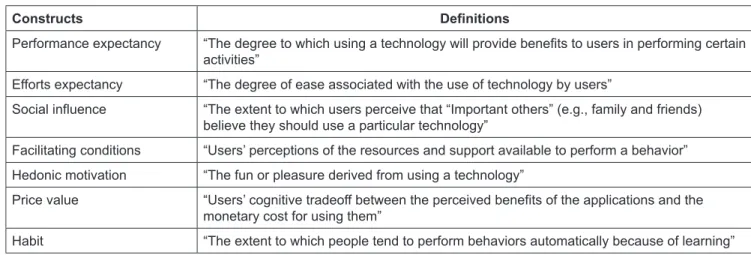
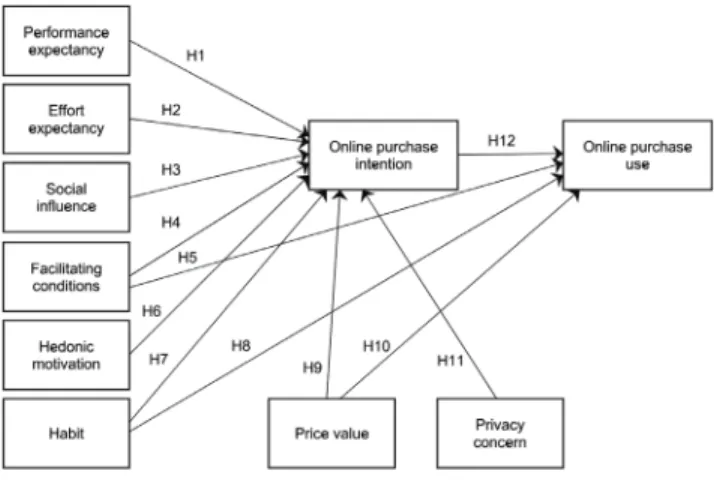
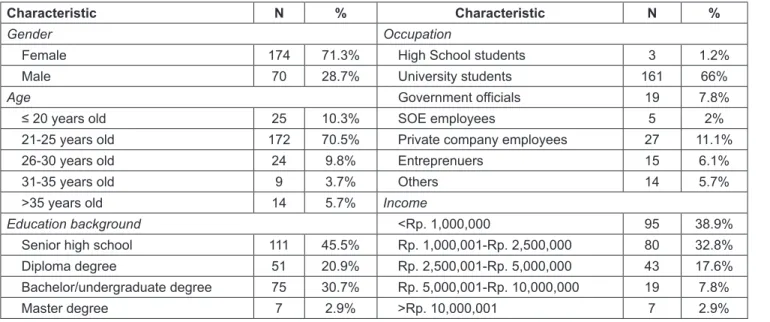
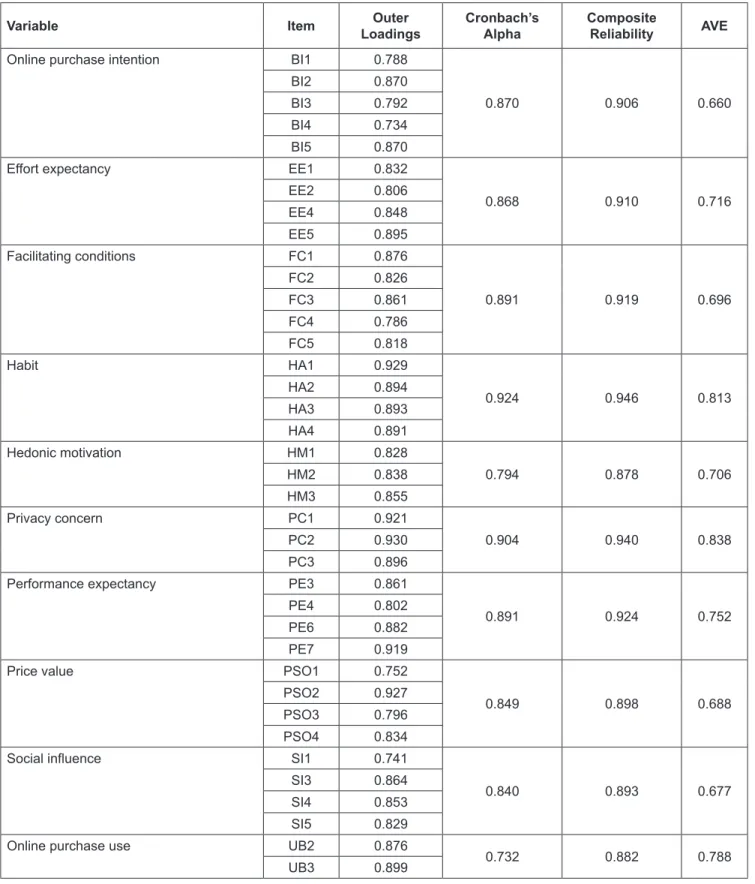
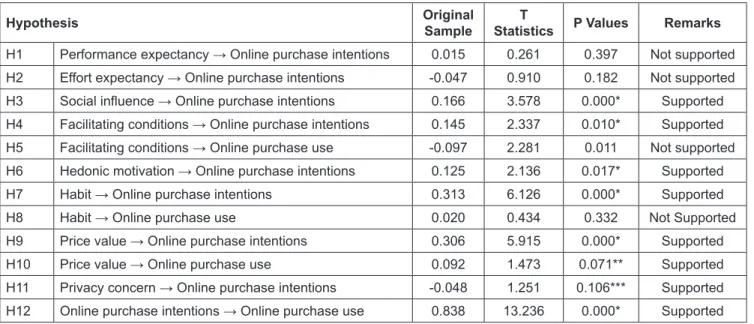
This research aims to analyze the factors affecting the acceptance of social commerce, including performance expectancy, effort expectancy, social support, facilitating conditions, hedonic motivation, habitability, price saving orientation, and privacy concerns using the Unified Theory of Acceptance and Use of Technology (UTAUT2). UTAUT2 has been examined and modified in various contexts. The research model studies the acceptance and use of technology in the context of customers. This study adopts a quantitative method using the partial least squares regression (PLS) approach involving 244 respondents. The respondents are users of social commerce in Indonesia. The result of this research indicates that social influence, facilitating conditions, hedonic motivation, habit, price value orientation, and privacy concerns have a significant effect on behavioral intention. On the other hand, performance expectancy and effort expectancy does not affect behavioral intention. Furthermore, price value has a significant effect on social commerce user behavior. Lastly, facilitating conditions and habits does not affect social commerce user behavior. This research contributes to the development of theory by examining an additional variable, which is privacy concern. This study is significant since social media and social commerce have grown exponentially nowadays.
Implications of the results for the development of the theory (UTAUT2) and practice are discussed in the article.
Keywords: Social Commerce, UTAUT2, Privacy Concern, Indonesia JEL Classification Code: M15, M40, N35
(APJII), Indonesia has also recorded a significant increase of 29 percent, increasing rapidly within two years from 132.7 million in 2016 to 171.2 million Internet users by 2018.
Highlighting the main reasons for Internet usage, the survey results show the need for communication through instant messaging dominates the reasons for Internet usage (24.7 percent), followed by social media usage (18.9 percent).
Internet users in Indonesia are actively engaging in social networks such as Facebook (50.7 percent), Instagram (17.8 percent), and YouTube (15.1 percent) (Asosiasi Penyedia Jasa Internet Indonesia, 2019).
Recent web technology brings advanced communication tools to encourage active user interaction and make social media a vast space of global networking. Besides, web technology has sparked the rise of social commerce (s-commerce) as a novel subset of electronic commerce, where social media users act as the main content providers to share experiences and knowledge about a particular product or service (Hajli & Sims, 2015; Zhang et al., 2014).
Social media platforms such as Facebook, Instagram, and YouTube provide features where users can express their reviews of products or services that have been purchased
1
First Author and Corresponding Author. Assistant Professor, Department of Accounting, Faculty of Business and Economics, Universitas Islam Indonesia, Indonesia [Postal Address: Pawirokuat St. No. 1, Condong Catur, Depok, Sleman, DI. Yogyakarta 55283, Indonesia]
Email: [email protected]
2
Department of Accounting, Faculty of Business and Economics, Universitas Islam Indonesia, Indonesia.
Email: [email protected]
3
Lecturer, Department of Accounting, Faculty of Business and Economics, Universitas Islam Indonesia, Indonesia.
Email: [email protected]
© Copyright: The Author(s)
This is an Open Access article distributed under the terms of the Creative Commons Attribution Non-Commercial License (https://creativecommons.org/licenses/by-nc/4.0/) which permits unrestricted non-commercial use, distribution, and reproduction in any medium, provided the original work is properly cited.