* Corresponding author: (E-mail) [email protected]
Current Status and Potentiality of Forest Resources in a Proposed Biodiversity Conservation Area of Bangladesh
Md. Parvez Rana1*, Mohammed Salim Uddin1,2, Mohammad Shaheed Hossain Chowdhury3, Md. Shawkat Islam Sohel1, Sayma Akhter1, and Masao Koike3
1Department of Forestry and Environmental Science, Shahjalal University of Science and Technology, Sylhet-3114, Bangladesh
2Natural Resource Institute, University of Manitoba, Winnipeg, Manitoba, Canada
3Forest Policy Laboratory, Department of Forest Science, Faculty of Agriculture, Shinshu University, 8304 Minamiminowa-Mura, 399-4598 Nagano- Ken, Japan
ABSTRACT : An exploratory study was conducted in Juri Forest Range-2, a proposed biodiversity conservation area of Bangladesh to explore the present growing stock of tree, regeneration condition and status of non-timber forest products (NTFPs). This conservation area contains both natural and artificial plantation was selected by using multistage random sampling method. For determination of plot size and sampling methods, the quadrate size (10 m×10 m) for tree stock measurement, (2 m×2 m) for regeneration survey, (20 m×20 m) for NTFPs survey was determined. Regarding tree stock survey, 14 species under eight families were found where Tectona grandis shows average number of stem/ha was 624 and basal area/ha was (10.36 m2/ha) followed by Acacia auriculiformis (0.2 m2/ha and 637 stem/ha), Gmelina arborea (0.2 m2/ha and 600 stem/ha). In regeneration survey, 14 species were found belonging to 9 families where Alstonia scholaris shows highest (3,750) seedling per hectare. Regarding NTFPs, bamboo and cane are the most common resources. In last ten years, the total timber output was 1,28,596.14 cubic feet and total amount of revenue was 4,64,434 US$. The vacant area is 1,335.5 acre which contains 14% of total area. If this vacant area is planted with suitable species and take proper steps for appropriate management of this species it will be a good biologically diversified area.
Keywords : Forest resources, Bangladesh, Range, Stock, Regeneration.
INTRODUCTION
Forests cover almost 25% of the world’s land and are critical in meeting human needs for water, food, shelter, medicine, fuelwood, fodder and timber (Hirakura, 2003).
According to the World Bank (2002), more than 1.6 billion people throughout the world relying heavily on forests for their livelihoods and some 350 million people depends only on forest both for their subsistence and income.
Bangladesh is a rural-based developing country located in the northeastern part of South Asia (North latitude 20034/-26038/ East longitude 88001/-92041/) (Hossain, 2001). The percentage of forest cover in relation to total land area is 10.2%; forest plantations were 625,000 ha in
2000 (FAO, 2005). The area of forestland is 2.53 million ha which is 17.5% of the country’s total area. Bangladesh Forest Department (BFD) manages 1.53 million hectares of forestland (Roy, 2004). The natural forests of Bangladesh are considered as one of the richest and biologically diverse forest resources due to its unique geo-physical location (Hossain, 2001). About 5,000 plant species are estimated to occur here (Sattar, 1998). Per capita forestland in the country is around 0.02 ha and the existing natural forests are decreasing at a rate varying from 2.1% yr-1 (Choudhury, 2003) to 3.3% yr-1 (BBS, 2004). Although the accounted of the forests in the national economy is reasonable, the social and ecological importance is immense.
Forests play an important role in maintaining the quality
of the local and national environment although their contribution to the national economy is passable. If envir- onmental services and contribution in people’s livelihood could have been properly accounted for, then the share of the forestry sector would have been much more. Beside the economic importance, the forests play vital role in people’s livelihood (Iftekhar, 2006).
Juri Forest Range-2 which is a proposed biodiversity conservation area was located in north-eastern hilly forest area of Bangladesh. The total area of hill forests is 6,70,000 hectares, which is 4.7% of the country surface area and 44% of the total forest land managed by the Bangladesh Forest Department (Chowdhury, 2006). Hill forests are rich in diverse varieties of flora and fauna and spread over the areas of Chittagong Hill tracts, Chittagong, Cox’s Bazar and Sylhet. The Sylhet Forest Division is extended over four districts, namely Sylhet, Sunamgonj, Moulovibazar, and Hobiganj under the central circle of the Forest Department. According to latest forest inventory, hill forest have a growing stock of 23.93 million m3 of wood. The productivity of the forests declined to a range of 1.5 m3 to 2.5 m3 per hectare per annum from 7 m3 to 8 m3 twenty years ago but the forests still supply around 40%
of the commercial timber production (Chowdhury, 2006).
Information on the species composition of a forest is essential for its wise management in terms of economic value and regeneration potential (Wyatt-Smith, 1987). For any feasible conservation activity the bioinventory of the area is inevitable. Correct inventorisation and assessment of biodiversity in different habitats is also necessary for evolving a long term strategy for rehabilitation of endangered species in similar, alternate habitats when original habitat gets destroyed (Rao, 1994) but very scanty or almost no information is available on the composition and distribution of tree species of this forest (Alamgir, 2003). Measuring biodiversity of a community or habitat has been one of the central issues of ecology and conservation because of their academic necessity and its utility in devising conservation strategies (Verghess and Menon, 1997). Evaluation of biological diversity from conservation point of view in disturbed areas focuses on measuring riches and not more
complex indices of heterogeneity (Margules and Usher, 1981). More frequently the number of species in certain taxa and vegetation types are measured but occasionally abiotic features are used (Smith, 1984). In this context a detailed survey of trees was undertaken which, will provide complete information on the species composition, distribution and quantitative structure of tree species of this proposed biodiversity conservation area.
A lot of research work has been conducted on various aspects about tree stock, regeneration, non-timber forest products (NTFPs) on hill forest. But in considering southern part of the country (Chittagong Hill tracts, Chittagong, Cox’s Bazar) (e.g., Ahmed and Bhuyian, 1994; Alamgir
& Al-Amin, 2005; 2007), there was less research work conducted on north-eastern part (Sylhet Forest Division).
Despite of biologically enriched area, less attention has been given on Sylhet Forest division. Growing stock is an important parameter required for sound forest management and planning. General information about the stock available per unit area is the key information desired for forest inventories. Therefore, considering above information, this research will show the present status of tree stock which will help policy makers to get an actual idea of the present status of forest of proposed biodiversity conservation area.
MATERIALS AND METHODS Study area
Among the 13 these forest ranges of Sylhet Forest Division, Juri Forest Range-2 (Sub forest division) was selected randomly and it is a proposed biodiversity conservation area. It is located in Barlekha Upazilla of Maulvibazar district and important strategic focal point between 24o40/-24o50/ N and 92o02/-92o16/ E and is bounded by India on the east, Golabganj and Beanibazar upazillas on the north, Kulaura Upazilla on the south. Kulaura and Fenchuganj upazillas on the west (Banglapedia, 2006).
Average temperature of the area from April to October is 30°. Maximum temperature in May remains around 32° and minimum temperature remains between 12° to 14° from
Table 1. Scenario of forest cover, encroached land, plantation area and vacant area in Juri Forest Range-2
Name of the beat Forest cover (acre) Encroached area (acre) Plantation (acre) Vacant area (acre) Reserved forest Acquired forest Reserved forest Acquired forest Reserved forest Acquired forest
Barlekha 1,969.05 150 400.00 1,119.60 290.00 150.00 850.5
Madhabchara 2,388.25 103.7 26.75 115.60 118.00 37.00 485.0
Samanbagh 1,800.00 - - - 535.00 - -
Total 6,157.3 253.7 426.75 1,235.2 943 187
1,335.5
6,411 1,661.95 1,130
Figure. 1. Location map of the study area.
December to February (BMD, 2004). In this range, total artificial planted area is 1130 ha and rest of them are naturally planted. It is subdivided into 3 beats viz Baralekha, Madhabchara, Samanbagh. The total area of reserved forest (These areas are finally notified under section 20 of the Forest Act, 1927 Bangladesh.. Everything is strictly prohibited unless permitted) in this range is 7,919.55 acre and acquired forest (These forest were acquired from different owners under State Acquisition and Tenancy Act
of Bangladesh, 1950) is 1,488.9 acre. In the study area, among the total area of range, 6,411 acre area is under forest cover. In Samanbagh beat total area (1,800 acre) is a reserved forest. But in Barlekha and Madhabchara beat, total 253.7 acre area is under acquired forest. Encroached area (The area which is encroached) in this range is 1,661.95 acre. But in Samanbagh beat there is no encroached area.
Vacant area in this range is 1,335.5 acre.
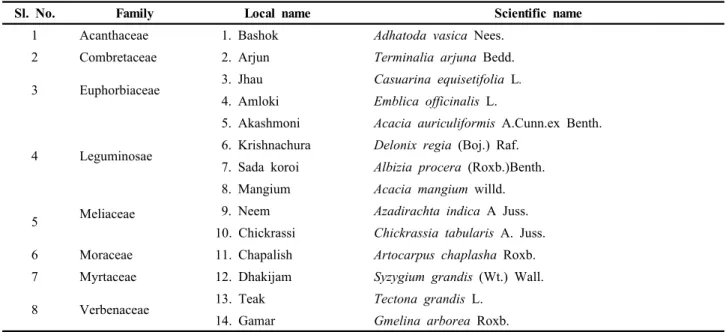
Table 2. Species composition in Juri Forest Range-2
Sl. No. Family Local name Scientific name
1 Acanthaceae 1. Bashok Adhatoda vasica Nees.
2 Combretaceae 2. Arjun Terminalia arjuna Bedd.
3 Euphorbiaceae 3. Jhau Casuarina equisetifolia L.
4. Amloki Emblica officinalis L.
4 Leguminosae
5. Akashmoni Acacia auriculiformis A.Cunn.ex Benth.
6. Krishnachura Delonix regia (Boj.) Raf.
7. Sada koroi Albizia procera (Roxb.)Benth.
8. Mangium Acacia mangium willd.
5 Meliaceae 9. Neem Azadirachta indica A Juss.
10. Chickrassi Chickrassia tabularis A. Juss.
6 Moraceae 11. Chapalish Artocarpus chaplasha Roxb.
7 Myrtaceae 12. Dhakijam Syzygium grandis (Wt.) Wall.
8 Verbenaceae 13. Teak Tectona grandis L.
14. Gamar Gmelina arborea Roxb.
Methods
Multistage random sampling method was used to determine the floristic composition, quantitative structure and distribution of trees of the Juri forest range-2. Initially sampling points were located in the map proportionally and finally identified in the field. There were 60 plots of (10 m×
10 m) for tree stock, (2 m×2 m) for regeneration survey, (20 m×20 m) for NTFPs survey were taken in the study area respectively. The optimum quadrate size was determined by applying species area curve using Gareth’s (1991), Sharma (1979) and Ambasht (1978) method. All the trees which, crossed 1.3m in height were measured and recorded.
Different tree species in the area have been gathered and representative samples have been collected for herbarium preparations. The collected specimens were identified fol- lowing Prain (1903) and Day (2006).
The Basal area per tree was calculated by the formula given by the Chaturvedi and Khanna (1982):
Basal area per tree = Π×D2/4
Where,
D = Diameter at breast height in centimetre.
Π = Constant = 3.142
Density of a species was calculated by the formula given by the Moore and Chapman (1986), Shukla and Chandal (1980), Ambast (1978), Dallmeier et al., (1992) and Sharma (1979):
Total number of individuals of a species in all the quadrates Density of a species = ---
Total number of quadrates studied.
RESULTS AND DISCUSSION Present status of trees in Juri forest range-2
Study reveals that 14 species under eight families were found where the dominant family was Leguminasae containing four species followed by Euphorbiaceae, Meliaceae, Verbenaceae (two species each) and rest of the family contain one species each. Syzygium grandis and Artocarpus chaplasha were naturally available in the study area.
Considering the planted area, Tectona grandis, Acacia auriculiformis, Albizia procera, Acacia mangium were available in the study area (Table 2). Similar study was done by Alamgir and Al-Amin (2005) found 32 tree species within 15 families at biodiversity conservation area, Banskhali, Bangladesh. The study also reveals that Tectona grandis
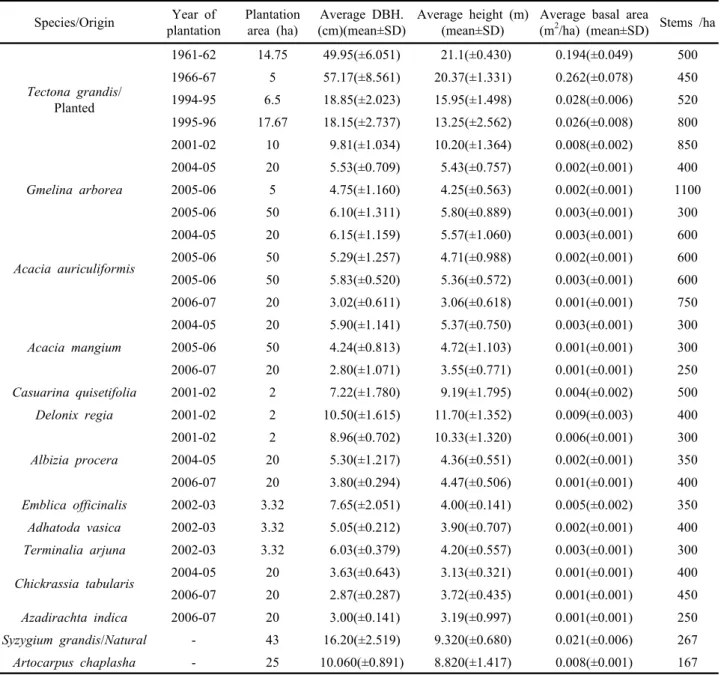
Table 3. Present stock of trees in Juri Forest Range-2
Species/Origin Year of plantation
Plantation area (ha)
Average DBH.
(cm)(mean±SD)
Average height (m) (mean±SD)
Average basal area
(m2/ha) (mean±SD) Stems /ha
Tectona grandis/
Planted
1961-62 14.75 49.95(±6.051) 21.1(±0.430) 0.194(±0.049) 500 1966-67 5 57.17(±8.561) 20.37(±1.331) 0.262(±0.078) 450 1994-95 6.5 18.85(±2.023) 15.95(±1.498) 0.028(±0.006) 520 1995-96 17.67 18.15(±2.737) 13.25(±2.562) 0.026(±0.008) 800 2001-02 10 9.81(±1.034) 10.20(±1.364) 0.008(±0.002) 850 Gmelina arborea
2004-05 20 5.53(±0.709) 5.43(±0.757) 0.002(±0.001) 400 2005-06 5 4.75(±1.160) 4.25(±0.563) 0.002(±0.001) 1100 2005-06 50 6.10(±1.311) 5.80(±0.889) 0.003(±0.001) 300
Acacia auriculiformis
2004-05 20 6.15(±1.159) 5.57(±1.060) 0.003(±0.001) 600 2005-06 50 5.29(±1.257) 4.71(±0.988) 0.002(±0.001) 600 2005-06 50 5.83(±0.520) 5.36(±0.572) 0.003(±0.001) 600 2006-07 20 3.02(±0.611) 3.06(±0.618) 0.001(±0.001) 750 Acacia mangium
2004-05 20 5.90(±1.141) 5.37(±0.750) 0.003(±0.001) 300 2005-06 50 4.24(±0.813) 4.72(±1.103) 0.001(±0.001) 300 2006-07 20 2.80(±1.071) 3.55(±0.771) 0.001(±0.001) 250 Casuarina quisetifolia 2001-02 2 7.22(±1.780) 9.19(±1.795) 0.004(±0.002) 500
Delonix regia 2001-02 2 10.50(±1.615) 11.70(±1.352) 0.009(±0.003) 400
Albizia procera
2001-02 2 8.96(±0.702) 10.33(±1.320) 0.006(±0.001) 300 2004-05 20 5.30(±1.217) 4.36(±0.551) 0.002(±0.001) 350 2006-07 20 3.80(±0.294) 4.47(±0.506) 0.001(±0.001) 400 Emblica officinalis 2002-03 3.32 7.65(±2.051) 4.00(±0.141) 0.005(±0.002) 350 Adhatoda vasica 2002-03 3.32 5.05(±0.212) 3.90(±0.707) 0.002(±0.001) 400 Terminalia arjuna 2002-03 3.32 6.03(±0.379) 4.20(±0.557) 0.003(±0.001) 300 Chickrassia tabularis 2004-05 20 3.63(±0.643) 3.13(±0.321) 0.001(±0.001) 400 2006-07 20 2.87(±0.287) 3.72(±0.435) 0.001(±0.001) 450 Azadirachta indica 2006-07 20 3.00(±0.141) 3.19(±0.997) 0.001(±0.001) 250 Syzygium grandis/Natural - 43 16.20(±2.519) 9.320(±0.680) 0.021(±0.006) 267
Artocarpus chaplasha - 25 10.060(±0.891) 8.820(±1.417) 0.008(±0.001) 167
shows average number of stem/ha was 624 and basal area/ha was (10.36 m2/ha) followed by Acacia auriculiformis (0.2 m2/ha and 637 stem/ha), Gmelina arborea (0.2 m2/ha and 600 stem/ha), Acacia mangium (0.0016 m2/ha and 283 stem/ha), Casuarina equisetifolia (0.004 m2/ha and 500 stem/ha), Delonix regia (0.009 m2/ha and 400 stem/ha), Albizia procera (0.003 m2/ha and 350 stem/ha), Emblica officinalis (0.005 m2/ha and 350 stem/ha) respectively. There were some old plantations of Tectona grandis available in the study area. The following table shows present status
of stock of different trees in the study area (Table 3).
Present status of regeneration in Juri forest range-2
In the study area, 14 species were found belonging to 9 families. The family Meliaceae was dominant with 3 species followed by Leguminaceae, Myrtaceae and Verbenaceae containing 2 species (Table 4). The remaining family containing one species each. Similar study was done by Alamgir and Al-Amin (2007) found 39 species under 18
Table 4. Species composition in Juri Forest Range-2
Sl. No. Family Local name Scientific name
1. Apocynaceae 1. Chatian Alstonia scholaris (L) R. Br.
2. Leguminosae 2. Sada koroi Albizia procera (Roxb.) Benth.
3. Krishnachura Delonix regia (Boj.) Raf.
3. Meliaceae
4. Pitraj Aphanamixis polystachya (Wall.) Par.
5.Toon Toona ciliate J.Roem
6. Neem Azadirachta Indica A Juss
4. Moraceae 7. Chapalish Artocarpus chaplasha Roxb.
5. Myrtaceae 8. Ban jam Syzygium fruticosum (Roxb.) DC
9. kalojam Syzygium cuminii (L) skeel.
6. Rubiaceae 10. Kadam Anthocephalus chinensis (Lam) Rich
7. Rutiaceae 11. Jambura Citrus grandis (L.) Osbeck
8 Thymalaceae 12. Agor Acquilaria agallocha Roxb
9. Verbenaceae 13. Teak Tectona grandis L.
14. Gamar Gmelina arborea Roxb.
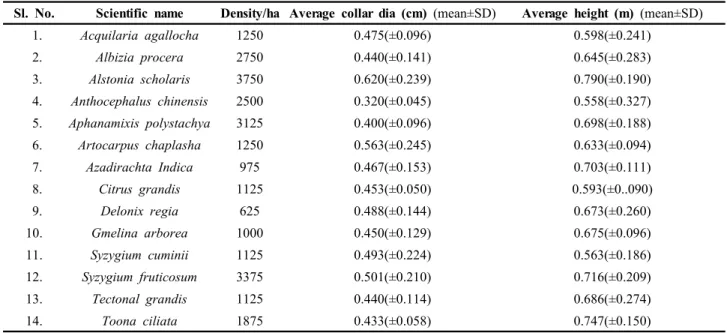
Table 5. Quantitative structure of regeneration in Juri Forest Range-2
Sl. No. Scientific name Density/ha Average collar dia (cm) (mean±SD) Average height (m) (mean±SD)
1. Acquilaria agallocha 1250 0.475(±0.096) 0.598(±0.241)
2. Albizia procera 2750 0.440(±0.141) 0.645(±0.283)
3. Alstonia scholaris 3750 0.620(±0.239) 0.790(±0.190)
4. Anthocephalus chinensis 2500 0.320(±0.045) 0.558(±0.327)
5. Aphanamixis polystachya 3125 0.400(±0.096) 0.698(±0.188)
6. Artocarpus chaplasha 1250 0.563(±0.245) 0.633(±0.094)
7. Azadirachta Indica 975 0.467(±0.153) 0.703(±0.111)
8. Citrus grandis 1125 0.453(±0.050) 0.593(±0..090)
9. Delonix regia 625 0.488(±0.144) 0.673(±0.260)
10. Gmelina arborea 1000 0.450(±0.129) 0.675(±0.096)
11. Syzygium cuminii 1125 0.493(±0.224) 0.563(±0.186)
12. Syzygium fruticosum 3375 0.501(±0.210) 0.716(±0.209)
13. Tectonal grandis 1125 0.440(±0.114) 0.686(±0.274)
14. Toona ciliata 1875 0.433(±0.058) 0.747(±0.150)
families in a proposed biodiversity conservation area (Bamerchara and Danerchara) in Chittagong, Bangladesh. Hossain (1994) in the Sitapahar natural forest of Chittagong Hill tracts (South) forest division, found 52 species of 32 families.
Ahmed and Bhuyian (1994) found 42 known and few unknown regenerating species in the natural forest of Cox’s Bazar Forest Division, Bangladesh. In comparison to these studies, the number of regenerating species in the study
area is less because most of the area in this range under new plantation and degraded condition of the natural forests.
The quantitative structure of regeneration shows in Table 5. Highest density was estimated in Alstonia scholaris (3,750 seedling/ha) followed by Syzygium fruticosum (3,375 seedling/
ha), Aphanamixis polystachya (3,125 seedling/ha), Albizia procera (2,750 seedling/ha) and Anthocephalus chinensis (2,500 seedling/ha).
Table 6. Species composition in Juri Forest Range-2
NTFP’s Local name Scientific name Family
Bamboo
Dulu Neohouzeaua dulloa (Gam.)Camp.
Graminae Jai Bambusa vulgaris Schrad.
Muli Melocanna baccifera (Roxb.) Kurz
Cane Jali Calamus guruba Ham. Palmae
Table 7. Present status of bamboo in Juri Forest Range-2
Scientific name No of culm/ha No of clump/ha Average no of culm/clump (mean±SD)
Circumference of each clump (average ) (m) (mean±SD)
Bambusa vulgaris 7,500 375 22(±9.409) 4.25(±1.233)
Melocanna baccifera 9,000 - - -
Neohouzeaua dulloa 3,150 150 27(±5.422) 7.13(±1.923)
Table 8. Present status of cane in Juri Forest Range-2
Scientific name No of stem/ha No of clump/ha Average no of stem/clump (mean±SD)
Circumference of each clump (average )(m) (mean±SD)
Calamus guruba 4,950 225 25(±6.016) 3.02(±0.884)
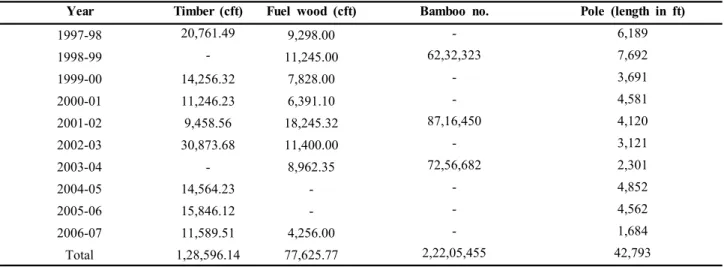
Table 9. Last ten years output of Juri Forest Range-2
Year Timber (cft) Fuel wood (cft) Bamboo no. Pole (length in ft)
1997-98 20,761.49 9,298.00 - 6,189
1998-99 - 11,245.00 62,32,323 7,692
1999-00 14,256.32 7,828.00 - 3,691
2000-01 11,246.23 6,391.10 - 4,581
2001-02 9,458.56 18,245.32 87,16,450 4,120
2002-03 30,873.68 11,400.00 - 3,121
2003-04 - 8,962.35 72,56,682 2,301
2004-05 14,564.23 - - 4,852
2005-06 15,846.12 - - 4,562
2006-07 11,589.51 4,256.00 - 1,684
Total 1,28,596.14 77,625.77 2,22,05,455 42,793
Present status of NTFPs in Juri forest range-2
In the study area, bamboo and cane were the major NTFP’s. There are three types of bamboo available in this range. Among them, Melocanna baccifera is the most common in the study area. Calamus guruba is the only one type of cane available in this range (Table 6). Similar study was done by Anon (2008) in Ukhia range of Cox’s Bazar South Forest Division, which shows cane, bamboo, sungrass were the major NTFPs. Another study was done by Miah et al., (2002) in floodplain areas of Bangladesh,
which found four species of bamboo-Bambusa balcooa, B. tulda, B. arundinaceae and M. baccifera. The study also revealed that M. baccifera shows highest no of culm per hectare (9,000 culm/ha) followed by Bambusa vulgaris and Neohouzeaua dulloa show (7,500 culm/ha) and (3,150 culm/ha) respectively. M. baccifera does not show any clump (Table 7). In the study area, Calamus guruba shows 4,950 stems per hectare and 225 clumps per hectare. The average no of stem per clump is 25 and average circumference of each clump is 3.02 m (Table 8).
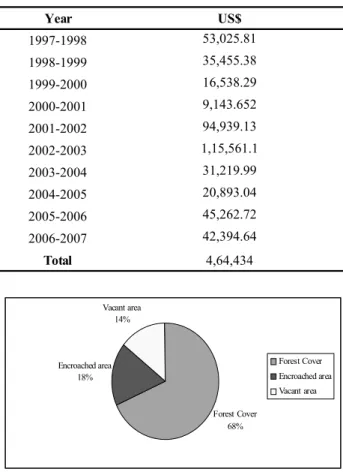
Table 10. Last ten years revenue earnings in Juri Forest Range-2
Year US$
1997-1998 53,025.81
1998-1999 35,455.38
1999-2000 16,538.29
2000-2001 9,143.652
2001-2002 94,939.13
2002-2003 1,15,561.1
2003-2004 31,219.99
2004-2005 20,893.04
2005-2006 45,262.72
2006-2007 42,394.64
Total 4,64,434
Encroached area 18%
Vacant area 14%
Forest Cover 68%
Forest Cover Encroached area Vacant area
Figure. 2. Status of vacant area in Juri Forest Range-2.
Potentiality of Juri forest range-2
Last ten years timber output and revenue earnings
The total output of timber in last ten years was 1,28,596.14 Cubic feet (cft). In 2002-03, highest amount of timber (30,873.68 cft) was obtained. There was no output of timber in 1998-99 and 2003-04 (Table 9). In the study area, it was found that total amount of revenue in last ten years was (4,64,434 US$). In 2002-03, highest amount of revenue (1,15,561 US$) was earned. In 2000- 01, lowest amount of revenue (9,144 US$) was earned (Table 10).
Status of vacant area in Juri forest range-2
In the study area, total area of forest cover is 6,411 acre which is the 68% of total area. The area under vacant is 1,335.5 acre and it contains 14% of total area.
If this vacant area is planted with suitable species and take proper steps for appropriate management of this species it will be a great potentiality which ultimately conserves the biodiversity or ecological balance in the study area.
CONCLUSION
The forests of Bangladesh are physiographically divided into hill forest (tropical moist evergreen and semi-evergreen);
inter-tidal mangrove forests (tropical evergreen) and plain land Sal (Shorea robusta) forest (tropical moist deciduous).
Among them, hill forest (Sylhet Forest division, Chittagong, Chittagong Hill Tracts, Cox’s Bazar) constitutes 67% which supply 66% of the growing stock of the country (Khan et al., 2004). This article has shown the present status of tree stock, quantitative structure of regeneration, status of NTFP’s and potentiality of this range. If properly conserve the naturally regenerated seedling in the study area, it has good potentials and cultivation of the vacant area in the near future will make this area as a biologically or environmentally rich one.
ACKNOWLEDGEMENT
The author acknowledged to University Grand Commis- sion (UGC), Bangladesh for funding the research work.
LITERATURE CITED
Ahmed, G.U. and Bhuyian M.K. 1994. Regeneration status in the natural forests of Cox’s Bazar forest division, Bangladesh. Ann.
For. Sci. 2: 103-108.
Alamgir, M. 2003. Assessment of floral diversity using GPS at a strategically suitable biodiversity conservation area. B.Sc. (Hons) Project Paper. Institute of Forestry and Environmental Sciences, University of Chittagong. 79 pp.
Alamgir, M. and Al-Amin M. 2005. Plant diversity and their distribution pattern at strategically selected conserved forests of Banskhali, Chittagong. J. For. Env. 3: 69-75
Alamgir, M. and Al-Amin M. 2007. Regeneration status in a proposed biodiversity conservation area of Bangladesh. Proc.
Pakistan Acad. Sci. 44(3): 165-172
Ambasht, R.S. 1978. A textbook of plant ecology. Students Friends
and Co. Lanka, Varanasi, India. 276 pp.
Anonymous. 2008. Proposed ten years Management Plan for Ukhia and Inani Forest Range for the period of 2008-09 to 2017-18.
Department of Forestry and Environmental Science, Shahjalal University of Science and Technology, Sylhet. Bangladesh.
Banglapedia. 2006. National Encyclopedia of Bangladesh. Asiatic Society of Bangladesh. Dhaka-1212, Bangladesh.
BBS. 2004. Compendium of Environment Statistics of Bangladesh.
Bangladesh Bureau of Statistics, Ministry of Planning. Govern- ment of the People’s Republic of Bangladesh, Dhaka, Bangla- desh.
BMD (Bangladesh Meteorological Department). 2004. Climate Division. Sylhet Station. Bangladesh.
Chaturvedi, N.A. and Khanna S.L. 1982. Forest Mensuration. Inter- national book distribution, Dehra Dun- 248001, India 406 pp.
Choudhury, J.K. 2003. Country report – Bangladesh. In: An Over- view of Forest Policies in Asia Enters, Qiang, T., M. and Leslie R.N. (eds.). EC-FAO Partnership Programme (2000–2002), Euro- pean Commission and FAO, Rome.
Chowdhury, J.A. 2006. Towards Better Forest Management.
Oitijjhya, Dhaka. 336 pp.
Dallmeier, F., Kabel M. and Rice R. 1992. Methods for long term biodiversity inventory plots in protected tropical forests. In:
Long term monitoring of biodiversity in tropical forest areas methods for establishment and inventory of permanent plots, Dallmier (ed.) MAB digest II, UNESCO, Paris, 11-46 pp.
Dey, T. K. 2006. Useful Plants of Bangladesh. Second edition. The Ad. Communication, Chittagong.
FAO (Food and Agriculture Organization). 2005. State of the world’s forest 2005. FAO, Rome, Italy.
Gareth, W. 1991. Techniques and field work in ecology. Collins educational publishers, Hammersmith, London. 125 pp.
Hirakura, S.R. 2003. Can law save the forests? Lesson from Fin- land and Brazil. CIFOR, Bogor, Indonesia, 120 pp.
Hossain, M. 1994. Tree species diversity of a natural forest – A study of Bamu reserve forest. Review paper No. 226, Institute of forestry and environmental sciences, University of Chittagong.
67 pp.
Hossain, M.K. 2001. Overview of the Forest Biodiversity in Bangladesh. In: Assessment, Conservation and Sustainable Use
of Forest Biodiversity (CBD Technical Series no. 3). Secretariat of the Convention on Biological Diversity, Montreal, pp. 33-35.
Iftekhar, M.S. 2006. Forestry in Bangladesh: An overview. J. of For. 104(3): 148-153
Khan N.A., Choudhury J.K. and Huda K.S. 2004. Forestry Sector Review Report. Bangladesh Forest Department, Ministry of Environment and Forest, Dhaka, Bangladesh.
Margules, C. and Usher, M.B. 1981. Criteria used in assessing wildlife conservation potential- A review. Biol. Conserv. 21: 55-65.
Miah, M. D., Ahmed R. and Uddin M.B. 2002. Indigenous manage- ment of bamboo plantations in the rural homesteads of floodplain areas of Bangladesh. Int. J. For. Usuf. Mngt. 3(1 & 2): 35-40.
Moore, P.D. and Chapman S.B. 1986. Methods in plant ecology.
Blackwell Scientific Publication, Oxford. 550 pp.
Prain, D. 1903. Bengal Plants, Vol.1&2, Calcutta, India.
Rao, R.R. 1994. Biodiversity in India (Floristic Aspects). Bishen Singh Mahendrapal Singh, Dehra Dun, India.
Roy, M.K. 2004. Designing a Co-management Model for Protected Areas in Bangladesh. International seminar on Protected Area Management, University of Montana, USA.
Sattar, M.A. 1998. Properties and uses of priority timber species.
Bangladesh J. For. Sci. 26:1-7.
Sharma, P.D. 1979. Elements of ecology. Pastogi publications.
Meerat, India, 358 pp.
Shukla, S.R. and Chandal S.P. 1980. Plant ecology. (4th Edn). S.
Chandel and Co. Ramnagar, New Delhi. 197 pp.
Smith, P.G.R. 1984. Identifying and evaluating environmental significant areas in the North-west territories a review a proposed evaluation system and test application. M.A. Thesis University of Waterloo, Canada.
Varghese, A.Q. and Menon, A.R.R. 1997. Assessment of ecosystem and ecological levels of biodiversity: A case study of Peppara Wildlife Sanctuary. The Malaysian Forester. 60(4): 249-255.
World Bank. 2002. A revised forest strategy for the World Bank Group. World Bank. Washington D.C.
Wyatt-Smith, J. 1987. Problems and prospects for natural manage- ment of tropical moist forests. In: Natural management of Tropical Moist Forests. Mergen, F. and Vincent, J.R. (eds.) New Haven, Connecticut, Yale University.
(Received September 8, 2009; Accepted December 3, 2009)