This is an Open Access article distributed under the terms of the Creative Commons Attribution License (http://creativecommons.org/licenses/by/4.0) which permits unrestricted use, distribution, and reproduction in any medium, provided the original work is properly cited.
Copyright © 2021 Korean Society of Women Health Nursing pISSN 2287-1640 · eISSN 2093-7695
Korean J Women Health Nurs 2021;27(3):180-195 https://doi.org/10.4069/kjwhn.2021.09.17
Received: July 5, 2021 Revised: September 17, 2021 Accepted: September 17, 2021 Corresponding author:
Sukhee Ahn
College of Nursing, Chungnam National University, 266 Munhwa- ro, Jung-gu, Daejeon 35015, Korea Tel: +82-42-580-8324
E-mail: [email protected]
Effects of nonpharmacological interventions on the
psychological health of high-risk pregnant women: a systematic review and meta-analysis
Hyeji Yoo, Sukhee Ahn
College of Nursing, Chungnam National University, Daejeon, Korea
Purpose: This study aimed to summarize the current evidence on the effects of nonpharmacologi- cal interventions on psychological health outcomes for women with high-risk pregnancies due to conditions such as preeclampsia, gestational diabetes, or preterm labor.
Methods: The following databases were searched from January 2000 to December 2020: PubMed, Ovid Embase, CINAHL, Web of Science, DBpia, RISS, and KISS. Two investigators independently reviewed and selected articles according to the inclusion/exclusion criteria. RoB 2 and the ROB- INS-I checklist were used to evaluate study quality.
Results: Twenty-nine studies with a combined total of 1,806 pregnant women were included in the systematic review and meta-analysis. Psychological health improvements were found in women with preeclampsia (Hedges’ g=–0.67; 95% confidence interval [CI], –0.91 to –0.44), gestational diabetes (Hedges’ g=–0.38; 95% CI, –0.54 to –0.12), and preterm labor (Hedges’ g=–0.73; 95% CI, –1.00 to –0.46). The funnel plot was slightly asymmetrical, but the fail-safe N value and the trim-and-fill method showed no publication bias.
Conclusion: Nonpharmacological interventions for women with high-risk pregnancies due to con- ditions such as preeclampsia, gestational diabetes, and preterm labor can improve psychological pa- rameters such as anxiety, stress, and depression. Nurses can play a pivotal role in the nursing man- agement of pregnant women with high-risk conditions and apply various types of nonpharmacolog- ical interventions to meet their needs in uncertain and anxious times during pregnancy.
Keywords: Anxiety; Gestational diabetes; High-risk pregnancy; Mental health; Premature obstetric labor
Introduction
High-risk pregnancy refers to a pregnancy that can threaten the health and life of the pregnant woman, fetus, or newborn [1]. Al- though precise statistical data for high-risk pregnancies have not been published, the number of women hospitalized for high-risk pregnancies increased by 3.5 times from 21,000 in 2006 to 77,000 in 2016 in Korea [2]. The proportion of premature births alone in-
creased from 4.9% in 2006 to 7.7% in 2018 in Korea [1]. These findings indicate that high-risk pregnancies are continuing to be- come more common. Among the conditions that cause high-risk pregnancies, preeclampsia, gestational diabetes mellitus (GDM), and preterm labor (PTL) before 34 weeks of pregnancy are the most common [2]. The Korean Society of Obstetrics and Gyne- cology classifies these three as factors that cause a moderate- or higher-risk pregnancy and notes that intensive observation and
management are necessary during pregnancy or childbirth for women with these conditions [1].
High-risk pregnant women often have negative experiences due to pharmacological treatment, restriction of physical activity, and hospitalization [3]. High-risk pregnant women are also more like- ly to be affected by poor psychological health such as depression, anxiety, and stress than other pregnant women [4-7]. In high-risk pregnant women in Korea, the prevalence of anxiety is 16%–34%
and that of depression is 7%-33.9% [8]; similar rates have been re- ported among high-risk pregnant women in Western countries.
Depression in high-risk pregnant women aggravates anxiety and stress [8] and negatively affects pregnancy maintenance and post- partum depression [6].
Some high-risk pregnant women are hospitalized in maternal-fe- tal intensive care units. This results in being separated from their spouse and family members [3], which may aggravate their anxiety, depression, and stress [9]. In addition, high-risk pregnant women have been reported as being less aware of the need for psychological health management than their low-risk counterparts [9].
Many intervention studies have been conducted for high-risk pregnant women. However, those studies mainly focused on changes in physical health indicators [10-12], including reduc- tions in blood pressure [12], improvement of blood glucose levels [13], postpartum weight loss [11], and lowering of blood glucose levels in newborns [14]. Most systematic reviews of intervention studies on pregnant women with PTL only confirmed the treat- ment effect by applying drugs, tests, or treatment guidelines to prevent premature birth [10,15,16].
In recent years, increasingly many intervention studies have been conducted to improve aspects of psychological health such as depression, anxiety, and stress in high-risk pregnant women.
These include relaxation therapy for pregnant women with pre- eclampsia [12] and face-to-face educational interventions com-
bined with cognitive behavioral therapy and acupressure for preg- nant women with GDM [17], which were found to effectively re- duce stress. In addition, health care interventions for pregnant women with GDM were effective in relieving depression and anx- iety [17]. Previous studies have reported the effects of interven- tions on psychological health by approaching high-risk pregnant women from the standpoint of disease. Still, no systematic review of nonpharmacological interventions effective for psychological health in high-risk pregnant women has yet been reported. It is necessary to identify the evidence applicable in practice for the ef- fects of interventions on psychological health, including anxiety, depression, and stress of high-risk pregnant women through a sys- tematic review of the literature.
This study was conducted to confirm the effectiveness of non- pharmacological interventions applied to pregnant women expe- riencing preeclampsia, GDM, or PTL as high-risk conditions.
The specific goals were as follows: first, to identify nonpharmaco- logical interventions for pregnant women experiencing pre- eclampsia, GDM, or PTL; and second, to present a meta-analysis of the effects of nonpharmacological interventions on anxiety, de- pression, and stress.
Methods
Ethics statement: This study was exempted from approval by the Institutional Review Board as it is a review of the literature using previously published studies.
Study design
This study is a systematic review and meta-analysis. It was de- scribed according to the PRISMA (Preferred Reporting Items for Systematic Reviews and Meta-Analysis) 2020 guidelines [18].
Summary statement
• What is already known about this topic?
Nonpharmacological interventions for women with high-risk pregnancies affect physical health outcomes such as maternal blood glucose levels and blood pressure. Their psychological health effects, however, have not been clearly identified.
• What this paper adds
This systematic review and meta-analysis found that nonpharmacological interventions exerted positive effects on anxiety, de- pression, and stress among high-risk pregnant women with preeclampsia, gestational diabetes, or preterm labor.
• Implications for practice, education, and/or policy
Nurses can play a pivotal role in the nursing management of pregnant women with high-risk conditions, recognizing that non- pharmacological interventions are an effective way to improve their psychological health.
Criteria for selection of literature
The review questions were set using the PICO-SD (participants, intervention, comparison, outcome, study design) framework for a study that applied nonpharmacological interventions to preg- nant women experiencing high-risk pregnancies and confirmed their effects. Studies were searched and selected from the elec- tronic database.
Selection criteria
• Participants: The participants were pregnant women diagnosed with preeclampsia, GDM, or PTL as a high-risk condition.
• Intervention: All nonpharmacological interventions performed prenatally for the above-mentioned high-risk conditions during pregnancy were included.
• Comparison: Receiving routine antenatal care without nonphar- macological interventions during pregnancy.
• Outcomes: Anxiety, depression, or stress level.
• Study design: Only randomized controlled trials (RCTs) and non-RCTs using nonpharmacological interventions for high-risk pregnant women were included.
Exclusion criteria
The following types of studies were excluded: survey studies, qualitative studies, literature reviews, studies in which effect sizes could not be calculated, and studies presented at conferences.
Literature search and collection Literature search
The terms expressing interventions were identified through PubMed’s MeSH database before the literature search. The start time of the search was not limited, and the search site updated the literature by December 31, 2020. A total of seven search databases were used. PubMed, CINAHL (Cumulative Index to Nursing &
Allied Health Literature), Web of Science, and Embase were used as international databases. In addition, RISS (the Korea Educa- tion and Research Information Service), KISS (Korea Research Information Service), and DBpia were used as domestic databases to identify studies published in Korea.
The search terms in the database were ‘preeclampsia,’ ‘GDM,’
‘premature labor,’ ‘anxiety,’ ‘depression,’ and ‘stress,’ in combina- tions with ‘intervention.’ The search term for each risk was in- putted as “TX (text) preeclampsia” OR “TI (title) preeclampsia”
OR “AB (abstract) preeclampsia” OR “SU (subject) preeclamp- sia.” GDM and PTL were searched in the same way. All three search expressions were integrated. For the “intervention” search, the following terms were used “TX intervention” OR “TI inter-
vention” OR “AB intervention” OR “SU intervention.” As terms related to the psychological health results, three search formulas were integrated by generating “TX anxiety” OR “TI anxiety” OR
“AB anxiety” OR “SU anxiety” for anxiety, depression, and stress, respectively (Supplementary Data 1).
Data collection and selection
A list of documents collected through the literature search was generated. Using EndNote X9 (Clarivate Analytics, London, UK), a bibliographic management program, duplicate documents were removed from the list. The title and abstract of each study were checked to confirm whether the study met the data selection criteria. If it was difficult to decide whether to select a study based on the title and abstract, the full text of the study was reviewed.
Two researchers (Yoo H and Ahn S) chose articles, discussed the results of selection, examined the content, and confirmed the final target literature.
Literature quality evaluation
The quality of the literature was evaluated independently by the two researchers using the revised Cochrane Risk of Bias tool for randomized trials (RoB 2) [19] and the Risk of Bias in Non-ran- domized Studies of Interventions (ROBINS-I) tool [20]. RoB 2 provides a framework for judging bias in the results of various types of randomized experimental studies [19]. RoB 2 consists of five subdomains: (1) bias due to the randomization process, (2) bias due to deviations from intended interventions, (3) bias due to miss- ing outcome data, (4) bias in measurement of the outcome, and (5) bias in selection of the reported result. ROBINS-I is a tool to evalu- ate the non-randomized effects of interventions and compare two or more interventions [20]. ROBINS-I consists of seven subdo- mains: (1) bias due to confounding, (2) bias in selection of partici- pants into the study, (3) bias in classification of interventions, (4) bias due to deviation from intended interventions, (5) bias due to missing data, (6) bias in measurement of outcomes, and (7) bias in selection of the reported result. Two researchers evaluated the litera- ture quality individually, and reevaluated inconsistencies through consensus after reviewing the full text.
Data analysis method Characteristics of the literature
The characteristics of the selected studies were extracted using the framework of the following 12 items: age, pregnancy period, classi- fication of high-risk pregnancy, sample size, intervention name, number of interventions, duration of interventions, dependent vari- ables, research tools, research design, research results, and country.
Comprehensive effect size analysis
The effect size and homogeneity of nonpharmacological inter- ventions were analyzed using the Comprehensive Meta-Analysis program. The mean and standard deviation or frequency were se- lected, and a random-effect model was applied to calculate the ef- fect size for the results. The direction of the effect values of indi- vidual studies and the degree of overlap of the confidence inter- vals between studies were confirmed through forest plots. For sta- tistical heterogeneity in the effect size, the chi-square test and I2 index were calculated. A higher value of the I2 index corresponds to greater heterogeneity: 0% means no heterogeneity; 50%, mod- erate heterogeneity; and 75% or more, high heterogeneity [21].
Publication bias test
The publication bias of the selected study was tested by the Egger linear regression asymmetry test [22], the fail-safe N coefficient [23], and the trim-and-fill method [24,25], including a funnel plot.
Results
Final literature selection
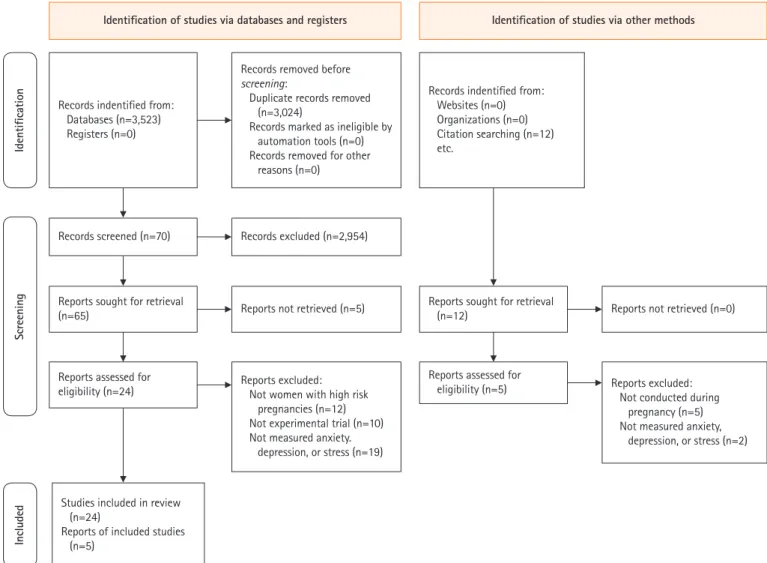
Through the search, a total of 3,535 documents were first select- ed, and after excluding duplicate documents, 3,024 articles re- mained. Among them, 70 papers were selected by reviewing the titles and abstracts. The full text of these 70 papers was checked, and finally, 29 articles were selected for analysis [26-54]. Of the 41 articles excluded, 12 did not include preeclampsia, GDM, or PTL, 10 were non-experimental studies, and 19 did not have anx- iety, depression, or stress as outcome variables (Figure 1).
Quality evaluation of selected studies
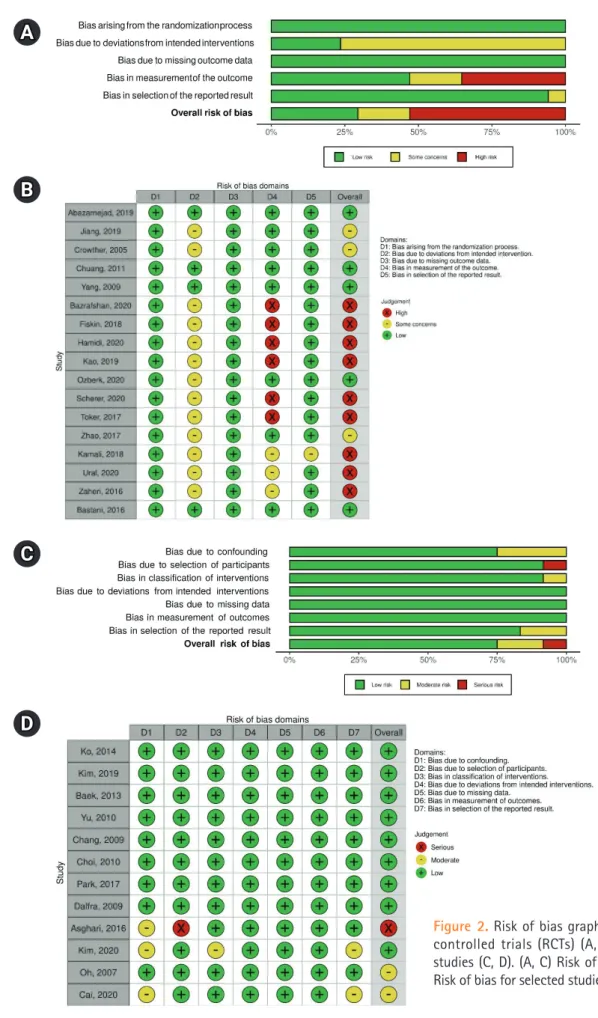
Quality evaluation using RoB 2 was performed for the 17 RCTs [26-42]. The risk of bias was low for both bias due to the random- ization process and bias due to missing outcome data. Bias due to deviations from intended interventions showed some concern for
Figure 1. PRISMA 2020 flow chart for the literature review.
Identification of studies via databases and registers Identification of studies via other methods
Records indentified from:
Websites (n=0) Organizations (n=0) Citation searching (n=12) etc.
Reports sought for retrieval (n=12)
Records screened (n=70) Records excluded (n=2,954)
Reports not retrieved (n=5) Reports sought for retrieval
(n=65)
Reports assessed for eligibility (n=24)
Studies included in review (n=24)
Reports of included studies (n=5)
Reports assessed for
eligibility (n=5) Reports excluded:
Not conducted during pregnancy (n=5) Not measured anxiety,
depression, or stress (n=2) Reports excluded:
Not women with high risk pregnancies (n=12) Not experimental trial (n=10) Not measured anxiety.
depression, or stress (n=19)
Reports not retrieved (n=0) Records removed before
screening:
Duplicate records removed (n=3,024)
Records marked as ineligible by automation tools (n=0) Records removed for other
reasons (n=0) Records indentified from:
Databases (n=3,523) Registers (n=0)
IdentificationScreeningIncluded
about 76% of studies. The risk of bias in measurement of out- comes was as follows: 35%, high-risk of bias; 29%, low risk; 18%, moderate risk; and 53%, very high risk. An analysis of the meth- odological quality of the 12 non-RCT studies [43-54], using ROBINS-I found low risks of bias due to deviations from intend- ed interventions, bias due to missing outcome data, and bias in measurement of outcomes. The risk of bias in the allocation pro- cess was moderate in 25% of papers. The risk of bias due to devia- tions from intended interventions was severe in 8% of studies.
The risk of bias due to missing outcome data was moderate in 8%
of studies. The risk of bias in selection of the reported result was moderate in 17% of the studies. Overall, 75% of the studies had a low risk of bias, 16% had a moderate risk, and 8% had a severe risk (Figure 2).
General characteristics of selected studies Research characteristics
• Country: Of the 29 studies, nine were conducted in Korea [43- 46,48,50,52-54], all of which were non-RCT studies. Seven studies [27-29,33,35,41,47] were conducted in Iran. There were four studies each in China [26,34,42,49] and Turkey [32,37,39,40], and two each in Taiwan [30,36] and Switzerland [38]. One study was done in Australia [31] and one in Italy [51] (Supplementary Table 1).
• Year of publication: Of the 29 selected studies, seven [26,31,45,46,50,51,54] were published between 2005 and 2010. Three studies [30,48,53] were published between 2011 and 2014. The majority of studies (n= 18) were published be- tween 2016 and 2020 [27-29,32-37,39-44,47,49,52] (Supple- mentary Table 1).
Subject characteristics
• High-risk pregnancies: Of the 29 studies, five studies [28,34, 35,39,47] included women with preeclampsia. There were 11 studies [27,31-33,40,41,48,49,51-53] targeting GDM and 11 studies [26,29,30,35-38,45,46,50,54] on PTL. Two studies [42,43] were conducted on women with high-risk pregnan- cies including PTL, GDM, and preeclampsia (Supplementary Table 1).
• Age: The age of the subjects was reported in 21 studies [27- 34,36-38,42,43,45,46,48-52,54]. With the exclusion of one study [28], which presented only the age range, the average age of the subjects was 32.1 years and at least 17 years [28] (Table 1).
• Pregnancy period: The gestation period in the 29 articles ranged from 16 weeks [31] to 41 weeks [49] (Table 1).
Characteristics of interventions
• Research design: Of the 29 studies, 17 [26-42] were RCTs. Of the remaining 12 non-RCTs [43-54], seven studies used a non- equivalent control group pre- and posttest design [45,48,49,51- 53], and four studies used a nonequivalent control group non-synchronized design [43,44,50,54]. One study had a matching control group interrupted time series design [46]
(Supplementary Table 1).
• Sample size: All 29 studies had one experimental group and one control group, and the average sample size was 75 people each.
The smallest sample size was 17 in the experimental and 18 in the control group [44], and the largest sample size was 490 in the experimental group and 510 in the control group [31] (Ta- ble 1).
• Intervention strengths: Except for four studies [31,34,49,51], which did not clearly report the details, the number of interven- tions could be confirmed. The intervention programs were pro- vided an average of 7.7 times, with a range from at least one time [30] up to 30 times [31]. Except for four studies that did not report the relevant data [31,34,42,49], the average duration of the intervention was identified as 19.5 days. In both RCTs and non-RCTs, on average 7.7 interventions were provided for 19.6 days (Table 1).
• Types of intervention and consequences: The interventions were classified into education, counseling, and behavioral ther- apy. Studies that performed only one type were classified as monotherapy. (1) Education: Three studies conducted educa- tion, of which two studies [35,42] conducted psychological ed- ucation. One study [45] provided high-risk pregnancy educa- tion. The educational intervention effectively relieved stress [35,45] and postpartum depression [42]. (2) Counseling: One study involved dietary counseling [31] and the other focused on blood glucose control [51]. Counseling was effective for de- pression at 3 months postpartum [31]. (3) Behavioral interven- tions: Twelve studies implemented behavioral therapy. Three studies [32,46,54] used abdominal breathing, three studies [26,39,44] used music therapy, and three studies [38,41,47]
used cognitive behavioral therapy. Two studies [30,50] used re- laxation therapy. Finally, one study [27] used acupressure ther- apy. Overall, behavioral therapy was effective in relieving anxi- ety [26,27,30,32,38,46,47,50,54], depression [32,47], and stress [30,32,38,41,44,47,50,54] (Supplementary Table 1).
Studies that offered two or more intervention approaches were classified as combination therapy. (1) Studies using education and counseling therapy: Of the seven studies, two studies [29,34]
mixed high-risk pregnancy education and psychological counsel- ing and four studies [48,49,52,53], mixed high-risk pregnancy ed-
A
B
C
D
Figure 2. Risk of bias graphs for 17 randomized controlled trials (RCTs) (A, B) and 12 non-RCT studies (C, D). (A, C) Risk of bias summary. (B, D) Risk of bias for selected studies.
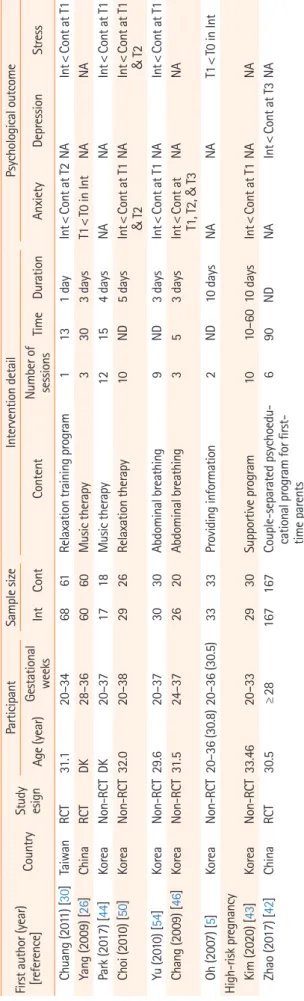
Table 1. Descriptive summary of the selected studies (N=29) First author (year) [reference]Country Study esign
ParticipantSample sizeIntervention detailPsychological outcome Age (year)Gestational weeksIntContContent
Number of sessions
TimeDurationAnxietyDepressionStress Preeclampsia Abazarnejad (2019) [28]IranRCT17–4625–382222Psychoeducational counseling2453 daysInt<Cont at T1NANA Jiang (2019) [34]ChinaRCT21–48 (31.7)≥ 208484Comprehensive nursing inter- ventionNDNDNDInt<Cont at T1Int<Cont at T1NA Kamali (2018) [35]IranRCTND34–383636Face-to-face education in the health care system345–603 daysNANAInt<Cont at T1 Toker (2017) [39]TurkeyRCTND≥303535Classical Turkish music7307 daysNoneNANA Asghari (2016) [47]IranNon-RCTND28–343130Cognitive behavioral therapy12904 weeksInt<Cont at T1Int<Cont at T1Int<Cont at T1 Gestational diabetes Hamidi (2020) [33]IranRCT29.624–284444Mindfulness-based training81208 weeksInt<Cont at T1 & T2NANA Ural (2020) [40]TurkeyRCTND34–384642Health-promoting lifestyle education program3453 daysNANoneNA Fiskin (2018) [32]TurkeyRCT31.024–28 (27.2)3231Diaphragmatic breathing ex- ercise301530 daysInt<Cont at T1 & T2Int<Cont at T1 & T2Int<Cont at T1 & T2 Bastani (2016) [27]IranRCT29.9ND2829Acupressure9183 daysInt<Cont at T1NANA Zaheri (2016) [41]IranRCTND24–324040Cognitive behavioral stress management intervention training
61203 weeksNANAInt<Cont at T1 Crowther (2005) [31]AustraliaRCT30.516–30490510Ongoing care including indi- vidualized dietary adviceNDNDNDNone at T1 & T4Int<Cont at T4NA Cai (2020) [49]ChinaNon-RCT30.9934–418970Comprehensive nursing modeNDNDNDInt<Cont at T1Int<Cont at T1NA Kim (2019) [52]KoreaNon-RCT35.824–28222212-week web-based self-management program1220–3012 weeksInt<Cont at T1Int<Cont at T1NA Ko (2014) [53]KoreaNon-RCTND243434Coaching program on com- prehensive lifestyle modifi- cation
420–304 weeksNAInt<Cont at T1NA Baek (2013) [48]KoreaNon-RCT3324–281918Case management program5ND2 weeksInt<Cont at T1Int<Cont at T1NA Dalfrà (2009) [51]ItalyNon-RCT34.012–28105150TelemedicineNDND10 weeksNANoneNone Preterm labor Bazrafshan (2020) [29]IranRCT26.124–283636Educational counseling group intervention6606 weeksInt<Cont at T1 & T2NANA Özberk (2020) [37]TurkeyRCT27.929.83333Relaxation-focused nursing care4
40– 102 daysInt<Cont at NANA &5T1, T2, T3 Scherer (2016) [38]SwissRCT32.718–32 (28.4)3127Internet-based cognitive be-6ND6 weeksT1<T0 in IntNAT1<T0 in Int havioral stress management Kao (2019) [36]TaiwanRCT33.020–36 (27)140103Support intervention3–530–402 weeksInt<Cont at T1Int<Contat T1NA (Continued to the next page)
First author (year) [reference]Country Study esign
ParticipantSample sizeIntervention detailPsychological outcome Age (year)Gestational weeksIntContContent
Number of sessions
TimeDurationAnxietyDepressionStress Chuang (2011) [30]TaiwanRCT31.120–346861Relaxation training program1131 dayInt<Cont at T2NAInt<Cont at T1 Yang (2009) [26]ChinaRCTDK28–366060Music therapy3303 daysT1<T0 in IntNANA Park (2017) [44]KoreaNon-RCTDK20–371718Music therapy12154 daysNANAInt<Cont at T1 Choi (2010) [50]KoreaNon-RCT32.020–382926Relaxation therapy10ND5 daysInt<Cont at T1 & T2NAInt<Cont at T1 & T2 Yu (2010) [54]KoreaNon-RCT29.620–373030Abdominal breathing9ND3 daysInt<Cont at T1NAInt<Cont at T1 Chang (2009) [46]KoreaNon-RCT31.524–372620Abdominal breathing353 daysInt<Cont at T1, T2, & T3NANA Oh (2007) [5]KoreaNon-RCT20–36 (30.8)20–36 (30.5)3333Providing information2ND10 daysNANAT1<T0 in Int High-risk pregnancy Kim (2020) [43]KoreaNon-RCT33.4620–332930Supportive program1010–6010 daysInt<Cont at T1NANA Zhao (2017) [42]ChinaRCT30.5≥28167167Couple-separated psychoedu-
cational program for first- time parents
690NDNAInt<Cont at T3NA Cont: Control group; Int: intervention group; NA: not applicable; ND: not described; RCT: randomized clinical trial; T1: time point 1; T2: time point 2; T3: time point 3.
Table 1. Continued
ucation and lifestyle counseling. Only one study [40] conducted high-risk pregnancy management education and counseling.
These combination interventions were effective in relieving anxi- ety [29,34,48,49,52] and depression [29,48,49,52,53]. (2) Stud- ies using education and behavioral therapy: One study [28] used high-risk pregnancy education and anxiolytic therapy and another [33] used high-risk pregnancy education and breathing therapy.
Education and behavioral therapy were effective in relieving anxi- ety [28,33]. (3) Studies using counseling and behavioral therapy:
One study [36] used psychological counseling and conversion therapy, and another [37] used psychological counseling and re- laxation therapy. Counseling and behavioral therapy were effec- tive in relieving anxiety and depression [36]. (4) Combining edu- cation, counseling, and behavioral therapy: One study [43] found that this combination was effective in relieving depression (Sup- plementary Table 1).
• Intervention duration: Behavioral therapy can be divided into short-term interventions and long-term interventions. Consid- ering that high-risk pregnant women are stable after 3 days of hospitalization [30], and women with PTL are hospitalized for 5 days on average [50], short-term interventions were defined as those conducted within a week. Short-term interventions in- cluded applying relaxation therapy for 1 to 5 days for pregnant women with PTL [30,50], providing music therapy for 3 to 4 days [26,44], applying abdominal breathing for three days [46,54], and performing acupressure for 3 days in pregnant women with GDM [27]. Long-term interventions (longer than a week) included cognitive behavioral therapy for 3 to 6 weeks for pregnant women with PTL [38], preeclampsia [47], and GDM [41] and abdominal breathing for a month for women with GDM [32]. In particular, abdominal breathing effectively relieved stress, anxiety, and depression [32]. Abdominal breath- ing also effectively reduced anxiety [46,54] and stress [54] in pregnant women in PTL. Abdominal breathing can be easily applied in clinical practice, and we therefore suggest that behav- ioral interventions applying abdominal breathing be actively used to improve the psychological health of high-risk pregnant women. Cognitive behavioral therapy showed improvement in stress [41] in pregnant women with GDM, alleviated depres- sion, anxiety, and stress [47] in pregnant women with pre- eclampsia, and reduced anxiety and stress [38] in pregnant women with PTL.
Therefore, expanding the use of cognitive behavioral interven- tions in clinical practice would have the benefits of reducing anxiety, depression, and stress in high-risk pregnant women.
• Intervention place: Nonpharmacological interventions were mainly provided as in-hospital interventions, including all five
interventions for pregnant women with preeclampsia [28,34, 35,39,47], and 10 out of 11 interventions for pregnant women with PTL [26,29,30,36,37,44-46,50,54]. Pregnant women with preeclampsia and PTL received pharmacological therapy during hospitalization and therapeutic management for ongo- ing monitoring of the pregnant woman and fetus after hospital discharge [3]. In pregnant women with GDM, seven out of 11 interventions [27,31-33,40,41,48,49,53] were applied in outpa- tient clinics and two interventions [27,49] were conducted in the hospital ward. This was most likely because providing inte- grated education and counseling on GDM self-management, such as blood glucose checks, lifestyle improvement, and drug treatment is possible in outpatient clinics.
• Measurement tools: Nine tools were used in 21 studies to measure anxiety: the Spielberger State-Trait Anxiety Questionnaire, the most popular tool, was used in 11 studies [26,28,30,31,33,38,39, 43,50,52,54]; followed by the Depression Anxiety Stress Scale [32,35,41], visual analog scale [27,46,50], Hospital Anxiety and Depression [45,47], Beck Anxiety Inventory [36,48], Self-rating Anxiety Scale [34], Pregnancy-Related Anxiety [30], Pregnan- cy-Related Anxiety Questionnaire [29], and Maternal Anxiety Questionnaire [27]. For depression, seven instruments were used in 12 studies: the Self-Rating Depression Scale [34,52,53], the Edinburgh Postnatal Depression Scale [31,36,42], the Depres- sion Anxiety Stress Scale [32,35,41], the Center for Epidemio- logic Studies-Depression Scale [40,51], Beck Depression Inven- tory [48], Hospital Anxiety and Depression [47], and the Post- partum Depression Screening Scale [42], which was adminis- tered after delivery. For stress measurements, eight instruments were used in 11 studies: The PTL Stress Scale [44,50,54], De- pression Anxiety Stress Scale [32,35,41], Perceived Stress Scale [30,38], visual analog scale [30], Diabetes-related Stress Scale [51], Diabetes Health Distress Scale [51], Pregnancy Distress Questionnaire [47], and Prenatal Posttraumatic Stress Question- naire [35].
Outcome variables were measured using well-established self-report instruments for anxiety, depression, and stress. In order to supplement these subjective indicators, five studies also report- ed pregnant women’s blood pressure [26,39,46,50], pulse [50], heart rate [26], respiration [26], body temperature [30,46,50], and oxygen saturation [46]. In these five studies, improvements in physiological indicators were shown by a decrease in systolic blood pressure [26,39,46,50] and diastolic blood pressure [26,39,50], a decrease in pulse or heart rate [26,50], body tem- perature [30,46,50], and oxygen saturation [46].
Effects of nonpharmacological interventions on psychological health
The effect size of the nonpharmacological interventions for high- risk pregnant women was calculated for the overall results includ- ing anxiety, depression, and stress; for the results of each of the three variables; according to the type of high-risk pregnancy; and according to the study design. The effect size was calculated using a random-effect model. Some studies included multiple measure- ments of the outcome variable. Thus, the meta-analysis of effect size included 26 sets of measurements of anxiety from 21 studies, 11 sets of measurements of depression from 12 studies, and 13 sets of measurements of stress from 11 studies.
(1) Effects by type of high-risk pregnancy Effects on subjects with preeclampsia
A. Effects on anxiety: Nonpharmacological interventions showed an effect size of Hedge’s g= -0.42 (SE= .28) for anxiety in preg- nant women with preeclampsia, but it was not statistically signif- icant (p=.142). The five studies on anxiety in pregnant women with preeclampsia were highly heterogeneous (Q=28.61, df=4, p<.001, I2=86.02) [21].
B. Effects on depression: Nonpharmacological interventions had an effect size of Hedge’s g= -0.75 (SE= .14) for depression in pregnant women with preeclampsia (p<.001). The two studies on depression in pregnant women with preeclampsia showed low heterogeneity (Q= 0.13, df= 1, p=.719, I2< .001) [21].
C. Effects on stress: Nonpharmacological interventions showed an effect size of Hedge’s g= –0.48 (SE=.46) on stress in pregnant women with preeclampsia, which was not statistically significant (p=.296). The two studies on stress in pregnant women with preeclampsia showed moderate heterogeneity (Q=6.62, df=1, p=.010, I2=84.90) [21] (Figure 3, Supplementary Table 2).
Effects on subjects with GDM
A. Effects on anxiety: Nonpharmacological interventions had an effect size of Hedge’s g= –1.66 (SE= .46) on anxiety in preg- nant women with GDM (p<.001). The eight studies reporting 10 sets of anxiety measurements in pregnant women with GDM were highly heterogeneous (Q= 382.15, df= 9, p<.001, I2= 97.65) [21].
B. Effects on depression: Nonpharmacological interventions showed an effect size of Hedge’s g= –0.23 (SE=.11) for depres- sion in pregnant women with GDM (p=.045). The seven stud- ies reporting depression in pregnant women with GDM had a moderate level of heterogeneity (Q =11.85, df =6, p =.065, I2=49.37) [21].
C. Effects on stress: Nonpharmacological interventions showed
an effect size of Hedge’s g= –0.62 (SE= .48) for stress in preg- nant women with GDM and were not statistically significant (p=.194). The three studies reporting four sets of stress mea- surements in pregnant women with GDM were highly hetero- geneous (Q= 76.30, df= 3, p<.001, I2= 96.07) [21] (Figure 4, Supplementary Table 2) .
Effects on subjects with PTL
A. Effects on anxiety: Nonpharmacological interventions showed an effect size of Hedge’s g= –0.97 (SE= .31) on the anxiety of pregnant women with PTL (p=.001). The eight studies re- porting 10 sets of anxiety measurements were highly heteroge- neous (Q= 14.72, df= 6, p=.023, I2= 59.24) [21].
B. Effects on stress: Nonpharmacological interventions showed an
effect size of Hedge’s g= –.75 (SE=.16) on the stress of preg- nant women with PTL (p<.001). Six studies reporting seven sets of stress measurements in pregnant women with PTL showed a moderate level of heterogeneity (Q=11.66, df=5, p=.040, I2=57.11) [21] (Figure 5, Supplementary Table 2) . C. Only one of the PTL studies focused on depression.
(2) Effect size by study design
Details on effect size by RCT and non-RCT study design are pre- sented in Supplementary Figures 2, 3.
Effect size for randomized trial design subjects
A. RCT effects on anxiety: Nonpharmacological interventions showed an effect size of Hedge’s g= –1.01 (SE= .26) on anxi- Figure 3. Effects of nonpharmacological interventions on pregnant women with preeclampsia.
Figure 4. Effects of nonpharmacological interventions on pregnant women with gestational diabetes mellitus.
ety (I< .001). Of the 17 RCT studies, the 16 studies on anxiety were highly heterogeneous (Q = 391.45, df = 15, I < .001, I2= 96.17) [21].
B. RCT effects on depression: Nonpharmacological interventions showed an effect size of Hedge’s g= –0.52 (SE= .08) on de- pression in randomized experimental design subjects (p<.001). The six studies on depression showed low heteroge- neity (Q= 6.73, df= 5, p<.001, I2= 25.69) [21].
C. RCT effects on stress: Nonpharmaceutical interventions showed an effect size of Hedge’s g= –0.77 (SE=.28) on subjects’ stress in randomized studies (p=.005). The six studies on stress showed high heterogeneity (Q=39.24, df=5, p<.001, I2=87.26) [21]
(Supplementary Table 2, Supplementary Figure 2).
Effect size for non-RCT design subjects
A. Non-RCT effects on anxiety: Nonpharmacological interven- tions showed an effect size of Hedge’s g= –1.14 (SE= .32) on anxiety (p<.001). Of the 12 non-RCT studies, the 10 on anxi- ety were highly heterogeneous (Q = 125.75, df = 9, p <.001, I2= 92.84) [21].
B. Non-RCT effects on depression: Nonpharmacological inter- ventions showed an effect size of Hedge’s g= –0.29 (SE= .19) on depression, but it was not significant (p=.136). The five studies on depression had an intermediate level of heterogene- ity (Q= 12.62, df= 4, p=.013, I2= 68.31) [21].
C. Non-RCT effects on stress: Nonpharmacological interventions showed an effect size of Hedge’s g= –0.49 (SE= .25) on stress (p<.001). The seven studies on stress were highly heteroge- neous (Q= 54.75, df= 6, p<.001, I2= 89.04) [21] (Supplemen- tary Table 2, Supplementary Figure 3).
Publication bias test
Funnel plots, the classic fail-safe N, and the trim-and-fill method were used to test for publication bias related to the effects of non- pharmacological interventions on psychological health of high- risk pregnant women. The funnel plot was visually asymmetrical (Supplementary Figure 1), and the significance level of the degree of asymmetry through the Egger regression test was p<.001. The safety factor (classic fail-safe N) was calculated. This parameter, which refers to the number of studies required to change the re- sults of nonpharmacological interventions on psychological health, was 6,235. This value was greater than the 260 calculated from the standard 5k+10 formula [23]. The effect of errors on the results was checked through the trim-and-fill method. No addi- tional study was required, and both the observed effect size and the corrected effect size were –0.80. Therefore, combining the above results, it can be concluded that the overall effect size was not affected by publication bias. (Supplementary Figure 1).
Discussion
Key results
In this study, 29 nonpharmacological intervention studies for pregnant women experiencing high-risk pregnancies were re- viewed, including the method of application, the content of the intervention, and intervention effects on anxiety, depression, and stress. Furthermore, the effect size of the outcome index was eval- uated. As a result of the meta-analysis, nonpharmacologic inter- ventions showed significant effects on individual indicators of anxiety, depression, and stress.
Figure 5. Effects of nonpharmacological interventions on pregnant women with preterm labor.
Interpretation
The health problems caused by high-risk pregnancy require long- term therapeutic management to maintain pregnancy and give birth at full term [1]. As a result, pregnant women experience anxiety, depression, and stress due to the burden of self-manage- ment and uncertainty about their health [9]. This study’s results showed that nonpharmacological interventions provided for high- risk pregnant women had the largest effect size for anxiety, com- pared to depression or stress as individual variables.
Previous studies confirmed the effectiveness of nonpharmaco- logical interventions on physiological health only for pregnant women with preeclampsia [12] or pregnant women with GDM [17]. However, the present study confirmed the effects of non- pharmacological interventions on specific psychological out- comes for women with high-risk pregnancies who had preeclamp- sia, GDM, and/or PTL. Nonpharmacological interventions showed the greatest effect on depression in women with pre- eclampsia. In contrast, for pregnant women with GDM, the im- pact on anxiety was most prominent, and for pregnant women with PTL, anxiety, and stress were reduced. Therefore, the active use of nonpharmacological interventions in clinical practice can help improve psychological health indicators in high-risk pregnant women and positively affect maternal-infant health.
Based on the findings of this study, the effectiveness of on- line-based interventions remains unclear. An online counseling intervention applied to pregnant women with GDM did not sig- nificantly improve depression or stress scores [51]. However, on- line-based self-management and counseling appeared to reduce anxiety and depression in pregnant women with GDM [52] and an online-based cognitive behavioral stress management program reduced anxiety and stress in pregnant women with PTL [38]. As the physical activity of high-risk pregnant women is restricted [9]
and the number of studies is insufficient, future research is needed to confirm the effect of non-face-to-face interventions. In addi- tion, due to the recent social distancing due to coronavirus disease 2019, some regions are operating or have plans to run non-face- to-face prenatal programs [55,56]. As such, more active use of in- formation and communications technology-based mediations would be beneficial.
The most common intervention providers were nurses or mid- wives. This is most likely due to the fact that high-risk pregnant women receive focused inpatient or outpatient care and nurses and midwives are highly accessible and have a heightened under- standing of high-risk pregnancy. The majority of the interventions (86.2%) were performed individually. Group-based interventions constituted 13.8% and group sizes ranged from as few as four [29]
to as many as 12 women [42]. Because the treatment schedule for
each high-risk individual is different and bed rest is required when hospitalized, more interventions appear to have been delivered on an individualized basis. However, a group intervention for 10 pregnant women with preeclampsia per group effectively alleviat- ed anxiety, depression, and stress [47]. As group interventions have been shown to affect psychological health in women with high-risk conditions [42], group interventions may be a reason- able option if individual access is difficult.
Limitations
Since the results of this study were limited to anxiety, depression, and stress, the findings cannot be applied to other mental health or psychosocial health outcomes, such as uncertainty or self-efficacy.
Since the Cochrane Library was not included in the literature search, it is possible that some studies may have been missed. Be- cause most women with high-risk pregnancies who are hospitalized require bed rest, prior studies may have been faced limitations in ap- plying physical activities or behavioral interventions. Thus, the loca- tion where intervention is applied, the intervention type, and limit- ed activities of women with high-risk pregnancies may have affected the results of this study. The risk of bias in measurement of the out- come was high in RCTs, and randomization and blinding were not sufficiently described. These are limitations when evaluating the quality of the studies. In non-RCT studies, the risk of bias in selec- tion of participants into the study was deemed high because the cri- teria and process for selection were not clearly described. The fact that the outcome variables of anxiety, depression, and stress were measured using self-report questionnaires also increases the risk of bias in measurement of the outcome. If subject blinding is not per- formed, there is a possibility that the intervention effect can be over- estimated. Therefore, caution should be considered when interpret- ing the non-RCT study results.
This study presented evidence regarding whether nonpharma- cological interventions improve anxiety, depression, and stress in high-risk pregnant women with preeclampsia, GDM, and/or PTL. The effectiveness of face-to-face interventions was con- firmed, but the impact of online-based interventions on psycho- logical health remains unclear. When education, counseling, and behavioral therapy were applied as single or multiple interven- tions for high-risk pregnant women, their psychological health improved. Nurses need to apply these nonpharmacological inter- ventions for women with high-risk pregnancies considering their nursing needs and the environment where the intervention is pro- vided. In further research, the effect of online-based interventions will be checked using both self-reporting questionnaires and vital signs as much as possible.
ORCID
Hyeji Yoo, https://orcid.org/0000-0002-1109-2946 Sukhee Ahn, https://orcid.org/0000-0002-1694-0027
Authors’ contributions
Conceptualization, Data collection & Formal analysis, Writing–
original draft, Writing–review & editing: Yoo H, Ahn S.
Conflict of interest
The authors declared no conflict of interest.
Funding
This study was supported by the National Research Foundation (NRF) of Korea (NRF No. 2020R1A2C201086512).
Data availability
Please contact the corresponding author for data availability.
Acknowledgments
None.
Supplementary materials
Further details on supplementary materials are presented online (available at https://doi.org/10.4069/kjwhn.2021.09.17).
References
1. Hwang JY. Reclassification of high-risk pregnancy for mater- nal-fetal healthcare providers. J Korean Soc Matern Child Health. 2020;24(2):65-74. https://doi.org/10.21896/jksmch.
2020.24.2.65
2. Ahn TG, Kim T, Kim Y, Hwang JY. The current state of ma- ternity care and suggestions for improvement in the manage- ment of high-risk pregnancies in South Korea. J Korean Soc Matern Child Health. 2018;22(3):134-141. https://doi.org/10.
21896/jksmch.2018.22.3.134
3. Isaacs NZ, Andipatin MG. A systematic review regarding women’s emotional and psychological experiences of high- risk pregnancies. BMC Psychol. 2020;8(1):45. https://doi.
org/10.1186/s40359-020-00410-8
4. Palma E, Armijo I, Cifuentes J, Ambiado S, Rochet P, Díaz B, et al. Hospitalisation in high-risk pregnancy patients: is pre- natal attachment affected? J Reprod Infant Psychol. 2021;
39(1):30-42. https://doi.org/10.1080/02646838.2020.1740661 5. Ko SY, Bae JG, Jung SW. A comparative study on the anxiety,
depression, and maternal-fetal attachment of high-risk preg- nant women and normal pregnant women. J Korean Soc Biol Ther Psychiatry. 2019;25(2):117-126. https://doi.org/10.228 02/jksbtp.2019.25.2.117
6 .Jung SH, Bae JG, Jung SW, Kim MK, Kim HC, Kim JB. Ef- fects of the temperament and character on depression, anxi- ety, and maternal-fetal attachment in high-risk pregnant women. Anxiety Mood. 2018;14(2):106-11. https://doi.
org/10.24986/anxmod.2018.14.2.007
7. Fairbrother N, Young AH, Zhang A, Janssen P, Antony MM.
The prevalence and incidence of perinatal anxiety disorders among women experiencing a medically complicated preg- nancy. Arch Womens Ment Health. 2017;20(2):311-319.
https://doi.org/10.1007/s00737-016-0704-7
8. Tsakiridis I, Bousi V, Dagklis T, Sardeli C, Nikolopoulou V, Papazisis G. Epidemiology of antenatal depression among women with high-risk pregnancies due to obstetric compli- cations: a scoping review. Arch Gynecol Obstet. 2019;300(4):
849-859. https://doi.org/10.1007/s00404-019-05270-1 9. Kim H, Park H. Health-care needs of high-risk pregnant
women hospitalized in maternal-fetal Intensive care units: a mixed-methods design. Korean J Women Health Nurs.
2018;24(2):196-208. https://doi.org/10.4069/kjwhn.2018.
24.2.196
10. Ali AA, Sayed AK, El Sherif L, Loutfi GO, Ahmed AM, Mo- hamed HB, et al. Systematic review and meta-analysis of ran- domized controlled trials of atosiban versus nifedipine for in- hibition of preterm labor. Int J Gynaecol Obstet. 2019;145(2):
139-148. https://doi.org/10.1002/ijgo.12793
11. Martis R, Crowther CA, Shepherd E, Alsweiler J, Downie MR, Brown J. Treatments for women with gestational diabe- tes mellitus: an overview of Cochrane systematic reviews.
Cochrane Database Syst Rev. 2018;8(8):CD012327. https://
doi.org/10.1002/14651858.CD012327.pub2
12. Smith CA, Tuson A, Thornton C, Dahlen HG. The safety and effectiveness of mind body interventions for women with pregnancy induced hypertension and or preeclampsia: a sys- tematic review and meta-analysis. Complement Ther Med.
2020;52:102469. https://doi.org/10.1016/j.ctim.2020.102469 13. Park SJ, Lee J. The effects of health care programs for gesta-
tional diabetes mellitus in South Korea: a systematic review.
Korean J Women Health Nurs. 2020;26(4):274-284. https://
doi.org/10.4069/kjwhn.2020.10.28
14. Brown J, Alwan NA, West J, Brown S, McKinlay CJ, Farrar D, et al. Lifestyle interventions for the treatment of women with gestational diabetes. Cochrane Database Syst Rev. 2017;5(5):
CD011970. https://doi.org/10.1002/14651858.CD011970.
pub2
15. Berghella V, Palacio M, Ness A, Alfirevic Z, Nicolaides KH, Saccone G. Cervical length screening for prevention of preterm birth in singleton pregnancy with threatened preterm labor: systematic review and meta-analysis of ran- domized controlled trials using individual patient-level data.
Ultrasound Obstet Gynecol. 2017;49(3):322-329. https://doi.
org/10.1002/uog.17388
16. Medley N, Poljak B, Mammarella S, Alfirevic Z. Clinical guidelines for prevention and management of preterm birth:
a systematic review. BJOG. 2018;125(11):1361-1369. https://
doi.org/10.1111/1471-0528.15173
17. Kim J, Chung C. Effects of nursing intervention programs for women with gestational diabetes: a systematic review of ran- domized controlled trials. Korean J Women Health Nurs.
2021;27(1):14-26. https://doi.org/10.4069/kjwhn.2021.03.02 18. Page MJ, McKenzie JE, Bossuyt PM, Boutron I, Hoffmann
TC, Mulrow CD, et al. The PRISMA 2020 statement: an up- dated guideline for reporting systematic reviews. BMJ.
2021;372:n71. https://doi.org/10.1136/bmj.n71
19. Higgins JP, Savović J, Page MJ, Elbers RG, Sterne JA. Chapter 8: Assessing risk of bias in a randomized trial. 2021. Co- chrane Handbook for Systematic Reviews of Interventions version 62 (updated February 2021) [Internet]. London: Co- chrane; 2021. [2020 Sep 28]. Available from: www.training.
cochrane.org/handbook
20. Sterne JA, Hernán MA, McAleenan A, Reeves BC, JPT H.
Chapter 25: Assessing risk of bias in a non-randomized study [Internet]. Cochrane Handbook for Systematic Reviews of Interventions version 60 (updated July 2019). London: Co- chrane; 2019. [2020 Sep 28]. Available from: www.training.
cochrane.org/handbook
21. Higgins JP, Thompson SG, Deeks JJ, Altman DG. Measuring inconsistency in meta-analyses. BMJ. 2003;327(7414):557- 560. https://doi.org/10.1136/bmj.327.7414.557
22. Egger M, Davey Smith G, Schneider M, Minder C. Bias in meta-analysis detected by a simple, graphical test. BMJ. 1997;
315(7109):629-634. https://doi.org/10.1136/bmj.315.7109.
629
23. Rosenthal R. The file drawer problem and tolerance for null results. Psychol Bull. 1979;86(3):638-641. https://doi.
org/10.1037/0033-2909.86.3.638
24. Duval S. The trim and fill method. In: Rothstein HR, Sutton AJ, Borenstein M, editors. Publication bias in me ta-analysis:
prevention, assessment and adjustments. New York: John Wiley & Sons; 2005. p. 127-144. https://doi.org/10.1002/
0470870168.ch8.
25. Duval S, Tweedie R. Trim and fill: a simple funnel-plot-based method of testing and adjusting for publication bias in me- ta-analysis. Biometrics. 2000;56(2):455-463. https://doi.
org/10.1111/j.0006-341x.2000.00455.x
26. Yang M, Li L, Zhu H, Alexander IM, Liu S, Zhou W, et al.
Music therapy to relieve anxiety in pregnant women on bed- rest: a randomized, controlled trial. MCN Am J Matern Child Nurs. 2009;34(5):316-323. https://doi.org/10.1097/01.NMC.
0000360425.52228.95
27. Bastani F. Effect of acupressure on maternal anxiety in wom- en with gestational diabetes mellitus: a randomized clinical trial. Clin Nurs Res. 2016;25(3):325-341. https://doi.org/10.11 77/1054773815579344
28. Abazarnejad T, Ahmadi A, Nouhi E, Mirzaee M, Atghai M.
Effectiveness of psycho-educational counseling on anxiety in preeclampsia. Trends Psychiatry Psychother. 2019;41(3):276- 282. https://doi.org/10.1590/2237-6089-2017-0134
29. Bazrafshan S, Kheirkhah M, Inanlou M, Rasouli M. Con- trolling the anxiety in Iranian pregnant women at risk of preterm labor by undergoing the counseling group interven- tion. J Family Med Prim Care. 2020;9(8):4016-4025. https://
doi.org/10.4103/jfmpc.jfmpc_1227_19
30. Chuang LL, Lin LC, Cheng PJ, Chen CH, Wu SC, Chang CL.
The effectiveness of a relaxation training program for women with preterm labour on pregnancy outcomes: a controlled clinical trial. Int J Nurs Stud. 2012;49(3):257-264. https://doi.
org/10.1016/j.ijnurstu.2011.09.007
31. Crowther CA, Hiller JE, Moss JR, McPhee AJ, Jeffries WS, Robinson JS, et al. Effect of treatment of gestational diabetes mellitus on pregnancy outcomes. N Engl J Med. 2005;352 (24):2477-2486. https://doi.org/10.1056/NEJMoa042973 32. Fiskin G, Sahin NH. Effect of diaphragmatic breathing exer-
cise on psychological parameters in gestational diabetes: a randomised controlled trial. Eur J Integr Med. 2018;23:505-6.
https://doi.org/10.1016/j.eujim.2018.09.006
33. Hamidi F, Javadnoori M, Hoss Einifard SM, Nikbakht R. The effectiveness of mindfulness-based training on anxiety in pregnant women with gestational diabetes. Fam Med Prim Care Rev. 2020;22(4):279-283. https://doi.org/10.5114/fmp- cr.2020.100430
34. Jiang J, Wang F. Comprehensive nursing on postpartum com- plications and negative emotions of patients with pregnancy
induced hypertension syndrome. Int J Clin Exp Med. 2019;
12(9):11982-11989.
35. Kamali Z, Tafazoli M, Ebrahimi M, Hosseini M, Saki A, Fayyazi-Bordbar MR, et al. Effect of spiritual care education on postpartum stress disorder in women with preeclampsia.
J Educ Health Promot. 2018;7:73. https://doi.org/10.4103/
jehp.jehp_170_17
36. Kao MH, Hsu PF, Tien SF, Chen CP. Effects of support inter- ventions in women hospitalized with preterm labor. Clin Nurs Res. 2019;28(6):726-743. https://doi.org/10.1177/
1054773817744323
37. Özberk H, Mete S, Bektaş M. Effects of relaxation-focused nursing care in women in preterm labor. Biol Res Nurs.
2021;23(2):160-170. https://doi.org/10.1177/1099800420 941253
38. Scherer S, Alder J, Gaab J, Berger T, Ihde K, Urech C. Patient satisfaction and psychological well-being after internet-based cognitive behavioral stress management (IB-CBSM) for women with preterm labor: a randomized controlled trial. J Psychosom Res. 2016;80:37-43. https://doi.org/10.1016/j.
jpsychores.2015.10.011
39. Toker E, Kömürcü N. Effect of Turkish classical music on prenatal anxiety and satisfaction: a randomized controlled trial in pregnant women with pre-eclampsia. Complement Ther Med. 2017;30:1-9. https://doi.org/10.1016/j.ctim.2016.
11.005
40. Ural A, Kizilkaya Beji N. The effect of health-promoting life- style education program provided to women with gestational diabetes mellitus on maternal and neonatal health: a ran- domized controlled trial. Psychol Health Med. 2021;26(6):
657-670. https://doi.org/10.1080/13548506.2020.1856390 41. Zaheri H, Najar S, Abbaspoor Z. Effectiveness of cogni-
tive-behavioral stress management on psychological stress and glycemic control in gestational diabetes: a randomized controlled trial. J Matern Fetal Neonatal Med. 2017;30(11):
1378-1382. https://doi.org/10.1080/14767058.2016.1214699 42. Zhao Y, Munro-Kramer ML, Shi S, Wang J, Luo J. A random-
ized controlled trial: effects of a prenatal depression interven- tion on perinatal outcomes among Chinese high-risk preg- nant women with medically defined complications. Arch Womens Ment Health. 2017;20(2):333-344. https://doi.
org/10.1007/s00737-016-0712-7
43. Kim HJ, Chun N. Effects of a supportive program on uncer- tainty, anxiety, and maternal-fetal attachment in women with high-risk pregnancy. Korean J Women Health Nurs. 2020;26 (2):180-190. https://doi.org/10.4069/kjwhn.2020.06.17 44. Park HJ, Sung MH. Effects of music therapy on stress of
preterm labor and uterine contraction in pregnant women with preterm labor. Korean J Women Health Nurs. 2017;23 (2):109-116. https://doi.org/10.4069/kjwhn.2017.23.2.109 45. Oh J. Effects of providing information on stress and maternal
role confidence of women with preterm labor. Korean Par- ent-Child Health J. 2007;10(2):99-109.
46. Chang SB, Kim HS, Ko YH, Bae CH, An SE. Effects of ab- dominal breathing on anxiety, blood pressure, peripheral skin temperature and saturation oxygen of pregnant women in preterm labor. Korean J Women Health Nurs. 2009;15 (1):32-42. https://doi.org/10.4069/kjwhn.2009.15.1.32 47. Asghari E, Faramarzi M, Mohammmadi AK. The effect of
cognitive behavioural therapy on anxiety, depression and stress in women with preeclampsia. J Clin Diagn Res. 2016;
10(11):QC04-QC07. https://doi.org/10.7860/JCDR/2016/
21245.8879
48. Baek ES, Park HJ. Effects of a case management program on self-efficacy, depression and anxiety in pregnant women with gestational diabetes mellitus. Korean J Women Health Nurs.
2013;19(2):88-98. https://doi.org/10.4069/kjwhn.2013.
19.2.88
49. Cai Q, Xiao C, Zhou Y, Chen J, Du P, Wu Y, et al. Effect of comprehensive nursing on blood glucose level, unhealthy emotion, and pregnancy outcome of patients with gestational diabetes mellitus. Int J Clin Exp Med. 2020;13(10):8158- 8166.
50. Choi MS, Park YJ. The effects of relaxation therapy on anxi- ety and stress of pregnant women with preterm labor. Korean J Women Health Nurs. 2010;16(4):336-347. https://doi.
org/10.4069/kjwhn.2010.16.4.336
51. Dalfrà MG, Nicolucci A, Lapolla A; TISG. The effect of tele- medicine on outcome and quality of life in pregnant women with diabetes. J Telemed Telecare. 2009;15(5):238-242.
https://doi.org/10.1258/jtt.2009.081213
52. Kim YS, Kim HS, Kim YL. Effects of a web-based self-man- agement program on the behavior and blood glucose levels of women with gestational diabetes mellitus. Telemed J E Health. 2019;25(5):407-414. https://doi.org/10.1089/tmj.
2017.0332
53. Ko JM, Lee JK. Effects of a coaching program on comprehen- sive lifestyle modification for women with gestational diabe- tes mellitus. J Korean Acad Nurs. 2014;44(6):672-681. https://
doi.org/10.4040/jkan.2014.44.6.672
54. Yu WJ, Song JE. Effects of abdominal breathing on state anxi- ety, stress, and tocolytic dosage for pregnant women in preterm labor. J Korean Acad Nurs. 2010;40(3):442-452.
https://doi.org/10.4040/jkan.2010.40.3.442
55. Choi Y. Active running medical health support project in Ganghwa-gun [Internet]. Seoul: Newsworks; 2021 [cited 2021 Sep 16]. Available from: http://www.newsworks.co.kr/
news/articleView.html?idxno=564657
56. Kim Y. Running a contacless prenatal education class for pregnant women in Hadong-gun [Internet]. Seoul: NEWSIS;
2021 [cited 2021 Sep 16]. Available from: https://newsis.com/
view/? id =NISX20210824_0001557961&cID =10812&p ID=10800#
![Table 1. Descriptive summary of the selected studies (N=29) First author (year) [reference]CountryStudy esign](https://thumb-ap.123doks.com/thumbv2/123dokinfo/5363257.402677/7.892.96.818.97.1105/table-descriptive-summary-selected-studies-author-reference-countrystudy.webp)