Streptococcus suis Meningitis with Bilateral Sensorineural Hearing Loss
Hee Jae Huh, M.D.1, Kyoung-Jin Park, M.D.1, Ja-Hyun Jang, M.D.1, Mina Lee, M.D.1, Jang Ho Lee, M.T.1, Yoon Hee Ahn, M.T.1, Cheol-In Kang, M.D.2, Chang-Seok Ki, M.D.1, and Nam Yong Lee, M.D.1 Departments of Laboratory Medicine and Genetics1 and Infectious Diseases2, Samsung Medical Center, Sungkyunkwan University
School of Medicine, Seoul, Korea
Streptococcus suis infection is an emerging zoonosis in Asia. The most common disease manifestation is meningitis, which is often associated with hearing loss and cochleovestibular signs. S. suis infection in humans mainly occurs among risk groups that have frequent exposure to pigs or raw pork. Here, we report a case of S. suis meningitis in a 67-yr-old pig carcass handler, who presented with dizziness and sensorineural hearing loss followed by headaches. Gram-positive diplococci were isolated from cerebrospinal fluid (CSF) and blood cultures and showed gray-white colonies with α-hemolysis. S. suis was identified from CSF and blood cultures by using a Vitek 2 system (bioMérieux, France), API 20 STREP (bioMérieux), and performing 16S rRNA and tuf gene sequencing.
Even after receiving antibiotic treatment, patients with S. suis infection frequently show complications such as hearing impairment and vestibular dysfunction. To the best of our knowledge, this is the first case of S. suis meningitis in Korea. Prevention through public health surveillance is recommended, especially for individuals who have occupational exposures to swine and raw pork.
Key Words: Streptococcus suis, Meningitis, Hearing loss, Korea
Received: January 18, 2011 Manuscript No: KJLM-11-005 Revision received: March 11, 2011
Accepted: March 25, 2011
Corresponding author: Nam Yong Lee, M.D.
Department of Laboratory Medicine and Genetics, Samsung Medical Center, Sungkyunkwan University School of Medicine, 50 Irwon-dong, Gangnam-gu, Seoul 135-710, Korea
Tel: +82-2-3410-2706, Fax: +82-2-3410-2719, E-mail: [email protected] ISSN 1598-6535 © The Korean Society for Laboratory Medicine.
This is an Open Access article distributed under the terms of the Creative Commons Attribution Non-Commercial License (http://creativecommons.org/licenses/by-nc/3.0) which permits unrestricted non-commercial use, distribution, and reproduction in any medium, provided the original work is properly cited.
INTRODUCTION
Streptococcus suis is an important swine pathogen associ- ated with a wide range of diseases in pigs. The upper respira- tory tract, genital, and alimentary tracts are the natural habi- tats of the pathogen in pigs [1]. S. suis is mainly transmitted to human beings by cutaneous contact with infected pigs or raw pork, especially when the skin has cuts and abrasions [2]. Human infection presents predominantly as acute men- ingitis or arthritis, but may also present with pneumonia, endophthalmitis, endocarditis, and fatal septicemia. Patients with S. suis meningitis can develop permanent hearing loss [1, 3, 4]. Since the first human case was reported in Den- mark in 1968, over 700 cases have been reported worldwide;
most are from the European and Asian countries [2, 5].
Here, we report the first case of S. suis meningitis in Korea.
CASE REPORT
Sixty seven-year-old man, working as a pig carcass han- dler, present-ed with hearing difficulty and dizziness fol- lowed by nausea and headache for 5 days. He had a history of hypertension and diabetes mellitus. On admission, his temperature was 35.1˚C, blood pressure was 86/65 mm Hg, pulse rate was at 61 beats per min, and respiratory rate was 19 breaths per min. Although he was alert and oriented, physical examination revealed neck stiffness and limb and gait ataxia. Laboratory investigation showed a leukocyte count of 10,190/mm3 with 90% polymorphonuclear cells and a platelet count of 87,000/mm3. The serum C-reactive protein level (30.0 mg/dL) and erythrocyte sedimentation rate (45 mm/hr) were elevated. The coagulation profile showed a slightly prolonged prothrombin time (15.5 sec, in- ternational normalized ratio 1.22) and elevated D-dimer levels (11.53 µg/mL). The serum glucose level was 257 mg/
dL, and the serum creatinine level had increased to 1.69 mg/
dL. The patient’s cerebrospinal fluid (CSF) was turbid and had 2,350 leukocytes/μL (polymorphonuclear cells, 81%), he had a protein concentration of 349.9 mg/dL, and a glu-
cose concentration of 10 mg/dL (serum glucose level of 257 mg/dL). Therefore, bacterial meningitis was immediately suspected. After performing CSF analysis and 2 sets of pe- ripheral blood cultur-es, empirical antibiotic treatment with intravenous ampicillin, ceftriaxone, and vancomycin was initiated.
Computed tomographic (CT) scans of the head and tem- poral bone showed normal results. However, magnetic res- onance imaging (MRI) of the brain showed abnormal en- hancement of the leptomeninges in both the cerebral hemi- spheres (Fig. 1). Pure-tone audiometry showed profound bilateral sensorineural hearing loss.
On day 2 at the hospital, aerobic bottles of both blood cul- ture sets grew gram-positive diplococci after 8 hr of incuba-
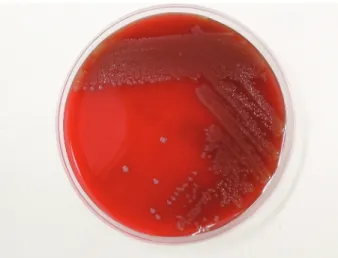
tion in the BacT/Alert 3D system (bioMérieux Inc; Durham, NC, USA). CSF samples cultured in the thioglycollate broth also grew the same organisms (Fig. 2). Subinoculation on sheep blood agar plates was performed for both the CSF and blood cultures. After 24 hr of incubation at 35˚C in the pres- ence of 5% CO2, we observed small gray-white colonies that showed catalase negativity, optochin resistance, and α-he- molytic activity. After prolonged incubation for 48 hr, large colonies were visible and the α-hemolysis was more pro- nounced (Fig. 3). This organism was identified as S. suis bio- type II using the Vitek 2 Gram-Positive Identification (GPI) card (probability, 99.0%; which represents excellent identifi- cation [ID]); (bioMérieux; Marcy-l’Etoile, France) and the API 20 STREP (profile code 4771473, % ID 99.7%, T index
A B
Fig. 1. Brain MRIs. T1 weighted gadolinium enhanced axial (A) and coronal (B) images reveal diffuse leptomeningeal enhancement in both cerebral hemispheres.
Fig. 2. Gram stain of Streptococcus suis of cerebrospinal fluid showed Gram
positive diplococci under a light microscope (×1,000). Fig. 3. Gray-whitish, α-hemolytic colonies of Streptococcus suis on sheep blood agar plate at 35˚C in the presence of 5% CO2 after 24 hr incubation.
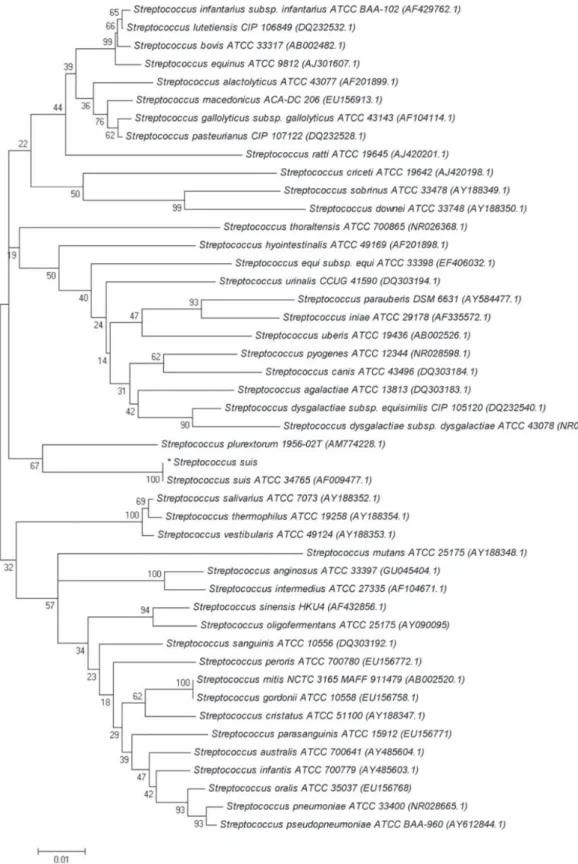
Fig. 4. Molecular phylogenetic tree constructed by neighbor-joining method using the 16s rRNA (A) and tuf gene (B) sequences of our S. suis isolate and various Streptococcus species. Reference sequences were from the type strains of the species and accession numbers are given in parentheses. All names and accession numbers are given as cited in the GenBank database. (Continued to the next page) A
0.73; bioMérieux).
We performed 16S rRNA gene sequencing for the CSF isolate. The 16S rRNA gene fragments were amplified by standard methods according to CLSI guidelines [6]. Two subregions of the 16S rRNA gene were amplified using the following primer pairs: forward, 4F: 5´-TTG GAG AGT TTG ATC CTG GCT C-3´ and reverse, 534R: 5´-TAC CGC GGC TGC TGG CAC-3´ and forward, 27F: 5´-AGA GTT
TGA TCM TGG CTC AG-3´ and reverse, 801R: 5´-GGC GTG GAC TTC CAG GGT ATC T-3´. The tuf gene frag- ments were amplified with the forward (55C-F: 5´-GCC AGT TGA GGA CGT ATT CT-3´) and reverse (55C-R: 5´- CCA TTT CAG TAC CTT CTG GTA A-3´) primers. Puri- fied PCR products were sequenced directly by using the BigDye Terminator Cycle Sequencing Kit 3.1 (Applied Bio- systems; Foster City, CA, USA) on an ABI Prism 3100 ge- Fig. 4. (Continued from the previous page) Molecular phylogenetic tree constructed by neighbor-joining method using the 16s rRNA (A) and tuf gene (B) sequences of our S. suis isolate and various Streptococcus species. Reference sequences were from the type strains of the species and accession numbers are given in parenthe- ses. All names and accession numbers are given as cited in the GenBank database.
B
netic analyzer (Applied Biosystems). A GenBank BLAST (The Basic Local Alignment Search Tool) search revealed that 16S rRNA gene and tuf gene sequences of the isolate show 100% (664/664 bp) and 99% (407/409 bp) homology with the corresponding sequences of a previously sequenc- ed S. suis strain, respectively (GenBank accession number, CP000837.1). For further phylogenetic analysis, the CSF isolate 16S rRNA and tuf gene sequences were aligned using ClustalW [7]. Phylogenetic trees (Fig. 4) were constructed using the neighbor-joining method by using the MEGA 5 software package (http://www.megasoftware.net) and Kim- ura two parameters as the substitution model [8-10]. The statistical significance of the phylogenies was assessed by bootstrap analysis with 1,000 pseudoreplicate datasets. The tree is drawn to scale, with branch lengths in the same units as those of the evolutionary distances used to infer the phy- logenetic tree.
Antibiotic susceptibility tests were performed using the MicroScan MICroSTREP plus panel (Dade Behring; West Sacramento, CA, USA). The CSF isolate was susceptible to all the antimicrobial agents tested (penicillin, ampicillin, ce- fotaxime, ceftriaxone, cefepime, meropenem, vancomycin, and chloramphenicol). On the basis of the results of suscep- tibility test, the patient’s antibiotic therapy was changed to intravenous penicillin G (24 million units over 24 hr).
Although the patient’s headache gradually improved, he experienced continued dizziness, bilateral hearing loss, and showed symptoms of vestibular dysfunction. On day 16 at the hospital, an MRI of the internal auditory canal revealed abnormal enhancement of the vestibular cochlea on both sides, which was suggestive of bilateral labyrinthitis. On day 22 at the hospital, the patient was discharged and referred to a local hospital close to his home. Because the patient re- quested outpatient treatment, the parenteral antibiotic ther- apy was modified to once-daily dose of ceftriaxone (2 g ev- ery 24 hr), as an alternative to 6 times-a-day administration of penicillin G.
After completing a 4-week course of parenteral antibiotic therapy, the patient continued to experience dizziness, hear- ing difficulty, and headache during the 5-week follow-up. It was subsequently determined that the patient had sustained a hand abrasion a week before disease presentation and con- tinued to handle pig carcasses at work without any protec- tion, such as wearing gloves.
DISCUSSION
S. suis is a gram-positive facultative anaerobe, which is coccoid or ovoid in shape and occurs as single cells, in pairs,
or in short chains. On the basis of the capsular polysaccha- rides, 35 serotypes of S. suis have been identified. Although the serotype was not identified in this case, serotype 2 is most commonly associated with diseases in pigs and human beings and is the most frequently reported serotype world- wide [1, 11, 12]. Most S. suis strains produce narrow zones of α-hemolysis on sheep blood agar plates. S. suis serotype 2 colonies show α- and β-hemolysis on sheep and horse blood agar plates, respectively [13]. Because the growth of S. suis on sheep blood agar plates is commonly used to identify the species in routine diagnostic laboratories, this species may be mistaken for viridans streptococci. Although bacterio- logical diagnosis was made using commercial identification systems in this case, S. suis infections are often misidentified, or may remain undiagnosed [2]. S. suis is commonly mis- identified and reported as Streptococcus species, α-hemolytic or viridans streptococci, Enterococcus faecalis, Aerococcus viridans, or even Streptococcus pneumoniae [2, 14]. An S.
suis infection should be considered in regions with pig- farming industries or in patients who are in contact with pigs or raw pork, if optochin-resistant Streptococcus are cul- tured from a CSF sample obtained from a patient with men- ingitis. Further microbiological investigations are required for the identification of α-hemolytic streptococci other than S. pneumoniae.
Molecular techniques with PCR have improved the rate of detection of S. suis. The 16S RNA gene sequencing tech- nique is a useful and definitive method for most Streptococ- cus spp. For certain genera or groups of microorganisms, the use of alternative gene targets such as the tuf gene is necessary, because some species may share 99% to 100%
16S rRNA sequence identity [6]. Thus, 16S rRNA and tuf gene sequencing were performed in this case. In phyloge- netic analysis, the CSF isolate presented here was homolo- gous with S. suis type strains based on 16S rRNA (GenBank accession number, AF009477.1) and tuf gene sequencing (AF274744.1), respectively (Fig. 4). Serotype-specific PCR assays and serological tests can be useful tools for the iden- tification of S. suis serotypes [1, 15, 16]. Some commercial biochemical identification systems also report the biotype of S. suis (biotype I or II) [2]. Wertheim et al. suggested that the S. suis biotype should not be mistaken for serotype 1 or 2, as was done in some previous reports [2, 17, 18].
S. suis infections have been reported worldwide. How- ever, the majority of human cases have occurred in Asia (China, Thailand, Vietnam, and Japan) [1, 2, 19]. S. suis in- fections in humans rarely occur in Korea. To date, only one S. suis infection in humans has been reported in Korea [20].
However, the possibility of undiagnosed S. suis infections
cannot be excluded. Although most reports of S. suis infec- tions are sporadic cases, outbreaks of human S. suis infec- tions are infrequently reported. Of note, the 2005 outbreak that occurred in Sichuan Province, China, involved 215 cases and caused 38 deaths, emphasizing the importance of S. suis as an emerging zoonosis [21].
S. suis infections in humans are most often reported from countries where pig rearing is common, and the people who are in daily contact with pigs are usually affected. The rela- tively high mean-patient age, the almost complete absence of children in the case series, and the high male-to-female patient ratio support the notion that S. suis infection is prin- cipally an occupational disease [2, 4, 21-23]. In our case, the patient was exposed to S. suis through infected tissues of pig carcasses, which were handled without proper protection, such as gloves. Besides occupational exposure, processing or consuming uncooked or partially cooked pork products is also a risk factor for infection [2, 22-24]. Patients are gen- erally healthy prior to infection with S. suis, although pre- disposing factors, such as diabetes mellitus, alcoholism, and malignancy have been reported [25].
S. suis infection is typically manifested as meningitis. One remarkable symptom of S. suis meningitis is sensorineural hearing loss, which may be reported by up to half of the pa- tients either at presentation or a few days later. This hearing loss is often bilateral, profound, and permanent [3, 22]. De- afness with or without vestibular dysfunction is thought to be attributed to direct infection of the cochlea. S. suis is be- lieved to enter the perilymph via the cochlear aqueduct through the lytic action of exotoxins [3]. Patients with S.
suis meningitis may also show permanent incapacitation by vertigo and gait instability because of vestibular dysfunc- tion. Such patients should immediately receive vestibular rehabilitation to improve their independence in daily activi- ties [3, 26].
Analogous to protocols for any case of with suspected bacterial meningitis, immediate antibiotic administration is the first step in the treatment of bacterial meningitis. For empirical treatment, ceftriaxone with vancomycin (the same treatment dose and duration that is used for pneumococcal meningitis) is a good choice until the diagnosis is confirm- ed. S. suis is sensitive to many antibiotics [1, 2]. Thus, once S.
suis is verified as an infectious agent, antibiotic treatment accompanied with other associated treatments is very effec- tive. After the confirmation of the presence of an S. suis in- fection, patients are generally treated with penicillin G, ac- companied by one or more other antibiotics including cef- triaxone, gentamicin, chloramphenicol, and ampicillin.
Penicillin G (24 million units over 24 hr for at least 10 days)
or ceftriaxone (2 g every 12 hr for at least 10 days) has been used successfully for the treatment of S. suis meningitis. Re- lapse of S. suis meningitis has been reported after 2 weeks of treatment with penicillin or ceftriaxone. However, the pa- tients responded to a prolonged antibiotic treatment for 4-6 weeks [1, 2, 23, 27]. The use of dexamethasone as an adjun- ctive treatment to reduce mortality and improve the out- come of bacterial meningitis remains controversial [28].
Quick diagnosis and early antibiotic treatment are the most important factors in decreasing the damage caused by S.
suis infection. Therefore, in patients presenting with menin- gitis, if characteristic features such as prominent and early hearing loss are observed, S. suis should be considered re- gardless of the patient’s occupational background.
Currently, there is no human S. suis vaccine. Therefore, prevention of transmission to humans depends on the con- trol of spread of S. suis from infected pigs. Improvement of pig-raising conditions and pig vaccination are both effective methods to reduce the risk of human infection. Further- more, increasing awareness of the disease by educating high-risk populations is also expected to help avoid human infection. Individuals with open wounds should wear gloves when handling raw or uncooked pork, and anyone who prepares pork should wash his or her hands and clean all the utensils thoroughly after contact [1, 29].
To the best of our knowledge, this is the first report of S.
suis meningitis in humans in Korea. This case should re- mind clinicians that S. suis meningitis affects people who are in daily contact with pigs. During diagnosis, S. suis in- fection should not be confused with infections caused by other Streptococcus species. Prevention through public he- alth surveillance is needed, and people with occupational exposures to swine and/or pork products should be edu- cated. Increased awareness among both clinicians and mi- crobiologists is required to fully appreciate the importance of S. suis infection as an emerging zoonosis and to promote early diagnosis and prevention of sequelae.
Authors’ Disclosures of Potential Conflicts of Interest No potential conflict of interest relevant to this article was reported.
REFERENCES
1. Lun ZR, Wang QP, Chen XG, Li AX, Zhu XQ. Streptococcus suis:
an emerging zoonotic pathogen. Lancet Infect Dis 2007;7:201-9.
2. Wertheim HF, Nghia HD, Taylor W, Schultsz C. Streptococcus suis:
an emerging human pathogen. Clin Infect Dis 2009;48:617-25.
3. Tan JH, Yeh BI, Seet CS. Deafness due to haemorrhagic labyrinthi-
pore Med J 2010;51:e30-3.
4. Wangkaew S, Chaiwarith R, Tharavichitkul P, Supparatpinyo K.
Streptococcus suis infection: a series of 41 cases from Chiang Mai University Hospital. J Infect 2006;52:455-60.
5. Perch B, Kristjansen P, Skadhauge K. Group R streptococci patho- genic for man. Two cases of meningitis and one fatal case of sepsis.
Acta Pathol Microbiol Scand 1968;74:69-76.
6. Clinical and Laboratory Standards Institute. Interpretive criteria for identification of bacteria and fungi by DNA target sequencing;
approved guideline. Document MM18-A. Wayne, PA: Clinical and Laboratory Standards Institute; 2008.
7. Aiyar A. The use of CLUSTAL W and CLUSTAL X for multiple sequence alignment. Methods Mol Biol 2000;132:221-41.
8. Saitou N and Nei M. The neighbor-joining method: a new method for reconstructing phylogenetic trees. Mol Biol Evol 1987;4:406- 9. Kimura M. A simple method for estimating evolutionary rates of 25.
base substitutions through comparative studies of nucleotide se- quences. J Mol Evol 1980;16:111-20.
10. Tamura K, Dudley J, Nei M, Kumar S. MEGA4: Molecular Evolu- tionary Genetics Analysis (MEGA) software version 4.0. Mol Biol Evol 2007;24:1596-9.
11. Gottschalk M and Segura M. The pathogenesis of the meningitis caused by Streptococcus suis: the unresolved questions. Vet Micro- biol 2000;76:259-72.
12. Facklam R. What happened to the streptococci: overview of taxo- nomic and nomenclature changes. Clin Microbiol Rev 2002;15:
613-30.
13. Heidt MC, Mohamed W, Hain T, Vogt PR, Chakraborty T, Do- mann E. Human infective endocarditis caused by Streptococcus suis serotype 2. J Clin Microbiol 2005;43:4898-901.
14. Donsakul K, Dejthevaporn C, Witoonpanich R. Streptococcus suis infection: clinical features and diagnostic pitfalls. Southeast Asian J Trop Med Public Health 2003;34:154-8.
15. Wisselink HJ, Joosten JJ, Smith HE. Multiplex PCR assays for si- multaneous detection of six major serotypes and two virulence- associated phenotypes of Streptococcus suis in tonsillar specimens from pigs. J Clin Microbiol 2002;40:2922-9.
16. Smith HE, Veenbergen V, van der Velde J, Damman M, Wisselink
and 9: development of rapid serotype-specific PCR assays. J Clin Microbiol 1999;37:3146-52.
17. Lee GT, Chiu CY, Haller BL, Denn PM, Hall CS, Gerberding JL.
Streptococcus suis meningitis, United States. Emerg Infect Dis 2008;
14:183-5.
18. Kopić J, Paradzik MT, Pandak N. Streptococcus suis infection as a cause of severe illness: 2 cases from Croatia. Scand J Infect Dis 2002;34:683-4.
19. Willenburg KS, Sentochnik DE, Zadoks RN. Human Streptococcus suis meningitis in the United States. N Engl J Med 2006;354:1325.
20. Kim H, Lee SH, Moon HW, Kim JY, Hur M, Yun YM. Streptococ- cus suis Causes Septic Arthritis and Bacteremia: Phenotypic Char- acterization and Molecular Confirmation. Korean J Lab Med 2011;31:115-7.
21. Yu H, Jing H, Chen Z, Zheng H, Zhu X, Wang H, et al. Human Streptococcus suis outbreak, Sichuan, China. Emerg Infect Dis 2006;12:914-20.
22. Kay R, Cheng AF, Tse CY. Streptococcus suis infection in Hong Kong. QJM 1995;88:39-47.
23. Mai NT, Hoa NT, Nga TV, Linh le D, Chau TT, Sinh DX, et al. Str- eptococcus suis meningitis in adults in Vietnam. Clin Infect Dis 2008;46:659-67.
24. Ma E, Chung PH, So T, Wong L, Choi KM, Cheung DT, et al.
Streptococcus suis infection in Hong Kong: an emerging infectious disease? Epidemiol Infect 2008;136:1691-7.
25. Huang YT, Teng LJ, Ho SW, Hsueh PR. Streptococcus suis infec- tion. J Microbiol Immunol Infect 2005;38:306-13.
26. Strupp M, Arbusow V, Maag KP, Gall C, Brandt T. Vestibular exer- cises improve central vestibulospinal compensation after vestibu- lar neuritis. Neurology 1998;51:838-44.
27. Halaby T, Hoitsma E, Hupperts R, Spanjaard L, Luirink M, Jacobs J.
Streptococcus suis meningitis, a poacher’s risk. Eur J Clin Microbiol Infect Dis 2000;19:943-5.
28. Greenwood BM. Corticosteroids for acute bacterial meningitis. N Engl J Med 2007;357:2507-9.
29. Durand F, Perino CL, Recule C, Brion JP, Kobish M, Guerber F, et al. Bacteriological diagnosis of Streptococcus suis meningitis. Eur J Clin Microbiol Infect Dis 2001;20:519-21.