INTRODUCTION
Recently, obesity becomes major health problem due
to the present situation like rapid growth of economy, westernized diet and lack of physical activity affect in- crease of obesity rate.
Obesity makes people daunted psychologically and so-
Effects of the Weight Management Program Based Self-Efficacy for Body Composition,
Blood Lipid Profile, Weight Self-Efficacy Lifestyles, Depression in
Middle-Aged Obese Women
Nam Hee Park, PhD, RN1, Hye Gyung An, PhD, RN2
Purpose. This study was done to determine the effects of weight management program using self-efficacy in middle-aged obese women. The study also attempted to measure the effects of the program on the weight efficacy lifestyle, body composition, and depression.
Method. The research design of this study was a nonequivalent control group pretest-posttest design. The exper- imental group consisted of 21 middle-aged obese women and another 21 middle-aged obese women in the control group. The women in the experimental group participated in the weight management program for 12 weeks using self-efficacy. The weight management program using self-efficacy included education on effects of exercise for weight control, aerobic exercise program, muscle training and counseling through the telephone.
Results. After 12 weeks of participation in the program, BMI (p <.0001), body fat % (p <.0001), abdominal fat (p <.0001), in the experimental group were significantly decreased compared to the control group. Weight self-efficacy lifestyle (p <.0001) and depression (p =.006) in the experimental group were significantly improved after the program compared to the control group. According to these findings, weight manage- ment program self-efficacy for middle-aged obese women could increase weight efficacy lifestyle, and decrease depression, BMI, body fat, and abdominal fat.
Conclusion. The result also suggested that the increasing weight efficacy and lifestyle help the obese women to perform and continue exercise. This program could be used in the community such as public health center for weight care and mental health promotion of middle-aged obese women.
Key Words : Self-Efficacy, Weight Management, Obese Women
1. Full time lecturer, Department of Nursing, College of Medicine, Inje University 2. Associate professor, Department of Nursing, Choonhae College
This research was supported by the 2005 Inje University Research Grant
Corresponding author: Nam Hee Park, PhD, RN, Department of Nursing, Inje University 633-165, Gaegeum-dong, Busanjin-gu, Busan 614-735, Korea.
Tel: 82-51-890-6832 Fax: 82-51-896-9840 E-mail: [email protected] Received February 13, 2006 ; Accepted November 14, 2006
cially by causing depression, restlessness, chronic dis- eases (e.g. hypertension, arteriosclerosis, diabetes, hy- perlipidenia etc) so that it might bring about many social problems (Clinical Obestiy, 2001).
According to “a people health nutrition research result report” (Ministry of Health and Welfare, 2003), if obesi- ty is defined by BMI 25≥Kg/m2, rate of obesity people per population of specific area (women: 29.4%, men:
32.4%) in 2001, Korea has been on the remarkable in- crease than the past. It has been previously reported that the increase of obesity among middle-aged women has become a hygienical problem that requires a nationwide attention (Moon, 2003). As obesity rate increases, so economical and social expense which its society has to pay increase (Youn, 2004).
Especially middle-aged women in Korea who have many potential health problems including obesity, do- mestic duties for women make them to set the level of self-health care lower, so that they lost the opportunity to prevent potential health problems (Kim, 2002). Middle- aged women have high neutral fat in serum, high choles- terol and high LDL density, but low HDL density (Kissebath & Krakower, 1994), so that it leads negative bad effect on physical and mental health by outbreaking hyperlipidemia and hypertension (Skelton & Skelton, 1992), causing depression (Linde et al., 2004).
Depressive symptoms have been negatively associated with healthy obese women (Roberts, Kaplan, Shema, &
Strawbrige, 2000).
Considering middle-aged women’s roles for taking care of family-nursing, their health condition is very impor- tant for society. Moreover, insufficient adaptation of health in time of women’s life would have influence on their health in the future (Lee & Choi, 1999). Especially obesity of middle-aged women, who have high risk of adult health problems, is involved in the prevalence.
Therefore the care of obesity at this time is more impor- tant than any other time and obesity is the most impor- tant factor causing serious heath problems to middle- aged women.
Many products and programs for weight adjustment have been used by people including obesity patients.
However, it is proved that most of them are not only costly and ineffective but also carry a side effect on those who try to lose weight in such a short period of time using wrong method (Jung, 1998). And repeated failing to lose weight cause severe weight change and heath problems in both mind and body (Goodrick &
Foreyt, 1991).
It was reported that correction of daily habit (e.g. diet and exercise) is effective to solve obesity problem (O’Neil, 2001). But the latest report tells that successful weight control or self-efficacy in obesity-management is more important prospect factor (Clark, Cargill, Medeiros, & Pera, 1996; Fontaine & Cheskin, 1997;
Roach et al., 2003; Matin, Dutton, & Brantly, 2004).
Synthesizing these results from previous studies, self- consciousness about unhealthy eating habit and behav- ior in obesity, cultivation of confidence and advisable weight control by usual exercise are important for solv- ing the obesity problem and are expected to reduce de- pression in obese-women at the same time.
Moreover, searching through precious studies on obe- sity in Korea, it was found that exercise treatment, be- havior control treatment (Kim, 2002), aroma therapy massage treatment for abdominal obesity (Han, Yang, &
Kim, 2003) and walking exercise program (Kim et al., 2004) were applied to middle-aged obese-women.
However, there are few studies about weight care pro- gram using self-efficacy for middle-aged obese-women.
Therefore, this study was conducted to provide base- line data, nursing intervention for obesity care and im- proving health-keeping through presentation of weight management program which use self-efficacy for obesity care, analysis of the body composition, physiological function, self-efficacy about weight control and depres- sion of obese-women.
The purpose of this study was to verify the effects of program on obese-women’s body composition, blood lipid profiles, weight self-efficacy lifestyles, depression by developing and adjusting the weight management program using self-efficacy.
METHOD
1. Research design
The nonequivalent control group pretest-posttest de- sign was used to verify the effects of the 12-week weight management program using self-efficacy, on body com- position, physiological function, and self-efficacy about weight control and depression
2. Sample
Participants for this study, based on the effect size of 0.8-3.58 in Kim’s study (2002) for t-test with alpha lev- el 0.05, and power 80-90% (Erdfelder, Faul, &
Buchner, 1996) by using G*power, were 21-28 for each group. Also as researchers considered the drop-out rate, persons who are BMI≥ 25 and have not participated in any other obesity care program among women who agreed to the purpose and to participate in this program in N public health center in P city, were selected. The women were assigned conveniently to the control (n = 25) or treatment group (n = 25). At the end, only 42 of them were used for final analysis; 21 in experimental group, 21 in control group.
3. Weight management using self-efficacy program Contents of this weight management program using self-efficacy consist of exercise, diet, and correction of lifestyles etc. Exercises, consisting of both aerobic exer- cise and weight training, was composed by athletics pro- fessor’s advices, and was conducted twice a week by ex- ercise prescription considering each individual’s physical capability. The type of exercise and its intensity has been prescribed by an athletics professor for 12 weeks.
Educational session on obesity was held before the program in lecture form by the researcher.
Individualized exercise considering their physical strength was performed with a master of athletics pre- scription.
In educational session on diet, dietician made diet pre- scription about setting balanced regular eating habit by explanation about unhealthy diet habit and keeping dai- ly diet log for nutritionally balanced diet.
Phone consultation about exercise, diet, and weight control was carried out twice a week. Counseling has been carried out semiweekly by the researcher over the phone, on the areas of exercise and diet program.
Exercise prescription, diet education and phone consulta- tion etc. were based on self-efficacy theory. In other words, achievement experience and proxy experience were achieved by the linguistic persuasion and the emotional awakening through group education on obesity care, durable exercise encouragement and phone consultation.
Self-efficacy strategy for durable program’s practice was carried out by checking heart rate during exercise at home, consultation on effect, method, and obstacles and affirmative feedback form praise for the results for 12 weeks.
4. Measurement 1) Body composition
BMI, Body Fat %, Abdominal fat was measured by
Body Composition Analyzer (Inbody 3.0, Biospace Co., Korea) using impedance rule.
2) Blood lipid profile
Blood lipid was acquired from 5 ml after blood sam- pling 12-hour fasting. And in 20 minutes, the blood was centrifuged by 3000rpm for 15 minutes to separate up- per serum and separated serum was kept cold. After blood-sampling, all cholesterol density, neutrality fat, HDL-Cholesterol, and LDL-Cholesterol density were measured in 12 hours.
3) Weight self-efficacy lifestyles
Weight control self-efficacy was assessed by using the 20-item Weight Efficacy Life-style questionnaire (WEL), a measure reported reliable and valid in obese popula- tion (Clark, et al., 1991; Fontaine & Cheskin. 1997;
Martin, Dutton & Brantley, 2004), which was translated to Korean and back-translated.
The WEL includes 20 items that the respondents could rate their confidence to resist eating in certain situations.
Respondents rated their confidence on a 10-point Likert scale ranging from 0(not confident) to 9(very confident).
The WEL yields five subscale scores and a global WEL score, which is the sum of the subscales. Each subscale is comprised of four items, and the subscales include situa- tions related to negative emotions, availability, social pres- sure, physical discomfort, and positive activities. External validity of the WEL has been supported since changes in WEL scores have been observed during obesity treatment (Clark et al., 1991). The WEL provides a total weight self- efficacy score based on the sum of scores from the items (total range = 0-180). Higher scores indicate greater self- efficacy. Internal consistency of the five subscales has ranged from 0.70 to 0.90 (Clark, et al., 1991). The WEL demonstrated good internal consistency reliability in this sample (Cronbach’s coefficient 0.77-0.93).
4) Depression
The level of depression was measured by using the 20- item Center for Epidemiologic Studies Depression scale (CES-D; Radloff, 1977). CES-D consists of four dimen- sions; depressive affect, positive affect, somatic symp- toms, and interpersonal relationships. Subjects were asked how often they experienced each symptom in past month and the scale items were; rarely (0), some of the time (1), occasionally (2), or most of the time (3).
Responses were summed with items that measured posi-
tive, and the affected reverses were scored before sum- ming. Scores range from 0 to 60 and the higher the score, the higher the occurrence of depressive symp- toms. Respondents with scores of 16 or higher were con- sidered as probable cases of depression (Radloff, 1977).
Cronbach’s alpha was 0. 86 in the study by Kim & Shin (2004) and was 0.79 in this study, respectively.
5. Statistical analysis
Data were analyzed by using SPSS/WIN 10.0. Chi- square test, T-test and Fisher’s exact test were used to
determine homogeneity of general characteristics, out- comes characteristics between the experimental group and the control group. Independent t-test and ANOVA were used to compare group differences on study out- comes at the pre-test and post-test measures.
RESULTS
General characteristics and outcomes characteristics of the subjects
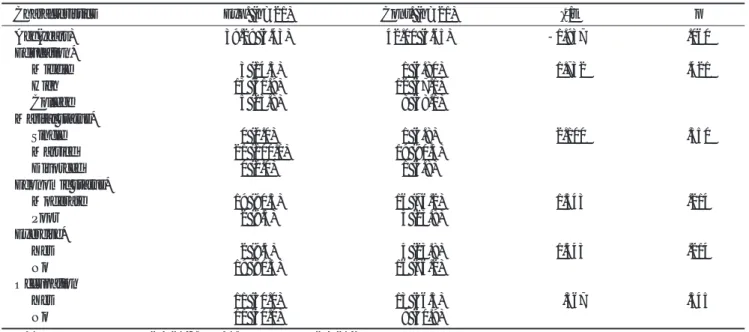
The characteristics of the experimental and the control
Table 2. Outcomes Characteristics
Characteristics Exp. (n=21) Cont. (n=21) t p
BMI 27.36 (2.39) 28.02 (3.94) -1.003 .268
Body fat (%) 031.76 (4.184) 31.27 (4.20) .379 .707
Abdominal fat (%) 00.89 (0.04) 00.89 (0.04) -.079 .937
TC (mg/dl) 188.19 (43.08) 209.19 (34.66) -1.740 .089
TG (mg/dl) 092.52 (47.63) 112.05 (49.78) -1.299 .202
HDL (mg/dl) 045.00 (17.44) 057.52 (26.65) -1.802 .079
LDL (mg/dl) 049.57 (26.64) 070.48 (44.41) -1.850 .072
Total WEL 086.62 (17.15) 092.71 (19.30) -1.082 .286
Availability 23.19 (5.62) 19.81 (5.37) 1.993 .053
Negative emotions 14.29 (4.62) 17.00 (5.47) -1.738 .090
Social pressure 16.14 (5.26) 17.38 (4.71) -.804 .426
Physical discomfort 20.52 (5.96) 19.81 (5.17) .415 .681
Positive activities 17.52 (4.38) 19.57 (5.19) -1.382 .175
Depression 18.24 (5.28) 18.00 (6.92) .129 .898
Exp. : Experimental group, Cont. : Control group
TC : total cholesterol, TG : triglyceride, HDL : high density lipoprotein, LDL: low density lipoprotein WEL (Weight Efficacy Lifestyle), Values are mean (SD)
Table 1. General Characteristics
Characteristics Exp. (n=21) Cont. (n=21) χ2/t p
Age(years) 39.29 (4.43) 42.00 (4.65) -1.937 .060
Education*
Middle 03 (14.3) 01 (4.80) 1.732 .421
High 13 (61.9) 12 (57.1)
College 05 (23.8) 08 (38.1)
Marital status*
Single 0 (0.0) 1 (4.8) 2.100 .350
Married 021 (100.0) 19 (90.5)
Divorced 0 (0.0) 1 (4.8)
Economic status*
Moderate 19 (90.5) 16 (76.2) 1.543 .214
Poor 2 (9.5) 05 (23.8)
Exercise*
Yes 2 (9.5) 05 (23.8) 1.543 .214
No 19 (90.5) 16 (76.2)
Occupation
Yes 11 (50.0) 13 (56.5) .367 .545
No 11 (50.0) 09 (40.9)
Exp. : Experimental group (n=21), Cont. : Control group (n=21).
Values are mean (SD) or N (%). * Fisher’s exact test
group are shown in Table 1. The mean age was 39.29 years in the experimental group and 42.00 years in the control group. The mean Weight Efficacy Lifestyle was 86.62 scores in the experimental group and 92.71 scores in the control group. The mean depression was 18.24 scores in the experimental group and 18.00 scores in the control group. There was no significant difference in be- tween two groups general characteristics or outcomes at pre-test (Table 1) (Table 2).
Effects on body composition
The BMI score of the experiment group and the con- trol after intervention was 25.04 and 28.91, respectively.
There was a decrease in BMI score in the experimental group after intervention, and in the control group there was 0.89 point increase. In addition, significant differ- ences were observed between the two group (p <.0001).
The Body fat scores of the experiment group and the control after intervention was 28.88 and 31.54, respec- tively. There was a decrease after intervention in the ex- perimental group, but in the control group there was .27 point increase (p <.0001). The abdominal fat scores of the experiment group and the control after intervention was .86 and .89 respectively. There was a decrease after intervention in the experimental group, but in the con-
trol group there was no change. In addition, significant differences were observed between the two groups (p
<.0001) (Table 3).
Effects on blood lipid profile
The blood lipid profile score of the experimental group was lower than the control group after intervention, but this difference was not statistically significant (p =.429, p
=.383, p =.390, p =.147) (Table 4).
Effects on weight self-efficacy lifestyles
The total weight self-efficacy lifestyles score of the ex- periment group and the control group after intervention was 143.76 and 89.33, respectively. While there was an increase after intervention in the experimental group, there was 4.24 point decrease in the control group. In addition, significant differences were observed between the two group (p <.0001). In subscales, there were statis- tically significant increases in the experiment group in the subscales of availability and negatives emotions and social pressure and physical discomfort, positive activi- ties (Table 5).
Effects and depression
The depression score of the experimental group and
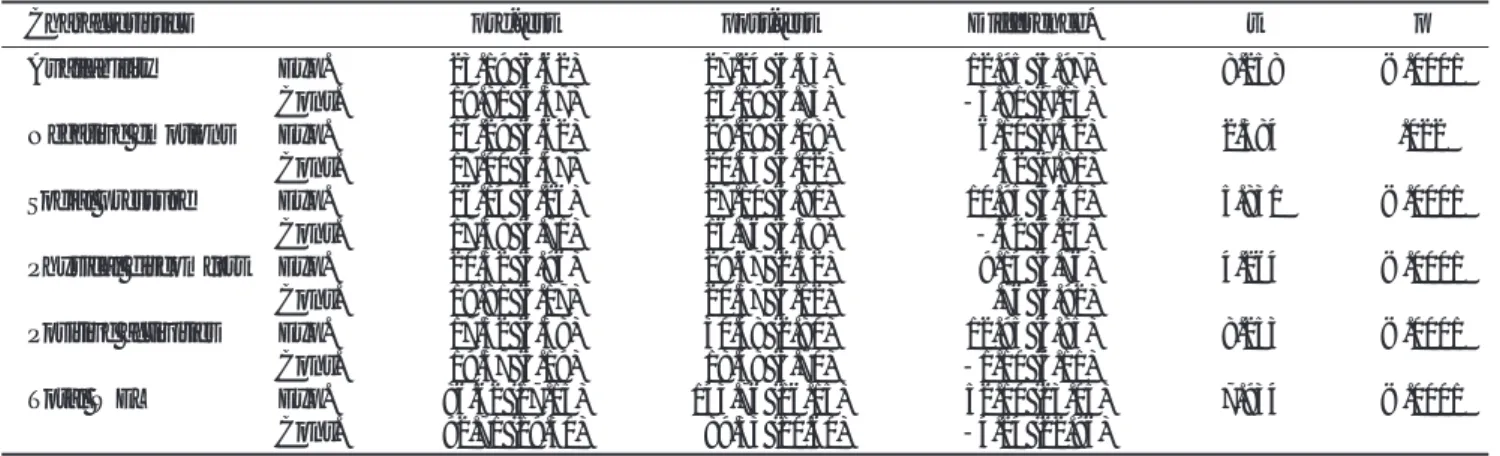
Table 3. Comparison of Body Composition between the Experimental and Control Group
Characteristics pre-test post-test Difference* t p
BMI Exp. 27.36 (2.39) 25.04 (2.59) -2.32 (1.11) -3.026 <.0001
Cont. 28.02 (4.20) 28.91 (4.97) -.89 (0.68)
Body fat(%) Exp. 31.76 (4.18) 28.88 (3.74) -2.89 (1.76) -6.184 <.0001
Cont. 31.27 (4.20) 31.54 (4.60) .27 (1.53)
Abdominal Exp. 00.89 (0.04) 00.86 (0.03) -0.03 (0.04) -6.234 <.0001
fat(%) Cont. 00.89 (0.04) 00.89 (0.04) 0.00 (0.01)
Exp. : Experimental group (n=21), Cont. : Control group (n=21)
* Difference : post-test - pre-test.
Table 4. Comparison of Blood Lipid Profiles between the Experimental and Control Group
Characteristics pre-test post-test Difference* t p
TC (mg/dl) Exp. 188.19 (43.08) 180.90 (22.29) -7.29 (30.69) -.799 .429
Cont. 209.19 (34.66) 209.38 (38.50) .19 (29.99)
TG (mg/dl) Exp. 092.52 (47.63) 084.95 (21.55) -7.57 (30.43) -.882 .383
Cont. 112.05 (49.78) 115.05 (62.33) 3.00 (45.73)
HD (mg/dl) Exp. 045.00 (17.44) 043.14 0(9.84) -1.86 (11.53) .869 .390
Cont. 057.52 (26.65) 049.95 (14.92) -7.57 (27.85)
LDL (mg/dl) Exp. 049.57 (26.64) 044.57 (10.73) -5.00 (18.92) 1.478 .147
Cont. 070.48 (44.41) 050.81 (24.95) -19.66 (41.36)
Exp. : Experimental group (n=21), Cont. : Control group (n=21)
TC : total cholesterol, TG : triglyceride, HDL : High density lipoprotein, LDL: low density lipoprotein. Values are mean (SD)
* Difference : post-test - pre-test.
the control group after intervention was 13.56 and 20.19, respectively. There was a 4.39 point decrease af- ter intervention in the experimental group, but in the control group, there was 2.19 point increase. In addition, significant differences were observed between the two group (p =.006) (Table 6).
DISSCUSION
This study was to identify the effects of weight man- agement program using self-efficacy, on body composi- tion, blood lipid profile, weight self-efficacy lifestyles and depression. So now we discuss about the result.
This study is different from previous research(Jung, 1998, Jung, & Kim, 2003) in using of various strategies such as the diet control of obese women, the combina- tion of aerobic exercise and weight training, and the self- efficacy’s cultivation for continuous changing of behav- ior.
Experimental group showed decrease of 2.32 in BMI change, 2.89 in body fat, and all of them are significant different from that of control group. Though it is difficult to compare this study with Jung & Kim (2003)’s study, which used both aerobic exercise and weight training
with middle-aged women and obtained significant loss in BMI and body fat rate after program, it is considered to be similar result because of using exercise program which makes change on body composition.
Change in abdominal fat rate in experimental group was 0.03, and its significant loss was bigger than control group. Program, which combining action-treatment and aerobic exercise for obese-women (Nam, 2004), gives glancing support for this result, decrease of abdominal obesity rate. This study will contribute to lead the posi- tive effects on abdominal obesity in middle-aged women.
Affirmative change in BMI, body fat rate and abdomi- nal fat rate in this program operated as getting more fat usage rate and more metabolism rate after exercise. In result, fat-cell of obese-women was smaller, and it oper- ated as diminishing fat rate. Also, strategies reinforcing self-efficacy gave good effects on continuing and practice of exercise.
In this study TG, TC, and HDL were less diminished after intervention. However, it had no statistical atten- tion, and LDL had no statistical attention either.
Cholesterol takes important role in organizing cells and synthesizing matters. Result of Jung & Kim (2003)’s Table 5. Comparison of Weight Efficacy Lifestyle (WEL) between the Experimental and Control Group
Characteristics pre-test post-test Difference* t p
Availability Exp. 23.19 (5.62) 27.24 (4.43) 12.95 (5.97) 8.258 <.0001
Cont. 19.81 (5.37) 13.19 (4.73) -3.81 (7.13)
Negative emotions Exp. 14.29 (4.62) 29.29 (5.08) 6.10 (7.32) 2.384 .022
Cont. 17.00 (5.47) 20.33 (5.02) .52 (7.81)
Social pressure Exp. 16.14 (5.26) 27.10 (4.81) 10.95 (6.61) 5.831 <.0001
Cont. 17.38 (4.71) 16.76 (3.38) -.62 (6.24)
Physical discomfort Exp. 20.52 (5.96) 29.67 (2.52) 9.14 (5.76) 4.264 <.0001
Cont. 19.81 (5.17) 20.57 (4.02) .76 (6.92)
Positive activities Exp. 17.52 (4.38) 30.48 (2.80) 12.95 (4.85) 8.253 <.0001
Cont. 19.57 (5.19) 18.48 (3.70) -1.10 (6.11)
Total WEL Exp. 86.62 (17.15) 143.76 (16.15) 52.10 (23.05) 7.934 <.0001
Cont. 92.71 (19.30) 089.33 (10.60) -4.24 (22.96)
Exp. : Experimental group (n=21), Cont. : Control group (n=21).
WEL : Weight Efficacy Lifestyle. Values are mean (SD)
* Difference : post-test - pre-test.
Table 6. Comparison of Depression between the Experimental and Control Group
Characteristics pre-test post-test Difference* t p
Depression Exp. 18.24 (5.28) 13.56 (4.73) -4.39 (7.34) 2.872 .006
Cont. 18.00 (6.92) 20.19 (4.83) 2.19 (7.50)
Exp. : Experimental group (n=21), Cont. : Control group (n=21).
Values are mean (SD)
* Difference : post-test - pre-test.
study about change of fat in the blood by aerobic exer- cise and weight training had no significant change in fat in blood, and Jung (1998)’s study about treatment of obesity for 12 weeks, had no significant statistical changes, though TC, TG, HDL, and LDL changed after the treatment. Thus, these two results from previous studies agree with result of this study.
We concluded that the reason for no change in fat in the blood was due to low exercise intensity and short pe- riod of exercising rather than the report from previous study by Hartung (1993) on HDL, reporting the positive result for body composition measurement needed 80%
more aerobic exercise for 6 months.
Therefore, improvement in obesity care program to re- duce fat in the blood requires continuous increase of in- tensity for long period.
After this weight management program using self-effi- cacy, perceived self-efficacy was statistically higher than before. Study of Linde et al.(2004, N=1632), which shows statistical increase of self-efficacy about weight control (p=0.02) after 6 month from part in program, supports this study. It also gives glancing support for the result that successful operation of the study needs more knowledge, preparation of exercise and self-efficacy feel- ing than other social support(Resnick, Orwing, Magaziner, & Wynne, 2002).
In this study, depression rate indicates significant di- minishing after intervention. Study of Linde, et al.
(2004), reported that depression rate in people is high when they have low self efficacy feeling and high weight.
Women claiming to have depression or lower self-effica- cy at baseline has less weight loss after 6 and 12 months.
Palinkas, Wingard, and Barrett-Connor (1996) found a relation between being overweight and depression.
Obese people also are less likely to exercise, and physi- cal activity reduces the risk of depression by increasing levels of endorphines, improved regulation of norepi- nephrine, improved fitness, and enhanced self-esteem (Ross & Hayes, 1988). Palinkas et al. (1996) noted that obesity also might be associated with depression through differential consumption of nutrients affecting depression, in particular, carbohydrates. Therefore, this study demonstrates that negative emotional states are highly prevalent among obese treatment seekers and predict well treatment outcomes. As clinical depression is a common exclusion criterion in weight management intervention trials, these findings raise the question of whether currently available obesity intervention ade-
quately address the needs of subset of obese individuals who manifest symptoms of depression or who are cur- rently taking medication for depression. Further research in this area may be warranted.
Synthesizing all the result, this weight care program has good effects on obese middle aged women who are sick in body and soul such as decrease of weight, body fat, abdominal rate, increase of self-confidence for weight control and solving the mental depression.
To conclude this study, weight management program could be more effective, if exercise, diet and various strategies for action-change are combined and operated multiple times. Especially, strategy using self-efficacy must include obesity care such as exercise and diet. Also, this program could be used for longer healthy life and for better quality of body, mentality and social for obese-women in public health center or in various local community centers.
CONCLUSION
This study was to examine the effects of weight man- agement program on body composition, physiological function, self-efficacy for weight control and depression in 42 obese middle aged women (21 in experimental group, 21 in control group) for 12 weeks from March 2005 to May 2005. In this program, exercise, diet, edu- cation for intensifying self-efficacy and telephone coun- seling were used. Nonequivalent control group pretest- posttest design was used to examine the effects.
Collected data were analyzed by SPSS WIN 10.0.
Typical characteristics of subjects were analyzed with ac- tual numbers and percentage. Chi-square test and t-test were used to analyze equivalent examine between two groups. T-test was used to compare body composition, physiological function, self-efficacy for weight control and depression, after the test between two groups.
1) After applying weight care program, statistically sig- nificant decrease was observed in BMI(p <.0001), body fat rate (p <.0001), and abdominal obesity rate (p
<.0001).
2) After applying weight care program, no difference was observed in cholesterol in serum (p =.429), neutral fat (p =.383), low-density lipoprotein (p =.390), high- density lipoprotein (p =.147).
3) After applying weight care program, statistically sig- nificant increase was observed in self-efficacy for weight
control (p <.0001).
4) After applying weight care program, statistically sig- nificant decrease was observed in depression (p =.006).
According to the results from this study, weight man- agement program using self-efficacy is very efficient in diminishing of BMI, body fat rate, abdominal obesity rate, depression, and increasing self-efficacy for weight control.
References
Clark, M. M., Abrams, D. B., Niaura, R .S., Eaton, C. A., & Rossi, J.
S. (1991). Self-efficacy in weight management. J Counseling &
Clinical Psychology, 59(5), 739-744.
Clark, M. M., Cargill, B. R., Medeiros, M. L., & Pera, V. (1996).
Changes in self-efficacy following obesity treatment. Obes Res, 4(2), 179-181.
Cliniclal Obestiy. (2001). Korean Society for the Study of Obesity.
Seoul: Korea Medical Book Publisher, pp. 113-173.
Cohen, J. (1988). Statistical power analysis for the behavioral sci- ences(Rev. ed.). Hillsdale, NJ: Lawrence Erlbaum Associates.
Erdfelder, E., Faul, F., & Buchner, A. (1996). G* Power [International MS-DOS version]. Retrived 2002, from http://www. psycho.uno- duesseldorf.de/aap/projects/gpower/
index.html.
Fontaine, K.R., & Cheskin, L. J. (1997). Self-efficacy, attendance, and weight loss in obesity treatment. Add Beha, 22(4), 567- 570.
Goodrick, G. K., & Foreyt, J. P. (1991). Why treatment for obesity don’t last. J Am Diet Assoc 91, 1243-1247.
Han, S. H., Yang, B. S., & Kim, H. J. (2003). Effectiveness of aro- matherapy massage on abdominal obesity among middle aged women. J Korean Acad Nurs, 33(6), 839-846.
Hartung, G. H. (1993). High density lipoprotein cholesterol and physical activity : An update. Sprots Med, 1981-1991.
Jung, S. L., & Kim, B. R. (2003). The effects of aerobic and muscu- lar combined exercises for 12 weeks on the physical strength, body composition, blood lipid profiles in the middle aged obese women. Korean J Physical Education, 42(3), 649-658.
Jung. J. S. (1998). The effect of exercise and diet combined with be- havior modification program on body composition, blood lipids level and aerobic capacity in obese middle-aged women.
Unpublished master’s Thesis, Hanyang University. Seoul.
Kim, C. S., Kang, S. Y., Nam, J. S., Cho, M.H., Park, J., Park, J. S., Nam, J. Y., Kim, D M., Yoon, S. J., Ahn, C. W., Cha, B. S., Lim, S. K., Kim, K. R., & Lee, H. C. (2004). The effect of walk- ing exercise program on BMI, percentage of body fat and mood state for women with obesity. Korean J Obesity Res, 13(2), 132-140.
Kim, I. H. (2002). The effects of exercise therapy and exercise-be- havior modification therapy on obesity, blood lipids, and self-
esteem of the obese middle-aged women. J Korean Acad Nurs, 32(6), 844-854.
Kim, J. S. , & Shin, K. R. (2004). A study on depression, stress, and social support in adult women. J Korean Acad Nurs, 34(2), 352-361.
Kissebath, A. H., & Krakower, G. R. (1994). Regional adiposity and morbidity. Physiol Rev, 74, 761-811.
Lee, K. E., & Choi, E. S. (1999). The depression in middle-aged women in kwangwondo. Korean J Women Health Nurs, 5(3), 299-312.
Linde, J. A., Jeffery, R.W., Levy, R. L., Sherwood, N. E., Utter, J., Pronk, N. P., & Boyle, R. G. (2004). Binge eating disorder, weight control self-efficacy, and depression in overweight men and women. Int J Obs Relat Metab Disord, 28(3), 418-425.
Martin, P. D., Dutton, G. R., & Brantley, P. J. (2004). Self-efficacy as a predictor of weight change in African-American women.
Obes Res,12(4), 646-651.
Ministry of Health and Welfare (2003). 2001 Result of public health nutrition survey. Seoul: Ministy on Health and welfare.
Moon, O. R. (2003). A study on particularity of obesity of Koreans and on obesity control plan. Seoul: Ministry of Health and Welfare.
Nam, C. U. (2004). The effect of aerobics exercises, behavior modi- fication treatment on the body composition, blood lipids, and leptin level in obese middle-aged women. Unpublished Doctoral Dissertation, Chonnam National University. Gwang ju. Korea.
O’Neil, P. M. (2001). Assessing dietary in management of obesity.
Obes Res, 9(5), 361-366.
Palinkas, L. A., Wingard, D. L., & Barrett-Connor, E. (1996).
Depressive symptoms in overweight and obese older adults : a test of the “jolly fat” hypothesis. J Psychosom Res, 40, 59-66.
Radloff, L. S. (1977). The CES-D scale : A self-report depression scale for research on the general population. Appl Psychol Meas, 1, 385-401.
Resnick, B., Orwig, D., Magaziner, J., & Wynne, C. (2002). The ef- fect of social support on exercise?behavior in older adults. Clin Nurs Res. 11(1), 52-70.
Roach, J. B., Yadrick, M. K., Johnson, J. T., Boudreaux, L. J., Forsythe, W. A., & Billon, W. (2003). Using self-efficacy to predict weight loss among young adults. J Am Diet Assoc, 103(10), 1357-1359.
Roberts, R. E., Kaplan, G. A., Shema, S. J., & Strawbridge, W. J.
(2000). Are the obese at greater risk for depression?. Am J of Epidol, 152(2), 163-170.
Ross, C. E., & Hayes, D. (1988). Exercise and psychological well- being in the community. Am J Epidemiol, 127, 762-771.
Skelton, N. K., & Skelton, W. P. (1992). Medical implication of obe- sity. postgrad med. 92, 151-152.
Youn, M. S. (2004). Effect of aerobic exercise training on body composition, cardiopulmonay function, blood components, and exercise ability of obese elementary children. Unpublished Doctoral dissertation, Gyeongsang National University. Jinju.