• 검색 결과가 없습니다.

Predictors of Intra-Aortic Balloon Pump Insertion in Coronary Surgery and Mid-Term Results

N/A
N/A
Protected

Academic year: 2021

Share "Predictors of Intra-Aortic Balloon Pump Insertion in Coronary Surgery and Mid-Term Results"

Copied!
5
0
0

로드 중.... (전체 텍스트 보기)

전체 글

(1)

http://dx.doi.org/10.5090/kjtcs.2013.46.6.444 ISSN: 2233-601X (Print) ISSN: 2093-6516 (Online)

Department of Cardiovascular Surgery, İzmir Katip Celeby University Atatürk Training and Research Hospital Received: January 28, 2013, Revised: July 23, 2013, Accepted: July 23, 2013

Corresponding author: Kazim Ergüneş, Department of Cardiovascular Surgery, İzmir Katip Celeby University Atatürk Training and Research Hospital, 2040-2 Sokak, Selçuk-3, No. 2, Daire- 56, Mavişehir. 35540 Karşıyaka, Izmir, Turkey

(Tel) 90-232-244-4444 (Fax) 90-232-243-4848 (E-mail) [email protected]

C

The Korean Society for Thoracic and Cardiovascular Surgery. 2013. All right reserved.

CC
This is an open access article distributed under the terms of the Creative Commons Attribution Non-Commercial License (http://creative- commons.org/licenses/by-nc/3.0) which permits unrestricted non-commercial use, distribution, and reproduction in any medium, provided the original work is properly cited.

Predictors of Intra-Aortic Balloon Pump Insertion in Coronary Surgery and Mid-Term Results

Kazim Ergüneş, M.D., Ismail Yurekli, M.D., Ersin Celik, M.D., Ufuk Yetkin, M.D., Levent Yilik, M.D., Ali Gurbuz, M.D.

Background: We aimed to investigate the preoperative, operative, and postoperative factors affecting intra-aortic bal- loon pump (IABP) insertion in patients undergoing isolated on-pump coronary artery bypass grafting (CABG). We al- so investigated factors affecting morbidity, mortality, and survival in patients with IABP support. Methods: Between January 2002 and December 2009, 1,657 patients underwent isolated CABG in İzmir Katip Celebi University Atatürk Training and Research Hospital. The number of patients requiring support with IABP was 134 (8.1%). Results: In a multivariate logistic regression analysis, prolonged cardiopulmonary bypass time and prolonged operation time were independent predictive factors of IABP insertion. The postoperative mortality rate was 35.8% and 1% in pa- tients with and without IABP support, respectively (p=0.000). Postoperative renal insufficiency, prolonged ventilatory support, and postoperative atrial fibrillation were independent predictive factors of postoperative mortality in patients with IABP support. The mean follow-up time was 38.55±22.70 months and 48.78±25.20 months in patients with and without IABP support, respectively. The follow-up mortality rate was 3% (n=4) and 5.3% (n=78) in patients with and without IABP support, respectively. Conclusion: The patients with IABP support had a higher post- operative mortality rate and a longer length of intensive care unit and hospital stay. The mid-term survival was good for patients surviving the early postoperative period.

Key words: 1. Coronary surgery

2. Intra-aortic balloon pumping 3. Risk factors

4. Survival

INTRODUCTION

Nowadays, patients undergoing coronary artery bypass grafting (CABG) are older and have more common comorbi- tidies, more severe coronary artery disease, and severe left ventricular dysfunction due to an increase in the angioplasty and stenting applications. An intra-aortic balloon pump (IABP) is the most common tool of temporary mechanical

circulatory support for coronary surgical patients who suffered from low cardiac output in the early postoperative phase [1,2].

IABP has been in widespread clinical practice for hemody-

namic support since it was first reported in 1968 [3]. The

main effects of IABP are reduction of ventricular afterload,

improvement of diastolic coronary perfusion, and enhance-

ment of subendocardial perfusion [4].

(2)

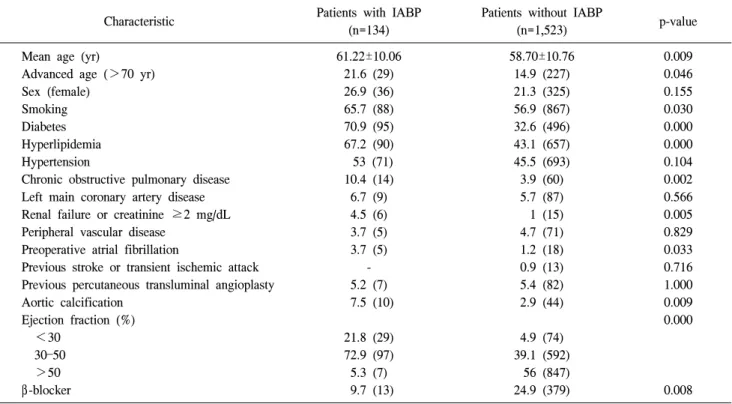
Table 1. Characteristics of patients with and without intra-aortic balloon pump (IABP) support

Characteristic Patients with IABP

(n=134)

Patients without IABP

(n=1,523) p-value

Mean age (yr)

Advanced age (>70 yr) Sex (female)

Smoking Diabetes Hyperlipidemia Hypertension

Chronic obstructive pulmonary disease Left main coronary artery disease Renal failure or creatinine ≥2 mg/dL Peripheral vascular disease

Preoperative atrial fibrillation

Previous stroke or transient ischemic attack Previous percutaneous transluminal angioplasty Aortic calcification

Ejection fraction (%) <30

30–50 >50 β-blocker

61.22±10.06 21.6 (29) 26.9 (36) 65.7 (88) 70.9 (95) 67.2 (90) 53 (71) 10.4 (14) 6.7 (9) 4.5 (6) 3.7 (5) 3.7 (5)

- 5.2 (7) 7.5 (10)

21.8 (29) 72.9 (97) 5.3 (7) 9.7 (13)

58.70±10.76 14.9 (227) 21.3 (325) 56.9 (867) 32.6 (496) 43.1 (657) 45.5 (693) 3.9 (60) 5.7 (87) 1 (15) 4.7 (71) 1.2 (18) 0.9 (13) 5.4 (82) 2.9 (44)

4.9 (74) 39.1 (592) 56 (847) 24.9 (379)

0.009 0.046 0.155 0.030 0.000 0.000 0.104 0.002 0.566 0.005 0.829 0.033 0.716 1.000 0.009 0.000

0.008 Values are presented as mean±standard deviation or % (number).

In this study, we aimed to display the preoperative, oper- ative, and postoperative factors affecting the IABP insertion among patients undergoing isolated on-pump CABG. We also investigated factors affecting morbidity, mortality, and surviv- al in patients with IABP support.

METHODS

Between January 2002 and December 2009, 1,657 patients underwent isolated CABG in İzmir Katip Celebi University Atatürk Training and Research Hospital. The number of pa- tients with IABP support was 134 (8.1%).

Cardiopulmonary bypass was undertaken using standardized extracorporeal circulation utilizing a non-pulsatile flow and an alpha-stat management protocol. In our patients, isothermic blood cardioplegia was initially administered antegradely, ret- rogradely, and thereafter, continuously retrogradely.

A 7.5-Fr sheathless IABP catheter was inserted via percuta- neous common femoral artery cannulation in 129 patients.

The 7.5-Fr IABP catheter was inserted through the ascending

aorta in the operating room in 5 patients having severe pe- ripheral vascular disease or atherosclerotic disease of the ab- dominal aorta and iliac arteries.

Following data accumulation, statistical models were formed and analyzed using SPSS ver. 15.0 (SPSS Inc., Chicago, IL, USA). Non-categorical data were analyzed with a t-test and categorical data with a chi-square or Fisher’s ex- act test where appropriate. The Mann-Whitney U-test was used for analyzing the duration of intensive care unit stay and hospitalization periods. Survival analysis was conducted using the Kaplan-Meier method. A log-rank test was used for analyzing the risk factors affecting survival. Variables with a p-value equal to or less than 0.05 were entered into the mul- tivariate regression model.

Independent predictors of the length of the intensive care

unit (ICU) and hospital stay were analyzed using a multi-

variate regression analysis, and independent predictors of

postoperative mortality were analyzed using a multivariate lo-

gistic regression analysis. Further, independent predictors of

survival were analyzed using a Cox regression analysis.

(3)

Table 2. Predictive factors of intra-aortic balloon pump insertion by multivariate logistic regression analysis in patients with in- tra-aortic balloon pumping support

Variable Odds ratio p-value

Prolonged cardiopulmonary bypass time Prolonged operation time

3.40 21.41

0.017 0.000

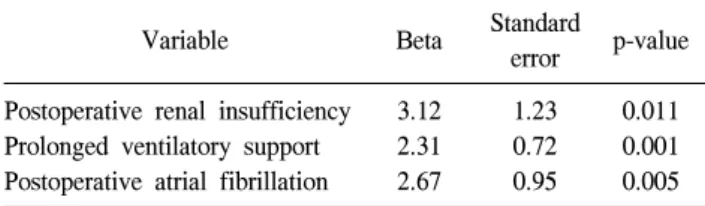
Table 3. Predictive factors of postoperative mortality by multi- variate logistic regression analysis in patients with intra-aortic bal- loon pumping support

Variable Beta Standard

error p-value Postoperative renal insufficiency

Prolonged ventilatory support Postoperative atrial fibrillation

3.12 2.31 2.67

1.23 0.72 0.95

0.011 0.001 0.005 RESULTS

Characteristics of patients with and without IABP support are given in Table 1. The IABP was inserted percutaneously through the common femoral artery in 129 patients (96.3%) and through an open access of the ascending aorta in the re- maining 5 patients (3.7%).

The independent predictive factors of IABP insertion are listed in Table 2. The independent predictive factors of post- operative mortality in patients with IABP support are given in Table 3. We also showed that hypertension (p=0.049), pre- operative renal insufficiency (p=0.022), peripheral vascular disease (p=0.005), ascending aorta calcification (p=0.004), cardiopulmonary bypass time (CPB) (p=0.000), operation time (>4 hours) (p=0.000), and massive blood transfusion (p=0.027) were factors affecting postoperative mortality in a univariate analysis in patients with IABP support, but these factors were not independent predictive factors of post- operative mortality in a multivariate analysis. Postoperative mortality in patients with IABP support was caused by ar- rhythmia (n=4, 8.3%), arrhythmia and pneumonia (n=1, 2.1%), renal insufficiency (n=1, 2.1%), myocardial infarction (n=6, 12.5%), and multiorgan failure (n=36, 75%). The mor- bidity rate related to IABP insertion in our study was 6.7%.

Pulse-less leg was detected in 9 patients with IABP support, and the problem was resolved after the removal of the IABP catheter in all these cases.

The length of ICU stay was 4.44±4.11 days and 2.52±3.05 days in patients with and without IABP support, respectively (p=0.000). The length of hospital stay was 8.88±5.37 days and 6.24±1.52 days in patients with and without IABP sup- port, respectively (p=0.000).

The mean follow-up time was 38.55±22.70 months in pa- tients with IABP support and 48.78±25.20 months in patients without IABP support, respectively. Advanced age (>70

years) was the factor affecting mortality in the follow-up of the univariate analysis in patients with IABP support (p=0.032), but this factor was not an independent predictive factor of mortality in the follow-up of the multivariate re- gression analysis.

The follow-up mortality rate was 3% (n=4) and 5.3%

(n=78) in patients with and without IABP support, respec- tively. Advanced age (>70 years) was the factor affecting mortality in the follow-up of the univariate analysis in pa- tients requiring support with IABP (p=0.032), but this factor was not an independent predictive factor of mortality in the follow-up of the multivariate regression analysis. Mortality re- vealed by the follow-up of patients with IABP support was due to multiorgan failure.

Postoperative renal insufficiency (p=0.042) and the length of ICU stay (>2 days) (p=0.016) were factors that affected the survival in the log-rank test in patients with IABP sup- port, but postoperative renal insufficiency (p=0.066) was not independent predictive factors of survival in the multivariate Cox regression analysis. The length of ICU stay (>2 days) (p=0.031) was independent predictive factors of survival in patients with IABP support.

DISCUSSION

Recently, several studies have shown that patients under-

going cardiac surgery were older and had more multi-vessel

disease, more impaired left ventricular function, and higher

incidence of preoperative comorbid illnesses [2,5]. In patients

with left ventricular dysfunction having a higher incidence of

associated comorbidities undergoing CABG surgery, it is dif-

ficult to wean them from CPB due to impaired cardiac per-

formance after CABG surgery, and the mortality rate is

(4)

higher. IABP has been widely used during the perioperative period to support patients with preoperative left ventricular dysfunction and low cardiac output syndrome after CABG surgery [2,6-8]. The main physiological effects of the IABP are the reduction of the left ventricular afterload and an in- crease in the coronary perfusion pressure and collateral vessel blood flow secondary to an increase in the aortic diastolic pressure. The cardiac output increases because of improved myocardial contractility due to increased coronary blood flow and the reduced afterload and preload [4,9]. Identification of perioperative risk factors in patients undergoing CABG might assist the surgeon in planning the surgery and in the sub- sequent postoperative management.

In our study, IABP was used in 8.1% of our patients, which is similar to results reported in other studies [10,11].

Although some studies have shown that survival at follow-up was better for receiving preoperative IABP as compared to intra- or postoperative IABP [1,7,12,13], other studies have shown that the use of prophylactic IABP in high-risk patients did not lead to any survival advantage compared with the use of intraoperative or postoperative IABP [10,11]. In our study, preoperative IABP was used in patients with hemodynamic instability having a poor left ventricular function refractory to the maximum medical therapy.

Intra- and postoperative IABP were used in patients that could not be weaned from CPB despite the forced inotropic support; in patients with a low-cardiac output status just after the discontinuation of CPB, supported by high-doses of ino- tropes; and in patients showing symptoms of arrhythmia but not amenable to anti-arrhythmic continuous infusion with he- modynamic instability. In our study, the prophylactic IABP was not used in any of the patients. Prolonged cardiopulmo- nary bypass time and prolonged operation time were in- dependent predictive factors of IABP insertion. In our study, the postoperative mortality rate in patients with IABP support was 35.8%, which was similar to that obtained in previous studies [8,12,14].

Several studies showed that advanced age [14], female gen- der [15], smoking [15], left main coronary artery disease [15], urgent or emergency operation [14], prolonged cross-clamping time [10], and prolonged CPB time [14] were factors affecting postoperative mortality in patients with IABP

support undergoing cardiac surgery, but these factors could not be confirmed in our study. In our study, as in others [10,14,15], there was a significant relationship between post- operative renal insufficiency and postoperative mortality.

Unlike former studies, we found that prolonged ventilatory support and postoperative AF were independent predictive factors of postoperative mortality in patients with IABP support.

The morbidity rate related to IABP insertion in our study was 6.7%, which is within the range reported elsewhere (range, 8.7% to 29%) [16,17]. In our study, a pulse-less leg was detected in 9 patients with IABP support, and the prob- lem was resolved after the removal of the IABP catheter in all cases. The low incidence of IABP-related complications is most likely explained by the effect of newer technologies, in- creased experience of our surgical teams, and more focused attention to IABP-related complications.

In our study, the mean length of ICU and hospital stay was longer in patients with IABP support undergoing isolated on-pump CABG, and these findings were similar to those of previous studies [10,11].

One study reported that the 5-year survival was 79.2% in patients with IABP support undergoing CABG [18], and an- other study stated that the 4-year survival rate was 85.2% [5].

In our study, although the postoperative mortality of patients with IABP support remained high, the mid-term prognosis was good.

In conclusion, although the postoperative mortality rate of patients with IABP support remained high, the mid-term sur- vival was relatively good for patients surviving the early postoperative period.

CONFLICT OF INTEREST

No potential conflict of interest relevant to this article was reported.

ACKNOWLEDGMENTS

The authors have all made significant contributions to this

manuscript and agree to its submission to the Korean Journal

of Thoracic and Cardiovascular Surgery, and, if accepted, to

(5)

its publication in this journal.

We warrant that this article is original, does not infringe on any copyrights or other proprietary right of any third par- ty, is not under consideration by another journal, and has not been previously published.

All the authors have declared that no conflicts of interest exist. None of the authors have any financial relationship with a biotechnology manufacturer, a pharmaceutical com- pany, or other commercial entity that has an interest in the subject matter or in the materials discussed in the manuscript.

REFERENCES

1. Baskett RJ, Ghali WA, Maitland A, Hirsch GM. The intra- aortic balloon pump in cardiac surgery. Ann Thorac Surg 2002;74:1276-87.

2. Naunheim KS, Swartz MT, Pennington DG, et al. Intraaortic balloon pumping in patients requiring cardiac operations:

risk analysis and long-term follow-up. J Thorac Cardiovasc Surg 1992;104:1654-60.

3. Rubino AS, Onorati F, Santarpino G, et al. Early in- tra-aortic balloon pumping following perioperative my- ocardial injury improves hospital and mid-term prognosis.

Interact Cardiovasc Thorac Surg 2009;8:310-5.

4. Moazami N, McCarthy P. Temporary circulatory support. In:

Cohn LH, Edmunds LH, editors. Cardiac surgery in the adult. New York: McGraw-Hill; 2003. p. 495-520.

5. Christenson JT, Cohen M, Ferguson JJ 3rd, et al. Trends in intraaortic balloon counterpulsation complications and out- comes in cardiac surgery. Ann Thorac Surg 2002;74:1086- 90.

6. Christenson JT, Buswell L, Velebit V, Maurice J, Simonet F, Schmuziger M. The intraaortic balloon pump for post- cardiotomy heart failure: experience with 169 intraaortic balloon pumps. Thorac Cardiovasc Surg 1995;43:129-33.

7. Arafa OE, Pedersen TH, Svennevig JL, Fosse E, Geiran OR.

Intraaortic balloon pump in open heart operations: 10-year follow-up with risk analysis. Ann Thorac Surg 1998;65:741- 7.

8. Tokmakoglu H, Farsak B, Gunaydin S, et al. Effectiveness of intraaortic balloon pumping in patients who were not able to be weaned from cardiopulmonary bypass after coronary artery bypass surgery and mortality predictors in the peri- operative and early postoperative period. Anadolu Kardiyol Derg 2003;3:124-8.

9. Takami Y, Masumoto H. Effects of intra-aortic balloon pumping on graft flow in coronary surgery: an intra- operative transit-time flowmetric study. Ann Thorac Surg 2008;86:823-7.

10. Parissis H, Leotsinidis M, Akbar MT, Apostolakis E, Dougenis D. The need for intra aortic balloon pump support following open heart surgery: risk analysis and outcome. J Cardiothorac Surg 2010;5:20.

11. Holman WL, Li Q, Kiefe CI, et al. Prophylactic value of preincision intra-aortic balloon pump: analysis of a state- wide experience. J Thorac Cardiovasc Surg 2000;120:1112-9.

12. Ramnarine IR, Grayson AD, Dihmis WC, Mediratta NK, Fabri BM, Chalmers JA. Timing of intra-aortic balloon pump support and 1-year survival. Eur J Cardiothorac Surg 2005;27:887-92.

13. Dunning J, Prendergast B. Which patients would benefit from an intra-aortic balloon pump prior to cardiac surgery?

Interact Cardiovasc Thorac Surg 2003;2:416-9.

14. Torchiana DF, Hirsch G, Buckley MJ, et al. Intraaortic bal- loon pumping for cardiac support: trends in practice and outcome, 1968 to 1995. J Thorac Cardiovasc Surg 1997;113:

758-64.

15. Karimi A, Movahedi N, Salehiomran A, Marzban M, Hesameddin Abbasi S, Yazdanifard P. Mortality in open heart surgery with intraaortic balloon pump support. Asian Cardiovasc Thorac Ann 2008;16:301-4.

16. Di Lello F, Mullen DC, Flemma RJ, Anderson AJ, Kleinman LH, Werner PH. Results of intraaortic balloon pumping after cardiac surgery: experience with the Percor balloon catheter. Ann Thorac Surg 1988;46:442-6.

17. Mackenzie DJ, Wagner WH, Kulber DA, et al. Vascular complications of the intra-aortic balloon pump. Am J Surg 1992;164:517-21.

18. Topkara VK, Cheema FH, Kesavaramanujam S, et al.

Coronary artery bypass grafting in patients with low ejection

fraction. Circulation 2005;112(9 Suppl):I344-50.

수치

Table 1. Characteristics of patients with and without intra-aortic balloon pump (IABP) support
Table 2. Predictive factors of intra-aortic balloon pump insertion  by multivariate logistic regression analysis in patients with  in-tra-aortic balloon pumping support

참조

관련 문서