책임저자:임해준, 서울시 영등포구 버드나루로7길 12
150-719, 한강성심병원 화상외과 Tel: 02-2639-5442, Fax: 02-2678-4386 E-mail: [email protected]
심재성 2도 화상에서 프로시아니딘이 포함된 드레싱의 치료 효과에 대한 연구
이영주
1ㆍ윤재철ㆍ양형태ㆍ조용석ㆍ김도헌ㆍ김종현ㆍ허 준ㆍ전 욱ㆍ임해준
한림대학교 의료원 한강성심병원 화상센터 화상외과, 1한림대학교 의료원 강동성심병원 외과
Effect of Plant Extracts Contained Dressing Material Which Is Rich in Procyanidins for Treatment of Deep Second Degree Burn
Young-Joo Lee, M.D.
1, Jaechul Yoon, M.D., Hyeong-Tae Yang, M.D., Yong-Suk Cho, M.D., Dohern Kym, M.D., Jong-Hyun Kim, M.D., Ph.D., Jun Hur, M.D., Wook Chun, M.D., Ph.D. and Haejun Yim, M.D.
Department of Burn Surgery, Burn Center, Hangang Sacred Heart Hospital, Hallym University Medical Center, 1Department of Surgery, Kangdong Sacred Heart Hospital, Hallym University Medical Center, Seoul, Korea
Purpose: This study was planned to evaluate the effect of plant extracts contained dressing material which is rich in procyanidins for treatment of deep second degree burn.
Methods: This study conducted from September 1, 2013 to February 28, 2014. Patients with the deep dermal burn wound which is larger than 200 cm2 were enrolled in this study. The test material was applied total 3 times every 2 days when the wounds were relatively clean, with thin eschar and scab removed and the dermal layer exposed. The test and control sites were treated with hydro-foam equally. The effectiveness was evaluated by comparing the re-epitheliali- zation rates between the test and control sites. Two burn sur- geons blindly evaluated for re-epithelialization. Evaluation of adverse reaction was also performed during study period.
Results: Total of 40 patients were enrolled. Mean total body surface area burned% was 12.3±5.5% and the test material was first applied at mean post burn day # 7.2±2.0.The re-epi- thelialization period was 9.0±1.7 days in the test site and 11.1±2.0 days in the control site. In the test site, re-epitheliali- zation was 2.1±1.0 days faster than in the control site (P<
0.0001). There was no significant adverse reaction during study period.
Conclusion: The plant extracts contained dressing material which is rich in procyanidins accelerates wound healing time and shows the safety. (J Korean Burn Soc 2014;17:25 -29)
Key Words: Deep second degree burn, Procyanidin
서 론
지난 십 수년간 화상 상처를 포함한 상처 치료를 위해 많 은 제품들이 개발되었다. 이에 따라 상처 치료의 패러다임 에도 많은 변화들이 있었으며, 그 개념의 중심에 있는 것은 친수성 콜로이드(hydro-colloid), 친수성 폼(hydro-foam), 친수성 젤(hydro-gel)과 친수성 화이버(hydro-fiber)로 대표 되는 습윤 드레싱이라 할 수 있다. 또한 최근 상처의 치유 기간을 단축시키기 위한 부가적인 치료 재료로 성장인자 (Epidermal growth factor and Fibroblast growth factor), hyaluronic acid dressing, Collagen dressing 및 Cultured epithelial allograft와 같은 다양한 생물학적 드레싱 제품들 이 지속적으로 개발되어 습윤 드레싱 제품들과 함께 사용 되고 있다.
이와 같은 합성 제품과 생물학적 제품 외에도 상처의 치 유를 위한 드레싱 제재로 자연에서 유래된 다양한 물질들 을 활용한 제품의 개발에 대한 노력들이 있다. 하지만 현재 까지 국내에서의 임상 사용은 제한적이다.
프로시아니딘(Procyanidins)은 Proanthocyanidins (con- densed tannins)의 한 종류로 식물에서 유래된 폴리페놀 (polyphenol)이며 사과, 소나무껍질, 계피, cocoa beans, 포 도 씨나 껍질, 크랜베리와 녹차 등 많은 식물들에서 존재한 다. 이런 식물 유래 폴리페놀의 경우 경구 투여를 한 경우나 국소적 사용을 한 경우에 대해 현재까지 알려진 특별한 독 성이나 부작용은 없으며
1), 분자의 크기가 커서 세포막을 통 해 흡수되지 않는 특징을 가지고 있어 상처에 도포할 때 상처 부위에서만 국소적인 효과를 보이며, 또한 외용으로 적용하였을 때 프로시아니딘은 피부 각질세포의 증식과 분 화에 영향을 주며, 상처의 치유를 촉진시키는 것으로 보고 되고 있다
2-5).
본 연구는 최근 국내에서 개발된 프로시아니딘이 풍부한
식물 추출물 기반의 제품(Neo-Dermal Activator
Ⓡ, 다은메
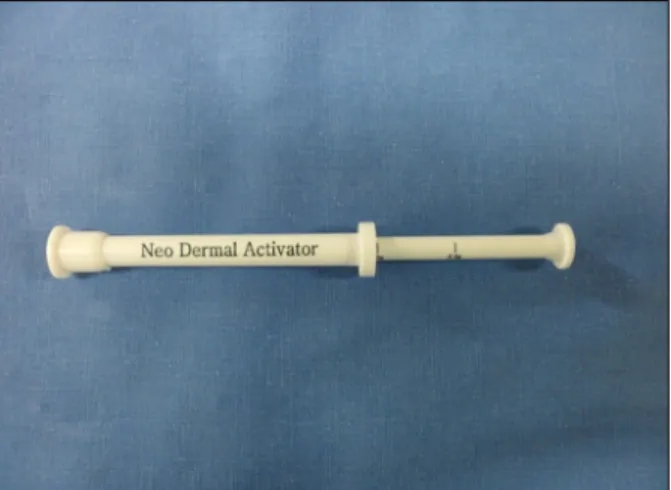
Fig. 1. Plant extracts contained dressing material which is rich in procyanidins (Neo-Dermal ActivatorⓇ, 1 gram sized).
Fig. 2. Application of plant extracts contained dressing material. (A) The test material was applied when the wound was relatively clean, with thin eschar and scab removed and the dermal layer exposed (29 year old female patient with chemical burn, post burn day #7). (B) Wound was improving state after 3 times application of the test material. (post burn day #14).
디칼, 부천시, 경기도, 대한민국, 이하 NDA)의 심재성 2도 화상의 치료에 미치는 효용성을 평가하기 위한 목적으로 진행되었다.
대상 및 방법
1. 대상
2013년 9월 1일부터 2014년 2월 28일까지 6개월간 한림대 학교 의료원, 한강성심병원 화상외과에 수상 후 7일 이내에 입원한 환자 중 200 cm
2이상의 동일한 깊이의 심재성 2도 화상이 있는 환자를 대상으로 하였고(동일 부위의 200 cm
2이상의 단일 상처인 경우와 다른 부위의 각각 100 cm
2이상 의 상처가 있는 경우 모두 대상으로 하였다), NDA를 적용
전에 환자나 보호자에게 설명 후 동의를 얻고 연구에 참여 시켰다. 제외기준은 아래와 같다.
1) 회음부, 관절부, 안면부에 상처가 있는 환자 2) 임산부와 수유부
3) 면역억제제, 스테로이드제재, 항응고제를 장기간 복용 한 병력이 있거나 복용 중인 환자
4) 악성종양의 과거력이 있거나 현재 악성 종양이 있는 환자
2. 제품의 성분 및 비율
성모초(Alchemilla Vulgaris) 추출물[23.0%], 미모사(Mi- mosa Tenuiflora) 잎 추출물[23%], 글리세롤(Glycerol) [35.8%], 꿀(Honey) [18%]과 잔탄 검(Xanthan Gum) [0.2%]
이 혼합되어 있는 젤 형태의 드레싱 제재로 대한민국 식품 의약품안전처의 허가를 받았다(Fig. 1).
3. 연구 디자인
1) 드레싱 방법(Dressing method)
선정된 심재성 2도 화상부위에 대한 치료를 지속하다 얇
은 가피(eschar)나 딱지(scab)가 제거되어 진피 층이 노출되
어 상처 부위가 비교적 깨끗해 지면 NDA를 적용하였으며,
시험부위(100 cm
2)와 대조부위(100 cm
2)는 무작위로 선정
하였다. 상처부위를 소독 후 시험부위에는 2일 간격으로 총
3회 NDA 1 g을 도포 후 친수성 폼 드레싱을 적용하였고
이후 재상피화 시까지 폼 드레싱을 시행하였다. 대조부위
는 시험부위와 동일하게 친수성 폼 드레싱만을 시행하였다
(Fig. 2).
Num. Sex/Age Mode of injury TBSA* burnd % Application of NDA
PBD† (day) Site
1 M/40 Scalding 30 PBD #7 Chest
2 M/50 Scalding 10 PBD #6 Thigh, right
3 M/50 Contact 7 PBD #8 Thigh, right
4 F/61 Scalding 9 PBD #5 Thigh, left
5 M/28 Scalding 20 PBD #8 Back
6 M/30 Scalding 15 PBD #7 Abdomen
7 M/32 Chemical 11 PBD #4 Upper arm, left
8 M/46 Flame 6 PBD #9 Forearm, left
9 M/64 Flame 21 PBD #11 Lower leg, left
10 M/27 Scalding 10 PBD #4 Back
11 F/7 Scalding 7 PBD #6 Thigh, left
12 0F/42 Scalding 9 PBD #7 Upper arm, right
13 M/51 Scalding 16 PBD #8 Chest
14 M/48 Flame 12 PBD #7 Thigh, right
15 M/55 Scalding 13 PBD #5 Lower leg, left
16 0F/11 Scalding 9 PBD #9 Thigh, left
17 M/65 Scalding 13 PBD #6 Lower leg, right
18 0F/29 Chemical 8 PBD #7 Thigh, right
19 M/40 Scalding 14 PBD #8 Thigh, left
20 M/20 Scalding 15 PBD #6 Abdomen
21 M/23 Flame 13 PBD #9 Forearm, right
22 0F/46 Chemical 13 PBD #4 Lower leg, left
23 M/14 Scalding 9 PBD #10 Thigh, right
24 M/48 Flame 12 PBD #7 Back
25 M/35 Contact 9 PBD #6 Inguinal area, left
26 M/53 Scalding 11 PBD #8 Back
27 M/30 Scalding 9 PBD #9 Buttock, right
28 0F/65 Scalding 7 PBD #9 Lower leg, right
29 M/46 Flame 26 PBD #6 Upper arm, left
30 0F/42 Scalding 10 PBD #7 Lower leg, left
31 0F/59 Flame 21 PBD #5 Upper arm, right
32 0F/62 Scalding 7 PBD #7 Lower leg, left
33 M/57 Flame 22 PBD #9 Abdomen
34 0F/57 Scalding 14 PBD #11 Chest
35 M/20 Scalding 13 PBD #5 Chest
36 M/38 Scalding 8 PBD #9 Forearm, right
37 0F/15 Scalding 9 PBD #6 Lower leg, left
38 0F/32 Scalding 8 PBD #7 Abdomen
39 0F/67 Contact 7 PBD #6 Lower leg, left
40 M/80 Scalding 10 PBD #8 Thigh, left
*TBSA = total body surface area, †PBD = post burn day.
Table 1. Characteristics of All the Patients Treated with the Plant Extracts Rich in Procyanidins (NDA)
2) 이상 반응(Adverse reaction)
이상반응(Adverse reaction)은 US National Institutes of Health Common Terminology Criteria for Adverse Events (CTCAE) Version 4.0에서 규정하는 grade 3 이상의 사인과 증상으로 정의하였으며
6), 이상 반응에 대한 관찰 및 평가는 화상외과 전문의 7명이 치료 기간 동안 지속적으로 하였다.
3) 효과에 대한 평가(Evaluation for effectiveness)
재상피화 완료까지의 기간을 치료 효과에 대한 평가 기
준으로 하여 시험부위와 대조부위의 재상피화까지의 기간
을 비교하였다. 재상피화 기간은 상처부위에 NDA를 처음
적용한 시점부터 화상 상처부위가 100% 재상피화 되어 추
가적인 드레싱이 필요 없이 상처를 열어 놓을 수 있는 시점
까지로 정의하였으며, 재상피화에 대한 평가는 2명의 화상
Num. Test site Control site Difference (δ)†
1 7 9 -2
2 11 14 -3
3 9 11 -2
4 7 9 -2
5 11 11 0
6 12 14 -2
7 7 9 -2
8 9 9 0
9 11 14 -3
10 7 7 0
11 9 11 -2
12 9 12 -3
13 10 13 -3
14 8 11 -3
15 11 14 -3
16 9 9 0
17 7 9 -2
18 8 10 -2
19 6 7 -1
20 8 9 -1
21 10 13 -3
22 11 11 0
23 9 11 -2
24 7 10 -3
25 9 11 -2
26 10 13 -3
27 9 11 -2
28 7 10 -3
29 13 16 -3
30 8 10 -2
31 6 9 -3
32 10 12 -2
33 11 13 -2
34 9 11 -2
35 7 11 -4
36 10 13 -3
37 9 11 -2
38 11 13 -2
39 9 11 -2
40 8 10 -2
Mean±SD 9.0±1.7 11.1±2.0 -2.1±1.0*
Min∼max 6∼13 7∼16 -4∼0
*P<0.0001.†Difference in re-epithelialization period between the test and the control sites.
Table 2. Wound Re-epithelialization Time Difference between the Test and the Control Sites
전문의가 하였다.
4. 통계 분석
통계적 분석은 SPSS 17.0 for Windows (SPSS Inc., Chicago, IL, USA)를 사용하였다. NDA 적용 부위와 대조
부위의 재상피화 기간에 대한 비교 분석은 paired t test로 하였고, 결과는 평균±표준편차로 제시 되었으며, P<0.05인 경우 통계적으로 유의한 것으로 평가하였다.
결 과
총 40명의 환자(남자 26명, 여자 14명)를 대상으로 하였으 며, 평균 연령은 34.7±21.8세(range, 2∼67세)였으며, 평균 화상범위는 12.3±5.5%였다. NDA는 평균 PBD #7.2±2.0에 처음으로 적용되었다(Table 1). 시험 부위(NDA 적용 부위) 의 재상피화 기간은 평균 9.0±1.7일, 대조 부위는 평균 11.1±2.0일로, 시험 부위에서의 재상피화 기간이 평균 2.1±
1.0일 빨랐던 결과를 보였다. 5명의 환자에서는 재상피화 기간에 차이를 보이지 않았다(Table 2). 또한 모든 환자에서 이상 반응은 없었다.
고 찰
성모초(Alchemilla Vulgaris)는 허브의 일종으로 중세시 대부터 위장관 장애의 치료와 상처의 치료에 이용되어 왔 고, 미모사(Mimosa Tenuiflora)는 전통적으로 피부의 상처 나 화상의 치료, 그리고 구강의 상처 등을 치료하는데 사용 되어왔다
3,7).
Neo-Dermal Activator
Ⓡ에 혼합되어 있는 두 허브 추출 물에는 프로시아니딘(Procyanidins)이 풍부하다. 프로시아 니딘이 상처의 치유를 촉진시키는 기전에 대해서는 아직 명확하지 않지만 상처에서 프로테아제(protease)와 세포간 매트릭스를 분해하는 다른 효소들(intercellular matrix de- grading enzymes)의 활성을 억제함으로써 상처 치유를 돕 는 세포의 부착과 성장에 도움이 되는 환경을 형성하여 치 유를 촉진시키는 것으로 추정하고 있다
8).
본 연구의 결과에서 제시된 약 2일의 차이는 작아 보일 수 있다. 하지만 대조 부위와 동일 조건에서 1g의 비교적 소량을 3회 적용했음을 고려하고, 비후성 반흔의 형성에 영 향을 미치는 주요 인자가 상처 치유까지의 기간임을 감안 한다면 의미가 있을 것으로 판단된다
9-11).
또한 이번 연구에서 5명의 환자에서 재상피화 기간의 차 이를 보이지 않았다. 이 결과는 NDA의 효험에 의문이 생 기게 할 수도 있는 결과일 수 있다. 하지만 저자들은 시험ㆍ 대조부위 선정 과정에서 발생된 에러이거나 드레싱 과정에 서 발생한 에러에서 기인한 결과로 판단하였다.
40명의 환자에서 이상 반응으로 분류할 수 있는 증상이
나 사인은 1건도 없었다. 따라서 NDA는 화상 상처의 치료
에 안전하게 적용할 수 있을 것으로 평가할 수 있다. NDA
의 경우 의약품이 아니고 치료 재료로 식품의약품안전처의 허가를 얻은 제품이며, 특별한 독성이 알려져 있는 성분은 포함되어 있지 않은 제품이기 때문에 안전성에 대한 평가 를 해야 할 필요는 없지만, 화상 환자들에서 임상에 적용된 보고가 매우 제한적이었기 때문에, 연구 계획 단계에서 저 자들은 이상 반응에 대한 관찰 및 평가도 동시에 진행하는 것으로 계획하였다.
본 연구에는 몇 가지 제한점이 있다. 첫째 단일 기관에서 의 환자를 대상으로 하였고, 둘째, 단지 재상피화 기간으로 만 화상 치료에서의 효용성을 평가했다는 점이다. 따라서 pigmentation과 비후성 반흔 형성 등에 대한 영향을 평가 하기 위한 추가 연구가 필요하다. 셋째, NDA 단일 드레싱 이 아니고 친수성 폼을 기본으로 제한된 횟수의 부가적 적 용으로 연구 설계를 하였기 때문에, NDA자체의 치료 효과 에 대한 정확한 평가가 이루어 지지 않았을 가능성 있다.
따라서 이번 연구 결과를 바탕으로 단일 치료 재료로서의 효용성 평가를 위한 추가 연구 또한 필요하다.
결 론
NDA는 심재성 2도 화상으로 치료에 있어 안전하게 사용 할 수 있는 드레싱 재료이며, 상처의 치유 속도를 증가시킨 다. 현재까지 천연 추출물을 기반으로 한 화상 치료 재료 대한 개발과 임상적 연구는 제한적이기 때문에 앞으로 다 양한 연구들이 요구된다.
REFERENCES
1) Chow HH, Cai Y, Hakim IA, Crowell JA, Shahi F, Brooks CA, et al. Pharmacokinetics and safety of green tea polyphenols after multiple-dose administration of epigallocatechin gallate and polyphenon E in healthy individuals. Clin Cancer Res.
2003;9:3312-3319.
2) Khanna S, Venojarvi M, Roy S. Dermal wound healing pro- perties of redox-active grape seed proanthocyanidins. Free Radic Biol Med. 2002;33:1089-1096.
3) Rivera-Arce E, Chávez-Soto MA, Herrera-Arellano A, Arzate S, Agüero J, Feria-Romero IA, et al. Therapeutic effectiveness of a Mimosa tenuiflora cortex extract in venous leg ulceration treatment. J Ethnopharmacol. 2007, 12;109:523-528.
4) Souza SM, Aquino LC, Milach AC Jr. Antiinflammatory and antiulcer properties of tannins from Myracrodruon urundeuva Allemão (Anacardiaceae) in rodents. Phytother Res. 2007;21:
220-225.
5) Deters A, Dauer A, Schnetz E, Fartasch M, Hensel A. High molecular compounds (polysaccharides and proanthocyan- idins) from Hamamelis virginiana bark: influence on human skin keratinocyte proliferation and differentiation and in- fluence on irritated skin. Phytochemistry. 2001;58:949-958.
6) National Cancer Institute (U.S.). Common terminology criteria for adverse events (CTCAE). Rev. ed. [Bethesda, Md.]: U.S.
Dept. of Health and Human Services, National Institutes of Health, National Cancer Institute; 2009.
7) Shrivastava R, John GW. Treatment of Aphthous Stomatitis with topical Alchemilla vulgaris in glycerine. Clin Drug Investig. 2006;26:567-573.
8) Shrivastava R. Clinical evidence to demonstrate that simul- taneous growth of epithelial and fibroblast cells is essential for deep wound healing. Diabetes Res Clin Pract. 2011;92:
92-99.
9) Deitch EA, Wheelahan TM, Rose MP, Clothier J, Cotter J.
Hypertrophic burn scars: analysis of variables. J Trauma.
1983;23:895-898.
10) Evidence for the link between healing time and the develop- ment of hypertrophic scars (HTS) in paediatric burns due to scald injury. Burns. 2006;32:992-999.
11) Yang HT, Yim H, Cho YS, Kim D, Hur J, Chun W, et al.
Treatment of deep second degree burn wound using hete- rogenic type I collagen dressing. J Korean Burn Soc. 2010;
13:136-139.