ABSTRACT
Conventional immunotherapy (IT) for optimal control of respiratory and food allergies has been fraught with concerns of efficacy, safety, and tolerability. The development of adjuvants to conventional IT has potentially increased the effectiveness and safety of allergen IT, which may translate into improved clinical outcomes and sustained unresponsiveness even after cessation of therapy. Novel strategies incorporating the successful use of adjuvants such as allergoids, immunostimulatory DNA sequences, monoclonal antibodies, carriers, recombinant proteins, and probiotics have now been described in clinical and murine studies. Future approaches may include fungal compounds, parasitic molecules, vitamin D, and traditional Chinese herbs. More robust comparative clinical trials are needed to evaluate the safety, clinical efficacy, and cost effectiveness of various adjuvants in order to determine ideal candidates in disease-specific and allergen-specific models. Other suggested approaches to further optimize outcomes of IT include early introduction of IT during an optimal window period. Alternative routes of administration of IT to optimize delivery and yet minimize potential side effects require further evaluation for safety and efficacy before they can be recommended.
Keywords: Immunotherapy; Allergy immunology; Allergoid; Immunologic stimulation;
Monoclonal antibody; Probiotics
INTRODUCTION
Atopic diseases, such as asthma, allergic rhinitis, eczema, and food allergies, are increasingly prevalent and are common causes of morbidity, affecting the patients' quality of life [1] and causing significant socioeconomic burden [2].
Symptom control has traditionally been the mainstay of management of atopic diseases as definitive cures are still elusive. Allergen immunotherapy (IT) is the frontier of a more definitive treatment for atopic diseases. IT is the practice of administering increasing quantities of an allergen extract to an allergic subject to ameliorate allergic symptoms during subsequent exposure to the allergen. IT induces allergen specific regulatory T and B cells that downregulate the allergen-specific Th2 response, via interleukin (IL)-10 and transforming growth factor (TGF)-β [3, 4]. In particular, regulatory B cells produce IL-10 and allergen-
Current Review
Received: Jan 30, 2018 Accepted: Apr 2, 2018
*Correspondence to Mohana Rajakulendran
Department of Paediatrics, National University Health System, Tower Block Level 12, 1E Kent Ridge Road., Singapore 119229.
Tel: +65-6772-4112 Fax: +65-6779-7486
E-mail: [email protected] Copyright © 2018. Asia Pacific Association of Allergy, Asthma and Clinical Immunology.
This is an Open Access article distributed under the terms of the Creative Commons Attribution Non-Commercial License (https://
creativecommons.org/licenses/by-nc/4.0/) which permits unrestricted non-commercial use, distribution, and reproduction in any medium, provided the original work is properly cited.
ORCID iDs
Mohana Rajakulendran
https://orcid.org/0000-0001-7315-6709 Author Contributions
Conceptualization: HP Van Bever. Data curation: Mohana Rajakulendran, Elizabeth Huiwen Tham. Investigation: Mohana Rajakulendran, Elizabeth Huiwen Tham, Jian Yi Soh, HP Van Bever. Validation: Mohana Rajakulendran. Writing - original draft:
Mohana Rajakulendran. Writing - review &
editing: Elizabeth Huiwen Tham, Jian Yi Soh, HP Van Bever.
Mohana Rajakulendran 1,*, Elizabeth Huiwen Tham1,2, Jian Yi Soh1,2, and HP Van Bever1,2
1 Khoo Teck Puat – National University Children's Medical Institute, National University Health System, Singapore 119229
2 Department of Paediatrics, Yong Loo Lin School of Medicine, National University of Singapore, Singapore 119229
Novel strategies in immunotherapy for
allergic diseases
specific IgG4 antibodies [5], which capture allergens before reaching effector cells, thereby preventing mast cell and basophil activation [6].
Conventional IT techniques have, however, been beleaguered by significant rates of adverse reactions, raising concerns over safety and limiting its widespread use in the general population. A recent study by Tophof et al. [7] showed a high rate of side effects experienced by patients undergoing subcutaneous IT to a range of aeroallergens such as grass pollen, tree pollen and house dust mites (HDMs). Seventy-five point six percent (75.6%) of patients experienced local side effects while 9.3% developed systemic side effects including cutaneous and respiratory symptoms. Of these, 0.6% experienced hypotension and shock. Rates of adverse reactions are also high in food oral IT. Pajno et al. [8] described 9% of patients receiving oral IT to cow's milk and hen's egg needed to discontinue therapy due to significant side effects. Depending on the food, reaction rates could be higher. In a study by Kulmala et al. [9] looking at wheat oral IT 94% of subjects experienced reactions 64% of which were classified as moderate to severe reactions.
Over the last decade, there have been increasing interests in developing and modifying IT to strengthen its efficacy while maintaining or improving its safety profile. This review summarizes existing literature on the use of novel adjuvants, challenges faced in developing such adjuvants for clinical use and discusses areas for future research and development.
OVERVIEW OF NOVEL STRATEGIES
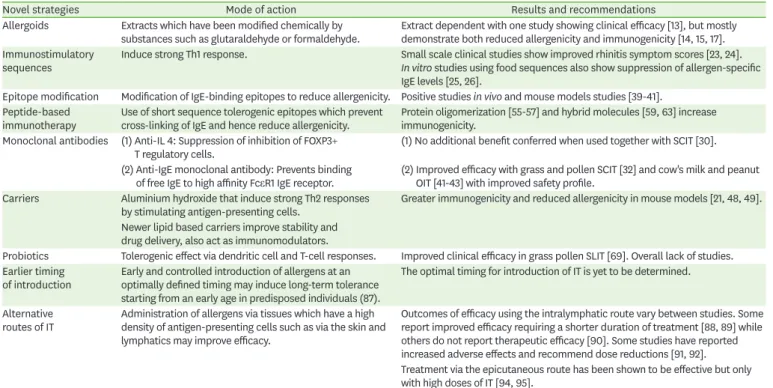
An ideal adjuvant should be able to accomplish 2 goals. First, to modify the nature of the immune response by inducing a robust Th1 response and/or suppressing Th2 responses arising from the allergic state. Second, to amplify the primary immune response to IT, thus requiring lower doses of allergen to achieve therapeutic effect [10]. Some of the adjuvants described here function as a depot for the antigen, presenting the antigen over a longer period and thus maximizing the body's immune response or may act as irritants, which induce the recruitment of additional immunomodulatory pathways which amplify the primary immune response [11]. Table 1 provides a summary of available IT strategies which are further described in detail in this paper.
Allergoids
Allergoid vaccines are allergen extracts which have been modified chemically by substances such as glutaraldehyde or formaldehyde. The chemical modification causes irreversible intra- or intermolecular polymerization of the protein, disrupting the conformational IgE epitopes of the allergen. These higher molecular weight complexes result in reduced allergenicity while preserving or improving immunogenicity. This would facilitate improved safety and efficacy compared to conventional IT compounds, and allow a faster up-dosing regimen.
Depigmentation is an additional step involving acid treatment of the extract prior to
polymerization with glutaraldehyde. This step reduces the allergenicity of the extract without compromising immunogenicity [12]. Gallego et al. [13] looked at the effect of a mixture of depigmented and polymerized extracts of Dermatophagoides pteronyssinus and Dematophagoides farinae in asthma patients (Depigoid). Patients treated with alum-adsorbed Depigoid for 54 weeks demonstrated clinical efficacy with significant reductions in median posttreatment bronchial (3.3 to 1.7), nasal (8.6 to 4.7), and ocular (0.7 to 0.6) symptom scores and reduced
rescue medication use (15.6 to 7.1). In contrast, there was an increase in median symptom and medication scores in the placebo group. Although there was also a statistically significant increase in specific IgG4 responses in the treatment group, the increase was not large, ranging between 1.4 to 2.8 fold from the baseline.
To date, there has been only a single study directly comparing the outcomes between standard allergen extracts and allergoids. Henmar et al. [14] compared the in vitro allergenicity and immunogenicity of 4 commercially available grass pollen allergoids with 3 intact grass pollen allergen vaccines used in subcutaneous IT. In this study, basophil activation was performed using blood from 20 grass pollen allergic patients. Basophil activation was comparable between the allergoids and allergen vaccines and did not show reduced allergenicity. The allergoids demonstrated significantly lower T-cell activation in 29 human cell lines. Moreover, 2 of the 4 allergoids, which demonstrated the lowest allergenicity (p < 0.001), unfortunately, also had significantly lower immunogenicity (p < 0.001) when compared to the intact allergens. Similarly, studies by Würtzen et al. [15] and Lund et al. [16]
also demonstrated the same issues with reduced immunogenicity where the allergoids were not appropriately recognized by the allergen-specific T-cell lines, leading to reduced T-cell activation and diminished specific IgG responses.
Chemical preparation processes also determine the allergenicity and immunogenicity of the extract. Heydenreich et al. [17] demonstrated that glutaraldehyde and formaldehyde preparations had different effects on pollen-derived allergoids. The glutaraldehyde-modified allergoids showed reduced IgE-binding, suggesting that the IgE-binding epitopes of modified allergoids were more efficiently destroyed by glutaraldehyde. However, the glutaraldehyde treatment process also modified T-cell binding epitopes, which diminished T-cell proliferative responses, resulting in reduced immunogenicity.
Table 1. Summary table of novel strategies in immunotherapy (IT)
Novel strategies Mode of action Results and recommendations
Allergoids Extracts which have been modified chemically by
substances such as glutaraldehyde or formaldehyde. Extract dependent with one study showing clinical efficacy [13], but mostly demonstrate both reduced allergenicity and immunogenicity [14, 15, 17].
Immunostimulatory
sequences Induce strong Th1 response. Small scale clinical studies show improved rhinitis symptom scores [23, 24].
In vitro studies using food sequences also show suppression of allergen-specific IgE levels [25, 26].
Epitope modification Modification of IgE-binding epitopes to reduce allergenicity. Positive studies in vivo and mouse models studies [39-41].
Peptide-based
immunotherapy Use of short sequence tolerogenic epitopes which prevent
cross-linking of IgE and hence reduce allergenicity. Protein oligomerization [55-57] and hybrid molecules [59, 63] increase immunogenicity.
Monoclonal antibodies (1) Anti-IL 4: Suppression of inhibition of FOXP3+
T regulatory cells. (1) No additional benefit conferred when used together with SCIT [30].
(2) Anti-IgE monoclonal antibody: Prevents binding
of free IgE to high affinity FcεR1 IgE receptor. (2) Improved efficacy with grass and pollen SCIT [32] and cow's milk and peanut OIT [41-43] with improved safety profile.
Carriers Aluminium hydroxide that induce strong Th2 responses
by stimulating antigen-presenting cells. Greater immunogenicity and reduced allergenicity in mouse models [21, 48, 49].
Newer lipid based carriers improve stability and drug delivery, also act as immunomodulators.
Probiotics Tolerogenic effect via dendritic cell and T-cell responses. Improved clinical efficacy in grass pollen SLIT [69]. Overall lack of studies.
Earlier timing
of introduction Early and controlled introduction of allergens at an optimally defined timing may induce long-term tolerance starting from an early age in predisposed individuals (87).
The optimal timing for introduction of IT is yet to be determined.
Alternative
routes of IT Administration of allergens via tissues which have a high density of antigen-presenting cells such as via the skin and lymphatics may improve efficacy.
Outcomes of efficacy using the intralymphatic route vary between studies. Some report improved efficacy requiring a shorter duration of treatment [88, 89] while others do not report therapeutic efficacy [90]. Some studies have reported increased adverse effects and recommend dose reductions [91, 92].
Treatment via the epicutaneous route has been shown to be effective but only with high doses of IT [94, 95].
IL, interleukin; SCIT, subcutaneous immunotherapy; SLIT, sublingual immunotherapy; FcƐR1, high-affinity IgE receptor; OIT, oral immunotherapy.
Allergoid grass pollen vaccines are now commercially available and studies evaluating the economic benefits show that they might be more cost-effective and affordable than other IT options such as SLIT [18, 19]. However, the efficacy and reproducibility of these vaccines remain questionable. This is likely due to a lack of standardization of chemical modification methods that have consistently shown to preserve important T-cell epitopes and immunogenicity of the extracts.
Routine antibody-based assays also cannot be used to reliably assess the allergen content in these extracts since the process of polymerization disables antibody binding and reduces IgE binding [13]. Alternative methods including tandem mass spectrometry have thus been used to ensure the preservation of important allergens [20]. In addition, indirect assessments of allergenicity can be performed through basophil activation tests and flow cytometric measurements of uptake by immature dendritic cells [21].
Immunostimulatory sequences
Immunostimulatory sequences (ISS) are oligodeoxynucleotide DNA sequences containing unmethylated CpG motifs, which are recognized by Toll-like receptor 9 (TLR 9), an important member of the TLR family of transmembrane signaling molecules that play an important role in the initiation of innate immune responses. ISS induce interferon (IFN)-α and convert a Th2 immune response to a Th1 response [22].
Amb a 1 immunostimulatory phosphorothioate oligonucleotide conjugate (AIC) is a novel adjuvant created by conjugating Amb a 1, the major allergen in ragweed, to an ISS. Its use as an adjunct to ragweed subcutaneous immunotherapy (SCIT) has shown promising long-term results. Creticos et al. [23] demonstrated that the AIC group had lower mean peak-season rhinitis scores (13.2 vs. 40.8, p = 0.006), mean peak-season daily nasal symptom diary scores (1.8 vs. 4.0, p = 0.02), and improved midseason overall quality of life scores (p = 0.05) compared to the placebo group. AIC induced a transient increase in Amb a 1-specific IgG antibodies and suppressed the seasonal increase in Amb a 1-specific IgE antibodies. A reduction in the number of IL-4-positive basophils in AIC-treated patients also correlated with lower rhinitis visual-analogue scores (r = 0.49, p = 0.03). This response was sustained during the subsequent ragweed season.
Tulic et al. [24] demonstrated both significant attenuation of the increase in eosinophils and IL-4 mRNA-positive cells (p = 0.008) and an increased number of IFN-γ mRNA positive cells (p = 0.002) in the AIC group compared to placebo-treated patients upon nasal challenge to ragweed 4–5 months post IT, and a postragweed season pollen challenge showed that this effect was sustained long term.
ISS have also been investigated in food IT using mice models. A murine model of peanut IT demonstrated increased peanut IgG2a and decreased IgE, reflecting a shift from Th2 to Th1- type response, following administration of a synthetic TLR 9 agonist consisting of modified oligodeoxynucleotides (CpR) [25]. Another study used CpG-coated poly(lactic-co-glycolic- acid) nanoparticles containing peanut extract (CpG/PN-NPs) in a murine model of peanut IT, resulting in significantly decreased peanut-specific IgE/IgG1 and Th2 cytokine levels as well as increased IgG2a and IFN-γ levels, which were consistent with reduced allergic responses [26].
The use of other TLR agonists such as the TLR4 agonist monophosphoryl lipid A (MPL-A), a bacterial lipopolysaccharide lipid derivative, have also been successful. Rosewich et al. [27]
recently demonstrated successful induction of tolerance upon bronchial allergen provocation after a single ultrashort course of MPL-A-adjuvant - grass pollen SCIT in pollen-sensitized asthmatics, achieving approximately 50% reduction in bronchial hyper-reactivity after treatment. A small follow-up study [28] of subjects on the MPL-A Parietaria grass pollen SCIT showed that the improvement in rhinitis, conjunctivitis and asthma symptoms was sustained up to 5 years after discontinuation of treatment.
Monoclonal antibodies
A number of studies have examined the use of monoclonal antibodies against immunological targets in Th1 and Th2 pathways as adjuvants to IT. Two well-described therapies include anti-IL-4 and anti-IgE antibodies.
Anti-IL-4 therapy
IL-4 plays a pivotal role in the inhibition of FOXP3+ T regulatory cell induction [29]. It sustains Th2 responses by inducing IgE isotype switching, high affinity IgE receptor (FcƐR1) and major histocompatibility complex class II upregulation and also drives other proallergic cytokines, such as IL-5, IL-9, and IL-31 in allergic disease [6].
Chaker et al. [30] administered anti-IL-4 antibodies as an adjuvant to SCIT with grass pollen in individuals with seasonal allergic rhinitis. Combined treatment with anti-IL-4 antibodies, however, did not improve response to SCIT, as measured through early and late phase cellular responses as well as subjective symptom reduction, compared to the control group.
Anti-IgE monoclonal antibody
Omalizumab is a recombinant humanized monoclonal antibody which binds to free IgE, preventing it from binding to the FcƐR1 and decreasing the number of FcεRI receptors on basophils. Its administration also decreases inflammatory mediators and down-regulates dendritic cell FcεRI expression [31]. It was first licensed for use in severe persistent asthma and chronic urticaria.
Omalizumab increases efficacy of SCIT when used in combination, compared to SCIT alone. Omalizumab-SCIT combination therapy in grass pollen allergic children with allergic rhinoconjunctivitis showed a 38% reduction in days with nasal symptoms, 76% reduction in days with ocular symptoms and 28% reduction in the use of any rescue medication after treatment [32]. In contrast, the SCIT-only arm did not show a significant reduction in any of the above parameters. Patients with severe asthma who remain at high risk of reactions with aeroallergen IT have also been shown to benefit with concomitant omalizumab administration [33, 34]. Case reports [35-37] also described patients who developed
anaphylactic reactions to hymenoptera IT but subsequently successfully completed treatment with concomitant administration of omalizumab.
The first application of anti-IgE therapy for food allergy was in a small, uncontrolled study of 22 food allergic patients who were already on omalizumab for persistent asthma and the authors observed a concomitant reduction in their concomitant IgE-related food allergy symptoms including cutaneous symptoms, respiratory symptoms, and even anaphylaxis on subsequent re-exposure to the sensitized foods [38].
Subsequent pilot studies looking at omalizumab-combined oral IT in severe milk and peanut allergies found that they facilitated rapid oral desensitization with a reduction in the time
required to achieve maximum doses and tolerability [39-41]. A phase 2 trial of omalizumab in peanut oral IT also demonstrated good treatment efficacy [42]. A recent randomized controlled trial of omalizumab combined with oral IT in cow's milk allergic subjects showed a significantly improved safety profile while maintaining efficacy [43]. However, there were no differences in the rates of sustained unresponsiveness between the placebo and omalizumab groups upon rechallenge, 16 weeks after cessation of omalizumab and 8 weeks post milk oral IT (OIT) (48.1% vs. 35.7%, respectively, p = 0.42). Omalizumab might, thus, be preferred in high-risk patients to achieve desensitization more safely and quickly, but long-term efficacy remains in question.
More recently, Brandström et al. [44] individualized dosing of omalizumab to patients with peanut allergy based on basophil allergen threshold sensitivities. A much higher dose was required in these patients as compared to the dose recommended for asthma treatment.
Frischmeyer-Guerrerio et al. [45] looked at identifying biological markers to predict the added value of omalizumab as an adjuvant in milk OIT. Patients with high baseline basophil reactivity and higher milk IgE/total IgE ratios who were given omalizumab with milk OIT were less likely to react and more likely to achieve sustained unresponsiveness compared to high risk subjects who received milk-only OIT. A phase I clinical trial [46] also demonstrated successful rapid and safe desensitization to multiple food allergens simultaneously with concomitant administration of omalizumab.
Carriers
Aluminium hydroxide has been present as an adjuvant in vaccines for decades and is now also being used as a safe carrier adjuvant in SCIT. It induces a strong Th2 response by stimulating the activation of antigen presenting cells, independent of TLR signaling. Alum-adsorbed allergens and allergoids showed greater reductions in histamine release and leukotriene release by human basophils, indicating superior allergenic and immunogenic properties, compared to nonadsorbed allergens and allergoids [21].
There are some concerns that the cumulative aluminium dose exposure in 3- to 4-year duration of IT exceeds safe dietary oral intake levels recommended by the World Health Organization [47]. However, no causal relationship has thus far been established between ingested or injected aluminium compounds and short-term adverse neurocognitive effects or longer-term outcomes such as neurotoxicity-induced Alzheimer disease or other cognitive impairments.
Other novel carriers under investigation include liposomes, niosomes (nonionic surfactant vesicles with increased stability), and transferosomes (which possess a fluid membrane, rendering them elastic and able to squeeze through the stratum corneum, allowing for transdermal delivery). These molecules encapsulate hydrophilic antigens [11] which are otherwise unable to permeate hydrophobic cellular barriers, enabling them to reach intracellular targets and function as immunomodulators.
There have been several successful studies in murine models using liposomes as carrier molecules. Arora and Gangal [48] showed that liposome-entrapped pollen allergen elicited down-regulation of IgE responses and allergenicity in mouse models primed and boosted with alum-adsorbed pollen allergen. This appeared to be through a direct effect on inducing T suppressor/cytotoxic cells. Mice primed and boosted with liposome-entrapped allergen had higher levels of specific IgG, suggesting greater immunogenicity of the modified allergen.
Similar findings were reported in intranasal liposomal cat allergen [49] and cockroach
allergen [50] vaccine studies. Sehra et al. [51] also demonstrated that liposomal-entrapped allergen conferred an added protection against anaphylaxis in mice by inducing a high IFN-γ:
IL-4 ratio and reduced synthesis of IgE and histamine release.
Recombinant proteins
Advances in molecular cell biology have allowed for the development of standardized and effective recombinant allergen preparations for both SLIT and SCIT [52]. This is vastly different from the crude preparation of allergen extracts of different mixtures and from a multitude of sources in the past, which could vary significantly in terms of molecular composition between batches [53].
The use of hypoallergenic recombinant protein derivatives is a strategy adapted from vaccine therapy, in which 2 general approaches have been proposed: the first, involves modification of IgE-binding epitopes on protein molecules to reduce immunogenicity; and the second, uses synthetic short amino acid segments containing tolerogenic epitopes as peptide-based IT. The latter approach retains antigenicity and allows interaction with antigen-presenting cells but prevents cross-linking of IgE, thus promoting tolerance. Although these approaches are technically not adjuvants, their properties significantly potentiate the effects of
conventional IT.
The major advantage of hypoallergenic proteins is the capability to produce an effective immune response with reduced risks of systemic adverse reactions. This has been
demonstrated in birch pollen allergy. Vrtala et al. [54] showed reduced IgE-binding capacity and allergenic activity in the basophils of birch pollen allergic individuals treated with recombinant trimeric rBet v1 aa 1–74 compared to those treated with wild type r Bet v1. The rBet v 1 aa 1–74 trimer induced significantly higher levels of Bet v 1-specific IgG1 antibodies than the monomer, and these antibodies also inhibited patients' IgE-binding to rBet v 1 wild type more than 10 fold more efficiently than antibodies induced by the monomer.
A Fagales pollen hybrid protein comprising stretches of birch, hazel, elder, oak, and hornbeam linear T-cell epitopes induced greater T-cell proliferation and a more significant reduction in lung eosinophilia and suppression of IL-5 in bronchoalveolar lavage fluid in sensitized mice, compared to a combination extract containing all 5 native pollen allergens [55].
These hybrid molecules have the advantage of better sustained long term immunologic memory. A study by Spertini et al. [56] found that the administration of 3 contiguous overlapping Bet v1 peptides (AllerT) in five injections to patients with allergic
rhinoconjunctivitis over 2 months elicited high anti-Bet v 1-IgG4 levels which remained sustained after more than three years of completion of treatment.
A clinical trial by Zieglmayer et al. [57] administered grass pollen allergy vaccine BM32 to individuals with grass pollen-induced allergic rhinoconjunctivitis. The vaccine contained four recombinant fusion proteins consisting of nonallergenic peptides derived from the IgE-binding sites of the major grass pollen allergens (Phl p 1, Phl p 2, Phl p 5, and Phl p 6) fused to hepatitis B virus-derived PreS which were adsorbed to aluminum hydroxide. Three monthly injections were administered to subjects who were stratified into 3 treatment groups with varying doses. These groups were compared with a fourth placebo group receiving only aluminium hydroxide. The recombinant vaccine induced significant grass pollen-specific IgG without increasing allergen-specific IgE responses. Subjects were able to tolerate high doses
of up to 160 μg of the recombinant protein without requiring an up-dosing phase. There was a significant reduction in total nasal symptoms score (TNSS) in the 20 mg and 40 mg groups with a mean reduction of 1.41 and 1.34, respectively. These groups also showed lower TNSS score after a 6-hour pollen chamber challenge. A dose-dependent reduction of between 11%- 24% in the total ocular symptom score was also observed.
On the converse, a small phase II randomized controlled trial comparing a hypoallergenic recombinant birch pollen allergen to standardized extracts in 51 patients with allergic rhino- conjunctivitis did not find any statistically significant differences in outcomes including symptom medication scores, allergen tolerance by nasal provocation tests and increases in birch- pollen specific IgG1 and IgG4 between the groups [58]. The variability in outcomes is possibly related to the variations in extract preparations, extract dosing and dosing intervals, etc.
Recombinant proteins have also recently been used as modifiers in food IT. A phase 1 trial by Wood et al. [59] modified IgE-binding epitopes on three peanut allergens, Ara h1, h2, and h3 through amino acid substitutions and encapsulated these in inactivated Escherichia coli (EMP- 123) as rectally administered suspensions for peanut IT. Despite promising in vivo studies, unexpected significant adverse events occurring in 5 out of 10 peanut-allergic adults required discontinuation of therapy.
In a novel peptide IT approach, 6 major T-cell epitopes from Met e 1, a recombinant shrimp tropomyosin protein, were administered orally to shrimp-allergic mice over 4 weeks. This resulted in increased IgG2a (p < 0.001), lower IL-4 and IL-5 levels compared to control mice (p < 0.001), shifting the allergenic Th2 cytokine milieu back towards tolerogenic Th1-type responses [60]. Similar studies by Rupa and Mine [61] and Yang et al. [62] using T-cell epitopes in ovalbumin (OVA), a major egg allergen, have also shown promising results in murine models of egg allergy.
Liu et al. [63] used a plant-human fusion protein comprising Ara h 2, the major peanut allergen, and human IgG Fϲγ1 (the high affinity IgE receptor) - termed AHG2. This construct was able to inhibit whole peanut extract-induced, peanut-specific IgE-mediated histamine release in human basophils as well as allergic responses in transgenic mice, through indirectly cross-linking FϲγRIIb.
Similarly, a hypoallergenic variant of the major fish allergen, parvalbumin, inhibited IgE binding, basophil degranulation, and allergic symptoms in sensitized mice in a mouse model of fish allergy by Freidl et al. [64].
In one of the few trials looking at human subjects, an edible β-lactoglobulin hydrolysate (βLg) with reduced antigenicity, generated through chymotrypsin-assisted hydrolysis, was able to completely suppress IgE-binding capacity in the sera of milk-allergic subjects compared to unhydrolysed βLg in a study by Ueno et al. [65]. This approach could potentially be utilized for the creation of peptide-based vaccines against milk allergy.
Overall, data on the use of recombinant proteins in both animal studies are promising and several peptides that are strong candidates for IT have been identified. There is, however, still a paucity of robust clinical data in humans and large-scale randomized controlled trials comparing recombinant proteins to current standard extracts are needed before definitive conclusions can be made about the efficacy of these products.
Probiotics
A handful of studies on the successful use of probiotics as adjuvants in IT have been reported.
Liu et al. [66] randomized house dust mite-sensitized asthmatic patients to 4 groups
receiving standard allergen extract (D. pteronyssinus), standard extract with Clostridium butyricum as an adjuvant, Clostridium butyricum alone and a placebo. Subjects who received the standard extract with probiotic had statistically better and more sustained improvement in asthma symptoms and suppression of serum specific IgE and Th2 cytokine levels (p < 0.01) after the discontinuation of IT compared to those who received only the standard allergen alone. No therapeutic effects were observed in the probiotic-only or placebo groups.
The use of probiotics as adjuvants in IT is likely to be strain-specific, given that different strains of bacteria have varying effects on dendritic and T cells in in vitro studies [67, 68]. This is demonstrated by Berni Canani et al. [69] who looked at the use of Lactobacillus rhamnosus with extensively hydrolyzed casein formula in infants with cow's milk protein allergy. The rate of tolerance acquisition in infants at both 6 months and 12 months as evaluated by double- blinded placebo-controlled food challenge was significantly higher in the probiotic group.
However, this effect was not reproducible when using a different combination of probiotics (Lactobacillus casei and Bifidobacterium casei) [70], suggesting that the effect was strain-specific.
Jerzynska et al. [71] compared the effect of both L. rhamnosus GG and vitamin D as adjuvants and found better clinical and immunologic responses with the use of probiotics with SLIT in grass pollen sensitized children with allergic rhinitis. The SLIT-probiotic group showed significantly higher CD4+CD25+Foxp3+ induction compared to the SLIT-only group and higher reduction in the percentage of TLR-positive cell group compared to the SLIT-vitamin D group. These were also correlated with greater reduction in symptom and medication scores and improvements in lung function in the children in the SLIT-probiotic group.
Other novel adjuvants Fungal compounds
Mushroom extracts, specifically fungal immunomodulatory proteins (FIPs), have been shown to have immunomodulatory properties such as the ability to inactivate the innate immune system, such as dendritic cells, NK cells, monocytes/macrophages, as well as induce cytokine/chemokine production which in turn activate the adaptive immune system by polarizing the Th1 or Th2 effector cells and stimulating the differentiation of B cells for antibody production [72]. The FIPs consist of various immunomodulatory proteins derived from the Basidiomycetes.
In an OVA-induced food allergy animal model, mice receiving oral administration of FIP-fve, a FIP isolated from the edible oriental mushroom Flammulina velutipes, during OVA sensitization showed significant reduction in the anaphylaxis symptoms, lower plasma histamine levels as well as milder mucosal oedema and epithelial damage of intestinal lamina propria compared to OVA-only sensitized mice [73]. These fungal compounds may be promising adjuvant carriers in future allergen IT.
Parasitic molecules
Helminths use several immunomodulatory strategies to evade or modify the host immune response in order to survive in the host. These including suppression or inactivation of host antigen-specific immune response. The modulation of the immune system has been considered symbiotic since helminths can avoid being eradicated and the host is also
protected from inflammatory responses which may damage the host's tissues and organs.
Two helminthic proteins that have been used to evade host's immune response are Brugia malayi TGF-β homologue-1 (TGH-1) and Brugia malayi TGF-β homologue-2 (TGH-2). They are 2 TGF-β homologues that have shown to be differentially regulated during the filarial life cycle: TGH-1 in Brugia malayi and B. pahangi [74] and TGH-2 in Brugia malayi [75]. These proteins bind to the human TGF-β receptor [76], mimicking human TGF-β and stimulating regulatory responses in the host. These parasitic molecules could potentially be harnessed as adjuvant carriers for allergen IT.
Vitamin D
Vitamin D may act as an adjuvant by activating specific regulatory immune cells to prevent atopic disease. An immunoregulatory effect of vitamin D3 was reported on dendritic cell migration, development of Fox p 3+-Tregs as well as activation of T cells [11]. Urry et al. [77]
found that a vitamin D3 adjuvant to HDM allergoid-grass pollen IT resulted in an increased ratio of regulatory to effector T cells in cell cultures (p = 0.015 for HDM; p =0.031 for grass).
Grundström et al. [78] demonstrated improved airway hyper-responsiveness in a murine model of asthma receiving subcutaneous IT with the cat allergen Fel d 1 coupled with vitamin D3.
However, clinical trials using vitamin D as an adjunct to SCIT show conflicting results.
Although Baris et al. [79] reported a significantly reduced usage of inhaled corticosteroids (p = 0.02) in asthmatic children receiving vitamin D as an adjunct to HDM SCIT, there was no significant difference in several other parameters such as total asthma symptom score, total symptom scores and medication scores compared to the control group.
Traditional Chinese herbs
A traditional Chinese herbal medication (food allergy herbal formula-2) was able to suppress IL-4, IL-5, and IL-13 production and anaphylactic responses in a murine model of peanut allergy for at least 6 months after treatment [80, 81]. Although phase 1 studies in humans showed it to be well tolerated [82], a recent phase 2 trial failed to demonstrate efficacy at the selected dosing regimen and suffered from high rates of drug nonadherence [83]. More studies are required to assess if the positive results in animal models will translate to efficacy in human trials.
Early introduction of IT
In addition to finding an optimal adjuvant, the discovery of an optimal window period for IT and an optimal mode of delivery may also be important in optimizing the outcomes of IT. It may be desirable to start IT earlier in life or even in the antenatal period, at a time when the immune system is still naïve and before any structural complications of allergy have occurred, such as lung remodelling in asthma, or chronic sinusitis in allergic rhinitis. Recent successful studies have looked at the optimal timing of early introduction of foods to prevent specific food allergies in high-risk children [84-86].
Hamelmann et al. [87] suggest that an early and controlled introduction of allergens at an optimally defined timing to induce long-term tolerance in allergic individuals may be the way forward. This may include exposure to allergens via sublingual IT or the mucosal route in sensitized but nonallergic high-risk individuals. In addition to early IT with aeroallergens and food proteins, they suggested that IT with bacterial or helminthic proteins may help induce tolerance from an early age.
Novel routes of IT
Novel routes of IT administration now include administration of allergens via tissues which have a high density of antigen-presenting cells such as via the skin and lymphatics.
Senti et al. [88, 89] demonstrated reduced treatment duration with intralymphatic grass pollen or cat allergen IT from 3 years to 8 weeks in individuals with rhinoconjunctivitis with comparable long-lasting tolerance and that the intralymphatic route was also safer with less adverse events. However, Witten et al. [90] questioned the therapeutic efficacy of intralymphatic grass pollen IT. Moreover, Lee et al. [91, 92] reported that intralymphatic aqueous allergen IT for house dust mite, dog, and cat allergies could provoke serious hypersensitivity reactions including anaphylaxis although this modality could alleviate symptoms during allergen exposure. They recommended reduction of the allergen dose in patients with high skin reactivity to the allergen. Despite several attempts to elucidate the mechanism, therapeutic efficacy, and adverse effects of intralymphatic IT, much remains to be learned [93].
Treatment efficacy via the epicutaneous route has also been demonstrated in studies but only when using high doses of IT [94, 95]. Epicutaneous delivery also has an added advantage of reduced systemic side effects [96] as the allergen is administered to a nonvascularized tissue which minimizes systemic absorption. Kitaoka et al. [97] described successful transcutaneous administration of modified nanodispersed Japanese cedar pollen in a mouse model with significant reduction of specific IgE levels.
CONCLUSIONS
We have discussed several novel strategies to optimize the efficacy, safety and tolerability of IT for the future. Amongst these, the use of adjuvants, in particular, the use of hypoallergenic recombinant proteins and probiotic-based IT appear to be most promising at present, with strong evidence for improved clinical efficacy and sustained unresponsiveness. These adjuvants are also more cost effective in comparison to other alternatives such as immune- stimulatory sequences or lipid-based carriers. Omalizumab as an adjuvant to IT appears to improve its safety profile in high-risk individuals with previous systemic reactions to IT, or in concomitant multiple allergen desensitizations. However, its prohibitive cost, limited spectrum of indications, and lack of data for sustained unresponsiveness may not justify its widespread use.
Of the adjuvants and other strategies described, the majority of positive findings were found mainly in in vitro studies and a handful of small scale early-phase clinical trials. There is a need for more robust, larger-scale randomized clinical trials in humans to thoroughly evaluate the safety, clinical efficacy and cost effectiveness of the use of these various modalities across age and disease spectrums.
Considerations for the optimal timing for initiation of IT within an earlier window period may improve the outcomes of IT. Alternative routes of administration targeting tissues with high density of antigen-presenting cells to optimize target effects while maintaining safety will need further evaluation before they can be recommended for use. Overall, there has been increasing interests in the use of novel approaches to augment the effects of IT for atopic disease. This remains a promising field to be studied with vast potential options.
ACKNOWLEDGEMENTS
We thank Dr. Dimple Rajgor for her assistance in editing, formatting, reviewing, and in submitting the manuscript for publication.
REFERENCES
1. Larenas-Linnemann D, Pfaar O. Patient-reported outcomes and quality-of-life questionnaires in the assessment of rhinoconjunctivitis in childhood. Curr Opin Allergy Clin Immunol 2014;14:192-9.
PUBMED | CROSSREF
2. Zuberbier T, Lötvall J, Simoens S, Subramanian SV, Church MK. Economic burden of inadequate management of allergic diseases in the European Union: a GA(2) LEN review. Allergy 2014;69:1275-9.
PUBMED | CROSSREF
3. Jutel M, Akdis M, Budak F, Aebischer-Casaulta C, Wrzyszcz M, Blaser K, Akdis CA. IL-10 and TGF- beta cooperate in the regulatory T cell response to mucosal allergens in normal immunity and specific immunotherapy. Eur J Immunol 2003;33:1205-14.
PUBMED | CROSSREF
4. Akdis M, Akdis CA. Mechanisms of allergen-specific immunotherapy: multiple suppressor factors at work in immune tolerance to allergens. J Allergy Clin Immunol 2014;133:621-31.
PUBMED | CROSSREF
5. van de Veen W, Stanic B, Yaman G, Wawrzyniak M, Söllner S, Akdis DG, Rückert B, Akdis CA, Akdis M.
IgG4 production is confined to human IL-10-producing regulatory B cells that suppress antigen-specific immune responses. J Allergy Clin Immunol 2013;131:1204-12.
PUBMED | CROSSREF
6. Akdis CA, Akdis M. Mechanisms of allergen-specific immunotherapy. J Allergy Clin Immunol 2011;127:18-27.
PUBMED | CROSSREF
7. Tophof MA, Hermanns A, Adelt T, Eberle P, Gronke C, Friedrichs F, Knecht R, Mönter E, Schöpfer H, Schwerk N, Steinbach J, Umpfenbach HU, Weißhaar C, Wilmsmeyer B, Bufe A. Side effects during subcutaneous immunotherapy in children with allergic diseases. Pediatr Allergy Immunol 2017 Dec 16 [Epub]. https://doi.org/10.1111/pai.12847.
PUBMED | CROSSREF
8. Pajno GB, Caminiti L, Chiera F, Crisafulli G, Salzano G, Arasi S, Passalacqua G. Safety profile of oral immunotherapy with cow's milk and hen egg: A 10-year experience in controlled trials. Allergy Asthma Proc 2016;37:400-3.
PUBMED | CROSSREF
9. Kulmala P, Pelkonen AS, Kuitunen M, Paassilta M, Remes S, Schultz R, Dunder T, Turunen S, Mäkelä MJ. Wheat oral immunotherapy was moderately successful but was associated with very frequent adverse events in children aged 6-18 years. Acta Paediatr 2018 Jan 18 [Epub]. https://doi.org/10.1111/apa.14226.
PUBMED | CROSSREF
10. Di Costanzo M, Paparo L, Cosenza L, Di Scala C, Nocerino R, Aitoro R, Canani RB. Food allergies: novel mechanisms and therapeutic perspectives. Methods Mol Biol 2016;1371:215-21.
PUBMED | CROSSREF
11. Jongejan L, van Ree R. Modified allergens and their potential to treat allergic disease. Curr Allergy Asthma Rep 2014;14:478.
PUBMED | CROSSREF
12. Casanovas M, Gómez MJ, Carnés J, Fernández-Caldas E. Skin tests with native, depigmented and glutaraldehyde polymerized allergen extracts. J Investig Allergol Clin Immunol 2005;15:30-6.
PUBMED
13. Gallego MT, Iraola V, Himly M, Robinson DS, Badiola C, García-Robaina JC, Briza P, Carnés J.
Depigmented and polymerised house dust mite allergoid: allergen content, induction of IgG4 and clinical response. Int Arch Allergy Immunol 2010;153:61-9.
PUBMED | CROSSREF
14. Henmar H, Lund G, Lund L, Petersen A, Würtzen PA. Allergenicity, immunogenicity and dose- relationship of three intact allergen vaccines and four allergoid vaccines for subcutaneous grass pollen immunotherapy. Clin Exp Immunol 2008;153:316-23.
PUBMED | CROSSREF
15. Würtzen PA, Lund L, Lund G, Holm J, Millner A, Henmar H. Chemical modification of birch allergen extract leads to a reduction in allergenicity as well as immunogenicity. Int Arch Allergy Immunol 2007;144:287-95.
PUBMED | CROSSREF
16. Lund L, Henmar H, Würtzen PA, Lund G, Hjortskov N, Larsen JN. Comparison of allergenicity and immunogenicity of an intact allergen vaccine and commercially available allergoid products for birch pollen immunotherapy. Clin Exp Allergy 2007;37:564-71.
PUBMED | CROSSREF
17. Heydenreich B, Bellinghausen I, Lorenz S, Henmar H, Strand D, Würtzen PA, Saloga J. Reduced in vitro T-cell responses induced by glutaraldehyde-modified allergen extracts are caused mainly by retarded internalization of dendritic cells. Immunology 2012;136:208-17.
PUBMED | CROSSREF
18. Reinhold T, Brüggenjürgen B. Cost-effectiveness of grass pollen SCIT compared with SLIT and symptomatic treatment. Allergo J Int 2017;26:7-15.
PUBMED | CROSSREF
19. Rosewich M, Lee D, Zielen S. Pollinex Quattro: an innovative four injections immunotherapy in allergic rhinitis. Hum Vaccin Immunother 2013l;9:1523-31.
PUBMED | CROSSREF
20. Carnés J, Himly M, Gallego M, Iraola V, Robinson DS, Fernández-Caldas E, Briza P. Detection of allergen composition and in vivo immunogenicity of depigmented allergoids of Betula alba. Clin Exp Allergy 2009;39:426-34.
PUBMED | CROSSREF
21. Heydenreich B, Bellinghausen I, Lund L, Henmar H, Lund G, Adler Würtzen P, Saloga J. Adjuvant effects of aluminium hydroxide-adsorbed allergens and allergoids - differences in vivo and in vitro. Clin Exp Immunol 2014;176:310-9.
PUBMED | CROSSREF
22. Higgins D, Marshall JD, Traquina P, Van Nest G, Livingston BD. Immunostimulatory DNA as a vaccine adjuvant. Expert Rev Vaccines 2007;6:747-59.
PUBMED | CROSSREF
23. Creticos PS, Schroeder JT, Hamilton RG, Balcer-Whaley SL, Khattignavong AP, Lindblad R, Li H, Coffman R, Seyfert V, Eiden JJ, Broide DImmune Tolerance Network Group. Immunotherapy with a ragweed-toll- like receptor 9 agonist vaccine for allergic rhinitis. N Engl J Med 2006;355:1445-55.
PUBMED | CROSSREF
24. Tulic MK, Fiset PO, Christodoulopoulos P, Vaillancourt P, Desrosiers M, Lavigne F, Eiden J, Hamid Q. Amb a 1-immunostimulatory oligodeoxynucleotide conjugate immunotherapy decreases the nasal inflammatory response. J Allergy Clin Immunol 2004;113:235-41.
PUBMED | CROSSREF
25. Zhu FG, Kandimalla ER, Yu D, Agrawal S. Oral administration of a synthetic agonist of Toll-like receptor 9 potently modulates peanut-induced allergy in mice. J Allergy Clin Immunol 2007;120:631-7.
PUBMED | CROSSREF
26. Mantel PY, Kuipers H, Boyman O, Rhyner C, Ouaked N, Rückert B, Karagiannidis C, Lambrecht BN, Hendriks RW, Crameri R, Akdis CA, Blaser K, Schmidt-Weber CB. GATA3-driven Th2 responses inhibit TGF-beta1-induced FOXP3 expression and the formation of regulatory T cells. PLoS Biol 2007;5:e329.
PUBMED | CROSSREF
27. Rosewich M, Girod K, Zielen S, Schubert R, Schulze J. Induction of bronchial tolerance after 1 cycle of monophosphoryl-a-adjuvanted specific immunotherapy in children with grass pollen allergies. Allergy Asthma Immunol Res 2016;8:257-63.
PUBMED | CROSSREF
28. Musarra A, Bignardi D, Troise C, Passalacqua G. Long-lasting effect of a monophosphoryl lipid-adjuvanted immunotherapy to parietaria. A controlled field study. Eur Ann Allergy Clin Immunol 2010;42:115-9.
PUBMED
29. Dardalhon V, Awasthi A, Kwon H, Galileos G, Gao W, Sobel RA, Mitsdoerffer M, Strom TB, Elyaman W, Ho IC, Khoury S, Oukka M, Kuchroo VK. IL-4 inhibits TGF-beta-induced Foxp3+ T cells and, together with TGF-beta, generates IL-9+IL-10+ Foxp3(-) effector T cells. Nat Immunol 2008;9:1347-55.
PUBMED | CROSSREF
30. Chaker AM, Shamji MH, Dumitru FA, Calderon MA, Scadding GW, Makatsori M, Jones I, He QA, Subramanian KK, Arm JP, Durham SR, Schmidt-Weber CB. Short-term subcutaneous grass pollen immunotherapy under the umbrella of anti-IL-4: A randomized controlled trial. J Allergy Clin Immunol 2016;137:452-61.
PUBMED | CROSSREF
31. Prussin C, Griffith DT, Boesel KM, Lin H, Foster B, Casale TB. Omalizumab treatment downregulates dendritic cell FcepsilonRI expression. J Allergy Clin Immunol 2003;112:1147-54.
PUBMED | CROSSREF
32. Rolinck-Werninghaus C, Hamelmann E, Keil T, Kulig M, Koetz K, Gerstner B, Kuehr J, Zielen S, Schauer U, Kamin W, Von Berg A, Hammermann J, Weinkauf B, Weidinger G, Stenglein S, Wahn UOmalizumab Rhinitis Study Group. The co-seasonal application of anti-IgE after preseasonal specific immunotherapy decreases ocular and nasal symptom scores and rescue medication use in grass pollen allergic children.
Allergy 2004;59:973-9.
PUBMED | CROSSREF
33. Braido F, Corsico A, Rogkakou A, Ronzoni V, Baiardini I, Canonica GW. The relationship between allergen immunotherapy and omalizumab for treating asthma. Expert Rev Respir Med 2015;9:129-34.
PUBMED | CROSSREF
34. Lambert N, Guiddir T, Amat F, Just J. Pre-treatment by omalizumab allows allergen immunotherapy in children and young adults with severe allergic asthma. Pediatr Allergy Immunol 2014;25:829-32.
PUBMED | CROSSREF
35. Boni E, Incorvaia C, Mauro M. Dose-dependence of protection from systemic reactions to venom immunotherapy by omalizumab. Clin Mol Allergy 2016;14:14.
PUBMED | CROSSREF
36. Ricciardi L. Omalizumab: A useful tool for inducing tolerance to bee venom immunotherapy. Int J Immunopathol Pharmacol 2016;29:726-8.
PUBMED | CROSSREF
37. Palgan K, Bartuzi Z, Gotz-Zbikowska M. Treatment with a combination of omalizumab and specific immunotherapy for severe anaphylaxis after a wasp sting. Int J Immunopathol Pharmacol 2014;27:109-12.
PUBMED | CROSSREF
38. Rafi A, Do LT, Katz R, Sheinkopf LE, Simons CW, Klaustermeyer W. Effects of omalizumab in patients with food allergy. Allergy Asthma Proc 2010;31:76-83.
PUBMED | CROSSREF
39. Schneider LC, Rachid R, LeBovidge J, Blood E, Mittal M, Umetsu DT. A pilot study of omalizumab to facilitate rapid oral desensitization in high-risk peanut-allergic patients. J Allergy Clin Immunol 2013;132:1368-74.
PUBMED | CROSSREF
40. MacGinnitie AJ, Rachid R, Gragg H, Little SV, Lakin P, Cianferoni A, Heimall J, Makhija M, Robison R, Chinthrajah RS, Lee J, Lebovidge J, Dominguez T, Rooney C, Lewis MO, Koss J, Burke-Roberts E, Chin K, Logvinenko T, Pongracic JA, Umetsu DT, Spergel J, Nadeau KC, Schneider LC. Omalizumab facilitates rapid oral desensitization for peanut allergy. J Allergy Clin Immunol 2017;139:873-81.
PUBMED | CROSSREF
41. Nadeau KC, Schneider LC, Hoyte L, Borras I, Umetsu DT. Rapid oral desensitization in combination with omalizumab therapy in patients with cow's milk allergy. J Allergy Clin Immunol 2011;127:1622-4.
PUBMED | CROSSREF
42. Sampson HA, Leung DY, Burks AW, Lack G, Bahna SL, Jones SM, Wong DA. A phase II, randomized, double blind, parallel group, placebo controlled oral food challenge trial of Xolair (omalizumab) in peanut allergy. J Allergy Clin Immunol 2011;127:1309-10.
PUBMED | CROSSREF
43. Wood RA, Sicherer SH, Burks AW, Grishin A, Henning AK, Lindblad R, Stablein D, Sampson HA. A phase 1 study of heat/phenol-killed, E. coli-encapsulated, recombinant modified peanut proteins Ara h 1, Ara h 2, and Ara h 3 (EMP-123) for the treatment of peanut allergy. Allergy 2013;68:803-8.
PUBMED | CROSSREF
44. Brandström J, Vetander M, Lilja G, Johansson SG, Sundqvist AC, Kalm F, Nilsson C, Nopp A. Individually dosed omalizumab: an effective treatment for severe peanut allergy. Clin Exp Allergy 2017;47:540-50.
PUBMED | CROSSREF
45. Frischmeyer-Guerrerio PA, Masilamani M, Gu W, Brittain E, Wood R, Kim J, Nadeau K, Jarvinen KM, Grishin A, Lindblad R, Sampson HA. Mechanistic correlates of clinical responses to omalizumab in the setting of oral immunotherapy for milk allergy. J Allergy Clin Immunol 2017;140:1043-53.
PUBMED | CROSSREF
46. Bégin P, Dominguez T, Wilson SP, Bacal L, Mehrotra A, Kausch B, Trela A, Tavassoli M, Hoyte E, O'Riordan G, Blakemore A, Seki S, Hamilton RG, Nadeau KC. Phase 1 results of safety and tolerability in a rush oral immunotherapy protocol to multiple foods using Omalizumab. Allergy Asthma Clin Immunol 2014;10:7.
PUBMED | CROSSREF
47. Kramer MF, Heath MD. Aluminium in allergen-specific subcutaneous immunotherapy: a German perspective. Vaccine 2014;32:4140-8.
PUBMED | CROSSREF
48. Arora N, Gangal SV. Efficacy of liposome entrapped allergen in down regulation of IgE response in mice.
Clin Exp Allergy 1992;22:35-42.
PUBMED | CROSSREF
49. Tasaniyananda N, Chaisri U, Tungtrongchitr A, Chaicumpa W, Sookrung N. Mouse model of cat allergic rhinitis and intranasal liposome-adjuvanted refined fel d 1 vaccine. PLoS One 2016;11:e0150463.
PUBMED | CROSSREF
50. Meechan P, Tungtrongchitr A, Chaisri U, Maklon K, Indrawattana N, Chaicumpa W, Sookrung N.
Intranasal, liposome-adjuvanted cockroach allergy vaccines made of refined major allergen and whole- body extract of Periplaneta americana. Int Arch Allergy Immunol 2013;161:351-62.
PUBMED | CROSSREF
51. Sehra S, Chugh L, Gangal SV. Polarized TH1 responses by liposome-entrapped allergen and its potential in immunotherapy of allergic disorders. Clin Exp Allergy 1998;28:1530-7.
PUBMED | CROSSREF
52. Valenta R, Linhart B, Swoboda I, Niederberger V. Recombinant allergens for allergen-specific immunotherapy: 10 years anniversary of immunotherapy with recombinant allergens. Allergy 2011;66:775-83.
PUBMED | CROSSREF
53. Focke M, Marth K, Flicker S, Valenta R. Heterogeneity of commercial timothy grass pollen extracts. Clin Exp Allergy 2008;38:1400-8.
PUBMED | CROSSREF
54. Vrtala S, Fohr M, Campana R, Baumgartner C, Valent P, Valenta R. Genetic engineering of trimers of hypoallergenic fragments of the major birch pollen allergen, Bet v 1, for allergy vaccination. Vaccine 2011;29:2140-8.
PUBMED | CROSSREF
55. Pichler U, Hauser M, Hofer H, Himly M, Hoflehner E, Steiner M, Mutschlechner S, Hufnagl K, Ebner C, Mari A, Briza P, Bohle B, Wiedermann U, Ferreira F, Wallner M. Allergen hybrids - next generation vaccines for Fagales pollen immunotherapy. Clin Exp Allergy 2014;44:438-49.
PUBMED | CROSSREF
56. Spertini F, Perrin Y, Audran R, Pellaton C, Boudousquié C, Barbier N, Thierry AC, Charlon V, Reymond C. Safety and immunogenicity of immunotherapy with Bet v 1-derived contiguous overlapping peptides. J Allergy Clin Immunol 2014;134:239-40.
PUBMED | CROSSREF
57. Zieglmayer P, Focke-Tejkl M, Schmutz R, Lemell P, Zieglmayer R, Weber M, Kiss R, Blatt K, Valent P, Stolz F, Huber H, Neubauer A, Knoll A, Horak F, Henning R, Valenta R. Mechanisms, safety and efficacy of a B cell epitope-based vaccine for immunotherapy of grass pollen allergy. EBioMedicine 2016;11:43-57.
PUBMED | CROSSREF
58. Klimek L, Bachert C, Lukat KF, Pfaar O, Meyer H, Narkus A. Allergy immunotherapy with a
hypoallergenic recombinant birch pollen allergen rBet v 1-FV in a randomized controlled trial. Clin Transl Allergy 2015;5:28.
PUBMED | CROSSREF
59. Wood RA, Kim JS, Lindblad R, Nadeau K, Henning AK, Dawson P, Plaut M, Sampson HA. A randomized, double-blind, placebo-controlled study of omalizumab combined with oral immunotherapy for the treatment of cow's milk allergy. J Allergy Clin Immunol 2016;137:1103-10.
PUBMED | CROSSREF
60. Wai CY, Leung NY, Leung PS, Chu KH. T cell epitope immunotherapy ameliorates allergic responses in a murine model of shrimp allergy. Clin Exp Allergy 2016;46:491-503.
PUBMED | CROSSREF
61. Rupa P, Mine Y. Oral immunotherapy with immunodominant T-cell epitope peptides alleviates allergic reactions in a Balb/c mouse model of egg allergy. Allergy 2012;67:74-82.
PUBMED | CROSSREF
62. Yang M, Yang C, Mine Y. Multiple T cell epitope peptides suppress allergic responses in an egg allergy mouse model by the elicitation of forkhead box transcription factor 3- and transforming growth factor- beta-associated mechanisms. Clin Exp Allergy 2010;40:668-78.
PUBMED | CROSSREF
63. Liu Y, Sun Y, Chang LJ, Li N, Li H, Yu Y, Bryce PJ, Grammer LC, Schleimer RP, Zhu D. Blockade of peanut allergy with a novel Ara h 2-Fcγ fusion protein in mice. J Allergy Clin Immunol 2013;131:213-21.
PUBMED | CROSSREF
64. Freidl R, Gstoettner A, Baranyi U, Swoboda I, Stolz F, Focke-Tejkl M, Wekerle T, van Ree R, Valenta R, Linhart B. Blocking antibodies induced by immunization with a hypoallergenic parvalbumin mutant reduce allergic symptoms in a mouse model of fish allergy. J Allergy Clin Immunol 2017;139:1897-905.
PUBMED | CROSSREF
65. Ueno HM, Kato T, Ohnishi H, Kawamoto N, Kato Z, Kaneko H, Kondo N, Nakano T. T-cell epitope- containing hypoallergenic β-lactoglobulin for oral immunotherapy in milk allergy. Pediatr Allergy Immunol 2016;27:818-24.
PUBMED | CROSSREF
66. Liu J, Chen FH, Qiu SQ, Yang LT, Zhang HP, Liu JQ, Geng XR, Yang G, Liu ZQ, Li J, Liu ZG, Li HB, Yang PC. Probiotics enhance the effect of allergy immunotherapy on regulating antigen specific B cell activity in asthma patients. Am J Transl Res 2016;8:5256-70.
PUBMED
67. Christensen HR, Frøkiaer H, Pestka JJ. Lactobacilli differentially modulate expression of cytokines and maturation surface markers in murine dendritic cells. J Immunol 2002;168:171-8.
PUBMED | CROSSREF
68. de Roock S, van Elk M, van Dijk ME, Timmerman HM, Rijkers GT, Prakken BJ, Hoekstra MO, de Kleer IM. Lactic acid bacteria differ in their ability to induce functional regulatory T cells in humans. Clin Exp Allergy 2010;40:103-10.
PUBMED | CROSSREF
69. Berni Canani R, Nocerino R, Terrin G, Coruzzo A, Cosenza L, Leone L, Troncone R. Effect of
Lactobacillus GG on tolerance acquisition in infants with cow's milk allergy: a randomized trial. J Allergy Clin Immunol 2012;129:580-2.
PUBMED | CROSSREF
70. Hol J, van Leer EH, Elink Schuurman BE, de Ruiter LF, Samsom JN, Hop W, Neijens HJ, de Jongste JC, Nieuwenhuis EECow's Milk Allergy Modified by Elimination and Lactobacilli study group. The acquisition of tolerance toward cow's milk through probiotic supplementation: a randomized, controlled trial. J Allergy Clin Immunol 2008;121:1448-54.
PUBMED | CROSSREF
71. Jerzynska J, Stelmach W, Balcerak J, Woicka-Kolejwa K, Rychlik B, Blauz A, Wachulec M, Stelmach P, Majak P, Stelmach I. Effect of Lactobacillus rhamnosus GG and vitamin D supplementation on the immunologic effectiveness of grass-specific sublingual immunotherapy in children with allergy. Allergy Asthma Proc 2016;37:324-34.
PUBMED | CROSSREF
72. Borchers AT, Krishnamurthy A, Keen CL, Meyers FJ, Gershwin ME. The immunobiology of mushrooms.
Exp Biol Med (Maywood) 2008;233:259-76.
PUBMED | CROSSREF
73. Hsieh KY, Hsu CI, Lin JY, Tsai CC, Lin RH. Oral administration of an edible-mushroom-derived protein inhibits the development of food-allergic reactions in mice. Clin Exp Allergy 2003;33:1595-602.
PUBMED | CROSSREF
74. Gomez-Escobar N, van den Biggelaar A, Maizels R. A member of the TGF-beta receptor gene family in the parasitic nematode Brugia pahangi. Gene 1997;199:101-9.
PUBMED | CROSSREF
75. Gomez-Escobar N, Gregory WF, Maizels RM. Identification of tgh-2, a filarial nematode homolog of Caenorhabditis elegans daf-7 and human transforming growth factor beta, expressed in microfilarial and adult stages of Brugia malayi. Infect Immun 2000;68:6402-10.
PUBMED | CROSSREF
76. Hirata M, Hirata K, Hara T, Kawabuchi M, Fukuma T. Expression of TGF-beta-like molecules in the life cycle of Schistosoma japonicum. Parasitol Res 2005;95:367-73.
PUBMED | CROSSREF
77. Urry ZL, Richards DF, Black C, Morales M, Carnés J, Hawrylowicz CM, Robinson DS. Depigmented- polymerised allergoids favour regulatory over effector T cells: enhancement by 1α, 25-dihydroxyvitamin D3. BMC Immunol 2014;15:21.
PUBMED | CROSSREF
78. Grundström J, Neimert-Andersson T, Kemi C, Nilsson OB, Saarne T, Andersson M, van Hage M, Gafvelin G. Covalent coupling of vitamin D3 to the major cat allergen Fel d 1 improves the effects of allergen- specific immunotherapy in a mouse model for cat allergy. Int Arch Allergy Immunol 2012;157:136-46.
PUBMED | CROSSREF
79. Baris S, Kiykim A, Ozen A, Tulunay A, Karakoc-Aydiner E, Barlan IB. Vitamin D as an adjunct to subcutaneous allergen immunotherapy in asthmatic children sensitized to house dust mite. Allergy 2014;69:246-53.
PUBMED | CROSSREF
80. Li XM, Zhang TF, Huang CK, Srivastava K, Teper AA, Zhang L, Schofield BH, Sampson HA. Food allergy herbal formula-1 (FAHF-1) blocks peanut-induced anaphylaxis in a murine model. J Allergy Clin Immunol 2001;108:639-46.
PUBMED | CROSSREF
81. Srivastava KD, Kattan JD, Zou ZM, Li JH, Zhang L, Wallenstein S, Goldfarb J, Sampson HA, Li XM. The Chinese herbal medicine formula FAHF-2 completely blocks anaphylactic reactions in a murine model of peanut allergy. J Allergy Clin Immunol 2005;115:171-8.
PUBMED | CROSSREF
82. Wang J, Patil SP, Yang N, Ko J, Lee J, Noone S, Sampson HA, Li XM. Safety, tolerability, and immunologic effects of a food allergy herbal formula in food allergic individuals: a randomized, double-blinded, placebo-controlled, dose escalation, phase 1 study. Ann Allergy Asthma Immunol 2010;105:75-84.
PUBMED | CROSSREF
83. Wang J, Jones SM, Pongracic JA, Song Y, Yang N, Sicherer SH, Makhija MM, Robison RG, Moshier E, Godbold J, Sampson HA, Li XM. Safety, clinical, and immunologic efficacy of a Chinese herbal medicine (food allergy herbal formula-2) for food allergy. J Allergy Clin Immunol 2015;136:962-70.e1.
PUBMED | CROSSREF
84. Du Toit G, Roberts G, Sayre PH, Bahnson HT, Radulovic S, Santos AF, Brough HA, Phippard D, Basting M, Feeney M, Turcanu V, Sever ML, Gomez Lorenzo M, Plaut M, Lack GLEAP Study Team. Randomized trial of peanut consumption in infants at risk for peanut allergy. N Engl J Med 2015;372:803-13.
PUBMED | CROSSREF
85. Perkin MR, Logan K, Tseng A, Raji B, Ayis S, Peacock J, Brough H, Marrs T, Radulovic S, Craven J, Flohr C, Lack GEAT Study Team. Randomized trial of introduction of allergenic foods in breast-fed infants. N Engl J Med 2016;374:1733-43.
PUBMED | CROSSREF
86. Wei-Liang Tan J, Valerio C, Barnes EH, Turner PJ, Van Asperen PA, Kakakios AM, Campbell DEBeating Egg Allergy Trial (BEAT) Study Group. A randomized trial of egg introduction from 4 months of age in infants at risk for egg allergy. J Allergy Clin Immunol 2017;139:1621-8.e8.
PUBMED | CROSSREF
87. Hamelmann E, Herz U, Holt P, Host A, Lauener RP, Matricardi PM, Wahn U, Wickman M. New visions for basic research and primary prevention of pediatric allergy: an iPAC summary and future trends. Pediatr Allergy Immunol 2008;19 Suppl 19:4-16.
PUBMED | CROSSREF
88. Senti G, Prinz Vavricka BM, Erdmann I, Diaz MI, Markus R, McCormack SJ, Simard JJ, Wüthrich B, Crameri R, Graf N, Johansen P, Kündig TM. Intralymphatic allergen administration renders specific immunotherapy faster and safer: a randomized controlled trial. Proc Natl Acad Sci U S A 2008;105:17908-12.
PUBMED | CROSSREF
89. Senti G, Crameri R, Kuster D, Johansen P, Martinez-Gomez JM, Graf N, Steiner M, Hothorn LA, Grönlund H, Tivig C, Zaleska A, Soyer O, van Hage M, Akdis CA, Akdis M, Rose H, Kündig TM. Intralymphatic immunotherapy for cat allergy induces tolerance after only 3 injections. J Allergy Clin Immunol 2012;129:1290-6.
PUBMED | CROSSREF
90. Witten M, Malling HJ, Blom L, Poulsen BC, Poulsen LK. Is intralymphatic immunotherapy ready for clinical use in patients with grass pollen allergy? J Allergy Clin Immunol 2013;132:1248-1252.e5.
PUBMED | CROSSREF
91. Lee SP, Choi SJ, Joe E, Lee SM, Lee MW, Shim JW, Kim YJ, Kyung SY, Park JW, Jeong SH, Jung JH. A pilot study of intralymphatic immunotherapy for house dust mite, cat, and dog allergies. Allergy Asthma Immunol Res 2017;9:272-7.
PUBMED | CROSSREF
92. Lee SP, Jung JH, Lee SM, Joe E, Kang IG, Kim ST, Lee MW, Park SH, Choi SJ. Intralymphatic immunotherapy alleviates allergic symptoms during allergen exposure in daily life. Allergy Asthma Immunol Res 2018;10:180-1.
PUBMED | CROSSREF
93. Kim ST, Park SH, Lee SM, Lee SP. Allergen-specific intralymphatic immunotherapy in human and animal studies. Asia Pac Allergy 2017;7:131-7.
PUBMED | CROSSREF
94. Senti G, von Moos S, Tay F, Graf N, Johansen P, Kündig TM. Determinants of efficacy and safety in epicutaneous allergen immunotherapy: summary of three clinical trials. Allergy 2015;70:707-10.
PUBMED | CROSSREF
95. Senti G, von Moos S, Tay F, Graf N, Sonderegger T, Johansen P, Kündig TM. Epicutaneous allergen- specific immunotherapy ameliorates grass pollen-induced rhinoconjunctivitis: A double-blind, placebo- controlled dose escalation study. J Allergy Clin Immunol 2012;129:128-35.
PUBMED | CROSSREF
96. Dupont C, Kalach N, Soulaines P, Legoué-Morillon S, Piloquet H, Benhamou PH. Cow's milk epicutaneous immunotherapy in children: a pilot trial of safety, acceptability, and impact on allergic reactivity. J Allergy Clin Immunol 2010;125:1165-7.
PUBMED | CROSSREF
97. Kitaoka M, Shin Y, Kamiya N, Kawabe Y, Kamihira M, Goto M. Transcutaneous peptide immunotherapy of japanese cedar pollinosis using solid-in-oil nanodispersion technology. AAPS PharmSciTech 2015;16:1418-24.
PUBMED | CROSSREF