Comparison between operative versus non-operative management of traumatic liver injury
Ki Bum Park1, Dong Do You1, Tae Ho Hong2, Jung Min Heo1, and Yong Sung Won1
1Department of Surgery, The Catholic University of Korea, St. Vincent’s Hospital, Suwon,
2Department of Hepato-biliary and Pancreas Surgery, College of Medicine, Seoul St. Mary’s Hospital, The Catholic University of Korea, Seoul, Korea
Backgrounds/Aims: The aim of this study was to compare operative versus non-operative management of patients with liver injury and to ascertain the differences of the clinical features. Methods: From April 2000 to July 2012, 191 patients were admitted to Seoul St. Mary’s Hospital and St. Vincent’s Hospital for liver injuries. Of these, 148 patients were included in this study. All patients were diagnosed using computed tomography (CT). The liver injury was graded in accordance with the American Association for the Surgery of Trauma liver injury scoring scale. Patients were divided into two groups: those who underwent surgery and those treated with non-operative management (NOM). There was a comparison between these two groups concerning the clinical characteristics, grade of liver injury, hemodynamic stability, laboratory findings, and mortality. Results: According to the 148 patient records evaluated, 108 (72.9%) pa- tients were treated with NOM, and 40 (27.1%) underwent surgery. Patients treated with NOM had significantly fewer severe injuries as rated using the Revised Traumatic Injury Scale, Injury Severity Score, and Glasgow Coma Scale.
Grade of liver injury and number of patients with extravasation of contrast dye on CT and hemoperitoneum were higher in the operative group than in the NOM group. There were significant differences between the two groups for: heart rate, respiratory rate, systolic blood pressure, and mean hemoglobin levels at admission and after 4 hours. The oper- ative group experienced a significantly higher mortality than the NOM group. Conclusions: The results of our study suggest that hemodynamic stability and the following should be considered for deciding the treatment for liver injuries:
grade of liver injury, amount of blood loss, and injury scales scores. (Korean J Hepatobiliary Pancreat Surg 2015;19:103 -108)
Key Words: Liver; Abdominal injury; Liver injury; Trauma; Operation
Received: July 20, 2015; Revised: August 3, 2015; Accepted: August 10, 2015 Corresponding author: Yong Sung Won
Department of Surgery, The Catholic University of Korea, St. Vincent’s Hospital, Jungbu-daero 93, Paldal-gu, Suwon 16247, Korea Tel: +82-31-249-8157, Fax: +82-31-247-5347, E-mail: [email protected]
Copyright Ⓒ 2015 by The Korean Association of Hepato-Biliary-Pancreatic Surgery
This is an Open Access article distributed under the terms of the Creative Commons Attribution Non-Commercial License (http://creativecommons.org/
licenses/by-nc/4.0) which permits unrestricted non-commercial use, distribution, and reproduction in any medium, provided the original work is properly cited.
Korean Journal of Hepato-Biliary-Pancreatic Surgery ∙ pISSN: 1738-6349ㆍeISSN: 2288-9213
INTRODUCTION
Because of its size and anatomical position, the liver is often injured when abdominal trauma occurs. About 5%
of admissions to emergency departments worldwide are because of hepatic trauma.1 There has been an increase in hepatic injury diagnosis because of the advances in di- agnostic modalities, such as computed tomography (CT).
These advances have also resulted in a change from surgi- cal treatment to non-operative management (NOM) for se- lect patients with hepatic injuries. A prospective study found that NOM is safe for hemodynamically stable pa- tients with blunt hepatic injuries, regardless of the injury severity.1 In most trauma centers, NOM has become the
standard therapeutic modality in hemodynamically stable patients because of its low complication rate. In the United States in recent decades, 80% to 90% of hepatic injuries are managed non-operatively.2
However, data including 35,510 cases of hepatic in- juries from the American College of Surgeons’ National Trauma Data Bank showed that, despite a strongly sig- nificant increase in the use of NOM for hepatic trauma, the mortality rates have remained unchanged.3 Moreover, excessive use of NOM for some high-grade liver injuries increased the short- and long-term morbidity, including biloma, biliary fistulae, early or late hemorrhage, false aneurysm, arteriovenous fistulae, hemobilia, liver abscess, and liver necrosis.4,5 Furthermore, no definitive guideline
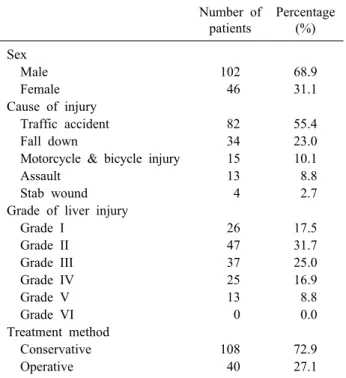
Table 1. Characteristic of the patients, the cause of injury and the treatment method
Number of patients
Percentage (%) Sex
Male 102 68.9
Female 46 31.1
Cause of injury
Traffic accident 82 55.4
Fall down 34 23.0
Motorcycle & bicycle injury 15 10.1
Assault 13 8.8
Stab wound 4 2.7
Grade of liver injury
Grade I 26 17.5
Grade II 47 31.7
Grade III 37 25.0
Grade IV 25 16.9
Grade V 13 8.8
Grade VI 0 0.0
Treatment method
Conservative 108 72.9
Operative 40 27.1
exists yet on which patients can be safely managed non-operatively.
Thus, this study aims to present data from patients with traumatic liver injury and to compare clinical findings and outcomes between the operative and NOM groups to de- termine factors that will aid in treatment choice.
MATERIALS AND METHODS
The medical records were reviewed for 148 patients with traumatic liver injury who were admitted from April 2000 to July 2012 to Seoul St. Mary’s Hospital in Seoul and St. Vincent’s Hospital, Suwon City, South Korea. The ethical committees of the aforestated hospitals examined and approved this study. The exclusion criteria were: pa- tients who were younger than 14 years, initially treated in other hospitals, or referred to other hospitals.
All patients were diagnosed using computed tomog- raphy (CT). Liver injury was classified according to the revised liver injury scale (6 grades) of the American Association for the Surgery of Trauma (AAST).6 The se- verity of the overall injury was calculated from hospital records using the Revised Trauma Scale (RTS), Injury Severity Score (ISS), and Glasgow Coma Scale (GCS).
In accordance with their hemodynamic stability, 108 pa- tients (72.9%) were treated conservatively (NOM group), and 40 patients (27.1%) underwent surgery (operative group). This study compared the severity of liver injury, grade of injury, extravasation of dye on CT, presence of hemoperitoneum, other organ injury, initial vital signs (heart rate, respiratory rate, systolic blood pressure), labo- ratory results (hemoglobin, liver enzymes), amount of transfusion, and mortality between the operative group and NOM group. There was also a comparison of the hemody- namic stability according to grade of liver injury.
Differences between groups were tested using the chi-square test, Fisher’s exact test, and Mann-Whitney test. SPSS V18.0 (IBM Corp; Chicago, Illinois, USA) was used throughout. The statistical significance was set at p-value <0.05.
RESULTS
In total, 148 patients were admitted for traumatic liver injury. The majority of patients (68.9%) were male.
One-hundred eight (72.9%) patients were treated with NOM, and 40 (27.1%) patients were treated surgically (Table 1). There was no patient treated with an inter- vention, such as embolization.
Blunt liver injury (n=144, 97.3%) occurred more fre- quently than penetrating injury (n=4, 2.7%). The main causes of injury were traffic accidents (n=82, 55.4%), fol- lowed by an accidental fall (n=34, 23.0%). Fifteen pa- tients (10.1%) were injured in motorcycle or bicycle acci- dents, and 13 (8.8%) had been assaulted. Stab wounds oc- curred in 4 (2.7%) patients.
A total 110 patients (74.3%) were low-grade liver in- jury (grades I, II, or III) and 38 patients (25.7%) were high-grade liver injury (grades IV or V), in accordance with the AAST scale. Not one of the patients were consid- ered grade VI (unsalvageable). Grade II liver injuries (n=47, 31.7%) were the most frequent, followed by grade III (n=37, 25.0%), grade I (n=26, 17.5%), grade IV (n=25, 16.9%), and grade V (n=13, 8.8%).
The most commonly injured other abdominal organ was the kidney (n=16), and other associated injured abdominal organs were the spleen (n=13), pancreas (n=8), bowel (n=7), and adrenal gland (n=4).
Table 2. Comparison between patients undergoing surgical and conservative treatment Surgical treatment
N=40 (27.1%)
Conservative treatment
N=108 (72.9%) p-value
Sex (n)
Male 31 (77.5%) 70 (64.8%)
Female 9 (22.5%) 38 (35.2%)
Mean RTS 10.5±1.9 11.8±0.9 <0.05
Mean ISS 30.6±15.6 13.7±10.3 <0.05
Mean GCS 12.3±4.3 14.7±1.5 <0.05
Grade of liver injury (n)
I-II-III 19 (47.5%) 91 (84.3%) <0.05
IV-V 21 (52.5%) 17 (15.7%) <0.05
Extravasation of dye on CT scan (n) 15 (38.5%) 9 (8.3%) <0.05
Hemoperitoneum (n) 37 (92.5%) 63 (58.3%) <0.05
Mean number of other abdomen organ injury 0.6±0.8 0.2±0.4 <0.05
Mean HR at admission 102.9±26.6 91.7±19.7 <0.05
Mean RR at admission 19.2±6.1 22.0±3.4 <0.05
Mean SBP at admission 97.4±31.3 117.5±25.5 <0.05
Mean hemoglobin at admission 11.9±2.6 13.0±2.1 <0.05
Mean hemoglobin after 4 hours from admission 10.0±2.8 12.1±2.0 <0.05
Mean AST at admission 448.4±405.2 412.3±426.9 0.64
Mean ALT at admission 295.0±261.8 378.2±537.6 0.35
Mean number of packed RBC 9.5±10.7 0.5±2.1 <0.05
Mortality (n) 10 (25.0%) 3 (2.8%) <0.05
RTS, Revised trauma scale; ISS, Injury severity score; GCS, Glasgow coma score; HR, heart rate; RR, respiratory rate; SBP, systolic blood pressure; AST, aspartate aminotransferase; ALT alanine aminotransferase; RBC, red blood cell
Comparison between the operative group and NOM group
Here was a significant difference between the groups for: injury severity and grade, number of patients with ex- travasated contrast dye during CT or with hemoper- itoneum, mean number of other abdomen organ injury, vi- tal signs, hemoglobin levels, volume of transfusion, and mortality rate (Table 2). The NOM group showed a sig- nificantly lower ISS, higher RTS score, and higher GCS score than the operative group (p<0.05). The percentage of low-grade liver injury was significantly greater in the NOM group (84.3% vs. 47.5%). In contrast, the percent- age of high-grade (grade IV and V) liver injury was great- er in the operative group (n=21, 52.5%) versus the NOM group (n=17, 15.7%).
The number of patients with contrast dye extravasation during CT was significantly higher in the operative group (n=15, 38.5%) as compared with the NOM group (n=9, 8.3%). Hemoperitoneum was more commonly observed in the operative group (n=37, 92.5%, vs. n=63 58.3% for the NOM group). The mean number of other abdominal organ injuries was also significantly higher in the operative
group (0.6 vs. 0.2, respectively).
The operative group had a higher average of initial heart rate and a lower average of initial respiratory rate and systolic blood pressure as compared with the NOM group.
In the laboratory findings, there were no differences be- tween the two groups in initial aspartate aminotransferase and alanine aminotransferase levels. However, the mean hemoglobin at admission and 4 hours after were sig- nificantly lower in the operative group than in the NOM group (p<0.05). The change in hemoglobin level was al- so greater in the operative group. The mean number of packed red blood cells on admission was significantly greater in the operative group (9.5 vs. 0.5).
The mortality rate was significantly higher in the oper- ative group than in the NOM group (25.0% vs. 2.8%).
According to the medical records, deaths in the NOM group were caused by cardiac arrest in the emergency de- partment (n=1), hypovolemic shock because of an external iliac artery laceration (n=1), and an external iliac vein lac- eration (n=1). These patients were being considered for surgery before they died. In the operative group, death
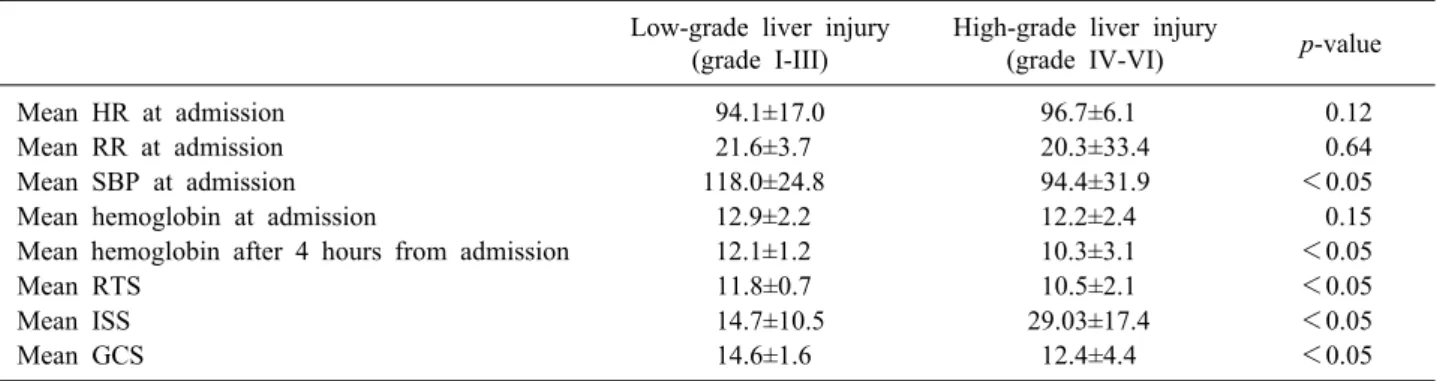
Table 3. Comparison of hemodynamic stability according to the grade of liver injury Low-grade liver injury
(grade I-III)
High-grade liver injury
(grade IV-VI) p-value
Mean HR at admission 94.1±17.0 96.7±6.1 0.12
Mean RR at admission 21.6±3.7 20.3±33.4 0.64
Mean SBP at admission 118.0±24.8 94.4±31.9 <0.05
Mean hemoglobin at admission 12.9±2.2 12.2±2.4 0.15
Mean hemoglobin after 4 hours from admission 12.1±1.2 10.3±3.1 <0.05
Mean RTS 11.8±0.7 10.5±2.1 <0.05
Mean ISS 14.7±10.5 29.03±17.4 <0.05
Mean GCS 14.6±1.6 12.4±4.4 <0.05
RTS, Revised trauma scale; ISS, Injury severity score; GCS, Glasgow coma score; HR, heart rate; RR, respiratory rate; SBP, systolic blood pressure
was caused by hypovolemic shock (n=3), disseminated in- travascular coagulopathy (n=3), multiorgan failure (n=2), cardiac arrest (n=1), and pulmonary embolism (n=1).
Comparison of hemodynamic stability according to the grade of liver injury
According to the grades of liver injury, there were no significant differences in the initial mean heart rate, mean respiratory rate, or mean hemoglobin (Table 3). In the low-grade group, the mean systolic blood pressure at ad- mission was significantly higher than that of the high-grade group (118.0 mmHg vs. 94.4 mmHg, p<0.05).
Furthermore, the mean hemoglobin after 4 hours was sig- nificantly higher in the low-grade group (12.1 g/dl vs.
10.3 g/dl, p<0.05). The mean RTS and GCS scores were higher (11.8 vs. 10.5, and 14.6 vs. 12.4, respectively, p
<0.05) and the mean ISS was lower (14.7 vs. 29.03, p
<0.05) in the low-grade group, as compared with the high-grade group.
DISCUSSION
The main cause of traumatic liver injury in the current study was traffic accidents (49.7%), which is similar to other published studies. In a multicenter study of 783 pa- tients, 54% of traumatic liver injuries were caused by traf- fic accidents,7 while another study found that traffic acci- dents were responsible for 72% of traumatic liver injuries.8 Brammer et al.9 observed that 67% of liver in- jury patients were injured by traffic accidents.
Males were 69% of those with traumatic liver injuries in this study. A male predominance in this type of injury
has been demonstrated in numerous other studies world- wide, including those conducted in the United Kingdom (79%),10 Scotland (76%),7 South Africa (81%),11 and the United States (65%).8,12
According to the injury grade, 70.9% of traumatic liver injuries in the current study were low-grade (I, II, or III), a finding similar to the results of previous studies. Pachter et al8. in their study described a predominance of grades I, II, or III injuries (80%). Scollay et al.7 found that most patients (69%) in Scotland with traumatic liver injury had AIS grade II injuries.
NOM is a safe and effective method in the management of hemodynamically stable patients with blunt hepatic injuries. The use of NOM in liver trauma has pro- gressively increased: from 1969 to 1970, no patients were treated with NOM; from 1995 to 1999, however, the per- centage had increased to 65%.13 In the current study, 72.9% of patients were treated with non-operatively from 2000 to 2012, which is similar to a study conducted in 2003.14
The current study showed significant differences in the grade of liver injury between the operative and NOM groups (p<0.05). In the NOM group, 84.3% of patients had low-grade injuries. Therefore, almost all patients with low-grade liver injuries in this study were treated non-operatively. In contrast, 15.7% of patients with high-grade injury were treated with NOM. There are rea- sons why high-grade liver injury is not well managed by NOM. First, high-grade injury is associated with hemody- namic instability. Second, patients with high-grade injury in the current study had a significantly lower mean systolic blood pressure at admission and reduced mean hemoglobin
levels 4 hours after. Third, patients with high-grade injury may also have a severe injury to the brain, spleen, kidney, and other organs. Furthermore, a comparison of the ISS and RTS and GCS scores showed that a high-grade injury was associated with other severe injuries.
Most surgeons determine the treatment of traumatic liv- er injury according to a patient’s hemodynamic status rather than the injury grade. The relationship between the liver injury grade and treatment choice remains controversial. In a study of 206 patients with liver injury, van der Wilden et al.15 found that liver injury grade was not significantly different between NOM failure versus success. Zago et al.16 showed no significant differences in liver injury grade between NOM and operative groups.
However, Pachter et al.8 described that most cases of failed NOM occurred in patients with grades IV or V injuries. Furthermore, there are several studies showing that NOM in high-grade liver injuries may lead to sig- nificant morbidity and possible mortality because of liv- er-related complications.17,18
In the current study, extravasation of contrast dye dur- ing CT and the number of patients with hemoperitoneum were significantly different in the two study groups (p
<0.05). Fang et al.19 suggested that the presence of ex- travasation on CT is associated with a failure of NOM in initially hemodynamically stable patients with blunt liv- er trauma. The van der Wilden study of 206 patients with hepatic injury suggested a volume of 300 ml of free intra- peritoneal fluid on CT as an independent risk factor for the failure of NOM.15 Thus, the extravasation of dye or presence of hemoperitoneum shown on CT could be fac- tors considered for surgical interventional rather than NOM.
The operative group showed a higher mortality than the NOM group in the current study. According to the medi- cal records, the most common cause of death was hypo- volemic shock. A retrospective study of 44 patients with grade V blunt hepatic injuries reported that total intra- operative blood loss were the significant factors that de- termined operative mortality after blunt hepatic trauma.20 In this study, patients who died after surgery received a mean of 15.2 units of packed red blood cells, which is higher than the mean of 9.5 received in the first 24 hours.
Most patients (80%) who failed surgery had grades IV and V liver injuries. Therefore, prompt resuscitation and
appropriate surgical management are required to reduce mortality in patients with high-grade injury and significant blood loss.
There are currently no definitive guidelines for the treatment choice of traumatic liver injury. Asfar et al. sug- gested guidelines for the NOM of liver injury.21 The au- thors describe a continued need for blood transfusion ex- ceeding 5 units, development of peritoneal signs, unstable vital signs despite resuscitation, and intrahepatic infections.
Velmahos et al. identified 4 independent risk factors for NOM failure: presence of a splenic or renal injury, free fluids greater than 300 ml observed on CT, requirement for blood transfusion, and a high-grade liver injury.22 We suggest that when surgeons decide between surgery and NOM in patients with traumatic liver injury, considering the following factors will be helpful: hemodynamic stabil- ity; grade of liver injury; amount of blood loss; injury scales such as RTS, ISS, and GCS; and extravasation of contrast dye and hemoperitoneum in CT findings.
There were several limitations of this study. This study was retrospective study. We made decisions about the treatment in patients that were not in accordance with the standard clinical protocol. We evaluated only mortality but did not evaluate complications; thus, we could not as- sess the causes of NOM failure.
In this study, we compared the clinical features be- tween NOM and surgical treatment of traumatic liver injury. There were significant differences between the two groups for: injury severity scores, grade of liver injury, extravasation of dye on CT, hemoperitoneum, other ab- dominal organ injuries, vital signs, hemoglobin levels, amounts of transfusion, and mortality rate. Thus, high-grade liver injury is associated with hemodynamic instability.
Considering the results of this study, we propose that hemodynamic stability and the following may be helpful when determining the treatment of traumatic liver injury:
grade of liver injury, amount of blood loss, and injury scales scores, such as the RTS, ISS, and GCS,.
REFERENCES
1. Croce MA, Fabian TC, Menke PG, Waddle-Smith L, Minard G, Kudsk KA, et al. Nonoperative management of blunt hepatic trauma is the treatment of choice for hemodynamically stable patients. Results of a prospective trial. Ann Surg 1995;221:
744-753.
2. David Richardson J, Franklin GA, Lukan JK, Carrillo EH, Spain DA, Miller FB, et al. Evolution in the management of hepatic trauma: a 25-year perspective. Ann Surg 2000;232:324-330.
3. Hurtuk M, Reed RL 2nd, Esposito TJ, Davis KA, Luchette FA.
Trauma surgeons practice what they preach: The NTDB story on solid organ injury management. J Trauma 2006;61:243-254.
4. Trunkey DD. Hepatic trauma: contemporary management. Surg Clin North Am 2004;84:437-450.
5. Strong RW, Lynch SV, Wall DR, Liu CL. Anatomic resection for severe liver trauma. Surgery 1998;123:251-257.
6. Tinkoff G, Esposito TJ, Reed J, Kilgo P, Fildes J, Pasquale M, et al. American Association for the Surgery of Trauma Organ Injury Scale I: spleen, liver, and kidney, validation based on the National Trauma Data Bank. J Am Coll Surg 2008;207:646-655.
7. Scollay JM, Beard D, Smith R, McKeown D, Garden OJ, Parks R. Eleven years of liver trauma: the Scottish experience. World J Surg 2005;29:744-749.
8. Pachter HL, Knudson MM, Esrig B, Ross S, Hoyt D, Cogbill T, et al. Status of nonoperative management of blunt hepatic in- juries in 1995: a multicenter experience with 404 patients. J Trauma 1996;40:31-38.
9. Brammer RD, Bramhall SR, Mirza DF, Mayer AD, McMaster P, Buckels JA. A 10-year experience of complex liver trauma.
Br J Surg 2002;89:1532-1537.
10. John TG, Greig JD, Johnstone AJ, Garden OJ. Liver trauma: a 10-year experience. Br J Surg 1992;79:1352-1356.
11. Krige JE, Bornman PC, Terblanche J. Liver trauma in 446 patients. S Afr J Surg 1997;35:10-15.
12. Fabian TC, Croce MA, Stanford GG, Payne LW, Mangiante EC, Voeller GR, et al. Factors affecting morbidity following hepatic trauma. A prospective analysis of 482 injuries. Ann Surg 1991;
213:540-547.
13. Lucas CE, Ledgerwood AM. Changing times and the treatment
of liver injury. Am Surg 2000;66:337-341.
14. Velmahos GC, Toutouzas K, Radin R, Chan L, Rhee P, Tillou A, et al. High success with nonoperative management of blunt hepatic trauma: the liver is a sturdy organ. Arch Surg 2003;138:
475-480.
15. van der Wilden GM, Velmahos GC, Joseph DK, Jacobs L, Debusk MG, Adams CA, et al. Successful nonoperative manage- ment of the most severe blunt renal injuries: a multicenter study of the research consortium of New England Centers for Trauma.
JAMA Surg 2013;148:924-931.
16. Zago TM, Pereira BM, Calderan TR, Hirano ES, Rizoli S, Fraga GP. Blunt hepatic trauma: comparison between surgical and non- operative treatment. Rev Col Bras Cir 2012;39:307-313.
17. Kozar RA, Moore JB, Niles SE, Holcomb JB, Moore EE, Cothren CC, et al. Complications of nonoperative management of high-grade blunt hepatic injuries. J Trauma 2005;59:1066-1071.
18. Goldman R, Zilkoski M, Mullins R, Mayberry J, Deveney C, Trunkey D. Delayed celiotomy for the treatment of bile leak, compartment syndrome, and other hazards of nonoperative man- agement of blunt liver injury. Am J Surg 2003;185:492-497.
19. Fang JF, Wong YC, Lin BC, Hsu YP, Chen MF. The CT risk factors for the need of operative treatment in initially hemody- namically stable patients after blunt hepatic trauma. J Trauma 2006;61:547-553.
20. Chen RJ, Fang JF, Lin BC, Hsu YP, Kao JL, Chen MF. Factors determining operative mortality of grade V blunt hepatic trauma.
J Trauma 2000;49:886-891.
21. Asfar S, Khoursheed M, Al-Saleh M, Alfawaz AA, Farghaly MM, Nur AM; Liver Trauma Registry Group. Management of liver trauma in Kuwait. Med Princ Pract 2014;23:160-166.
22. Velmahos GC, Toutouzas KG, Radin R, Chan L, Demetriades D. Nonoperative treatment of blunt injury to solid abdominal or- gans: a prospective study. Arch Surg 2003;138:844-851.