
가시광 감응 산화티탄(TiO
2
)손호경⋅Sherub Phuntsho⋅Yousef Okour⋅조동련*⋅김경석*⋅이휘지*⋅나숙현*⋅김종범*,**⋅김종호*,**,†
시드니공과대학교 환경공학부, *전남대학교 응용화학공학부 촉매연구소, **(주)빛과환경 환경기술연구소 (2008년 1월 25일 접수)
-
Visible Light Responsive Titanium Dioxide (TiO
2
)Hokyong Shon, Sherub Phuntsho, Yousef Okour, Dong-Lyun Cho*, Kyoung Seok Kim*, Hui-Jie Li*, Sukhyun Na*, Jong Beom Kim*
,**, and Jong-Ho Kim*
,**
,†Faculty of Engineering, University of Technology, Sydney, P.O. Box 123, Broadway, NSW 2007, Australia
*School of Applied Chemical Engineering & The Research Institute for Catalysis, Chonnam National University, Gwangju 500-757, Korea
**Photo & Environmental Technology Co. Ltd., Gwangju 500-460, Korea (Received January 25, 2008)
산화티탄은 가장 많이 연구된 반도체 산화물로 환경 정화와 에너지 생산에 응용이 크게 기대되고 있다. 공기와 물 속의 유해 유기물을 제거하고 물분해를 통한 수소 생산은 대표적인 응용 분야이다. 산화티탄의 저렴한 가격, 낮은 독성, 화학적 및 열적 안정성은 잘 알려진 장점이다. 그러나, 산화티탄의 단점은 가시광 영역에서 광촉매 활성이 낮다는 점이다. 이러한 문제점을 해결하기 위하여, 귀금속, 금속, 양이온, 음이온 도핑 방법으로 산화티탄의 표면과 전기적 구조를 변형시켜 가시광 영역에서 광촉매 활성을 높이기 위한 연구가 많이 진행되고 있다. 이번 총설에서는 산화티탄의 가시광 감응을 유도하는 방법에 대한 광범위한 정보를 정리하였다.
Titanium dioxide (TiO2) is one of the most researched semiconductor oxides that has revolutionised technologies in the field of environmental purification and energy generation. It has found extensive applications in heterogenous photocatalysis for removing organic pollutants from air and water and also in hydrogen production from photocatalytic water-splitting.
Its use is popular because of its low cost, low toxicity, high chemical and thermal stability. But one of the critical limi- tations of TiO2 as photocatalyst is its poor response to visible light. Several attempts have been made to modify the surface and electronic structures of TiO2 to enhance its activity in the visible light region such as noble metal deposition, metal ion loading, cationic and anionic doping and sensitisation. Most of the results improved photocatalytic performance under visible light irradiation. This paper attempts to review and update some of the information on the TiO2 photocatalytic tech- nology and its accomplishment towards visible light region.
Keywords: visible light photocatalyst, titanium dioxide, semiconductor, TiO2 modification
1. Introduction
1)
TiO2 semiconductor is the most popular photocatalyst because of its excellent optical and electronic properties, low cost, non toxicity, chemical and thermal stability[1]. TiO2 has been used for environ- mental remediation purposes such as in the purification of water and air and also in the solar water splitting[2-7]. Photocatalysis is by far one of the most superior technologies in the environmental purifica- tion because unlike many other technologies, photocatalysis does not serve as a mere phase transfer but completely degrades the organic pollutants by converting to innocuous substances such as CO2 and H2O. Photocatalytic water-splitting using TiO2 for hydrogen pro-
† 교신저자 (e-mail: [email protected])
duction provides a promising method to obtain clean, low-cost and environmentally friendly fuel by solar energy. Therefore the improve- ment and optimization of TiO2 is an important task for heterogeneous photocatalysis in the future[8]. Many researches have been carried out not only to improve the photoactivity of TiO2 under UV light but also to improve its activity under visible light region.
A number of scientific reviews have been published on visible light responsive (VLR) TiO2 photocatalyst[9-15]. The above review papers mainly cover the recent developments and progress of VLR TiO2 in terms of photocatalytic water-splitting and degradation of organic pollutants. It also includes TiO2 modification to produce VLR TiO2
such as chemical additives (electron donors and suppression of back- ward reaction), noble metal loading, ion doping, sensitization and
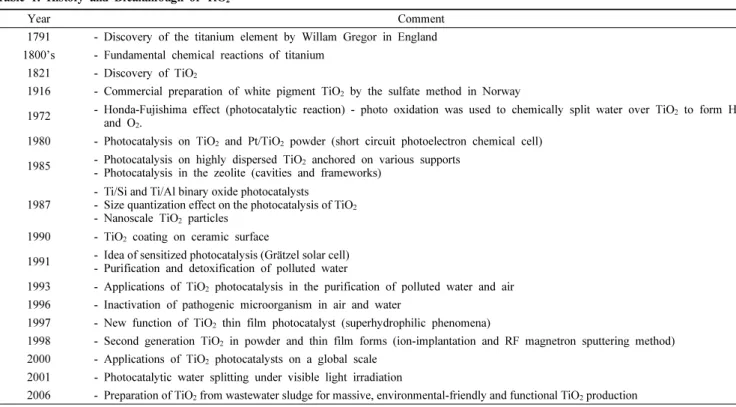
Table 1. History and Breakthrough of TiO2
Year Comment
1791 - Discovery of the titanium element by Willam Gregor in England 1800’s - Fundamental chemical reactions of titanium
1821 - Discovery of TiO2
1916 - Commercial preparation of white pigment TiO2 by the sulfate method in Norway
1972 - Honda-Fujishima effect (photocatalytic reaction) - photo oxidation was used to chemically split water over TiO2 to form H2
and O2.
1980 - Photocatalysis on TiO2 and Pt/TiO2 powder (short circuit photoelectron chemical cell) 1985 - Photocatalysis on highly dispersed TiO2 anchored on various supports
- Photocatalysis in the zeolite (cavities and frameworks)
1987
- Ti/Si and Ti/Al binary oxide photocatalysts - Size quantization effect on the photocatalysis of TiO2
- Nanoscale TiO2 particles 1990 - TiO2 coating on ceramic surface
1991 - Idea of sensitized photocatalysis (Grätzel solar cell) - Purification and detoxification of polluted water
1993 - Applications of TiO2 photocatalysis in the purification of polluted water and air 1996 - Inactivation of pathogenic microorganism in air and water
1997 - New function of TiO2 thin film photocatalyst (superhydrophilic phenomena)
1998 - Second generation TiO2 in powder and thin film forms (ion-implantation and RF magnetron sputtering method) 2000 - Applications of TiO2 photocatalysts on a global scale
2001 - Photocatalytic water splitting under visible light irradiation
2006 - Preparation of TiO2 from wastewater sludge for massive, environmental-friendly and functional TiO2 production
metal ion-implantation. In this paper, we have made an attempt to re- view detailed effects of each ion and its different modification techni ques to harvest visible light response TiO2.
2. Background
2.1. History of TiO2
Ever since the element titanium was discovered, TiO2 nanoparticles have drawn increasing interests as shown in Table 1[16-19]. Titanium element was first discovered by William Gregor in 1791, which he called menachanite but was named titanium four years later by Klaproth and the fundamental chemical reactions on which the present titanium industry is based were known before 1800, although it was not available in the markets until 1916[16]. Titanium dioxide (TiO2) was discovered in 1821 but it was not until 1916 that modern technol- ogy had progressed to the point where it could be massively produced. Fujishima and Honda[20] invented photo-electrochemical splitting of water over TiO2 to form H2 and O2 which opened up greater possibilities of solar energy conversion by semiconductors.
The extensive knowledge that was gained during the development of semiconductor photo electrochemistry during the 1970 and 1980’s has greatly assisted the development of photocatalysis and its application in the environmental purification. In 1995 TiO2 was used as a coating on ceramic surface by TOTO Company in Japan[21] while its applica- tion for inactivation of pathogenic micro-organisms in air and water was found in 1996. Since then, a number of photocatalyst applications have significantly developed.
2.2. Properties of TiO2
Titanium is widely distributed over the surface of the earth and is the ninth most abundant element in the earth’s crust comprising an estimated 0.62% of the earth crust[22]. The naturally occurring titanium ores are ilmenite, mineral rutile and brookite. Ilmenite is a black sand or rock and has the formula FeTiO3. The iron is par- tially oxidized to the trivalent state and ore also contains some impurities of silicon compounds. The TiO2 concentration in the ore varies from 45 to 60% depending upon the origin. Rutile is natu- rally occurring TiO2 and its colour vary from brown to reddish black, and its major impurities are iron compounds. The TiO2 con- tent in this ore normally varies from 90 to 95%.
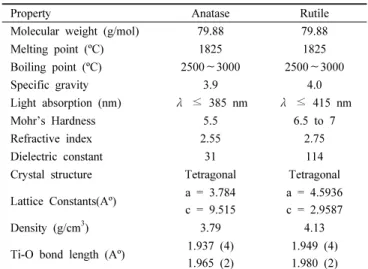
Table 2 shows some of the physical and structural properties of TiO2[23]. TiO2 exists in three different phases: anatase, rutile and brookite. TiO2 is chemically inert and thermally stable, non flammable and non toxic.
Electronic properties such as band gap play an important role for a semiconductor photocatalyst. Anatase phase TiO2 has higher band gap (3.2 eV) compared with other two phases of rutile (3.0 eV) and brookite. Anatase TiO2 is more popular as photocatalyst although ru- tile has been found to be effective under certain specific circum- stances[7].
Figure 1 shows the photocatalytic mechanism of water-splitting to produce hydrogen and oxygen and the formation of the precursor spe- cies of hydroxyl radical and superoxide ions when illuminated under UV light. The energy level between Valence Band (VB) and Conduction Band (CB) is called band gap. At normal state, electrons and the protons remain in the VB but when TiO2 is excited by photon
Figure 1. Mechanism of a) photocatalytic water-splitting from hydrogen production and b) formation of reacting species (hydroxyl radicals and superoxide ions) when illuminated under UV light.
Table 2. Physical and Structural Properties of Anatase and Rutile Structure of TiO2
Property Anatase Rutile
Molecular weight (g/mol) 79.88 79.88
Melting point (ºC) 1825 1825
Boiling point (ºC) 2500∼3000 2500∼3000
Specific gravity 3.9 4.0
Light absorption (nm) λ ≤ 385 nm λ ≤ 415 nm
Mohr’s Hardness 5.5 6.5 to 7
Refractive index 2.55 2.75
Dielectric constant 31 114
Crystal structure Tetragonal Tetragonal
Lattice Constants(Aº) a = 3.784 c = 9.515
a = 4.5936 c = 2.9587
Density (g/cm3) 3.79 4.13
Ti-O bond length (Aº) 1.937 (4) 1.965 (2)
1.949 (4) 1.980 (2)
with energy greater than its band gap energy level, electrons in the VB jump to the CB, creating e-/h+ pair. Because of its high band gap of 3.2 eV (anatase), only UV light source has been found to be effec- tive in the excitation of the electrons in TiO2.
To produce hydrogen, water should be efficiently broken into hy- drogen and oxygen by hydrolysis. When TiO2 is irradiated by UV light, e-/h+ pair is formed and when it comes into contact with ab- sorbed water, it gets oxidized by positive holes which in the process forms hydroxyl radicals (OH⋅), having strong oxidative decomposing power and therefore reacts with organic matter. In the presence of oxygen, the intermediate radicals in the organic compounds and oxy- gen molecules undergo radical chain reactions and consume oxygen to finally form carbon dioxide and water as shown below:
TiO2 (h+) + H2Oads→ TiO2 + OHads⋅
+ H+ (1)
TiO2 (h+) + OHads- → TiO2 + OHads⋅ (2) OHads⋅ + organics → CO2 + H2O (3) Under certain conditions, organic compounds directly react with the
positive holes (h+) resulting in oxidative decomposition. In the pres- ence of air, oxygen reduction takes place instead of hydrogen gen- eration and forms superoxide anions (O2⋅-
) which attach to the inter- mediate products in the oxidative reaction, forming peroxide or changing to hydrogen peroxide and then later to water.
TiO2 (e-) + O2,ads→ TiO2 + O2⋅- (4) TiO2 (e-) + H2O2,ads→ TiO2 + OH- + OHads⋅ (5)
2.3. Preparation of TiO2
TiO2 is produced using a variety of methods such as: i) sulfate method, ii) chloride method (vapor method), iii) alkoxide method, iv) specific method and v) sludge recycling method by Ti-salt floccu- lation in wastewater[18,19]. Among the methods, the sulphate process and the chlorine process are mainly used to produce TiO2 powders.
World production of TiO2 is shared almost equally between these two production routes[24]. The chlorine process will continue to displace the sulphate process in the future due to the economic, environmental and market forces. Environmental problems with waste disposal costs associated with the large amount of acid and iron salt wastes which are produced during the sulphate and chorine process have resulted in the closure of certain U.S based plants[25]. To resolve the above problems, Shon et al.[19] developed a new solution to the sludge problem through a process which recovered economically valuable TiO2 from wastewater. The work uses titanium tetrachloride (TiCl4) as an alternative coagulant instead of more commonly used salts of iron (FeCl3) and aluminum (Al2(SO4)3) to remove particulate and dissolved organic matter including persistent organic pollutant which is not re- moved in the conventional sewage treatment plants. TiCl4 coagulant successfully removed organic matter to the same extent as Fe and Al salts and moreover the floc size formed using titanium salt was bigger than that of Fe and Al salts which led to faster and effective settling.
This technique is a novel method in solving the environmental prob- lems associated with large quantity of sludge disposal using conven- tional coagulant. The settled floc was incinerated to produce func- tional TiO2 doped with carbon (C) and phosphorus (P) (TiO1.42C0.44P0.14) and up to 40 mg-TiO2 per litre of synthetic waste-
water was produced following TiCl4 flocculation.
Alkoxide can be used for the production of high purity TiO2 and thin film TiO2. Compared with different TiO2 preparation methods, TiO2 by the alkoxide method is free from counter anions so that the effect of the anions on photocatalytic activity is marginal[18]. The alkoxide method is mainly used for TiO2 coating. When the TiO2 sol is coated onto a substrate, thin films are obtained which are used for many applications. Specific methods to produce thin film TiO2 consist of i) thermal decomposition of titanium isopropoxide vapour (amorphous TiO2 of large surface area), ii) molten salt reaction of a mixture of titanium oxysulfate and alkaline nitrate (microcrystalline anatase TiO2), iii) laser induced decomposition of alkoxide (TiO2 mi- crocystal), iv) hydrothermal oxidation of titanium metal in an auto- clave (rutile TiO2), v) thermal reaction of titanium oxyacetylacetonate in organic media (microcrystalline anatase), v) high temperature hy- drolysis of alkoxide with water dissolved in organic solvent (nanocystalline anatase and higher photoactivity), vi) ultrasonic tech- nique, vii) microemulsion or reverse micelles and viii) thermal de- composition of alkoxide in inert organic solvents and high termper- ature hydrolysis of alkoxide with water liberated from solvent alco- hols (nanocystalline anatase and higher photoactivity)[26].
2.4. Applications of TiO2
TiO2 is the most widely used metal oxide for environmental appli- cations, cosmetics, paints, electronic paper and solar cells. As a pig- ment, TiO2 has a remarkably high refractive index and an exceedingly high reflectance. It offers maximum opacity or hiding power as well as imparting whiteness and brightness. The above properties allow TiO2 as a pigment in paints and coatings (including glazes and enam- els), plastics, paper, inks, fibers, food and cosmetics. The material is used as an opacifier in glass and porcelain enamels, sunscreens and cement. As photocatalyst, TiO2 is used as photosensitiser for photo- voltaic cells, and electrode coating in photoelectrolysis cells can en- hance the efficiency of electrolytic splitting of water into hydrogen and oxygen. Photocatalytic activity of TiO2 results in thin coatings of the material exhibiting self cleaning and disinfecting properties under exposure to UV radiation. These properties make the material a candi- date for applications such as medical devices, food preparation surfa- ces, air conditioning filters, and sanitary ware surfaces. As oxygen sensor, even in mildly reducing atmospheres TiO2 tends to lose oxy- gen and become sub stoichiometric. In this form the material becomes a semiconductor and the electrical resistivity of the material can be correlated to the oxygen content of the atmosphere to which it is exposed. Hence TiO2 can be used to sense the amount of oxygen (or reducing species) present in an atmosphere. The followings are the main different applications of TiO2.
2.4.1. Energy Applications of TiO2
Hydrogen is considered as an ideal fuel for the future. However re- newable energy contributes only about 5% of the commercial hydro- gen production via water electrolysis, while other 95% hydrogen is mainly from fossil fuels. Nano-sized TiO2 photocatalytic water-split-
ting technology has great potential for low-cost, stable, non corrosive, environmentally friendly solar-hydrogen production to support the fu- ture hydrogen economy. The solar-to-hydrogen energy conversion ef- ficiency is too low for the technology to be economically sound. The main barriers are the rapid recombination of photo-generated elec- tron/hole pairs as well as backward reaction and the poor activation of TiO2 by visible light.
In response to these deficiencies, many investigators have been con- ducting research with an emphasis on effective remediation methods.
Some investigators studied the effects of addition of sacrificial reagents to prohibit rapid recombination of electron/hole pairs and backward reactions. The organic compounds act as sacrificial electron donors by consuming photo generated holes and/or oxygen, decreasing the rates of electron-hole recombination and increasing H2-production rates.
EDTA, methanol, ethanol, CN-, lactic acid and formaldehyde have been tested and proved to be effective to enhance hydrogen production [27-30]. Moreover, the decomposition of these hydrocarbons could be also contributed to a higher hydrogen yield since hydrogen is one of their decomposed products. Li et al.[27] reported that the addition of cyanide has improved the amount of hydrogen evolution over NiO/TiO2 which is directly proportional to the cyanide concentration.
When complete liberalization of the sacrificial agent is achieved, the H2-production rate drops to steady-state values[31]. Photocatalytic decomposition of gaseous methanol on Pt/TiO2 nano-film can be car- ried out in a continuous-flow reactor for hydrogen production[32].
The pollutants can be acted as electron donors, so the photocatalytic production of hydrogen and decomposition of these pollutants hap- pened at the same time. The present of carbonate salts was very effi- cient for hydrogen production using Pt loaded TiO2 semiconductor photo catalysts[33]. According to Sayama et al.[34] these carbonates salts can prevent backward reaction and thereby enhance the hydrogen production rate. According to Hashimoto et al.[35] the rate of hydro- gen production from mixture of water and several aliphatic hydro- carbons when alkaline is added to the solution becomes 2∼4 times lager than those without alkaline. Several aromatic compounds also serve as electron donors for the reaction of the present photocatalytic hydrogen production with Pt/TiO2. The rate of hydrogen production is about 5∼10 times larger than those without alkaline. Other re- searchers focused on the enhancement of photo catalysis by mod- ification of TiO2 by means of metal loading, metal ion doping, dye sensitization, composite semiconductor, anion doping and metal ion-implantation.
TiO2 semiconductor photocatalyst loaded with noble metals like Pt can inhibit charge recombination and increase hydrogen production rate[36]. Since Pt is very expensive, low cost metals have been identified. Wu and Lee[28] deposited Cu particles on TiO2 for hydro- gen production from aqueous methanol solution. They reported that the maximum hydrogen production rate was ten times higher than that of blank TiO2 and 4.5 times higher than P-25 TiO2 for 1.2 wt% Cu.
Anion doping, such as nitrogen doping and sulfur doping, is more ef- fective the photocatalytic activity than metal ion doping[37,38]. Dye sensitization and composite semiconductor are very efficient methods
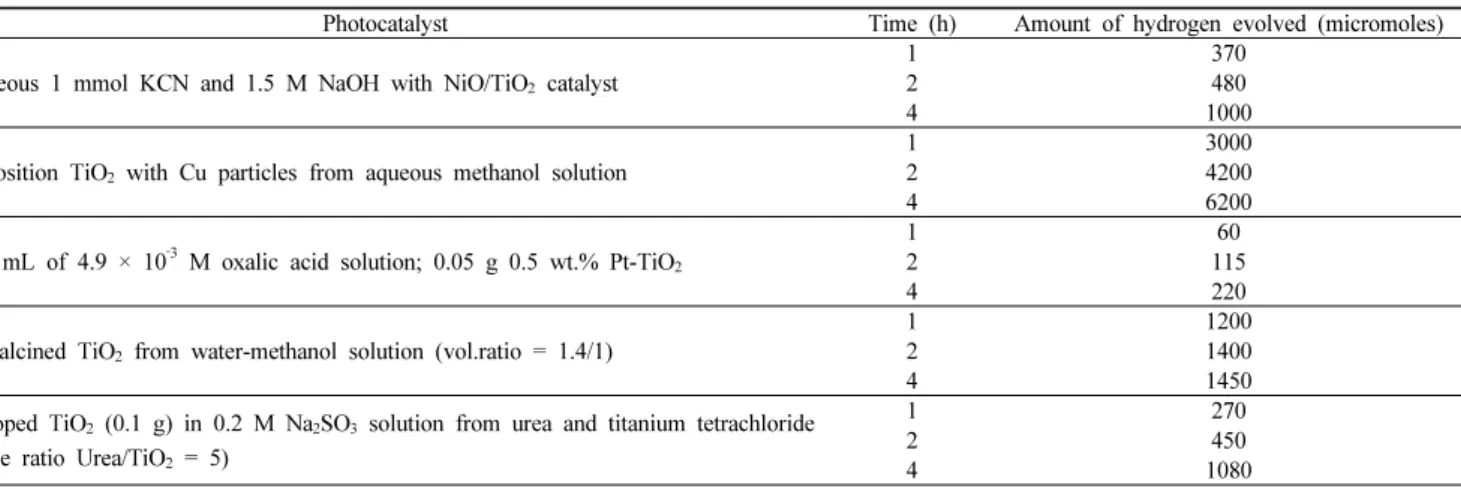
Table 3. Approximately Amount of Hydrogen Evolved after Different Times for Different Photocatalysts
Photocatalyst Time (h) Amount of hydrogen evolved (micromoles)
Aqueous 1 mmol KCN and 1.5 M NaOH with NiO/TiO2 catalyst
1 370
2 480
4 1000
Deposition TiO2 with Cu particles from aqueous methanol solution
1 3000
2 4200
4 6200
100 mL of 4.9 × 10‐3 M oxalic acid solution; 0.05 g 0.5 wt.% Pt-TiO2
1 60
2 115
4 220
Ar-calcined TiO2 from water-methanol solution (vol.ratio = 1.4/1)
1 1200
2 1400
4 1450
N-doped TiO2 (0.1 g) in 0.2 M Na2SO3 solution from urea and titanium tetrachloride (mole ratio Urea/TiO2 = 5)
1 270
2 450
4 1080
to expand light response of TiO2 to visible region. Metal ion im- plantation with wavelength up to 600 nm is a promising modification technique for red shift of TiO2 photocatalyst. TiO2 is bombarded with high energy ions which are injected into the lattice and interact with TiO2. The qualitative effectiveness of red shift observed to be the fol- lowing order: Cr > Mn > Fe > Ni[39,40].
The hydrogen evolution rate still remains very low as can be seen from Table 3[27,28,41-43], the apparent energy conversion efficiency defined as the ratio of the combustion heat energy of hydrogen to the radiation energy from the Xe lamp to the reactor. Kida et al.[30]
pointed out that according to some estimates an efficiency of 10∼ 15% might be economical for hydrogen production from water using solar energy.
Based on the studies reported in the literature, metal ion-im- plantation and dye sensitization are very effective methods to extend the activating spectrum to the visible range[15]. They play an im- portant role in the development of efficient photocatalytic hydrogen production to more than 10∼15% under sunlight.
2.4.2. TiO2 Applications to Air Purification
The applications of photocatalysis have been expanded, and it has become more attractive. An air treatment system for ethylene removal has been placed in grocery stores to remove the naturally occurring ethylene that causes fruits and vegetables to spoil. TiO2 photocatalytic reactor traps and chemically oxidizes volatile organic compounds con- verting them primarily to carbon dioxide and water. Photocatalytic re- actors are also modular and can be scaled to suit a wide variety of air quality applications. They operate at room temperature and with negligible pressure drop and therefore may be readily integrated into new and existing heating, ventilation, and air conditioning sys- tems[44]. TiO2 catalyst which is excited by plasma-induced high-en- ergy particles (electrons, photons), resulting in an enhanced pollutant air removal cleaning system for such as tobacco smoke found in in- door environments[45]. Thin films of organic contaminants can be photo catalytically oxidized on TiO2-coated surfaces. The thickness of the organic layer oxidized per day is 1∼5 pm, a rate sufficient for maintaining the cleanliness of a surface when the flux of contaminant
is not excessive[46]. In the process of treating air streams, TiO2 must be suspended on some sort of surface to allow the gas to pass over it and react. This is usually some sort of matrix with a high surface area and UV light.
The main purpose of photocatalytic coatings is to maintain clean windows or windshields, strip finger marks off walls and to reduce the density of colonies of microorganisms on hospital walls. Toluene and formaldehyde are malodorous and cause indoor pollution. Ichiura et al.[47] prepared a composite sheets of TiO2-zeolite using a paper- making technique to decompose formaldehyde and toluene under UV irradiation. It was shown that these sheets are potentially applicable as highly functional materials to be placed on walls and ceilings of houses.
TiO2 can be used to coat building materials, such as glass, tile, and cement[48]. Once coated, these sidings, roofs, or roads could remove outdoor air pollutants. These pollutants are converted into carbon di- oxide and water vapor. Coating roadway systems are being considered for air pollution mitigation[49], and has already been used on several building structures in Italy[50,51]. Most of the exterior walls of build- ings become soiled from automotive exhaust fumes, which contain oily components. When the original building materials are coated with a photocatalyst, a protective film of titanium provides the self-clean- ing building by becoming antistatic, super oxidative, and hydrophilic.
The hydrocarbon from automotive exhaust is oxidized and the dirt on the walls washes away with rainfall, keeping the building exterior clean at all times[52].
The glass covers on highway tunnel lighting fixtures darken from automobile exhaust, when TiO2 coated lamp covers are used, the glass surface remains cleaner longer, and the number of required cleanings is greatly reduced[21]. The Japanese company TOTO developed TiO2-coated surfaces tiles for operating rooms, hospital applications and public restrooms on the basis of joint research with Fujishima, Hashimoto and their colleagues at the University of Tokyo[46].
Colonies of pathogenic microorganisms do not persist on them, even under low level irradiance from common fluorescent lamps.
TiO2 coatings on sintered borosilicate glass were prepared employ- ing a synthetic route based on the hydrolysis of titanium oxysulfate
(TiOSO4)[53]. The stability and lifetime of the coatings were tested for more than 4000 h of continuous operation. They have not noticed any appreciable degradation of the coatings was observed.
Air purifier with TiO2 can prevent smoke, soil, pollen, bacteria, vi- rus and harmful gas as well as seize the free bacteria in the air by filtering percentage of 99.9% with the help of the highly oxidizing ef- fect of photocatalyst TiO2[54]. It was powerful for the sterilization of floating germs. They noticed that the number of germs after seven months operation were almost the same as obtained in the first operation. Ao and Lee[55] have used TiO2 immobilized on activated carbon (TiO2/AC) filter for removing indoor air pollutant which was installed in an air cleaner. They found that the higher removal effi- ciency of using TiO2/AC filter is owing to the large adsorption ca- pacity provided by the activated carbon. A 25% higher of nitrogen oxides (NOx) was achieved using TiO2/AC filter compared to the TiO2/AC only. Purification ability of TiO2/AC was found to be higher than single purification techniques in decomposing toluene, whether in high concentration or low concentration[56]. They found that the compound of TiO2 photocatalyst and active carbon has the advantage of active carbon absorption and TiO2 photocatalyst for decomposition.
2.4.3. Water Applications of TiO2
Photocatalyst coupled with UV lights can oxidize organic pollutants into nontoxic materials, such as CO2 and water and can disinfect cer- tain bacteria in water. This technology is very effective in removing further hazardous organic compounds and at killing a variety of bac- teria and some viruses in the secondary wastewater treatment.
Heterogeneous photocatalysis is an alternative treatment method for decontamination of organic compounds and disinfection of micro- organisms to purify potable water[57].
Disinfecting microorganisms such as E.coli is a great concern in drinking water supply facilities around the world. An annular type flu- idized bed reactor has been constructed and tested to disinfect E.coli bacteria[58]. They prepared specially catalyst of (TiO2 + glass bead + zeolite). The efficiency of E.coli removal was 99.99% by using the proposed technology. It has been found that the pilot scale is capable of degrading 84% of E.coli within 80 minutes compared with 77.3%
by using UV only which has capacity of handling 46 litre/min. E.coli degradation in larger scale is being tested for the first time and its re- sult compared with only UV destruction is promising. They recom- mended using this method on a continuous reactor to increases the po- tential for scale up. Peyton and DeBerry[59] used three different sem- iconductors (TiO2, ZnO, and Fe2O3) to decompose pollutant com- pounds in wastewater by using solar energy. They concluded that Fe2O3 was found to be ineffective, both ZnO and TiO2 catalyzed the removal of all compounds.
Yamashita et al.[60] has used the metal ion-implantation method to improve the electronic properties of the TiO2 photocatalyst to realize the utilization of visible light. They investigated the properties of TiO2 photocatalyst for the purification of water. The UV-VIS absorption spectra of these metal ion-implanted TiO2 photocatalysts were found to shift toward visible light regions depending on the amount and the
kind of metal ions implanted. They were found to exhibit an effective photocatalytic reactivity for the liquid-phase degradation of 2-propanol diluted in water at 295 K under visible light (λ> 450 nm) irradiation.
Zhanghai et al.[61] fabricated a composite nano-ZnO/TiO2 photo- catalyst with vacuum vaporized and solgel methods. They indicated that the nano-ZnO/TiO2 film improved the separate efficiency of the charge and extended the range of spectrum, which showed a higher efficiency of photocatalytic than the pure nano-TiO2 and nano-ZnO film. Under the optimal operation conditions, chemical oxygen de- mand (COD) values with the linear range of 0.3∼10.0 mgl-1 were achieved and these results were in good agreement with those from the conventional COD methods. Photocatalysis aided by TiO2 nano- particles is used in removing the organic chemicals which occur as pollutants in wastewater effluents from industrial and domestic sources.
In general, the main advantage of photocatalysis is that there is no further requirement for secondary disposal methods. Other treatment methods such as adsorption by activated carbon and air stripping merely concentrate the chemicals present by transferring them to the adsorbent or air and they do not convert them to non toxic wastes.
Also as compared to other oxidation technologies, expensive oxidation methods are not required as ambient oxygen is used.
2.4.4. Pigment Applications of TiO2
The most important function of TiO2 however is in powder form as a pigment for providing whiteness and opacity to such products such as paints and coatings (including glazes and enamels), plastics, paper, inks, fibers, food and cosmetics. TiO2 is by far the most widely used white pigment. TiO2 very white and has a very high refractive in- dex-surpassed only by diamond. The refractive index determines the opacity that the material confers to the matrix in which the pigment is housed. Hence, with its high refractive index, relatively low levels of TiO2 pigment are required to achieve a white opaque coating.
The high refractive index and bright white colour of TiO2 make it an effective opacifier for pigments. The material is used as an opaci- fier in glass and porcelain enamels, cosmetics, sunscreens, paper, and paints. One of the major advantages of the material for exposed appli- cations is its resistance to discoloration under UV light. Even in mild- ly reducing atmospheres TiO2 tends to lose oxygen and become sub stoichiometric. In this form the material becomes a semiconductor and the electrical resistivity of the material can be correlated to the oxy- gen content of the atmosphere to which it is exposed. Hence TiO2 can be used to sense the amount of oxygen (or reducing species) present in an atmosphere.
2.4.5. Applications of TiO2 in Construction Materials
TiO2 photocatalyst have high application potential in the con- struction industry. Many applications of this material already exist, such as photocatalytic ceramics, self cleaning glass, photocatalytic ce- ments and paints. TiO2 coating makes the material surface super hy- drophilic and self-cleansing. Thin coating not only makes the surface wetting and rinsing more uniform so that water slides easily without
forming a droplets and float away organic surface contaminants.
Moreover the organic dust that may come in contact with the surface will be removed by photocatalytic action in presence of sun light.
This technology has allowed the creation of many exterior and interior facades and self-cleansing rooftops from ceramic and glass tiles[62].
More applications could be found in the future for building applica- tions such as self cleansing pavements, walls, tunnels, curbs so on to remove NOx and SOx from the air produced by vehicular emissions.
Photocatalyst-modified cements are used for various applications in buildings, self-cleaning surfaces and solar-powered remediation de- vices for polluted waters[63]. They used a model reaction of photo- catalytic atrazine degradation by white Portland cement samples modi- fied with different semiconducting oxides TiO2 to investigate a possi- ble application of modified cements for the degradation of pollutants on building surfaces.
2.4.6. Applications of TiO2 in Waste Treatment
The most common water treatment technologies for hazardous or- ganic pollutants is using adsorption on granulated activated carbon and air stripping to destroy the contaminants. Its implementation on a large scale was prevented due to negative public perception and the potential hazard of incineration of organic toxic compounds.
Hofstadlert and Bauer[64] recommended that one of the most effec- tive approaches to resolve this problem is the mineralization of organ- ic contaminants by using photocatalytic semiconductors (SrTiO2).
They indicated that the potential is high enough to destroy most or- ganic compounds to carbon dioxide and mineral acids.
Photocatalytic degradation using ultraviolet-irradiated TiO2 suspen- sion has been investigated for destroying both free and complex cya- nide with a concurrent removal of copper metal[65]. In contrast to conventional cyanide waste treatment processes, the photocatalytic processes convert both free and complex cyanide species into carbon dioxide and nitrogen with no residual harmful chemicals remaining.
Results revealed that about 78% of free cyanide (10-3 M) was re- moved after illumination for 4 h in the presence of 1 g/L TiO2 at pH 11. Free copper (10-2 M) was completely removed in a shorter time of 3 h.
2.4.7. Oil Spills Applications of TiO2
Oil spills in the sea and ocean is one of the major environmental disasters in the marine environment. Researchers have been trying to study the effect of photodegradation in cleaning up the marine environment. The application of TiO2 photocatalysis has therefore been reported for the remediation of marine environment[66-68].
Photodegradation remains one of the least studied related to the crude oil and petroleum products spilled into the ocean or coastal waters. In fact, all the weathering process occurred simultaneously in the environment, and it is difficult to distinguish the changes induced by photodegradation from the changes induced by other process as biodegradation. Furthermore, the complex composition of crude petro- leum and oil fractions makes the photodegradation process com- plicated. A multitude of photoinduced reactions could take place, pro-
ducing also a multitude of photodegradation products. Polycyclic ar- omatic hydrocarbons (PAHs) frequently appear in oil spills, petroleum fractions and coal. The possible applications in the cleaning up of ma- rine oil spills have been considered[69]. The initial photoreactivity of petroleum distillates was found to depend greatly upon the aromatic fraction. PAHs are a class of persistent organic pollutants of special concern since they are carcinogenic and mutagenic[70]. PAHs were identified as the photosensitizing species responsible for most of the initiation reactions. An aromatic rich distillate photogrades about ten times faster than a homologue distillate with low aromatic con- tent[71].
The PAHs reached a high degree of photodegradation in the wa- ter-soluble fraction, but the heavier PAHs have fewer tendencies to photodegradation. However, the organic fractions remained almost unaffected. The alkyl derivatives of PAHs show lower photo- degradation rates than parent compounds (those without radical sub- stituents). In general, the photodegradation rate lowers with the in- creasing substitution[68].
Photodegradation is in some cases as important as biodegradation, since these two processes act upon different components of oil: alka- nes are biodegraded while aromatics tend to be photodegraded, and this fact leads to synergistic reactions which enhance the degradation of oil[72]. However, the n-alkanes with 10 or more carbon atoms and the isoprenoids such as prystane and phytane are very resistant to photodegradation[73], while in crude oil the secondary and the tertiary alkanes are easier to photogrades. N-alkanes were easily degraded by marine bacteria, while branched and cyclic alkanes were assumed to be less biodegradable[74]. Photoinduced toxicity of oil and PAHs has been confirmed due to the transient photodegradation intermediates which showed higher toxicity and solubility than the initial com- pounds, but were subsequently destroyed in the photocatalytic process [75].
Photocatalytic oxidations of dodecane and toluene have been con- sidered in pure water and in synthetic sea water on different TiO2
powders under simulated solar radiation. Minero et al.[67] indicated that diluted hydrocarbons disappear in pure water in the presence of TiO2 and simulated solar radiation. The current properties of pure TiO2 have been found to be effective only under UV irradiation and hence there are still more challenges for in-situ application of TiO2 in open sea or water bodies.
2.4.8. Disinfections Applications of TiO2
Photocatalyst does not only kill bacteria cells, but also decompose the cell itself. The TiO2 photocatalyst has been found to be more ef- fective than any other antibacterial agent, because the photocatalytic reaction works even when there are cells covering the surface and while the bacteria are actively propagating[76]. The end toxin pro- duced at the death of cell is also expected to be decomposed by pho- tocatalytic action. TiO2 does not deteriorate and it shows a long-term anti-bacterial effect. Generally speaking, disinfection by TiO2 is three times stronger than chlorine, and 1.5 times stronger than ozone.
Bacteria and viruses are decomposed on the tile surface due to the
strong oxidizing properties of TiO2. If you cover the walls, ceiling and floor with photocatalytic tiles, bacteria floating in the air in an operating room are also killed as they come in contact with the TiO2 surface[21].
2.4.9. Soil application of TiO2
One of the other applications of TiO2 photocatalysis is the re- mediation of organically contaminated soil and sludge. Both pure and composite photocatalyst has been tried for the removal of organic pol- lutants from soil. Xie et al.[77] investigated the enhancement of photo degradation of organics on soil surfaces using TiO2 induced by UV-light. They concluded that the photodegradation rate increased with the increase of the soil pH and photon flux. Higrashi and Jardim [78] used heterogeneous photocatalytic of TiO2 to degrade pesticide (diuron) under laboratory conditions to evaluate the potential use of this technology for in situ remediation. They reported that the photo- catalytic treatment combined with solar light to be very efficient in the destruction of diuron in the top 4 cm of contaminated soil, with the degradation rate markedly dependent on the irradiation intensity.
Pelizzetti et al.[79] mixed contaminated soils of 2-chlorophenol, 2,7-dichlorodibenzodioxin and atrazine with a photocatalyst (TiO2) in a aqueous slurry and exposed them to simulated solar radiation in the laboratory. They noticed that the organic contaminants were destroyed in relatively short time and reported that the photocatalytic processes could be effective chemical detoxification methods for contaminated soils. According to Hamerski et al.[80] the most active photocatalyst for soil purification was TiO2 modified by calcium.
The common challenge on the above TiO2 applications is to use its photoactivity under visible light irradiation. Thus, the following sec- tions focus on the modification of VLR TiO2.
3. Modification of TiO
2to Harvest Visible Light
Heterogeneous photocatalysis using semiconductor TiO2, is a fast growing field of basic and applied research for the degradation of or- ganic pollutants in water and in air and photocatalytic water-splitting for hydrogen production[78,81-83]. Oxidation of organic pollutants occurs because of the electron-hole pairs of the semiconductor after being excited by UV light with energy equal to or greater than the band gap energy (Eg) of semiconductor. TiO2 is considered the noble photocatalyst because of its many intrinsic properties, but it has its own limitations which are critical to photocatalytic technology[84]
such as: i) recombination of photo-generated electron/hole pairs, ii) fast backward reaction and iii) inefficient visible light utilization. The other significant drawback of TiO2 as photocatalyst is its wide bad gap because it is found effective only under UV irradiation and not under solar light that contain only about 4% of UV rays[5,7]. The use of UV as light source has many disadvantages such as requirement of external energy and also has to be conducted in a closed and pro- tected space. Therefore in order to deal with these drawbacks, techni- ques such as i) addition of electron donors (hole scavengers), ii) addi- tion of carbonate salts, iii) noble metal loading, metal ion doping, iv)
anion doping, v) dye sensitization, vi) composite semiconductors and vi) metal ion-implantation have extensively been investigated[15].
Several attempts have been made to modify UV responsive TiO2 to VLR TiO2 and one of the methods is by doping of TiO2 with other substances. Sol-gel method is one of the most popular methods used for doping TiO2. Mechanical alloying is also an effective process for refining grain size down to the nano-sized range and has the ability to alloy immiscible elements. In hydrothermal method the products prepared have well crystalline phase and have high thermal stability of the nano-sized materials. Flame spray pyrolysis is the coupling of high temperature and rapid quenching has been found to generate ho- mogeneous doping even at a concentration level as high as 30 wt%.
Ion-implementation technique is used for doping at higher concen- trations of dopants up to 60% and it gives better properties of pow- ders than sol-gel method.
Doping of TiO2 using noble metals such as gold[85,86], sil- ver[6,87,88], platinum[5,89] transition metal ions such as Co, Cr, Cu, Fe, Mo, V and W[1,90,91], non-metals such as C, N, P and S[7,37, 83,92], carbon, coupling with organic dye-sensitizers[93-95] have been reported and also shown a promising result under visible light irradiation though the mechanism under which this process occurs still remains controversial. The followings are some of the attempts made to modify the electronic structures of TiO2 to improve its effective- ness under visible light.
3.1. Noble Metal Loading (Pt, Au, Pd, Rh, Ni, Cu, Sn, Ag) Noble metals deposited or doped on TiO2 (Pt, Au, Pd, Rh, Ni, Cu, Sn and Ag) show various effects on the photocatalytic activity of TiO2 by different mechanisms[88]. These noble metals act separately or simultaneously depending on the photoreaction conditions and they may (i) enhance the electron-hole separation by acting as electron traps, (ii) extend the light absorption into the visible range and en- hance surface electron excitation by plasmon resonances excited by visible light and (iii) modify the surface properties of photocatalyst.
While some authors have reported an increased photocatalytic activity under visible light due to certain metal ion doping, others have re- ported a decreased activity. But generally the photocatalytic property of metal ion doped TiO2 has been reported to be quite higher than the undoped TiO2 and therefore is seen to be of very high research value.
The effect of platinum (Pt) loading on TiO2 was mainly studied for hydrogen generation from water but it was also observed that it in- creases the degradation of organic pollutants. Pt ion doped TiO2 has been reported to have not only high photocatalytic activity under UV irradiation but also effective under visible light irradiation. Kim et al.[5] successfully demonstrated the visible light photocatalytic degra- dation of chlorinated organic compounds using Pt doped TiO2. It had lower band gap than that of undoped TiO2 by about 0.2 eV and it showed higher photocatalytic activity than undoped TiO2. Analyses showed that Pt ions were substituted in the TiO2 lattice and the visible light absorption is due to electronic transition between the band gap edge (CB or VB). The defect redox states of Pt ions substituted in the TiO2 lattice. It was also found that the visible light activity of Pt-TiO2
Table 4. Characteristics of Noble Metal Loading on TiO2
Noble metal Remarks
Pt - Pt loading reduced the amount of Ti3+ (evidence of the occurrence of electron transfer from TiO2 to Pt)[97].
- Pt showed better than Au loading in terms of hydrogen generation[36].
Ag
- Anatase size (at 600 oC) decreased from 37 nm to 19 nm. Specific surface area increased from 45 to 63 m2/g. Photocatalytic activity increased by 18%. Phase transfer appeared from anatase to rutile at 700 oC and phase transformation was completed at 800 oC [98].
- Ag/TiO2 catalyst was evaluated for the photocatalytic degradation of reactive yellow-17 under UV and visible light irradiations.
The enhanced degradation of reactive yellow-17 was obtained with Ag-deposited TiO2 due to trapping of conduction band electrons [99].
Au
- Optical characterization by UV-vis spectrophotometer showed a shift in optical absorption wavelength to visible region which may be due to the incorporation of gold nanoparticles (1∼2%) into TiO2 structure. The kinetic study showed that the rate of decomposition of phenol using Au/TiO2 photocatalyst was improved by 2∼2.3 times than undoped TiO2[100].
- Au/TiO2 (0.45 wt%) in the oxidation of glucose resulted in high selectivity and high catalytic activities were made in the optimum conditions at a reaction temperature (40∼60 °C) and a pH value[101].
Pd
- Loadings of Pt and Au were better than that of Pd due to suitable electron affinity[102].
- Pd/TiO2 anatase exhibited higher acetylene conversion and ethylene selectivity than rutile TiO2 supported ones. Ag addition to Pd/TiO2 anatase suppressed the advantageous effect of the Ti3+ sites during selective acetylene hydrogenation[103].
Cu
- Cu loading was almost comparable to Pt loading for hydrogen production.
- The optimum contents for Cu (1.5 wt%), Pd (1 wt%), and Au (2 wt%) loadings produced the H2 evolution rate of 360, 420, and 557 µmol/h, respectively, suggesting that the H2 evolution resulted showed that the photocatalytic capability of the cocatalysts was in the order of Au > Pd > Cu[104].
Ni - Ni and Ag loadings among different noble metals were found to be effective for photocatalytic activity[105].
Sn - At 500 oC a mixture of anatase and rutile phases was observed with rutile.
Figure 2. Electronic structure of TiO2 by the substitution of metal ions or anions to harvest visible light response[10].
was observed to be strongly affected by the calcination temperature.
Nano-Ag doped TiO2 was investigated[88] and observed that the Ag clusters give rise to localized energy levels in the band gap of TiO2
and the VB electrons of TiO2 are excited at wavelength longer than 370 nm. The photonic efficiency increases with an increase in the metal loading up to an optimum level while above the optimum level, the dopants behave as electron/hole recombination centres. Under UV irradiation, Ag deposits exhibit the effect only as electron traps, thus leading to the enhancement in the Ag-TiO2 photocatalytic activity.
The substitution of Sn for Ti in the lattice structure is expected to aid the formation of solid solutions, alter the structure and contribute to the thermal stability of TiO2[96]. More details of the noble metal loading are shown in Table 4.
3.2. Ion Doping
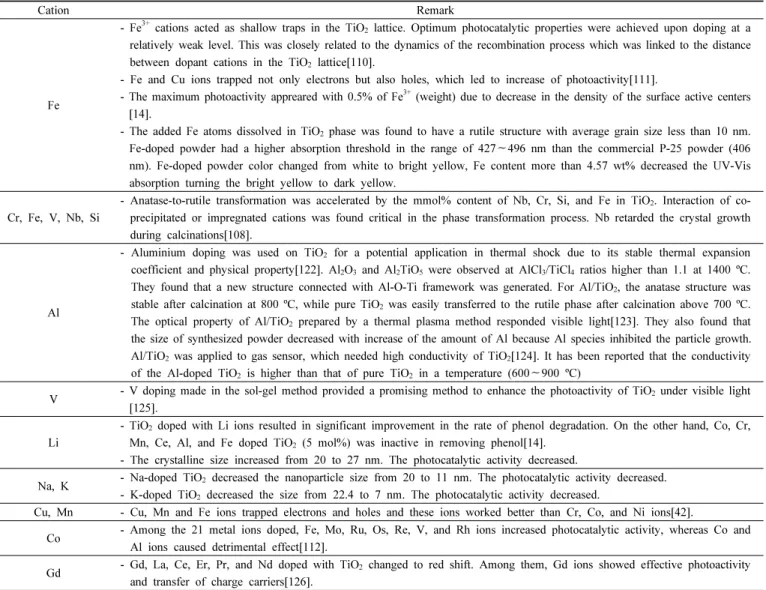
Cationic and anionic elements have been used as either dopants or simply as deposited with TiO2 to increase its photocatalytic activity under visible light region. The Ti ions in TiO2 has been substituted
![Figure 2. Electronic structure of TiO 2 by the substitution of metal ions or anions to harvest visible light response[10].](https://thumb-ap.123doks.com/thumbv2/123dokinfo/5046028.311930/9.892.146.830.512.877/figure-electronic-structure-substitution-anions-harvest-visible-response.webp)

![Table 8. Dye Classification[136]](https://thumb-ap.123doks.com/thumbv2/123dokinfo/5046028.311930/13.892.65.790.126.264/table-dye-classification.webp)
