Comparing Organic Carbon Storage of Upper 15-cm Soils between Different Land Use Types in Korean Inland
Kyung-Hwa Han, Hee-Rae Cho, Jeong-Tae Lee1, Gye-Jun Lee1, Suk-Young Hong, and Yong-Seon Zhang*
Soil & Fertilizer Management Division, NAAS, RDA, Suwon 441-707, Korea
1Highland Agriculture Research Center, National Institute of Crop Science, RDA, Pyeongchang, 232-955, Korea
This study was carried out to investigate the surface soil organic carbon fractions affecting by different land use types, including needle-leaf forest (FN), broad-leaf forest (FB), pasture, annual upland cropping land (upland), and paddy rice land (paddy). We chose seven regions across Korean inland, considering sea level altitude, and measured soil organic carbon content and physico-chemical properties such as bulk density at a depth of 0~15 cm using core samples in April for the each land use type. In addition, labile organic carbon fractions in soil including light fraction and hot water extractable carbon were investigated. From this study, organic carbon storage (Mg C per ha) in the upper 15-cm soils was highest in FB (37.8), and decreased in the order of pasture (29.1), FN (28.8), paddy (21.9), and upland crop (19.9). In forest, more than 20% of soil organic carbon existed as light fraction, the free organic matter. Hot-water extractable carbon contents of soils in five land use types were lower than 7% of their soil organic carbon content.
Key words: Soil organic carbon storage, Light fraction, Hot-water extractable carbon, Land use types
Received : November 18. 2011 Accepted : December 16. 2011
*Corresponding author : Phone: +82312900337 E-mail: [email protected]
Introduction
Different land use types have different vegetation and management practices, influencing soil organic status and soil structure such as bulk density, 3-phase & 4- component distribution, and aggregation. In recent years, we have paid more attention to conservation and retention of terrestrial carbon, which mitigating an increase in atmospheric carbon. Soil organic carbon has a wide spectrum of the physico-chemical composition, including plant residue, humus, and carbohydrate. Especially, labile organic pool has been regarded as an indicator reflecting land use change and management practices. Light fraction is a transitory pool of organic matter between fresh residues and humified, stable organic matter (Gregorich and Janzen, 1996). In other words, the ‘free’ or uncomplexed organic matter in soils is that had not undergone significant transformations and can be separated by density using heavy liquids. In addition, hot-water extraction of soil carbon, significantly related to soil microbial biomass,
can be applied for determining the easily available pool of organic component (Gandi et al., 2003).
In Korea, mountainous topographies dominate, occupying 2/3 of the total land area. Especially, about 80 percents of Korean inland is in regions where the altitude of the summit ranges from 300 to more than 1,000 meters, mostly belonging to forest. Partially, conversion of forest into arable land or recreation site has been progressed since 1950s (Um, 1986). In addition, grassland for livestock is mainly distributed in slope land nearby forest, occupying relatively small area compared to other land use types. Between valleys and flat land are mostly used as rice cropping. In case of forest, soils between under needle-leaf and under broad-leaf could have different properties each other.
To quantify soil carbon storage in response to land use or management, soil samples are typically collected and analyzed for soil C concentration. In this study, therefore, using core samples in a depth of 0-15 cm, we compared soil organic carbon storage including light fraction and hot water extractable organic carbon, affecting by different land use types including needle- leaf forest, broad-leaf forest, grassland, annual upland cropping land, and paddy rice land.
Table 1. Location of study regions.
Regions Latitude/longitude Elevation (m) Remark
Ansung N36.41/E128.44 52
Goesan N36.46/E127.51 196
Cheongwon N36.46/E127.28 134
Yongju N36.48/E128.34 177
Jecheon N37.10/E128.16 282
Namwon N35.26/E127.32 484
Pyeongchang N37.41/E128.44 762 Highland
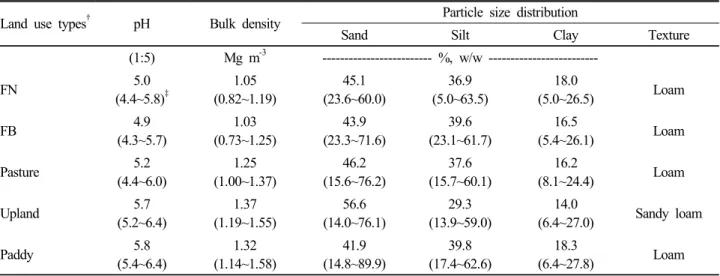
Table 2. Physical-chemical properties of soils used.
Land use types† pH Bulk density Particle size distribution
Sand Silt Clay Texture
(1:5) Mg m-3 --- %, w/w ---
FN 5.0
(4.4~5.8)‡
1.05 (0.82~1.19)
45.1 (23.6~60.0)
36.9 (5.0~63.5)
18.0
(5.0~26.5) Loam
FB 4.9
(4.3~5.7)
1.03 (0.73~1.25)
43.9 (23.3~71.6)
39.6 (23.1~61.7)
16.5
(5.4~26.1) Loam
Pasture 5.2
(4.4~6.0)
1.25 (1.00~1.37)
46.2 (15.6~76.2)
37.6 (15.7~60.1)
16.2
(8.1~24.4) Loam
Upland 5.7
(5.2~6.4)
1.37 (1.19~1.55)
56.6 (14.0~76.1)
29.3 (13.9~59.0)
14.0
(6.4~27.0) Sandy loam
Paddy 5.8
(5.4~6.4)
1.32 (1.14~1.58)
41.9 (14.8~89.9)
39.8 (17.4~62.6)
18.3
(6.4~27.8) Loam
†FN, needle-leaf forest; FB, broad-leaf forest.
‡Parenthesis indicate the range of each property of soils used.
Materials and Methods
Study regions selections To compare of surface soil organic carbon between different land use types, we chose seven regions across Korean inland, considering sea level altitude, and then, in each region, five sites with different land use types including forest with broad- leaf tree (FB), forest with needle-leaf tree (FN), pasture, upland with annual crops, and paddy rice fields in April before submerging paddy fie1d (Table 1).
Soil sampling and analysis Pines and oaks are dominant species of needle leaf and broad leaf forest in sites studied, respectively. Soil core samples, Φ5 cm
× h 15 cm, with three replicates were taken from soil surface to a depth of 15cm in April and were analyzed for determining soil organic carbon and physic-chemical properties, following the procedures in NIAST (2000).
Plant residues on the topsoil were sampled in FB, FN, and pasture land use types because conventional management of upland and paddy rice fields commonly
includes crop residue removal for harvesting and so there are rarely plant residues in next spring season in Korea.
Soil organic carbon content (SOC) was measured with by wet digestion method as described in Tyurin (1931).
The light fractions in soil organic carbon were investigated, referred from Gregorich and Ellert (1993), which was isolated from soils by flotation on dense liquid. The total carbon and nitrogen content of plant residues and light fractions, and soils were quantified using elementary analyzer (Flash EA1112, USA). Water and hot water extractable organic carbon were measured using the method of Gandi et al. (2003). The extraction of hot water extractable C was conducted in two simple steps.
The first step involved removal of readily water soluble C from the soils that may have come from recent liming of the soils or from animal excreta and soluble plant residues. This is referred to as water extractable carbon. The second step involved extraction of labile components of soil carbon at 80℃ for 16h. This is subsequently referred to as hot-water extractable carbon.
Table 3. Average values of soil structure factors and organic carbon storage in upper 15-cm soils of different land use types.
Land use types†
Soil 3-phase & 4-component
Stable macroaggregate
Soil organic carbon storage‡
Solid Liquid Gas
Mineral Organic
--- %, v/v --- %, w/w Mg C ha-1
FN 37.3 2.5 16.0 44.2 54.1 28.8
FB 35.8 3.3 24.6 36.3 56.8 37.8
Pasture 44.3 2.6 18.9 34.2 48.5 29.1
Upland 49.8 1.8 24.0 24.4 35.8 19.9
Paddy 47.8 1.9 29.8 20.5 45.8 21.9
†FN, needle-leaf forest; FB, broad-leaf forest.
‡Soil organic carbon storage (Mg C ha-1) in the upper 15-cm soils.
Table 4. The contents of labile organic carbon fractions in upper 15-cm soils as affected by different land use types.
Land use types† Soil organic carbon Light fraction Extractable carbon content
Water Hot water
--- g C kg-1 ---
FN 19 (100)‡ 5.6 (30) 0.05 (0.3) 0.60 (3)
FB 27 (100) 5.4 (20) 0.04 (0.1) 0.60 (2)
Grass 16 (100) 1.9 (12) 0.04 (0.2) 0.48 (3)
Upland 10 (100) 0.9 (9) 0.05 (0.5) 0.69 (7)
Paddy 11 (100) 0.8 (7) 0.05 (0.4) 0.57 (5)
†FN, needle-leaf forest; FB, broad-leaf forest.
‡Parenthesis mean the percentage of the each fraction to total soil organic carbon in each land use type.
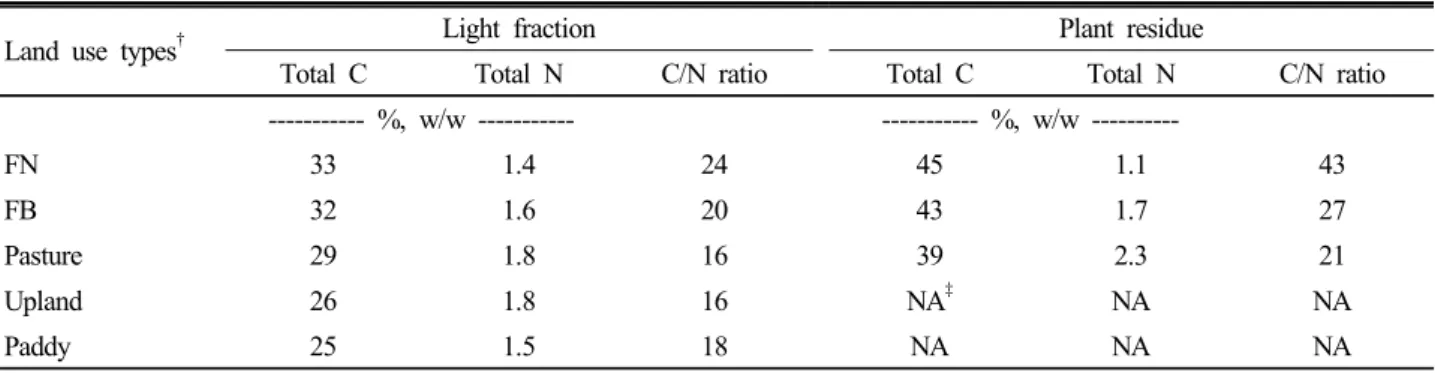
Table 5. Total carbon and nitrogen contents in light fraction and plant residues as affected by different land use types.
Land use types† Light fraction Plant residue
Total C Total N C/N ratio Total C Total N C/N ratio
--- %, w/w --- --- %, w/w ---
FN 33 1.4 24 45 1.1 43
FB 32 1.6 20 43 1.7 27
Pasture 29 1.8 16 39 2.3 21
Upland 26 1.8 16 NA‡ NA NA
Paddy 25 1.5 18 NA NA NA
†FN, needle-leaf forest; FB, broad-leaf forest.
‡Not Analyzed.
The total organic carbon of the extract was quantified using TOC analyzer (GE sievers 5310C, USA).
Aggregate stability in wet-sieving was used with Yoder’s sieve shaker (Daiki, Japan). After 0.25 mm sieve was set in the shaker, 10g soil put into the sieve and was saturated with water for five minutes. After up and down shaking for 10 minutes, the sieve with aggregate was dried and weighed. The sand correction was done with sieving, drying and weighing after
dispersing the aggregate with 10 mL of 5% sodium hexametaphosphate (Han et al., 2007; Kemper and Koch, 1966; USDA, 1999). Stable macro-aggregate in wet sieving (SM) was calculated using following equation.
SM (% of soil > 0.25 mm)
= [(weight of dried aggregate - sand)/(weight of dry soil - sand)] × 100
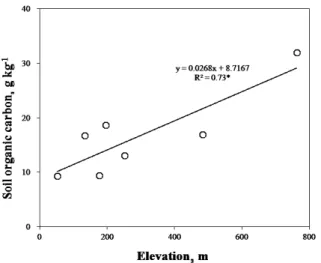
Fig. 1. Soil organic carbon content as affected by different elevations. *significant at 0.05 probability levels.
For calculating 3 phases and 4 components of soil structure, the particle densities of minerals and organics in soils were used as 2.65 and 1.3 Mg m-3, respectively (Scott, 2000).
Results and Discussion
Soil physical properties such as soil texture and bulk density, interacting land use types, are important factors for assessing soil organic carbon storage (Dalal and Bridge, 1996). Firstly, we examined them for the studied sites. Averagely soil textures of sites studied were shown as loam or sandy loam (Table 2). pHs of soils under forest and pasture was lower than those of soils under cropland. The bulk density was highest in upland 1.37 Mg m-3 and decreased in the order of paddy (1.32), pasture (1.25), needle-leaf forest (1.05) and broad-leaf forest (1.03), which is the same order to solid phase and the inverse order of porosity, consisting of liquid and gas. This difference in bulk densities between land use types resulted in some change in the order of organics share percentage in soil volume from that of soil organic carbon content (Table 3 & 4). Organic component in soil volume was highest in FB, and decreased in the order of pasture, FN, paddy, and upland. In the other words, volumetric organics shares of pasture and FN land use types, despite of small turn around, inverted from gravimetric organics shares due to the differences of bulk density. This informs us an importance of bulk density in calculating volumetric carbon sequestration from soil test value in weight basis (La1 and Kimble, 2001). Liquid phase, volumetric water content in field
retained water at sampling time, shared highest portion in paddy and decreased in the order of FB, upland, pasture, and FN land use types. On the contrast to this, FN had highest gas phase share and decreased in the order of FB, pasture, upland, and paddy land use types.
Except paddy, FB with high organic shares was also high values in field retained water and air-filled porosity.
Organic carbon content in a soil is determined by the turnover rate of soil organic carbon (SOC) affected by edaphic and environmental condition (Parton et al., 1996). Higher elevations give a soil lower temperature condition. Lower temperatures could reduce SOC turnover rates, leading to increases in SOC levels (Leifeld et al., 2005) as shown in Fig 1. In a climatic condition, however, land use types could determine the quality and quantity of SOC. Especially, in natural vegetation, plant residue has been known as primary source of soil organic carbon (Lorenz and Lal, 2005), and its quality such as C/N ratio largely influences the dynamics of soil organic carbon (Brady and Weil, 2008). Table 4 shows the average values of soil organic carbon content and light fractions in SOC for each land use types. Soil organic carbon content was highest in FB, and decreased in FN, pasture, paddy rice, and upland fields, showing the same order of their stable macroaggregate content. Soils under pasture had lower organic carbon content than soils under forest.
This is probably due to grazing by animals or periodic removal of residues for feeding livestock (Jiao et al., 2011). Upland with annual crops and paddy fields are commonly named as cropland with annually disturbed by human and agro-machines. Pasture converted to cropland under conventional cultivation commonly has a decrease in organic carbon content, because the amount of organic material returned to the soils is considerably lower than that under pasture and tillage enhance the decomposition of native soil organic matter (Dalal and Bridge, 1996). Paddy soils with periodic submergence were slightly higher in organic carbon content than upland soils, probably due to wetter condition inducing slower SOC turnover rate (Brady and Weil, 2008).
The soil organic carbon in light fractions, the ‘free’
or uncomplexed organic matter, had highest value in soils under FN, and decreased in the order of FB, Pasture, upland and paddy. Especially, 30% of SOC in FN existed as light fractions. Van Breemen and Finzi (1998) showed that broad-leaf litter decomposed rapidly compared to needle-leaf due to its larger amount of calcium ions,
and that the calcium ions, the decomposition products, returned to soils under the trees. From table 5, FN had higher C/N ratio than FB in both of plant residues and light fractions, with positive relationship each other. Pine leaf has often higher polyphenol content than other tree leaf. Lignin and polyphenol has been reported that they have an inhibitory effect of litter decomposition, similar to high C/N ratio. It could be suggested, therefore, that broad-leaf trees could give more favorable condition for soil organic carbon formation than needle-leaf trees.
Unlike light fraction, hot-water extractable carbon, active organic carbon closely related to soil microbial biomass, was higher percentage of total soil organic carbon in upland (7%) than those in other land use types, probably due to agricultural inputs such as compost.
Spring season, sampling time in this study, however, could not be regarded as microbial activity peak time in Korea, and thereby further research considering temporal variability will be needed.
By the large, this study shows that soil organic carbon storage (Mg C per ha) in a depth of 0-15 cm was highest in FB (37.8), and decreased in the order of pasture (29.1), FN (28.8), paddy (21.9), and upland crop (19.9). In forest, more than 20% of soil organic carbon existed as light fraction, the free organic matter. Hot-water extractable carbon content was lower than 7% of soil organic carbon.
Conclusions
Soil C concentration is most often converted to C mass per unit area by multiplying it with bulk density to a fixed soil depth. Using core samples enables us the soil C measurement in volume-basis as well as analyzing physical properties of soils. In addition, light fraction and hot-water extractable carbon could give us more information of soil organic carbon status in each land use type.
Acknowledgements
This study was carried out with the support of
“Research Program for Agricultural Science & Technology Development (Project No. PJ006375022011)”, National Academy of Agricultural Science, Rural Development Administration, Republic of Korea.
References
Brady, N.C. and R.R. Weil. 2008. The nature and properties of soils. Pearson-Prentice Hall Inc. New Jersy, USA.
Dalal, R.C. and B.J. Bridge. 1996. Aggregation and organic matter storage in sub-humid and semi-arid soils. In: Carter, M.R., and B.A. Stewart, Structure and Orgainc Matter Storage in Agricultural Soils. CRC Press, Boca Raton, FL, pp. 263- 307.
Ghani, A., M. Dexter, and K. W. Perrott. 2003. Hot-water extractable carbon in soils: a sensitive measurement for determining impacts of fertilisation, grazing and cultivation. Soil Biology &
Biochemistry 35:1231-1243.
Gregorich, E.G. and B.H. Ellert. 1993. Light fraction and macroorganic matter in mineral soil. In M.R. Carter (Ed.), Soil Sampling and Methods of Analysis. Canadian Society of Soil Science. Lewis Publishers.
Gregorich, E.G. and H.H. Janzon. 1996. Storage of soil carbon in the light fraction and macro-organic matter. pp.167-190. In M.R. Carter and B.A. Stewart(ed.) Structure and organic matter storage in agricultural soils. Lewis Publ., CRC Press. Boca Raton, FL.
Han, K.H., H.J. Cho, H.S. Lee, D.S. Oh., and L.Y. Kim. 2007.
Stable macro-aggregate in wet sieving and soil properties.
Korean J. Soil Sci. Fert. 40:255-261.
Jiao, F., Z.M. Wen, and S.S. An. 2011. Changes in soil properties across a chronosequence of vegetation restoration on the loess plateau of China. Catena 86:110-116.
Kemper, W.D. and E.J. Koch. 1966. Aggregate stability of soils form the western portions of the United States and Canada. U.
S. Dep. Agric. Tech. Bull. 1355.
La1, R. and J.M. Kimble. 2001. Importance of soil bulk density and methods of its measurement. pp31-44. In R. Lal, J.M.
Kimble, R.F. Follett., and B.A. Stewart (ed.). Assessment methods for soil carbon edited by R. Lal. Lewis Publ., CRC Press. Boca Raton, FL.
Leifeld, J., S. Bassin, and J. Fuhrer. 2005. Carbon stocks in Swiss agricultural soils predicted by land-use, soil characteristics, and altitude. Agric. Ecosyst. Environ. 105:255-266.
Lorenz, K. and R. Lal. 2005. The depth distribution of soil organic carbon in relation to land use and management and the potential of carbon sequestration in subsoil horizons. Advances in Agronomy 88:35-65.
NIAST. 2000. Method of soil and plant analysis. Published by National Institute of Agricultural Science & Technology.
Suwon, Korea.
Parton, W.J., D.S. Ojima, and D.S. Schimel. 1996. Models to evaluate soil organic matter storage and dynamics p. 421-448.
In M. R. Carter and B. A. Stewart(ed.) Structure and organic matter storage in agricultural soils. Lewis Publ., CRC Press.
Boca Raton, Fl.1995
Scott, H.D. 2000. Soil physics. Iowa state university press.
Tyurin, L.V. 1931. A new modification of the volumetric method of determining soil organic matter by means of chromic acid.
Pochvovedenie 26:36-47.
Um, K.T. 1986. Reclamation and soil conservation of sloped farm land in Korea. In Korea-China bilateral symposium on reclamation and soil conservation of sloped farm land. Published by RDA, Suwon, Korea.
USDA. 1999. Soil quality test kit guide. USDA-ARS, Washington, DC, USA.
van Breemen, N. and A.C. Finzi. 1998. Plant-soil interactions:
Ecological aspects and evolutionary implication. Biogeochemistry 42:1-19.