www.kosse.or.kr
Design Verification of APR1400 Reactor Vessel Through Re-engineering Approach
Mutegi Peter Mutembei, Ihn Namgung
*KINGS (KEPCO INTERNAL NUCLEAR GRADUATE SCHOOL
Abstract : This paper describes verification of APR1400 reactor vessel by applying the system engineering approach, in which the design re-engineering method is used to check the design parameters of APR1400 RV (reactor vessel). The RV is classified as safety class 1 and therefore must adhere strictly to the rules of ASME BPVC section III, subsection NB and seismic category I. This study explores designing the RV by following the ASME guidelines and making a comparative study with the current design. To meet this objective we apply system engineering methodologies to structure the process and allow for verification and validation of the major RV design parameters such as thickness of RV. The structural thicknesses of various part of RV are determined as well as reinforcements on the RV major nozzles. A 3D virtual reality model was created based on the design parameters using CATIA V5 and animation using Dassault Composer V2016. A comparison of re-engineered ARP1400 RV and standard APR1400 RV was done to show which design parameters were taken more conservative approach.
Key Words : Re-engineering, APR1400, Reactor Vessel, Nuclear Component
Received: November, 2016 / Revised: June 21, 2017 / Accepted: June 26, 2017
* Corresponding Author : Ihn Namgung, [email protected]
This is an Open-Access article distributed under the terms of the Creative Commons Attribution Non-Commercial
License(http://creativecommons.org/licenses/by-nc/3.0) which permits unrestricted non-commercial use, distribution,
and reproduction in any medium, provided the original work is properly cited.
[Figure 1] Reactor vessel assembly manufacturing process
1. Introduction
The RV is classified as safety class 1 and therefore must adhere strictly to the rules of ASME BPVC section III, subsection NB. Figure 1 shows the RV and its subparts. The RV forms the primary pressure boundary of Nuclear Steam Supply System, supports reactor internals and core and provides coolant flow path. There are 4 inlet nozzles and 2 outlet nozzles for coolant flow, and 4 direct injection nozzles and 61 ICI nozzles (bottom mount nozzles). The RV is supported vertically by 4 columns attached to cold-leg and horizontally by 4 shear lugs at the bottom of outside bottom head. The 4 shear lugs and base plate of support columns allows expansion of RV due to temperature rise while restraining horizontal movement during seismic events.
Figure 1 shows manufacturing process of reactor vessel. All of the sub-parts of the reactor vessel are made of forgings from ring for shell part and plate for head part. These forged parts are then cladded and welded together to form reactor vessel. The core region is made out of one shell section to prevent adverse effect on the reactor vessel
from welding process. Note also current RV manufacturing has been improved so that all weldings in RV are in circumferential weld and there are no longitudinal welds. The change of fabrication practice is to reduce the chances of stress corrosion cracking in the longitudinal weld.
The basic shape of RV is cylinder and sphere and openings for nozzle. Stresses in cylinder and sphere could be predicted accurately, but stresses rear by openning is not. The numerous nozzles/ openings that provide interface points to other systems and components form geometric discontinuities that create stress concentration. Henc there's a need to ascertain that proper structural compensation is made to ensure safety. The ASME BPVC section III, subsection NB provides guidelines for the design of vessel thickness and nozzles. The re-engineered design carried out in this study followed the ASME procedure. These ASME procedure is minimum guidelines to ensure safety of RV.
2. System Engineering Process
The system engineering approach takes on the design process of the system as a whole rather than focusing on individual components.
2.1 System Engineering Methodology
At the highest level, the systems engineering
methodology focuses on several major steps
including: problem statement, identification of
objectives and requirements documentation,
concept generation, analysis of alternatives
and trade studies, selection of primary concept,
system creation, including decomposition, design,
[Figure 2] Process Activity Relationships
[Figure 3] Flow chart of the project process
[Figure 4] Project process V-model
development, integration, verification and validation, and system operation and life cycle disposal.
The system is then physically reconstructed from its individual components into subsystems and eventually integrated into a complete system.
These steps are typically combined together in a manner that decomposes the problem into subsystem and eventually component-level
“pieces” that can be handled by individual engineers. Plans are created by the System Engineer to ensure that the subsystems and overall system perform as designed (verification) and ultimately meet the desired intent of the customer (validation) by performing the desired function.
Implementing the system engineering approach assesses the problem in a more efficient manner and makes the application of the desired codes for the RV design easy. When analyzing the RV structural design, and combining the desired codes, the output will be a design that satisfies the ASME code rules. This procedure is shown in Figure 2.
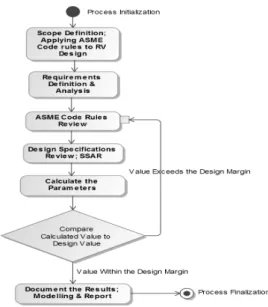
Figure 3 shows a flow chart representing the decision making process for the project.
The re-engineering process is represented in the V-model shown in Figure 4 below. It is a systematic approach to understand and project requirements of the client and maps these
requirements to process definitions. The V-model also performs reviews on multiple levels tracing all requirements through the entire project life cycle so as to ensure clear and unambiguous requirements.
2.2 Systems Engineering Requirements of ASME Design by Formula
In this study, ASME Section III Subsection
NB code requirements are considered as minimum
requirements. Any additional requirements by owner
or regulatory body will be additional requirements
which will increase conservatism in the design
of RV.
ASME code requirement are mostly concerned about high pressure of primary system, and it contains two different procedures. One is for the design by stress analysis and the other is the design by formula. Since the procedure for the design by formula need to includes uncer- tainties, it is more conservative than the design by analysis. While design by analysis is more accurate and allows less conservative design, it requires detailed stress analysis and complete and lengthy documentation of the analysis result.
In this study, design by formula is taken as re-engineering design of RV. In essesce the cylindrical shell thickness of RV and bottom head thickness to determin.
- Cylindrical Shells (NB-3324.1)
- Spherical Shells (NB-3324.2)
where
P = Design Pressure
R = inside radius of shell or head R o = outside radius of shell or head
S m = design stress intensity values (Sec. II, Part D, Subpart 1, Tables 2A and 2B) t = thickness of shell or head
Other requirements are related to nozzle openings. Since opening in vessel weaken the strength, it has to be reinforced. The Opening Reinforcement is defined in NB-3332. This reinforcement are also limited to the vicinity of openings in order to effectively reinforce the openings. The limit of reinforcement is defined in NB-3334. The strength of reinforcing
matrerial is defined in NB-3336, and requirements on multiple opennings are defined in NB-3335.
Also special vessel requirements are define in NB-33360.
In the design of vessel, these requirements shall be meet as minimum. Any specific owner requirement and regulatory requirements are additional requirements.
3. Sizing Calculation Methodology
3.1 Core and Reactor Internals Design Data Since the design re-engineering is based on APR1400 reactor design, the core design of APR1400 is used to determine the inner diameter of reactor vessel. Figure 5 shows the APR1400 core arrangement.
[Figure 5] Core Arrangement of APR1400
With reference to APR 1400 SSAR, we get the parameters of Core Support Barrel and Core Shroud as shown in Table 1 below.
The arrangement of ractor core is shown in
Figure 6 with design parameters given in
Table 1 is used.
<Table 1> Core Support Barrel and Core Shroud parameters
Components Parameter
Core Shroud OD: 3987.8 mm (157 in) CSB ID: 3987.8 mm (157 in) Reactor Vessel ID: 4629.15 mm (182.25 in)
Ø3987.8mm ID Ø4629.15mm
Core Shroud
Core Support Reactor Vessel
Ø3987.8mm OD