총 설
유해폐기물 처리용 소각 대체기술 동향
양희철†·조용준·은희철·김응호 한국원자력연구원
305-353
대전시유성구덕진동150-1 (2007
년7
월2
일접수, 2007
년7
월15
일채택)
On the Alternative Incineration Technologies for the Treatment of Hazardous Waste
Hee-Chul Yang
†, Yung-Zun Cho, Hee-Chul Eun and Eung-Ho Kim
Korea Atomic Energy Research Institute, 150-1, Duckjin-dong, Yuseong-gu, Daejeon 305-353, Korea
(Received 2 July 2007; accepted 15 July 2007)
요 약
소각은유기성유해폐기물에대해가장발달된유용한처리기술로인정되어왔다
.
그러나PCBs
와같이유해한폐 기물의처리를위한소각로의부지확보나인허가가유해한대기오염물질의배출에대한주민의우려로용이하지않 다.
최근에많은소각대체기술들이개발되어왔으며이기술들은소각에비해다이옥신이나퓨란과같은유해한물질 의배출이적어주민의우려를완화시킬수있다.
본논문에서는다양한유해폐기물의종류에대해현재적용이가능 한소각대체기술들을검토하였다.
다양한범주의비열처리및열처리소각대체기술들을공정운전조건,
적용대상폐 기물및이차폐기물발생특성의관점에서평가하고몇가지소각대체기술들에대해서는공정의운전원리에대해자 세히설명하였다.
Abstract −
Incineration has been regarded as the best developed technology available for organically hazardous waste.
However, permitting and siting incinerators to treat hazardous waste such as a waste containing PCBs is very difficult due to the public concerns associated with toxic air emissions. Recently, a lot of alternatives to an incineration have been developed and these technologies have the potential of alleviating public concerns by decreasing emissions of hazard- ous materials such as dioxins and furans. This paper reviews currently available alternative incineration technologies for various hazardous waste streams. Various categories of non-thermal and thermal alternative incineration technologies have been evaluated in terms of their process operating condition, applicability of a waste stream and their emission of secondary waste. Detailed descriptions of operating principles of several technologies are also provided.
Key words: Alternative Incineration Technology, Chemical Oxidation, Steam Reforming, Gas-phase Reduction, Molten Salt Oxidation
1. 소각 대체기술이란?
가연성폐기물의처리를위한소각공정은오랫동안운영되어왔 고또이의개선을위한수많은연구개발이끊임없이수행되어왔 다
.
그결과개선된폐기물소각공정은유해물질의환경배출을적 절히억제하고있으며,
최근에는폐기물소각공정의운전으로인한 환경위해성에대한논란은거의일어나지않고있다.
그럼에도불구하고다이옥신이나
,
산가스또는방사성핵종이나유해중금속등과같은유해물질의환경배출이우려되어소각처리가용이하지않 은특수한종류의폐기물들이 있다
.
이러한폐기물에는PCBs (polychlorinated biphenyls)
와같은POPs(persistent organic pollutants:
잔류성유기오염물질
)
함유폐기물, PVC
등과같은할로겐화유기폐기물
,
방사성물질과화학적유해물질이동시에포함되어있는혼 성폐기물(mixed waste),
화약류등의폭발성물질(explosives)
이나추진제
(propellants)
와같은반응성폐기물및병원성폐기물등이이에해당된다
.
소각대체기술이란다이옥신이나산가스,
유해중금속등의환경유해물질배출을근원적으로방지하면서이러한소각처리가 용이하지않은폐기물을분해처리할수있도록개발되었거나개발 중인새로운폐기물처리기술을의미한다고할수있다
.
2. 소각 대체기술 개발 배경
소각대체기술은산화대체기술
(alternative oxidation technologies:
AOTs)
이라고도표현된다[1].
즉화염에노출되지않은상태에서자유산소
(free oxygen)
에의한산화처리없이유기물질을분해하는기술로정의된다
.
열처리공정(thermal treatment process)
또는비열처†
To whom correspondence should be addressed.
E-mail: [email protected]
리공정
(nonthermal treatment process)
으로크게구분되는산화대체 기술들은모두전통적인산화열처리기술인소각에비해서는상대 적으로아주적은양의배기가스를배출하고,
독성재조합생성물인다이옥신
/
퓨란(PCDD/Fs)
의생성을근본적으로억제하는공정특성을가진다
.
고온열처리소각대체기술들도소각로의운전온도 보다낮은온도에서운전되어납,
카드뮴,
비소등의준휘발성(semi-
volatile)
유해중금속은물론세슘등의방사성핵종들을쉽게휘발시키지않아이의배출이억제할수있다
.
즉소각대체기술이란근 본적으로과잉공기고온연소에대한대체기술로다이옥신및유해 중금속의배출을근본적으로억제할수있는공정을의미한다고할 수있다.
미국에서는소각이나산화열처리공정에서배출되는유해한배 기가스에대한주민들의우려가소각대체기술에대한개발과보급 에가장큰동기가되었다고보고되고있다
.
특히주민들은다음과 같은사실들에크게우려하고있다고한다고보고되고있다.
-
미연소생성물(products of incomplete combustion: PICs)
및유 해중금속의배출-
소각로의운전과정에서배출되는많은양의배기가스-
비정상운전이나사고로인한유해물질의배출가능성,
즉제어 되지않은상태에서의유해물질의대량배출가능성- PVC
등할로겐화유기물소각시피할수없는다이옥신과퓨란의합성생성과이생성물들의배출
1994
년이후미국EPA
에서2,3,7,8 tetrachlorodibenzo-p-dioxin (TCDD)
의독성에대한재평가가이루어졌으며, 1997
년에기존및계 획중인소각로에대한배기가스허용기준이더욱강화되었다[2-6].
새로운규정의만족을위하여부가적인배기가스처리설비의설치 및운영이필요하게되었는데이에소요되는비용이과대하여기존 소각로운영의경제성이부재하게되었으며
,
이로인하여수많은소 각로의가동이중지되었는데병원성폐기물소각로의경우에만약5,000
기이상이가동중지·
해체되었다[6].
한편
,
유럽에서도2000
년에소각로에대한배기가스허용기준이 크게강화되어미국과마찬가지로많은소각로의운영이중단되었 다.
최근체코,
폴란드등새로운10
개국이유럽연합에가입되었는 데이들국가에서운영해오던소각로는다이옥신허용기준0.1 ng/m
3TEQ
를만족시킬수없어고비용의배기가스처리장치로기존의소 각로를보강할것인지아니면소각로의운영을중단하고소각대체 공정을이용할것인지에대한선택을필요로하고있다.
유럽연합 에서는2004
년5
월에발효된POPs(persistent organic pollutants:
잔류성유기오염물질
)
의근절에관한스톡홀름협약을준수하기에적합한소각대체공정을정책적으로권장하고있으며
,
소각대체기술적용의필요성을다음다섯가지항목으로강조하고있다
[7].
-
소각로는다이옥신과중금속과같은유해한기체상오염물을환 경으로배출한다.
-
다이옥신과중금속을반드시포함하는소각재는유해한오염물 질이다.
-
소각로는후처리장치비용이과대하므로소각대체공정보다경 제성이부족하다.
-
소각로는지속적으로강화되는배기가스허용기준을충족하기 위해끝없는장치개선이필요하다.
-
소각대체기술의적용으로POPs
근절에관한국제협약을준수 할수있다.
3. 대상 폐기물 및 2차 폐기물 발생 특성 몇가지기술들을제외한소각대체기술들은대부분적용대상폐 기물이소각에비해상당히제한적이다
.
따라서폐기물의특성에따 라적용될수있는소각대체기술이결정된다고할수있다.
또한소각대체기술의적용성은폐기물에포함되어있는
POPs,
중금속,
방사성핵종등과같은유해물질의자체의특성보다는오염된폐기 물매질의특성에더크게의존된다
.
따라서폐기물매질에따라소 각대체기술의적용성이결정된다고할수있다.
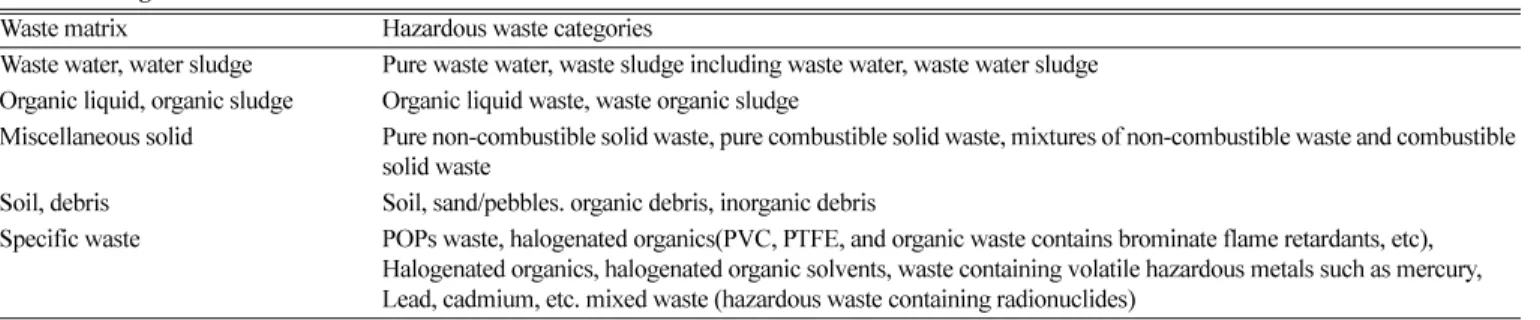
우선폐기물매질별특성에따라유해물질을함유하는폐기물을크게분류하면다음
Table 1
과같이나타낼수있다[8].
소각대체기술로서의적용성을평가할때고려하여야할또다른 중요한사항은처리시에발생되는배기가스와
2
차폐기물이다.
여 러가지소각대체기술들은각기다른장단점을가지고있지만가 장중요한배기가스의발생량과2
차폐기물의발생량측면에서폐 기물의처리기술의큰범주로분류할경우에Table 2
에나타낸바 와같은특징을지님을알수있다.
즉분류되는기술들을처리온도 가높은순으로나열해볼경우,
순서대로배기가스의발생량이많은반면상대적으로
2
차폐기물의발생량이적은등의단점과장점Table 1. Categories of hazardous waste matrix
Waste matrix Hazardous waste categories
Waste water, water sludge Pure waste water, waste sludge including waste water, waste water sludge Organic liquid, organic sludge Organic liquid waste, waste organic sludge
Miscellaneous solid Pure non-combustible solid waste, pure combustible solid waste, mixtures of non-combustible waste and combustible solid waste
Soil, debris Soil, sand/pebbles. organic debris, inorganic debris
Specific waste POPs waste, halogenated organics(PVC, PTFE, and organic waste contains brominate flame retardants, etc), Halogenated organics, halogenated organic solvents, waste containing volatile hazardous metals such as mercury, Lead, cadmium, etc. mixed waste (hazardous waste containing radionuclides)
Table 2. Rank of waste treatment technologies as a function of off-gas volumes and secondary waste amount
Waste treatment
technology Rank of treatment
temperature Rank of
off-gas volume Rank of secondary waste amount
Thermal destruction 1 1 4
Chemical destruction 2 2 3
Separation process 3 3 2
Biological treatment 4 4 1
을동시에지니고있는것으로분석되었다
. Table 2
는소각대체기 술뿐만아니라소각을포함한다른모든폐기물처리기술들도이 러한규칙을따른다고할수있다[1, 8].
4. 소각 대체기술의 적용성
다양한소각대체기술들을저온산화공정
(low-temperature oxidation),
탈할로겐화
(dehalogenation),
열탈착(thermal desorption),
고온처리(high-temperature treatment)
등의4
가지군으로크게분류하고각 각의기술에대해적용온도및압력,
적용가능폐기물,
분해제거효 율,
배기가스종류및2
차폐기물에대해요약하여Table 3
에나타내었다
. Table 3
에 나타낸 소각 대체기술들 외에도photolytic
oxidation, ultrasonic, electron beam
및x-ray/gamma ray
기술과같 은radiation induced oxidation
기술들을소각대체기술에포함하는 경우도있지만이기술들은주요소각대상인가연성유기물질을처 리하기어렵고주요처리대상이수용액상오염물질인폐수이기때 문에본기술분석에서제외하였다.
유사한이유에서생물학적처 리(biological treatment)
및토양세척(soil washing)
기술들도본소 각대체기술동향분석에서제외하였다.
본동향분석에서는
Table 3
에나타낸여러가지폐기물처리기술 들중다양한폐기물종류에대해적용성이높은저온처리(
비열처리)
및고온처리
(
열처리)
기술들의각각에대해우리나라에비교적많이알려져있지않은기술이지만유해폐기물의소각대체기술로서 의그적용범위가높은기술들
,
즉주소각대상폐기물인가연성 유기폐기물을처리할수기술들을선정하여각공정의운전원리에 대해정리하였다.
4-1. DETOX[10, 11]
미국의
New Mexico
에있는Albuquerque
사의Delphi Research
에의해개발된공정으로촉매화학적분해공정
(catalytic chemical destruction process)
을대표할수있는공정이다.
이공정은촉매를 사용하여산화제를자체적으로재생시키면서유해유기물을산화·
분 해하는공정이다.
약150~250
oC
의저온에서운전되고촉매의특성 상규제되는배기가스를근본적으로생성시키지않을뿐만아니라 운전온도가낮아배기가스에휘발성중금속이포함되지도않는다.
사용되는작용유체인
Pt
및Ru
가담지된FeCl
3를포함하는시약용 액(reagent solution)
은반응과정에서소멸되지않을뿐만아니라금 속성분도쉽게녹이므로폐기물에포함되어있던유해중금속등은Table 3. Operating conditions, acceptable waste streams, DRE and secondary wastes of alternative incineration
Alternative incinerationtechnology Temperature (°C) Pressure
(Psig) Acceptable waste streams DRE* Off-gas streams Secondary waste streams Wet chemical oxidation [9-20]
- Wet air oxidation 100-200 300-3,000 Aqueous, organics <10% 60->99% CO2, VOCs Organic reaction byproducts - DETOXSM 100-300 20-200 Organic sludge, soild, liquid, soil >99.9% CO2, VOcs, HCl Depleted acid, inorganic sludges - Direct chemical oxidation 80-100 Ambient Organic sludge, soild, liquid >95% CO2, CO, VOCs Dilute aqueous, batch residuals - Acid digestion 150-200 0-15 Organic sludge, soild, liquid, soil >99.9% CO2, VOCs, NOx Depleted acid, inorganic sludge - Electrochemical oxidation Ambient-70 Ambient Organic sludge, cellulose, plastic 90%->99% CO2, CO, NOx, HNO2 Depleted acid, inorganic sludge Dehalogenation [21-25]
- KPEG/APEG Ambient-115Ambient Halogenated organics, soil, sudge >99.5% VOCs Biphenyls, reaction byproducts - BCDP 320-350 Ambient Halogenated organics, soil, sludge >99.5% VOCs, dust Biphenyls, reaction byproducts - Birch reduction Ambient Ambient Halogenated organics, soil, sludge >99.5% Ammonia Biphenyl, CaCl2, Ca(OH)2
- LARC Ambient Ambient Halogenated organics, soil, sludge >99.5% None Biphenyl and NaCl
- Photo-reduction <500 Ambient Gaseous halogenated organics Unknown HCl Hydrocarbons
- Biodechlorination Ambient Ambient PCBs-contaminated aquous waste
and soil Unknown CO2 Biomass
Gas phase destruction [26-33]
- Thermal reduction >850 Ambient Chlorinated organic waste >99.99% H2, CH4, CO, H2O, light hydrocarbonsScrubber sludge - Electron beam Ambient Ambient Gaseous oranics, <3,000ppm >99% CO2, CO, Cl2, HCl, trace phosgene Acidic scrubber solution - Silent discharge plasma Ambient Ambient Gaseous oranics >99% CO2, HCl;, trace PICs, PCDD/PCDFs Scrubber solution - High energy corona Ambient Ambient Gaseous oranics, 5ppb-10,000ppm >99% NOx, O3, HCl, Cl2; phosgene Scrubber solution - Photolytic Ambient-700Ambient Gaseous oranics 90->99% DCAC, phosgene, PCDD/PCDFs, PICsScrubber solution - Packed bed reactor 870-1,010 Ambient Gaseous oranics >99.99% CO2, H2O, acid gases, <2ppm NOx Scrubber solution Thermal treatment [34-46]
- Molten salt 700-950 Ambient Low-ash organics, halides >99.99% CO2, CO, H2O Recyclable salt, ash, chlorides - Metal melting 1,300-870 Ambient Oragnc, inorganic solid and liquid >99.99% CO2, CO, VOCs, particulates, metals Slag, recyclable metals - Steam reforming 850-1,100 Ambient Organic liquid, solid, sludge and soli >99.99% HCl, CO2, H2O Ash, scrubber solution - Supercritical water 450-650 Ambient Aqueous or suspended organics >99.99% CO2, H2O, N2, N2O Salts, acids, oxides - Plasma pyrolysis 5,000-15,000Ambient Organic liquid >99.99% CO2, H2O, CO, NOx, particulates Powdered carbon - Chemchar 1,200 Ambient Organic liquid, sludge, soil >99.99% CO2, CO, H2O, H2, CH4, trace VOCs Depleted carbon char/slag
containing metals - Packed bed reactor 300-3,000 Ambient Organic liquid >99.9% CO2, H2O, HCl, PICs, dioxins/furans Scrubber solution and
condensate - Vitrification 1,000-1,600 Ambient Sludge, soli, organic liquid >99.9% Acid Gas, CO2, CO, NOx, SOx Glass and metals - Plasma torch/electric arc 1,500-5,300 Ambient Sludge, soli, organic liquid >99.99% CO, CO2, HCl, NOx, SOx, VOCs, metals Slag and metals
*DRE depends on organic waste stream, residence time in the reactor, performance of additional treatment system
회수되거나처분되기전까지는이시약용액내에계속해서축적되 어환경으로배출되지않는다
.
이시약용액에존재하는산소는다 음과같은반응메카니즘으로환원된철이온을철로산화시키는 역할을한다.
(1)
이기술의난분해성유기물에대한분해및제거효율은
PCB
화합물에대해
98.9%,
비염화유기용매에대해서는99.999%
를상회하는높은분해효율을보이는것으로알려져있다
(Table 4
참조).
특 히,
약20~200 psig
의중저압에서운전되는공정으로액체폐기물에 대해적용이용이하다.
고체폐기물에대해서도적용이가능하나,
작용유체
(working fluid)
내로불활성고체매질의용해성여부에따라그적용이제한된다고할수있다
.
4-2.직접화학적산화(direct chemical oxidation: DCO)[12-14,17]
직접화학적산화
(direct chemical oxidation: DCO)
는상압및저온(<100
oC)
에서유해유기성분을분해시키는수용상공정(aqueous-
based process)
으로폐화학무기등의분해에도적절한기술로평가되고있다
.
이기술은산이나염기용액내에있는과산화이황산음이온
(peroxydisulfate anion: S
2O
82−)
을산화제로이용한다.
산화반응 에의해생성되는수소황산나트륨(sodium hydrogen sulfate)
이나수 소황산암모늄(ammonium hydrogen sulfate)
은전해작용에의해다 시산화제로변하여재사용된다.
산화반응은peroxydisulfate
농도에대한
1
차반응으로알려져있다.
거의모든용해성유기물에대한 분해반응상수k
a는0.01~0.005 min
−1 범위에있고과산화이황산음 이온(peroxydisulfate anion)
이화학적활성이온인SO
−4로분해되는 속도에따라전체산화반응의속도가결정된다.
이분해반응의속 도는DCO
반응조의온도를80~100
oC
까지상승시키면크게증가하는것으로알려져있고반응조의온도를그이상으로올리면
PVC
등의염화유기물도분해할수있다고알려져있다
.
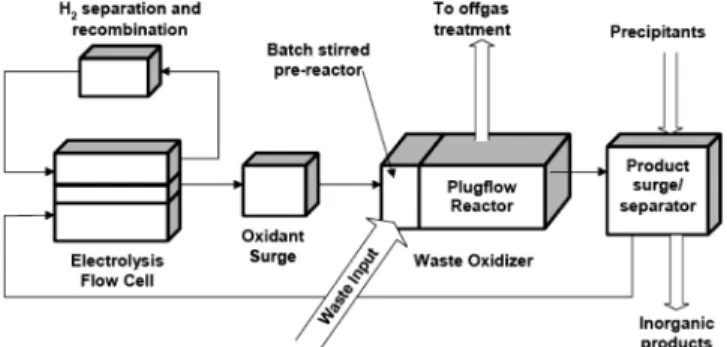
DCO
공정의흐름도를Fig. 1
에나타내었다.
이공정은peroxydisul- fate salts(
주로sodium
또는ammonium
염)
로유기물을이산화탄소와물로무기화한다
.
사용되는산화제를전극에서재생하여사용하 기때문에2
차폐기물의발생을최소화하고있다.
폐기물처리반응 식은다음과같이표현된다.
(2)
이러한
peroxydisulfate
공정은잘개발되어있는기존화학공정기술의응용이라고볼수있다
.
산화된ammonium peroxydisulfate
는가장강한산화제의일종으로이의산화력은불소
,
오존및oxyfluoride
다음으로강하다고알려져있다. Peroxydisulfate
의산화 포텐셜은거의모든종류의유기물을분해할수있을정도로강하 여실로널리적용될수있는공정이라고할수있다.
여러가지유기물은상압및
80~100
oC
의온도에서이DCO
공정으로분해될수 있으나
, PVC
중합체 등과 같은 난분해성 유기물의 경우peroxydisulfate
에의한산화처리에앞서140~180
oC
에서두시간정 도의열화전처리가필요하다고한다.
이
DCO
기술의가장큰장점은다양한유기성고체및액체의산화분해에적용될수있다는것이다
.
대상폐기물에는유기용매,
세제
,
살충제,
불수용성기름(water-insoluble oil)
및그리스(grease), charcoal filter media, incinerator chars
와tars,
종이류,
불화물을제 외한플라스틱류,
염화,
황화및질화폐기물류,
흙,
모래및슬러지와같은유
/
무기매질에포함되어있는유기물등이포함될수있다.
또산화제용액은특히접근이용이하지않은폐기물
,
즉방사능으로오염되어있는기계류나
glove box
내에포함되어있는유기물의처리및화학무기류
,
폭발물및추진제(propellants)
의제염이나분해에도널리사용될수있다
.
또ammonium peroxysulfate
산화제 는거의대부분상온에서아무런제약없이저장될수있으므로유 해폐기물분해설비가크게겉으로드러나지않아도되며필요시자 주또쉽게보충해서사용할수있다.
따라서공정은이동설치가가능한벤치규모에서부터큰고정설치형의장치로쉽게처리규모의 변경이가능하다
.
여러가지유해유기물에대한DCO
의분해효율을 다음Table 5
에나타내었다.
한편
DCO
공정으로acetic acid, formamide, ethylene glycol, tributyl phosphate, trialkyl amines, kerosene, methyl chloroform, Fe II
( )+ + O
2H
2O e +
−= Fe III
( )+ 2OH
−S
2O
82 –+ Organics
⇒2HSO
4−+
(CO
2,H
2O inorganic residues
, )Fig. 1. Principle of operating conditions of direct chemical oxidation process.
Table 4. Destruction efficiency of delphi DETOX process (unstirred reactor)
Organic material Absolute destruction
efficiency [%] Absolute destruction efficiency on vermiculite [%]
O-xylene 99.9997
1,2,3 tri methyl-benzene 99.9997 99.98
Trichloroethylene 99.995 99.55
Hexachlorobenzene 99.995
Polychlorinated biphenyl 98.9 Carbon tetrachloride “complete”
Trichloroethane “complete”
Table 5. Destruction efficiency of direct chemical oxidation process
Compound Feed
concentration Percent
destruction Destruction rate [kg/M
3-day) Batch reactor
Kerosene 9.6 g/L 99.97 186
Triethylamine 0.96 g/L 98.8 205
2,4,6-TNT (0.003M) 99.9 760
Polyvinyl chloride Pieces and powder 50 3 Ethylene glycol 0.80 g/L
Plug flow reactor
Ethylene glycol 6.2 g/L 99.93 432
trinitrotoluene
와다른폭발물,
생화학및화학무기시약의모의물질,
종이류및섬유류
, PCB
류, pentachlorophenol, ion exchange resins
(DOWEX)
및모의슬러지에포함된탄소잔류물등의광범위한폐기물에대한성공적인실증시험이수행되었는데이결과로얻어진 이기술의주요특성
,
장치재료및배기가스의특성은다음과같다.
처리용량에대해서요약하면다음과같다
.
4-3.산소화(acid digestion)[19, 20]Acid digestion
기술은질산인산염(nitric-phosphoric acid)
으로종 이,
플라스틱,
수지(resins)
및군수품(munitions)
등을적당한온도 에서분해할수있는소각대체기술이다.
이기술은질산을산화제로사용하고인산을
carrier
로,
팔라듐혼합물을촉매로사용한다.
인산은질산의비등점을상압에서상승시켜용액내에잔류
(retention)
하도록해준다
.
유기물의산화반응은보통용액내에녹아있는NO
2및NO
에의해발생되는유기성라디칼(organic radical)
의생성으로부터시작된다
.
CH
3(CH)CH
2+ NO
2--> CH
3(OH)CH + HNO
2(3)
이공정은보통상압에서
130~180
oC
의온도에서운전되지만,
난 분해성플라스틱류를분해하기위해서는그이상의가압과가온이 필요하다.
산화속도는종이류나군수품류에대해서는수초밖에걸리지않을정도로빠르지만
,
어떤난분해성플라스틱의분해에는1
시간이상걸리는경우도있다.
폐기물에포함된유해중금속들은 유기물의분해후에용액내에남는다.
0~5 psig
기압하에130~150
oC
온도범위에서대부분의유기화합물은쉽게산화되어물과이산화탄소로분해된다
. Polystyrene
이온교환수지는
175
oC
및5~10
기압에서효과적으로분해된다. 0.001 M
의
palladium
촉매를사용하여일산화탄소의배출을억제하고N
2O
의생성을최소화한다
.
발생되는NO
및NO
2를포집하여회수되 는HNO
3와함께산소화반응기로환류시킬수있다.
아울러과산화수소를사용하여
NO
와NO
2를회수하여NO
x의배출을100 ppm
이하로낮출수있다고한다
. Table 6
에산소화공정의몇가지폐기물에대한처리속도를나타내었다
.
4-4.수증기개질(steam reforming)[13]고온
(300~1,200
oC)
에서수증기를폐기물내유기성분과반응시켜CO, CO
2및H
2로주로구성되는합성가스(synthesis gas)
를발생시 킨다.
미량의메탄가스(CH
4)
도불완전반응생성물로발생되며할로겐화유기폐기물의처리시에는할로겐화산을포함하는배기가스 를발생하며질화물이나황산화물이폐기물에존재할때에는
SOx
및
NOx
가발생되어배기가스에포함된다.
유해폐기물의steam
reforming
공정은다음의기본적인두단계를반드시거치면서폐기물내의유기성분을분해하는공정이다
.
1)
약300~800
oC
의온도범위에서폐기물내의유기성분이수증기나수증기와합성가스의혼합가스와접촉하여열분해되면서휘 발성유기성분은휘발하고비휘발성유기성분은비휘발성무기성분 과함께
coke
나char
의형태로남는다.
2)
앞의1
단계의과정에서휘발된유기성분은약1,200
oC
의고온에서수증기에의해분해되어합성가스를생성한다
.
합성가스에포함된산가스는
scrubber
에의해세정되고합성가스는다시산화되어이산화탄소와물로전환되어대기로배출된다
.
이러한수증기개질공정도앞에소개한
DCO(direct chemical
oxidation)
기술이나뒤에소개할MSO(molten salt oxidation)
공정과 같이지난수십년동안화학공학산업분야(
석탄으로부터합성가스 의생산)
에서이용되어오던상업화된기술을폐기물처리기술에응용한것이라볼수있다
.
미국의
Synthetica Technologies
및ThermoChem, Inc.
이 미국DOE(department of energy)
의혼성폐기물(mixed waste: hazardous and/or radioactive waste)
을처리하기위한steam reforming
공정을개발하였다
. Synthetica Technologies
사의steam reforming plant
인synthetica detoxifier
는두단계공정으로구성된다.
먼저폐기물의 열분해공정으로폐기물의특성에따라달리적용되는다음4
종류의폐기물투입설비를경유하여
300~600
oC
의고온수증기및합성가스와접촉하면서폐기물중의유기물이열분해되고휘발된다
. - drum feed evaporator :
드럼포장된폐기물투입용- moving bed evaporator :
슬러리나할로겐화탄화수소및 질산화물투입용- heated shredder :
잡고체폐기물을투입용- screw feeder :
오염토양의처리용각각의폐기물투입계통에서휘발된유기물질및부분적으로개 질된배가스들은전기적으로가열되어
1,100
oC
이상의온도로유 지되는고온의수증기개질로(steam reforming reactor)
인detoxifier
로공급된다
.
수증기개질반응로에서배출되는배가스는냉각된후 입자상물질의제거장치,
산가스제거장치및흡착층(adsorption bed)
을통과하면서잔여유기물
,
중금속및산가스를제거한후대기로 배출되게된다. Thermatrix
라는촉매산화기(catalytic oxidizer)
를통해피
(bleed)
와같은생물학적폐기물등도쉽게분해되어이산화탄소와수증기로전환된다
.
배기가스의일부는다시가열되어폐기물증발계통
(feed evaporator)
으로 환류된다.
이 공정을 개발한Synthetica
사는용매(solvent),
기름으로오염된천조각이나종이 및방호복(protective clothing)
등을8
시간에200-L drum
을처리하 는규모의실증에성공하였으며폐기물의감량및감용은각각99.7%
및98%
였다.
이수증기개질공정은많은에너지를필요로하 는공정이며, 1 ton/day
용량의군용화학제(military chemical agent)
를처리하는데
335 kW
용량의전기적으로가열되는detoxifier
가필 요하다고한다.
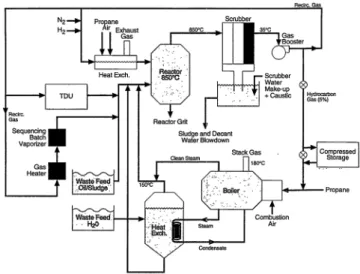
Themochem
사의수증기개질공정도마찬가지로두개의큰공정으로구분된다
(Fig. 2
참조).
우선폐기물의종류에따라650~900
oC
의광범위한온도범위로간접적

![Table 6. Treatment rates of acid digestion Chemical material Temperature[oC] Pressure[psig] Rate [g/L-h] Rate[kg/M3 -h] EDTA 140 0-5 142 142 Cellulose 150 0-5 95 95 Neoprene 165 0-5 50 50 Polystyrene resin 170 5-10 65 65 Polypropylene 180 10-15 35 35](https://thumb-ap.123doks.com/thumbv2/123dokinfo/5116425.331754/5.918.77.442.969.1126/treatment-digestion-chemical-temperature-pressure-cellulose-polystyrene-polypropylene.webp)