Urological Oncology
Clinical Significance of Free-to-Total Prostate-Specific Antigen (PSA) Ratio in Advanced Prostate Cancer Patients with PSA Less than 0.1 ng/ml after Hormone Treatment
Dae Il Kim, Jae Mann Song, Hyun Chul Chung
Department of Urology, Yonsei University Wonju College of Medicine, Wonju, Korea
Purpose: We analyzed the pattern of change in the free-to-total prostate-specific anti- gen (f/t PSA) ratio and the progression to castration-resistant prostate cancer (CRPC) in patients with advanced prostate cancer who received hormone treatment and whose PSA nadir was below 0.1 ng/ml.
Materials and Methods: We retrospectively analyzed the medical records of 52 patients with advanced prostate cancer. All patients were treated with maximum androgen blockade (gonadotrophin-releasing hormone agonist and anti-androgen agents). The patients were divided into two groups: those with a nadir f/t PSA ratio above 60% and those with a nadir f/t PSA ratio of 60% or below. Age, initial PSA, clinical stage, lymph node metastasis, bone metastasis, and follow-up data, including PSA, free PSA, and f/t PSA ratio, were collected. The Mann-Whitney U-test, Fisher exact test, chi-square test, Kaplan-Meier survival analysis, and log rank test were used.
Results: There were 24 patients in the group with a nadir f/t PSA ratio above 60% and 28 patients in the group with a nadir f/t PSA ratio of 60% or below. After hormone ther- apy, the median f/t PSA ratio in each group increased from 37% and 34% at 3 months to 75% and 60% at 6 months, respectively. At 9 months, however, the f/t PSA ratio in- creased to 80% in the group with a nadir f/t PSA ratio above 60%, whereas it decreased to 31% in the group with a nadir f/t PSA ratio of 60% or below. From 9 to 15 months, the f/t PSA ratio showed a tendency to decrease (75 to 37% and 27 to 20%, respectively).
The progression to CRPC was significantly different between the two groups (10 vs.
24).
Conclusions: Progression to CRPC was significantly higher in the group with a lower f/t PSA ratio. Additionally, the pattern of change in the f/t PSA ratio was significantly different after 9 months. Collectively, the f/t PSA ratio can be used as an additional marker for prognosis of hormone treatment.
Key Words: Hormone replacement therapy; Prostate-specific antigen; Prostatic neoplasms
This is an Open Access article distributed under the terms of the Creative Commons Attribution Non-Commercial License (http://creativecommons.org/licenses/by-nc/3.0) which permits unrestricted non-commercial use, distribution, and reproduction in any medium, provided the original work is properly cited.
Article History:
received 14 August, 2011 accepted 25 October, 2011
Corresponding Author:
Hyun Chul Chung
Department of Urology, Yonsei University Wonju College of Medicine, 20 Ilsan-ro, Wonju 220-701, Korea TEL: +82-33-741-0654
FAX: +82-33-748-3804 E-mail: [email protected]
INTRODUCTION
Prostate cancer is the most common cancer in the United States [1]. In Korea, prostate cancer is the fifth most com- mon malignancy in men [2]. Because of prostate-specific antigen (PSA)-based screening, the clinical stage of newly diagnosed prostate cancer has been migrating downward
in the United States [3]. According to the American Cancer Society-National Prostate Cancer Detection Project, the proportion of locally advanced (clinical state T3) and meta- static (stage T1-4N0-1M1) prostate cancer (advanced pros- tate cancer) was reduced to less than 5% of all newly diag- nosed cancers [4]. In Korea, however, more than half of newly diagnosed prostate cancer is of an advanced stage
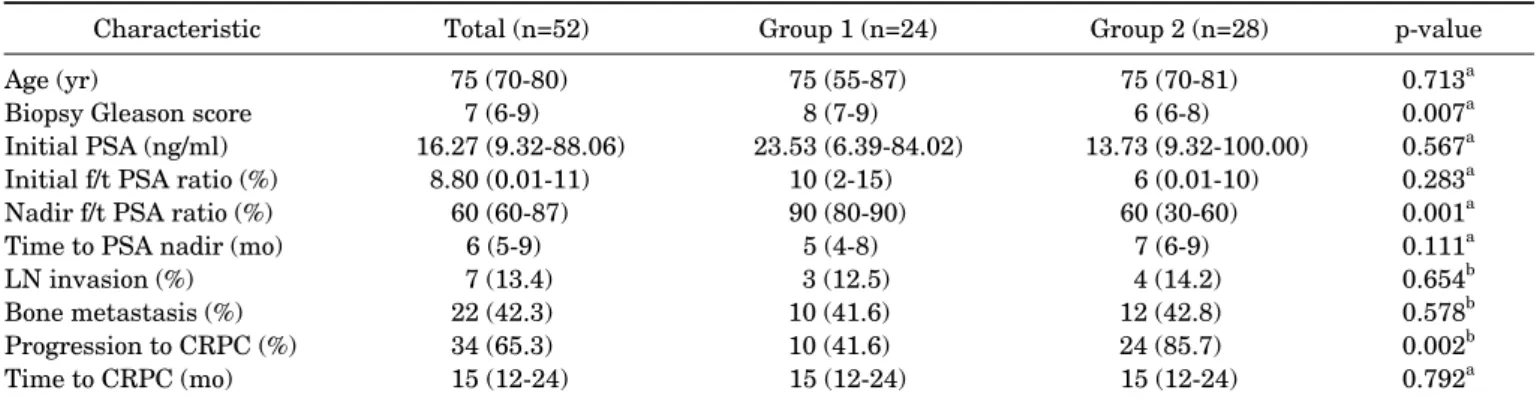
TABLE 1. The clinical characteristics and CRPC progression in the two groups
Characteristic Total (n=52) Group 1 (n=24) Group 2 (n=28) p-value
Age (yr)
Biopsy Gleason score Initial PSA (ng/ml) Initial f/t PSA ratio (%) Nadir f/t PSA ratio (%) Time to PSA nadir (mo) LN invasion (%) Bone metastasis (%) Progression to CRPC (%) Time to CRPC (mo)
75 (70-80) 7 (6-9) 16.27 (9.32-88.06)
8.80 (0.01-11) 60 (60-87)
6 (5-9) 7 (13.4) 22 (42.3) 34 (65.3) 15 (12-24)
75 (55-87) 8 (7-9) 23.53 (6.39-84.02)
10 (2-15) 90 (80-90)
5 (4-8) 3 (12.5) 10 (41.6) 10 (41.6) 15 (12-24)
75 (70-81) 6 (6-8) 13.73 (9.32-100.00)
6 (0.01-10) 60 (30-60)
7 (6-9) 4 (14.2) 12 (42.8) 24 (85.7) 15 (12-24)
0.713a 0.007a 0.567a 0.283a 0.001a 0.111a 0.654b 0.578b 0.002b 0.792a Values are presented as □ (interquarile range).
PSA, prostate-specific antigen; f/t PSA ratio, free-to-total PSA ratio; LN, lymph node; CRPC, castration-resistant prostate cancer.
a: Mann-Whitney U-test, b: Fisher exact test and Chi-square test.
additional treatments.
Recent studies have reported that changes in the free-to-total PSA (f/t PSA) ratio in patients with advanced prostate cancer whose PSA level has reached the nadir is an important prognostic factor. Therefore, we investigated the pattern of change in the f/t PSA ratio and the pro- gression to CRPC in patients with advanced prostate can- cer who received hormone treatment and whose PSA nadir was below 0.1 ng/ml.
MATERIALS AND METHODS
We retrospectively analyzed the medical records of 52 pa- tients who received hormone treatment after a diagnosis of advanced prostate cancer between January 2007 and April 2009. Data on age, initial PSA, clinical stage, lymph node metastasis, and bone metastasis were collected. The follow-up data of the patients included PSA, free PSA (fPSA), and f/t PSA ratio every 3 months for 15 months. The 2010 American Joint Committee on Cancer/tumor-node- metastasis staging system and Gleason system were used for the pathologic staging and tumor grading [9]. The clin- ical stage was locally advanced (T3-4) or metastatic (stage T1-4N0-1M1) prostate cancer. The pathologic diagnosis was confirmed with transrectal ultrasonography-guided
60% or below (group 2). The pattern of change in the f/t PSA ratio during the course of hormone treatment and pro- gression to CRPC were compared between the two groups.
The Mann-Whitney U-test, Fisher exact test, and chi-squ- are test were used to compare the two groups of patients.
Kaplan-Meier survival analysis and the log rank test was used to analyze the difference in progression to CRPC be- tween the two groups. All statistical analyses were per- formed with SPSS ver. 18.0 (IBM, New York, NY, USA), and p-values less than 0.05 were determined to be statisti- cally significant.
RESULTS
Table 1 summarizes the clinical characteristics and CRPC progression in the two groups. The median age of the pa- tients was 75 years (interquartile range [IQR], 70 to 80 years), and the median Gleason score was 7 (IQR, 6 to 9).
PSA and the f/t PSA ratio at the time of diagnosis were 16.27 ng/ml (IQR, 9.32 to 88.06 ng/ml) and 8.80% (IQR, 0.01 to 11.50%), respectively. The PSA nadir of all patients was lower than 0.1 ng/ml. The median nadir f/t PSA ratio and the time to PSA nadir were 60% (IQR, 60 to 87%) and 6 months (IQR, 5 to 9 months), respectively. Progression to CRPC occurred in 34 patients, and the median time elapsed
FIG. 1. The pattern of change in the free-to-total prostate-spe- cific antigen ratio between the two groups during hormone treatment. a: p<0.001.
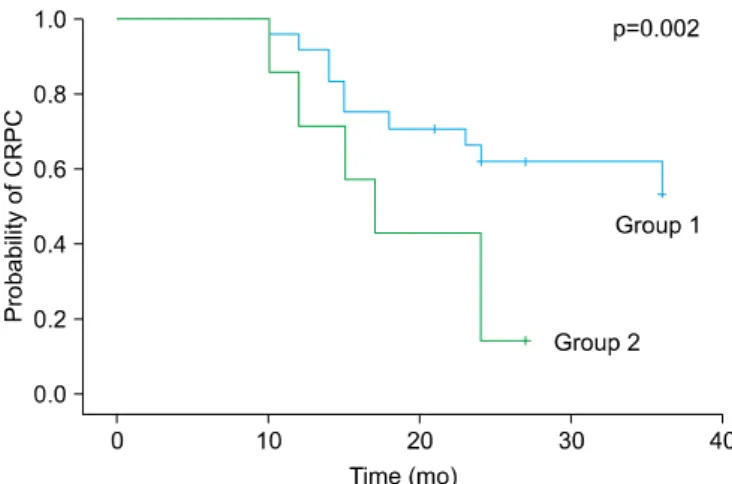
FIG. 2. The probability of progression to castration-resistant prostate cancer (CRPC) during hormone treatment in the two groups.
to progression to CRPC was 15 months (IQR, 12 to 24 months). There were 24 patients in group 1 and 28 patients in group 2. There were no significant differences in the me- dian age, lymph node invasion, bone metastasis, initial PSA, initial f/t PSA ratio, or time to PSA nadir between the two groups. The median Gleason score was 8 (IQR, 7 to 9) in group 1 and 6 (IQR, 6 to 8) in group 2, which was statisti- cally significant. The median nadir f/t PSA ratio was 90.00% (IQR, 80.00 to 90.00%) in group 1 and 60% (IQR, 30 to 60%) in group 2.
Fig. 1 shows the change in the f/t PSA ratio between the two groups. After PSA nadir, the median f/t PSA ratio of group 1 and group 2 increased from 37% (IQR, 30 to 76%) and 34% (IQR, 19 to 60%) at 3 months from the initiation of therapy to 75% (IQR, 40 to 87%) and 60% (IQR, 60 to 61%) at 6 months, respectively. There was no significant differ- ence in the median f/t PSA ratio between the two groups.
However, at 9 months, an increase in the ratio to 80% (IQR, 55 to 100%) was observed in group 1, whereas a decrease to 31% (IQR, 30 to 42%) was noted in group 2 (p<0.001).
After 12 months, the ratio showed a tendency to decrease in both groups from 75% (IQR, 50 to 97%) to 37% (IQR, 27 to 90%) in group 1 and from 27% (IQR, 20 to 40%) to 20%
(IQR, 10 to 28%) in group 2 (p<0.001 and 0.001, re- spectively). The difference in the median f/t PSA ratio be- tween the two groups was significant from 9 to 15 months after the time of PSA nadir.
The probability of progression to CRPC during the fol- low-up period is illustrated in Fig. 2. The number of cases involving progression to CRPC was 10 in group 1 and 24 in group 2 (p=0.002). The median time to CRPC in both groups was 15 months (IQR, 12 to 24 months and 12 to 24 months, respectively), and it was not significantly different as shown in Table 1 (p=0.792).
DISCUSSION
In the United States, prostate cancer has the highest in- cidence of all noncutaneous malignancies and has the sec- ond-highest mortality rate in men [1]. Advances in screen- ing and diagnostic techniques have resulted in a downward migration of stage [13]. In Korea, however, more than half of newly diagnosed prostate cancer is already of a locally advanced or metastatic stage [5].
Hormone therapy is the standard treatment for ad- vanced prostate cancer [6,14]. Nonetheless, the timing of hormonal treatment in advanced prostate cancer remains controversial [6]. Although radical prostatectomy and ra- diation therapy have been recommended in localized ad- vanced prostate cancer [15-18], Heidenreich [19] reported that hormone treatment has benefits in high-risk patients, such as those with poorly differentiated prostate cancer (Gleason score of 8 to 10) and those with a very short PSA doubling time (<12 months). Also, Park et al. [5] reported that many of those with advanced prostate cancer have been treated with hormone treatment for various reasons, such as failure of surgical or radiation treatment, age at the time of diagnosis, or socioeconomic status. However, most patients with advanced prostate cancer who have received hormone treatment eventually progress to CRPC, despite the maintenance of castration serum testosterone levels [8]. In the present study, patients treated with hormone treatment showed biochemical improvements, with PSA decreasing to 0.01 ng/ml or lower in an average of 6 months, as well as progression to CRPC in an average of 15 months.
Therefore, it is important to detect patients who may show early progression to CRPC and to perform other salvage therapies, including secondary hormone therapy, chemo- therapy, and radiation therapy, early.
Although the pathophysiology of prostate cancer has not been elucidated completely, well-known prognostic factors include age, Gleason score, bone pain, serum hemoglobin level, PSA nadir, time to PSA nadir, and PSA level 3 months
free PSA is not a static factor, but rather a dynamic factor that is influenced by various conditions including hormone treatment. Therefore, free PSA and the f/t PSA ratio can be used to predict the prognosis of patients treated by hor- mone treatment. In this study, the number of patients pro- gressing to HRPC was 10 in group 1 and 14 in group 2 (p=0.003). These findings suggest that the nadir f/t PSA ra- tio can be a prognostic factor.
Tanaka et al. [23] reported that whereas the f/t PSA ratio is unaffected by the stage of prostate cancer at the time of diagnosis, it does rise during the period in which the cancer is responsive to hormone treatment and then slowly re- turns to the pretreatment level as the cancer recurs. Recent literature has shown that the difference in the f/t PSA ratio between a group showing early biochemical recurrence and a group continuously responsive to hormone treatment be- comes greater at 8 to 10 months after the initiation of treat- ment compared with the time of diagnosis. Some authors have argued that the pattern of change in the f/t PSA ratio is dependent on the response to treatment. In this study, the f/t PSA ratio of both groups steadily increased until 6 months after the initiation of hormone treatment. Howev- er, the f/t PSA ratio continuously declined since 9 months in group 2, whereas it remained elevated until 9 months and then slowly declined in group 1. The pattern of change in the f/t PSA ratio is thought to be related to the response to hormone treatment, similar to PSA. Such results are consistent with the results of previous studies showing that the f/t PSA ratio is affected not only by hormone treat- ment of advanced prostate cancer but also by the degree of response to hormone treatment. These results also demon- strate the importance of the f/t PSA ratio as a supple- mentary prognostic marker in the hormone treatment of advanced prostate cancer that can be used simultaneously with PSA.
CONCLUSIONS
When patients were divided into two groups on the basis of the nadir f/t PSA ratio, progression to CRPC was sig- nificantly higher in the group with a lower f/t PSA ratio.
In addition, the pattern of change in the f/t PSA ratio was
American Cancer Society; 2005.
2. Ministry for Heath, Welfare and Family Affairs. Annual report of cancer incidence (2006) and survival (1993-2006) in Korea.
Seoul: Ministry for Heath, Welfare and Family Affairs; 2009.
3. Derweesh IH, Kupelian PA, Zippe C, Levin HS, Brainard J, Magi-Galluzzi C, et al. Continuing trends in pathological stage migration in radical prostatectomy specimens. Urol Oncol 2004;22:300-6.
4. Mettlin C, Murphy GP, Babaian RJ, Chesley A, Kane RA, Littrup PJ, et al. The results of a five-year early prostate cancer detection intervention: investigators of the american cancer society na- tional prostate cancer detection project. Cancer 1996;77:150-9.
5. Park SC, Choi HY, Kim CS, Hong SJ, Kim WJ, Lee SE, et al.
Predictive variables of the progression to androgen independent prostate cancer after combined androgen blockade. Korean J Urol 2007;48:408-15.
6. Mottet N, Bellmunt J, Bolla M, Joniau S, Mason M, Matveev V, et al. EAU guidelines on prostate cancer. Part II: Treatment of ad- vanced, relapsing, and castration-resistant prostate cancer. Eur Urol 2011;59:572-83.
7. Heidenreich A, Aus G, Bolla M, Joniau S, Matveev VB, Schmid HP, et al. EAU guidelines on prostate cancer. Eur Urol 2008;53:68-80.
8. Lam JS, Leppert JT, Vemulapalli SN, Shvarts O, Belldegrun AS.
Secondary hormonal therapy for advanced prostate cancer. J Urol 2006;175:27-34.
9. Edge SB, Compton CC. The American Joint Committee on Cancer: the 7th edition of the AJCC cancer staging manual and the future of TNM. Ann Surg Oncol 2010;17:1471-4.
10. Klotz L. Maximal androgen blockade for advanced prostate cancer. Best Pract Res Clin Endocrinol Metab 2008;22:331-40.
11. Kwak C, Jeong SJ, Park MS, Lee E, Lee SE. Prognostic sig- nificance of the nadir prostate specific antigen level after hormone therapy for prostate cancer. J Urol 2002;168:995-1000.
12. Stewart AJ, Scher HI, Chen MH, McLeod DG, Carroll PR, Moul JW, et al. Prostate-specific antigen nadir and cancer specific mor- tality following hormonal therapy for prostate specific antigen failure. J Clin Oncol 2005;23:6556-60.
13. Cooperberg MR, Lubeck DP, Mehta SS, Carroll PR. Time trends in clinical risk stratification for prostate cancer: implications for outcomes (data from CaPSURE). J Urol 2003;170(6 Pt 2):S21-7.
14. Kaliks RA, Del Giglio A. Management of advanced prostate cancer. Rev Assoc Med Bras 2008;54:178-82.
15. van den Ouden D, Schröder FH. Management of locally advanced prostate cancer. 1. Staging, natural history, and results of radical surgery. World J Urol 2000;18:194-203.
16. Schröder FH, van den Ouden D. Management of locally advanced
prostate cancer 2. Radiotherapy, neoadjuvanct endocrine treat- ment, update 1997-1999. World J Urol 2000;18:204-15.
17. Rosenthal SA, Sandler HM. Treatment strategies for high-risk locally advanced prostate cancer. Nat Rev Urol 2010;7:31-8.
18. Heidenreich A, Bellmunt J, Bolla M, Joniau S, Mason M, Matveev V, et al. EAU guidelines on prostate cancer. Part I: Screening, di- agnosis, and treatment of clinically localised disease. Eur Urol 2011;59:61-71.
19. Heidenreich A. Current approach to androgen deprivation ther- apy in patients with advanced prostate cancer. Eur Urol Suppl 2010;9:776-81.
20. Huang SP, Bao BY, Wu MT, Choueiri TK, Goggins WB, Huang CY, et al. Impact of prostate-specific antigen (PSA) nadir and time
to PSA nadir on disease progression in prostate cancer treated with androgen-deprivation therapy. Prostate 2011;71:1189-97.
21. Collette L, Burzykowski T, Schröder FH. Prostate-specific anti- gen (PSA) alone is not an appropriate surrogate marker of long-term therapeutic benefit in prostate cancer trials. Eur J Cancer 2006;42:1344-50.
22. Yoon CY. Free PSA and the free PSA to total PSA ratio as predictor of response to hormone treatment for metastatic prostate cancer.
Korean J Urol 2006;47:362-7.
23. Tanaka M, Murakami S, Suzuki N, Shimazaki J. Change in the ratio of free-to-total prostate-specific antigen during progression of advanced prostate cancer. Int J Urol 2000;7:83-7.