D I A B E T E S & M E T A B O L I S M J O U R N A L
This is an Open Access article distributed under the terms of the Creative Commons At- tribution Non-Commercial License (http://creativecommons.org/licenses/by-nc/3.0/) which permits unrestricted non-commercial use, distribution, and reproduction in any medium, provided the original work is properly cited.
Current Status of Diabetic Peripheral Neuropathy in Korea: Report of a Hospital-Based Study of Type 2
Diabetic Patients in Korea by the Diabetic Neuropathy Study Group of the Korean Diabetes Association
Jong Chul Won1,*, Sang Soo Kim2,*, Kyung Soo Ko1, Bong-Yun Cha3
1Department of Internal Medicine, Cardiovascular and Metabolic Disease Centre, Inje University College of Medicine, Seoul,
2Department of Internal Medicine, Pusan National University Hospital, Pusan National University School of Medicine, Busan,
3Department of Internal Medicine, The Catholic University of Korea College of Medicine, Seoul, Korea
Diabetic peripheral neuropathy (DPN) is the most common complication associated with diabetes. DPN can present as a loss of sensation, may lead to neuropathic ulcers, and is a leading cause of amputation. Reported estimates of the prevalence of DPN vary due to differences in study populations and diagnostic criteria. Furthermore, the epidemiology and clinical characteristics of DPN in Korean patients with type 2 diabetes mellitus (T2DM) are not as well understood as those of other complications of diabetes such as retinal and renal disease. Recently, the Diabetic Neuropathy Study Group of the Korean Diabetes Association (KDA) conducted a study investigating the impact of DPN on disease burden and quality of life in patients with T2DM and has published some data that are representative of the nation. This review investigated the prevalence and associated clinical implications of DPN in Korean patients with diabetes based on the KDA study.
Keywords: Diabetes; Peripheral nervous system diseases; Prevalence; Quality of life
Corresponding author: Kyung Soo Ko
Department of Internal Medicine, Inje University Sanggye Paik Hospital, Inje University College of Medicine, 1342 Dongil-ro, Nowon-gu, Seoul 139-707, Korea
E-mail: [email protected]
INTRODUCTION
The prevalence of type 2 diabetes mellitus (T2DM) is increas- ing in Korea [1] and has escalated from 1.5% to 9.9% over the last four decades. Major outcomes of the progression of T2DM include chronic complications that decrease quality of life (QoL), incur heavy burdens on the healthcare system, and increase diabetic mortality [2]. Therefore, it is clear that information regarding the prevalence of T2DM-related complications is important in the development of policies and practices for the management of T2DM patients so that they may receive the best care possible.
Diabetic peripheral neuropathy (DPN) is the most com-
mon complication associated with diabetes and it is estimated that 30% to 50% of diabetes patients are affected by this disor- der [3-5]. Chronic sensorimotor distal symmetric polyneu- ropthy is the most common form of DPN [6] and can lead to substantial sensory loss, muscle weakness, and pain. The typi- cal presentation of DPN is a gradual onset of sensory impair- ments that include burning and numbness in the feet. In fact, the onset is so gradual that the disease may go undiagnosed for years. Neuropathic pain may be severe when it is present but this type of pain is reported to occur in only 11% to 32% of individuals with DPN [7]. DPN leads to a number of impair- ments and functional limitations including foot ulceration and subsequent lower-extremity amputation [8]; in Korea between http://dx.doi.org/10.4093/dmj.2014.38.1.25
pISSN 2233-6079 · eISSN 2233-6087
Won JC, et al.
2000 and 2002, 44.8% of foot amputee patients had diabetes [9]. In patients with diabetes, the presence of DPN is associat- ed with a greater degree of health care use and an inability to work due to physical limitations [3]. Other potential compli- cations of DPN, such as falls, are less clearly attributable to the disorder but also result in significant limitations of function.
Over the last five decades, several studies have reported the prevalence of DPN in Korea to be anywhere from 14.1% to 54.5%, depending on the study population and diagnostic cri- teria used [10]. It should be noted, however, that these studies were specifically designed to evaluate the prevalence of chron- ic complications associated with diabetes and that the diagnos- tic criteria for DPN were not clearly established during this time period. In 2009, the Diabetic Neuropathy Study Group of the Korean Diabetes Association (KDA) conducted a hospital- based nationwide survey to investigate the impact of DPN on disease burden and QoL in patients with T2DM. This cross- sectional study was carried out with T2DM patients from the diabetic clinics of 40 hospitals throughout Korea as has been described in previous reports, some of which have already been published [11-13]. In this review, we describe the prevalence and clinical implications of DPN in T2DM outpatients in Korea.
PREVALENCE OF DPN IN KOREA
The prevalence of DPN in Korea varies from 13.1% to 61.8%, depending on the population being studied [4,14,15]. This in- consistency may be attributed to the various types of diabetes, differences in study design, sample selection, and diagnostic criteria, and variation in race, age, sex, and duration of diabe-
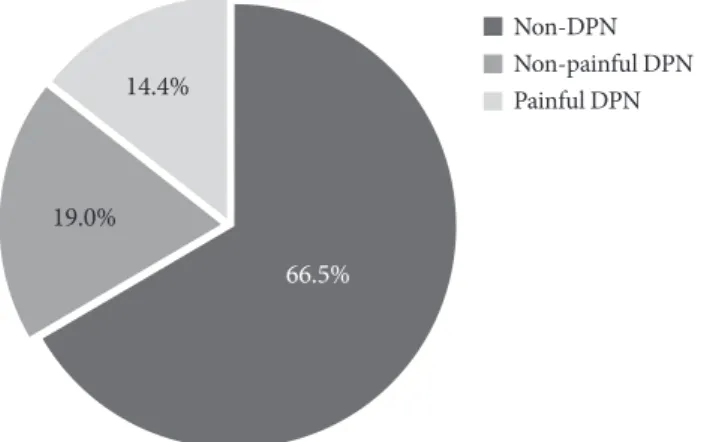
tes in the populations studied. According to findings of the Diabetic Neuropathy Study Group of the KDA, the actual prev- alence of DPN is 33.5% (n=1,338, study population=3,999) (Fig. 1) [11]. In the prior studies by that group, diagnostic cri- teria included the presence of documented DPN by quantita- tive sensory or nerve conduction studies, the presence of symptoms typically attributable to DPN after the exclusion of other causes of neuropathy, results from the Michigan Neu- ropathy Screening Instrument (MNSI, ≥3 score), and abnor- mal results on the 10 g monofilament test (2 out of 10). Thus, the high rate of DPN might partly be due to the inclusion of diverse diagnostic criteria [16-18]. In terms of a clinical diag- nosis, it is generally agreed that DPN can be diagnosed by the presence of a combination of peripheral symptoms and neuro- logical deficits [19]. Findings from the KDA study are compat- ible with the reported range in prevalence of a meta-analysis by the International Diabetes Federation, which estimated that the incidence of DPN in the West-Pacific Asia region varies from 9% to 45% [20]. Up to half of patients with DPN exhibit painful symptoms while the remainder may be asymptomatic but present with neurological deficits [16]. Among the patients with DPN in the KDA study, 43.1% (n=577) were found to have painful DPN based on the following criteria: the average daily pain intensity in the legs, feet, or hands lasted 48 hours;
pain was rated ≥4 (moderate or strong pain) on the visual an- alog scale; patients were taking medication for their current pain [13]. Use of these criteria resulted in a prevalence of pain- ful DPN of 14.4% for patients with T2DM. Some reports have suggested that the perception of pain may vary based on eth- nic and cultural differences [21]. However, in this study, the prevalence of painful DPN was comparable to those of reports from Western countries [22].
CLINICAL CHARACTERISTICS OF PATIENTS WITH DPN
The primary risk factor for DPN is hyperglycemia and other independent risk factors include advanced age, longer dura- tion of diabetes, cigarette smoking, hypertension, elevated tri- glyceride levels, a higher body mass index, alcohol consump- tion, and greater height [5,23]. To evaluate the clinical charac- teristics of patients with DPN, the results from the nationwide survey of the Diabetic Neuropathy Study Group of KDA were evaluated. A multivariate logistic regression analysis in patients with T2DM revealed that the clinical variables independently
Non-DPN Non-painful DPN Painful DPN
66.5%
19.0%
14.4%
Fig. 1. The prevalence of diabetic peripheral neuropathy (DPN) (n=3,999).
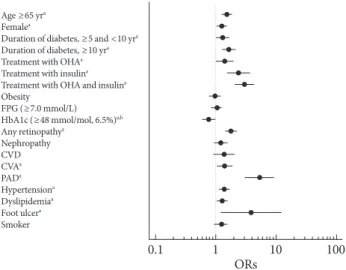
associated with DPN include older age, being female, a longer diabetes duration, lower hemoglobin A1c (HbA1c) level, the presence of retinopathy, a history of cerebrovascular accident, or peripheral arterial disease, the presence of hypertension or dyslipidemia, treatment with an oral hypoglycemic agent or insulin, and a history of foot ulcers (Fig. 2) [11]. As expected, patients identified in this study with painful DPN were older, typically female, had a longer duration of diabetes, showed more prevalent insulin use, and exhibited a greater incidence of oth- er microvascular complications (retinopathy, nephropathy, or both) and hypertension compared to patients with nonpainful DPN [13].
These findings suggest that much more attention should be paid to high-risk diabetic patients to exert better control over DPN, especially in those who are elderly and/or have a long history of diabetes. Moreover, patients with DPN exhibit a higher prevalence of other diabetes-related complications or comorbidities. Although higher HbA1c levels did not show a significant relationship with DPN, the proportion of DPN pa-
tients significantly increased in conjunction with higher HbA1c levels according to an analysis of variance. In addition, diabe- tes treatment (i.e., the proportion of patients being treated with insulin) could be seen as a surrogate for disease severity [24,25].
Therefore, these data suggest that factors other than hypergly- cemia, such as the duration of diabetes, are involved in the de- velopment of DPN and that these factors may obscure any as- sociations between the prevalence of DPN and glycemic status.
As a result, the pathogenesis of diabetic complications is com- posed not only of hyperglycemic status but also of other fac- tors associated with metabolic control [26]. According to co- hort studies, each 1% reduction in HbA1c levels is associated with a 37% decrease in the risk for microvascular complica- tions [27]. Although it may not be concluded from the KDA study that poor glycemic control results in chronic complica- tions, including DPN, these findings serve as a warning to healthcare professionals that there is an urgent need for better glycemic control to prevent the development of chronic com- plications due to T2DM. Furthermore, the management of DPN and other diabetes-related complications or co-morbidi- ties should be an important and integrated component of dia- betes disease management.
TREATMENT
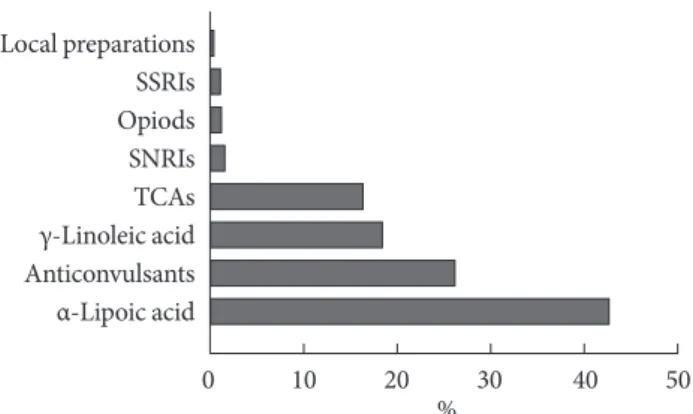
Treatment strategies for DPN are intended to improve the symptoms of patients, to modify the pathophysiology of DPN, including metabolic control, or both. Unfortunately, these ap- proaches do not appear to be sufficient because the underlying mechanisms of DPN and measures for treatment efficacy have yet to be clearly elucidated. The KDA study assessed the medi- cations prescribed to patients by their physicians for the man- agement of DPN. Of the 1,338 patients diagnosed with DPN, 69.8% (n=934) were currently prescribed medications for DPN including α-lipoic acid (40.2% of prescriptions, n=396), anti- convulsant drugs (24.6% of prescriptions, n=242), γ-linoleic acid (17.2% of prescriptions, n=169), tricyclic antidepressants (15.2% of prescriptions, n=150), serotonin-norepinephrine reuptake inhibitors (1.2% of prescriptions, n=12), opioids (0.8%
of prescriptions, n=8), selective serotonin reuptake inhibitors (0.7% of prescriptions, n=7), and local preparations (0.1% of prescriptions, n=1). Approximately 20.1% (n=187) of patients received more than one medication (Fig. 3) [11].
More than half of patients with DPN were being treated with pathophysiology-based medication rather than symptomatic
Age ≥65 yra Femalea
Duration of diabetes, ≥5 and <10 yra Duration of diabetes, ≥10 yra Treatment with OHAa Treatment with insulina Treatment with OHA and insulina Obesity
FPG (≥7.0 mmol/L) HbA1c (≥48 mmol/mol, 6.5%)a,b Any retinopathya
Nephropathy CVDCVAa PADa Hypertensiona Dyslipidemiaa Foot ulcera Smoker
Fig. 2. Odds ratios (ORs) of factors associated with the presence of diabetic peripheral neuropathy according to a logistic-regres- sion analysis. Standardized ORs (95% confidence intervals) are expressed per standard deviation increase for each continuous variable. ORs for categorical variables have a reference group without the respective factor. OHA, oral hypoglycemic agents;
FPG, fasting plasma glucose; HbA1c, hemoglobin A1c; CVD, cardiovascular disease; CVA, cerebrovascular accident; PAD, peripheral arterial disease. aP<0.05 vs. control, bHbA1c mea- surements in International Federation of Clinical Chemistry (mmol/mol) and Diabetes Control and Complications Trial (%) units. Adapted from Won JC, et al. Diabet Med 2012;29:e290-6, with permission from John Wiley and Sons [11].
0.1 1 10
ORs 100
Won JC, et al.
treatments, and in line with international and Korean guide- lines, anticonvulsant, and tricyclic antidepressant drugs were commonly prescribed for symptomatic management [28,29].
On average, patients receiving treatment for DPN had a longer duration of diabetes and greater incidences of retinopathy, ne- phropathy, and hypertension. Moreover, the proportion of pa- tients using insulin was greater in DPN patients on medication compared to those without treatment for DPN (43.5% vs.
36.4%, respectively; P=0.0157). Interestingly, the MNSI score was slightly higher in patients receiving treatment than in those not receiving treatment, but the mean number of pa- tients unable to feel the 10 g monofilament was higher in those without treatment compared to those with treatment [11].
These findings suggest that a substantial number of patients with a higher risk for foot disease were not being properly managed by their physicians and that quantitative sensory nerve tests should be a routine inclusion in clinical practice to identify high-risk patients.
EFFECTS OF PAIN ON QOL IN PATIENTS WITH DPN
DPN has serious detrimental effects on the physical, emotion- al, and social functioning of patients [30]. Many DPN patients experience pain or discomfort, anxiety, depression, and limita- tions in activity, and may lose workdays or show decreased pro- ductivity as a result [31]. Although there is a growing awareness of the influence of DPN on QoL and the diseased status of pa- tients with diabetes, neither the exact magnitude of this con- tribution nor the characteristics of patients most likely to be
affected have been determined. In this study, all items assess- ing pain interference (Fig. 4A) and results from the Medical Outcomes Study Sleep Scale (Fig. 4B) revealed that patients with painful DPN suffer from pain during daily activities and sleep, relative to patients with nonpainful DPN [12,13]. In ad- dition, the percentage of respondents reporting more than some problem for each dimension on the EQ-5D was signifi- cantly higher in patients with painful DPN compared to those with nonpainful DPN (Fig. 4C). Therefore, patients with pain- ful DPN have greater discomfort during daily activities and sleep, and reduced QoL compared to patients with nonpainful DPN. These results provide some data on the nature and ex- tent of the impact of pain on QoL in patients with painful DPN.
AWARENESS AND EXPERIENCE OF
PATIENTS REGARDING EDUCATION FOR THE MANAGEMENT OF FOOT SYMPTOMS
It is possible to prevent the amputation of limbs through regu- lar screening and treatment. The complications of diabetes in- cur high costs on the healthcare system and foot care screen- ing programs have been shown to not only be cost-effective but also to impact QoL in patients with T2DM [32]. The KDA recommends that patients with T2DM undergo an annual foot examination to proactively assess sensation in the feet, foot structure, biomechanics, circulation, and skin integrity [28]. In the KDA study, 72.8% of patients with DPN had been educated about DPN and 72.2% had heard about foot man- agement, but the awareness of patients with DPN regarding their condition was only 12.6% (n=169). In other words, only one-eighth of patients with DPN reported having had DPN [11]; this is a concern. A lack of awareness regarding DPN and the neglectful care of its symptoms could lead to a high degree of unnecessary morbidity, substantial rates of hospitalization, and increased healthcare costs. Although more than two-thirds of patients with DPN recalled having foot problems and hav- ing received education about foot management over the past few years, the experience of diabetes education did not equate to their having knowledge of the disease. This disconnect like- ly occurs because many patients with DPN remained unaware that this complication is often asymptomatic. Therefore, a comprehensive program designed to increase awareness of DPN should be implemented and the role of primary care providers in screening for DPN needs to be developed.
0 10 20 30 40 50
% Local preparations
SSRIs Opiods SNRIs TCAs γ-Linoleic acid Anticonvulsants α-Lipoic acid
Fig. 3. Pattern of medication for neuropathy in patients with diabetic peripheral neuropathy (n=934). SSRIs, selective sero- tonin reuptake inhibitors; SNRIs, serotonin-norepinephrine reuptake inhibitors; TCAs, tricyclic antidepressants.
CONCLUSIONS
The present review provides detailed estimates of the preva- lence of DPN in patients with T2DM in Korea as well as the clinical characteristics of this disease. It is worth noting that a high proportion of T2DM patients suffer from DPN and the painful symptoms they experience are associated with a de- creased QoL. The high prevalence of DPN and other long-term complications probably represent the current reality of diabe- tes care in a hospital setting since many patients with these complications tend to be treated at the hospital. The presence of DPN may indicate that patients have an increased severity of diabetes, which is also supported by the increased prevalence of other diabetes-related complications and comorbidities. All of these medical issues lead to increased resource utilization. It is believed that the findings of the current study will be used as
a basis for future epidemiological studies, randomized con- trolled trials, and additional well-designed studies that will in- vestigate methods with which to ameliorate the prevalence of diabetic complications in Korea. In addition, given the disease burden associated with DPN, future research may benefit from a focus on efficacy to differentiate treatment strategies. These results suggest that strategies aimed at the prevention and man- agement of DPN should be put to the forefront of research and that the management of DPN must not be neglected.
CONFLICTS OF INTEREST
No potential conflict of interest relevant to this article was re- ported.
Fig. 4. Mean value of measures related to the clinical impact of pain on (A) pain interference items using the Brief Pain Inventory- Short Form, (B) the Medical Outcomes Study Sleep Scale, and (C) the quality of life (QoL) in patients with painful diabetic periph- eral neuropathy (DPN) (linear line) and nonpainful DPN (dotted line). (A) A 0 to 10 numeric rating scale was used for each item and was anchored at 0 (does not interfere) and 10 (completely interferes). (B) Item responses were assigned scores using conven- tional rules where higher scores indicate a greater severity of sleep disturbance (range, 0 to 100). (C) Data are expressed as percent- ages of respondents reporting more than some problems or greater (score of 2 or 3). Each question had three levels: no problem, score of 1; some problems, score of 2; and severe problems, score of 3. (A-C) P<0.01 for all items between painful DPN and non- painful DPN. Adapted from Kim SS, et al. Diabetes Res Clin Pract. Forthcoming 2014, with permission from Elsevier [13].
0.0 1.0 2.0 3.0 4.0
General activity5.0
Mood
Walking
Normal work Relationship
Sleep Enjoyment of life
MOS-1, Sleep Adequacy
MOS-2, Respiratory problem during sleep
MOS-3,
Sleep initiation problem
MOS-4,
Sleep maintenance problem MOS-5,
Somnolence MOS-6, Sleep Adequacy
0.0 10.0 20.0 30.0 40.0 50.0
0.0 20.0 40.0 60.0 80.0 100.0Mobility
Self-care
Usual activity Pain/discomport
Anxiety/depression Fig. 4C.
A
B
C
MOS-1, Sleep Adequacy
MOS-2, Respiratory problem during sleep
MOS-3,
Sleep initiation problem
MOS-4,
Sleep maintenance problem MOS-5,
Somnolence MOS-6, Sleep Adequacy
0.0 10.0 20.0 30.0 40.0 50.0
MOS-1, Sleep Adequacy
MOS-2, Respiratory problem during sleep
MOS-3,
Sleep initiation problem
MOS-4,
Sleep maintenance problem MOS-5,
Somnolence MOS-6, Sleep Adequacy
0.0 10.0 20.0 30.0 40.0 50.0
Won JC, et al.
ACKNOWLEDGMENTS
This study was supported by the Priority Research Centers Program through the National Research Foundation of Korea (NRF) funded by the Ministry of Education, Science, and Technology (2010-0020224), and by the Inje Research and Scholarship Foundation in 2012 (J.C.W.).
REFERENCES
1. Kim DJ. The epidemiology of diabetes in Korea. Diabetes Metab J 2011;35:303-8.
2. U.K. Prospective Diabetes Study Group. Quality of life in type 2 diabetic patients is affected by complications but not by in- tensive policies to improve blood glucose or blood pressure control (UKPDS 37). Diabetes Care 1999;22:1125-36.
3. Candrilli SD, Davis KL, Kan HJ, Lucero MA, Rousculp MD.
Prevalence and the associated burden of illness of symptoms of diabetic peripheral neuropathy and diabetic retinopathy. J Diabetes Complications 2007;21:306-14.
4. Gregg EW, Sorlie P, Paulose-Ram R, Gu Q, Eberhardt MS, Wolz M, Burt V, Curtin L, Engelgau M, Geiss L; 1999-2000 national health and nutrition examination survey. Prevalence of lower- extremity disease in the US adult population >=40 years of age with and without diabetes: 1999-2000 national health and nu- trition examination survey. Diabetes Care 2004;27:1591-7.
5. Adler AI, Boyko EJ, Ahroni JH, Stensel V, Forsberg RC, Smith DG. Risk factors for diabetic peripheral sensory neuropathy.
Results of the Seattle Prospective Diabetic Foot Study. Diabe- tes Care 1997;20:1162-7.
6. Boulton AJ, Vinik AI, Arezzo JC, Bril V, Feldman EL, Freeman R, Malik RA, Maser RE, Sosenko JM, Ziegler D; American Di- abetes Association. Diabetic neuropathies: a statement by the American Diabetes Association. Diabetes Care 2005;28:956-62.
7. Vinik AI, Park TS, Stansberry KB, Pittenger GL. Diabetic neu- ropathies. Diabetologia 2000;43:957-73.
8. Pecoraro RE, Reiber GE, Burgess EM. Pathways to diabetic limb amputation. Basis for prevention. Diabetes Care 1990;13:
513-21.
9. Task Force Team for Basic Statistical Study of Korean Diabetes Mellitus of Korean Diabetes Association, Park IeB, Kim J, Kim DJ, Chung CH, Oh JY, Park SW, Lee J, Choi KM, Min KW, Park JH, Son HS, Ahn CW, Kim H, Lee S, Lee IB, Choi I, Baik SH.
Diabetes epidemics in Korea: reappraise nationwide survey of diabetes “diabetes in Korea 2007”. Diabetes Metab J 2013;37:
233-9.
10. Won JC, Ko KS. The epidemiology of diabetic neuropathy in Korea. J Korean Diabetes 2010;11:177-83.
11. Won JC, Kwon HS, Kim CH, Lee JH, Park TS, Ko KS, Cha BY.
Prevalence and clinical characteristics of diabetic peripheral neuropathy in hospital patients with type 2 diabetes in Korea.
Diabet Med 2012;29:e290-6.
12. Kim SS, Won JC, Kwon HS, Kim CH, Lee JH, Park TS, Ko KS, Cha BY. Validity of the medical outcomes study sleep scale in patients with painful diabetic peripheral neuropathy in Korea.
J Diabetes Invest 2013;4:405-9.
13. Kim SS, Won JC, Kwon HS, Kim CH, Lee JH, Park TS, Ko KS, Cha BY. Prevalence and clinical implications of painful diabet- ic peripheral neuropathy in type 2 diabetes: results from a na- tionwide hospital-based study of diabetic neuropathy in Ko- rea. Diabetes Res Clin Pract. Epub 2013 Dec 25. http://dx.doi.
org/10.1016/j.diabres.2013.12.003.
14. Tapp RJ, Shaw JE, de Courten MP, Dunstan DW, Welborn TA, Zimmet PZ; AusDiab Study Group. Foot complications in Type 2 diabetes: an Australian population-based study. Diabet Med 2003;20:105-13.
15. Lu B, Yang Z, Wang M, Yang Z, Gong W, Yang Y, Wen J, Zhang Z, Zhao N, Zhu X, Hu R. High prevalence of diabetic neuropa- thy in population-based patients diagnosed with type 2 diabe- tes in the Shanghai downtown. Diabetes Res Clin Pract 2010;
88:289-94.
16. Tesfaye S, Boulton AJ, Dyck PJ, Freeman R, Horowitz M, Kem- pler P, Lauria G, Malik RA, Spallone V, Vinik A, Bernardi L, Valensi P; Toronto Diabetic Neuropathy Expert Group. Dia- betic neuropathies: update on definitions, diagnostic criteria, estimation of severity, and treatments. Diabetes Care 2010;33:
2285-93.
17. Cheng WY, Jiang YD, Chuang LM, Huang CN, Heng LT, Wu HP, Tai TY, Lin BJ. Quantitative sensory testing and risk factors of diabetic sensory neuropathy. J Neurol 1999;246:394-8.
18. Feldman EL, Stevens MJ, Thomas PK, Brown MB, Canal N, Greene DA. A practical two-step quantitative clinical and elec- trophysiological assessment for the diagnosis and staging of diabetic neuropathy. Diabetes Care 1994;17:1281-9.
19. Boulton AJ, Gries FA, Jervell JA. Guidelines for the diagnosis and outpatient management of diabetic peripheral neuropathy.
Diabet Med 1998;15:508-14.
20. Whiting DR, Guariguata L, Weil C, Shaw J. IDF diabetes atlas:
global estimates of the prevalence of diabetes for 2011 and 2030.
Diabetes Res Clin Pract 2011;94:311-21.
21. Abbott CA, Malik RA, van Ross ER, Kulkarni J, Boulton AJ.
Prevalence and characteristics of painful diabetic neuropathy in a large community-based diabetic population in the U.K.
Diabetes Care 2011;34:2220-4.
22. Daousi C, MacFarlane IA, Woodward A, Nurmikko TJ, Bun- dred PE, Benbow SJ. Chronic painful peripheral neuropathy in an urban community: a controlled comparison of people with and without diabetes. Diabet Med 2004;21:976-82.
23. Tesfaye S, Chaturvedi N, Eaton SE, Ward JD, Manes C, Iones- cu-Tirgoviste C, Witte DR, Fuller JH; EURODIAB Prospective Complications Study Group. Vascular risk factors and diabetic neuropathy. N Engl J Med 2005;352:341-50.
24. el-Shazly M, Abdel-Fattah M, Scorpiglione N, Benedetti MM, Capani F, Carinci F, Carta Q, Cavaliere D, De Feo EM, Taboga C, Tognoni G, Nicolucci A. Risk factors for lower limb compli- cations in diabetic patients. The Italian Study Group for the Implementation of the St. Vincent Declaration. J Diabetes Complications 1998;12:10-7.
25. Franklin GM, Shetterly SM, Cohen JA, Baxter J, Hamman RF.
Risk factors for distal symmetric neuropathy in NIDDM. The San Luis Valley Diabetes Study. Diabetes Care 1994;17:1172-7.
26. Pop-Busui R, Sima A, Stevens M. Diabetic neuropathy and ox- idative stress. Diabetes Metab Res Rev 2006;22:257-73.
27. Clarke PM, Gray AM, Briggs A, Farmer AJ, Fenn P, Stevens RJ, Matthews DR, Stratton IM, Holman RR; UK Prospective Dia- betes Study (UKDPS) Group. A model to estimate the lifetime health outcomes of patients with type 2 diabetes: the United Kingdom Prospective Diabetes Study (UKPDS) Outcomes Model (UKPDS no. 68). Diabetologia 2004;47:1747-59.
28. Korean Diabetes Association. 2011 Treatment guideline for type 2 diabetes. 4th ed. Seoul: Korean Diabetes Association;
2011.
29. Dworkin RH, O’Connor AB, Backonja M, Farrar JT, Finnerup NB, Jensen TS, Kalso EA, Loeser JD, Miaskowski C, Nurmik- ko TJ, Portenoy RK, Rice AS, Stacey BR, Treede RD, Turk DC, Wallace MS. Pharmacologic management of neuropathic pain:
evidence-based recommendations. Pain 2007;132:237-51.
30. Jensen MP, Chodroff MJ, Dworkin RH. The impact of neuro- pathic pain on health-related quality of life: review and impli- cations. Neurology 2007;68:1178-82.
31. Gore M, Brandenburg NA, Hoffman DL, Tai KS, Stacey B. Bur- den of illness in painful diabetic peripheral neuropathy: the patients’ perspectives. J Pain 2006;7:892-900.
32. Boulton AJ, Vileikyte L, Ragnarson-Tennvall G, Apelqvist J.
The global burden of diabetic foot disease. Lancet 2005;366:
1719-24.