
Reperfusion Therapy in Unclear-Onset Stroke Based on MRI Evaluation (RESTORE) - A Prospective Multicenter Study
15
0
0
전체 글
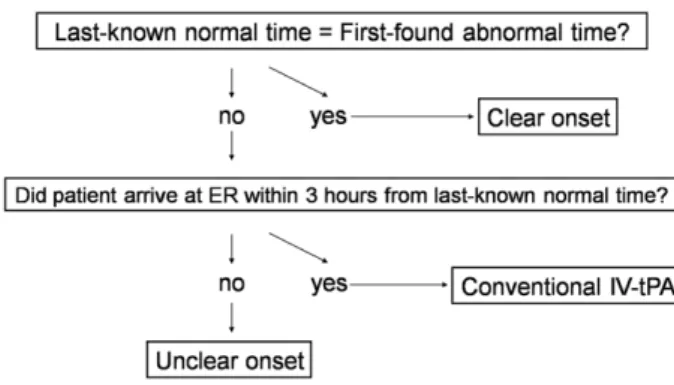
S troke occurs in the darkness as well as in daylight. Although most strokes develop suddenly, the onset time cannot be pinpointed in patients with wake-up strokes or unwitnessed day- time strokes causing aphasia or unconsciousness. An estimated 14% to 28% of ischemic strokes are wake-up strokes.1
(3)
(4)
(5)
(6)
(7)
(9)
(10)
(11)
(12)
(13)
(14)
(15)
수치
관련 문서
First, after the Group Art Therapy, the scale of hopelessness depression in the test group decreased significantly in comparison with that before the group
In addition, if the patients had a high MPV level (cut-off value of 7.95 fL) without low-dose aspirin therapy, they were at risk for ischemic stroke, especially in
This study was conducted under the hypothesis that a group art therapy program may increase emotional expression and decrease life event stress in patients with
Guidelines for the early management of adults with ischemic stroke: a guideline from the American Heart Association/American Stroke Association Stroke Council,
After analyzing their behavior and attitude before and after the program, it can be claimed that the group art therapy not only provides the elderly with
Based on the results above, this study demonstrates that the group art therapy program has a positive effect on decreased problematic behaviors and
The associations of hepatic steatosis and fibrosis using fatty liver index and BARD score with cardiovascular outcomes and mortality in patients with new‑onset type 2
Maintenance therapy with rituximab leads to a significant prolongation of response duration after salvage therapy with a combination of rituximab, fludarabine,
