Resveratrol Ameliorates High-fat-induced Metabolic Complications by Changing the Expression of Inflammasome Markers and Macrophage M1 and M2 Markers in Obese Mice
Young-Ran Lee1†, Pipit Pitriani2†, Hee-Geun Park2 and Wang-Lok Lee2*
1Center for Sport Science in Jeonbuk, Jeonju 54894, Korea
2Department of Sports Science, College of Natural Science, Chungnam National University, Daejeon 34134, Korea Received September 6, 2017 /Revised November 1, 2017 /Accepted November 13, 2017
The purpose of this study was to investigate the effects of resveratrol supplementation on inflammasome, inflammation, and macrophage markers in subcutaneous adipose tissue of high-fat-diet–induced obese mice. C57BL/6 mice were randomly assigned to three groups: normal diet control (NC; n=10), high-fat diet control (HC; n=10), or high fat with resveratrol (HRE; n=10) group. The mice were fed a high-fat diet (60% of calories from fat) or normal diet (18% of calories from fat). Resveratrol dis- solved in a 0.1ml solution of dimethyl sulfoxide was supplemented orally at 25 mg/kg body weight.
After 15 weeks, the body weight was significantly higher in the high-fat diet group than in the normal diet group. The inflammasome markers NLRP3, ASC, and caspase1 were significantly lower in the HRE group than in the HC group. The levels of an inflammation marker, IL-18, were also significantly lower in the HRE group than in the NC and HC groups. The levels of macrophage markers F480 and CD86 were significantly lower in the HRE group than in the HC group. The levels of the M2 macro- phage marker CD206 were significantly decreased in the HC and HRE groups. Resveratrol had a pos- itive effect on ameliorating the complications of high fat diet-induced obesity by reducing in- flammasome and M1 macrophage gene expressions. However, resveratrol supplementation did not re- duce inflammation gene expression.
Key words : Inflammasome, inflammation, macrophage marker, obese, resveratrol
†Authors contributed equally.
*Corresponding author
*Tel : +82-42-821-6460, Fax : +82-42-823-0387
*E-mail : [email protected]
This is an Open-Access article distributed under the terms of the Creative Commons Attribution Non-Commercial License (http://creativecommons.org/licenses/by-nc/3.0) which permits unrestricted non-commercial use, distribution, and reproduction in any medium, provided the original work is properly cited.
Journal of Life Science 2017 Vol. 27. No. 12. 1462~1469 DOI : https://doi.org/10.5352/JLS.2017.27.12.1462
Introduction
Obesity is a serious problem and has grown fast recent years [9]. Obesity can be defined as excess body fat. Obesity often associated with various chronic diseases such as dia- betes, dyslipidemia, and cardiovascular disease [9, 16-18].
Excess of adipose tissue for a long time can be linked to inflammatory processes. Recently, adipose tissue has been known as an endocrine organ that secretes several adipo- kines and produces some pro-inflammatory cytokines [13, 25].
Our previous study has been reported that high-fat diet induced obese mice can increase the concentration of TLR4, ICAM-1, and VCAM-1 which induce pro-inflammatory cyto-
kine production [16]. To prevent the development of obesity process and alleviate the determination of obese induced complication, many scientists have looked into prospective therapeutic effects of naturally occurring phytochemicals [11, 26, 40].
Resveratrol (3,4_,5-trihydroxystilbene, RSV), one of phy- tochemical, is a polyphenol compound found in berries, grapes, nuts, and several plants source [5, 6, 43]. Resveratrol mimics the metabolic effects of long-term calorie restriction, and many in vitro studies have demonstrated that resveratrol has an anti-obesity potential by inhibiting pre-adipocyte dif- ferentiation, decreasing adipocyte proliferation, inducing adipocyte apoptosis, decreasing lipogenesis, and promoting lipolysis and fatty acid β-oxidation [41].
In vitro and pre-clinical studies have greatly facilitated the characterization of molecular targets activated by resveratrol.
PGC-1α, SIRT1, NF-kB AMPK, and peroxisome proliferator activated receptor-γ (PPARγ) seem to be related to obesity pathophysiology and affected by specific hormetic mecha- nisms [31].
There is some group of protein that recognizes the stim- ulus of inflammation. It controls the production of pro-in-
flammatory cytokines such as IL-1β and IL-18 called in- flammasome [34, 38, 39]. The component of inflammasome proteins is NOD-like receptor family, pyrin domain contain- ing 3 (NLRP3), apoptosis-associated speck-like protein con- taining a caspase activation recruitment domain (ASC) and caspase 1 (CASPASE 1) [34]. Vandanmagsar et al. [40] have found that high-fat diet induced obese caused the in- flammasome marker increased significantly in adipose tissue and liver. Another study has found that there is a strong correlation between obesity, inflammation and NLRP3 in- flammasome expression in abdominal subcutaneous adipose tissue [12].
Knockout NLRP3 inflammasome in mice has been re- ported to protect from obesity-associated macrophage acti- vation in adipose tissue, reducing the M1-like macrophage activation in adipose tissue and increasing the expression of M2-like cytokine [40]. Besides that, mice deficient in- flammasome components (NLRP3, ASC, and Caspase 1) are resistant from increasing body weight even with high-fat di- et, which correlated with obesity protection [37]. Inflammation is related to response to immune process against pathogens and or pathological condition such as obesity, cancer, and syndrome metabolic [28, 32, 38].
Resveratrol has been previously identified as an anti- oxidation, and anti-inflammation agent also prevents car- diovascular disease, cancer progression, and metabolic syn- drome [5, 8, 16, 17, 21, 30, 35]. Chronic resveratrol supple- mentation may attenuate inflammation and oxidative stress in epididymal WAT of diet-induced obese mice and appears to reduce adipocyte dysfunction by decreasing adipocyte size and increasing SIRT1 activity [24].
Macrophages have frequently been grouped into two cat- egories: the classically activated macrophages (M1 macro- phage) and the alternatively activated macrophages (M2 macrophages) [29, 32]. Diet-induced obesity can shift the M2 macrophage to M1 macrophage that produces pro-in- flammatory cytokine [3, 16, 23].
Recently, many scientists use variety way to treat obese induced metabolic complication such as functional nutrition diet. Our previous study has been shown the effect of resver- atrol on inflammatory process, mitochondrial biogenesis, lip- id metabolism in the liver, skeletal muscle, and peritoneal macrophage [16, 17, 21, 30]. So far the effect of resveratrol on the inflammatory and obesity processes have been estab- lished, but how the effects on inflammasome and macro- phage infiltration markers are not clearly known especially
in subcutaneous adipose tissue [16-18, 21, 30].
Therefore, the aim of this study was to investigate the effects of resveratrol supplementation on inflammasome, in- flammation, and macrophage marker in subcutaneous adi- pose tissue of high-fat-diet-induced obese mice.
Material and Methods
Animals and diet
Male C57BL/6 mice 4 weeks old, n=30 from Central Experimental Animal, Korea were housed in cages (5 mice per cage) with standard experimental laboratory, at temper- ature 22±2˚C, with 60±5% humidity. After one week adapta- tion period, the mice were feed either a high fat diet (60%
of calories from fat, 20% from carbohydrate, 20% from pro- tein, Orient Bio Inc., #D12492) or a normal diet (18% calories from fat, 58% from carbohydrate, 24% from protein, Orient Bio Inc., #2018) ad libitum for 15 weeks.
The mice were randomly assigned to three groups: nor- mal diet control (NC; n=10), high fat diet control (HC; n=10), and high fat with resveratrol (HRE; n=10) groups. The mice were weighed and food intake per cage (5 mice) measured weekly. All experiments were approved by the Animal Care and Use Committee at the Chungnam National University (CNU-00494).
Resveratrol supplements
Resveratrol supplement purchased from Sigma Aldrich Inc. Resveratrol supplement was orally given 25 mg/kg body weight dissolved in a 0.1ml solution of Dimethyl Sulfoxide (DMSO). The supplements were administered or- ally using a disposable 1 ml syringe at dose 0.1 ml per mouse 4 times a week.
All the mice were sacrificed after fasted for 12 hr under anesthesia using a mixture ketamine (80 mg/kg) and xyla- zine (10 mg/kg). The subcutaneous adipose tissue was quickly removed, weighed and frozen in liquid nitrogen and stored at -80˚C until analysis.
RNA extraction and semi quantitative reverse tran- scription-polymerase chain reaction (RT PCR)
Total RNA was extracted from 150 mg subcutaneous adi- pose tissue homogenate using 1ml Trizol reagent (Ambion, Carlsbad, CA, USA). The total RNA concentration was calcu- lated by measuring the absorbance at 260 nm and 280 nm using an ultraviolet spectrophotometer. For cDNA synthesis,
Table 1 Reverse transcription-polymerase chain reaction primer sequences
Gene Forward Reverse NLRP3
ASC Caspase 1 IL-1β IL-18 F480 CD86 CD206 β-actin
GCTCCAACCATTCTCTGAC CAGGTATTGCCATCATTCAGT GCAAAGAGGAAGCAATTTATCA TCACAAGCAGAGCACAAG AATCTGTAATGTTCACTCTCACTA CTTTGGCTATGGGCTTCCAGTC TCTCCACGGAAACAGCATCT CAGGTGTGGGCTCAGGTAGT TCACCCACACTGTGCCCATCACGA
AGTTACACTGTGGGTCCTT TTCCATAGGTAGGACCATAAATAA GCCTTGTCCATAGCAGTAAT GAAACAGTGCAGCCCATAC GCCTCGGGTATTCTGTTATG GCAAGGAGGACAGAGTTTATCGTG CTTACGGAAGCACCCATGAT TGTGGTGAGCTGAAAGGTGA CAGCGGAACCGCTCATTGCCAATGG
A B
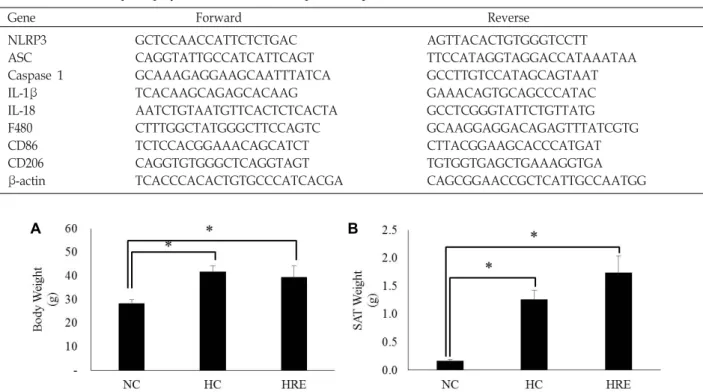
Fig. 1. The change of (A) Body Weight ; (B) Subcutaneous Adipose Tissue (SAT) weight of high-fat-diet -induced obese mice. Values represent means±SEM. * p<0.05 significant difference from NC group.
Maxi RT PreMix kit (iNtRON, Korea) was used according to the manufacturer’s instructions.
The PCR was set using the following program: 95°C for 2 min, 95°C for 30sec 38-40 cycle, the appropriate annealing temperature between 55-57°C for 30sec and 72°C for 2 min.
After loaded onto 1% of the agarose gel containing ethidium bromide then measured the PCR band density with Image Lab 4.0 (Bio-Rad, USA). The mRNA levels were normalized with β-Actin. The PCR primer sequences for each studied gene are shown in Table 1.
Statistical analysis
Statistical analysis from RT-PCR data was performed by SPSS V22.0 using one-way ANOVA with LSD posthoc tests.
Statistical significance was defined as α=0.05.
Results
Characteristic changes
Fig. 1 shows body and subcutaneous adipose tissue (SAT) weight. There was a significant difference between NC and HC group in the body and SAT weight. However, the body and SAT weight of HRE group were not significantly differ- ent compared to those of HC group (p<0.05).
Inflammasome marker changes in the subcutaneous adi- pose tissue
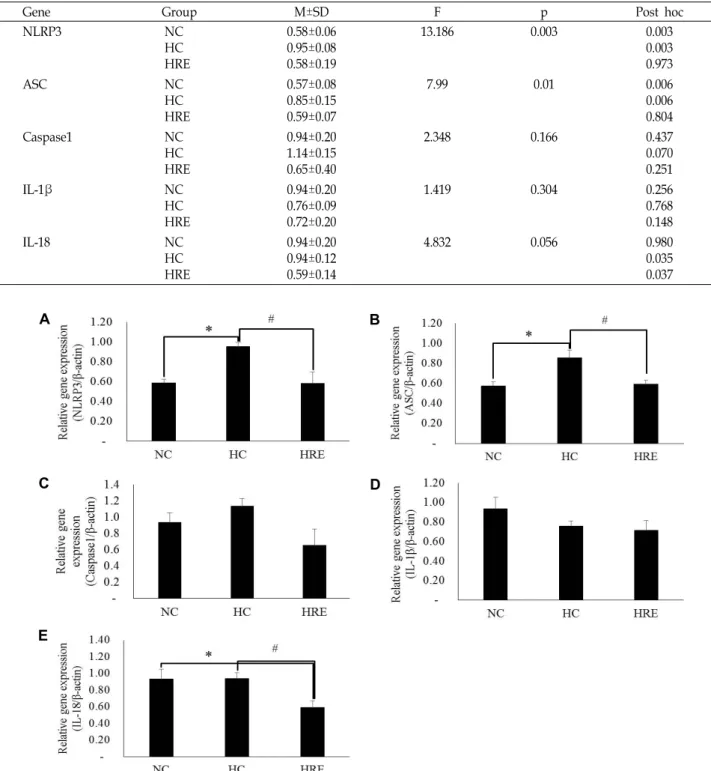
Fig. 2 shows the effect of resveratrol supplementation on mRNA expression of inflammasome marker in high-fat diet induced obese mice. The NLRP3 and ASC mRNA expression of HC group significantly increased compared to those of NC group. There was no significant difference between NC and HC groups on caspase1 mRNA expression.
The data showed there was no significant difference among all groups in IL-1β level. However, the IL-18 mRNA expression of resveratrol group was significantly reduced compared to NC and HC groups (p<0.05).
Macrophage infiltration marker changes in subcuta- neous adipose tissue
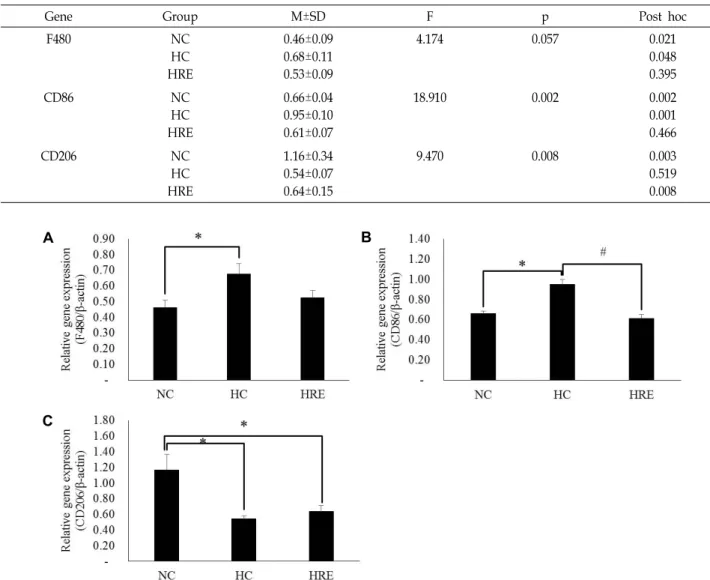
Fig. 3 shows macrophage infiltration marker mRNA ex- pression. The M1 macrophage marker including F480 and CD86. There was significantly different in F480 and CD86 mRNA expression between NC and HC groups. The HRE group also significantly decreased in CD86 mRNA expre- ssion compared with HC group.
The M2 macrophage infiltration marker CD206 was sig- nificantly decreased in HC group compared with NC group.
However, there was no significant difference in HRE group
Table 2. Inflammasome and inflammation marker mRNA expression in subcutaneous adipose tissue
Gene Group M±SD F p Post hoc
NLRP3 NC
HC HRE
0.58±0.06 0.95±0.08 0.58±0.19
13.186 0.003 0.003
0.003 0.973
ASC NC
HC HRE
0.57±0.08 0.85±0.15 0.59±0.07
7.99 0.01 0.006
0.006 0.804
Caspase1 NC
HC HRE
0.94±0.20 1.14±0.15 0.65±0.40
2.348 0.166 0.437
0.070 0.251
IL-1β NC
HC HRE
0.94±0.20 0.76±0.09 0.72±0.20
1.419 0.304 0.256
0.768 0.148
IL-18 NC
HC HRE
0.94±0.20 0.94±0.12 0.59±0.14
4.832 0.056 0.980
0.035 0.037
A B
C D
E
Fig. 2. Effect of resveratrol supplementation on inflammasome marker in high-fat diet induced obese mice. (A) NLRP3 Inflammasome;
(B) ASC; (C) Caspase 1; (D) IL-1β; (E) IL-18. Data represent means±SEM. *p<0.05 significant difference from NC group.
#p<0.05 significant difference from HC group.
compared with HC group.
Discussion
A high-fat diet can induce obesity and other metabolic
dysfunction related [9]. It was reported that resveratrol stimulated anti-obese effects by inhibition of adipogenic dif- ferentiation and lipid droplet accumulation as well as by stimulation of cytotoxic effects on adipocytes [5]. Also, re- sveratrol improved dyslipidemia and steatohepatitis in-
Table 3. Macrophage infiltration mRNA expression in subcutaneous adipose tissue
Gene Group M±SD F p Post hoc
F480 NC
HC HRE
0.46±0.09 0.68±0.11 0.53±0.09
4.174 0.057 0.021
0.048 0.395
CD86 NC
HC HRE
0.66±0.04 0.95±0.10 0.61±0.07
18.910 0.002 0.002
0.001 0.466
CD206 NC
HC HRE
1.16±0.34 0.54±0.07 0.64±0.15
9.470 0.008 0.003
0.519 0.008
A B
C
Fig. 3. The effect of resveratrol supplementation on macrophage marker in high-fat diet induced obese mice. (A) F480, (B) M1 macrophage marker CD86, (C) M2 macrophage marker, CD206. Data represent means±SEM. *p<0.05 significant difference from NC group. #p<0.05 significant difference from HC group.
duced by the atherogenic diet [1]. The previous study con- firmed that resveratrol has a role in the promotion of mi- tochondrial activity in the brown adipose tissue, both in vitro and in vivo.
In the in vivo study, resveratrol re-established the im- paired mitochondrial activity that was induced by the high-fat diet, increased the expression of endoplasmic retic- ulum-α, and improved insulin sensitivity [19]. Thus, it was important to know the effect of resveratrol on obesity-in- duced metabolic complications.
In this study, we found that body weight was not sig- nificantly reduced by resveratrol supplementation. The pre- vious study reported that there was significant weight re- duction with resveratrol supplementation (200-400 mg/kg/
day) in obese mice [20]. However, our previous results with 10mg/kg also showed no significant effect on body weight [17]. In this research, we use 25mg/kg body weight of mice that were given orally but the weight of resveratrol supple- mentation group was not significant difference compared to the high-fat diet group. The effect of resveratrol on the obese model suggested that weight reduction can differ based on the level of obesity, the duration, and concentration of re- sveratrol administration [5, 30]. Thus, further studies are needed in the future
NLRP3 inflammasome is a novel protein complex that in- tegrates multiple exogenous and endogenous danger signals into immediate secretions of IL-1β and IL-18 [2]. Our study found there were not significant difference in IL-1β and
IL-18 mRNA expressions between high fat diet and normal diet groups. However, IL-18 mRNA expressions were sig- nificantly decreased only in resveratrol group. Previous study demonstrated that NLRP3 inflammasome is spesifi- cally activated in response to high fat diet and controls the production of IL-1β in adipose tissue and IL-18 in obesity [40].
Schmidt (2012) [33] found that processing of IL-1β and IL-18 are independently regulated by activation of NLRP3 inflammasome. This process was related with the production of reactive oxygen species (ROS) and modification of the thi- oredoxin interacting protein, TXNIP. It was found that in- hibitor of ROS production inhibited secretion of IL-1β, but did not in IL-18 [33].
Inflammasomes have been highlighted in the area of in- nate immunity. It has been hypothesized that obesity may be caused by activated innate immunity as well as by ac- quired immunity. Thus, extensive research has been shown to link obesity and inflammasome as regulatory components of innate immunity. Among inflammasomes, the NLRP3 in- flammasome is a sensor of obesity-associated inflammation and a key regulator linking metabolism and inflammation [14, 15, 27]. Once the NLRP3 inflammasome is activated, acti- vated caspase1 cleaves a variety of protein precursors, in- cluding pro-IL-1β and pro-IL-18, subsequently inducing ex- cessive production of pro-inflammatory cytokines [36].
We found that induction of high–fat-diet-induced obe- sity caused NLRP3, ASC and Caspase 1 activation in sub- cutaneous adipose tissue. This finding was relevant to pre- vious research that obesity condition can activate the in- flammasome such as NLRP3, ASC and Caspase 1. This in- flammasome activation was specific for several tissues in- cluding adipose tissue and liver but not in the kidney [40].
Furthermore, resveratrol had a significant effect on reduced the expression of the inflammasome markers.
The Macrophage can be divided into two types, M1 as classically activated macrophage phenotype and M2 as alter- natively activated macrophage [4, 7, 32]. In the development of obesity, adipose tissue mass is increased by hyperplasia and hypertrophy also increased macrophage infiltration in adipose tissue [7]. The increased accumulation of macro- phages in adipose tissue may increase production of a proin- flammatory cytokine in the adipose tissue and contribute to the pathophysiological effects of obesity [43].
Our study found the macrophage marker F480 was sig- nificantly increased in high-fat diet group compared to that
in normal diet group. Resveratrol has a significant effect that reduces the F480 mRNA expression in high-fat diet group (p<0.05). This result is consistent with our previous study [16].
M1 macrophage marker CD86 was significantly reduced in resveratrol supplementation group compared to that in high-fat diet induced obese mice group (p=0.001). The pre- vious results demonstrated that resveratrol is a potent in- hibitor of the anti-pathogen responses of rat macrophages and suggest that this agent may have applications in the treatment of diseases involving macrophage hyper re- sponsiveness [22].
In recent study M2, macrophage marker CD206 was sig- nificantly decreased in high-fat diet group compared with that in normal diet group (p<0.05). In contrast, resveratrol supplementation increased the expression of CD206 com- pared with high-fat diet induced obese group but not significant. This result also similar with our previous study M2 macrophage specific marker CD163 was not significantly increased with resveratrol supplement [16]. In the condition of obesity, proinflammatory M1 macrophage markers are predominantly presented in adipose tissue whereas anti-in- flammatory M2 macrophage markers are less found in obese adipose tissue [7]. This result suggests that resveratrol has an effect to ameliorate the M1 macrophage marker CD86 and controlled the M2 macrophage marker CD206.
In conclusion, resveratrol has a positive effect on in- flammasome marker, M1, and M2 macrophage marker.
However, resveratrol supplementation cannot change the ex- pression of IL-1β as an inflammatory cytokine that activated by caspase1.
Acknowledgment
“This work was supported by the National Research Foundation of Korea Grant funded by the Korean Govern- ment (NRF-2013S1A5B5A07048323)”
References
1. Ahn, J., Cho, I., Kim, S., Kim, D. and Ha, T. 2008. Dietary resveratrol alters lipid metabolism-rRelated gene expres- sion of mice on an atherogenic diet. J. Hepatol. 49, 1019-1028.
2. Benetti, E., Fausto, C., Nimesh, S. A. P. and Massimo, C.
2013. The NLRP3 inflammasome as a novel player of the intercellular crosstalk in metabolic disorders. J. Pharmacol.
154, 165-173.
3. Boutens, L. and Stienstera, R. 2016. Adipose tissue macrop-
hages : going off track during obesity. Diabetilogy 59, 879- 894.
4. Castoldi, A., Cristiane N. S., Niels Olsen, S. C. and Pedro, M. M. 2016. The macrophage switch in obesity development.
Front. Immunol. 6, 1-11.
5. Chang, C., Lin, K., Peng, K., Day, Y. and Hung, L. 2016.
Resveratrol exerts anti-obesity effects in high-fat diet obese mice and displays differential dosage effects on cytotox- icity, differentiation, and lipolysis in 3T3-L1 cells. Endocr.
J. 63, 169-178.
6. Chang, Y., Ka, S., Hsu, W., Chen, A., Chao, L., Lin, C., Hsieh, C., Chen, M., Chiu, H., Ho, C., Chic, Y., Liu, M. and Hua, K. 2015. Resveratrol inhibits NLRP3 inflammasome activa- tion by preserving mitochondrial integrity and augmenting autophagy. J. Cell. Physiol. 230, 1567-1579.
7. Chawla, A., Khoa, N. and Sharon, Y. 2012. Macrophage - mediated inflammation in metabolic disease. Nat. Rev.
Immunol. 11, 738-749.
8. Chen, Q., Ermao W., Liping, M. and Pei, Z. 2012. Dietary Resveratrol increases the expression of hepatic 7α-hydrox- ylase and ameliorates hypercholesterolemia in high-fat fed C57BL/6J mice. Lipids Health Dis. 11, 56.
9. Fernando, C., Ricardo V. G. and Alejandra, L. 2014. Obesity, adipose tissue, inflammation and update on obesity man- agement. Obes. Rev. 1, 1-8.
10. Ghanim, H., Sia, C. L., Abuaysheh, S., Korzeniewski, K., Patnaik, P., Marumganti, A., Chaudhuri, A. and Dandona, P. 2010. An antiinflammatory and reactive oxygen species suppressive effects of an extract of polygonum cuspidatum containing resveratrol. J. Clin. Endocrinol. Metab. 95, 1-8.
11. González-Castejón, M. and Rodriguez-Casado, A. 2011.
Dietary phytochemicals and their potential effects on obe- sity: a review. Pharmacol. Res. 64, 438-455.
12. Goossens, G. H., Blaak, E. E., Theunissen, R., Duijvstijn, A.
M., Cle'ment, K., Tervaert, J. W. and Thewissen, M. M.
2012. Expression of NLRP3 inflammasome and T cell pop- ulation markers in adipose tissue are associated with insulin resistance and impaired glucose metabolism in humans.
Mol. Immunol. 50, 142-149.
13. Greenberg, A. S. and Obin, M. S. 2006. Obesity and the role of adipose tissue in iInflammation and metabolism. Am. J.
Clin. Nutr. 83, 461S-465S.
14. Haneklaus, Moritz. and O’Neill, L. A. 2015. NLRP3 at the interface of metabolism and inflammation. Immunol. Rev.
265, 53-62.
15. Haneklaus, M., O’Neill, L. A. and Coll, R. C. 2013. Modula- tory mechanisms controlling the NLRP3 inflammasome in inflammation: recent developments. Curr. Opin. Immunol.
25, 40-45.
16. Jeong, J., Lee, Y., Park, H. and Lee, W. 2015. The effects of either resveratrol or exercise on macrophage infiltration and switching from M1 to M2 in high fat diet mice. J. Exerc.
Nutr. Biochem. 19, 65-72.
17. Jeong, J., Lee, Y., Park, H. and Lee, W. 2015. Moderate ex- ercise training is more effective than resveratrol supplemen- tation for ameliorating lipid metabolic complication in skel-
etal muscle of high fat diet-iduced obese mice. J. Exerc. Nutr.
Biochem. 19, 131-137.
18. Jun, J., Lee, W., Park, H., Lee, S., Jeong, S. and Lee, Y. 2014.
Moderate intensity exercise inhibits macrophage infiltration and attenuates adipocyte inflammation in ovariectomized rats. J. Exerc. Nutr. Biochem. 18, 119-127.
19. Ku, C. R., Cho, Y. H., Hong, Z. Y., Lee, H., Hohg, S. S.
and Lee, E. J. 2016. The effects of high fat diet and resvera- trol on mitochondrial activity of brown adipocytes.
Endocrinol. Metab. 31, 328-335.
20. Lagouge, M., Argmann, C., Gerhart-Hines, Z., Meziane, H., Lerin, C., Daussin, F., Messadeg, N., Milne, J., Lambert, P., Elliott, P., Geny, B., Laakso, M., Puigserver, P. and Auwerx, J. 2006. Resveratrol improves mitochondrial function and protects against metabolic disease by activating SIRT1 and PGC-1α. Cell 127, 1109-1122.
21. Lee, Y., Jeong, S., Park, H., Jung, J. and Lee, W. 2013. The effects of either resveratrol supplementation or aerobic ex- ercise training combined with a low fat diet on the mole- cules of adipogenesis and adipocyte inflammation in high fat diet-induced obese mice. J. Exerc. Nutr. Biochem. 17, 15-20.
22. Leiro, J., Álvarez, E., García, D. and Orallo, F. 2002. Resver- atrol modulates rat macrophage functions. Int. Immuno- pharmacol. 2, 767-774.
23. Lumeng, C. N., Jennifer L. B. and Alan, R. S. 2007. Obesity induces a phenotypic switch in adipose tissue macrophage polarization. J. Clin. Invest. 117, 175-184.
24. Lv, Z. M., Wang, Q., Chen, Y. H., Wang, S. H. and Huang, D. Q. 2015. Resveratrol attenuates inflammation and oxida- tive stress in epididymal white adipose tissue: implications for its involvement in improving steroidogenesis in diet-in- duced obese mice. Mol. Reprod. Dev. 82, 321-328.
25. Makki, K., Froguel, O. and Wolowczuk, L. 2013. Adipose tissue in obesity-related inflammation and insulin resis- tance: cells, cytokines, and chemokines. ISRN Inflamm. 2013, 1-12.
26. Manach, C., Scalbert, A., Morand, C., R'em'esy, C. and Jime'nez, L. 2004. Polyphenols: food sources and bioavail- ability Am. J. Clin. Nutr. 79, 727-747.
27. McGettrick, A. F. and O’Neill, L. A. 2013. How metabolism generates signals during innate immunity and inflamma- tion. J. Biol. Chem. 288, 22893-22898.
28. Medzhitov, R. 2008. Origin and physiological roles of inflammation. Nature 454, 428-435.
29. Metchnikoff, I. and Nobel, P. 2015. Macrophage polarization.
Biorad 2, 1-8.
30. Park, H., Lee, Y., Jun, J. and Lee, W. 2014. Exercise training is more effective than resveratrol supplementation on allevi- ation of inflammation in peritoneal macrophages of high Fat diet mice. J. Exerc. Nutr. Biochem. 18, 79-87.
31. Poulsen, M. M., Fjeldborg, K., Ornstrup, M. J., Kjaer, T. N., Nohr, M. K. and Pedersen, S. B. 2015. Resveratrol and in- flammation: challenges in translating pre-clinical findings to improved patient outcomes. Biochim. Biophys. Acta. 1852, 1124-1136.
32. Qiu, Y., Shan, B., Yang, L. and Liu, Y. 2016. Adipose tissue
초록:라스베라트롤 투여가 고지방식이 비만쥐의 지방조직에서의 inflammasome과 대식세포 마커에 미치는 영향
이영란1†․피핏 피트리아니2†․박희근2․이왕록2*
(1전북스포츠과학센터, 2충남대학교 스포츠과학과)
본 연구 목적은 고지방식이 유도 비만 쥐의 피하지방조직에서 라스베라트롤 투여가 대식세포 침윤관련 염증인 자에 미치는 영향을 규명하고자 하였다. 본 연구를 위해 정상식이군, 고지방식이군, 고지방식이+라스베라트롤 투 여군으로 분류한 후, 라스베라트롤 투여군은 15주간 25 mg/kg 농도로 Dimethyl Sulfoxide에 용해하여 투여하였 으며, 비교군은 Dimethyl Sulfoxide 용액만을 투여하였다. 연구결과 고지방식이군은 정상식이군에 비하여 체중이 유의하게 증가하였고, 라스베라트롤 투여군에서 고지방식이 군보다 NLRP3. ASC, Casepase1 mRNA 발현이 감소 하였다. 또한 염증마커로 알려진 IL-18 mRNA 발현이 라스베라트롤 투여군에서 정상식이군과 고지방식이군보다 낮게 나타났다. 대식세포 침윤 마커인 F480, CD86 mRNA 발현에서도 라스베라트롤 투여군에서 고지방식이 군보 다 유의한 감소를 보였다. 따라서 라스베라트롤 투여는 고지방식이 유도 비만 상황에서 대식세포 침윤 염증과 inflammasome에 긍정적인 영향을 미치는 것으로 보여진다.
macrophage in immune regulation of metabolism. Sci.
China. Life. Sci. 59, 1232-1240.
33. Rebecca, L. S. and Laurel, L. L. 2012. Distinct licensing of IL-18 and IL-1 β secretion in response to NLRP3 inflamma- some activation. PLoS. One 7, 1-9.
34. Schroder, K., Zhou, R. and Tschopp, J. 2010. The NLRP3 inflammasome: a sensor for metabolic danger? Science 327, 296-300.
35. Signorelli, P. and Ghidoni, R. 2005. Resveratrol as an anti- cancer nutrient: molecular basis, open questions and promises. J. Nutr. Biochem. 16, 449-466.
36. Skeldon, A. M., Faraj, M. and Saleh, M. 2014. Caspases and inflammasomes in metabolic inflammation. Immunol. Cell.
Biol. 92, 304-313.
37. Stienstra, R., van Diepen, J. A., Tack, C. J., Zaki, M. H., van de Veerdonk, F. L., Perera, D., Neale, G. A., Hooiveld, G.
J., Hijmans, A., Vroegrijk, I., van den Berg, S., Romijn, J., Rensen, P. C., Joosten, L. A., Netea, M. G. and Kanneganti, T. D. 2011. Inflammasome is a central player in the in- duction of obesity and insulin resistance. Proc. Natl. Acad.
Sci. USA 108, 15324-15329.
38. Strowig, T., Henao-Mejia, J., Eran, E. and Richard, F. 2012.
Inflammasomes in health and disease. Nature 481, 278-286.
39. Tschopp, J. and Schroder, K. 2010. NLRP3 inflammasome activation: The convergence of multiple signalling path- ways on ROS production? Nat. Rev. Immunol. 10, 210-215.
40. Vandanmagsar, B., Youm, Y. H., Ravussin, A., Galgani, J.
E., Stadler, K., Mynatt, R. L., Ravussin, E., Stephens, J. M.
and Dixit, V. D. 2011. The NALP3/NLRP3 inflammasome instigates obesity-induced autoinflammation and insulin resistance. Nat. Med. 17, 179-188.
41. Vauzour, D., Ana, R. M., Giulia, C., Maria, O. C. and Jeremy, P. E. 2010. Polyphenols and human health: pre- vention of disease and mechanisms of action. Nutrients 2, 1106-1131.
42. Shu, W., Naima, M. M., Lixia, C., Huanbiao, M., Anuradha, S., Rui, S., Priyanka, B., Kwun, I. S. and Shen, C. L. 2014.
Novel insights of dietary polyphenols and obesity. J. Nutr.
Biochem. 25, 1-18.
43. Weisberg, S. P., McCann, D., Desai, M., Rosenbaum, M., Leibel, R. L. and Ferrante, A. W. 2003. Obesity is associated with macrophage accumulation in adipose tissue. J. Clin.
Invest. 112, 1796-1808.
44. Yang, S. J. and Lim, Y. 2014. Resveratrol ameliorates hepatic metaflammation and inhibits NLRP3 inflammasome activa- tion. Metabolism 63, 693-701.