*Corresponding author: Myoung Gun Choung Phone: +82-33-540-3321; Fax: +82-33-540-3329;
E-mail: [email protected]
Korean J Environ Agric. 2018;37(2):104-116. Korean Online ISSN: 2233-4173
Published online 2018 June 1. https://doi.org/10.5338/KJEA.2018.37.2.12 Print ISSN: 1225-3537
GC-ECD/MS 를 이용한 농산물 중 Bifenox, Ethalfluralin, Metolachlor, Oxyfluorfen, Pretilachlor, Thenylchlor 및
Trifluralin의 동시 분석
안경근1, 김기쁨1, 황영선2, 강인규3, 이영득4, 정명근1*
1강원대학교 보건과학대학 생약자원개발학과, 2텍사스주립대학교 생물학과,
3경북대학교 농업생명과학대학 원예과학과, 4대구대학교 과학생명융합대학 생명환경학부
Simultaneous Pesticide Analysis Method for Bifenox, Ethalfluralin, Metolachlor, Oxyfluorfen, Pretilachlor, Thenylchlor and Trifluralin Residues in Agricultural Commodities Using GC-ECD/MS
Kyung Geun Ahn
1, Gi Ppeum Kim
1, Young Sun Hwang
2, In Kyu Kang
3, Young Deuk Lee
4and Myoung Gun Choung
1*(
1Department of Herbal Medicine Resource, College of Health Science, Kangwon National University, Samcheok 25949, Korea,
2Department of Biology, University of Texas-Arlington, Arlington, TX 76019, USA,
3
Department of Horticultural Science, College of Agriculture and Life Sciences, Kyungpook National University, Daegu 41566, Korea,
4Division of Life and Environmental Science, College of Science Life Integration, Daegu University, Gyeongsan 38453, Korea)
Received: 1 April 2018/ Revised: 27 April 2018/ Accepted: 25 May 2018 Copyright ⓒ 2018 The Korean Society of Environmental Agriculture
This is an Open-Access article distributed under the terms of the Creative Commons Attribution Non-Commercial License (http://creativecommons.org/licenses/by-nc/3.0) which permits unrestricted non-commercial use, distribution, and reproduction in any medium, provided the original work is properly cited.
ORCID
Myoung Gun Choung
http://orcid.org/0000-0002-4391-5513
Young Deuk Lee
http://orcid.org/0000-0003-4282-457X
104
Abstract
BACKGROUND: This experiment was conducted to establish a simultaneous analysis method for 7 kinds of herbicides in 3 different classes having similar physicochemical property as diphenyl ether(bifenox and oxyfluorfen), dinitroaniline (ethalfluralin and trifluralin), and chloroacetamide (metolachlor, pretilachlor, and thenylchlor) in crops using GC-ECD/MS.
METHODS AND RESULTS: All the 7 pesticide residues were extracted with acetone from representative samples of five raw products which comprised apple, green pepper, Kimchi cabbage, hulled rice and soybean. The extract was diluted with saline water and directly partitioned into n-hexane/dichloromethane(80/20, v/v) to remove polar
co-extractives in the aqueous phase. For the hulled rice and soybean samples, n-hexane/acetonitrile partition was additionally employed to remove non-polar lipids. The extract was finally purified by optimized Florisil column chromatography. The analytes were separated and quantitated by GLC with ECD using a DB-1 capillary column. Accuracy and precision of the proposed method was validated by the recovery experiment on every crop samples fortified with bifenox, ethalfluralin, metolachlor, oxyfluorfen, pretilachlor, thenylchlor, and trifluralin at 3 concentration levels per crop in each triplication.
CONCLUSION: Mean recoveries of the 7 pesticide residues ranged from 75.7 to 114.8% in five representative agricultural commodities. The coefficients of variation were all less than 10%, irrespective of sample types and fortification levels. Limit of quantitation (LOQ) of the analytes were 0.004 (etahlfluralin and trifluralin), 0.008 (metolachlor and pretilachlor), 0.006 (thenylchlor), 0.002 (oxyfluorfen), and 0.02 (bifenox) mg/kg as verified by the
Research Article Open Access
Cl
Cl O
NO2 C O O CH3
C F F
F
Cl O
NO2 O CH2 CH3
Bifenox Oxyfluorfen
N NO2
NO2 C
F F
F
CH2
CH2 CH3
C CH2
CH3
N NO2
NO2 C
F F
F
CH2
CH2 CH2
CH2 CH3
CH3
Ethalfluralin Trifluralin
CH2 N
CH3 C
O H2C Cl
H3C
CH CH3
CH2 O CH3
N C
O H2C Cl
H3C CH3
CH2 S O
CH3
Metolachlor Thenylchlor
CH2 H2C
N
CH3 H3C
CH2 CH2 O CH2 CH2 CH3 C
O H2C Cl
Pretilachlor
Fig. 1. Chemical structures of bifenox, ethalfluralin, metolachlor, oxyfluorfen, pretilachlor, thenylchlor, and trifluralin.
recovery experiment. A confirmatory technique using GC/MS with selected-ion monitoring was also provided to clearly identify the suspected residues. Therefore, this analytical method was reproducible and sensitive enough to determine the residues of bifenox, ethalfluralin, metolachlor, oxyfluorfen, pretilachlor, thenylchlor, and trifluralin in agricultural commodities.
Key words: Chloroacetamide, Dinitroaniline, Diphenyl ether, GC-ECD/MS, Residues
서 론
농산물 재배 시 병해충 및 잡초를 방제하기 위한 농약의 사용량은 매년 증가하여 농산물 중 잔류농약에 의한 독성학 적 위해 유발 가능성이 지속적으로 제기되어 왔으며, 이에 따 라 농산물의 안전성 확보가 커다란 사회적 문제로 대두되고 있다(Park and Lee, 2003). 현재 국내 사용되고 있는 농약 의 경우 일부 속효성 약제를 제외하고는 살포 후 일정기간 이 상 잔류되는 특성이 있어 최종 수확 농산물에 살포농약이 잔 류할 가능성이 있으므로, 살포한 농약들로부터의 안전성 확보 는 반드시 이루어져야 할 과제이며(Kwon and Lee, 2003),
국제기준에 준하는 정확하고 신속한 잔류농약 분석법의 확립 이 필요하다.
최근 안전 농산물의 확보 및 유통을 위해 농산물에 잔류할 가능성이 있는 다양한 농약에 대해 잔류 분석이 수행되고 있 으며, 이 경우 다종농약다성분 분석법을 적용하여 특정 농약 의 잔류성 유무를 모니터링 하고, 이후 검출 잔류농약에 대한 정밀한 정량적 분석을 통해 잔류량의 검증이 수행되므로 잔 류분석 시 다성분 동시분석의 정확성 및 효율성이 중요한 관 건으로 대두될 수 있다.
본 연구는 국내 식품공전에 수록되어 있는 다종농약다성 분 분석법 제1법(4.1.2.1) 및 제2법(4.1.2.2)에 수록된 제초제 성분 중 일상분석 시 다성분 분석의 특성 상 분리능이 열등하 고, 분석 재현성이 불량하거나 분석 검출기의 최적화가 미비 하다고 판단되어지는 dinitroaniline계 제초제 ethalfluralin 및 trifluralin 성분, chloroacetamide계 제초제인 metolachlor, pretilachlor 및 thenylchlor 성분과 diphenyl ether계 제 초제 bifenox 및 oxyfluorfen을 포함하는 물리화학적 특성 이 유사한 제초제 성분 7종에 대한 동시 분석법을 확립하고 자 하였다(Fig. 1).
이들 7종의 대상 농약은 잎, 줄기 및 뿌리를 통해 식물체
로 용이하게 흡수되며, 세포막을 파괴하여 광합성을 억제하거
나, 배축 및 뿌리에서 흡수되어 발아억제 작용을 함으로써 제 초효과를 발휘하는 것으로 보고되고 있다(Hutson, 1998;
Canadian Council of Ministers of the Environment, 1999; European Food Safety Authority, 2007; Jursik et al ., 2011).
대상 농약은 강아지풀, 바랭이 및 돌피 등 한해살이풀에 해당하는 잡초제거에 효과적이며, 논 제초에 많이 사용하지만 콩, 오이, 멜론, 호박, 해바라기, 땅콩, 카놀라, 렌즈콩, 옥수수, 대두, 감자, 사탕수수, 사탕무 및 순무 등 밭작물의 광엽제초 제로도 광범위하게 사용되고 있다(Hutson, 1998; Canadian Council of Ministers of the Environment, 1999; Judge et al ., 2003; European Food Safety Authority, 2007;
Dharumarajan et al ., 2008; Dow, 2010; Jursik et al ., 2011).
국내에서는 옥수수, 대두, 밀, 보리, 땅콩, 메밀, 귀리, 복숭 아, 자두, 양파, 고추, 살구, 파, 양배추 등 매우 다양한 농산물 에 대한 대상농약 7종의 농약잔류허용기준(Maximum Residue Limits; MRL)은 0.05~1.0 mg/kg 범위로 설정되어 있다(Ministry of Food and Drug Safety, 2018).
본 연구의 대상성분인 Bifenox[methyl 5-(2,4-dichlorophenoxy) -2-nitrobenzoate], oxyfluorfen(2- chloro-α,α,α-trifluoro-p-tolyl 3-ethoxy-4-nitrophenyl ether), ethalfluralin[N-ethyl-α,α, α-trifluoro-N-(2-methylallyl)-2,6-dinitro-p-toluidine], trifluralin(α,α,α-trifluoro-2,6-dinitro-N,N-dipropyl- p-toluidine), metolachlor[2-chloro-N-(6-ethyl-o-tolyl)-N- [(1R-S)-2-metho-xy-1-methylethyl]acetamide], pretilachlor [2-chloro-2',6'-diethyl-N-(2-propoxyethyl)acetanilide] 및 thenylchlor[2-chloro-N-(3-methoxy-2-thenyl)-2',6'- dimethylacetanilide]의 물리화학적 특성을 살펴보면, 대상 농약 7종은 모두 일상적 조건에서 해리하지 않는 중성 화합물 로 n -octanol/water 분배계수(Log P
ow)는 3.4~5.3 범위의 중간 혹은 비극성 성분이다. 증기압이 0.028~12 mPa 범위로 GLC(Gas-liquid chromatography) 분석이 가능한 충분한 휘발성이 있으며, metolachlor(480 mg/L; EC, 2004)를 제 외한 대상 성분들의 물에 대한 용해도는 0.1~1.0 mg/L로 공 통적으로 물에 잘 녹지 않지만 다양한 유기용매에는 잘 녹는 특성이 있다(United States Environmental Protection Agency, 1995; Lee, 2003; World Health Organization, 2003; European Food Safety Authority, 2007).
Dinitroaniline계 제초제인 ethalfluralin 및 trifluralin의 잔류분석은 GC-MS(Gas chromatography-mass spectrometry) 및 LC-MS/MS(liquid chromatography-tandem mass spectrometry)를 이용한 분석이 보고된 바 있으나(Shackelford et al ., 2000; Lerch et al ., 2003; Raina and Hall, 2008), 이들 방법 모두 다성분분석 및 SPE(Solid phase extraction) 정제법의 적용으로 인해 정제도와 재현성이 불량할 우려가 있 고, chloroacetamide계 제초제인 metolachlor, pretilachlor 및 thenylchlor 또한 SPE 정제 후 GC-MS 및 LC/MS/MS로 분석된 바 있으나(Yokley et al ., 2002; Li, 2004; Yun et al .,
2009; Kim et al ., 2010), 선행 연구 결과들은 monitoring의 목적으로 분석, 보고된 것으로 개별성분에 대한 분석조건 및 회수율은 검토되지 않았다. 한편 diphenyl ether계 제초제인 bifenox 및 oxyfluorfen은 QuEChERS(Quick, Easy, Cheap, Effective, Rugged and Safe)법 및 UPLC-MS/MS를 적용 한 다성분 분석(Mastovska et al ., 2010)법이 보고된 바 있 으나 실제 농산물을 적용한 정밀한 분석조건 확립 및 회수율 은 검토된 바 없으며, 상기 기술한 내용처럼 본 연구의 대상 농약 7종에 대한 포괄적 계열별 동시분석법은 현재까지 보고 된 바 없다.
따라서 본 연구에서는 물리화학적 특성이 유사한 dinitroaniline계 제초제인 ethalfluralin 및 trifluralin 성 분, chloroacetamide계 제초제인 metolachlor, pretilachlor 및 thenylchlor 성분과 diphenyl ether계 제초제인 bifenox 및 oxyfluorfen을 포함하는 7종의 대상 농약에 대해 잔류 유 무를 판단하는 monitoring의 수준에 그치지 않고, 정확성 및 정밀성이 확보된 계열별 동시 정량 분석법을 개발하고자 하 였으며, 시료 조제를 비롯한 모든 과정의 통합을 통해 편이성 이 확보된 새로운 계열별 동시 정량분석법을 확립하여 국내 잔류농약 검사의 기초 자료를 제공하고자 하였다.
재료 및 방법
시약 및 기구
본 연구에 사용된 bifenox, ethalfluralin, metolachlor, oxyfluorfen, pretilachlor, thenylchlor 및 trifluralin은 순 도 97.7% 이상의 분석용 표준품을 Sigma-Aldrich(USA)로 부터 구입하여 사용하였다. 표준품의 stock solution은 n -hexane에 녹여 500 mg/L의 농도로 조제하여 -20℃의 냉 동고에서 보관하고, 필요 시 마다 n -hexane으로 희석하여 사 용하였다. Florisil (60~100 mesh)은 J. T. Baker (USA)사로 부터 구입하여 130℃에서 하룻밤 이상 가열, 활성화하여 사용 하였다. Acetone, n -hexane, dichloromethane 및 acetonitrile 은 잔류분석용을, deionized water는 HPLC용을 J. T.
Baker (USA)사에서 구입하여 사용하였으며, 기타 유기용매 및 무기시약은 시약특급 또는 잔류분석용을 사용하였다. 시료 용액의 농축은 Eyela NE- 1000SW (Japan)를 사용하였고, 농산물 시료의 마쇄 및 균질화는 고속 호모게나이저(IKA, Ultra-Turrax T-25, USA)를 이용하였다.
농산물 시료
국내 농약 잔류허용기준(Ministry of Food and Drug
Safety, 2018) 중 bifenox, ethalfluralin, metolachlor,
oxyfluorfen, pretilachlor, thenylchlor 및 trifluralin의 사
용이 등록되어있는 일부 농산물을 분석대상으로 하였으며,
Codex의 잔류분석법 대상 대표 농산물군(Codex, 2003)과
국내 식품 소비량을 감안하여 곡류는 현미, 두류는 콩, 채소
류는 고추 및 배추, 과일류에서는 사과를 대표시료로 선정하
였다. 각 대표적 시료의 무농약 시료는 지역 대형마트에서 유
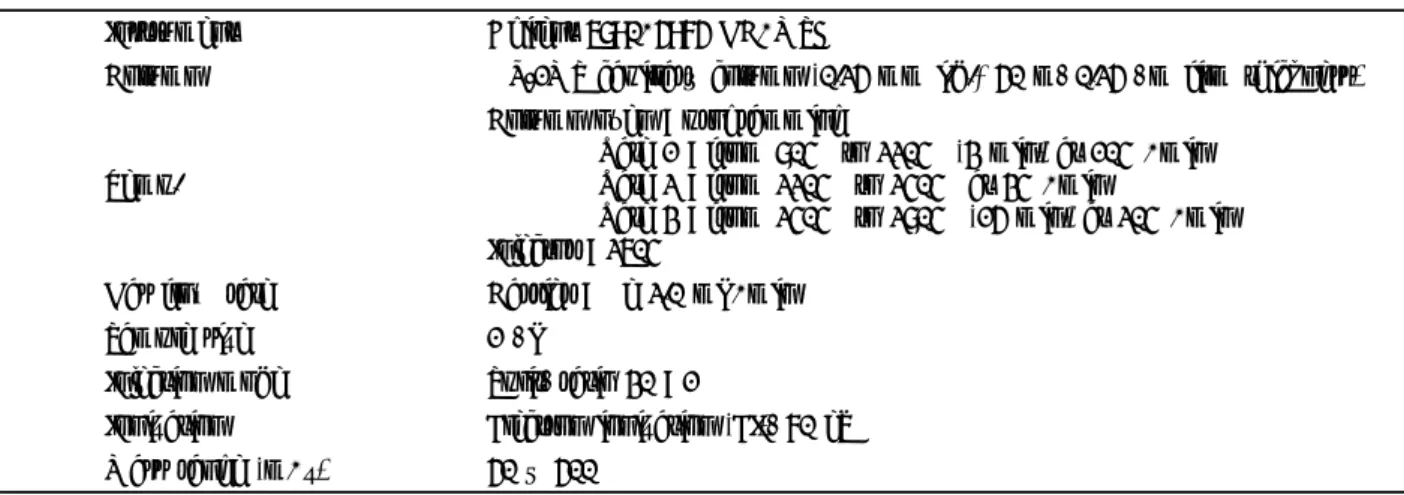
Instrument Agilent 6890 GC
Detector 63Ni - electron capture detector (ECD)
Column DB-1 capillary column (0.53 mm i.d.×30 m, 0.50 μm film thickness)
Temp.
Column oven : programming
Rate 1 : from 140℃ to 240℃ at 4℃/min
Rate 2 : from 240℃ to 280℃ (3 min) at 10℃/min Post run : 140℃ for 8 min
Detector : 300℃, Injector : 250℃
Gas flow rate Carrier : N2 10 mL/min, Make up : N2 55 mL/min Detector purge : N2 5.5 mL/min
Sample size 1 μL Injection mode Splitless
Table 1. GC-ECD operating parameters for the analysis of 7 kinds of herbicides
Instrument Agilent 6890/5975 GC/MSD
Column HP-1MS capillary column (0.25 mm i.d.×50 m, 0.25 μm film thickness)
Temp.
Column oven : programming
Rate 1 : from 80℃ to 220℃ (3 min) at 10℃/min Rate 2 : from 220℃ to 240℃ at 3℃/min
Rate 3 : from 240℃ to 280℃ (15 min) at 20℃/min Injector : 260℃
Gas flow rate Carrier : He 2.0 mL/min Sample size 1 μL
Injection mode Split, ratio 30 : 1
Ionization Electron ionization (EI), 70 eV Mass range (m/z) 50 ~ 500
Table 2. GC/MS operating parameters for the confirmation of 7 kinds of herbicides
기농 인증시료를 구입한 후 식품공전 상 검체 처리방법 (Ministry of Food and Drug Safety, 2012)에 따라 전처 리하여 사용하였다. 대조 시료는 잔류농약 검사를 실시하여 무농약 시료임을 확인하였다.
GC-ECD/MS 기기분석 조건
분석 대상성분인 bifenox, ethalfluralin, metolachlor, oxyfluorfen, pretilachlor, thenylchlor 및 trifluralin 성분 은 분자구조 내에 할로겐 화합물 혹은 카보닐기를 함유하고 있어 GC-ECD (Gas chromatography-electron capture detector)를 이용한 고감도 분석이 가능하다. ECD를 장착 한 GC는 Agilent (USA) 6890을 이용하였고, 내경이 0.53 mm인 capillary column을 사용하여 분석하였다. 잔류분의 재확인을 위한 GC/MS 분석에는 Agilent (USA) 6890/
5975 GC/MSD를 사용하였으며, 각각의 자세한 분석조건은 Table 1과 Table 2에 나타내었다.
표준검량선 및 분석정량한계(Limit of quantitation, LOQ) 대상농약인 7종의 제초제 bifenox, ethalfluralin, metolachlor, oxyfluorfen, pretilachlor, thenylchlor 및 trifluralin의 stock solution을 희석하여 성분별로 0.005∼0.5 mg/L의
농도가 되도록 농도별 혼합 표준용액을 조제하고, 각 1 μL씩 GC-ECD에 주입하여 분석된 peak의 면적을 기준으로 표준 검량선을 작성하였다.
분석법의 정량한계(Limit of quantitation; LOQ)는 무농 약 농산물 시료에서 간섭물질이 존재하지 않음을 확인한 후, 분석기기의 정량한계와 시료량 및 분석과정 중의 농축배율을 계산하여 아래의 계산식에 의해 산출하였으며(Ahn et al ., 2014), 동일 수준으로 대상농약 7종을 처리한 회수율 시험으 로 검토하였다.
정량한계(LOQ, mg/kg)=[기기 정량한계(ng)/주입량(μ L)]×[시료용액(mL)/시료량(g)]
시료 추출 및 분배
농산물 시료 각 25 g에 acetone 100 mL를 가하고(콩 및
현미 시료의 경우 추출 전 20 mL의 증류수를 가한 후 30분
간 방치하여 미리 습윤화 함) 호모게나이저 상에서 2분간 고
속마쇄(12,000 rpm) 추출하였다. 추출물을 여과지(Toyo
No. 6, Japan)가 장착된 Büchner funnel 상에서 여과하고
시료 및 호모게나이저 컵을 여분의 acetone 40 mL로 씻어
앞서의 여과액과 합하였다. 합친 추출액을 1 L 용량의 분액여
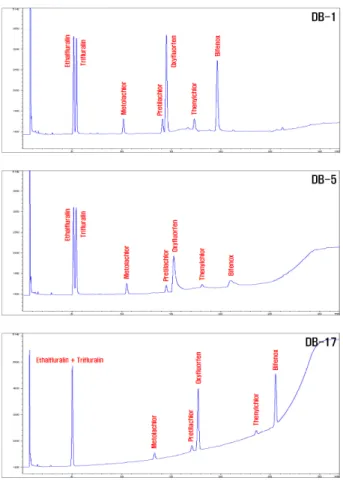
Fig. 2. GC-ECD chromatograms of 7 kinds of herbicides using typical capillary columns(1 μL of 0.05 mg/L in n-hexane, respectively).
두에 옮기고 포화식염수 50 mL와 증류수 450 mL를 첨가한 뒤 n -hexane/dichloromethane 혼합액(80/20, v/v) 100 mL로 분배 추출하였으며, 정치한 뒤 n -hexane/dichloromethane (80/20, v/v) 층만을 취해 무수 sodium sulfate에 통과시 켜 탈수한 후 40℃에서 감압 농축, 건고하였다. 콩 및 현미를 제외한 시료의 잔류물은 n -hexane 10 mL에 재용해하여 Florisil 흡착 크로마토그래피에 직접 공시하였다. 콩 및 현미 시료의 경우 잔류물을 미리 acetonitrile을 포화시킨 n - hexane 40 mL에 재용해하여 250 mL 용량의 분액여두에 옮기고 미리 n -hexane을 포화시킨 acetonitrile 40 mL로 2 회 분배 추출하였다. 합친 acetonitrile 추출액을 40℃에서 감압 농축, 건고하고 잔류물을 n -hexane 10 mL에 재용해하 여 Florisil 흡착 크로마토그래피에 공시하였다.
Florisil 흡착크로마토그래피
내경 1.5 cm, 길이 40 cm의 유리칼럼에 활성화시킨 Florisil 10 g을 건식 충전한 후, 3 g의 무수 황산나트륨을 그 위에 첨가하였다. 칼럼에 n -hexane 50 mL를 가하여 상단에 소량의 n -hexane이 남을 정도로 유출시켜 버린 후 n - hexane 10 mL에 녹인 시료 용액을 가하여 약 3 mL/min 의 유속으로 유출시켰다. 충전제 표면이 노출되기 직전 n - hexane/dichloromethane 혼합용액(90/10, v/v) 150 mL 를 용출시켜 버린 후 재차 n -hexane/dichloromethane 혼 합용액(60/40, v/v) 150 mL를 용출시켜 ethalfluralin 및 trifluralin을 회수하였고, 연속하여 150 mL의 dichloromethane/
n -hexane/acetonitrile 혼합용액(50/49.5/0.5, v/v/v)을 용출시켜 oxyfluorfen 및 bifenox를 회수하고, 계속하여 dichloromethane/ n -hexane/acetonitrile 혼합용액(50/
46/4, v/v/v)을 용출시켜 metolachlor, pretilachlor 및 thenylchlor를 회수하였다. 각각의 성분들이 용출된 분획들 은 40℃에서 감압 농축, 건고하고 잔류물을 n -hexane 10 mL에 재용해하여 GC-ECD로 분석하였다.
대표 농산물에 대한 7종 제초제 성분의 회수율 검정 본 연구에서 확립한 대상농약 7종 잔류분석법의 효율 및 신뢰성을 검증하기 위하여 실제 농산물 시료에 대한 회수율 시험을 수행하였다. 즉, 마쇄한 각 대표 무농약 농산물 시료 25 g에 정량한계(LOQ), 정량한계의 10배 및 50배가 되도록 대상농약 7종의 표준용액을 각각 3반복으로 처리한 다음 상 기 분석과정을 수행하여 회수율과 분석오차를 측정하였다.
결과 및 고찰
GC-ECD 분석조건의 확립
GC-ECD를 이용한 7종 제초제 성분의 최적 분석용 column을 선정하기 위하여 column 극성별로 분리양상을 조사하였다. Column에 충전된 phenylsiloxane/methylsiloxane 함량별로 극성을 달리하여 분리능을 조사한 결과, methylsiloxane 이 50% 함유된 극성계열의 DB-17 capillary column에서는
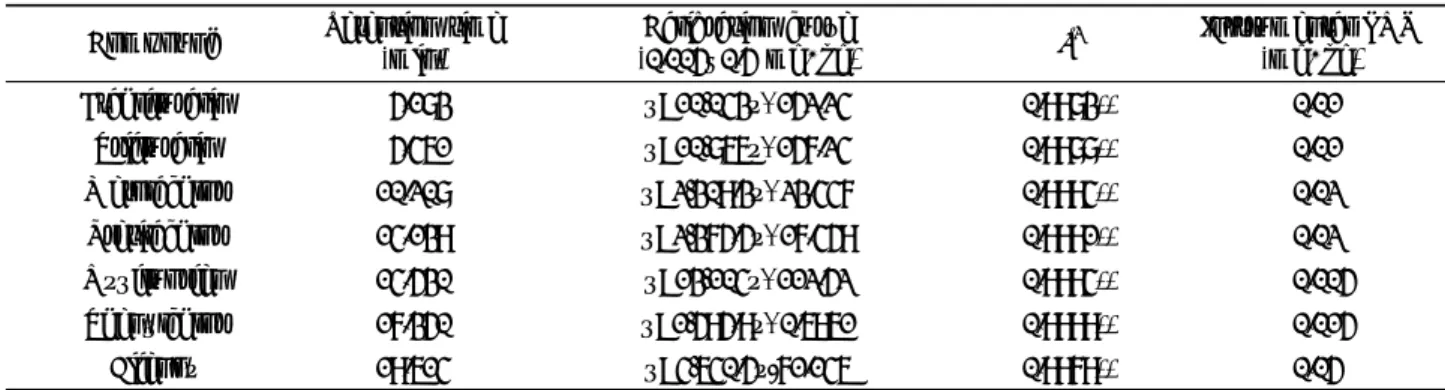
oven 온도를 비롯한 GC-ECD의 모든 분석인자를 변화시켜 도 대상농약 중 ethalfluralin과 trifluralin이 분리되지 않는 양상을 나타내었다. 반면 methylsiloxane이 각각 100% 및 95% 함유되어 DB-17 대비 비극성의 특성을 나타내는 DB-1 및 DB-5 capillary column에서는 모든 성분이 검출 가능한 수준에서 분리가 가능하였으나, DB-1 capillary column이 분석 감도 및 분리능 면에서 가장 우수한 양상을 나타내었다 (Fig. 2). 따라서 본 연구의 대상성분인 7종 제초제 성분의 최 적 분석용 column은 DB-1 capillary column으로 선정하였 으며, Table 1의 GC-ECD 분석조건으로 대상 농약을 분석 시 각 성분의 머무름 시간은 ethalfluralin 5.1분, trifluralin 5.4 분, metolachlor 10.2분, pretilachlor 14.1분, oxyfluorfen 14.5 분, thenylchlor 17.3분 및 bifenox 19.6분을 나타내었다.
분석기기의 정량한계(LOQ)는 크로마토그램의 해석 시 신
뢰성이 확보되어 분석결과를 수치화할 수 있는 한계농도로써,
크로마토그램 상에서 검출된 peak의 S/N(signal/noise)의
비가 10 이상을 나타내는 성분의 농도를 의미한다(Fong et
al ., 1999; Miller, 2005). Table 1의 GC-ECD 분석 조건에서
대상농약 7종의 표준용액을 분석하여 S/N비를 계산한 결과,
각 성분의 기기상 정량한계(S/N≥10)는 bifenox 0.05 ng,
ethalfluralin 0.01 ng, metolachlor 0.02 ng, oxyfluorfen
Compound Retention time (min)
Calibration curve
(0.005~0.5 mg/kg)
R
2 Instrumental LOQ(mg/kg)
Etahlfluralin 5.183 y=10,043x+152.24 0.9983** 0.01
Trifluralin 5.461 y=10,866x+157.24 0.9988** 0.01
Metolachlor 10.208 y=2,309.3x+23.447 0.9994** 0.02
Pretilachlor 14.139 y=2,375.5x+17.459 0.9991** 0.02
Oxyfluorfen 14.530 y=13,104x+112.52 0.9994** 0.005
Thenylchlor 17.350 y=1,595.9x+0.6961 0.9999** 0.015
Bifenox 19.614 y=4,640.5x-71.146 0.9979** 0.05
Table 3. Comparison on retention time, calibration curve and instrumental LOQ for 7 kinds of herbicides
Compound Recovery ratio (%)1)
PartitionⅠ2) PartitionⅡ PartitionⅢ PartitionⅣ
Etahlfluralin 94.1±0.4 94.0±0.8 90.1±0.7 78.5±0.5
Trifluralin 93.7±0.2 93.3±1.2 90.6±0.9 82.1±0.2
Oxyfluorfen 97.4±0.7 98.5±0.7 100.3±0.4 101.4±0.4
Bifenox 99.1±0.9 98.3±0.7 104.8±0.3 105.6±0.7
Metolachlor 85.6±0.2 90.4±1.0 92.0±0.7 91.6±0.3
Pretilachlor 94.7±0.4 96.0±0.5 96.2±1.1 96.0±0.4
Thenylchlor 91.5±0.6 100.2±0.4 102.1±0.5 102.2±0.6
1) Mean values of triplicate samples.
2) Partition mixture : 150 mL acetone+50 mL saturated NaCl+450 mL distilled water.
Ⅰ, 100 mL
n
-hexane, Ⅱ, 100 mLn
-hexane/dichloromethane(80/20, v/v),Ⅲ, 100 mL
n
-hexane/dichloromethane (20/80, v/v), Ⅳ, 50 mL dichloromethane(×2 times).Table 4. Efficiency of liquid-liquid partition of crude extract by different solvents for 7 kinds of herbicides
0.005 ng, pretilachlor 0.02 ng, thenylchlor 0.015 ng 및 trifluralin 0.01 ng 수준 이었다.
한편, 대상농약 7종의 농도별 표준용액(0.005∼0.5 mg/L) 1 μL를 GC-ECD에 주입, 분석하여 얻은 검량선의 회귀방정 식은 모두 우수한 직선성을 나타내었으며(Table 3), 모든 표 준검량선에 대한 회귀계수가 R
2=0.998** 이상으로 정량의 직 선성이 검정되었으므로 해당 범위의 시료 중 잔류량을 비례 적으로 산출하는 것이 가능하였다.
시료 추출 및 분배과정의 확립
농산물 시료로부터 7종 제초제 성분을 추출하기 위한 용매 로는 acetone을 사용하였다. Acetone은 다양한 농약의 추출 에 보편적으로 사용되는 표준적 용매로써 이미 많은 연구자들 에 의하여 농약 추출에 그 효율과 재현성이 인정된 바 있다.
농산물 추출액으로부터 대상 성분들과 함께 추출되는 방 해물질을 1차적으로 제거하기 위한 조정제법으로는 액-액 분 배법을 사용하였다. 즉, 수용성 유기용매 추출액을 다량의 포 화식염수와 증류수로 희석한 후 직접 비극성 용매로 분배 추 출하는 방법을 사용하였는데, 이는 US FDA법이나 AOAC 법에서 중간∼비극성 농약 성분에 대하여 보편적으로 사용되 며, 번거로운 추출액의 농축과정을 생략할 수 있는 장점이 있
다(AOAC, 2000; Lee et al ., 2008).
액-액 분배법의 분배 용매로는 n -hexane, 2종의 n -hexane/
dichloromethane 혼합액, dichloromethane 등 4종을 공시 (Lee et al ., 2011), 대상 성분들의 분배효율을 조사하였다 (Table 4). 액-액 분배조건에 따른 분배효율을 조사한 결과 n -hexane 용액 100 mL로 분획하였을 때 대상농약 7종의 회 수율은 85.6~99.1% 수준이었으며, 이 때 metolachlor의 회 수율이 85.6%로 다소 낮은 회수율을 나타내어 제한요인으로 판단되었다. n -hexane/dichloromethane 혼합액(80/20, v/v) 100 mL로 분획하였을 때 대상농약 7종의 회수율은 90.4
~100.2%로 metolachlor의 회수율이 90.4%로 향상되는 양
상을 나타내었으며, n -hexane/dichloromethane 혼합액
(20/80, v/v) 100 mL 분획 및 dichloromethane 50 mL로 2
회 반복하여 분획하였을 때 metolachlor의 회수율은 92% 수
준으로 향상되었으나, 상대적으로 극성이 낮은 ethalfluralin
및 trifluralin의 회수율은 현저히 감소하는 양상을 나타내었
다. 또한, 분배용매 중 dichloromethane의 비율이 증가함에
따라 농산물 함유 극성 물질의 다량 혼입이 예상되며, 대상농
약 7종의 전체 회수율을 고려해볼 때, 가장 효율적이라 판단
되는 분획용매는 조건 Ⅱ의 n -hexane/dichloromethane
혼합액(80/20, v/v) 100 mL로 분획을 실시하는 것이 가장
Compound Recovery ratio(%)1) PartitionⅠ2) PartitionⅡ Etahlfluralin 89.8±0.7 88.0±1.0
Trifluralin 90.5±0.4 89.5±0.7
Oxyfluorfen 97.3±0.3 97.6±0.4
Bifenox 99.2±0.8 102.1±0.3
Metolachlor 94.7±0.4 94.8±0.8
Pretilachlor 97.2±0.7 97.5±0.5
Thenylchlor 101.4±0.3 102.9±0.9
1) Mean values of triplicate samples.
2) Partition mixture : 40 mL
n
-hexane saturated with acetonitrile.Ⅰ, 40 mL acetonitrile saturated with
n
-hexane(×2 times),Ⅱ, 40 mL acetonitrile saturated with
n
-hexane(×3 times).Table 5. Efficiency of n-hexane/acetonitrile partition for 7 kinds of herbicides
Compound
Recovery ratio (%)1) Solvent (50 mL×3 times)
90 : 102) 60 : 403) 50 : 49.5 : 0.54) 50 : 46 : 45)
Etahlfluralin 0.0 92.5 0.0 0.0
Trifluralin 0.0 91.9 0.0 0.0
Oxyfluorfen 0.0 0.0 92.0 0.0
Bifenox 0.0 0.0 97.3 0.0
Metolachlor 0.0 0.0 0.0 95.6
Pretilachlor 0.0 0.0 0.0 96.5
Thenylchlor 0.0 0.0 0.0 100.5
1) 10 g of activated Florisil (60 - 100 mesh) was dry packed.
2)
n
-Hexane/dichloromethane (v/v).3) Pre-washed with 150 mL of 2)solvent system, and then eluted
n
-hexane/dichloromethane (v/v).4) After collect 3)solvent system, and then eluted dichloromethane/
n
-hexane/acetonitrile (v/v/v).5) After collect 4)solvent system, and then eluted dichloromethane/
n
-hexane/acetonitrile (v/v/v).Table 6. Elution profile of 7 kinds of herbicides on Florisil column chromatography
효율적인 것으로 판단되었다.
상기 액-액 분배과정에 의하여 시료 중에 포함된 상당량의 극성 및 기타 방해물질이 제거될 것으로 기대되나, 유지성분 은 n -hexane/dichloromethane 혼합액(80/20, v/v) 층으로 대상성분과 함께 분배되기 때문에 제거되지 않는다. 이러한 유지성분은 기기분석 시 치명적 간섭 또는 분리용 column 및 검출기의 급격한 열화를 초래하므로 반드시 제거해야 할 간섭물질이다. 대상 시료 중 현미 및 콩은 유지가 약 1∼3%
및 20% 수준 함유되어 있는 시료이므로 유지제거를 위하여 n -hexane/ acetonitrile 분배법을 추가로 공시하였다(US FDA, 1999; AOAC, 2000).
Table 5에 나타낸 바와 같이 미리 n -hexane으로 포화시 킨 acetonitrile로 2회 분배하였을 때 대상농약 7종은 89.8~101.4% 수준으로 회수가 가능하였으며, n -hexane으로 포화시킨 acetonitrile로 3회 분배하였을 때의 회수율은
88.0~102.9%로 조사되어 분배횟수를 늘려도 회수율이 향상 되지 않았으므로 작업의 편의성 및 신속성을 고려하여 유지 및 비극성 간섭물질의 제거를 위한 n -hexane/acetonitrile 분배법은 2회 분배를 실시하는 분배조건Ⅰ로 설정하였다. 한 편, 유지함량이 0.1∼0.4%로써 비유지 시료로 분류되는 고추, 배추 및 사과에서는 제거되는 비극성 유지성분 및 불순물의 양이 매우 작고 크로마토그램 상에서 그 정제 효과 또한 미미 하였으므로 n -hexane/acetonitrile 분배과정을 생략하였다.
Florisil 흡착크로마토그래피의 최적화
농산물에 함유된 7종 제초제 성분의 분석 시 상기 액-액 분배과정을 통해 상당량의 불순물 및 비극성 간섭물질들이 제거되었을 것으로 판단되나, 농산물에 따라 시료로부터 유래 되는 다양한 기타 불순물 및 색소가 여전히 존재하므로, 추가 적인 정제과정이 필요할 것으로 판단되어 흡착크로마토그래 피에 의한 정제법을 검토하였다.
흡착크로마토그래피는 잔류농약 분석 시 가장 많이 이용 하는 정제 방법으로, 흡착제로는 silica gel, Florisil 및 alumina 등이 많이 사용된다. 이 중 Florisil은 색소와 지방 의 제거가 뛰어나 미국의 FDA(1999)나 AOAC(2000) 등에서 가장 많이 사용하는 방법으로, 본 연구에서도 Florisil을 흡착 제로 선정 하였으며, 용매의 극성 조절을 위해 n -hexane/
dichloromethane 및 dichloromethane/ n -hexane/acetonitrile 혼합용액의 용매체계를 사용하여 흡착크로마토그래피 조건을 최적화 하였다(Table 6).
Florisil 흡착크로마토그래피용 용매의 다양한 극성 조절을 이용하여 대상농약 7종의 회수율을 조사한 결과, n -hexane/
dichloromethane 혼합액(90/10, v/v) 150 mL로 pre-washing 한 후, 150 mL의 n -hexane/dichloromethane 혼합액(60/
40, v/v)으로 용출할 경우 ethalfluralin과 trifluralin이 각
각 92.5% 및 91.9%로 용출되었으며, 연속하여 동일한 칼럼
에 150 mL의 dichloromethane/ n -hexane/acetonitrile
Fig. 3. GC-ECD chromatograms of soybean extract for the analysis of 7 kinds of herbicides.
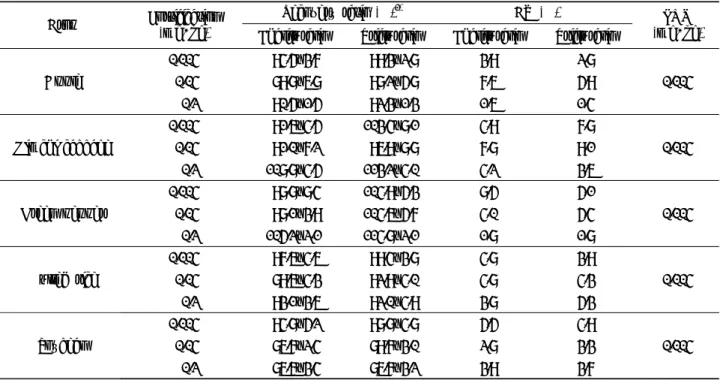
Crop Fortification
(mg/kg)
Recovery ratio (%)1) CV (%) LOQ
(mg/kg) Ehalfluralin Trifluralin Ehalfluralin Trifluralin
Apple
0.004 94.5±3.7 99.3±2.8 3.9 2.8
0.004
0.04 89.8±6.8 98.2±5.8 7.6 5.9
0.2 90.5±1.5 92.3±1.3 1.6 1.4
Kimchi cabbage
0.004 91.6±4.5 103.4±8.1 4.9 7.8
0.004
0.04 91.0±7.2 96.9±8.8 7.8 9.1
0.2 108.8±4.5 113.2±4.0 4.2 3.6
Green pepper
0.004 98.8±8.4 104.9±5.3 8.5 5.1
0.004
0.04 98.1±3.9 104.6±5.7 4.0 5.4
0.2 105.2±2.1 114.8±2.1 1.8 1.8
Hulled rice
0.004 97.6±4.6 99.4±3.8 4.8 3.9
0.004
0.04 89.6±4.3 92.9±4.0 4.8 4.3
0.2 93.1±3.6 92.0±4.9 3.8 5.3
Soybean
0.004 94.8±5.2 98.8±4.8 5.5 4.9
0.004
0.04 86.7±2.4 89.7±3.0 2.8 3.3
0.2 86.6±3.4 86.7±3.2 3.9 3.7
1)Mean values of triplicate samples with standard deviations.
Table 7. Recovery ratio of ehalfluralin and trifluralin with different crop samples
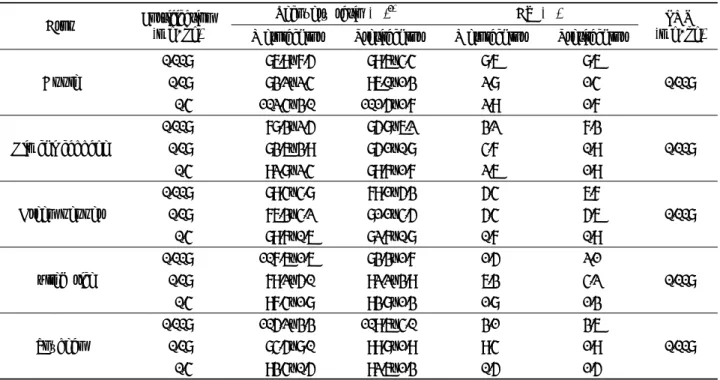
혼합액(50/49.5/0.5, v/v/v)으로 용출하였을 때 oxyfluorfen 및 bifenox가 각각 92.0% 및 97.3% 수준으로 회수되었다.
계속하여 150 mL의 dichloromethane/ n -hexane/acetonitrile 혼합액(50/46/4, v/v/v)으로 용출하면 metolachlor, pretilachlor 및 thenylchlor가 95.6~100.5% 용출되는 양 상을 나타내어 대상성분 7종 모두를 순차적으로 용출해내는 것이 가능하였다. 따라서 Florisil 흡착크로마토그래피법을 이 용한 간섭물질 제거를 위한 추가적인 정제법은 상기의 방법 과 같이 적용하였다.
농산물 시료 중 7종 제초제 성분의 분석 정량한계 및 회 수율
본 연구에서 확립한 시료 중 대상 농약의 추출, 정제 및 기기분석 과정을 포괄하여 무농약 농산물 시료인 콩에 대표 적으로 적용한 결과는 Fig. 3과 같다. 모든 무농약 농산물의 최종 시료용액에서 대상농약 7종과 동일한 머무름시간에 간 섭물질이 존재하지 않음을 확인하였고, 분석기기의 정량한계 와 시료량, 그리고 분석과정 중의 농축배율을 계상하여 분석 법의 정량한계를 산출하였다.
본 연구에서 무농약 농산물 시료에서 간섭물질이 존재하
지 않음을 확인한 후 산출된 대상농약 7종의 각각 정량한계
는 bifenox 0.02, ethalfluralin 0.004, metolachlor 0.008,
oxyfluorfen 0.002, pretilachlor 0.008, thenylchlor 0.006
및 trifluralin 0.004 mg/kg이었으며, 국제기준인 Codex
(Codex Alimentarius Commission, 2003) 및 식품공전 잔
류농약분석법 실무 해설서(Lee, 2017)에서 권장하는 잔류농
약분석법 기준인 0.05 mg/kg 이하 또는 잔류허용기준의
Crop Fortification (mg/kg)
Recovery ratio (%)1) CV (%) LOQ
(mg/kg) Metolachlor Pretilachlor Metolachlor Pretilachlor
Apple
0.008 86.9±7.5 89.6±4.4 8.6 8.6
0.008
0.08 83.2±2.4 96.0±1.3 2.8 1.4
0.4 102.4±3.0 101.5±1.7 2.9 1.7
Kimchi cabbage
0.008 78.3±2.5 85.8±6.2 3.2 7.3
0.008
0.08 83.6±3.9 85.1±0.8 4.7 0.9
0.4 92.8±2.4 89.7±1.7 2.6 1.9
Green pepper
0.008 89.4±4.8 79.1±5.3 5.4 6.7
0.008
0.08 76.3±4.2 81.1±4.5 5.4 5.6
0.4 89.7±0.6 82.7±0.8 0.7 0.9
Hulled rice
0.008 107.6±1.6 83.3±1.7 1.5 2.1
0.008
0.08 79.2±5.0 92.2±3.9 6.3 4.2
0.4 97.4±1.8 93.8±1.3 1.8 1.3
Soybean
0.008 105.2±3.3 109.6±4.0 3.1 3.6
0.008
0.08 84.5±8.0 99.8±1.9 9.4 1.9
0.4 93.4±0.5 92.6±1.3 0.5 1.5
1)Mean values of triplicate samples with standard deviations.
Table 8. Recovery ratio of metolachlor and pretilachlor with different crop samples
Crop Fortification (mg/kg) Recovery ratio (%)1) CV (%) LOQ (mg/kg)
Apple
0.02 108.2±2.4 2.2
0.02
0.2 93.9±3.7 3.9
1.0 86.0±1.1 1.3
Kimchi cabbage
0.02 92.0±2.0 2.2
0.02
0.2 89.0±4.7 5.2
1.0 93.5±1.2 1.3
Green pepper
0.02 106.6±4.9 4.6
0.02
0.2 83.0±2.5 3.0
1.0 82.2±2.3 2.8
Hulled rice
0.02 107.2±1.2 1.1
0.02
0.2 103.3±2.0 2.0
1.0 103.4±2.2 2.1
Soybean
0.02 105.4±6.2 5.9
0.02
0.2 101.1±8.2 8.1
1.0 95.8±1.5 1.6
1)Mean values of triplicate samples with standard deviations.
Table 9. Recovery ratio of bifenox with different crop samples
1/2 이하의 정량한계 기준에 적합하였다.
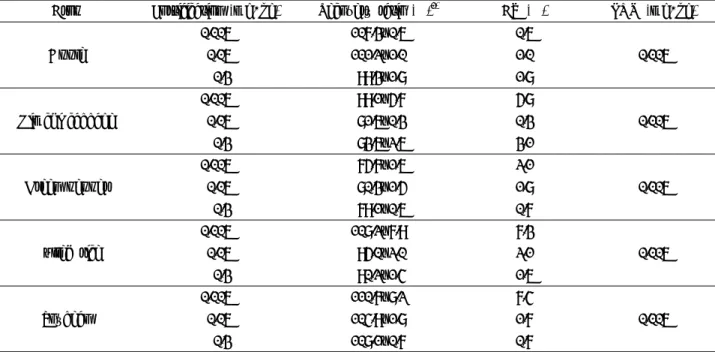
각 무처리 농산물 시료에 대상농약 7종의 표준용액을 정 량한계, 정량한계의 10배 및 50배의 농도가 되도록 첨가하고, 상기 확립된 분석방법에 의하여 대표 농산물에 대해 3반복으 로 분석하여 회수율을 조사한 결과, 정량한계 수준에서는 75.7∼110.7%, 정량한계 10배 수준에서는 76.3∼107.9%,
정량한계 50배 수준에서는 79.1∼114.8%의 회수율을 나타내 었고, 분석오차는 최대 9.1%로 조사되었다. 따라서, 처리수준 및 농산물 시료 종류에 관계없이 다성분 잔류분석기준인 회 수율 70∼120% 범위와 분석오차 10% 이내를 만족하였다 (Table 7~11).
이상의 결과로 볼 때, 본 연구에서 확립된 물리화학적 특
Crop Fortification (mg/kg) Recovery ratio (%)1) CV (%) LOQ (mg/kg) Apple
0.002 102.6±4.5 4.4
0.002
0.02 107.9±1.4 1.3
0.1 109.1±1.5 1.4
Kimchi cabbage
0.002 88.7±2.8 3.2
0.002
0.02 94.4±4.3 4.6
0.1 107.0±1.1 1.1
Green pepper
0.002 90.9±1.1 1.2
0.002
0.02 89.9±4.6 5.1
0.1 106.3±3.2 3.0
Hulled rice
0.002 77.9±2.1 2.7
0.002
0.02 99.2±2.5 2.5
0.1 101.2±8.6 8.5
Soybean
0.002 107.8±2.6 2.4
0.002
0.02 97.5±2.6 2.7
0.1 98.3±0.9 0.9
1)Mean values of triplicate samples with standard deviations.
Table 10. Recovery ratio of oxyfluorfen with different crop samples
Crop Fortification (mg/kg) Recovery ratio (%)1) CV (%) LOQ (mg/kg)
Apple
0.006 107.3±0.6 0.6
0.006
0.06 101.2±1.0 1.0
0.3 99.3±1.8 1.8
Kimchi cabbage
0.006 99.1±5.7 5.8
0.006
0.06 81.6±0.3 0.3
0.3 83.6±2.6 3.1
Green pepper
0.006 75.7±1.6 2.1
0.006
0.06 80.3±1.5 1.8
0.3 79.1±0.6 0.7
Hulled rice
0.006 108.2±7.9 7.3
0.006
0.06 95.0±2.0 2.1
0.3 90.2±1.4 1.6
Soybean
0.006 110.7±8.2 7.4
0.006
0.06 104.9±1.8 1.7
0.3 108.1±0.7 0.7
1)Mean values of triplicate samples with standard deviations.
Table 11. Recovery ratio of thenylchlor with different crop samples
성이 유사한 dinitroaniline계 제초제인 ethalfluralin 및 trifluralin 성분, chloroacetamide계 제초제인 metolachlor, pretilachlor 및 thenylchlor 성분과 diphenyl ether계 제 초제인 bifenox 및 oxyfluorfen을 포함하는 7종 제초제 성 분의 분석법은 국내 · 외 농산물의 잔류농약 분석 및 검사에 충분히 적용 가능함을 확인하였다.
GC/MS를 이용한 잔류분의 재확인
본 연구에서 검토된 7종 제초제 분석법의 신뢰성을 확보 하기 위하여 GC/MS에 의한 재확인 과정을 추가하였다.
Narrow bore capillary column을 사용하고 대상 7종 제초
제 성분을 완전히 분리할 수 있는 GC/MS 조건에서 표준용
액을 주입하여 Fig. 4와 같이 GC/MS의 TIC(total-ion
chromatogram)를 얻었다.
Fig. 4. Total-ion chromatogram (TIC) of 7 kinds of herbicides in GC/MS.
Fig. 5. EI mass spectrums of 7 kinds of herbicides.
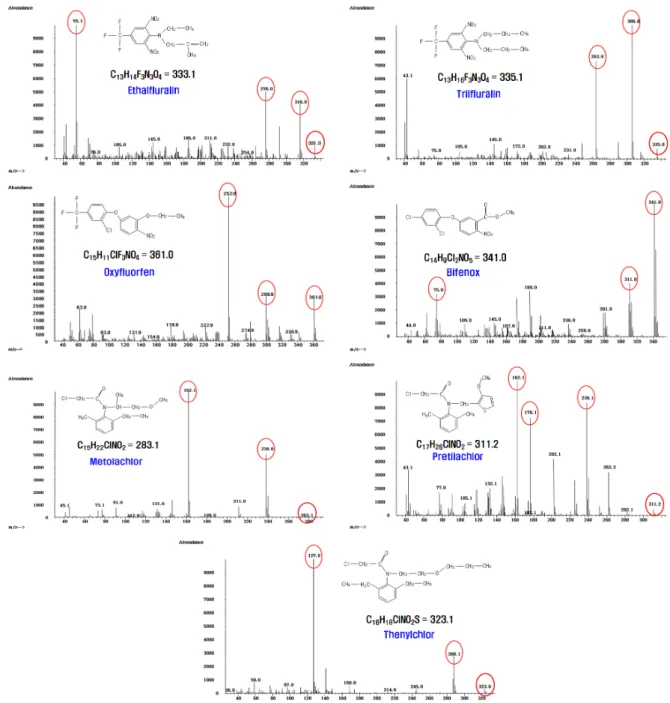
TIC로부터 각 성분별 EI spectrum (Fig. 5)을 조사한 결 과, bifenox, ethalfluralin, oxyfluorfen, trifluralin, pretilachlor 및 thenylchlor의 [M]
+ion인 341.0, 333.0, 361.0, 335.0, 311.1 및 232.1 m/z는 충분한 intensity로 관찰되어 각 성 분의 분자구조를 EI spectrum을 통해 명확히 확인할 수 있 었다. 반면, metolachlor는 [M]
+ion인 283.1 m/z의 intensity가 낮아 관찰되지 않았으나, [M-CH
2OH]
+ion인 238.0 m/z가 충분한 intensity로 관찰되어 명확한 정성적 확인이 가능하였다.
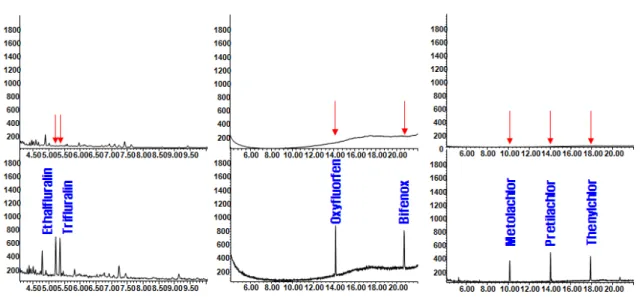
Fig. 6은 본 실험에 사용된 농산물 시료 중 콩을 대상으로
7종 제초제 성분의 잔류분을 재확인한 SIM (selected-ion
monitoring chromatogram)이며, 본 실험에서 사용된 모든
Fig. 6. SIM chromatograms of soybean extract for the confirmation of 7 kinds of herbicides.
농산물의 무처리 시료에서는 대상 농약성분의 peak가 전혀 관찰되지 않았고, 인위 첨가된 시료에서는 동일 머무름 시간 대에 정확하게 대상농약 7종의 잔류분만을 확인할 수 있었다.
따라서 본 연구에서 사용한 GC/MS의 SIM 조건을 이용 할 경우에도 GC-ECD를 이용한 정량법과 더불어 잔류분의 추가적 정성분석법으로 사용할 수 있음을 확인하였다.
요 약
본 연구는 GC-ECD/MS 분석법을 이용하여 농산물 시료 중 dinitroaniline계 제초제 ethalfluralin 및 trifluralin, chloroacetamide계 제초제 metolachlor, pretilachlor 및 thenylchlor와 diphenyl ether계 제초제 bifenox 및 oxfluorfen의 계역별 동시 분석법을 확립하였다. 농산물 시 료에 acetone을 가하여 추출된 대상농약 7종의 잔류분은 n -hexane/dichloromethane(80/20, v/v)을 이용한 분배와 Florisil 흡착 크로마토그래피법으로 정제하여 분석대상 시료 로 하였다. DB-1 capillary column을 이용한 GC-ECD 분 석 시 불순물의 간섭은 없었으며, 사과, 고추, 배추, 현미 및 콩을 포함한 5종의 대표 농산물 중 대상농약 7종의 정량한계 (LOQ)는 bifenox 0.02, ethalfluralin 0.004, metolachlor 0.008, oxyfluorfen 0.002, pretilachlor 0.008, thenylchlor 0.006 및 trifluralin 0.004 mg/kg이었다. 5종의 대표 농산 물에 대한 대상농약 전체의 회수율은 75.7∼114.8%였으며, 농 산물 시료 및 처리수준에 관계없이 10% 미만의 분석오차를 나타내어 잔류분석기준 이내를 만족하였다. 본 연구에서 확립 된 7종의 제초제 성분인 bifenox, ethalfluralin, metolachlor, oxyfluorfen, pretilachlor, thenylchlor 및 trifluralin의 계열 별 동시 분석법은 검출한계, 회수율 및 분석오차 면에서 국제 적 분석기준을 만족할 뿐만 아니라, GC/MS SIM을 이용한 잔류분의 재확인 과정의 결과를 종합해 볼 때 분석과정의 편 리성 및 신뢰성이 확보된 계열별 동시 분석법으로 사용이 가 능할 것으로 판단된다.
Note
The authors declare no conflict of interest.
Acknowledgement
This study was carried out with the support of Ministry of Food and Drug Safety, Republic of Korea (Project No. 16162MFDS020).
References