Impacts of Oyster Shell and Peat Treatments on Soil Properties in Continuous Watermelon Cropping Greenhouse Plots
Byung-Koo Ahn, Jin-Ho Lee
1*, and Young-Han Lee
2Jeollabuk-do Agricultural Research and Extension Services, Iksan 570-704, Korea.
1
Department of Bioenvironmental Chemistry, College of Agricultural and Life Sciences, Chonbuk National University, Jeonju 561-756, Korea.
2
Gyeongsangnam-do Agricultural Research and Extension Services, Jinju 660-3703, Korea.
Soils in continuous monoculture cropping system generally have a number of physical and chemical problems.
Thus, we studied to investigate selected soil properties in continuous watermelon cropping plots with applications of different soil management practices: 1) conventional farming practice (CFP), 2) chemical fertilizer management practice (FMP), the FMP with different amounts, 0.5, 1.0, and 1.5 t ha
-1, of oyster shell meal application (FMP-OS 0.5, 1.0, and 1.5 t ha
-1), and 3) the FMP with different amounts, 2.0, 3.0, and 4.0 t ha
-1, of peat application (FMP-PT 2.0, 3.0, and 4.0 t ha
-1) and also to evaluate watermelon quality. Soil pH slightly increased only in the FMP-OS 1.5 t ha
-1plot, while it was not changed or decreased a little in other plots. The contents of soil organic matter (SOM) expectedly increased in the FMP-PT plots, whereas it markedly decreased in the FMP-OS plots. The concentrations of exchangeable cations, Ca
2+, Mg
2+, and K
+, in soils were mostly dropped down in most of the FMP and FMP-PT plots. Otherwise, the exchangeable Ca
2+concentration increased a bit in the FMP-OS plots. Also, the concentrations of water-soluble anions, NO
3-, Cl
-, SO
42-, and PO
43-, in soils mostly declined in all the plots applied with the different management practices during the study years. Due to the cation and anion decreases, the electrical conductivity (EC) values in the soils were greatly reduced in the plots. Thus, the soil management practices applied, especially oyster shell meal and peat treatments, might be useful to control soil conditions. However, watermelon quality, such as sugar content and fruit weight, would not be associated with the soil management practices applied.
Key words: Greenhouse soil, Management practice, Exchangeable cation, Water-soluble anion, Watermelon quality
Received : August 8. 2010 Accepted : August 17. 2010
*Corresponding author : Phone: +82632702545 E-mail: [email protected]
Introduction
Some of many farmers in Korea are producing water- melon (Citrullus lanatus Thunb.) as a special agricultural product because watermelon is profitable and in great demand. However, for cultivating the watermelon plants, especially in continuous cropping system, heavy chemical fertilizer application was used in most areas of farm lands, indoor and outdoor fields. For this reason, soils in the fields have been damaged with physical and chemical problems such as nutrient deficiencies and toxicities, soil salinity, etc. In particular, calcium deficiency of water- melon generally causes the reduction of its sugar content
(Park et al., 1999); and also if the contents of other cations
are abnormally high in soil, the uptake of calcium from the
soil by watermelon plant decreases, so that the calcium
deficiency can be occurred. Therefore, to prevent those
soil problems, proper soil management practices are ne-
cessary. In this aspect, to control the nutrient balance,
oyster shell meal might be applicable solution because it
contains high contents of calcium and boron as macro- and
micronutrient, respectively (Lee et al, 2005a). Fortunately,
Korea has a great amount of oyster shell resources
(approximately 0.3 million tons per year) because Korean
oyster farmers have been confronted with the problem of
disposal of huge amounts of oyster shell waste (Lee et al.,
2005a and 2005b). Studies related to oyster shell appli-
cation in soil has been limited. Lee et al. (2005a) and Lee
et al. (2008) reported that the application of oyster shell in
soils enhanced the productivity of Chinese cabbage. Most
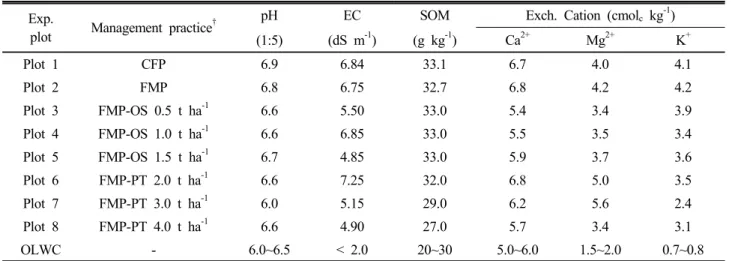
Table 1. Selected properties of soils used in this study.
Exp.
plot Management practice
†pH EC SOM Exch. Cation (cmol
ckg
-1) (1:5) (dS m
-1) (g kg
-1) Ca
2+Mg
2+K
+Plot 1 CFP 6.9 6.84 33.1 6.7 4.0 4.1
Plot 2 FMP 6.8 6.75 32.7 6.8 4.2 4.2
Plot 3 FMP-OS 0.5 t ha
-16.6 5.50 33.0 5.4 3.4 3.9
Plot 4 FMP-OS 1.0 t ha
-16.6 6.85 33.0 5.5 3.5 3.4
Plot 5 FMP-OS 1.5 t ha
-16.7 4.85 33.0 5.9 3.7 3.6
Plot 6 FMP-PT 2.0 t ha
-16.6 7.25 32.0 6.8 5.0 3.5
Plot 7 FMP-PT 3.0 t ha
-16.0 5.15 29.0 6.2 5.6 2.4
Plot 8 FMP-PT 4.0 t ha
-16.6 4.90 27.0 5.7 3.4 3.1
OLWC - 6.0~6.5 < 2.0 20~30 5.0~6.0 1.5~2.0 0.7~0.8
†
CFP: conventional farming practice, FMP: fertilizer management practice, FMP-OS: fertilizer management practice with 0.5, 1.0, and 1.5 t ha
-1of oyster shell applications, FMP-PT: fertilizer management practice with 2.0, 3.0, and 4.0 t ha
-1of peat applications.
‡
OLWC: optimal levels of soil properties for watermelon cultivation.
of other studies associated with the oyster shell application were to solve acidic soil problems with increasing soil pH. On the other aspect, the soils damaged with high concentrations of cations and anions might negatively influence the solubility of other essential nutrient ions in soil-solution system (Lindsay, 1979), and the high salinity in the soils would affect to decrease the nutrient uptake and plant growth (Elrashidi et al., 2010). Thus, the appli- cation of organic materials, such as peat, can reduce the negative impacts and improve soil productivity by the buffering effects for competitive ions. Our previous study (Ahn et al., 2010) found that the application of rice straw as an organic material improved soil conditions and water- melon growth condition.
Therefore, objective of this study was to investigate soil properties and watermelon qualities as influenced by dif- ferent soil management practices, especially soils amended with oyster shell meal and peat, including conventional farming practice and chemical fertilizer management practice as well.
Materials and Methods
Site description Experimental site is located at Vegetable Research Institute in Jeollabuk-do Agricultural Research and Extension Services, Kochang, Korea. Ex- perimental plots were used for a long-term watermelon monoculture cropping. The plots were set up in plastic- film covered greenhouses, and each plot size was 6 x 24 m
(144 m
2) in area. Soils in the plots are sandy clay loam containing 54.0% sand, 22.0% silt, and 24.0% clay in average.
Soil, oyster shell meal, and peat analyses Soil samples in the plots were collected after harvesting watermelon. The soil samples were air-dried and crushed to pass through a 2-mm sieve. The samples were analyzed for the selected physical and chemical properties (Table 1) using the procedures proposed by Rural Development Association (RDA), Korea (2000) and showed by Ahn et al. (2010). Oyster shell was purchased from a manufacture in Jindo County, Korea, which contained 640 g kg
-1of calcium oxide (CaO) in average. It was normally prepared that powdered oyster shell combusted at a temperature above 700℃, at that point calcium carbonate (CaCO
3) of oyster shell transformed CaO (Nakatani et al., 2009). Peat was imported from a company from Malaysia. The peat samples were air-dried for 7 days and roughly ground to determine chemical properties using the methods proposed by RDA (2000). The peat samples were pH 4.2 and contained 900.7 g kg
-1of organic matter, 8.1 g kg
-1of nitrogen (N), 6.8 g kg
-1of P
2O
5, 1.7 g kg
-1of K
2O, 3.9 g kg
-1of CaO, 1.6 g kg
-1of MgO, and 1.5 g kg
-1of Fe.
Fertilizer, oyster shell meal, and peat applications
The experimental plots prepared were similar to the
experimental design reported by Ahn et al. (2010). The
plots were prepared in eight different conditions: 1) a plot
under conventional farming practice (CFP), 2) a plot
0.0 4.0 5.0 6.0 7.0 8.0
pH
CFP FMP
FMP-OS 0.5 t ha-1 FMP-OS 1.0 t ha-1 FMP-OS 1.5 t ha-1
0 1 2 3
Experimental Year 0.0
4.0 5.0 6.0 7.0 8.0
pH
CFP FMP FMP-PT 2.0 t ha-1 FMP-PT 3.0 t ha-1 FMP-PT 4.0 t ha-1
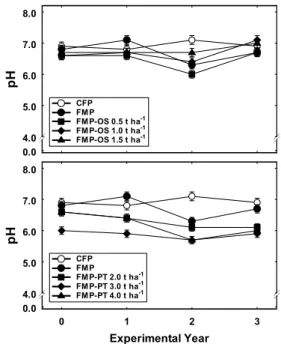
Fig. 1. Changes in soil pH in the experimental plots as affected by different management practices. CFP: conven- tional farming practice, FMP: chemical fertilizer manage- ment practice, FMP-OS: FMP with different amounts of oyster shell meal application, FMP-PT: FMP with differ- ent amounts of peat application.
under nitrogen-phosphorus-potassium (NPK) fertilizer management practice (FMP), 3) three plots under the FMP with different amounts of oyster shell meal treatments (FMP-OS), and 4) three plots under the FMP with dif- ferent amounts of peat treatments (FMP-PT) .
Fertilizer treatment methods for the CFP and FMP plots are described as follows. In the CFP plot, the NPK Fertilizers were applied at 138-49-87 kg ha
-1as N-P
2O
5-K
2O, without adjusting the fertilizer application rates by soil testing results. However, In the FMP, FMP-OS, and FMP-PT plots, the amounts of NPK fertilizers applied, the rates of 138-49-87 kg ha
-1, were estimated by using Soil Manage- ment and Fertilizer Recommendation System (Version 2002) supplied by National Institute of Agricultural Science and Technology, RDA, Korea. Total amount of phosphorus fertilizer estimated were applied as base- dressing, while nitrogen and potassium were treated in different ratios: 50% of the fertilizers were applied as base-dressing and other 50% were treated as top-dressing.
A specific amount of the NPK fertilizers were applied based on the fertilizer requirements for watermelon plant estimated by soil testing at every application periods with adding 0.5, 1.0, and 1.5 t ha
-1of oyster shell meal and 2.0, 3.0, and 4.0 t ha
-1of peat in the separated experimental plots.
Watermelon Cultivation A cultivating method for watermelon plants is described in the method reported by Ahn et al. (2010). Seeds of watermelon (Citrullus lanatus Thunb.) and bottle gourd (Lagenaria leucanth Standl) cultivar FR-Dantos (Dongbu Hannong Seed, Korea) were simultaneously germinated. Both plant seedlings were grown in a plant nursery for 15 days, and then the watermelon plant tops were grafted. The grafted water- melon plants were grown for approximately 30 more days in the nursery. After 45 days in the nursery, the plant was transplanted into the greenhouse plots using two different cultivation methods, a semi-forcing and retarding culture.
Watermelons were harvested at 90 to 95 days after transplantation, and then twenty samples of watermelon were randomly collected from each plot to determine fruit weight and sugar content. The watermelon fruit weight was weighed using a table top balance, and the sugar content of watermelon was measured using a potable Brix meter (Atago, PR-40DMF, Japan).
Results and Discussion
Soils in the experimental plots contained higher levels
on most of the selected soil chemical properties as com- pared to their optimum levels for watermelon cultivation, except the concentrations of exchangeable Ca
2+(Table 1).
Therefore, to improve the soil conditions for watermelon cultivation, we applied three major different farming practices, such as chemical fertilizer management practice (FMP), the FMP with different amounts of oyster shell meal application (FMP-OS) and peat application (FMP- PT), and then they were compared with conventional farming practice (CFP).
As the results of a previous report (Ahn et al, 2010), the
soil pH values in the CFP and FMP plots were no or
slightly changed, and also the values in the plots of FMP
with 0.5 and 1.0 t ha
-1of oyster shell meal (FMP-OS 0.5
and 0.1 t ha
-1) applications showed similar trend, but in the
FMP with 1.5 t ha
-1of oyster shell meal treatment plot
(FMP-OS 1.5 t ha
-1), the soil pH value gradually increased
during the three experimental years. The results show that
relatively higher amounts of calcium oxide in the oyster
shell meal can increase pH value in the sandy clay loam
soil plots. On the other hand, the soil pH values decreased
in the all plots of FMP-PT (2.0, 3.0, and 4.0 t ha
-1of peat
applications, FMP-PT 2.0, 3.0, 4.0 t ha
-1) because organic
matter (peat) mineralization resulted in the formation of
organic and inorganic acids, which provide hydrogen ion
0 20 25 30 35 40
Soil Organic Matter (g kg-1)
CFP
FMPFMP-OS 0.5 t ha-1 FMP-OS 1.0 t ha-1 FMP-OS 1.5 t ha-1
0 1 2 3
Experimental Year 0
20 25 30 35 40
CFP FMPFMP-PT 2.0 t ha-1 FMP-PT 3.0 t ha-1 FMP-PT 4.0 t ha-1
Fig. 2. Changes in soil organic matter content in the experimental plots as influenced by different management practices. CFP: conventional farming practice, FMP: chem- ical fertilizer management practice, FMP-OS: FMP with different amounts of oyster shell meal application, FMP- PT: FMP with different amounts of peat application.
0 500 1000 1500 2000
(a) (b)
0 500 1000 1500
2000 CFP
FM P FM P-OS 0.5 t ha-1 FM P-OS 1.0 t ha-1 FM P-OS 1.5 t ha-1
(a)
CFPFM P FM P-PT 2.0 t ha-1 FM P-PT 3.0 t ha-1 FM P-PT 4.0 t ha-1
(b)
0 1 2 3
Experimental Year 0
500 1000 1500 2000
(a)
0 1 2 3
(b)
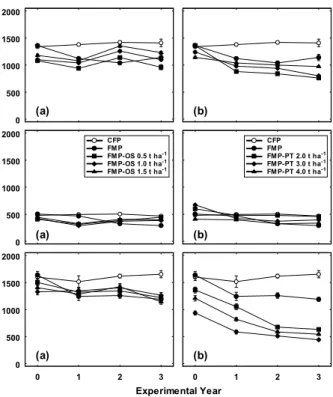
Fig. 3. The concentrations of exchangeable cations (Ca
2+, Mg
2+, and K
+) in soils as affected by (a) oyster shell meal and (b) peat application practices. CFP: conven- tional farming practice, FMP: chemical fertilizer man- agement practice, FMP-OS: FMP with different amounts of oyster shell meal application, FMP-PT: FMP with different amounts of peat application.
(H
+) to the soil (Figure 1).
Figure 2 shows the influences of oyster shell meal and peat applications on SOM contents in the experimental plots. SOM content did not change in the CFP plot, but in the FMP and FMP-OS plots expectedly declined, whereas it increased in the FMP-PT plots because application of peat containing 900.7 g kg
-1of organic matter effectively affected to increase SOM content in the plots. Also, the higher the peat application, the greater the SOM contents in the plots during the study years.
Influences of the various management practice app- lications on the changes in the concentrations of selected exchangeable cations, Ca
2+, Mg
2+, and K
+, in soils are shown in Figure 3. In the CFP plots the cation concen- trations were not changed, but in the FMP plots they gradually reduced during the three experimental years.
However, in the FMP-OS plot, the concentrations of exchangeable Ca
2+and Mg
2+decreased in the first year, but they increased from the second year. In particular, the increases of exchangeable Ca
+were dependent upon the amounts of OS applications, which was that the higher the OS application, the more the exchangeable Ca
+concen- tration in the soils. The concentration of exchangeable K
+in the plot slightly decreased during the study years even though it slightly increased in the second year, which showed similar trend to that in the FMP only plot. Lee et
al. (2005b) reported similar trends that the concentration of exchangeable Ca
2+slightly increased at 180 and 300 days after OS application, and it decreased at 570 days after the OS treatment; however, the concentrations of exchangeable K
+and Mg
2+declined at 180 days, increased at 300 days, and then dropped down again at 570 days after OS applications. On the other hand, in the FMP-PT plot, the concentrations of the exchangeable cations markedly decreased in the first year, and then gradually kept decreasing till the last study year. These results might be caused by following reasons: 1) peat made to increase plant available cations that were up-taken by watermelon plants and/or 2) it escalated for losing the cations by leaching from the saline soils because it’s application improved soil physical properties, such as an increase of porosity, even though it is usually working for holding nutrients to prevent them from leaching from normal soils (Cooperband, 2002).
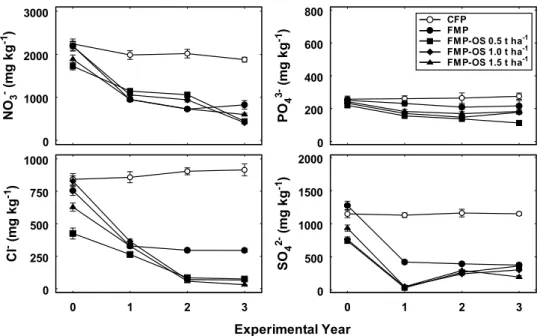
Impacts of the different management practices on the
concentrations of water soluble anions, NO
3-, Cl
-, SO
42-,
and PO
43-, in soils are shown in Figure 4 and 5. In the CFP
plots, changes in NO
3-and Cl
-concentrations showed
0 1000 2000 3000
NO
3-(mg k g
-1)
0 200 400 600 800
PO
43-(m g k g
-1)
CFPFMPFMP-OS 0.5 t ha-1 FMP-OS 1.0 t ha-1 FMP-OS 1.5 t ha-1
0 1 2 3
Experimental Year
0250 500 750 1000
Cl
-(m g k g
-1)
0 1 2 3
0 500 1000 1500 2000
SO
42-(m g k g
-1)
Fig. 4. The concentrations of water-soluble anions (NO
3-, Cl
-, SO
42-, and PO
43-) in soils as affected by oyster shell ap- plication practice. CFP: conventional farming practice, FMP: chemical fertilizer management practice, FMP-OS: FMP with different amounts of oyster shell meal application, FMP-PT: FMP with different amounts of peat application.
0 1000 2000 3000 4000
NO
3-(m g k g
-1)
0 200 400 600 800
PO
43-(m g k g
-1)
CFPFMPFMP-PT 2.0 t ha-1 FMP-PT 3.0 t ha-1 FMP-PT 4.0 t ha-1
0 1 2 3
Experimental Year
0250 500 750 1000
Cl
-(m g k g
-1)
0 1 2 3
0 500 1000 1500 2000
SO
42-(m g k g
-1)
Fig. 5. The concentrations of water-soluble anions (NO
3-, Cl
-, SO
42-, and PO
43-) in soils as affected by peat application practice. CFP: conventional farming practice, FMP: chemical fertilizer management practice, FMP-OS: FMP with different amounts of oyster shell meal application, FMP-PT: FMP with different amounts of peat application.
different trends: the former slightly increased while the latter declined a little during the study years, but SO
42-and PO
43-concentrations had not been changed. In the FMP plots, the anion concentrations dropped down in the first year, except PO
43-, and then they were no more decreased during the last two years. However, in the FMP-OS and FMP-PT plots, the concentration changes of anions in the soils were different depended on each anion species with the two different additional treatments, oyster shell meal
and peat. In the FMP-OS plots, the concentrations of NO
3-were drastically lowered till the last study year. The
concentrations of PO
43-gradually decreased a little during
the three years. However, the Cl
-concentrations markedly
declined till the second year, and then remained at the
point of the concentration in the third year. The concen-
trations of SO
42-were dropped down in the first year, but
then increased from the second year even though the
concentration slightly reduced with FMP-OS 1.5 t ha
-1Table 2. Effects of different management practices on watermelon fruit quality during the three experimental years.
Exp.
plot
Management practice
†Sugar content (°Bx) Fruit weight (kg each)
Year 1 Year 2 Year 3 Year 1 Year 2 Year 3
Plot 1 CFP 11.2 11.5 11.4 7.12 7.24 7.20
Plot 2 FMP 11.0 11.3 10.9 7.04 7.11 7.15
Plot 3 FMP-OS 0.5 t ha
-110.8 10.9 10.8 6.96 7.24 7.28
Plot 4 FMP-OS 1.0 t ha
-110.9 11.5 12.4 6.82 7.41 7.41
Plot 5 FMP-OS 1.5 t ha
-111.3 11.2 11.8 7.52 7.40 7.38
Plot 6 FMP-PT 2.0 t ha
-111.5 11.2 11.0 7.67 7.18 7.34
Plot 7 FMP-PT 3.0 t ha
-111.3 11.6 11.0 7.72 7.27 7.19
Plot 8 FMP-PT 4.0 t ha
-111.8 11.8 11.2 7.79 7.15 7.42
†
CFP: conventional farming practice, FMP: fertilizer management practice, FMP-OS: fertilizer management practice with 0.5, 1.0, and 1.5 t ha
-1of oyster shell applications, FMP-PT: fertilizer management practice with 2.0, 3.0, and 4.0 t ha
-1of peat applications.
0.0 3.0 6.0 9.0 12.0
EC (dS m-1)
CFP FMP
FMP-OS 0.5 t ha-1 FMP-OS 1.0 t ha-1 FMP-OS 1.5 t ha-1
0 1 2 3
Experimental Year 0.0
3.0 6.0 9.0
12.0 CFP
FMP FMP-PT 2.0 t ha-1 FMP-PT 3.0 t ha-1 FMP-PT 4.0 t ha-1
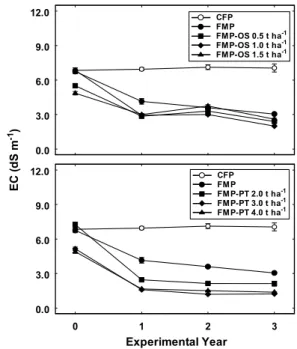
Fig. 6. The values of EC in soils as affected by different management practices. CFP: conventional farming practice, FMP: chemical fertilizer management practice, FMP-OS:
FMP with different amounts of oyster shell meal appli- cation, FMP-PT: FMP with different amounts of peat application.
treatment at the third year. In addition, the different amounts of oyster shell meal applied in this study did not affect the rate of anion concentration changes in the plots.
On the other hand, in the FMP-PT plots, the concentrations of NO
3-sharply decreased till the second year, the Cl
-and SO
42-concentrations were dropped down only at the first year, and then those concentrations are stable from the second and first year, respectively, until the third year. In these plots, the concentrations of PO
43-also generally declined a little during the study years. The decrease rates of anion concentrations had not been affected by different amounts of peat applications.
Changes in electrical conductivity (EC) values in the experimental plot soils are presented in Figure 6. The EC values were not changed in the CFP plot during the three study years. However, in the FMP, FMP-OS, and FMP-PT plots, they showed general decrease during the study years even if they slightly increased in the FMP-OS plots at the second year and also remained at similar EC value in the FMP-PT plots after the first study year. The EC value is closely related to soluble/exchangeable cations and anions in soil-solution system. In the FMP-OS plots, the changes of EC values showed similar trends to the concentration changes of exchangeable cations, especially at the second experimental year. Also, the decreases of EC value might be greatly affected by the high reduction of anion concentrations in the soils with oyster shell meal and peat applications. However, any specific impacts had not been observed between the low and high amounts of oyster shell meal or peat treatments for the decrease rate of EC values.
Influences of the different management practice app-
lications on watermelon fruit quality, sugar content and fruit weight, in the plots are shown in Table 2. The sugar contents of watermelon ranged between 10.8 and 12.4 °Bx, and the watermelon weight ranged from 6.82 to 7.79 kg each. Those indices for watermelon quality were not close- ly associated to the different soil management practices;
but even so, those values were relatively a bit lower in the
FMP-OS 0.5 and 1.0 t ha
-1plots than in other plots,
especially at the first study year.
Conclusion
In this study, we compared three different soil man- agement practices, such as chemical fertilizer manage- ment practice (FMP), the FMP with different amounts of oyster shell meal application (FMP-OS) and peat ap- plication (FMP-PT), with conventional farming practice (CFP) to improve the soil conditions for long-term water- melon cultivation plots. Soil pH was not or slightly changed in the plots of CFP, FMP, and FMP with lower amounts of oyster shell meal applications (FMP-OS 0.5 and 1.0 t ha
-1). The soil pH slightly increased only in the plot of FMP with relatively higher amount of oyster shell meal treatment (FMP-OS 1.5 t ha
-1). However, it decreased in the all plots of FMP-PT applications. In contrast to the changes in soil pH values, the content of soil organic matter (SOM) expectedly increased in the FMP-PT plots, whereas it markedly decreased in the FMP-OS plots, especially in the FMP-OS 1.5t ha
-1plot.
The concentrations of exchangeable cations, Ca
2+, Mg
2+, and K
+, in soils slightly or gradually decreased in the FMP and FMP-PT plots and were not changed in CFP plot, while the concentrations of Ca
2+in the FMP-OS plots increased. On the other hand, the concentrations of water- soluble anions, NO
3-, Cl
-, SO
42-, and PO
43-, in soils were mostly dropped down in all the plots, except in the CFP plot. Besides decreasing the cation and anion concentrations affected to decrease electrical conductivity (EC) in soil- solution system in the plots. Therefore, the soil man- agement practices, especially FMP-OS and FMP-PT, would be applicable to improve soil conditions.
References
Ahn, B.K., Y.H. Lee, and J.H. Lee. 2010. Fertilizer management practices with rice straw application for improving soil quality in watermelon monoculture greenhouse plots. Korean J. Soil Sci. Fert. 43(1):105-112.
Cooperband, L. 2002. Building Soil Organic Matter with Organic Amendments: A resource for urban and rural gardeners, small farmers, turfgrass managers and large-scale producers. Center for Integrated Agricultural Systems. Univ. of Wisconsin.
Madison, WI.
Elrashidi, M.A., L.T. West, C.A. Seybold, E.C. Benham, P.S.
Schoeneberger, and R. Ferguson. 2010. Effects of gypsum addition on solubility of nutrients in soil amended with peat.
Soil Sci. 175(4):162-172.
Lee, C.H., D.K. Lee, M.A. Ali, and P.J. Kim. 2008. Effects of oyster shell on soil chemical and biological properties and cabbage productivity as a liming materials. Waste Management 28:2702-2708.
Lee, J.Y., C.H. Lee, Y.S. Yoon, B.U. Ha, B.C. Jang, K.S. Lee, D.K, Lee, and P.J. Kim. 2005a. Effects of oyster shell meal on improving spring Chinese cabbage productivity and soil properties. Korean J. Soil Sci. Fert. 38(5):274-280.
Lee, Y.C., B.W. Moon, G.C. Song, and J.M. Park. 2005b.
Effects of soil application of natural and processed oyster shell on physicochemical properties of soil and grapevine growth. Korean J. Hort. Dci. Technol. 23(2):192-197.
Lindsay, W. L. 1979. Chemical Equilibria in Soils. John Wiley
& Sons. New York, NY.
Nakatani, N., H. Takamori, K. Takeda, and H. Sakugawa. 2009.
Transesterification of soybean oil using combusted oyster shell waste as a catalyst. Bioresource Technol. 100:1510-1513.
Park, S.G., B.S. Lee, and S.J. Chung. 1999. Effect of calcium concentration in nutrient solution on the growth and fruit quality of ‘Mudeungsan’ watermelon grown in rocjwool. J.
Korean Soc.Hort.Sci. 40(2):174-178.
RDA. 2000. Methods of analysis of soil and plant. National
Institute of Agricultural Science and Technology, Rural De-
velopment Administration, Korea.
패화석 및 이탄 처리가 수박 연작지 토양의 특성에 미치는 영향