Print ISSN: 1738-3110 / Online ISSN 2093-7717 JDS website: http://www.jds.or.kr/
http://dx.doi.org/10.15722/jds.19.2.202102.45
How to Utilize Sports Psychology for Better Customer Experience in Sports Retail Store as a Distribution Content Perspective
Dong-Ho SEONG
1Received: December 21, 2020. Revised: January 02, 2021. Accepted: February 05, 2021.
Abstract
Purpose: Contemporary consumers are increasingly adopting public displays of their loyalty towards brands: consumer dedication surpasses loyalty in that they find various ways to show their devotion to their favorite brands. The purpose of the current study is to utilize sports psychology to improve customer experience in the sports shops. Research design, data and methodology: To investigate the purpose of the study and suggest the solutions, Epistemology methods were used to analyze the nature of knowledge and various forms of attaining knowledge. As such, epistemology asks questions such as “what are constitutes of valid knowledge?”. Results: This study figured out five theoretical results to suggest for practitioners in the sports retail shop based on prior research. According to the research, sports psychology can affect consumer buying behavior which builds upon specific demographics and their differentiating behavior. The results also show that males shop with specificity, while female consumers are likely to shop for pleasure. Men are also less frequent shoppers than women. Conclusions: Above all, this study concludes that a consumer decision-making study is vital in the sports retail business, and information about consumer decision-making can be an influential factor for sports retailers to increase their competitive advantage.
Keywords : Sports Psychology, Customer Management, Distribution Perspective JEL Classification Codes : D31, L81, L83,
1. Introduction
12Hedonic psychology is defined as the study of what makes life experiences pleasant (Witkowski, 2020).
Hedonic psychology focuses on positive aspects of human experiences such as positive institutions, positive individual traits, and positive subjective experiences (Araújo, Ribeiro,
& Paúl, 2017). This area studies the activities from which people obtain enjoyment and those that contribute to the pleasure that people feel in their daily lives, such as
1 First and Corresponding Author, Visiting professor, The department of sports and leisure, Yongin University, 134 Yongindaehak-ro, Samga-dong, Cheoin-gu, Yongin-si, Gyeonggi- do, South Korea, 17092, E-mail: [email protected]
ⓒ Copyright: The Author(s)
This is an Open Access article distributed under the terms of the Creative Commons Attribution Non-Commercial License (http://Creativecommons.org/licenses/by-nc/4.0/) which permits unrestricted noncommercial use, distribution, and reproduction in any medium, provided the original work is properly cited.
sporting events. For example, sports spectatorship gives pleasure to the mind because it results from emotions and cognitions blending and giving meaning and experience.
Fernandes, Correia, Abreu, & Biscaia (2013) studied The Relationship Between Sport Commitment and Sport Consumer Behavior. According to the researchers' commitment to sports can be reviewed based on Thibaut, &
Kelley (1959), social exchange theory that people participate in sporting activities depending on whether their participation is sufficiently favorable. According to Ortiz (2015), contemporary consumers are increasingly adopting public displays of their loyalty towards brands: consumer dedication surpasses loyalty in that they find various ways to show their devotion to their favorite brands.
However, the study of Nunes, & Arruda (2015) connect
consumer products with both a symbol and utilitarian
purposes. The premise is driven by the fact that products'
choice is associated with different meanings; the products
occupy the consumer's life and make a personal decision;
thus, consumers define and redefine their products. For example, sports spectators obtain benefits from attending sporting events. Either they can experience the event through broadcast media or the internet (Fernandes, Correia, Abreu, & Biscaia, 2013). Fanatic consumption is associated with the pursuit of activities with a level of passion that is generally out of proportion to other more temperate consumers in the same product category. Those products sometimes could be manufactured by two companies that were in the strategic process of merger and acquisition (Kang, Nantharath, & Hwang, 2020). According to Ortiz (2015), fanatic consumption represents an enduring form of consumer involvement with the product, characterized by a persistent commitment to resources. It represents an intense dedication that could be described as unrealistic, excessive, or uncritical. Just like consumers in other industries, sports consumption is no different. The sports fan can develop a long-term commitment to a specific team, exhibiting an enthusiastic form of responsibility that is overwhelming and uncritical.
Fernandes and his associates (2013) refer to sport consumption behavior as involving consumers when they choose, buy products and services associated with the sports that satisfy their needs. This type of consumer behavior significantly contributes to the economic performance of the sporting industry. Spectator consumption behavior is exhibited when searching, participating, or evaluating a sporting event that will satisfy consumer needs. According to Ortiz (2015), contemporary consumers line up for Harry Potter books, wear clothes that show their loyalty to Star Trek, and own all the episodes of tapes of their favorite stars such as Andy Griffith. More passionate fans dress up to impersonate their sports stars.
Thus, the level of consumer devotion depends on their commitment to the specific sport.
Therefore, sporting also involves tangible goods, products, and services manufactured, marketed, and distributed in the sports industry. Sports retailers sell their products depending on the associated benefits to the consumer with sporting goods, including sportswear, sports shoes, and sports practice support material. Traditionally, sports shoes were considered as a sports participant product.
However, things have changed with sports shoes being part of almost everyone's wardrobe. Consumers use these products for many reasons, including evidence of their lifestyle: a consumption behavior whose objective is not to enjoy the quality of the products but associated with acquiring a public reputation, distinction, and portrayal of consumer loyalty. Therefore, it is crucial to study how to employ sports psychology for improving customer experiences in sports retail stores.
2. Literature Review
This paper aims to study how to use sports psychology to better customer experience in sports retail stores. The sports products and services industry, including countries and organizations, consider the importance of studying consumer behavior to evaluate their consumer preferences and experiences. According to Fletcher (2010), the sporting industry is a big business that involves big cities and big organizations. On the contrary, big companies, and as a matter of fact, all companies can be viewed as sports.
Factors such as commitment to a sports organization are associated with inducing fanatic consumption.
Spectatorship, fanaticism, and favoritism are connected with the balance between benefits and costs. A framework described by the study of Scanlan, Carpenter, Simons, Schmidt, & Keeler (1993) was influenced by the psychological processes associated with sports participation, that defined sports commitment as a psychological state that represents the desire to proceed with the involvement in a particular sports program or align with specific sporting material.
Theorists of consumer behavior point out the concept of Theorists of consumer behavior point out the concept of commitment as pivotal since it shows consumer resistance to change. This means that even with persuasion, such as involving an alternative product, consumers will still be loyal to the same product. Therefore, emotions that arise with a commitment to a sport have been studied and related to consumer commitment. The attribution-dependent emotions are defined as the emotions that arise due to praiseworthiness, including respect, pride, admiration, and blameworthiness, such as anger, frustration, and irritation.
Spectating a team that wins a specific game creates more emotions despite the valence. Another consequence of sports spectatorship is basking in reflected glory (BIRGing).
According to Spinda (2011), BIRGing refers to sharing in the glory of the winning party with whom the consumer is associated somehow. BIRGing has based on the premise that fans increase their relationship with a winning team to enhance their self-esteem regardless of whether their connection may be trivial or critically incidental.
On the contrary, cutting off reflected failure (CORGing) is a form of ego protection theory that involves spectators distancing themselves from an unsuccessful team. Die-hard fans tend to BIRG more and CORG less than fans with low and moderate commitments. The assumption is that die- hard fans are more psychologically committed to the team.
However, in either circumstance, self-esteem due to the outcome of a game but can be a temporary effect.
Marketing specialists are always interested in
understanding the factors that cause consumers to buy
certain products. Impulse buying refers to unplanned
purchases or the customers' immediate need to purchase goods they did not plan to buy. Sports products are classified under impulse purchases since they convey the attitude of the one who buys them. As already described, sports have a strong psychological and socioeconomic impact on consumers. These key factors describe the key characteristics of sports consumers.
Fletcher (2011) cites Trevor Slack's observation that sport is big business and that big business is primarily involved in sports. In other words, the whole management and marketing domain can have much to study from sports psychology and match them to business management. Apart from the fact that sporting events stimulate consumer purchases based on their moods and attitudes, sporting psychology can also be studied and applied in improving employee performance and well-being. For instance, management researchers have investigated outcomes when managers use a coaching approach to enhance employee performance.
Therefore, aspects of sports psychology that focus on mental skills, the capacity to focus and concentrate, performance routing, mental imagery, and self-talk can be applied in enhancing employee performance and well-being.
Fernandes and his associates (2013) studied the relationship between consumer behavior and sports involvement in light of the social exchange theory. According to the researchers, sports consumers' behavioral involvement is directly associated with how much time they spend on sports. In this case, involvement is viewed in terms of the amount of time people dedicate to sporting activities. The level of participation is a reliable predictor of the consumers sporting behavior. Thus, the level of involvement is directly associated with marketing performance since it is a strong predictor of the amount of time an individual will spend in a specific activity.
Based on the social exchange theory, consumers will continue to participate or connect with a sporting activity as long as they consider it beneficial. The commitment is propagated by a relationship where the benefits outweigh the costs. Similarly, consumers will be committed to participating in a sporting activity so long as the practice coincides with a positive experience. For instance, highly committed sports fans and players are likely to buy more sporting products. Fernandes and his colleagues (2013) found that a sports participant's ability to use sports shoes is on the higher average, followed by sportswear and other training equipment. Consumers mostly associate sports shoes with a specific lifestyle in contrast to sportswear and training equipment.
In a study by Chew (2016) to investigate The Role of Social Influence in Purchasing Sports Apparel, demand for sporting goods is influenced by the general population's increased sports participation and the increased acceptance
of sportswear daily wear. Therefore, while athletes buy sports apparel to use for sporting purposes, the general population engages in purchases for other purposes. In response, the sporting industry participates in much advertising to influence consumer choice. This is because sports can be consumed through media channels such as radio, television, and the internet. As a result, sports retailers work towards improving the broadcast media audiences, including premium cables, magazines, television options, and satellite networks. Therefore, retailers such as Adidas and Nike and many other entrants like Li-Ning from China invest in the advertisement to influence brand awareness and market share.
Bae, & Miller (2009) compared consumer behavior between males and females buying sports apparel. The researchers were motivated by the traditional assumption that consumers display consistent consumption behavior regardless of gender. However, male and female consumers project divergent consumer behavior relative to product advertisements. For instance, female consumers show more complex information processing criteria than male consumers. According to Bae, & Miller (2009), female consumers comprehensively analyze product advertisements and information while male consumers portray simple information processing criteria. While both men and women buy almost the same products, women tend to spend more time than males shopping and searching for product information. Also, female consumers hold different attitudes towards shopping and purchasing and are more dominant than male consumers.
On the contrary, male consumers are viewed as unique shoppers, mostly purchasing camping gear, insurance, and camping gear. Moreover, despite males spending less time shopping than females, they spend more money than females. Bae, & Miller (2009) found that despite female consumers being more interested in product information and engaging in much impulsive purchasing than male consumers. Female consumers also show increased interest in high-priced products for believing that brand and price are the significant indicators of quality. Despite female consumers spending more time at the store, they also need extensive assistance with decision-making since different brands, colors, and sizes make them more confused over the product to purchase. These assumptions show that male and female consumers will show different behavior patterns when buying sports apparel.
Abdomaleki et al. (2017) state that successful sports
marketing began when retailers began interpreting both the
why and how of sports spectatorship behaviors. These
involved the study of the psychological factors associated
with spectatorship, which influence the endurance and the
consumer behavior of sports fandom. Sports fandom
consumption is related to psychological aspects that are
directed towards a variety of sporting products. The action of both coaches, athletes, and sports fans and the factors that influence their association with specific sporting products, is key to developing marketing strategies for retailers, including organizations and organizers of sporting events. These are the concepts that sport retail stores need to understand to identify and supply their needs, expectations, and abilities.
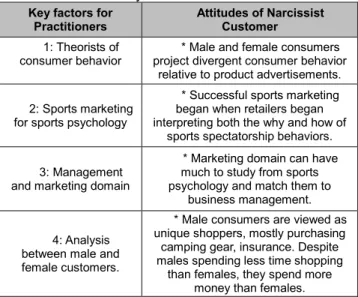
Table 1: Main Summary of Prior Literature
Key factors forPractitioners
Attitudes of Narcissist Customer