Original Articles Korean Circulation J 1998;;;;28((((10))))::::1700-1706
관상동맥 MAC 스텐트의 임상경험
전남대학교병원 심장센타,1 연세대학교병원 심혈관센터,2 전남대학교병원 순환기내과3
김성희3·정명호1,3·장양수2·배 열3·김준우3·조장현3 김남호3·박우석3·안영근1,3·조정관1,3·박종춘1,3·강정채1,3
Clinical Experiences of Coronary MAC ((((Maximum Arterial Re-Creation)))) Stent
Sung Hee Kim, MD3, Myung Ho Jeong, MD1,3, Yang Soo Jang, MD2, Youl Bae, MD3, Joon Woo Kim, MD3, Jang Hyun Cho, MD3, Nam Ho Kim, MD3, Woo Suck Park, MD3,
Young Keun Ahn, MD1,3, Jeong Gwan Cho, MD1,3, Jong Chun Park, MD1,3 and Jung Chaee Kang, MD1,3
1Heart Center of Chonnam University Hospital, Kwang Ju, 2Cardiovascular Center of Yon Sei University Hospital, Seoul, 3Department of Cardiovascular Medicine, Chonnam University Hospital, Kwangju, Korea
ABSTRACT
Background and Objectives:We previously reported the effects of MAC (Maximum Arterial Re-Creation) stent on stent restenosis in a porcine model. The clinical trial was performed in patients with ischemic heart disease after MAC stent implantation. Materials and Method:We analyzed the clinical and angiographic re-sults in 20 patients in 22 lesions (15 M, 5 F, 59±11 year), who underwent MAC stent at Chonnam University Hospital between Nov ’97 and Aug ’98. Clinical diagnosis was 13 unstable angina (65%), 6 acute myocardial infarction (30%) and 1 old myocardial infarction (5%). Results:Indications for stent were 3 de novo lesion (13.6%), 7 restenosis (31.8%), 8 suboptimal angioplasty result (36.4%) and 4 bail-out procedure (18.2%). Target stented coronary arteries were 15 left anterior descending coronary arteries (67.3%), 2 left circumf- lex coronary arteries (9.1%) and 5 right coronary arteries (22.7%). Morphologic types were 13 type B1 (59.1%), 5 B2 (22.7%) and 4 C (18.2%). Minimal luminal diameter (MLD) before stent was 0.75±0.35 mm and percent dia- meter stenosis (DS) was 75±11.5%, which were improved 2.97±0.28 mm in MLD and 2.79±5.4% in DS after stent. MAC stent was placed successfully in all patients and one case of acute stent thrombosis was improved after ReoPro infusion. Mean follow-up period was 5.2±3.2 months and 100% event-free survival was observed in all patients. Follow-up coronary angiography was performed in 5 patients and showed no stent restenosis.
Conclusion:The MAC stent is one of effective and safe devices in the treatment of coronary artery diseases witho- ut significant complications and target vessel revascularization. ((((Korean Circulation J 1998;28((((10)))):1700-1706)))) KEY WORD:MAC (Maximum Arterial Re-Creation) stent.
서 론
관상동맥 스텐트 시술은 관상동맥 중재술의 시술기구
중 가장 효과가 좋은 방법의 하나로 알려지고 있으며, 현재 임상에서 사용이 점차 늘어가고 있다. 그러나, 임 상에서 사용되고 있는 스텐트는 대부분 수입에 의존하 고 있으며, 이에 따른 환자의 경제적 부담도 커서 국내 개발에 대한 요구가 절실히 요청되고 있다. 경피적 관상 동맥 확장후 급성 혹은 임박 폐쇄, 잔여 협착 이 35%이 상인 경우, 재협착 병변, 관상동맥 우회로술 시술후 이식 논문접수일:1998년 9월 16일
심사완료일:1998년 11월 19일
교신저자:정명호, 501-757 광주광역시 동구 학1동 8번지 전남대학교병원 순환기내과
전화:(062) 220-6243・전송:(062) 228-7174 E-mail:[email protected]
편에서 발생한 병변, 완전 폐쇄 병변의 초기 치료를 위한 일차적인 스텐트 시술등이 의료보험적용이 된다고 하지 만 그 외에도 스텐트 시술에 있어서 광범위한 확대가 요 청되고 있다. 또한 국내외에서 다혈관 질환에 대한 중재 적 시술이 관상동맥 우회술을 대치하여 증가하고 있어서 관상동맥 스텐트의 시술 예는 더욱 더 증가할 전망이다.
본 교실에서는 국내 연구진에 의해 한국 메디텍(Korea Medical Technologies Co. Ltd)사에서 독일 AMG(Ap- plied Medical and Health TechnoloGie)사에 위탁 제 조로 개발한 MAC(脈;Maximum Arterial Re-Crea- tion) Stent의 돼지 관상동맥을 이용한 스텐트 재협착에 관한 실험결과를 보고 한 바 있다. MAC stent는 slotted tube식의 stainless steel stent로서 PTCA balloon에 mount하기가 용이하고 다양한 직경과 길이를 갖고 있다.
저자 등은 임상에서 관상동맥 질환자를 대상으로 MAC stent를 시술하여 다음과 같은 임상경과를 관찰하여 보 고하는 바이다.
대상 및 방법
대상 환자
본 연구는 전남대학교 임상연구 심의위원회와 보건복 지부 기획평가단의 심의를 거쳐서 이루워졌으며, 관찰대 상은 1997년 11월부터 1998년 8월까지 관상동맥 질환 으로 전남대학교 병원 순환기내과에 내원하여 관상동맥 중재술이 필요했던 환자 중 시술 동의를 얻어 관상동맥 내 MAC stent를 시술한 20예(남:여=15:5, 평균 연 령 58.2±12세), 22병변을 대상으로 임상적 특징, 관상 동맥 조영상의 병변 및 관상동맥 스텐트 삽입술과 관련 된 인자, 주요 합병증 등을 분석하였다.
모든 예에서 Stent시술 후 평균 5.5±3.2개월의 정기 적인 외래 추적관찰 치료 중이며, 그 중 5예에서는 6.7±
0.5 개월후에 추적 관상동맥 조영술을 시행하였다.
스텐트 시술
시술 전 모든 환자에서 시술에 대한 설명과 동의를 받 은 후 시행하였으며, 대퇴접근을 이용한 통상적인 방법 으로 시술하였다. Monorail 풍선 체계를 이용하여 풍선 카테터로 표적 병변을 미리 확장한 후, 풍선으로 스텐트 를 전개하고 평균 12 기압의 압력으로 확장하였다.
시술에 따른 혈관연축이나 급성 폐쇄를 예방하기 위
해서 혈관확장제(Nitrate, 칼슘 길항제), 항응고제(시술 전 heparin 150 U/kg, 대부분 10,000단위), 항혈소판제 (시술전 적어도 24시간 전에 aspirin 100~300 mg/day, ticlopidine 500 mg/day)를 사용하였다.
자료의 분석
관상동맥 조영술상 혈관의 크기, 병변 등의 형태는 AHA/
ACC 분류 지침에 의해 정리하였고, 시술 전 후의 관상 동맥의 협착의 정도는 유도 도자의 직경을 기준으로 ele- ctronic caliper를 이용하여 측정하였다.
Stent 삽입술후 최종 관상동맥 조영술에서 잔여 협착 이 20% 미만이고 TIMI III flow를 보인 경우 성공적인 시술로 정의하였으며, 관상동맥 중재술과 관련된 사망, 급 성 심근경색증, 심인성 쇼크, 관상동맥 우회술 등에 의한 표적 혈관 재소통 등의 사건이 없는 경우를 event free로 정의하였다. 모든 결과는 평균±표준편차로 표시하였다.
결 과
임상적인 특징
대상환자는 모두 20예로서 남자 15명 여자 5명으로 서, 평균 연령은 58.2±12세(37~80세)였다. 임상 진단 은 불안정 협심증 13예(65%), 급성심근경색증 6예(30%), 진구성 심근경색증 1예(5%)이었다. 시술 전 심장초음파 검사 또는 좌심실 조영술에 의한 좌심실 구혈률은 61.2±
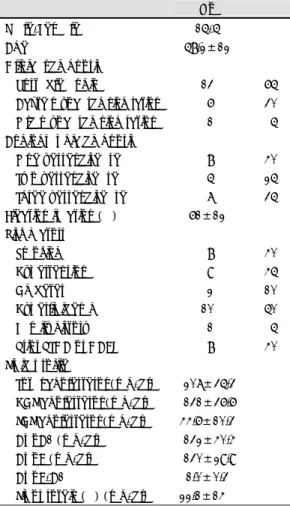
12%이었다. 동반된 동맥경화의 위험인자는 흡연 8예 (40%), 고혈압 9예(45%), 당뇨병 2예(10%), 고지혈증 10예(50%) 및 관상동맥 중재술의 과거력 8예(40%) 등 이었다(Table 1).
관상동맥 병변 특징
관상동맥 조영술에서 단일 혈관질환 8예(40%), 두 혈 관질환 5예(25%), 세 혈관질환 7예(35%) 등이었으며, 표적혈관은 좌전하행지 14예(68.2%), 좌회선지 2예(9.
1%), 우관상동맥 5예(22.7%)이었고, 병변의 형태는 AHA/
ACC 지침에 따른 분류상 B1 13예(59.1%), B2 5예(22.
7%), C 4예(18.2%) 등이었다. 병변 원위부 혈류는 Th- rombolysis in Myocardial Infarction(TIMI) flow 0인 예가 1예(4.5%), I인 예가 2예(9.1%), II인 예가 14예 (63.6%), III인 예가 5예(22.7%) 이었다(Table 3).
병변 중 가장 심한 부위의 내경 협착(DS:diameter
stenosis)은 75±11.5%, 최소 내경(MLD:minimal lu- minal diameter)은 0.75±0.35 mm였고, 병변의 길이 는 14.2±5.5 mm이었다(Table 2).
스텐트 시술
스텐트 시술은 20예의 22병변에서 모두 성공적으로 시술하였으며(Fig. 1), 시술의 적응증으로는 원발성 병 변이 3예(13.6%), 재협착병변 7예(31.8%), 아최적 풍 선확장술의 결과(suboptimal PTCA result)가 8예(36.
4%), 구제적 시술(bail-out procedure) 4예(18.2%) 등 이었다. 구제적 시술 4예중 2예는 풍선확장술 후 내막 박 리가 발생했던 경우이며, 2예는 탄력성 반동(elastic rec- oil)이 발생하였던 예이었다. 스텐트의 내경은 2.5~3.5 mm, 길이는 9~26 mm, 스텐트 내경과 참조혈관(refer- ence vessel)의 내경의 비는 0.97±0.02, 스텐트 길이 와 병변의 길이의 비는 1.27±0.2이었다. 스텐트 시술 시 평균 최고 압력은 11.5±1.9기압이었다(Table 4).
스텐트 시술에 따는 합병증은 3예(13.6%)에서 발생 하였으며, 분지혈관의 폐쇄(side branch occlusion) 1예, 급성 스텐트 혈전(acute stent thrombosis) 1예, 스텐 트 하방의 혈관경련 1예 등이었다. 급성 스텐트 혈전이 발생하였던 경우는 ReoPro 2.5 mg/kg(10 μg/min)를 정주함으로써 호전되었다.
관상동맥 조영술 소견의 분석 결과
내경 협착(diameter stenosis)은 75±11.5%에서 2.9
±5.4%로 감소하였으며, 최소 혈관내경(minimal luminal diameter)은 0.75±0.35 mm에서 2.97±0.28 mm로 증가하였다. 스텐트 시술에 따르는 조기이득(acute gain) 은 2.2±0.4 mm로서, 스텐트 시술직후 전 예에서 의의 있는 잔여 협착없이 성공적이었고 stent 시술후 recoil은 Table 1. Clinical characteristics of 20 patients
No %
Male/Female 15/5 Age 58.2±12 Clinical diagnosis
Unstable angina 13 65 Acute myocardial infarction 6 30 Old myocardial infarction 1 5 Angiographic diagnosis
One vessel disease 8 40 Two vessel disease 5 25 Three vessel disease 7 35 Ejection fraction (%) 61±12 Risk factors
Smoking 8 40
Hypertension 9 45
Diabetes 2 10
Hyperlipidemia 10 50 Family history 1 5
Prior PTCA or CABG 8 40 Lipid profile
Total cholesterol (mg/dl) 207±35.3 HDL-cholesterol (mg/dl) 131±36.6 LDL-cholesterol (mg/dl) 44.6±10.3 ApoA1 (mg/dl) 132±40.4 ApoB (mg/dl) 130±29.9 ApoB/A1 1.0±0.3 Lipoprotein (a) (mg/dl) 22.1±14
Table 2. Baseline angiographic characteristics of 22 lesions Number %
Locations Prox LAD 9 40.9
Middle LAD 6 27.3 Prox LCX 2 9.1 Prox RCA 2 9.1 Mid RCA 1 4.5 Distal RCA 2 9.1 Lesion type (ACC/AHA clasification)
Type B1 13 59.1 Type B2 5 22.7 Type C 4 18.2 TIMI (thrombolysis In Myocardial Infarction)
0 1 4.5
I 2 9.1
II 14 63.6
III 5 22.7
Table 3. Angiographic findings before and after stent Reference diameter (mm) 3.0 ± 0.27
Lesion length (mm) 14.2 ± 5.5 Minimal luminal diameter (mm)
Baseline 0.75± 0.35 Post-stent 2.97± 0.28*
Percentage of diameter stenosis (%)
Baseline 75 ±11.5
Post-stent 2.9 ± 5.4*
Acute gain (mm) 2.2 ± 0.4
Fig. 1. MAC (Maximum Arterial Re-Creation) stent was successfully placed for the critical stenosis at middle left anterior descending artery in the patients with unstable angina.
발생하지 않았다(Table 3).
고 찰
최근 관상동맥 중재술이 기구의 발전과 기술의 축적으 로 적용범위가 점차 넓어지고 시술 환자 수도 급증하고 있다. 경피적 관상동맥 확장술이 소개되어 발전한지 20 여년이 되었지만,1) 아직도 가장 문제가 되는 것은 급성 혈관폐쇄와 재협착이 문제가 되고 있다.2-8) 관상동맥 중 재술에 따른 혈관박리, 혈전형성, 혈관연축 등에 의한 급 성 혈관폐쇄는 항혈전제 및 항응고제 치료 등의 도입 및
스텐트의 시술로 대부분 해결되었다고 볼 수 있으나, 재 협착이 아직도 해결되어야 할 문제점으로 남아 있다. 재 협착은 성공적인 관상동맥 풍선 확장술후 약 30~50%
에서 6개월 이내에 확장된 혈관내에 초래되며, 현재까지 재협착을 줄이기 위해 많은 시도들이 진행되고 있으나 아직까지 확실한 방법은 없다.9-14) 그러나, STRESS와 BENESTENT 등의 연구결과15-16)에서 경피적 관상동 맥 풍선확장술에 비해 스텐트 시술이 재협착율을 감소시 킬 수 있다고 보고한 이래, 임상에서 이용이 증가하고 있고 스텐트 시술과 더불어 일반적인 관상동맥 풍선확장 술로 해결이 쉽지 않은 calcific, eccentric, ostial, thro- Table 4. Characteristics of stent
Number % Stent indication
De novo lesion 3 13.6
Restenosis 7 31.8
Suboptimal PTCA 8 36.4 Bail-out procedure 4 18.2 Stent diameters (mm) 1 4.5
2.5
3.0 17 77.3
3.5 4 18.2
Stent length (mm)
9 4 18.2
17 13 59.1
26 5 22.7
Stent/vessel diameter ratio 0.97±0.02 Stent/lesion ratio 1.27±0.2 Maximum pressure (atm) 11.5±1.9
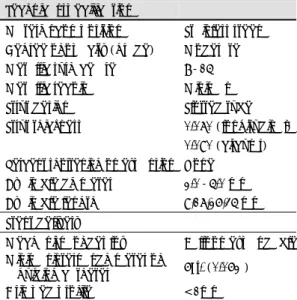
Table 5. MAC stent technical specifications and stent de- livery
Technical specification
Material composition Stainless steel Degree of opacity (grade) Moderate Metallic surface area 8-15%
Metallic recoil Minimal Strut design Slotted tube Strut thickness 0.070 (longitudinal)
0.090 (circular)
Percent shortening on expansion None Available diameter 2.0-5.0 mm Available length 9,17,26,35 mm Stent delivery
Mechanism of deploy Balloon expandable Minimal internal diameter of
guiding catheter 6Fr. (0.062") Crimped profile <1mm
mbus-containing or bifurcation lesion 등을 해결하기 위해 많은 새로운 시술 방법 즉, atherectomy, laser an- gioplasty 등이 개발되고 있다. 임상에 스텐트가 처음 도 입이 된 것은 1986년도로서,17) 초기에는 관상동맥 확장 성형술 중 발생한 급성 혈관폐쇄 병변(bail-out lesion), 재협착 병변, 이식혈관의 협착에 국한되었다.18) 현재는 미 국이나 유럽의 많은 병원에서 관상동맥 중재술의 40%
이상 스텐트 시술이 차지하고 있으며, 시술범위도 점차 넓어지고 있다.
스텐트 시술의 문제점은 아급성 스텐트 혈전, 스텐트 부정확한 위치 설정, 부적절한 스텐트 확장, 출혈 합병 증 등이다.18-20) 초기에는 특히 혈관폐쇄가 오는 혈전을 예방하기 위해서 aspirin, dipyridamole, 저분자 헤파린, 저분자 덱스트란, warfarin 등 적극적인 항응고 및 항 혈소판 치료를 실시하였으며, 이에 따른 재원기간의 증 가 및 출혈 합병증 등이 임상적 문제였다. 최근에 대부분 의 합병증이 불완전한 스텐트 확장의 결과로 인하여 발 생함을 알게 되어, 스텐트의 초기 시술시 고압력 확장, 관 상동맥내 초음파를 이용하여 스텐트와 혈관벽의 완벽한 접촉을 시도하고 항혈소판제인 aspirin과 ticlodipine의 병합요법만으로 스텐트 혈전 형성 및 국소혈관 합병증을 현저히 낮출 수 있다고 알려져 스텐트 시술시 합병증을 줄 일 수 있다.21)
국내의 경우는 1983년 관상동맥 확장 성형술이 처음 으로 시술된 후부터 1990년 이후 급속히 증가하기 시 작하였으며,23-37) 스텐트 시술 경우에는 1991년에 처음 시술된 이후 1994년까지 20% 미만이였으나 1995년부 터 증가하기 시작하여 1996년부터는 47%에 달하고 있 다.22) 하지만, 현재 국내에서 사용되고 있는 관상동맥 스 텐트는 전량을 수입하고 이에 따른 우리 나라의 경제적 인 손실도 무시할 수 없게 되었으며, 국내 개발이 절실히 요구되고 있다. 본 교실에서는 돼지 관상동맥 모형을 이 용한 MAC(Maximum Arterial Re-Creation) 스텐트 와 Palmaz-Schatz Stent(Johnson & Johnson사)와 스 텐트 재협착의 정도를 비교 발표한 바 있으며,38) MAC stent는 국내의 연구진에 의해 개발되어 한국 메디텍(Ko- rea Medical Technologies Co. Ltd)사에서 독일 AMG (Applied Medical and Health TechloloGie)사에 위탁 제조로 개발되었다. MAC stent는 slotted tube 식의 st- ainless stent로서 metal/artery ratio가 8 내지 15%이 고 Palmaz-Schatz stent보다 적으며, recoil이나 short-
ening이 1% 이내로 매우 적고 7 내지 35 mm의 다양한 길이가 있다(Table 5). 저자 등이 풍선도자에 MAC ste- nt를 감아서 사용할 때에 매우 쉽게 퐁선도자에 감을 수 있었으며, 굴곡이 심하거나 작은 표적 혈관이 위치시키는 데에도 어려움이 없었다.
본 연구의 결과는 돼지 관상동맥 모형을 이용한 동물 실험 결과에서는 MAC stent가 신생내막 증식에 의한 스 텐트 재협착의 형성을 토대로 실시하여 MAC stent가 임 상에 유용하게 사용될 수 있음을 시사하였으며, 장기적 관찰 결과도 매우 양호할 것으로 사료된다. 또한, BENE- STENT-II Pilot Study에서는 heparin-coated Pa- lmaz-Schatz 스텐트를 시술하여 급성 혹은 아급성 스 텐트 혈전증이 없었고 6개월 추적관찰에서도 높은 무사 고 생존율을 보고한 바 있어서,39) 본 교실에서는 MAC stent에 heparin을 고분자 플라즈마 공법으로 부착시킨 후 돼지 관상동맥 모형에서 실험을 진행하고 있는 중이다.
향후 많은 환자를 대상으로 임상 연구를 계속할 예정 이며, 3.0 mm이하의 작은 혈관이나 개구부 및 bifurcati- on 병변, 만성 폐쇄병변, 재협착 병변에 대한 헤파린 부 착 MAC stent의 임상 시험도 보건복지부의 임상 시험 허가를 받아 시도할 예정이다.
요 약
연구배경:
돼지 관상동맥을 이용한 MAC(脈;Maximum Arterial Re-Creation) stent의 스텐트 재협착에 관한 실험결과 를 보고한 바 있으며, 임상에서 관상동맥 질환자를 대상 으로 시술하여 다음과 같은 결과를 얻었다.
대상 및 방법:
1997년 11월부터 1998년 8월까지 관상동맥 질환으 로 전남대학교 병원 순환기내과에 내원하여 관상동맥 확 장술이 필요했던 환자 중에서 MAC stent를 시술한 20 예(59±11세, 남:여=15:5), 22 병변을 대상으로 하였 으며, 임상 진단명은 불안정협심증 13예(65%), 급성 심 근경색증 6예(30%), 진구성 심근경색증 1예(5%) 등이 었다.
결 과:
1) 스텐트 시술의 적응증은 de novo lesion 3예(13.
6%), 재협착 병변 7예(31.8%), suboptimal PTCA 8예 (36.4%), bail-out 4예(18.2%) 등이었다. 표적혈관은
좌전하행지 15예(67.3%), 좌회선지 2예(9.1%), 우관상 동맥 5예(22.7%) 등이었고, 병변의 형태는 AHA/ACC 분류에 따른 B1형 13예(59.1%), B2 5예(22.7%), C 4예 (18.2%) 등이었으며, 전 예에서 스텐트 시술은 성공적 이었다.
2) 시술전 병변의 MLD(minimal luminal diameter) 0.75±0.35 mm, % 협착율 75±11.5%, 병변 길이 14.2
±5.5 mm, reference vessel diameter 3.0±0.27 mm 였다. 시술 직후 acute stent thrombosis 1예가 발생하 였으나 Reopro 사용후 개선되었고 스텐트 하방의 혈관경 련 1예, 분지부 혈관 폐쇄 1예 있었다.
3) 시술후 MLD는 2.97±0.28 mm로 증가하였고, 협 착율은 2.97±5.4%로 감소되었다.
4) 5.2±3.2 개월동안 추적관찰중이며, 모두 무사고 생존하였고 추적관상동맥 조영술을 실시한 5예 전예에서 스텐트 재협착 소견은 보이지 않았다.
결 론:
관상동맥 질환자에서 MAC 스텐트 시술에 대한 단기 임상 성적은 매우 양호하였으며, 향후 장기적인 추적관찰 을 통해 효용성 및 안정성에 대한 검증이 필요할 것으로 생각되었다.
중심 단어:맥스텐트.
본 연구는 1997 연도 한국 메디텍이 지원하는 전남대학교 병원 임상연구비 및 1998 연도 보건의료기술 연구개발사 업 연구비(HMP-98-M-5-0059) 등의 지원에 의해 이루 어졌음.
REFERENCES
1) Gruentzig A. Transluminal dilatation of coronary artery stenosis. Lancet 1978;1:1263.
2) Roubin GS, Cannon AD, Agrawal SK, Macander PJ, Dena LS, Baxley WA, et al. Intracoronary stenting for acute and threatened closure complication percutaneous transl- uminal coronary angioplasty. Circulation 1992;85:916-27.
3) Sigwart U, Urban P, Golf S, Kaufmann U, Adam Fischer CI, Kappenberger L. Emergency stenting for acute occl- usion after coronary balloon angioplasty. Circulation 1988;
78:1121-7.
4) Rim SJ, Chung IM, Cho SY, Jang YS, Chung NS, Shim WH, et al. Progression of coronary artery disease after percutaneous transluminal coronary angioplasty. Korean Circulation J 1994;24:634-46.
5) Jeong MH, Cho IJ, Seo JP, Ryu MH, Lee MG, Park JS, et al. Predictive factors of restenosis after percutaneous transluminal coronary angioplasty. Korean Circulation J 1994;24:762-8.
6) Seok JH, Kim SM, Bae SH, Kim BJ, Lee HJ, Yoon JS, et al. Predictive factors of restenosis after successful percut- aneous transluminal coronary angioplasty. Kor Int Med J 1998;54:684-94.
7) Freed M, Grines C, Safian RD. The New Manual of Interv- entional Cardiology: Physicians’ press;1996. p.425-35.
8) Nobuyoshi MN, Kimura T, Ohishi H, Horiuchi H, Nosaka H, Hamasaki N, et al. Restenosis after percutaneous tra- nsluminal coronary angioplasty: Pathologic observations in 20 patients. J Am Coll Cardiol 1991;17:433-9.
9) Jeong MH. Local drug delivery in prevention of restenosis.
Korean Circulation J 1996;26:237-45.
10) Jeong MH. Biologic and genetic therapy for restenosis.
Chonnam J Med Sci;1996. p.122-9.
11) Jeong MH, Kang JC, Schwartz RS, Holmes DR. Fibrin- loaded fibrin stent prevents acute stent thrombosis and ble- eding complication. Chonnam J Med Sci 1996;9:173-8.
12) Jeong MH, JC Park, Cha KS, Bae Y, Ahn YK, Park JH, et al. The effects of local nitric oxide doner delivery in sten- ted Patients. Korean Circulation J 1997;27:592-9.
13) Jeong MH, Ahn YK, Bae Y, Park JC, Cha KS, Seo JP, et al. Successful coronary stent implantation without systemic heparin therapy: Use of local heparin delivery. Korean Circulation J 1997;27:988-94.
14) Kim JW, Lee CW, Cheong SS, Kang DH, Hong MK, Song JK, et al. A Prospective, randomized, comparative clinical investigation of the effects of Sulodexide on restenosis after percutaneous transluminal coronary balloon angioplasty.
Korean Circulation J 1997;27:644-51.
15) Serruys BW, de Jaegere P, Kimeneij F, et al (BENESTENT Study Group). A comparison of balloon-expandable stent implantation with balloon angioplasty in patient with coro- nary artery disease. N Eng J Med 1994;331:489-95.
16) Fischman DL, Leon MB, Baim DS, et al (STRESS Inve- stigators). A randomized comparison of coronary stent placement and balloon angioplasty in the treatment of coronary artery disease. N Eng J Med 1994;331:496-501.
17) Sigwart U, Puel J, Mirkowitch V, Joffre F, Kappenberger L.
Intravascular stents to prevent occlusion and restenosis af- ter transluminal angioplasty. N Engl J Med 1987;316:701.
18) Schatz R. A View of Vascular Stents. Circulation 1989;79:
445-57.
19) Hoffmann R, Mintz GS, Dussaillant GR, Popman JJ, Pic- hard AD, Satler LF, et al. Pattern and mechanism of ins- tent restenosis:A serial intravascular ultrasound study.
Circulation 1996;94:1247-54.
20) Sutton JM, Ellis SG, Roubin GS, Pinkerton CA, King III SB, Raizner AE, et al. Major clinical events after coron- ary stenting: The multicenter registry of acute and elective Gianturco-Roubin stent placement. Circulation 1994;89:
1126-37.
21) Jeong MH, Kang JC, Holmes DR, Schwartz RS. Comb- ination of aspirin and ticlopidine is effective in the preve- ntion of the acute stent thrombosis. Chonnam J Med Sci 1997;10:27-34.
22) Kim KB. Status of coronary intervention in Korea. Korean Circulation J 1997;27:168-75.
23) Cho SY, Park SJ, Shim WH, Lee WK, Chung NS, Kim SS, et al. Treatment of coronary stenosis by PTCA. Korean Circulation J 1986;16:317-29.
24) Cho SY, Park SJ, Shim WH, Lee WK, Chung NS, Kim
SS, et al. Clinical follow-up after percutaneous translum- inal coronary angioplasty (PTCA) in patients with angina pectoris. Korean Circulation J 1987;18:177-86.
25) Ryu MH, Rhew JY, Bae Y, Cho IJ, Seo JP, Gill GC, et al. Clinical experiences of long-balloon percutaneous tr- ansluminal coronary angioplasty. Korean Circulation J 1995;25:1084-90.
26) Coronary Stenting Study Group. Gianturco-Roubin Cor- onary Stenting: Analysis of multicenter results. Korean Circ- ulation J 1995;25:896-902.
27) Coronary Stenting Study Group. Palmaz-Schatz coronary stenting: Analysis of multicenter results. Korean Circulati- on J 1995;25:889-95.
28) Jeong MH, Cho IJ, Seo JP, Ryu MH, Lee MK, Park JS, et al. Clinical study for coronary artery stenting. Korean Circulation J 1994;24:374-9.
29) Lee SG, Park SW, Lee CW, Cheong SS, Hong MK, Kim JJ, et al. Early and late clinical outcomes after directional co- ronary atherectomy. Korean Circulation J 1997;27:1117-22.
30) Park SJ, Park SW, Hong MK, Cheong SS, Lee CW, Kim YH, et al. Stenting of unprotected left main coronary art- ery stenosis without anticoagulation: Immediate and late outcomes. Korean Circulation J 1997;27:947-57.
31) Hong MK, Park SJ, Park SW, Kim JJ, Kang DH, Cheong SS, et al. Coronary angioplasty in patients with multivessel coronary artery disease. Korean Circulation J 1995;25:
756-63.
32) Oh SJ, Sohn MS, Sohn JW, Ahn TH, Choi IS, Shin EK.
Preliminary Results of intracoronary stenting in thormbus containing lesion. Korean Circulation J 1997;27:1110-6.
33) Choi DH, Jang YS, Hong BK, Lee NH, Kim TY, Ha JW, Rim SJ, et al. AVE Micro-II Stent: 6-months follow up result. Korean Circulation J 1997;27:1280-8.
34) Shim WH, Ha JW, Lim SW, Kwan J, Lee MH. Aniogra- phic follow-up after intracoronary stenting with flexible coil (Giantur-co-Roubin) stent. Korean Circulation J 1996;
26:29-34.
35) Hong MK, Park SW, Lee CH, Lee SK, Lee IS, Park HK, et al. Intravascular ultrasound analysis of factors associ- ated with suboptimal stent expansion after high pressure balloon inflation. Korean Circulation J 1997;27:1272-9.
36) Ryu JC, Jang YS, Kim KY, Lee SH, Kim JH, Jeon DW, et al. Immediate results of AVE Micro-II stent. Korean Circulation J 1997;27:532-40.
37) Cha KS, Park JC, Seo JP, Lim SC, Park JH, Jeong MH, et al. Early outcome of long coronary stent implantation.
Korean Circulation J 1997;27:821-8.
38) Bae Y, Jeong MH, Jang YS, Cha KS, Park JC, Seo JP, et al. Comparison of porcine coronary stent restenosis bet- ween MAC (Maximum Arterial Re-Creation) and Palmaz- Schatz stent. Korean Circulation J 1998;28:89-96.
39) Serruys PW, Emanuelsson H, Van der Giessen W, Lunn AC, Kiemeney F, macaya C, et al. Heparin-coated Pal- maz-Schatz stents in human coronary arteries: Early out- come of the Benestent-II Pilot study. Circulation 1996;93:
412-22.