서 론
처음 항균제가 발견되었을 때 모든 질병이 정복될 거 라는 예상과는 달리1947년 페니실린에 내성을 나타내는 Staphylococcus aureus가 출현한 이후로 페니실린뿐만 아 니라 거의 모든 항균제에 대한 내성균이 출현하고 있는 상황이다 그런데 항균제는 사람의 질병을 치료 하는데.
만 사용하는 것이 아니고 축산동물의 질병예방 치료 성, , , 장촉진 사료의 효율 향상을 위해 사용하고 있기 때문, 에,1,2) 내성균의 출현은 사람에게 사용되는 항균제에 의 해서만 출현되는 것이 아니라 축산동물과의 직접적인 접 촉 항균제에 오염된 고기 등에 의해서도 발생할 수 있,
고,3-11) 축산 농가 주변의 토양이나 지하수의 내성균 오염
이 사람이나 동물에게 직접 또는 간접적인 영향을 줄 수 도 있다.12,13) 국내에서 허가된 사료 첨가용 항균제 종류 는2004년53종에서2005년 25종으로 축소되었으며 그, 중 네오마이신 린코마이신 바시트라신 콜리스틴 테트, , , , 라사이클린 페니실린 등은 인수공통 항균제이다, . 2007
Vol. 24. No. 2, pp. 119 124, 2009∼
돼지에서 분리한 대장균의 항균제 감수성과 테트라사이클린 내성 유전자의 분포
박인달1,2
고신대학교 의과대학 미생물학교실1, 항생제 내성연구소2
Indal Park1,2
Department of Microbiology1 and Research Institute for Antimicrobial Resistance2, Kosin University College of Medicine, Busan, Korea
――― Abstract ――――――――――――――――――――――――――――――――――――――――
Background : The high frequency of antibiotic-resistant bacteria against tetracyclines which are most widely used as animal feed additives contribute to the treatment of animals. And these bacteria are able to spread into human and are getting more difficult to treat for bacterial infections. The aim of this work was to investigate susceptibility of antibiotics and to detect tetracycline resistant genes from swine.
Methods : Bacteria were collected by rectal swab of swine from livestock farmhouse. The MICs (minimal inhibitory concentration) of penicillin (Pc), ampicillin (Am), tetracycline (Te) and erythromycin (Em) were determined according to the broth microdilution methodology of the Clinical and Laboratory Standards Institute (CLSI). PCR screening was carried out to identify possible tet genes that contributed to tetracycline resistance.
Results : All of the 61 isolates were Escherichia coli (E. coli) and were examined for MICs. MIC of antibiotics for the isolates ranged from 32 to ≥256 g/ml for Pc, 4 toµ ≥256 g/ml for Am, 32 toµ ≥256 g/ml for Te, and 8 toµ 256 g/ml for Em. Of the 61 strains analysed by PCR for the presence of the tetracycline resistance genes [tetA,
≥ µ
tetB, tetC, tetD, tetE, tetG, tetGG, tetK, tetL, tetM, tetO, tetS, tetA(P), tetQ, and tetX], the most common determinants were tet(A) (61/61, 100%) and tet(B) (13/61, 21.3%). Tet(M) (6/61, 9.8%) were also found. Thirteen strains contained tet(A) and tet(B) genes (21.3%), 4 strains contained tet(A) and tet(M) genes (6.6%), and 2 strains contained tet(A), tet(B), and tet(M) genes (3.3%).
Conclusion : All the isolates were highly resistant to Te (MIC, 32 - ≥256 g/ml) and contained at least 1 of 15µ tetracycline resistance genes. However, the presence of more than one resistance determinants did not lead to noticeably higher MICs.
―――――――――――――――――――――――――――――――――――――――――――――――――
Key words :
교신저자 박 인 달:
주소 : 602-702 부산광역시 서구 암남동34번지
고신대학교 의과대학 미생물학교실 TEL : 051-990-6423 FAX: 051-990-3081 E-mail: [email protected]
년 한 해 동안 축산동물에 사용된 총 항균제 양은1527톤 이었으며 그 중, 874 (57.2%)톤 이 돼지에 사용되었고 그, 다음으로 많이 사용된 동물은 닭으로서280 (18.3%)톤 이 었다 이 처럼 축산동물에 사용되는 항균제의 대부분은. 돼지에 사용되며 그 중 테트라사이클린계 항균제는 인, 수공통 항균제로서 치료보다는 축산동물의 사료나 물, 에어로졸에 주로 사용되며, 2002년에774톤이 소비되었 고2007년에는624톤이 소비되어 그 사용량이 현저히 줄 어들었지만 여전히 가장 많이 사용되는 항균제이다 암. 피실린을 돼지에게 일 동안 처리하였더니 내성율이7 6%
에서90%이상으로 높아졌다는 보고처럼14) 많이 사용되 는 항균제는 그에 대한 내성균의 출현도 많으며 축산농, 가에서의 테트라사이클린계 항균제 사용이 많으므로 자 연히 내성균의 출현율도 높았고 그에 대한 연구도 활발, 하게 이루어지고 있다 테트라사이클린 내성에 관여하는. 유전자로는 여러 가지가 알려져 있는데 tet(A)-(E), tet(G)-(L), tet(Z)등은 세포막 연관 단백질을 만들어 균 체 내로 들어온 테트라사이클린을 외부로 잘 배출되게 하고,tet(M), tet(O), tet(Q), tet(S), tet(W)등은 테트라사 이클린의 표적물인 리보솜을 보호하는 단백질을 만들어 내성을 갖게 하며, tet(X)는 테트라사이클린을 효소적으 로 불활성화 시켜서 내성을 갖게 하는 유전자이다.15) 따라서 본 연구에서는 축산동물 중 가장 항균제를 많이 사용하고 있는 돼지에서 분리되는 균들의 약제에 대한 감수성을 알아보고 그 균들이 보유하고 있는 테트라사, 이클린 내성 유전자의 종류를 알아보고자 하였다.
재료 및 방법 균 분리와 동정 1)
년 월 국내의 축산농가 곳에서 돼지의 항문을 멸
2007 8 3
균된 면봉으로 잘 닦은 후 MacConkey 한천(Becton, 평판배지와 혈액 Dickinson and Company, Sparks, USA)
한천 평판배지에 접종하여 배양한 후 증식된 집락을 실 험 균주로 사용하였다 이 균들을 생리식염수에 희석하. 여McFarland 0.5로 조정하여Mueller-Hinton 한천 배지 에 접종한 후 배양된 균은 Vitek GNI (bioMerieux Vitek 와 전통적인 방법으로 동정하 Inc., Hazelwood, MO, USA)
였다.
항균제 감수성 검사 2)
의 기준 Clinical and Laboratory Standards Institute (CLSI) 에 의거하여 페니실린(Pc),암피실린(Am), 테트라사이클 린(Te)과 에리스로마이신(Em)이1-256 ㎍ ㎖/ 들어 있는 한천평판배지를 만들어 항균제 감수성 검 Mueller-Hinton
사를 하였다.
3) Polymerase chain reaction (PCR)
실험균주를 MacConkey한천 배지에서 배양하여 증식된 집락을 증류수3ml에 현탁하고, 100℃에서10분간 끓인 후14,000 rpm에서10분간 원심하였다 그 상층액을. PCR 반응의 DNA 시료로 사용하였으며, DNA 시료 2㎕에 EF-Taq DNA polymerase 2.5 unit (SolGent, Daejeon), 10X
각
reaction buffer 3 , 10mM dNTP-Mix 1 ,㎕ ㎕ primer 1㎕ 씩 넣은 후 총30㎕ 되게 하였다. PCR은 TaKaRa PCR 를 사용하여 에서 Thermal Cycler (TaKaRa, Japan) 95℃ 5 분간 전처리하고, 95℃1 , 55분 ℃1 , 72분 ℃1분으로35회
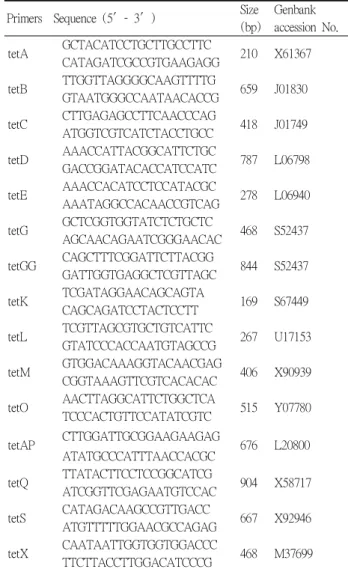
Table 1. PCR primers used in the study Primers Sequence (5 - 3 )′ ′ Size
(bp)
Genbank accession No.
tetA GCTACATCCTGCTTGCCTTC
210 X61367 CATAGATCGCCGTGAAGAGG
tetB TTGGTTAGGGGCAAGTTTTG
659 J01830 GTAATGGGCCAATAACACCG
tetC CTTGAGAGCCTTCAACCCAG
418 J01749 ATGGTCGTCATCTACCTGCC
tetD AAACCATTACGGCATTCTGC
787 L06798 GACCGGATACACCATCCATC
tetE AAACCACATCCTCCATACGC
278 L06940 AAATAGGCCACAACCGTCAG
tetG GCTCGGTGGTATCTCTGCTC
468 S52437 AGCAACAGAATCGGGAACAC
tetGG CAGCTTTCGGATTCTTACGG
844 S52437 GATTGGTGAGGCTCGTTAGC
tetK TCGATAGGAACAGCAGTA
169 S67449 CAGCAGATCCTACTCCTT
tetL TCGTTAGCGTGCTGTCATTC
267 U17153 GTATCCCACCAATGTAGCCG
tetM GTGGACAAAGGTACAACGAG
406 X90939 CGGTAAAGTTCGTCACACAC
tetO AACTTAGGCATTCTGGCTCA
515 Y07780 TCCCACTGTTCCATATCGTC
tetAP CTTGGATTGCGGAAGAAGAG
676 L20800 ATATGCCCATTTAACCACGC
tetQ TTATACTTCCTCCGGCATCG
904 X58717 ATCGGTTCGAGAATGTCCAC
tetS CATAGACAAGCCGTTGACC
667 X92946 ATGTTTTTGGAACGCCAGAG
tetX CAATAATTGGTGGTGGACCC
468 M37699 TTCTTACCTTGGACATCCCG
반응 시킨 후72℃에서 분간 마무리 반응을 하였다 각5 . 산물은 2% agarose gel에서 전기영동하여 ethidium 로 염색한 후 를 확인하였다 본 실험에 사용
bromide band .
한 primer들은Table 1에 정리하였다.
결 과
균 분리와 항균제 감수성 검사 1)
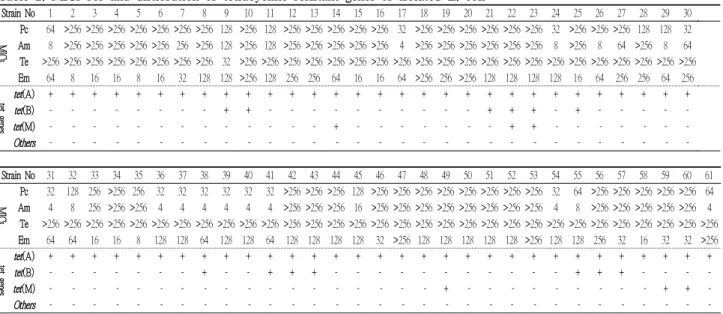
돼지의 분변에서 분리한Te 내성균은 모두61주였으며, 이들 균은 모두Escherichia coli (E. coli 였다 이 균들의) . 항균제 감수성은Pc에 대한 최소발육저지 농도(minimal
는 이었으며
inhibitory concentration, MIC) 32->256 ㎍ ㎖/ ,
은 은 은
Am 4->256 ㎍ ㎖/ , Te 32->256 ㎍ ㎖/ , Em 8->256 이었다 그리고 각 항균제에 대한
/ (Table 2). MIC
㎍ ㎖ 50과
MIC90은Pc, Am, Te는 모두>256㎍ ㎖/ 였으며, Em은128, 이었다
256 ㎍ ㎖/ .
내성 유전자 분포 2) Tetracycline
각 균에 대한Te내성 유전자를 분석하기 위해PCR을 수 행한 결과 모든 균들이tet(A) 유전자를 갖고 있었으며, 균주9, 10, 21, 22, 23, 25, 38, 41-43, 55-57은 tet(B) ,를 균주14, 22, 23, 49, 59, 60은tet(M)유전자를 추가로 갖 고 있었고(Fig.1),균주22는tet(A), tet(B), tet(M) 모두를 갖고 있었다(Table 2, 3, 4).그 이외의Te내성 유전자는 관찰되지 않았다.
Table 4. MICs for and distribution oftet(A) andtet(M) genes andtet(A), tet(B), and tet(M) genes of isolated E. coli
tet genes tet(A)+tet(M) tet(A)+tet(B)+tet(M)
Strain No 14 49 59 60 22 23
A nti bioti cs
Pc >256 >256 >256 >256 >256 >256 Am >256 >256 >256 >256 >256 >256 Te >256 >256 >256 >256 >256 >256
Em 64 128 32 32 128 128
Pc: Penicillin, Am: Ampicillin, Te: Tetracycline, Em: Erythromycin
Fig. 1. PCR of tetracycline resistant tet(M) gene in E. coli.
M: 100 bp DNA ladder Table 2. MICs for and distribution of tetracycline resistant genes of isolatedE. coli
Strain No 1 2 3 4 5 6 7 8 9 10 11 12 13 14 15 16 17 18 19 20 21 22 23 24 25 26 27 28 29 30
MI Cs
Pc 64 >256 >256 >256 >256 >256 >256 >256 128 >256 128 >256 >256 >256 >256 >256 32 >256 >256 >256 >256 >256 >256 32 >256 >256 >256 128 128 32 Am 8 >256 >256 >256 >256 >256 256 >256 128 >256 128 >256 >256 >256 >256 >256 4 >256 >256 >256 >256 >256 >256 8 >256 8 64 >256 8 64 Te >256 >256 >256 >256 >256 >256 >256 >256 32 >256 >256 >256 >256 >256 >256 >256 >256 >256 >256 >256 >256 >256 >256 >256 >256 >256 >256 >256 >256 >256 Em 64 8 16 16 8 16 32 128 128 >256 128 256 256 64 16 16 64 >256 256 >256 128 128 128 128 16 64 256 256 64 256
te t ge nes
tet
(A) + + + + + + + + + + + + + + + + + + + + + + + + + + + + + +tet
(B) - - - - - - - - + + - - - - - - - - - - + + + - + - - - - -tet
(M) --
--
--
--
--
--
- + --
--
--
- + +-
--
--
- -Others
--
--
--
--
--
--
--
- --
--
--
--
--
--
--
-Strain No 31 32 33 34 35 36 37 38 39 40 41 42 43 44 45 46 47 48 49 50 51 52 53 54 55 56 57 58 59 60 61
MI Cs
Pc 32 128 256 >256 256 32 32 32 32 32 32 >256 >256 >256 128 >256 >256 >256 >256 >256 >256 >256 >256 32 64 >256 >256 >256 >256 >256 64 Am 4 8 256 >256 >256 4 4 4 4 4 4 >256 >256 >256 16 >256 >256 >256 >256 >256 >256 >256 >256 4 8 >256 >256 >256 >256 >256 4 Te >256 >256 >256 >256 >256 >256 >256 >256 >256 >256 >256 >256 >256 >256 >256 >256 >256 >256 >256 >256 >256 >256 >256 >256 >256 >256 >256 >256 >256 >256 >256 Em 64 64 16 16 8 128 128 64 128 128 64 128 128 128 128 32 >256 128 128 128 128 128 >256 128 128 256 32 16 32 32 >256
te t ge nes
tet
(A) + + + + + + + + + + + + + + + + + + + + + + + + + + + + + + +tet
(B) - - - - - - - + - - + + + - - - - - - - - - - - + + + - - - -tet
(M) --
--
--
--
--
--
--
--
--
+-
--
--
--
--
+ + -Others
--
--
--
--
--
--
--
- --
--
--
--
--
--
--
- -Pc: Penicillin, Am: Ampicillin, Te: Tetracycline, Em: Erythromycin
Table 3. MICs for and distribution of tet(A) and tet(B) genes of isolated E. coli
tet genes tet(A)+tet(B)
Strain No 9 10 21 25 38 41 42 43 55 56 57
A nti bioti cs
Pc 128 >256 >256 >256 32 32 >256 >256 64 >256 >256 Am 128 >256 >256 >256 4 4 >256 >256 8 >256 >256 Te 32 >256 >256 >256 >256 >256 >256 >256 >256 >256 >256 Em 128 >256 128 16 64 64 128 128 128 256 32 Pc: Penicillin, Am: Ampicillin, Te: Tetracycline, Em: Erythromycin
고 찰
본 실험에서 축산 농가의 돼지로부터 분리한 균주61주 는 모두E. coli였으며 이 균들의, Pc, Am, Te, Em에 대한
를 측정하였더니 에 대한 는
MIC Pc MIC 32 - >256 ㎍ ㎖/ 이었으며, Am은4 - >256㎍ ㎖/ , Em은8 - >256㎍ ㎖/ 이 었고, Te는 한 균주(32 ㎍ ㎖/ )를 제외하고는 모두 >256
이었는데 는 이면 내성으로 판정하기
/ Te 16 /
㎍ ㎖ ≥ ㎍ ㎖
때문에 모든 균이 내성균으로써 가장 높은 내성률을 나 타내었는데 이것은Te제제가 사료첨가용으로 가장 많이 사용되었기 때문으로 생각된다 이러한 결과는 돼지의. 분변에서 분리한E. coli로Te에 대한 항균제 감수성을 시 험한 결과 최성화 등16)은 모든 균이(100%)내성을 나타 내었다고 보고와는 일치하였으며, Rosengren 등17)은
등
66.8%, Kozak 18)은83.2%라고 하여 다소 차이가 있었 고 그 외, Ashish 등19)은 젖소에서42%, Velusamy등20)은 축산농가 흙에서 64.3%, Andrew 등21)은 닭에서 47%의 내성균이 출현하였다고 하였다 이러한 차이는 지역
Te .
별 항균제 사용량 그리고 시료 채취 대상에 따라 출현율, 의 차이가 나는 것으로 생각된다 그리고 각 항균제에 대. 한 MIC50과 MIC90은Pc, Am, Te는 모두>256 ㎍ ㎖/ 였으 며, Em은128, 256 ㎍ ㎖/ 로써 다른 항균제보다Em이 좀 더 효과적인 항균제임을 알 수 있었다.
내성과 관련이 있는
Te tet 유전자의 보유 현황은 분리된 모든 균들이 tet(A) 유전자(100%)를 갖고 있었으며, tet(B)유전자는 총61주중13균주(21.3%), tet(M)은 균6 주(9.8%)가 갖고 있었고 다른 종류의 유전자는 관찰되지, 않았다. tet(A)와 tet(B)를 같이 갖고 있는 균은 13균주 (21.3%), tet(A)와 tet(M)을 같이 갖고 있는 균은 균주4
였으며
(6.6%) ,tet(A), tet(B), tet(M)모두 갖고 있는 균도 균주 가 있었다 내성유전자를 개 이상 갖고 있
2 (3.3%) . 2
는 균이라도Te나 다른 항균제의MIC에는 별 다른 영향 을 주지 않는 것으로 관찰되며, Te는 256 ㎍ ㎖/ 이상의 더 높은 농도에서 내성유전자와MIC와의 관계를 비교할 필요가 있다고 생각한다(Table 3, 4). 내성유전자의 결과 를 보면 본 연구에서 분리된Te내성E. coli들은 기본적 으로 세포막 연관 단백질을 만들어 균체 내로 들어온 Te 를 외부로 잘 배출되게 하는 유전자인tet(A)와tet(B)에 의해 내성을 갖는 것으로 생각되며 일부의 균은, Te의 표 적물인 리보솜을 보호하는 단백질을 만들어 내성을 갖게 하는 tet(M) 유전자를 갖고 있었다 이러한 결과는.
등
Andrew 21)이 사람을 비롯한 여러 동물에서 분리한 Te
내성E. coli가 주로 tet(B) (63%)와tet(A) (35%) 유전자 를 보유하고 있었고 그 외, tet(C), tet(D), tet(M)유전자 도 갖고 있었으며, 2종류 이상의 내성 유전자를 갖고 있 더라도MIC와는 관계가 없음을 보고한 것이나,E. coli에 서 아주 드물게 tet(M) 유전자가 발견된다는 보고와는 유의한 결과였다. Maynard 등22)은 돼지에서 분리한 Enterotoxigenic Escherichia coli (ETEC) serotype 주 중 가 내성이었으며 이 균들은 O149:K91 112 93% Te ,
tet(A), tet(B), tet(C) 유전자를 보유하고 있었고, tet(B) 유전자의 보유율이 80%로 가장 높았다고 보고 하였고,
등
M nicaó 23)은 돼지에서 분리한 Actinobacillus pleuropneumoniae는 주로 tet(B) 유전자를 갖고 있었고
그 외 등도 갖고 있었다고
(70%), tet(O), tet(H), tet(L)
보고하였다 이러한 결과는 본 연구에서. tet(A)유전자가 100%, tet(B)가 21.3%인 것과는 차이를 보였으며 이러, 한 차이가 지역적인 차이인지는 좀 더 연구해 볼 필요가 있다고 생각된다. Moussa 등24)은 닭으로부터 분리한 Te 내성균 104 균주 중 tet(A) 유전자는 76 균주(73.1%), tet(B)유전자는59균주(56.7%)가 갖고 있었고,tet(A)와 tet(B) 유전자를 같이 갖고 있는 균주는 31균주(29.8%) 였다고 보고하였다 그리고. Ashish등19)은 젖소에서 분리 한Te 내성E. coli는7%가tet(A)를 갖고 있으며, 93%가 tet(B)유전자를 갖고 있었으며, Margareta등25)은 사람에 서 분리한 E. coli에서 tet(A)는 25.6%, tet(B)는 32.2%, tet(A)와tet(B)를 같이 갖고 있는 균은3.5%였다고 보고 하였다. Chopra등15), Roberts26)가 균의 종류에 따라 갖고 있는Te 내성 유전자가 다르다고 보고한 것과 같이 돼지 에서도 분리균의 종류에 따라 또 닭 소 사람 등과 같이, , , 분리 대상에 따라 같은 종류의 균이라 하더라도 보유하 고 있는 내성 유전자가 다를 수 있다 본 연구는 돼지에. 서 분리한E. coli의Te내성 유전자 보유현황을 관찰하였 는데 앞으로는 사람을 비롯한 다른 동물에서의Te 내성 균에 관한 연구나, E. coli에서 아주 드물게 검출되는 tet(M)유전자에 관한 연구를 좀 더 깊이 있게 진행할 필 요가 있다고 생각하며 다른 항균제제에 대한 내성균의, 출현 양상과 내성기전에 관한 연구가 지속적으로 이루어 져야 할 것으로 생각한다.
결 론
돼지에서 분리한E. coli61주 모든 균이Te에 내성을 갖
는 것으로 확인되었다 이 균들은 모두. 15종류의Te 내 성유전자 중 개 이상의 유전자를 갖고 있었고 다른 종1 , 류의 유전자는 관찰되지 않았다 그러나 개 이상의 내성. 1 유전자를 갖고 있더라도Te 내성도를 더 높여주지는 않 았다.
참고문헌
1) Hammerum AM, Heuer OE, Lester CH, Agerso Y, Seyfarth AM, Emborg HD, Frimodt-Moller N, Monnet DL : Comment on: withdrawal of growth-promoting antibiotics in Europe and its effects in relation to human health. Int J Antimicrob Agents 30:466-468, 2007
2) Giguere S, Prescott JF, Baggot JD, Walker RD, Dowling PM : Antimicrobial therapy in veterinary medicine, 4th ed, Iowa, Blackwell publishing, 2006, pp389-404
3) Angulo FJ, Baker NL, Olsen SJ, Anderson A, Barrett TJ : Antimicrobial use in agriculture: controlling the transfer of antimicrobial resistance to humans. Semin Pediatr Infect Dis 15:78-85, 2004
4) Cox LA, Popken DA : Quantifying potential human health impacts of animal antibiotic use: enrofloxacin and macrolides in chickens. Risk Anal 26:135-146, 2006
5) Besser TE, Goldoft M, Pritchett LC, Khakhria R, Hancock DD, Rice DH, Gay JM, Johnson W, Gay CC : Multi-resistant Salmonella typhimurium DT104 infections of humans and domestic animal in the Pacific northwest of the United States.
Epidemiol Infect 124:193-200, 2000
6) Donabedian SM, Thal LA, Hershberger E, Perri MB, Chow JW, Bartlett P, Jones R, Joyce K, Rossiter S, Gay K, Johnson J, Mackinson C, DeBess E, Madden J, Angulo F, Zervos MJ : Molecular characterization of gentamicin-resistant enterococci in the United States: evidence of spread from animals to humans through food. J Clin Microbiol 41:1109-1113, 2003
7) Holmberg SD, Wells JG, Cohen ML : Animal-to-man transmission of antimicrobial resistant Salmonella : investigations of U.S. outbreaks, 1971-1983. Science 225:833-835, 1984
8) Spika JS, Waterman SH, Soo Hoo GW, Louis MES, Pacer RE, JamesSM, Bissett ML, Mayer LW, Chiu JY, Hall B, Green K,
Potter ME, Cohen ML, Blake PA :
Chloramphenicol-resistant Salmonella newport traced through hamburger to dairy farms. N Engl J Med 316:565-570, 1987 9) Endtz HP, Ruijs GJ, van Klingeren B, Jansen WH, Van der Reyden T, Mouton RP : Quinolone resistance in Campylobacter isolated from man and poultry following the introduction of fluoroquinolones in veterinary medicine. J Antimicrob Chemother 27:199-208, 1991
10) McDermott PF, Zhao S, Wagner DD, Simjee S, Walker RD, White DG : The food safety perspective of antibiotic resistance. Animal Biotech 13:71-84, 2002
11) Kan CA, Petz M : Residues of veterinary drugs in eggs and
their distribution between yolk and white. J Agric Food Chem 48:6397-6403, 2000
12) Mariano V, McCrindle CME, Cenci-Goga B, Picard JA : Case-control study to determine whether river water can spread tetracycline resistance to unexposed impala (Aepyceros melampus) in Kruger National Park (South Africa). Appl Environ Microbiol 75:113-118, 2009
13) Sengelov G, Agerso Y, Halling-Sorensen B, Baloda SB, Andersen JS, Jensen LB : Bacterial antibiotic resistance levels in Danish farmland as a result of treatment with pig manure slurry. Environ Int 28: 587-595, 2003
14) Bibbal D, Dupouy V, Pr re MF, Toutain PL, Bousquet-M louè é : Relateness of Escherichia coli strains with different susceptibility phenotypes isolated from swine feces during ampicillin treatment. Appl Environ Microbiol 75:2999-3006, 2009
15) Chopra I, Roberts M : Tetracycline antibiotics: Mode of action, applications, molecular biology, and epidemiology of bacterial resistance. Microbiol Mol Biol Rev 65:232-260, 2001 최성화 이영주 김봉환 김기석 박청규 배동화 조재근 김
16) , , , , , , ,
종완 김병한 강민수 양돈 환경유래, , : Escherichia coli의 항 균제 내성 및 유전적 특성. J Bacteriol Virol 36:159-165, 2006
17) Rosengren LB, Waldner CL, Reid-Smith RJ, Checkley SL, McFall ME, Raji A : Can Antimicrobial resistance of fecalć Escherichia coli isolated from grow-finish pigs in 20 herds in Alberta and Saskatchewan. J Vet Res 72(2):160-167, 2008
18) Kozak GK, Boerlin P, Janecko N, Reid-Smith RJ, Claire Jardine1 : Antimicrobial resistance in Escherichia coli isolates from swine and wild small mammals in the proximity of swine farms and in natural environments in Ontario, Canada.
Appl Environ Microbiol 75:559-566, 2009
19) Ashish AS, Narasimha VH, Beth AS, Sarah CD, Brenda CL, Stephen JK, Bhushan MJ : Antimicrobial-resistant enteric bacteria from dairy cattle. Appl Environ Microbiol 73:156-163, 2007
20) Velusamy S, Hyang-Mi N, Ashish AS, Susan IH, Lien TN, Stephen PO : Distribution of tetracycline and streptomycin resistance genes and class 1 integrons in Enterobacteriaceae isolated from dairy and nondairy farm soils. Microb Ecol 55:184-193, 2008
21) Andrew B, Nir S, Michael JS : Frequency and distribution of tetracycline resistance genes in genetically diverse, nonselected, and nonclinical Escherichia coli strains isolated from diverse human and animal sources. Appl Environ Microbiol 70:2503-2597, 2004
22) Maynard C, Fairbrother JM, Bekal S, Sanschagrin F, Levesque RC, Brousseau R, Masson L, Larivi re S, Harel1 Jè : Antimicrobial resistance genes in Enterotoxigenic Escherichia coli O149:K91 isolates obtained over a 23-year period from pigs Appl Environ Microbiol 47:3214-3221, 2003 23) M nica B, C sar BG,ó é El as FR, Marilyn CR, Jes s N :í ú Distribution of tetracycline resistance genes in Actinobacillus pleuropneumoniae isolates from Spain. Antimicrob Agents Chemother 50:702-708, 2006
24) Moussa SD, Fred GS, Fatoumata D, Jane P, Luke M, Roland
B, Claudie B, Pascal D, Susan B, Brent JS, Edward T : Impact of feed supplementation with antimicrobial agents on growth performance of broiler chickens, Clostridium perfringens and Enterococcus counts, and antibiotic resistance phenotypes and distribution of antimicrobial resistance determinants in Escherichia coli isolates. Appl Environ Microbiol 73:6566-6576, 2007
25) Margareta T, Peter JP, Anita YMH, Mark O, Stanley M, Karen C, Patricia AB, Jones CH : Occurrence of tetracycline resistance genes among Escherichia coli isolates from the phase 3 clinical trials for tigecycline. Antimicrob Agents Chemother 51:3205-3211, 2007
26) Roberts MC : Update on acquired tetracycline resistance genes. FEMS Microbiol Lett 245:195-203, 2005