ORIGINAL ARTICLE
J Korean Surg Soc 2011;81:96-103
DOI: 10.4174/jkss.2011.81.2.96
JKSS
Journal of the Korean Surgical Society pISSN 2233-7903ㆍeISSN 2093-0488
Received October 6, 2010, Accepted June 9, 2011 Correspondence to: Han-Kwang Yang
Department of Surgery and Cancer Research Institute, Seoul National University College of Medicine, 28 Yeongeon-dong, Jongno-gu, Seoul 110-799, Korea
Tel: +82-2-2072-3797, Fax: +82-2-3672-0042, E-mail: [email protected]
*Recently moved to the Department of Surgery, Gyeongsang National University Hospital, Jinju, Korea
cc Journal of the Korean Surgical Society is an Open Access Journal. All articles are distributed under the terms of the Creative Commons Attribution Non-Commercial License (http://creativecommons.org/licenses/by-nc/3.0/) which permits unrestricted non-commercial use, distribution, and reproduction in any medium, provided the original work is properly cited.
Is the critical pathway effective for the treatment of gastric cancer?
Sang-Ho Jeong
1,*, Moon-Won Yoo
2, Hong-Man Yoon
1, Hyuk-Joon Lee
1,3, Hye Sung Ahn
1, Jae-Jin Cho
1, Hyung-Ho Kim
1, Kuhn-Uk Lee
1, Han-Kwang Yang
1,31Department of Surgery, Seoul National University College of Medicine, 2Department of Surgery, Konkuk University Hospital,
3Cancer Research Institute, Seoul National University College of Medicine, Seoul, Korea
Purpose: The present study was conducted to investigate the low compliance rate of the critical pathway (CP) and whether CP is effective for treatment of gastric cancer in radical gastrectomy. Methods: The medical records of 631 patients who had undergone radical gastrectomy with D2 lymph node dissection were reviewed. This study compared data from patients in early gastric cancer (EGC) and advanced gastric cancer (AGC) groups, which were further subdivided into general care (non-CP) and CP groups. Results: The mean length of preoperative hospital stays were significantly different between the EGC and AGC patients (P < 0.05). However, there was no difference in the mean length of postoperative hospital stays be- tween non-CP and CP groups among either EGC patients or AGC patients (P > 0.05). The postoperative and total cost of hos- pitalization was not statistically different between either of the groups (P > 0.05); however, the mean preoperative costs were significantly different (P < 0.05). Conclusion: We conclude that use of the CP following gastrectomy is unnecessary. To de- crease the length of hospital stay and associated costs, preoperative examination and consultation should be performed be- fore admission.
Key Words: Critical pathways, Fast-track, Stomach neoplasms, Gastrectomy
INTRODUCTION
The critical pathway (CP), also known as the clinical path or pathway, is a set of guidelines for patient care that outlines the objectives of the patient care plan along with the corresponding ideal sequence and timing of physician and staff action for achieving these goals with optimal effi- ciency [1,2]. The use of the CP is intended to allow for the standardization of patient management, as well as im-
prove the quality and efficiency of patient care. The term
‘clinical pathway’ was coined in 1985 by Zander et al. at the New England Medical Center. The CP is used for the treat- ment of many medical conditions across the continuum of care [3-5]. Some studies have found that the critical path- ways can lead to a decrease in postoperative length of stay and hospital charges, such as in colorectal [6,7], liver [8], vascular [9,10], obstetric [11], urologic [12,13], and pedia- tric procedures [14].
The CP was first implemented at Our Hospital in September 2004, and the first use of electric medical record (EMR)-based CP was for the management of cataract sur- gery patients in the Department of Ophthalmology in August 2005. Since then, six CPs have been developed at the Department of Surgery for use in the treatment of stomach cancer, breast cancer, thyroid diseases and be- nign gallbladder diseases. The CPs that were developed include procedures such as gastrectomy, routine mastec- tomy, mastectomy with neoadjuvant chemotherapy, total thyroidectomy, subtotal thyroidectomy and laparoscopic cholecystectomy. Additionally, EMR-based critical path- ways were developed and applied in July 2006 to provide care for patients following gastrectomy for gastric cancer.
However, compliance with the CP developed for treat- ment of stomach cancer was lower than for other diseases.
Therefore, we investigated the low compliance rate of the CP for stomach cancer and analyzed the effectiveness of the CP for reducing the length of hospital stay and asso- ciated care costs.
METHODS
The medical records of 631 consecutive patients who had undergone radical gastrectomy with D2 lymph node dissection between December 1st, 2006 and November 30th, 2007 were reviewed. This included patient character- istics and data from hospital records (sex, age, length of hospital stay and tumor, node, metastasis [TNM] stages), as well as information on the specific operative methods used (resection, combined resection and reconstruction).
The patients were divided into early gastric cancer (EGC) and advanced gastric cancer (AGC) groups for data com- parison, based on differences between the two groups in the range of lymph node dissection, length of post- operative hospital stay and postoperative complications.
Each group was further subdivided into a general care (non-CP) group and a critical pathway (CP) group.
To compare the effects of application of the CP to the management of different cases, four diseases were ana- lyzed: stomach cancer, breast cancer, thyroid disease and benign gallbladder disease. The analysis included 495 cas-
es of mastectomy, 322 cases of thyroidectomy, 371 cases of laparoscopic cholecystectomy, and 380 cases of gas- trectomy during the period between May and September of 2007.
Inclusion and exclusion criteria for CP
Patients included in the study were those diagnosed with gastric adenocarcinoma and those with potentially curative diseases. Exclusion criteria were laparoscopic surgery, emergency surgery, concomitant malignancies, palliative surgery, severe comorbidities, and severe mal- nutrition (American Society of Anesthesiologists grading grades 4).
Perioperative management of radical gastrectomy for gastric cancer
Non-CP groups
Patients were admitted three to four days before surgery. Preoperative laboratory tests and diagnostic mo- dalities (endoscopy and computed tomography [CT] scan) were performed in the outpatient clinic. After the patients were admitted, the presence of concomitant diseases was assessed and consultation for operative safety was obtained. The patients underwent bowel preparation at preoperative day one, and antibiotics (intravenous Cefa- zolin and Gentamicin) were administered before surgery and on the first postoperative day. The nasogastric tube was removed when the patient passed flatus and began taking sips of water. In the absence of complications after the ingestion of water, the patients were started on a semi-fluid diet. The patients were maintained on a semi- fluid diet for a minimum of two days, after which time they were placed on a soft brand diet. The closed suction drain was removed after water was ingested without complications. After confirmation in the pathology report, the patients were discharged from the hospital.
CP groups
Patients were assessed using preoperative laboratory tests and diagnostic modalities (endoscopy and CT scan);
concomitant diseases were also investigated and con- sultation for operative safety was obtained at the out-
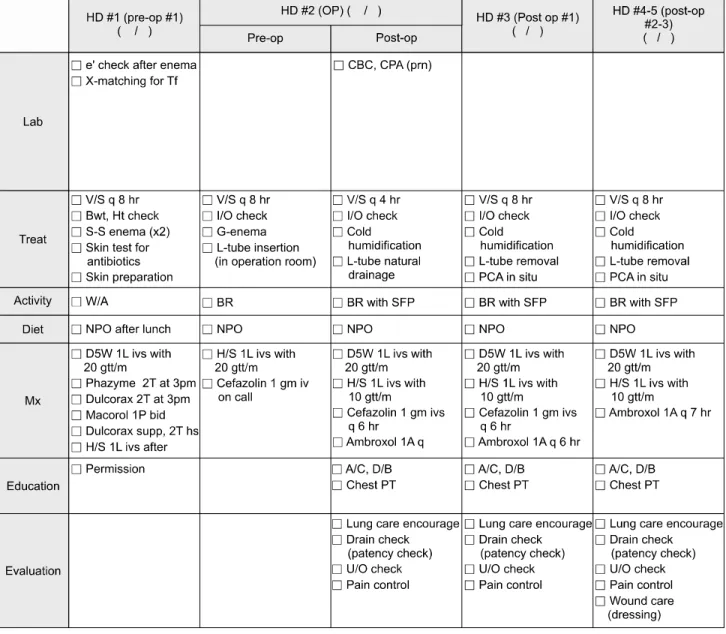
Fig. 1. Critical pathway for hospital staff. HD, hospital day; Pre-op, preoperative; OP, operation; e’, electrolyte; X matching for Tf, cross matching for transfusion; CBC, complete blood cell count; CPA, Chest PA; v/s, vital sign; Bwt, body weight ; Ht, height; I/O, input and output;
L-tube, levin tube; PCA, patient controlled analgesia; W/A, ward ambulation; BR, bed rest; SFP, semi-Fowlers position; A/C, active cough;
D/B, deep breathing.
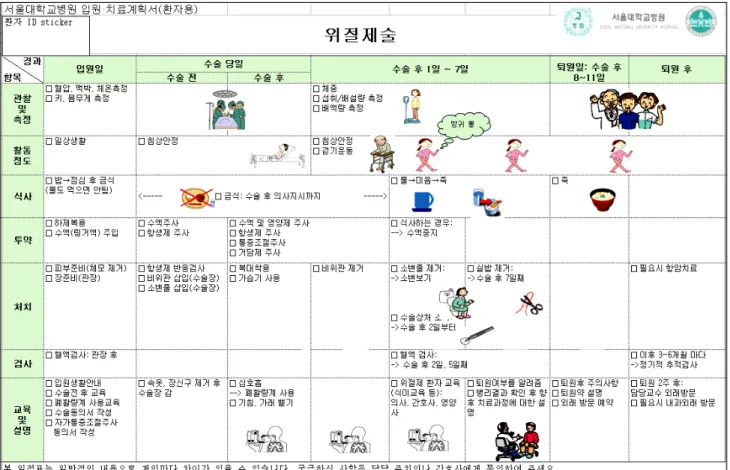
patient clinic before admission. The patients were admit- ted two days before surgery, at which time the operative safety was checked again. Following surgery, the nasogas- tric tube was removed on the first postoperative day, and sips of water were administered to the patients on the third postoperative day irrespective of passing flatus. If water was ingested without complication, the patients were started early on a semi-fluid diet on the fourth post- operative day, and the closed suction drain was removed.
In the absence of specific complications or complaints, the
patients were discharged from the hospital on the seventh to eighth postoperative day (Figs. 1, 2).
Surgical procedure
All cases underwent either a radical subtotal gas- trectomy with gastroduodenostomy (Billroth I) or a gas- trojejunostomy (Billroth II). Roux-en-Y esophagojeju- nostomy with or without a Paulino pouch was performed after total gastrectomy. D2 lymph node dissection with cu- rative intent was performed on all patients [15]. For tu-
Fig. 2. Critical pathway for patient.
mors located in the lower third of the stomach, the dou- ble-stapling Billroth I method was used [16]. However, if the tumor extended to the upper part of the stomach and was located close to the pylorus, or if there was a scar at the duodenal bulb, Billroth II gastrojejunostomy was per- formed. Billroth II anastomosis was generally preferred when tumor invasion extended beyond the subserosa.
Application and termination of CP
The designation of cases to be managed by the CP and termination of the CP were determined by the residents in charge of the patients. The causes for termination of the CP were classified according to four criteria: 1) additional medical care (laboratory tests) or workup needed due to medical problems (unexpected abdominal pain or dis- comfort, fever, etc.), 2) postoperative complications (ana- stomotic leakage, fluid collection, wound problems, in- testinal obstruction, etc.), 3) non-compliance of the pa- tients (delayed discharge, etc.), and 4) additional oper-
ations performed during gastrectomy (hysterectomy, etc.).
Statistical analyses
Statistical analyses were performed using SPSS ver. 12.0 (SPSS Inc., Chicago, IL, USA). The data are presented as means ± SD. For validation of significance, the paired t-test and the χ2 test were applied. Data were considered to be statistically significant if the probability was less than 5%.
RESULTS
Patient characteristics
The mean age of the patients was 59.2 ± 12.1, and the male to female ratio was 2.1:1. The most frequently per- formed surgical procedure was radical subtotal gas- trectomy (476, 75.4%), followed by radical total gas- trectomy (121, 19.2%), proximal gastrectomy (22, 3.5%), and pylorus preserving gastrectomy. A combined multi-
Table 2. Operative morbidities between the non-CP and CP groups
EGC AGC
Non-CP CP group P-value Non-CP CP group P-value
Leakage 2 (1.1) 2 (1.8) 0.64 3 (1.4) 2 (1.8) 1.0
Fluid collection 6 (3.2) 6 (5.1) 0.54 25 (11.5) 4 (3.6) 0.02
Wound problem 8 (4.3) 9 (7.6) 0.30 4 (1.8) 4 (3.6) 0.44
Postoperative bleeding 2 (1.1) 1 (0.8) 1.0 1 (0.5) 1 (0.9) 1.0
Ileus 2 (1.1) 5 (4.2) 0.11 5 (2.3) 4 (3.6) 0.49
Stenosis 4 (2.2) 1 (0.8) 0.65 6 (2.8) 2 (1.8) 0.72
Pulmonary problem 4 (2.2) 5 (4.2) 0.31 11 (5.0) 1 (0.9) 0.06
Others 3 (1.6) 3 (2.5) 0.68 13 (6.0) 2 (1.8) 0.10
Total complications 24 (13) 24 (20.3) 0.10 52 (23.9) 18 (16.4) 0.15
Values are presented as number (%).
EGC, early gastric cancer group; AGC, advance gastric cancer group; CP, critical pathway.
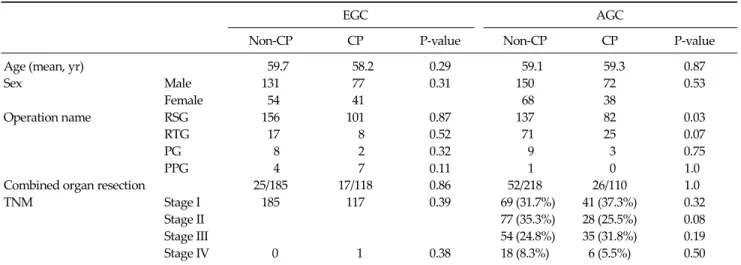
Table 1. Patient characteristics
EGC AGC
Non-CP CP P-value Non-CP CP P-value
Age (mean, yr) 59.7 58.2 0.29 59.1 59.3 0.87
Sex Male 131 77 0.31 150 72 0.53
Female 54 41 68 38
Operation name RSG 156 101 0.87 137 82 0.03
RTG 17 8 0.52 71 25 0.07
PG 8 2 0.32 9 3 0.75
PPG 4 7 0.11 1 0 1.0
Combined organ resection 25/185 17/118 0.86 52/218 26/110 1.0
TNM Stage I 185 117 0.39 69 (31.7%) 41 (37.3%) 0.32
Stage II 77 (35.3%) 28 (25.5%) 0.08
Stage III 54 (24.8%) 35 (31.8%) 0.19
Stage IV 0 1 0.38 18 (8.3%) 6 (5.5%) 0.50
EGC, early gastric cancer group; AGC, advance gastric cancer group; CP, critical pathway; RSG, radical subtotal gastrectomy; RTG, radical total gastrectomy; PG, proximal gastrectomy; PPG, pylorus preserving gastrectomy; TNM, tumor, node, metastasis.
organ resection was performed on 19% of the patients.
TNM staging classified 65.3% of the cancers at stage I, fol- lowed by 16.6% at stage II, 14.4% at stage III, and 4% at stage IV.
Comparison of non-CP and CP groups in EGC and AGC patients showed no differences between these two groups, except for a higher number of subtotal gastrectomies in the CP group of AGC patients (Table 1).
Comparison of morbidity rate and readmission rate between non-CP and CP groups in EGC and AGC patients
The overall morbidity rate was 18.7%, and there were no significant differences in the morbidity rate between the
non-CP and CP groups in the EGC and AGC patients (P = 0.10 and P = 0.15). In surgical complication assessment, flu- id collection was more frequently noted in the non-CP group than in the CP group in AGC patients (P = 0.02), but there were no significant differences in other compli- cations. Additionally, four patients (1.8%) in the non-CP group and one patient (0.9%) in the CP group in the AGC group required readmission 30 days after surgery, but the difference was not statistically significant (P = 0.66). There were no mortality cases in either group (Table 2).
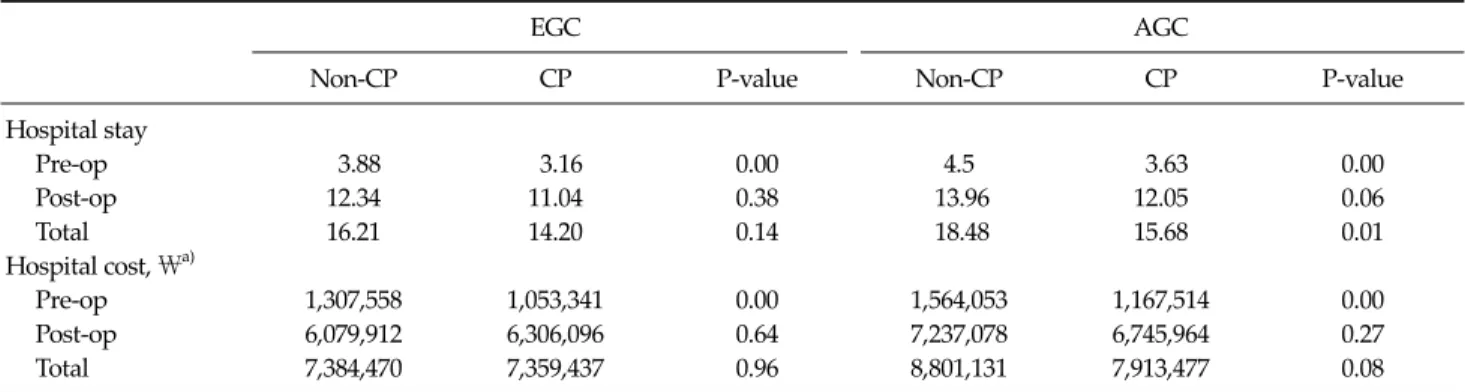
Table 3. Comparison of the mean length of hospital stay between the non-CP, CP groups
EGC AGC
Non-CP CP P-value Non-CP CP P-value
Hospital stay
Pre-op 3.88 3.16 0.00 4.5 3.63 0.00
Post-op 12.34 11.04 0.38 13.96 12.05 0.06
Total 16.21 14.20 0.14 18.48 15.68 0.01
Hospital cost, \a)
Pre-op 1,307,558 1,053,341 0.00 1,564,053 1,167,514 0.00
Post-op 6,079,912 6,306,096 0.64 7,237,078 6,745,964 0.27
Total 7,384,470 7,359,437 0.96 8,801,131 7,913,477 0.08
EGC, early gastric cancer group; AGC, advance gastric cancer group; CP, critical pathway; Pre-op, preoperative; Post-op, postoperative.
a)Korean monetary unit.
Table 4. Termination causes of gastrectomy critical pathway (CP)
Cause of CP termination (%)
Need for additional medical care 52
Postoperative complications 24
Additional unexpected operations 9
Patient non-compliance 4
Non-reported or technical errors 12
Fig. 3. Comparison of application rate, completion rates in four disease groups. La. Cholecystectomy, laparoscopic cholecystec- tomy.
Length of hospital stay and cost comparison between non-CP and CP groups in EGC and AGC patients
The mean length of preoperative hospital stays were significantly different between the EGC and AGC patients (P < 0.05). The mean length of total hospital stays was 18.4 days in the non-CP group and 15.6 days in the CP group in AGC patients, and this difference was statistically sig- nificant (P = 0.01). However, there was no difference in the mean length of postoperative hospital stays between non-CP and CP groups in either EGC patients or AGC pa- tients (P > 0.05).
The postoperative and total cost of hospitalization was not statistically different between either of the groups (P
> 0.05); however, the mean preoperative costs were sig- nificantly different (P < 0.05, Table 3).
Termination causes of gastrectomy CP
The most common cause of the termination of CP in gas- trectomy was the need for additional medical care (52%), followed by the incidence of postoperative complications (24%), performance of additional unexpected operations (9%), patient non-compliance (4%), and non-reported or
technical errors (12%) (Table 4).
Comparison of CP application and completion rate
The application rate of the CP in gastrectomy was 43%
and the completion rate was 19%. The CP was applied in cases of mastectomy, thyroidectomy and laparoscopic cholecystectomy at rates of 99%, 98% and 53%, respec- tively. The completion rates for CP in cases of mastectomy, thyroidectomy and laparoscopic cholecystectomy were 58%, 45% and 53%, respectively (Fig. 3).
DISCUSSION
Hospitals are under pressure to reduce costs while
maintaining or increasing the quality of care. Develop- ment of the CP began with the introduction of diag- nosis-related groups and the prospective payment system in the United States, which was implemented to improve hospital management through measures such as short- ening the length of hospital stay, reducing the costs of hos- pitalization, and increasing the efficiency of nursing care [17].
Introduction of the CP helped streamline the post- operative care of surgical patients and reduced the cost and length of hospital stay for patients undergoing gen- eral surgical procedures [6,17,18]. However, studies have drawn conflicting conclusions on the efficacy of the CP. In some studies, the success of critical pathways may reflect patient selection bias, and may be the result of clinical
‘cherry picking’ rather than the effect of pathway manage- ment [19]. A study of 32 Connecticut hospitals [20], as well as other studies of medical and surgical pathways [1,21], have reported that critical pathways do not reduce the length of hospital stay more than the pre-pathway secular trends in comparable local hospitals with similarly man- aged care pressures. The results of the present study show that, while the mean preoperative hospital stay decreased in EGC and AGC patients, there were no differences in the length of postoperative hospital stay and hospital cost.
The study also showed that a preoperative workup at an outpatient clinic contributed significantly to shortening the length of preoperative hospital stay and reducing the hospital cost. Thus, utilizing preoperative examination and consultation in outpatient clinics would decrease the length of hospital stay and cost without the necessity of implementing the CP for the treatment of gastric cancer.
The completion rate of the CP for gastrectomy patients was only 19%, but the rates for patients undergoing mas- tectomy, thyroidectomy and laparoscopic cholecystec- tomy were 45 to 58%. We conclude that CP is more effec- tive in patients with benign disease or undergoing non- bowel surgery than in those undergoing gastrectomy. This is possibly due to gastrectomy being a major operation of- ten associated with postoperative hemodynamic changes.
In the present study, the most common causes of the termi- nation of CP in gastrectomy patients were the need for ad- ditional medical care and the development of post-
operative complications. Most upper gastrointestinal sur- geries often require additional medical care and incur more postoperative complications compared to benign disease or non-bowel surgery. Therefore, it is possible to encourage the introduction of the CP in upper gastro- intestinal surgery with the acceptance of an additional re- peat orders and the allowance for frequent additional or- ders (ex, complete blood cell count, electrolyte, Chest X-ray) in limited periods. Another cause of no differences of hospital stay is that it is same hospital course between CP group and non-CP group after diet. In the absence of complications after the ingestion of water, patients were started on a semi-fluid diet in both groups. The patients were discharged from the hospital after two days of semi-fluid diet and one day of a soft brand diet. Therefore, our results indicate that the introduction of the CP is not beneficial for the treatment of conditions that require up- per gastrointestinal surgery.
We conclude that the introduction of the CP in cases of gastrectomy is unnecessary. We recommend increased uti- lization of preoperative examination and operative sur- gery consultations for decreasing the length of hospital stay and the associated costs of hospitalization.
CONFLICTS OF INTEREST
No potential conflict of interest relevant to this article was reported.
REFERENCES
1. Pearson SD, Goulart-Fisher D, Lee TH. Critical pathways as a strategy for improving care: problems and potential.
Ann Intern Med 1995;123:941-8.
2. Coffey RJ, Richards JS, Remmert CS, LeRoy SS, Schoville RR, Baldwin PJ. An introduction to critical paths. Qual Manag Health Care 1992;1:45-54.
3. Hindle D, Yazbeck AM. Clinical pathways in 17 European Union countries: a purposive survey. Aust Health Rev 2005;29:94-104.
4. Sermeus W, Depreitere R, De Waele K, Vanhaecht K, Vlayen J. An intruduction to clinical pathways. Brussel:
Federaal Kenniscentrum voor de Gezondheidszorg (KCE);
2005.
5. Zander KS, Bower KA, Etheredge MR. Nursing case man- agement: blueprints for transformation. Boston: New England Medical Center Hospital; 1987.
6. Pritts TA, Nussbaum MS, Flesch LV, Fegelman EJ, Parikh AA, Fischer JE. Implementation of a clinical pathway de- creases length of stay and cost for bowel resection. Ann Surg 1999;230:728-33.
7. Stephen AE, Berger DL. Shortened length of stay and hos- pital cost reduction with implementation of an accelerated clinical care pathway after elective colon resection.
Surgery 2003;133:277-82.
8. Lin DX, Li X, Ye QW, Lin F, Li LL, Zhang QY. Implementa- tion of a Fast-Track clinical pathway decreases post- operative length of stay and hospital charges for liver resection. Cell Biochem Biophys 2011 May 10 [Epub]. DOI:
10.1007/s12013-011-9203-7.
9. Huber TS, Carlton LM, Harward TR, Russin MM, Phillips PT, Nalli BJ, et al. Impact of a clinical pathway for elective infrarenal aortic reconstructions. Ann Surg 1998;227:691-9.
10. Niino T, Hata M, Sezai A, Yoshitake I, Unosawa S, Shimura K, et al. Optimal clinical pathway for the patient with type B acute aortic dissection. Circ J 2009;73:264-8.
11. Santillan A, Govan L, Zahurak ML, Diaz-Montes TP, Giuntoli RL 2nd, Bristow RE. Feasibility and economic im- pact of a clinical pathway for pap test utilization in Gynecologic Oncology practice. Gynecol Oncol 2008;109:
388-93.
12. Koch MO, Smith JA Jr. Influence of patient age and co-mor- bidity on outcome of a collaborative care pathway after radical prostatectomy and cystoprostatectomy. J Urol 1996;
155:1681-4.
13. Leibman BD, Dillioglugil O, Abbas F, Tanli S, Kattan MW, Scardino PT. Impact of a clinical pathway for radical retro-
pubic prostatectomy. Urology 1998;52:94-9.
14. Zand DJ, Brown KM, Lichter-Konecki U, Campbell JK, Salehi V, Chamberlain JM. Effectiveness of a clinical path- way for the emergency treatment of patients with inborn errors of metabolism. Pediatrics 2008;122:1191-5.
15. Park DJ, Lee HJ, Kim HH, Yang HK, Lee KU, Choe KJ.
Predictors of operative morbidity and mortality in gastric cancer surgery. Br J Surg 2005;92:1099-102.
16. Yang HK, Lee HJ, Ahn HS, Yoo MW, Lee IK, Lee KU. Safety of modified double-stapling end-to-end gastroduodeno- stomy in distal subtotal gastrectomy. J Surg Oncol 2007;
96:624-9.
17. Hirasaki S, Tanimizu M, Moriwaki T, Hyodo I, Shinji T, Koide N, et al. Efficacy of clinical pathway for the manage- ment of mucosal gastric carcinoma treated with endo- scopic submucosal dissection using an insulated-tip dia- thermic knife. Intern Med 2004;43:1120-5.
18. Dy SM, Garg PP, Nyberg D, Dawson PB, Pronovost PJ, Morlock L, et al. Are critical pathways effective for re- ducing postoperative length of stay? Med Care 2003;41:
637-48.
19. Wright CD, Wain JC, Grillo HC, Moncure AC, Macaluso SM, Mathisen DJ. Pulmonary lobectomy patient care path- way: a model to control cost and maintain quality. Ann Thorac Surg 1997;64:299-302.
20. Holmboe ES, Meehan TP, Radford MJ, Wang Y, Marciniak TA, Krumholz HM. Use of critical pathways to improve the care of patients with acute myocardial infarction. Am J Med 1999;107:324-31.
21. Pearson SD, Kleefield SF, Soukop JR, Cook EF, Lee TH.
Critical pathways intervention to reduce length of hospital stay. Am J Med 2001;110:175-80.