• 검색 결과가 없습니다.

Traditional Herbal Medicine Yukmijihwang-won Alleviates Reserpine-Induced Pain and Depression-Like Behavior in Mice

N/A
N/A
Protected

Academic year: 2021

Share "Traditional Herbal Medicine Yukmijihwang-won Alleviates Reserpine-Induced Pain and Depression-Like Behavior in Mice"

Copied!
10
0
0

로드 중.... (전체 텍스트 보기)

전체 글

(1)

Traditional Herbal Medicine Yukmijihwang-won Alleviates Reserpine-Induced Pain and Depression-Like Behavior in Mice

Dong-Wook Kang # , Jiyoon Lee* ,# , Jae-Gyun Choi, Jaehyuk Kim, Ju-Yeon Kim*, Jin Bong Park, In Chul Jung*, Hyun-Woo Kim

Department of Physiology and Medical Science, College of Medicine and Brain Research Institute, Chungnam National University,

*Department of Neuropsychiatry, Dunsan Korean Medicine Hospital of Daejeon University

Received: December 1, 2020 Revised: December 11, 2020 Accepted: December 18, 2020

Objectives: Yukmijihwang-won (Liuweidihuang-wan in Chinese) is a frequently used medicinal herbal formula. It is used as Yin tonic in Korea and China to recover patients from Yin deficiency. However, the scientific evidence on this drug has not revealed the beneficial effect or mechanism of its effects on the neurological disorder. We designed this study to examine the antidepressive and analgesic ef- fects of Yukmijihwang-won (YJ-01) and the minor modification of YJ-01, YJ-06 on the reserpine-in- duced pain-depression dyad mice model.

Methods: Reserpine (1 mg/kg) was administered subcutaneously once a day for three consecutive days to induce pain and depression-like behavior. The oral administration of YJ-01 and YJ-06 (100, 200, or 300 mg/kg) was performed once daily from three days after the reserpine injection.

Results: Repeated administration of the YJs significantly reduced the immobility time in a forced swimming test and increased the moved distance and number of crossings in the open field test. In the von-Frey filament test, the oral administration of YJs remarkably suppressed the increase in paw with- drawal frequency.

Conclusions: The results of this study suggest that YJ-01 and 06 may be good candidates to treat the pain-depression dyad.

Key Words: Yukmijihwang-won, Liuweidihuang-wan, Pain, Depression, Reserpine, Mice.

Correspondence to In Chul Jung

Department of Neuropsychiatry, Dunsan Korean Medicine Hospital of Daejeon University, 75-0 Daedeok-daero 176 beon-gil,   Seo-gu, Daejeon, Korea.

Tel: +82-42-470-9129 Fax: +82-504-249-8238 E-mail: [email protected] Hyun-Woo Kim

Department of Physiology and Medical Science, College of Medicine and Brain Research Institute, Chungnam National University, Munhwa-ro 266, Jung-gu, Daejeon, Korea.

Tel: +82-42-580-8211 Fax: +82-42-585-8440 E-mail: [email protected]

#

The first two authors contributed equally to this study.

Acknowledgement

This research supported by the Basic Science Research Program through the National Research Foundation of Korea (NRF, 2018R1D1A1B07051069).

Copyright © 2020 by The Korean Society of Oriental Neuropsychiatry. All rights reserved.

CC
This is an open access article distributed under the terms of the Creative Commons Attribution Non-Commercial License (http://creativecommons.org/licenses/by-nc/4.0) which

permits unrestricted non-commercial use, distribution, and reproduction in any medium, provided the original work is properly cited.

(2)

I. INTRODUCTION

Chronic pain and depression are one of the most frequent reasons for people to seek medical assis- tance and these patients are much more emotionally suffered, poor quality of life and, even life-threat- ened

1,2)

. Not only that, frequent combinations of pain and depression, proven in some epidemiological stud- ies, are more problematic. Various types of pain act as a factor for depression and about 35% of chronic pain sufferers suffer from depression

3,4)

. In addition, depression is also accompanied by progressive pain in 43.4% of patients and causes one or more painful physical symptoms. These relationships between chronic pain and depression called depression pain syndrome or pain-depression dyad

5)

.

Unfortunately, preclinical and clinical studies of the pain-depression dyad are still insufficient. Hence, the animal models of pain-depression should include definitely pain and depressive symptoms. Reserpine (RSP) is well known to produce an irreversible deple- tion of monoamines such as serotonin, dopamine, and norepinephrine in the brain by inhibiting the ve- sicular monoamine transporter

6)

. Previous studies demonstrated that repetitive administration of re- serpine induces mechanical allodynia and depres- sion-like behaviors

7,8)

. These researches suggest that the reserpine-treated animal model may be suitable for the study of pain-depression dyad symptoms.

Traditional Chinese medicine (TCM) has been used therapeutics for various diseases in Asia, as they have shown the advantages of multi-components and mul- ti-targets

9)

. Yukmijihwang-won (YJ; Liuweidihuang- wan in Chinese, Rokumigan in Japanese) is a classic herbal formula that has been used as a cure for diseases including renal disorder, cognitive vital- ity, and diabetes mellitus in China

10)

. YJ was created to treat the “Yin deficiency pattern” in TCM

11)

. The YJ formula includes following herbs: Rehmanniae

Radix, Preparata, Corni Fructus, Dioscoreae Rhizoma, Moutan Radicis Cortex, Poria Sclerotium, Alismatis Rhizoma. YJ and its ingredients have been inves- tigated in modern research to have a wide range of pharmacological activities, such as improvement of learning and memory function, enhanced rheological properties of blood, osteoporosis and, etc

12-15)

. More- over, YJ protected the animals from depressive-like behaviors in the MSG+PH-induced liver regeneration neonatal rat model

16)

. In this study, YJ was minor modified into two types, YJ-01 and YJ-06, to evaluate their effects on pain-depression dyad. While YJ-01 follows its original formula, YJ-06 removes ‘Bo (acti- vate and restore a decreased function to normal)’

herbs and maintains ‘Sa (expel pathogenic factors)’

herbs, and add Dan-sam (Dan-shen in Chinese).

The YJ formula and its ingredients have various ef- fects that have been proven via various researches, but scientific studies related to pain and depression are still insufficient. Therefore, this study was de- signed to evaluate the effects of YJ-01 and minor modified YJ-06 on symptomatic behaviors in re- serpine-induced pain-depression dyad animal models.

II. MATERIALS AND METHODS

1. Animals

Adult male ICR mice (DBL, Eumseong, South Korea) weighing 20∼25 g were used in this study. All animal experimentation adheres to the policy of the Chung- nam National University regarding the use and care of animals and this study was conducted with the ap- proval of the Animal Experiment Ethics Committee of Chungnam National University (approval number:

201906A - CNU - 083). Mice were housed in under a 12 hr light/dark cycle, a constant room temper- ature (maintained between 20 and 25°C) and 40∼

60% humidity, with food and water ad libitum. Mice

were acclimatized at least 1 week prior to the experi-

(3)

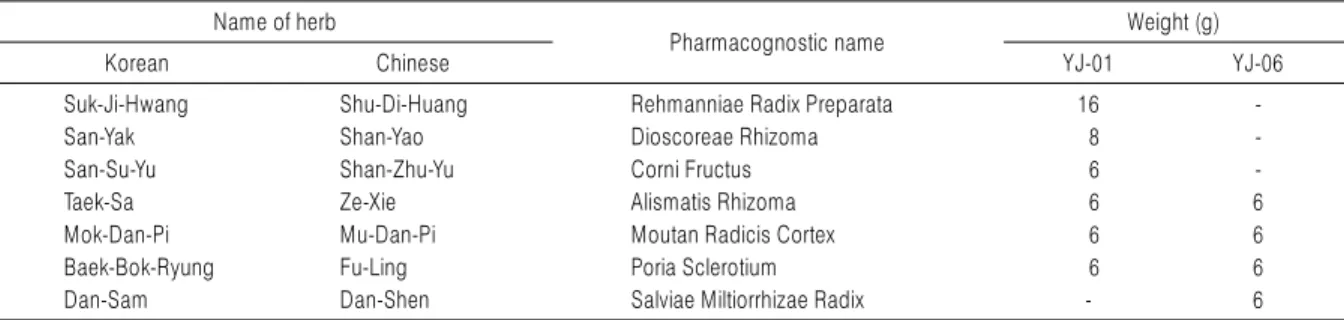
Table 1. Composition of Administered YJ-01 and YJ-06 Extract Formula per a Day Name of herb

Pharmacognostic name Weight (g)

Korean Chinese YJ-01 YJ-06

Suk-Ji-Hwang Shu-Di-Huang Rehmanniae Radix Preparata 16 -

San-Yak Shan-Yao Dioscoreae Rhizoma 8 -

San-Su-Yu Shan-Zhu-Yu Corni Fructus 6 -

Taek-Sa Ze-Xie Alismatis Rhizoma 6 6

Mok-Dan-Pi Mu-Dan-Pi Moutan Radicis Cortex 6 6

Baek-Bok-Ryung Fu-Ling Poria Sclerotium 6 6

Dan-Sam Dan-Shen Salviae Miltiorrhizae Radix - 6

ment.

2. Drug administration

YJ-01 and YJ-06 were frozen and dried after ex- traction of heat water, and each composition is shown in Table 1. YJ-01 and YJ-06 were dissolved in physiological saline and orally administered 100 μl at a dose of 100, 200, or 300 mg/kg. Fluoxetine (FLU, Sigma) was dissolved in 100 μl of saline at a dose of 10 mg/kg, gabapentin (GBP; Sigma) at a dose of 50 mg/kg and administered intraperitoneally as a positive control for depression and pain, respectively.

The doses used in the present study were selected based on dosages previously used in literature. Add- itionally, to investigate the synergistic effect, 100 mg/kg of YJ (01, 06) and 10 mg/kg of Fluoxetine were ad- ministered simultaneously by oral and intraperitoneal administration, respectively. All experimental drugs were administered once a day from 3 days after re- serpine injection.

3. Reserpine-induced depression and pain Reserpine (RSP, Sigma) was dissolved in 5% di- methyl sulfoxide (DMSO, Sigma) with physiological saline and subcutaneously injected into the abdomi- nal area once a day for 3 consecutive days to induce depression and pain. Mechanical allodynia was mea- sured at 2, 4, and 6 days after injection. On the 7th day after RSP injection, forced swimming test and open field test were performed after each drug ad-

ministration. Mice were randomly assigned to the ex- perimental and control groups, and the codes were used as animal numbers to keep the treatment from being known in all behavioral tests.

4. Mechanical allodynia assay

To assess nociceptive responses to innocuous me- chanical stimuli (mechanical allodynia), we measured paw withdrawal response frequency (PWF) by using von Frey filament (2.0 g, North Coast Medical, Morgan Hill, CA, USA) as described previously. A von Frey fil- ament was applied from underneath the metal mesh flooring to each plantar of the hind paw. The fila- ment was applied 10 times to each paw, with 10 sec of the time intervals. The number of foot withdrawal reactions after each filament stimulus was counted and the results were expressed as a percentage of the paw withdrawal response frequency (PWF, %).

5. Rota-rod test

Rota-rod test is a commonly used screening pro-

cedure to examine motor incoordination and/or

ataxia in rodents. In addition, this test can differ-

entiate the antinociceptive effect of the drug from

adverse side effects such as sedation. Following the

method described previously, mice were placed on a

cylindrical platform (12 cm wide; 3 cm diameter) sus-

pended 33 cm above the bottom of the apparatus

(SciTech Korea Inc., Seoul, Korea). Falls were cush-

ioned by wood shaved bedding. After 3 days of the

(4)

acclimation period, the rota-rod test was measured before the administration and at every 20, 40, 60, 80, 100, and 120 minutes after the administration of drugs or vehicles. Time spent on a rotating rod (con- stant speed of 5∼6 revolutions per min) was measured at each time point and cut-off time was 2 minutes.

6. Forced swimming test

Forced swimming test was performed according to the method described by Porsolt with minor modifi- cation. One day before the test, mice were placed in a clear plexiglass cylinder (10 cm×25 cm) containing 15 cm of water (24±0.5°C) for 15 minutes. For the test period, the mice were placed in the same system for 6 minutes after 24 hours from the pre-test. After the initial 1 minute of vigorous activity, the mice showed a period of immobility by stop climbing or swimming and remained floating motionless in the water, making only small forelimb movements to keep head above water. The duration that the mice remain immobile during the last 5 minutes of the testing period was recorded as immobility time.

7. Open field test

The Square black acrylic open field box (40 cm×

40 cm×40 cm) to provide the best contrast to the white mouse was placed in a testing soundproof room equipped with a video camera. Before the test, all mice were placed in the testing room for 30 min for adaptation. At the beginning of the test trial, the mouse was placed in the center of open field box for 20 sec and the next 5 min of behavior was recorded by the EthoVision-XT video tracking system (Noldus Information Technology, Netherlands). The EthoVision- XT software analyzes automatically various parame- ters such as moved distance, moving direction and number of turning or crossing so on. In this study, we examined moved distance to determine the ef- fects of YJ on reserpine-induced depression mice by

anti-anxiety based depressive behaviors.

8. Statistical Analysis

Data values were expressed as mean±SEM. The level of statistical significance was determined by un- paired Student’s t-test for comparisons between two means, and by analysis of variance (ANOVA) followed by a Dunnett’s test for multiple comparisons. Graph pad Prism 6 (Graph Pad Software, Inc., CA, and USA) was used to perform the statistical analysis and a val- ue of p<0.05 was considered statistically significant.

III. RESULTS

1. Effects of YJ administration on RSP-induced mechanical allodynia

To investigate the antinociceptive roles of YJ on RSP-induced pain, we examined the effect of YJ ad- ministration on RSP-induced MA in mice. Before RSP injection, the baseline of PWF (%) was tested. As shown in Fig. 1A, C, MA was gradually developed in the hind paws for 6 days after RSP injection. The re- peated s.c. administration of the RSP gradually in- creased PWF (%) to innocuous mechanical stimuli as compared with those of the vehicle-treated group.

Repetitive oral administration with all used doses of

YJ-01 suppressed the RSP-induced increase in PWF

(Fig. 1A; *p<0.05, **p<0.01 and ***p<0.001 as com-

pared with Reserpine group). Additionally, YJ-06

showed antinociceptive effects at doses of 200 and

300 mg/kg (Fig. 1B; *p<0.05 and ***p<0.001 as com-

pared with Reserpine group). GBP was used as a pos-

itive drug (Fig. 1A, B; ***p<0.001 as compared with

the Reserpine group). FLU did not show the anti-

nociceptive effect on RSP-induced MA and simulta-

neous administration of low doses YJ (01 or 06) with

FLU showed no synergistic effect.

(5)

Fig. 1. Antinociceptive effect of oral administration with YJ on reserpine-induced mechanical allodynia. (A) YJ-01 100, 200 and 300 mg/kg administered mice were significantly reduced on the paw withdrawal frequency (%) in the von-Frey test as compared with only reserpine injected mice. (B) YJ-06 200 and 300 mg/kg treated mice were reduced paw withdrawal frequency. High dose of YJ-01 and 06 (300 mg/kg) were similar to those of the positive control gabapentin.

*p <0.05, **p<0.01 and ***p<0.001 as compared with those of the reserpine group.

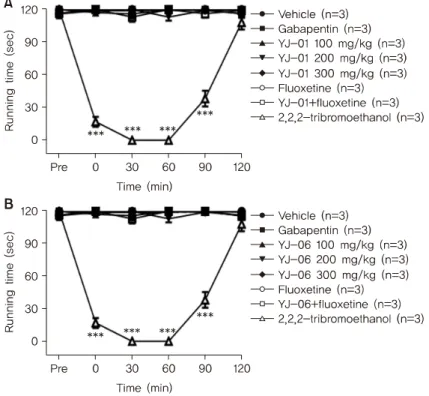
2. Effects of YJ administration on rota-rod test The effect of YJ on normal motor function was as- sessed using the rota-rod test. Normal mice remained on the rota-rod apparatus for 120 sec without fall from the cylinder. After test drug administration, each animal was tested on the rota-rod apparatus and the running time for which the mouse was able to remain on the cylinder was recorded. All doses of YJ-01 and 06 did not affect the normal motor func-

tion of mice during 120 min after administration and produced no significant change of spent time in the rota-rod (Fig. 2A, B). 2, 2, 2-tribromoethanol is an anesthetic, used as a positive control in this test (Fig.

2A, B; ***p<0.001 as compared with all group). This

result indicated that the antinociceptive effect of YJ

is not induced by motor impairment.

(6)

Fig. 2. Antidepressant effect of YJ on forced swimming test. Rota-rod test revealed that the treatment of (A) YJ-01 and (B) YJ-06 did not affect normal motor function on 120 min after treatment compared with vehicle treated group. 2, 2, 2-tribromoethanol is an anesthetic, used as a positive control.

***p <0.001 as compared with those of the vehicle group.

3. Effects of YJ administration on RSP-induced immobility time in forced swimming test To demonstrate the potential antidepressant-like effect of YJ on RSP-induced depression, we per- formed the forced swimming test on RSP injected mice. As shown in Fig. 3, repeated s.c administration of RSP was significantly increased on immobility time as compared with those of the control group at 7 days after injection. Repetitive oral administration with 200 mg/kg doses of YJ-01 and 200, 300 mg/kg doses of YJ-06 have suppressed the RSP-induced in- crease in the immobility time (Fig. 3A, B; *p<0.05 and ***p<0.001 as compared with reserpine group).

However, administration with 100, 300 mg/kg doses of YJ-01 and 100 mg/kg dose of YJ-06 not shown the significance but has reducible tendency on RSP-in- duced increased immobility time. FLU was used as a

positive drug (Fig. 3A, B; ***p<0.001 as compared with the Reserpine group). Additionally, simultaneous administration of low doses YJ (01 or 06) with FLU showed no synergistic effect. Interestingly, positive control GBP in the pain group also had a significant effect on the increase of reserpine-induced decrease of immobility time.

4. Effects of YJ administration on RSP-induced moved distance in open field test

As part of the depressed behavioral test to demon-

strate the potential antidepressant-like effect of YJ,

we also performed an open field test on RSP injected

mice. As shown in Fig. 4, repeated s.c administration

of RSP was significantly suppressed on moved dis-

tances and the number of crossings in the field at 7

days after injection (Fig. 4, 5). Repetitive oral admin-

istration with 200, 300 mg/kg doses of YJ-06 and FLU

(7)

Fig. 3. Antidepressant effect of YJ on forced swimming test. As compared with vehicle injected group, reserpine remarkably increased the immobility time. Treatment of (A) YJ-01, (B) YJ-06, (A, B) fluoxetine and gabapentin significantly reduced the immobility time in forced swimming test.

*p<0.05 and ***p<0.001 as compared with those of the reserpine group.

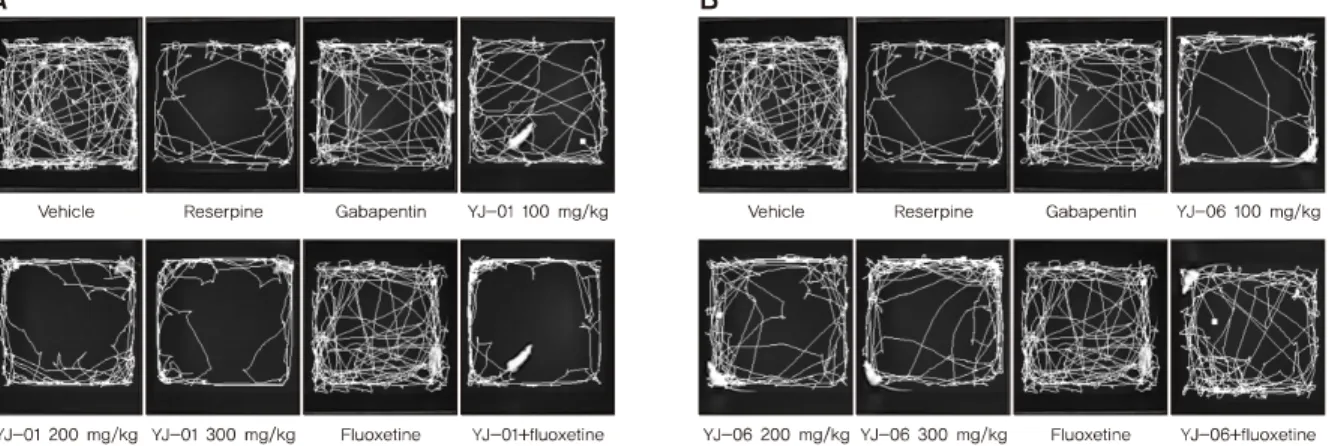
Fig. 4. Antidepressant effect of YJ on open field test. As compared with vehicle injected group, reserpine remarkably decreased the moved distance. (A) Treatment of YJ-01 had no effect in open field test. On the other hand, (B) Treatment of YJ-06, (A, B) fluoxetine and gabapentin significantly recovered the moved distance in open field test.

*p <0.05 and **p<0.01 as compared with those of the reserpine group.

(8)

Fig. 5. Visualized data of the open field test. Visualized moved distance and number of crossings by tracking mouse movements in open field box. (A) YJ-01 had no recovery effect on moved distance and number of crossings. On the other hand, (B) Treatment of YJ-06, (A, B) fluoxetine and gabapentin remarkably recovered the moved distance and number of crossings in open field box.

have increased the RSP-induced decrease in the moved distances and number of crossings. (Fig. 4A;

*p<0.05 and **p<0.01 as compared with reserpine group). However, repetitive oral administration of all YJ-01 doses did not show the recovery effect and si- multaneous administration of low doses YJ (01 or 06) with FLU showed no synergistic effect. Similar to the FST test, GBP also had a significant effect on the re- covery of reserpine-induced decrease moved dis- tance and number of crossings.

IV. DISCUSSION

In this study, we demonstrated both antinoci- ceptive and antidepressant effects of YJs in the pain- depression dyad mice model. Repetitive oral admin- istration of YJ-01 and 06 significantly reduced re- serpine-induced nociceptive behavior in the me- chanical allodynia test and shown to decrease the immobility time which is despair-based behavior in- duced by consecutive reserpine injection in the forced swimming test. Moreover, oral administration of YJ- 06 also shown to recover moved distance and num- ber of crossings which are anxiety-based behavior induced by reserpine injection in the open field test.

In addition, the changes in general motor function by

administration of YJs were measured through the ro- ta-rod test and as a result, the administration of YJs showed no side effects such as sedation or motor impairment.

Reserpine has been used clinically as an anti- hypertensive and antipsychotic drug for the control of high blood pressure and for the relief of psychotic symptoms. However, consecutive administration of reserpine to rodent also causes chronic muscular pain accompanied by depression through the de- crease of central nervous system regional biogenic amines (dopamine, serotonin, and norepinephrine) which are related to pain signal processing

7)

. In addi- tion to this, it has been suggested that the reserpine can be used as an inducer of pain depression in ro- dents

8,17,18)

.

YJ compound contains several medicinal herbs

and has been traditionally used to treat various dis-

eases and maintain normal body function in China

and Korea. In the concept of traditional medicine, YJ

has both function of ‘Bo (보, 補)’ and ‘Sa (사, 瀉)’. It

is known that ‘Bo’ herb reinforce the vital energy, and

the ‘Sa’ herb eliminate the pathogenic factors

19)

. In

YJ, the herbs that play the role of ‘Bo’ are

Rehmanniae Radix Preparata, Corni Fructus, and

Dioscoreae Rhizoma, which refill ‘Yin’ of liver and

(9)

kidney and make new blood. Herbs for ‘Sa’ are Moutan Radicis Cortex, Poria Sclerotium, and Alismatis Rhizoma. These herbs cool down the fever and make blood flow more smoothly in the body, therefore sedate the Heat syndrome and let the inap- propriate energy out. Additionally, Salviae Miltiorrhizae Radix (Dan-sam), which originated from “Shen Nong’s Herbal Classic”, is one of the major traditional herbs and has been widely used in TCM, and is also called Dan-sam in Korean traditional medicine. Known to promote blood flow, it is widely used to treat car- diovascular, brain, thrombus and other diseases

20-23)

. In other words, the action of YJ is to recover where circulation is not proper due to blockage, and supply nutrition to areas where nutrition is not properly supplied due to lack of yin in body parts. Especially, it seems to improve the overall symptoms such as pain and depression caused by the lack of yin through the action of supplementing the yin and blood.

The present study showed that YJ-01 has more ef- fective analgesic efficacy against mechanical allody- nia induced by reserpine than that of YJ-06. On the other hand, YJ-06 was more effective in depres- sion-related behaviors induced by reserpine, de- termined by FST and OF experiments. Summarizing these results, YJ-06 may be a formula that exhibits more suitable efficacy for pain-depression dyad than YJ-01. In other words, ‘Sa’ herbs and Dan-sam is more effective in pain-depression dyad than ‘Bo’

herbs. One of the ‘Sa’ group herb, Alismatis Rhizoma is the rhizome of Alisma orientale Juzepczuk, which has been used as diuretics for accelerating water me- tabolism and removing moisture according to the TCM for centuries

24)

. The other one, Moutan Radicis Cortex is the root cortex of Paeonia suffruticosa Andrews, has been widely applied as an analgesic, antipyretic and anti-inflammatory agent

25,26)

. Another material, Poria Sclerotium is one of the most com-

mon materials from Poria cocos Wolf., in TCM and has been used for nearly two thousand years

24,27)

. It has been widely used alone or in combination with other medicinal substances to treat various symp- toms such as immune dysfunction, urination dis- orders, diarrhea, vomiting, etc., and modern studies have demonstrated its efficacy

28-30)

. By removing ‘Bo’

herbs and concentrating ‘Sa’ herbs and Dan-sam, YJ-06 could focus on letting out inappropriate en- ergies circulated through the body and promoting the blood flow effects. There is a high possibility that its difference has an effect on improving the pain-depression dyad.

In conclusion, the present study shows that repeti- tive oral administration of YJ compound may pro- duce outstanding antinociceptive and antidepressant effects without side effects in reserpine-induced pain and depression mice model, suggesting that YJ com- pounds including YJ-01 and -06 may be good candi- dates for the treatment of pain-depression dyad.

CONFLICT OF INTEREST

The authors declare that they have no known competing financial interests or personal relation- ships that could have appeared to influence the work reported in this paper.

REFERENCES

1. Berton O, Nestler EJ. New approaches to antidepressant drug discovery: beyond monoamines. Nat Rev Neurosci.

2006;7(2):137-51.

2. Gureje O, Von Korff M, Simon GE, Gater R. Persistent pain and well-being: a World Health Organization Study in Primary Care. JAMA. 1998;280(2):147-51.

3. Bair MJ, Robinson RL, Katon W, Kroenke K. Depression and pain comorbidity: a literature review. Arch Intern Med.

2003;163(20):2433-45.

4. Miller LR, Cano A. Comorbid chronic pain and depres- sion: who is at risk? J Pain. 2009;10(6):619-27.

5. Ohayon MM, Schatzberg AF. Using chronic pain to pre-

(10)

dict depressive morbidity in the general population. Arch Gen Psychiatry. 2003;60(1):39-47.

6. Leith NJ, Barrett RJ. Effects of chronic amphetamine or reserpine on self-stimulation responding: animal model of depression? Psychopharmacology (Berl). 1980;72(1):

9-15.

7. Nagakura Y, Oe T, Aoki T, Matsuoka N. Biogenic amine de- pletion causes chronic muscular pain and tactile allody- nia accompanied by depression: A putative animal mod- el of fibromyalgia. Pain. 2009;146(1-2):26-33.

8. Arora V, Kuhad A, Tiwari V, Chopra K. Curcumin amelio- rates reserpine-induced pain-depression dyad: behav- ioural, biochemical, neurochemical and molecular evid- ences. Psychoneuroendocrinology. 2011;36(10):1570-81.

9. Zhang A, Sun H, Qiu S, Wang X. Advancing drug discov- ery and development from active constituents of yin- chenhao tang, a famous traditional chinese medicine formula. Evid Based Complement Alternat Med. 2013;2013:

257909.

10. Ha H, Lee JK, Lee HY, Koh WS, Seo CS, Lee MY, et al.

Safety Evaluation of Yukmijihwang-tang: Assessment of Acute and Subchronic Toxicity in Rats. Evid Based Complement Alternat Med. 2011;2011:672136.

11. Liang X, Li H, Li S. A novel network pharmacology ap- proach to analyse traditional herbal formulae: the Liu- Wei-Di-Huang pill as a case study. Mol Biosyst. 2014;

10(5):1014-22.

12. Kitagawa I, Fukuda Y, Taniyama T, Yoshikawa M. [Chemi- cal studies on crude drug processing. X. On the con- stituents of rehmanniae radix (4): comparison of the con- stituents of various rehmanniae radixes originating in China, Korea, and Japan]. Yakugaku Zasshi. 1995;115(12):

992-1003.

13. Kubo M, Asano T, Matsuda H, Yutani S, Honda S. [Studies on Rehmanniae radix. III. The relation between changes of constituents and improvable effects on hemorheology with the processing of roots of Rehmannia glutinosa].

Yakugaku Zasshi. 1996;116(2):158-68.

14. Zhang ND, Han T, Huang BK, Rahman K, Jiang YP, Xu HT, et al. Traditional Chinese medicine formulas for the treat- ment of osteoporosis: Implication for antiosteoporotic drug discovery. J Ethnopharmacol. 2016;189:61-80.

15. Zhou W, Cheng X, Zhang Y. Effect of Liuwei Dihuang de- coction, a traditional Chinese medicinal prescription, on the neuroendocrine immunomodulation network. Phar- macol Ther. 2016;162:170-8.

16. Zhao BB, Long QH, Wang CY, Chen LL, Xie GJ, Bo WJ, et al. Protective Effects of Liu Wei Di Huang Wan on the Liver, Orbitofrontal Cortex Nissl Bodies, and Neurites in MSG+

PH-Induced Liver Regeneration Rat Model. Evid Based Complement Alternat Med. 2018;2018:9090128.

17. Blasco-Serra A, Escrihuela-Vidal F, Gonzalez-Soler EM,

Martinez-Exposito F, Blasco-Ausina MC, Martinez-Bellver S, et al. Depressive-like symptoms in a reserpine-in- duced model of fibromyalgia in rats. Physiol Behav. 2015;

151:456-62.

18. Wu YY, Jiang YL, He XF, Zhao XY, Shao XM, Du JY, et al.

Effects of Electroacupuncture with Dominant Frequency at SP 6 and ST 36 Based on Meridian Theory on Pain- Depression Dyad in Rats. Evid Based Complement Alternat Med. 2015;2015:732845.

19. Region WWP. WHO International Standard Terminologies on Traditional Medicine in the Western Pacific Region.

Data. WLCiP, editor: World Health Organization; 2007.

20. Cheng TO. Danshen: a popular chinese cardiac herbal drug. J Am Coll Cardiol. 2006;47(7):1498; author reply 9-500.

21. Maione F, Mascolo N. Danshen and the Cardiovascular System: New Advances for an Old Remedy. Semin Thromb Hemost. 2016;42(3):321-2.

22. Su CY, Ming QL, Rahman K, Han T, Qin LP. Salvia miltior- rhiza: Traditional medicinal uses, chemistry, and phar- macology. Chin J Nat Med. 2015;13(3):163-82.

23. Wang T, Fu X, Wang Z. Danshen Formulae for Cancer: A Systematic Review and Meta-Analysis of High-Quality Randomized Controlled Trials. Evid Based Complement Alternat Med. 2019;2019:2310639.

24. Commission CP. Pharmacopoeia of the People’s Republic of China. Beijing: China MedicalScience Press; 2015.

25. Lin HC, Ding HY, Ko FN, Teng CM, Wu YC. Aggregation in- hibitory activity of minor acetophenones from Paeonia species. Planta Med. 1999;65(7):595-9.

26. Tatsumi S, Mabuchi T, Abe T, Xu L, Minami T, Ito S. Analgesic effect of extracts of Chinese medicinal herbs Moutan cor- tex and Coicis semen on neuropathic pain in mice.

Neurosci Lett. 2004;370(2-3):130-4.

27. H. Wagner HH, N.R. Farnsworth (Eds.). Recent research on oriental medicinal plants. Economic and Medicinal Plant Research. 1985:53-85.

28. Hattori T, Hayashi K, Nagao T, Furuta K, Ito M, Suzuki Y.

Studies on antinephritic effects of plant components (3):

Effect of pachyman, a main component of Poria cocos Wolf on original-type anti-GBM nephritis in rats and its mechanisms. Jpn J Pharmacol. 1992;59(1):89-96.

29. Tai T, Akita Y, Kinoshita K, Koyama K, Takahashi K, Watanabe K. Anti-emetic principles of Poria cocos. Planta Med. 1995;

61(6):527-30.

30. Tseng J, Chang JG. Suppression of tumor necrosis fac- tor-alpha, interleukin-1 beta, interleukin-6 and granulocyte- monocyte colony stimulating factor secretion from hu- man monocytes by an extract of Poria cocos. Zhonghua Min Guo Wei Sheng Wu Ji Mian Yi Xue Za Zhi. 1992;

25(1):1-11.

수치

Table 1. Composition of Administered YJ-01 and YJ-06 Extract Formula per a Day Name of herb
Fig. 1. Antinociceptive effect of oral administration with YJ on reserpine-induced mechanical  allodynia
Fig. 2. Antidepressant effect of YJ on forced swimming test. Rota-rod test revealed that the  treatment of (A) YJ-01 and (B) YJ-06 did not affect normal motor function on 120 min after  treatment compared with vehicle treated group
Fig. 4. Antidepressant effect of YJ on open field test. As compared with vehicle injected group,  reserpine remarkably decreased the moved distance
+2

참조

관련 문서