1.
서 론대한민국 조선업은 기간산업으로써 정부의 적극적인 지원 아래 최고의 기술력과 경쟁력으로 세계 시장을 선 도하고 있다. 하지만, 조선업은 규모가 방대하고 생산
구조가 복잡하며, 많은 인력의 이동이 요구됨과 동시에 제한된 공간에서 여러 공정 종류의 작업이 동시다발적 으로 진행되므로 다른 업종에 비해 다양한 재해의 위험 에 노출되어 있다. 한국산업안전보건공단에 따르면 조 선업의 연간 사망 근로자는 40여 명에 달하고, 2천 명에
***부경대학교 안전공학과 석사과정 (Department of Safety Engineering, Pukyong National University)
***부경대학교 안전공학과 초빙교수 (Department of Safety Engineering, Pukyong National University)
https://doi.org/10.14346/JKOSOS.2019.34.1.62 http://www.kosos.or.kr/jkosos
잠재 심각도 평가 기반의 조선업 재해 분석 활동에 관한 사례 연구
예정현*⋅정승래**⋅장성록***†
A Case Study on the Potential Severity Assessment for Incident Investigation in the Shipbuilding Industry
Jeong Hyun Ye*⋅Seung Rae Jung**⋅Seong Rok Chang***†
†
Corresponding Author Seong Rok Chang Tel : +82-51-619-6468 E-mail : [email protected] Received : August 13, 2018 Revised : November 23, 2018 Accepted : January 2, 2019
Abstract : Korean shipbuilding companies have taken many efforts for safety over the years by developing Health, Safety & Environment (HSE) Management Systems, Procedures, Training, and studying Programs for prevention of incidents. As a result, the shipbuilding industry has succeeded in reducing overall injury rates. Nevertheless, the industry also noticed that incident rates are still not at zero and more importantly, serious injuries and fatalities are still occurring. One factor that may be attributing to this is the lack of managing potential severity during incident investigations, most incident investigations are implemented based on the actual result. Generally, each shipbuilding company develops their customized incident investigation programs and these are also commonly being focused on actual result. This study aimed to develop a shift in strategy toward safety to classify the criteria of potential severity from any incidents and manage that to prevent any recurrence or causing any serious injuries or fatalities in the shipbuilding industry. Several global energy companies have already developed potential severity management tools and applied them in their incident investigations. In order to verify the necessity of improvement for current systems, a case study and comparative analysis between a domestic shipbuilding company and several global energy companies from foreign countries was implemented and comparison of two incident investigation cases from specific offshore projects was conducted to measure the value of a potential severity system. Also, a checklist was established from the data of fatalities and serious injuries in recent 5 years that occurred in Korea shipbuilding industry and a proposal to verify high potential incidents in the incident investigation process and comparative analysis between the assessment by appling proposed checklist and the assessment from a global energy company by using their own system was implemented. As a measure to prevent any incidents, it is required to focus on potential severity assessment during the incident investigation rather than to only control actual result. Hence, this study aims to propose a realistic plan which enables to improve the existing practices of incident investigation and control in the shipbuilding industry.
Key Words : potential severity assessment, incident investigation, prevention of incidents, shipbuilding industry
Copyright@2019 by The Korean Society
of Safety All right reserved.
가까운 근로자가 다치는 등 사업장 곳곳에서 크고 작은 사건⋅사고들이 끊임없이 발생하고 있다.1)
1990년대 조선업 산업재해에 관한 안전의식이 대두 되고2) 조선업 안전 관리 자율평가 프로그램이 시행되 는 등 노⋅사 모두의 안전의식이 크게 향상되기 시작 하면서3) 각 사업장별 안전 경영 시스템과 관리 절차를 수립하고 개인 안전 의식과 사업장 안전 문화를 개선 하는 등 산업 재해 예방을 위한 많은 노력을 기울여왔 다. 또한, 조선업 특성상 대부분의 발주처가 외국인이 므로4) 해외 고객과의 활발한 교류 활동을 통해 여러 선진 안전 관리 프로그램을 받아들이는 등 산업 재해 예방을 위한 많은 개선 노력을 하였다. 그 결과 Table 1과 같이 2000년대 초반 약 1.4~2.3%이던 재해율은 현 재는 약 0.8~0.9% 수준까지 감소하였다5).
이토록 조선업 전반에 걸쳐 재해율을 감소시키는 데 는 괄목할 만한 성과를 거두었다고 할 수 있지만, 최근 에 와서 재해율 감소는 다소 정체 상태를 보인다. 또 한, 여전히 2016년 조선업의 재해율은 0.83%로 대한민 국 전체 산업의 재해율 0.49%, 제조업 전체 재해율 0.62%에 비하여 여전히 높은 수준이며 특히, 중대 산 업 재해는 매년 꾸준히 발생하는 실정이다.
세계 에너지 시장을 선도하고 있는 해외 선주(주문 주)들은 이러한 현상이 각 사업장에서 발생하는 산업 재해에 대한 충분한 분석과 관리가 선행되지 못하여 그 결과 더 심각한 사고로 이어지고 있는 것으로 분석
Table 1. Incident rate of shipbuilding and ship repair industry Year No. of
Employees No. of
Injured Persons No. of
Fatalities Incident
Rate(%) Fatality Rate*
2000 90,842 1,258 33 1.4 3.6
2001 96,643 1,657 45 1.7 4.7
2002 98,279 1,974 42 2.0 4.3
2003 102,369 2,349 48 2.3 4.7
2004 117,156 2,366 44 2.0 3.8
2005 159,042 2,327 40 1.5 2.5
2006 118,559 2,240 48 1.9 4.0
2007 132,992 2,065 46 1.6 3.5
2008 134,699 2,375 45 1.8 3.3
2009 171,118 2,413 53 1.4 3.1
2010 177,433 2,122 47 1.2 2.6
2011 168,114 1,820 46 1.1 2.7
2012 180,661 1,760 51 1.0 2.8
2013 186,226 1,596 37 0.9 2.0
2014 215,833 1,713 37 0.8 1.7
2015 233,730 1,940 31 0.8 1.3
2016 229,899 1,911 32 0.8 1.4
* Fatality Rate = (No. of Fatalities / No. of Employees)*10,000
하였다. 이를 보완하기 위해 산업 재해 잠재 심각도 분 석과 관리를 위한 절차를 수립하고 적용하는 등 많은 노력을 기울여 왔다6-11). 하지만, 국내 조선업의 재해 분석 활동은 아직 실제 발생한 결과에 치중되는 경향 이 높으며, 아직 잠재 심각도 분석과 관리를 위한 활동 은 미흡한 수준이다.
이에 따라 본 연구에서는 국내 조선업과 해외 선주 (주문주)의 재해 분석 기준과 활동 사례를 비교⋅분석 함으로써 국내 조선업 재해 분석 활동의 개선점을 도 출하고, 잠재 심각도 평가 기반의 국내 조선업 재해 분 석 활동 방안을 제시하고자 한다.
2.
연구 방법본 연구는 사례 조사 및 비교⋅분석을 통한 재해 조 사 활동 內 잠재 심각도 분석의 필요성을 확인하고, 국 내 조선업 재해 조사 활동의 개선 방향을 제시하고자 재해 조사 활동에 사용 가능한 체크 시트를 제안하였 다. 또한, 체크 시트의 유의성을 확인하기 위해 재해 사례를 적용하고 기존 평가 Data와 비교⋅분석하였다.
이를 위해, 먼저 국내⋅외 문헌, 규정 및 활동 사례들 을 조사하였다. 국내의 경우 산업안전보건법 및 관련 기술 지침과 국내 한 조선 사업장의 활동 사례를 조사 하였으며, 해외의 경우 미국 노동성 산하의 직업 안전 위생국 (Occupational Safety and Health Administration:
OSHA) 기준과 ExxonMobil, Chevron, BP 등 주요 해외 선주(주문주)의 재해 분석 활동 사례를 조사하였다. 또 한, 재해 유형은 같지만 발생 결과와 잠재 심각도가 서 로 다른 두 가지 재해사례를 조선업 안전 관리 경력 15 년 이상의 국내⋅외 전문가 3인의 의견을 토대로 비교
⋅분석하여 잠재 심각도 분석의 필요성을 검증하였다.
그리고 국내 조선업 재해 조사 활동 개선 방안을 제 시하고자 최근 5년간 (2013~2017) 국내 조선 사업장에 서 발생한 중대 재해를 문헌 조사를 통해 수집하고 재 해 원인 및 유형을 분석하여 그 결과를 바탕으로 국내 조선 사업장에서 재해 발생 시 높은 잠재 심각도 (High- Potential Severity) 여부를 판별할 수 있는 유형별 체크 시트를 수립하고 운영 방안을 제시하였다.
3.
연구 결과 3.1 국내 조선업 재해 분석 기준 및 사례3.1.1 재해 분석 및 관리 기준
산업안전보건법에서 안전보건관리 책임자는 산업재 해의 원인을 조사하고 재발 방지 대책을 수립하며 통계
의 기록 및 유지를 하도록 규정하고 있고, 사업주는 이 러한 활동을 총괄 관리하도록 하는 조항을 두고 있다12).
1993년 「기업 활동 규제완화에 관한 특별 조치법」이 시행되면서 일반산업재해 발생 원인에 대한 조사와 대 책을 기업 자율에 맡겨 보고하도록 함으로써 각 사업 장별 자체 관리 기준에 따른 재해 원인 분석 및 개선 활동이 시행되고 있고, 심각한 상해를 유발하거나 중 대 재해가 발생하는 등의 경우 정부 감독관에 의한 조 사업무가 수행되고 있다13).
또한, 한국산업안전보건공단에서는 업무상 사고조사 에 관한 기술 지침과14) 사고의 근본 원인 분석 기법 (Root Cause Analysis)에 관한 기술 지침15) 등을 제공하 여 각 사업장에서 보다 면밀한 재해 분석 및 개선 활동 을 추진할 수 있도록 지원하고 있다.
3.1.2 국내 조선업 재해 분석 사례
재해 분석 사례 조사는 국내 A 조선업체의 재해 분 석 기준과 운영 사례를 확인하고 개선점을 도출하였다. 먼저, 근본 원인 분석 활동 기준은 Table 2와 같이 각 재해의 발생 결과에 따라 등급을 규정하고, 그 등급 에 따른 근본 원인 분석 활동의 책임을 규정하고 있었 다. 하지만 주관적 판단에 따라 중대 재해를 유발할 수 있는 것으로 고려되는 때에만 A등급으로 구분하고, 노
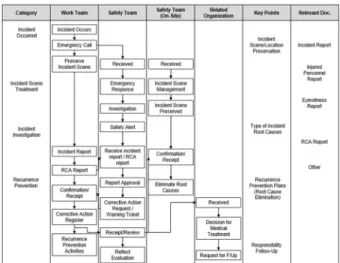
⋅사 합동의 근본 원인 분석 활동이 요구되고 있었으 며, 그 외에는 대부분 실제 발생 결과에 따라 관리되고 있었다. 그리고 재해 조사 및 처리 업무 프로세스는 Fig. 1과 같이 재해 발생 시 정보 수집 및 조사 활동부 터 재발 방지 활동까지 각 단계별 모든 유관 조직의 활 동과 책임이 규정되어 있었지만, 재해의 잠재 심각도 를 분석하여 조사 대상이나 적절한 재해 분석 수준을 결정할 수 있는 기준은 정립되어 있지 않았다.
이처럼 현재 국내 일부 조선업체의 재해 분석 활동 은 필요시 주관적 판단에 따라 잠재 심각도를 평가하 고 대부분 실제 발생한 결과에 보다 치중되어 있었으 며 이로 인해 자칫 잠재 심각도가 높은 재해에 대한 면
Table 2. Example of root cause analysis (RCA) responsibility in accordance with incident level
Incident Level RCA Responsibility Level A
Fatal Incidents Joint Committee Incidents could cause Fatal Incidents Division Committee
(Lead by Safety Dept.) Serious Incidents
Level B Lost Time Incidents
Dept. related to incidents Property Incidents ( > 10 million won)
Level C Except for A and B (including serious near miss)
Fig. 1. Example of incident investigation and control process.
Fig. 2. Example of root cause analysis (RCA) report.
밀한 분석과 개선 대책 수립의 기회나 그 적절한 시점 을 놓칠 수 있는 것으로 사료된다. 또한, Fig. 2와 같이 사업장의 자체 재해 조사에서는 대부분 근본 원인 분 석 기법을 사용하고 있었으나 잠재 심각도에 대한 보 고서 기술이 요구되지 않을 경우 제3자가 보고서를 접 했을 때 실제 발생 결과는 경미하지만 잠재 심각도가 높은 재해에 대해서는 그 심각을 정확히 인지하는 데 제한적일 수 있을 것이다.
3.2 해외 기업 재해 분석 기준 및 사례
3.2.1 재해 분석 및 관리 기준
조선업의 경우 대부분의 발주처가 해외 기업으로 공 사 기간 중 국내 안전 규정을 준수함과 동시에 발주처 의 계약 요건에 따라 다양한 안전 기준을 추가로 적용 해야 한다. 특히, 글로벌 에너지 기업이 주도하는 해양 플랜트 산업의 경우 재해 분석과 분류에 있어서 대부 분 미국 노동성 산하의 직업 안전 위생국 (Occupational Safety and Health Administration: OSHA) 기준을 적용하 고 있으며17,18), OSHA Incident Investigation Guide에서
는 아차 사고까지 재해 조사 대상으로 포함하여 잠재 적 위험 요소를 자세히 분석하고 관리할 것을 강력히 권고하고 있다.
3.2.2 해외 선주(주문주) 재해 분석 사례
해외 선주(주문주)들은 재해를 분석하면서 잠재 심 각도를 함께 평가하고 관리하여 무사고⋅무재해 사업 장 구현을 위한 많은 노력을 기울이고 있었다.
그 대표적으로, ExxonMobil은 Fig. 3과 같이 전체 사 업장에서 발생한 재해를 분석한 결과 전체의 약 20%
는 더 심각한 상해를 유발하거나 중대 재해로 이어질 수 있는 높은 잠재 위험성을 가졌다는 사실을 확인하 였고, ‘Mining the Diamond’라는 관리 기법을 통해 이 를 관리해 오고 있다19). 이는 즉, 아차 사고나 First Aid Case와 같은 일반 경미 재해에서도 잠재 위험성이 높
은 사건⋅사고가 발생할 수 있고, 이를 제대로 관리하 지 못하면 향후 동일한 원인의 중대 재해가 발생할 수
Fig. 3. Mining the diamond from ExxonMobil.
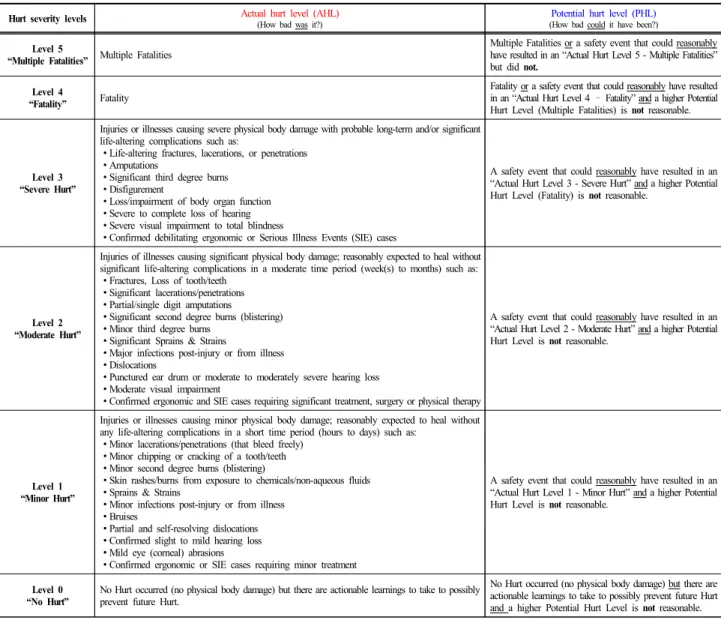
Hurt severity levels Actual hurt level (AHL)
(How bad was it?) Potential hurt level (PHL)
(How bad could it have been?) Level 5
“Multiple Fatalities” Multiple Fatalities Multiple Fatalities or a safety event that could reasonably
have resulted in an “Actual Hurt Level 5 - Multiple Fatalities”
but did not.
Level 4
“Fatality” Fatality Fatality or a safety event that could reasonably have resulted
in an “Actual Hurt Level 4 – Fatality” and a higher Potential Hurt Level (Multiple Fatalities) is not reasonable.
Level 3
“Severe Hurt”
Injuries or illnesses causing severe physical body damage with probable long-term and/or significant life-altering complications such as:
∙Life-altering fractures, lacerations, or penetrations
∙Amputations
∙Significant third degree burns
∙Disfigurement
∙Loss/impairment of body organ function
∙Severe to complete loss of hearing
∙Severe visual impairment to total blindness
∙Confirmed debilitating ergonomic or Serious Illness Events (SIE) cases
A safety event that could reasonably have resulted in an
“Actual Hurt Level 3 - Severe Hurt” and a higher Potential Hurt Level (Fatality) is not reasonable.
Level 2
“Moderate Hurt”
Injuries of illnesses causing significant physical body damage; reasonably expected to heal without significant life-altering complications in a moderate time period (week(s) to months) such as:
∙Fractures, Loss of tooth/teeth
∙Significant lacerations/penetrations
∙Partial/single digit amputations
∙Significant second degree burns (blistering)
∙Minor third degree burns
∙Significant Sprains & Strains
∙Major infections post-injury or from illness
∙Dislocations
∙Punctured ear drum or moderate to moderately severe hearing loss
∙Moderate visual impairment
∙Confirmed ergonomic and SIE cases requiring significant treatment, surgery or physical therapy
A safety event that could reasonably have resulted in an
“Actual Hurt Level 2 - Moderate Hurt” and a higher Potential Hurt Level is not reasonable.
Level 1
“Minor Hurt”
Injuries or illnesses causing minor physical body damage; reasonably expected to heal without any life-altering complications in a short time period (hours to days) such as:
∙Minor lacerations/penetrations (that bleed freely)
∙Minor chipping or cracking of a tooth/teeth
∙Minor second degree burns (blistering)
∙Skin rashes/burns from exposure to chemicals/non-aqueous fluids
∙Sprains & Strains
∙Minor infections post-injury or from illness
∙Bruises
∙Partial and self-resolving dislocations
∙Confirmed slight to mild hearing loss
∙Mild eye (corneal) abrasions
∙Confirmed ergonomic or SIE cases requiring minor treatment
A safety event that could reasonably have resulted in an
“Actual Hurt Level 1 - Minor Hurt” and a higher Potential Hurt Level is not reasonable.
Level 0
“No Hurt” No Hurt occurred (no physical body damage) but there are actionable learnings to take to possibly prevent future Hurt.
No Hurt occurred (no physical body damage) but there are actionable learnings to take to possibly prevent future Hurt and a higher Potential Hurt Level is not reasonable.
Table 3. Criteria of actual severity level (AHL) and potential severity level (PHL) from ExxonMobil
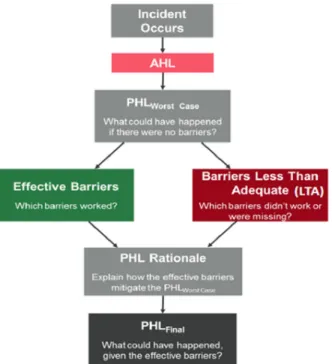
Fig. 4. Severity Level Determination Process from ExxonMobil.
Fig. 5. Probable severity assessment tool from Chevron.
있기 때문에 경미한 재해라도 잠재 심각도를 정확히 분석하고 그 결과에 따른 적절한 재해 조사가 선행되 어야 함을 뜻한다. 그리고 Fig. 4와 같이 재해 발생 당 시 조건을 고려하여 발생 가능한 잠재적 심각도를 결 정하는 프로세스를 적용하고20) 그 과정에서 Table 3의 실제 및 잠재적 심각도 수준을 결정할 수 있는 기준을 마련하여21) 재해 분석 활동에 적용하고 있다6,7).
이외에도 Chevron의 경우에는 Fig. 5와 같이 재해 발생 당시 Energy Source와 Potential Consequence, Control
Fig. 6. Principles for assessment of potential severity from BP.
Measure 등을 종합적으로 평가하여 재해 조사 수준을 결 정하는 Tool을 활용하고 있으며22), BP는 Fig. 6의 Flow Chart를 활용하여 재해 잠재 심각도의 경중을 분석하고 그 결과에 따른 적정 수준의 재해 조사 활동을 하고 있다23).
3.3 사례 분석을 통한 잠재 심각도 평가 필요성 검증 산업 재해 잠재 심각도 분석의 필요성을 검증하기 위해 재해 유형은 같지만 실제 발생한 결과와 잠재 심 각도가 다른 다음의 두 가지 재해 사례의 조사 결과를 비교 분석하였다.
재해 사례 #1
2015년 3월 8일 약 11:55분경, A Project에서 Grating 수정 작업 중 주변 인원 통제 미흡으로 작업장을 지나 가던 동료 근로자가 고박 되지 않은 Grating을 밟는 순 간 Grating이 한쪽으로 기울어지며 약 30 m 하부로 추 락할 번 한 아차 사고가 발생하였다.
재해 사례 #2
2015년 12월 11일 약 11:10분경, B Project의 가설 비 계 상부를 이동하던 중 개구부를 발견하지 못하고 실 족하면서 오른쪽 어깨가 골절되는 인명 피해가 발생하 였다. (당시 개구부로부터 2 m 하부에 비계가 설치되 어 있었음)
위의 두 사례는 모두 작업장 이동 중 실족에 의해 발생하였지만, 첫 번째 사례는 다행히 아차 사고로 인 명 피해가 발생하지 않았고 두 번째 사례는 어깨가 골 절되는 심각한 인명 피해가 발생하였다. 하지만, 잠재 적 심각도를 판단해 볼 때 첫 번째 사례는 근로자가 약 30 m 하부로 추락할 수 있었던 중대 재해 성 아차 사 고인 반면, 두 번째 사례는 2 m 하부에 비계가 설치되 어 있어 추락 시 첫 번째 사례보다는 상대적으로 잠재 적 위험이 낮음을 확인할 수 있다.
그런데도 불구하고, 두 사례의 조사 결과를 비교 분
Table 4. Comparison of two incident investigation cases
Case #1 Case #2
Classification Near Miss Restricted Work Case Injuries None Fracture (Shoulder) Lost (Restricted) Work Days None 3 months
Investigation Method Normal Tap Root Analysis Investigation Length (Dates) 1 day 15 days Final Report Length (Pages) 2 pages 25 pages
Interview X O (Witness, IP, Foreman) Statement X O (Witness, IP, Foreman)
Drug & Alcohol Test X O
Management Involvement X O
Personnel Information X Training, Experience
Findings Root Causes Root Causes, 3 Lessons Learned Corrective Actions 2 Actions 7 Actions
석해 보면 첫 번째 사례의 경우 하루 정도의 재해 조사 기간이 소요되었고 약 2페이지 분량의 보고서가 작성 되었으며, 2가지 정도의 개선 대책이 수립되는 등 일반 적 경미한 재해 수준의 조사 활동이 진행된 반면, 두 번째 사례의 경우 약 2주간의 조사가 진행되면서 Tap Root Analysis 기법을 통한 근본 원인 분석 활동과 7가 지 근본적인 개선 대책이 수립되었으며 재해 조사 활 동에 있어 경영진이 직접 참여하는 등 더 심도 있고 면 밀한 조사 활동이 진행되었음을 다음의 Table 4의 비 교 분석 표를 통해 확인할 수 있다.
위의 비교 분석을 통해 알 수 있듯이 재해의 실제 발생 결과뿐만 아니라 잠재 심각도가 함께 고려되지 않을 경우 충분한 조사 활동이 진행되지 않을 수 있으 며, 이는 곧 하인리히 법칙 (1:29:300)이나 프랭크 버드 법칙 (1:10:30:600)과 같이 향후 더 심각한 대형 사고를 초래할 수 있음을 알 수 있다.
3.4 재해 분석 활동 개선 방안
3.4.1 잠재 심각도 평가 기반의 재해 분석 제안
조선업의 경우 타 산업보다 재해 유형이 다양하고 발생 건수도 많지만, 이를 관리하기 위한 전문 인력이 나 시간, 비용 등은 매우 부족한 현실이다. 그렇기 때 문에 간혹 경미한 재해에 대해서는 현업 조직의 자체 적인 재해 분석 활동이 진행되는 경우도 있다. 이때 현 업 담당자는 재해 분석 전문가보다 지식이나 경험이 부족하고 이로 인해 면밀한 원인 분석이 제대로 이루 어지지 못하여 자칫 잠재 심각도가 높은 재해임에도 불구하고 적절한 재발 방지 대책이 수립되지 못할 수 있다. 또한, 잠재 심각도를 분석하더라도 대부분 담당
자의 주관적 관점에 따라 결정되었다.
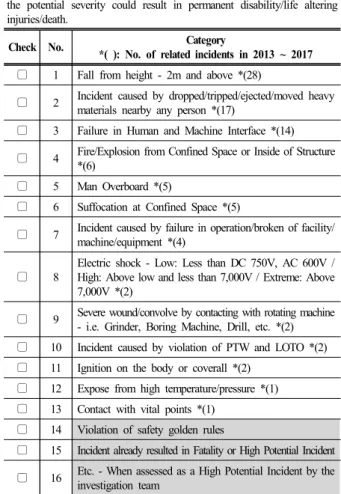
본 연구에서는 이러한 조선업의 특성과 현실적인 부 분을 고려하여 재해 발생 시 신속히 재해 유형을 분석 하고 더욱 객관적으로 높은 잠재 심각도 여부를 판별 하는 방안을 제시하고자 Fig. 7과 같이 최근 5년간 (2013~2017) 국내 조선업에서 발생한 총 89건의 중대 재해 유형을 분석하였다. 그 결과 2 m 이상 작업장에 서의 추락에 의한 재해 28건, 중량물의 낙하/전도/비례 등에 의한 협착/충돌 17건, 중장비 또는 설비에 의한 충돌/협착 14건 등 13가지의 중대 재해 유형이 도출되 었으며 이를 바탕으로 Table 5와 같이 유형 별 체크 시 트를 수립하고 재해 조사 활동에 적용함으로써 재해 조사 시 높은 잠재 심각도(High Potential Severity) 여부 를 보다 빨리 효율적으로 판별할 수 있는 방안을 제시 하였다. 또한, 각 사업장의 특성이나 작업 환경에 따라 상기 13가지 외의 경우를 고려하여 3가지 항목(중대 안전 수칙을 위반하거나 중대 재해로 발생했던 이력이 있는 경우 또는 중대 재해로 이어질 수 있었던 것으로
Table 5. Guidance of high-potential severity assessment Guidance of high-potential severity assessment
High-Potential (HIPO) incident means an incident or near miss that has the potential severity could result in permanent disability/life altering injuries/death.
Check No. Category
*( ): No. of related incidents in 2013 ~ 2017
▢ 1 Fall from height - 2m and above *(28)
▢ 2 Incident caused by dropped/tripped/ejected/moved heavy materials nearby any person *(17)
▢ 3 Failure in Human and Machine Interface *(14)
▢ 4 Fire/Explosion from Confined Space or Inside of Structure
*(6)
▢ 5 Man Overboard *(5)
▢ 6 Suffocation at Confined Space *(5)
▢ 7 Incident caused by failure in operation/broken of facility/
machine/equipment *(4)
▢ 8
Electric shock - Low: Less than DC 750V, AC 600V / High: Above low and less than 7,000V / Extreme: Above 7,000V *(2)
▢ 9 Severe wound/convolve by contacting with rotating machine - i.e. Grinder, Boring Machine, Drill, etc. *(2)
▢ 10 Incident caused by violation of PTW and LOTO *(2)
▢ 11 Ignition on the body or coverall *(2)
▢ 12 Expose from high temperature/pressure *(1)
▢ 13 Contact with vital points *(1)
▢ 14 Violation of safety golden rules
▢ 15 Incident already resulted in Fatality or High Potential Incident
▢ 16 Etc. - When assessed as a High Potential Incident by the
investigation team
Fig. 7. Records of serious injuries and fatalities in shipbuilding and ship repair industry (2013~2017).
판단될 경우)을 추가함으로써 최종적으로 총 16개 항 목으로 구성된 체크 시트를 수립하였다.
현업 또는 재해 조사 담당자는 산업 재해 발생 시 Table 5의 체크 시트를 활용하여 발생한 재해의 유형을 신속히 비교⋅분석하고 높은 잠재 심각도 여부를 판별 할 수 있을 것으로 사료된다. 만약, 발생한 재해의 유형 이 체크 시트 한 개 이상의 항목과 부합될 경우 먼저 높 은 잠재 심각도를 가진 재해로 분류하고 이에 상응하는 면밀한 재해 조사 및 원인 분석 활동을 이어갈 수 있다. 이러한 활동은 현업 또는 재해 조사 담당자가 빠른 시 간 내에 재해의 높은 잠재 심각도 여부를 판별할 수 있 도록 함으로써 중대 재해 예방을 위한 적절한 재해 분 석의 기회를 적기에 제공할 수 있을 것으로 사료된다. 그리고 높은 잠재 심각도(High-Potential Severity)를 지닌 재해 중 때에 따라서는 Table 6과 같이 기존의 위 험성 평가 Matrix를 사업장의 특성이나 환경에 따라 적 절히 활용하여 재해 발생 빈도 및 강도를 고려한 보다 세부적인 잠재 위험도를 분석할 수 있을 것으로 사료 된다.
Table 6. Example of severity assessment matrix
Likelihood Consequence
Never happened
Happened in the industry
Happened within 6 months
Happened within 3 momths
Happened within 1 month
1 2 3 4 5
No injury 1 1 2 3 4 5
Slight injuries 2 2 4 6 8 10
Minor injuries 3 3 6 9 12 15
Serious injuries 4 4 8 12 16 20
Fatalities 5 5 10 15 20 25
3.4.2 적용 결과
위의 Table 5에서 제안한 방법론을 활용하여 2012~
2014년 수행된 A 프로젝트에서 발생한 총 57건의 재해
Table 7. Comparison of potential severity assessment through two different guidance
Potential severity A Company Apply proposed guidance
No. of Low potential 51 48
No. of High potential 6 9
% of High potential 10.50 % 15.79%
사례를 대상으로 전체의 몇 %가 높은 잠재 심각도 (High Potential Severity)를 가졌는지 평가하였다.
적용 결과 Table 7과 같이 전체 57건 중 9건은 심각 한 인명 피해나 중대 재해를 초래할 수 있는 높은 잠재 심각도를 가졌던 것으로 분석되었으며, A 프로젝트 발 주처 자체의 잠재 심각도 분석 결과(57건 중 6건이 높 은 잠재 심각도를 가진 것으로 분석됨)와 비교했을 때 높은 잠재 심각도를 가진 재해에 대한 분석 결과는 같 았으며, 3건의 재해 사례가 추가로 높은 잠재 심각도를 가진 것으로 분석되었다.
4.
결론 및 고찰본 연구에서는 국내 조선업의 재해 예방을 위해 재해 조사 과정에서의 잠재 심각도 분석 방안을 제시하고자 국내⋅외 재해 분석 기준과 국내 조선업체 및 해외 선주 (주문주)들의 재해 분석 활동 사례를 조사하여 비교⋅분 석하였고, 같은 유형의 두 가지 재해 분석 결과 사례를 비교⋅분석하여 잠재 심각도 분석의 필요성을 검증하였 다. 또한, 국내 조선업의 특성과 현실성을 고려하여 재 해의 높은 잠재 심각도(High-Potential Severity) 여부를 판별할 수 있는 체크 시트를 제안하였고, 재해 사례 적 용을 통해 기존 분석 결과와의 유의성을 검증하였다. 본 방법론을 이용한 재해 조사 활동은 제한된 조건 (시간/인력/비용 등)에서 보다 효율적이고 객관적으로 잠재 심각도를 판별하고 그 결과에 따른 적절한 재해 조사를 이어갈 수 있을 것으로 사료된다. 또한, 이러한 접근 방법을 통한 안전 관리는 곧 개인의 안전 의식이 나 조직의 안전 문화를 향상시킬 수 있고, 나아가 안전 관리에서 궁극적으로 추구하는 무사고 무재해 사업장 을 구성하는데 이바지할 수 있을 것으로 사료된다. 그 리고 향후 재해 분석의 개선 및 운영 지침과 홍보 자료 로 활용되고, 재해의 잠재 심각도 분석 대한 필요성을 높임과 동시에 재해 예방 동기부여 자료로 활용되기를 기대한다.
하지만, 분석자의 재해 조사 활동에 대한 전문 지식 수준이나 경험에 따라 결과가 다르게 나올 수 있음을 확인하였고, 적정 수준의 경험과 자격을 갖춘 담당자가
각 사업장 특성에 맞게 체크시트를 지속적으로 수정하 고 관리해야 할 필요성이 제기되었다.
이러한 점을 보완하고 체크시트의 지속적 관리 및 운 영 개선 방안에 관한 추후 연구가 이루어진다면 산업 현장에서의 활용도를 더욱 높일 수 있을 것으로 기대하 며 인력, 비용, 제도 등의 현실적인 과제를 해결하기 위 한 노력과 각 사업장 경영진의 안전에 대한 적극적인 의지가 뒷받침되어야 할 것으로 사료된다.
References
1) The Korea Occupational Safety and Health Agency (KOSHA), “Safety and Health Guide of Shipbuilding and Repair Industry”, p. 6, 2012.
2) Y. H. Lee and S. D. Lee, “A Study on Safety Consciousness for Preventing Accident of the Shipbuilding Industry”, J.
Korean Soc. Saf., Vol. 13, No. 1, pp. 119-130, 1998.
3) Occupational Health and Safety Research Institute, “Risk Assessment Program Model Development for Shipbuilding Industry”, 2017.
4) The Kyunghyang Newspaper, 8 October, 2007.
5) The Korea Occupational Safety and Health Agency (KOSHA), Industrial Accident Statistics, 2000-2016.
6) R. M. Smith and M. L. Jones, “A Hurt-Bsed Approach to Safety”, Society of Petroleum Engineers, SPE Americas E&P Health, Safety, Security and Environmental Conference, 18-20 March, 2013.
7) J. Jackson, “Mining the Diamond: Next Step in the Safety Journey”, AAPG/SEG International Conference and Exhibition, London, England, October 15-18, 2017.
8) R. Rife, “Serious Injury and Fatality Prevention”, National Safety Council (Congress & Expo), September, 2017.
9) S. G. Riddle, “Focus on Hurt Free”, ExxonMobil Development, January, 2017.
10) M. J. Booth, “The Incident Potential Matrix”, Society of Petroleum Engineers, SPE Health, Safety and Environment in Oil and Gas Exploration and Production Conference, 1991.
11) T. V. Karlsson and B. M. Jahre, “Application of the Incident Potential Matrix Technique to Marine Sismic Operations”, Society of Petroleum Engineers, 1994.
12) Ministry of Employment and Labor (MOEL), Occupational Safety and Health Act, “Chapter II Safety and Health Management System, Article 13 Safety and Health Manager”, 2017.
13) Ministry of Employment and Labor (MOEL), “A Study on the Effect of the Accident Investigation Affecting on the Industrial Accident Prevention”, 2010.
14) The Korea Occupational Safety and Health Agency (KOSHA), KOSHA Code (G-5-2017), “Technical Guidance of Work Related Accident Investigation”, 2017.
15) The Korea Occupational Safety and Health Agency (KOSHA), KOSHA Code (P-151-2016), “Technical Guidance of Root Cause Analysis for the Accident”, 2016.
16) Ministry of Employment and Labor (MOEL), Occupational Safety and Health Act, Appendix#1 Formant, 2016.
17) OSHA Safety and Health Standards-29 CFR.
18) OSHA Shipyard Industry Standards, 2268-11R, 2015.
19) M. Smith, “A Hurt-Based Approach to Safety”, EMDC Contractor Safety Forum, 2012.
20) Hurt Severity AHL-PHL Classification, ExxonMobil.
21) R. Rife, “Serious Injury and Fatality Prevention”, National Safety Council Congress & Expo, 2017.
22) UG_Probable Severity Assessment Tool, Chevron, March, 2013.
23) E. Myers, “Incident Investigation and Reporting Procedure”, BP Oil-Toledo Refinery, 2017.