가톨릭대학교 의과대학 응급의학교실, 건양대학교 의과대학 응급의학교실1
신황진∙이미진
1∙박규남∙박준석
1∙박성수
1Clinical Characteristics of Patients with Acute Organophosphate Poisoning Requiring Prolonged Mechanical Ventilation
Hwang Jin Shin, M.D., Mi Jin Lee, M.D.
1, Kyu Nam Park, M.D., Joon Seok Park, M.D.
1, Seong Soo Park, M.D.
1Department of Emergency Medicine, College of Medicine, The Catholic University of Korea, Seoul, Korea Department of Emergency Medicine, College of Medicine, Konyang University, Daejeon, Korea
1Purpose: The major complication of acute organophosphate (OP) poisoning is respiratory failure as a result of cholinergic toxicity. Many clinicians find it difficult to predict the optimal time to initiate mechanical ventilation (MV) weaning, and as a result have tended to provide a prolonged ventilator support period. The purpose of this study is to determine any clinical predictors based on patients characteristics and laboratory findings to assist in the optimal timing of mechanical ventilator weaning.
Methods: We reviewed medical and intensive care records of 44 patients with acute OP poisoning who required mechanical ventilation admitted to medical intensive care unit between July 1998 and June 2007. Patient informa- tion regarding the poisoning, clinical data and demographic features, APACHE II score, laboratory data, and serial cholinesterase (chE) levels were collected. Base on the time period of MV, the patients were divided into two groups: early group (wean time < 7 days, n = 28) and delayed group (≥ 7 days, n = 16). Patients were assessed for any clinical characteristics and predictors associated with the MV weaning period.
Results: During the study period, 44 patients were enrolled in this study. We obtained the sensitivity and specificity values of predictors in the late weaning group. APACHE II score and a reciprocal convert of hypoxic index but specificity (83.8%) is only APACHE II score. Also, the chE concentration (rho = -0.517, p = 0.026) and APACHE II score (rho = 0.827, p < 0.001) correlated with a longer mechanical ventilation duration.
Conclusion: In patients with acute OP poisoning who required mechanical ventilation, the APACHE II scoring sys- tem on a point scale of less than 17 and decrements in cholinesterase levels on 1-3 days were good predictors of delayed MV weaning.
Key Words: APACHE II, Cholinesterase, Mechanical ventilation, Organophosphate, Poisoning
책임저자: 이 미 진
대전광역시 서구 가수원동 685 건양대학교병원 응급의학과
Tel: 042) 600-9119, Fax: 042) 600-9026 E-mail: [email protected]
서 론
급성 유기인계 중독환자에서 독성 효과에 의한 호흡근 무력이나 마비, 과다한 기관 분비물 증가, 중간형 마비 증 후군(Intermediate syndrome)이나 흡인성 폐렴 등으로 급성 호흡 부전이 유발되고 인공 호흡기에 의한 기계 환기 가 필요로 하는 경우가 많다. 따라서 중증 유기인계 농약 의 급성 중독에 있어서 가장 큰 치료목표는 급성 호흡부전 을 예측하고 이를 합병증 없이 치료하여 환자의 이환율과 사망률을 감소시키는데 있다
1-3).
하지만, 이런 호흡기계 중독 증상은 환자마다 차이가 있 어 인공 호흡기 이탈 시기가 환자 개개인의 상태에 따라 다르고, 일부에서는 중간형 마비와 같은 지연성 신경병증 (OPIDN; Organophosphate induced delayed neu- ropathy)을 예측하지 못한 상태에서 조기 발관이나 기계 환기 이탈을 시도한 후 환자 상태가 악화되거나 호흡성 심 정지까지 경험하게 된다
4-6). 반면에 이를 우려하여 인공 호 흡기로부터의 이탈을 지연시키게 되는 경우에는 오히려 중환자실 재원 기간 및 인공 호흡기 연관 폐렴의 위험성을 증가시킬 수 있다
7). 이에 저자들은 한 대학병원 내과 중환 자실에 입원하여 인공 호흡기 치료를 받은 급성 유기인계 농약 중독 환자 중 장기간 호흡기 치료를 받은 환자들의 임상 특성을 분석하고, 인공호흡기로부터의 이탈에 영향 을 미치는 인자를 알아보고자 이 연구를 시행하였다.
대상 및 방법
1998년 7월부터 2007년 6월까지 성모병원 응급의료센 터를 경유하여 급성 약물 중독으로 치료받은 환자 2,088명 중 15세 이상의 급성 유기인계 중독 환자를 대상으로 이 연구를 진행하였다. 이 기간 중 유기인계 중독으로 치료받 은 환자는 총 189명이었고, 내과계 중환자실에 입원하여 인공호흡기 치료를 받은 환자 56명 중 사망하여 인공 환기 이탈시기가 부정확한 12명을 제외한 44명을 대상으로 하 였다. 성별, 연령 등의 인구학적인 특성, 음독 사유, 약제와 독성 등급, 재원일 등의 독성학적 특성과 기존에 중증도 예측인자로 알려진 24시간 이내 최저 중심동맥압, 심전도 의 QTc 간격, 초기 및 기간별 혈장 콜린에스테라아제 수 치, 동맥혈 가스 분석 소견, hypoxic index(PaO 2 /FiO 2
ratio; 동맥혈 산소분압/치료 중 산소 농도), 입원기간 중 최고 아밀라아제 수치, 방사선과 전문의 판독에 의한 흉부 방사선 소견 등의 임상경과 특성, 기저 질환의 중증도 (APACHE II score)를 의무 기록을 토대로 확인하였다
1,2).
단, 이때 인공 환기 기간의 정확한 기간을 측정하기 위 하여, 인공 환기 이탈에 대한 적용 프로토콜은 SIMV (syn- chronized intermittent mandatory ventilation)나 T- piece, 압력 보조 환기 방법을 이용하여 기존 시행 중인 중 환자실 인공 환기 이탈 프로토콜을 이용하였고
8,9), 인공 호 흡기 이탈 지연에 연관된 연관 인자를 분석하기 위하여,
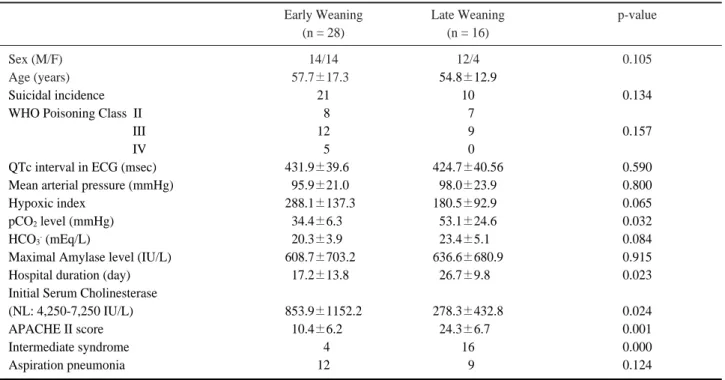
Table 1. Comparison of characteristics between early and late-weaning of MV group
Early Weaning Late Weaning p-value
(n = 28) (n = 16)
Sex (M/F) 14/14 12/4 0.105
Age (years) 57.7±17.30 54.8±12.9
Suicidal incidence 21 10 0.134
WHO Poisoning Class II 08 07
III 12 09 0.157
IV 05 00
QTc interval in ECG (msec) 431.9±39.600 424.7±40.56 0.590
Mean arterial pressure (mmHg) 95.9±21.00 98.0±23.9 0.800
Hypoxic index 288.1±137.30 180.5±92.90 0.065
pCO
2level (mmHg) 34.4±6.300 53.1±24.6 0.032
HCO
3-(mEq/L) 20.3±3.900 23.4±5.10 0.084
Maximal Amylase level (IU/L) 608.7±703.20 636.6±680.9 0.915
Hospital duration (day) 17.2±13.80 26.7±9.80 0.023
Initial Serum Cholinesterase
(NL: 4,250-7,250 IU/L) 853.9±1152.2 278.3±432.8 0.024
APACHE II score 10.4±6.200 24.3±6.70 0.001
Intermediate syndrome 04 16 0.000
Aspiration pneumonia 12 09 0.124
(LVW: Late Ventilator Weaning)군으로 분류하였다.
모든 유기인제 중독 환자는 위세척, 활성탄 투여, 해독제 인 아트로핀과 pralidoxime을 본원의 프로토콜을 이용하 여 동일한 기준의 치료를 적용하였고, 아트로핀의 경우에 는 중증도에 따라 4~16 mg/hr의 속도로 투여하였고, pralidoxime은 내원시 1.0 g을 10분 동안 급속 정주한 후 48시간동안 시간당 0.5 g/hr로 지속 정주하여 치료하였다.
test를 시행하였다. 또한, 인공 환기기 이탈기간과 다른 인자 들과의 상관관계를 알아보고자 비모수검정인 Spearman 상 관분석을 이용하였고, 호흡기 이탈을 지연을 예측하는 인자 들의 특성을 비교하고자 ROC 분석과 곡선하면적(AUC:
Area Under the Curve)을 이용하였다. 이때 p값이 0.05 미 만인 경우를 통계학적인 유의성이 있는 것으로 하였다.
결 과
1. 전체 연구 대상 환자의 임상적, 독성학적 특성
연 구 대 상 환 자 총 44명 의 환 자 중 남 성 은 26명 (59.1%), 여성은 18명(40.9%), 평균 연령은 56.6±15.7세 였고, 음독사유는 31명에서 자살시도였다. 중환자실 입실 기점 APACHE II score는 12.9±8.2점, 내원 초기 콜린에 스테라아제에 의한 중등도 분류 상 정상 기저치의 10% 미 만에 해당하는 중증인 경우는 26명(59.1%), 10% 이상인 경우는 18명(40.9%)이었다. 동반된 합병증으로는 흡인성 폐렴은 21명, 심인성 쇽 2명, 급성 호흡부전 증후군 9명, 급성 췌장염을 포함한 고아밀라제혈증 25명, 중간형 증후 군이 병발된 환자는 20명이었다. 평균 재원기간은 20.9±
13.1병일, 평균 인공 호흡기 유지 기간은 6.7±7.5일(5%
절삭 평균은 5.97일)이었다.
Fig. 1. The box plot of serum cholinesterase levels between early and late mechanical ventilator- weaning group in acute organophosphate poisoning. * p-value < 0.05 by Student’
s t-test between EVW group and LVW group.
Table 2. Correlation of variables with duration of mechanical ventilation
R
2Spearman’s rho
p-value Correlation coefficient
Initial Serum cholinesterase 0.115 -0.517 0.026
APACHE II score 0.611 0.827 0.000
Hypoxic index (PaO
2/FiO
2) 0.132 -0.442 0.127
Table 3. Factors prediction of delayed mechanical ventilation weaning in organophosphate poisoning
AUC* p-value Cut-off Sensitivity Specificity
APACHE II score 0.898 0.031 17 100% 83.3%
1/ Serum cholinesterase 0.731 0.209 1/244 100% 66.7%
1/Hypoxic index 0.756 0.060 1/345 100% 60.0%
* AUC: Area under the curve
2. 조기 인공 환기 이탈(EVW)군과 후기 인공 환기 이탈 (LVW)군 간의 특성 비교
연구 대상 환자 중 6일 이내 인공 환기 이탈이 시행된 환자는 28명(63.6%), 7일 이상 소요된 환자는 16명 (36.4%)였다. 이들 환자군에 대한 인구학적, 임상 독성학 적 비교 분석을 시행한 결과 내원 당시 동맥혈 가스 분석 상 이산화탄소 분압, 내원 초기 혈중 콜린에스테라아제 농 도, 입원시점 APACHE II score, 중간형 마비 증후군 발생 에서 양 군간 차이를 보였지만, 성별이나 연령, 음독 약물 등급, 24시간 평균 동맥압, 심전도 QTc 간격, 내원 당시와 입원 중 최고 시점의 혈청 아밀라제 농도, 흡인성 폐렴 병 발 등에서는 양 군간 통계학적으로 유의한 차이를 보이지 않았다(Table 1).
입원 기간 중 시행한 혈중 콜린에스테라아제 농도 변화 에서는 조기 이탈군에서는 내원 당시부터 3병일까지 지속 적으로 상승하여 입원기간 중 계속 상승하는 반면, 후기 이탈군에서는 초기부터 3병일까지 조기 이탈군에 비해 현 저히 낮고 오히려 3병일에는 감소하는 추세를 보이다 3병 일 이후부터 상승하였고, 이는 내원 초기와 3병일에서 양 군간 통계학적으로 유의한 차이를 보였다(Fig. 1).
3. 예측 인자 및 위험 요인 분석
중환자 기계 환기 이탈 프로토콜을 이용한 인공 환기 이 탈 시기와 주요 인자들과의 상관관계를 알아보고자 단변 량 분석에서 유의한 차이를 보인 Hypoxic index, 이산화 탄소 분압, 내원 초기 콜린에스테라아제 농도, APACHE II score를 이용하여 상관분석을 시행한 결과, 내원 초기 혈중 콜린에스테라아제, APACHE II score, Hypoxic Index와 기계 환기 기간과의 상관 계수 Spearman’s rho 값은 각각 -0.517, 0.827, -0.442이었다(Table 2). 이 중 음독 초기 콜린에스테라아제와 인공 환기 이탈시기 사이 에서 통계적으로 유의한 직선의 음의 상관 관계를 보였고 (p=0.026), APACHE II score에서는 통계적으로 유의한 강한 양의 상관 관계를 보였다(p=0.000).
후기 인공 환기 이탈군 예측에 대한 각 인자별 민감도와 특이도를 비교하기 위해 절단값을 이용한 ROC 분석에서 는 내원 초기 혈중 콜린에스테라아제 농도(절단값 244 IU/L 기준)의 역수, APACHE II score(절단값 17점 기 준), Hypoxic Index(절단값 345 기준)의 역수변환에서 모두 민감도 100%였으나, 특이도에서는 APACHE II score에서만 83.3%로 진단적 유용성을 보였다(Table 3).
고 찰
급성 유기인계 중독의 사망원인은 대부분 기관지 수축, 기관분비물 과다 분비, 호흡근 마비 등에 의한 호흡부전이 며, 이를 치료하는 것이 급성 유기인계 중독 환자의 사망률 을 최소화 하는 것이다
1,10). 급성 유기인계 중독 환자에서 인 공 환기가 필요한 환자는 21�35% 정도로 보고하고 있고
2,3,11,12)
, 인공 환기에 대한 예측 가능 특성에 대해 임상적으로
많은 인자를 제시하였지만, 실제 통계학적으로 적절한 인 자를 찾아내거나 연관성을 도출하는 데에는 실패하였다
1,11,13,14)