HPLC를 이용한 배추, 사과, 감귤, 고추 중 살균제 Fenhexamid의 정밀 분석법 확립
이혜리 ・ 류명주 ・ 박희원 ・ 나예림 ・ 송혁환 ・ 금영수 ・ Yongzhe Zhu1・ 김정한*
서울대학교 농생명공학부, 1Qingdao Agricultural University
(2009년 11월 29일 접수, 2009년 12월 10일 수리)
Establishment of Analytical Method for Fenhexamid Residue in Korean Cabbage, Apple, Mandarin and Green Pepper
Hyeri Lee, Myoungjoo Riu, Heewon Park, Yerim Na, Hyukhwan Song, Young Soo Keum, Yongzhe Zhu
1and Jeong-Han Kim*
Department of Agricultural Biotechnology, Seoul National University, Korea, 1Qingdao Agricultural University, China
This study was performed to develop a precise single residue analytical method of fungicide fenhexamid in representative crops for general residue analytical method which could be applied to most of crops. Korean cabbage, mandarin, apple and green pepper were selected, macerated, extracted with acetone, concentrated and partitioned with dichloromethane. Then the extracts were concentrated and cleaned-up through Florisil column with ethyl acetate/0.1% acetic acid in hexane [15:85, (v/v)] before concentration and analysis with HPLC. LOQ (Limit of Quantitation) of fenhexamid was 1 ng (S/N>10) and MQL (Method Quantitative Limit) was 0.01 mg/kg. Recoveries were measured at two fortification levels (10 MQL and 50 MQL) on crop samples and ranged from 85.2% to 94.8% (mean recoveries) and coefficients of variation were <10% regardless of sample type.
Key words Fenhexamid, HPLC, LOQ, MQL, Recovery
Abstract*연락저자 : Tel. +82-2-880-4644, Fax. +82-2-873-4415 E-mail: [email protected]
서 론
Fenhexamid[2,3-dichloro-4-(1-methylcyclohexyl-carbo nylamino)-phenol ; Table 1]는 hydroxyanilide계의 살균제 로 1989년 독일 Bayer AG사에서 개발되어 1998년부터 세 계적으로 판매되기 시작하였다(Tomlin, 2006). 현재 국내에서 수화제, 액상수화제인 텔도(영일케미컬, 바이엘), iminoctadine tris(albesilate)와의 합제인 균모리(동부정밀), tebuconazole 과의 합제인 타이브랙(경농), prochloraz-manganese와의 합 제인 금모아(한국삼공)가 판매되고 있다(한국작물보호협회,
2009). 적용대상으로 토마토, 딸기, 장미, 인삼, 고추, 오이, 포도, 감귤의 잿빛곰팡이병과 체리, 복숭아의 잿빛무늬병의 방제에 사용되고 있으며(한국작물보호협회, 2009), 이러한 병의 원인균인 Botrytis cinerea 뿐 아니라 Monilinia나 Sclerotinia 의 방제에도 사용된다(Rosslenbroich와 Stuebler, 2000).
Fenhexamid의 잔류분석은 Bayer AG사에서 Bachmann과 Nublein(1995)이 HPLC-electrochemical detection(ECD)를 이용하여 분석하였으며, Cabras 등(2001)에 의해 GC-NPD 를 이용하여 포도와 포도주 제조 중의 잔류분석을 보고하였 다. Hengel 등(2003)은 caneberry, blueberry, 석류에서 LC- MS/MS를 이용하여 분석하였고, 한 등(2003)은 오이, 딸기, 포도에서 GC-ECD를 이용하여 잔류 분석을 하였다. Mercader와
연구보문/잔류・안전성
223
Table 1. Use and physico-chemical properties of fenhexamid
Common name Fenhexamid (Fungicide)
Controlling Disease Botrytis cinerea, Monilinia sp., Scletotinia sp.
Physico-chemical Properties Molecular weight : 302.2 Log P
ow: 3.51 (pH 7, 20℃) Water solubility : 20 mg/L (pH 5-7, 20℃) Vapor pressure : 4 × 10
-4mPa (20℃) Toxicology LD
50for rats : >5000 mg/kg LC
50for rainbow trout : 1.34 mg/L (96hr) Residue DT
50in soil ≤ 1 days (4 soils, 20℃) MRLs : 0.01~5.0 mg/kg
Structure
HO
Cl Cl
NH CH3 O
Table 2. Maximum residue limits of fenhexamid in various crops
Crop MRLs (mg/kg) Crop MRLs Crop MRLs Crop MRLs
Green & red pepper
(fresh) 5.0 Apple 1.0 Grape 3.0 Peach 1.0
Strawberry 2.0 Cucumber 0.5 Sweet pepper 3.0 Tomato 2.0
Mandarin 1.0 Garlic 0.1
Abad-Fuentes(2009)은 포도에서 direct competitive enzyme -linked immunosorbent assay(dc-ELISA)를 이용하여 쉽고 간편하게 MRL까지 검출할 수 있다고 보고하였다. 문헌 조사 를 통한 기존의 방법 중 GC를 이용한 방법은 fenhexamid의 분자 구조 내 hydroxyl group(-OH)과 amide group(-NH-CO-) 이 존재하므로 peak의 끌림이 심하여 분리가 깨끗하지 못하 고, 또한 현재 식품공전 상 fenhexamid는 다성분분석법인 83번에 포함되어 HPLC로 분석하고 있으나(식품의약품안전 청, 2009), 회수율이 불량한 것으로 나타나 있다((주) 랩프런 티어, 2004). 또한 연구 대상 작물이 한정되어 있어서 기존 보고된 분석법으로는 fenhexamid가 사용되는 다양한 작물에 보편적이고 일반적으로 적용할 수 있는 잔류분석을 수행 할 수 없다. 잔류분석법을 다양한 작물에 적용이 가능하도록 각 작물 군의 대표작물[(곡류(현미), 과일(사과, 감귤), 채소(고 추, 배추), 두류 및 유지작물(콩), 서류(감자)]을 선정하여 표 준화된 잔류농약분석법을 개선, 개발하여 fenhexamid의 문 제점을 개선 보완하고 정확성 및 정밀성이 확보된 단성분 분 석법을 개발 하고자 하였다.
재료 및 방법
시약, 재료 및 기구
Fenhexamid 표준품(99.5%)은 Chem Service에서 구입하
였고, acetonitrile은 HPLC급을, acetone, dichloromethane, ethyl acetate, hexane은 EP급을 사용하였다. 또한 sodium chloride, 무수 sodium sulfate, acetic acid는 GR급을 사용 하였다. Florisil(60-100 mesh)은 Fluka에서 흡착 크로마토 그래피용을 구입하여 130℃에서 5시간 이상 활성화시켜 사 용하였다.
무처리 시료(배추, 사과, 감귤, 고추)는 시중에서 유통 중인 유기농 작물을 구입하였고, 믹서기(한일, HMF-1000A)를 이 용하여 마쇄하였으며, 감압농축기(R-114, Buchi, Switzerland) 는 시료 추출액 농축 시 사용하였다.
대표 작물의 선정
연구에서 사용할 대표 작물은 농약 잔류허용기준(식품의약 품안전청, 2009)에 기준이 설정되어 있고(Table 2), 대상 농약 에 대한 사용등록이 되어있는 토마토, 딸기, 장미, 인삼, 고추, 오이, 포도, 감귤, 체리, 복숭아 등을 고려하여, 대표 작물로서 채소에서 배추, 고추를, 과일에서 사과, 감귤을 선정하였다.
검출한계(LOD ; Limit of Detection) 및 정량한계(LOQ
; Limit of Quantitation) 측정
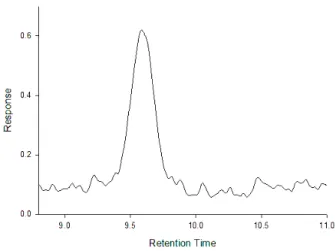
Fenhexamid 표준용액 1, 0.1, 0.05 ppm을 차례로 20 μL 씩 HPLC에 주입하여 크로마토그램의 signal과 noise의 비를 구하여 LOD 및 LOQ를 계산하였다.
Table 3. Condition of washing and elution solution for column chromatography Ethyl acetate/0.1% a.a Hx
Washing solution Volume (mL) Elution solution Volume (mL)
Condition 1 10 : 90 50 20 : 80 100
Condition 2 5 : 95 100 15 : 85 100
재현성(Reproducibility)의 검정
Fenhexamid 표준용액 0.05 ppm을 연이어 6번 HPLC에 20 μL씩 주입하여 크로마토그램 상의 머무름 시간(tr), peak 의 면적, peak 높이의 변이를 비교 검토하였다.
Fenhexamid 표준검량선 작성
Fenhexamid 표준용액은 fenhexamid 표준품을 1000 mg/L 가 되도록 acetonitrile에 용해시켜 stock solution으로 사용 하였다. 이를 0.05, 0.1, 0.5, 1, 5 mg/L의 농도가 되도록 차 례로 희석하고, 20 μL씩 HPLC에 주입하여 peak의 면적을 기준으로 표준검량선을 작성하였다.
분배용매별 분배효율 측정
25 mL의 증류수에 1 mg/L의 fenhexamid 표준용액 1 mL 을 가하고 포화식염수 50 mL과 증류수 50 mL을 첨가한 뒤, 분액여두에 옮겨 분배용매(dichloromethane, ethyl acetate, hexane) 각각 100 mL로 한 번 추출하였다. 분배 추출액을 무수 sodium sulfate에 통과 시켜 수분을 제거하고, 40℃ 이 하에서 감압농축하였다. 농축 잔사를 2 mL acetonitrile에 재 용해하여 기기분석을 행하고, 분배효율을 구하였다. 위와 같 은 방법으로 각각의 분배 용매 100 mL로 두 번 분배추출하 여 분배액을 합한 후 같은 방법으로 기기분석을 행하여 두 번 분배의 분배효율도 구하여 분배과정의 용매에 따른 분배추출 효율을 계산하였다.
정제 조건의 확립
가. 정제조건 확립을 위한 예비실험
130 ℃에서 5시간 활성화된 Florisil 10 g을 내경 1.5 cm, 길이 35 cm의 칼럼에 건식충진한 후, 3 g의 무수 sodium sulfate을 위에 첨가하였다(이하 florisil 칼럼). 여기에 0.1%
acetic acid 함유 hexane(이하 0.1% a.a Hx) 100 mL를 통 과시켜 활성화시킨 후 1 mg/L fenhexamid 표준용액 5 mL을 가하였다. 5%, 10%, 15%, 20%, 25%의 ethyl acetate/0.1%
a.a Hx 혼합액 50 mL을 차례로 용리시켜 용리액을 농축시킨 후 acetonitrile 5 mL로 재정용 하였다. 이 용액을 기기분석
하여 용리액에 의한 fenhexamid의 회수경향을 알아보았다.
나. 정제 조건의 확립
Florisil 칼럼에 0.1% a.a Hx 100 mL를 통과시켜 활성화 시킨 후 1 mg/L fenhexamid 표준용액 5 mL을 가하였다.
Ethyl acetate와 0.1% a.a Hx의 비율을 달리한 세척용매, 용 리액(Table 3)으로 위의 실험과 같이 용리, 정용한 후 기기분 석하여 용리액에 의한 fenhexamid의 회수경향을 알아보았다.
분석정량한계(MQL ; Method Quantitative Limit) 설정 분석정량한계(MQL)은 정량한계(LOQ)와 시료량 및 분석 조작 중의 희석배율을 고려하여 식 (1)에 의하여 계산하였다.
[정량한계 × HPLC주입전 최종시료용액 량(mL)]
= MQL (mg/kg) [HPLC주입량(μL) × 시료량(g)]
(1) 작물 중 fenhexamid의 회수율
무처리 시료(배추, 사과, 감귤, 고추) 25 g을 마쇄한 후 각 각 fenhexamid 표준용액을 0.1, 0.5 mg/kg이 되도록 처리한 다음 acetone 100mL을 첨가하고 1시간 동안 진탕 추출하였 다. 진탕이 끝난 균질 시료를 Whatman GF/A filter paper를 이용해 흡인여과 한 후, 30 mL의 acetonitrile로 추가 세척하 고, 여과액을 40℃ 이하에서 감압농축기를 이용하여 농축하 였다. 농축액에 포화 식염수 50 mL 및 증류수 50 mL을 첨가 한 후, 분액여두에 옮기고 dichloromethane 100 mL로 2회 분배추출하여 추출액을 합하였다. Dichloromethane층을 무 수 sodium sulfate를 통과 시켜 수분을 제거하고 40℃ 이하 에서 감압농축한 다음, 잔사를 5 mL 0.1% a.a Hx에 용해시 켰다. 이 추출액을 0.1% a.a Hx 100 mL를 통과시켜 활성화 시킨 florisil 칼럼에 첨가하고, ethyl acetate/0.1% a.a Hx(10:90, v/v) 50 mL로 세척한 다음, ethyl acetate/0.1%
a.a Hx(15:85, v/v) 100 mL로 용리시켰다. 용리액을 감압농 축하고 잔사를 acetonitrile 5 mL로 재용해하여 이 중 20 μL 를 HPLC에 주입하여 fenhexamid의 농도를 분석하였다.
Table 4. HPLC operating condition for the analysis of fenhexamid Instrument : Agilent 1100 series (U.S.A)
Detector : Variable wavelength detector(VWD) 205 nm Column : Agilent Eclipse XDB-C18 5μ
(4.6 mm I.D, 250 mm length, 5μm particle size, U.S.A) Mobile phase : A (acetonitrile), B (water)
A:B = 55:45(Korean cabbage) A:B = 53:47(apple, mandarin) A:B = 52:48(green pepper) Flow rate : 1 mL/min
Injection volume : 20 μL
Fig. 1. LOQ of fenhexamid.
Table 5. LOQ and reproducibility of fenhexamid
LOQ Reproducibility
1 ng
Average C.V
a)(%)
t
r9.60 (min) 0.21
Area 6.37 6.73
Height 0.51 3.51
a)
C.V (Coefficient of variation, %) = Standard deviation / Average × 100
HPLC 기기분석 조건
작물 중 Fenhexamid의 분석은 variable wavelength detector (VWD)가 장착된 Agilent 1100 series HPLC(Agilent, U.S.A) 를 사용하였다(Table 4).
HPLC상 fenhexamid peak의 머무름(Retention) 특징 Retention factor(Capacity factor)
Retention factor(k)는 머무름 시간과 보정머무름시간(tr' ; adjusted retention time)을 이용하여 식 (2)에 의하여 계산하 였다.
k = tr'
tm (2)
tr = retention time
tm = retention time of a non-retained compound tr' = tr - tm = adjusted retention time
HPLC 칼럼 효율성(Column efficiency)
이론단수(N ; Number of plates)와 이론단높이(H ; Height of theoretical plates)
N은 머무름 시간과 peak의 너비을 이용하여 식 (3)에 의 하여 계산하였고(Rood, 2007), 계산된 N과 칼럼의 길이를 이용하여 식 (4)에 의하여 H를 계산하였다(Rood, 2007).
N = 5.545( tr(min) )2
Wh(min) (3)
Wh = peak width at half height
H(mm) = column length(mm)
N (4)
결과 및 고찰
검출한계, 정량한계 및 재현성
검출한게(LOD) 및 정량한계(LOQ)는 분석기기의 감도를 검증할 수 있는데[Fig. 1, (Fong 등, 1999; Miller, 2005]., 다양한 농도의 표준 용액을 분석하여 S/N(signal과 noise비) 를 구한 결과, fenhexamid의 검출한계(LOD)는 정량과정에 는 적용성이 없어서 정량한계(LOQ; S/N>10배, LOD>의 3-5배 이상)만 측정하였고, 1 ng이었다. GC-NPD의 경우 한 등(2003)은 0.05 ng으로 보고하였다.
분석의 재현성 시험은 일정한 양의 농약을 여러 번 반복 주입 분석하여 머무름 시간(tr), peak의 면적(Area), peak 높 이(Height)의 오차를 조사하는데, 전체적으로 분석기기의 안 정성을 알아보기 위해 수행한다. 본 연구에서 설정한 정량한 계의 양(1 ng)을 연속으로 6번 분석한 결과, tr, area, height 의 반복 분석 간 오차가 작아 기기가 안정적이고 재현성 있는 분석을 수행할 수 있음을 확인하였다(Table 5).
검량선의 직선성(Linearity)
Fenhexamid 표준용액(0.05~5 ppm)을 분석하여 얻은 검
Fig. 2. Calibration curve of fenhexamid for the analysis of Korean cabbage, apple and mandarin, green pepper.
Table 6. Efficiency of liquid-liquid partition with three different solvents
Solvents Recovery (%)
100 mL × 1 100 mL × 2
Hexane 42.9 77.3
Ethyl acetate 86.6 91.3
Dichloromethane 97.3 113.4
Table 7. Recovery rate by sequential elution of ethyl acetate/0.1% a.a Hx mixture
Ethyl acetate/0.1% a.a Hx Recovery (%)
5 : 95 50 mL -
10 : 90 50 mL -
15 : 85 50 mL 94.6
20 : 80 50 mL 3.9
25 : 75 50 mL -
량선의 회귀방정식은 배추에서 y = 142x - 0.9527 (R2=1), 사과와 감귤에서 y = 142.77x + 0.7067 (R2=1), 고추에서 y = 141.86x + 0.342 (R2=1)로 모두 R2=0.99((주)랩프런티 어, 2004) 이상으로서 직선성이 우수하였다(Fig. 2).
분배 추출을 위한 분배용매의 결정
잔류분석에서의 액-액 분배는 물과 비극성 용매를 이용하 여 대개 비극성인 농약성분을 수분이 함유된 작물에서 비극 성의 용매로 이동 시키고, 극성의 방해물질을 수층으로 제거 할 수 있다. 극성으로 제거되는 방해물질에는 당이나 alcohol, starch와 같은 탄수화물 등이 있다(Fong 등, 1999). 따라서 적절한 용매의 선택이 중요한데, 액-액 분배 용매에 적용할 용매로는 보편적으로 많이 사용되는 dichloromethane, ethyl acetate, hexane이 고려되었다. Dichloromethane, ethyl acetate, hexane의 세 용매로 100 mL씩 한번(100 mL × 1), 또는 100 mL씩 각각 두 번(100 mL × 2) 분배한 결과(Table 6) dichloromethane이 1번 분배 및 2번 분배 조건에서 97.3
~113.4%의 양호한 회수율을 나타내어서, dichloromethane
100 mL씩 두 번 분배하는 것을 최종 분배용매조건으로 결정 하였다.
Florisil 칼럼을 이용한 정제조건의 확립
정제과정(clean-up)은 액-액 분배에서 제거하지 못한 간섭 물질을 제거하는 과정으로 Florisil, silica gel, alumina 등의 흡착물질을 유리관에 충진한 칼럼크로마토그래피와, 이와 동 일한 역할을 하면서 크기가 작고, 상업적으로 구입이 가능한 SPE(Solid Phase Extraction) cartridge 등을 이용하여 수행 한다. 본 연구에서는 잔류농약 정제과정에 가장 일반적으로 사용하는 Florisil을 선택하여 정제용 유리칼럼을 만들고, 예 비실험으로서 5, 10, 15, 20, 25% ethyl acetate/0.1% a.a Hx 혼합액으로 용리해 본 결과 20% 혼합액에서 99.5%의 회수율을 얻을 수 있었다(Table 7).
위의 결과를 토대로 시료에 적용하기 위하여 세척용매와 용리용매 조건을 다시 확립하고자 하였다(Table 3). 두 조건 에서 모두 99%의 회수율을 나타내었지만(Table 8), ethyl acetate의 함량이 5% 더 많아서 불순물 제거가 더 용이할 것
Table 8. Recovery rate of two condition of ethyl acetate/0.1% a.a Hx mixture Ethyl acetate
/0.1% a.a in hexane
Recovery (%)
0 - 50 mL 50 - 100 mL 100 - 150 mL Total
Washing (10 : 90) -
Elution (20 : 80) 93 6 - 99
Washing (5 : 95) - -
Elution (15 : 85) 96 3 - 99
Table 9. Recovery and MQL for fenhexamid in crops Fortified level
(mg/kg)
Recovery (%), CV (%)
a)MQL
(mg/kg)
Korean cabbage Apple Mandarin Green pepper
0.1 91.3, 1.9 92.1, 0.7 88.4, 0.4 94.8, 7.6
0.5 93.6, 1.5 85.2, 3.9 88.3, 1.3 91.7, 2.5 0.01
a)
Average of triplicate.
으로 판단되는 조건인 ethyl acetate/0.1% a.a Hx(10:90, v/v) 50 mL을 세척용매로 사용한 다음, ethyl acetate /0.1% a.a Hx(15:85, v/v) 100 mL을 용리용매로 사용하여 분석에 적 용하였다.
Bachmann 등(1995)과 한 등(2003)은 silica gel을 이용 한 정제방법을 이용하였으며, Hengel 등(2003)은 Chem Elut 칼럼을 이용하였다.
분석정량한계(Method Quantitation Limit ; MQL) 분석정량한계(MQL ; Method Quantitative Limit)((주) 랩프런티어, 2004)는 정량한계, 시료량 및 분석조작 중의 희 석배율 등을 감안하여 역산출한 수치로(식 (1)), 연구에 사용 한 전체적 분석방법으로 신뢰성 있게 정량할 수 있는 한계를 의미하며(이종화 등, 2008), 식품의약품안전청에서는 0.05 mg/kg 이하 또는 MRL의 1/2 이하까지 검출이 가능하도록 추천하고 있다(이영득, 2009). 식 (1)에 의하여 구한 본 연구 의 분석정량한계(식 (5))는 0.01 mg/kg으로서 잔류분석법기 준을 충분히 만족하였다.
1 ng × 5 mL
= 0.01 (mg/kg)
20 μL × 25 g (5)
Bachmann과 Nublein(1995)은 포도에서의 분석정량한계 (MQL)가 0.02 mg/kg, 딸기, 체리, 자두, 복숭아에서 0.05 mg/kg 이었다고 하였고, Cabras 등(2001)은 0.1 mg/kg, 한 등(2003) 은 0.01 mg/L, Hengel 등(2003)은 0.02 ppm이었다고 보고하였 으며, 모두 본 연구의 분석정량한계(MQL)보다 같거나 높았다.
분석법의 회수율
회수율 시험은 무처리 시료에 일정량의 농약을 처리하고, 추출, 분배, 정제의 전체 과정을 거친 후 시료 중에서 농약이 얼마나 회수되는가를 알아보는 것으로 분석법 검증에서 정확 성(평균 회수율%)과 정밀성(CV%)을 평가할 수 있다.
본 연구에서는 마쇄한 무처리 시료에 fenhexamid 표준용 액을 10MQL(0.1 mg/kg)과 50MQL(0.5 mg/kg)이 되도록 첨가하고, 앞에서 확립한 방법으로 3회 반복하여 분석하였다 (Table 9). 분석 결과 10MQL(0.1 mg/kg) 수준에서는 88~92%, 50MQL(0.5 mg/kg) 수준에서는 85~94%의 양호한 회수율 을 보였고, 정밀성(CV<8%)도 양호하여 식약청 분석법 기준 을 만족하였다.
Hengel 등(2003)은 caneberry, blueberry, 석류에서 LC- MS/MS를 이용하여 분석한 결과 74~96% 범위의 회수율 결 과를 얻었으며, 한 등(2003)은 오이, 딸기, 포도에서 GC-ECD 를 이용한 분석 결과 각각 94.8, 88.1, 93.7%의 회수율을 얻 었다고 보고하였다.
분석법의 fenhexamid peak의 머무름 특징 및 칼럼 효율성
작물 중 fenhexamid의 분석 크로마토그램에서 fenhexamid 의 머무름 시간은 배추에서 9.7분, 사과와 감귤에서 11.0분, 고추에서 11.4분이었으며, 머무름 시간에서의 방해물질은 관 찰되지 않았다(Fig. 3~6).
Retention factor[k; partition ratio 또는 capacity factor(k')]
는 실질적으로 분석물질이 정지상에 머무른 정도를 나타내며 (김강진 등; 1997Rood, 2007) 배추, 사과와 감귤, 고추에서
Fig. 3. Chromatograms of control and recovery (fortified at 0.5 mg/kg of fenhexamid) of fenhexamid Korean cabbage extracts.
Fig. 4. Chromatogram of control and recovery (fortified at 0.5 mg/kg of fenhexamid) of fenhexamid in apple extracts.
Fig. 5. Chromatogram of control and recovery (fortified at 0.5 mg/kg of fenhexamid) of fenhexamid in mandarin extract.
Fig. 6. Chromatogram of control and recovery (fortified at 0.5 mg/kg of fenhexamid) of fenhexamid in green pepper extract.
Table 10. Retention times, k, N and H of fenhexamid each crops
Crops t
r(min) t
m(min) t
r' k N H (mm)
Korean caggage 9.74 1.76 7.98 4.53 18252 0.014
Apple & Mandarin 11.02 1.75 9.27 5.30 22952 0.011
Green pepper 11.44 1.77 9.67 5.46 20366 0.012
각각 4.53, 5.30, 5.46이었다.
이론단수(N)와 이론단높이(H)는 칼럼의 분리 효율을 나타 내는데(김강진 등, 1997; McNair and Miller, 1997; Rood, 2007) N은 배추, 사과 및 감귤, 고추에 대해 각각 18252, 22952, 20366이었으며, 따라서 H는 각각 0.014, 0.011, 0.012 mm이었다(Table 10).
결 론
본 연구에서는 우리나라 식품공전에 등재될 fenhexamid 의 표준 잔류분석법을 확립하였다. 대표 농작물 시료(배추, 사 과, 감귤, 고추)를 acetone으로 추출하고, dichloromethane 으로 분배하여, florisil 흡착 크로마토그래피법으로 정제하였 다. Florisil을 이용한 정제방법은 ethyl acetate/0.1% a.a Hx (10:90, v/v) 50 mL로 세척한 후, ethyl acetate/0.1% a.a Hx(15:85, v/v) 100 mL로 용리하는 방법을 이용하였다. 정량 한계(LOQ)는 1 ng이었고, 분석정량한계(MQL)는 0.01 mg/kg 이었으며, 회수율은 85.2~94.8%로 모든 작물에서 양호한 결 과를 나타내었다. 따라서 개발된 분석법은 fenhexamid가 등 록되어 MRL이 설정된 과일 및 채소 중 fenhexamid의 표준 잔류분석법으로 사용이 가능함을 입증하였다.
감사의 글
본 연구는 식품의약품안전청의 2009년 국가 잔류농약 안 전관리 연구 사업단 - 농약의 단성분 분석법 개발 연구의 연 구비 지원으로 수행된 결과의 일부이며, 이에 감사드립니다.
인 / 용 / 문 / 헌
Bachmann, J and F. Nublein (1995) Method for the determination of KBR 2738 residues in plant material by HPLC, MR- 144/94, Bayer AG, Germany.
Cabras, P., A. Angioni, V. L. Garau, F. M. Pirisi, F. Cabitza, M.
Pala and G. A. Farris (2001) Fenhexamid residues in grapes and wine. Food Additives and Contaminants 18(7):625~629.
Fong, W. G, H. A. Moye, J. N. Seiber and J. P. Toth (1999) Pesticide Residues in food: Methods, Technologies, and Re- gulations. Wiley Interscience. pp.3~4, 40~44, Canada.
Hengel, M., B. Hung, J. Engerbretson and T. Shibamoto (2003) Analysis of fenhexamid in caneberry, blueberry, and pomegranate by liquid chromatography-tandem mass spectrometry. J. Agric.
Food Chem. 51:6635~6639.
McNair, H. M. and J. M. Miller (1997) Basic Gas Chromatography.
pp.7, 51, Wiley Interscience, U.S.A.
Mercader, J. V. and A. Abad-Fuentes (2009) Monoclonal antibody generation and direct competitive enzyme-linked immunosorbent assay evaluation for the analysis of the fungicide fenhexamid in must and wine. J. Agric. Food Chem. 57:5129~5135.
Miller, J. M. (2005) Chromatography : conseps and contrasts (2nd), Wiley Intersciense, pp.286~287, U.S.A.
Rood, Dean (2007) The Troubleshooting and Maintenance Guide for Gas Chromatographyers pp.16-17, p.22, Wiley-VCH, U.S.A.
Rosslenbroich, H. J. and D. Stuebler (2000) Botrytis cinerea - history of chemical control and novel fungicides for its management. Crop Protection 19:557~561.
Tomlin, C. D. S (2006) The Pesticide Manual (14th), pp.436~
437, British Crop Production Council, UK.
김강진 , 김하석, 이대운, 이원 (1997) 분석화학 (제4판), pp.698, 자유 아카데미.
식품의약품안전청 (2009) 식품의 농약 잔류허용기준.
식품의약품안전청 (2009) 식품공전.
이영득 (2009) 식품공전 잔류농약분석법 실무 해설서 pp.3, 식품의약 품안전청.
이종화 , 박희원, 금영수, 권찬혁, 이영득, 김정한 (2008) 시설 내 오이 재배 중 살균제 Boscalid의 잔류특성. 농약과학회지 12(1):67~
73.
(주)랩프런티어 (2004) 식품 중 동시다성분 분석법 개선 연구 pp.89, 114, 187 식품의약품안전청.
한국작물보호협회 (2009) 농약사용지침서, 삼정인쇄공사 pp.310~
313.
한성수, 노석초, 김원주, 박필재, 김일광 (2003) 작물(오이, 딸기, 포
도) 중 살균제 Fenhexamid의 잔류성에 대한 기체 크로마토그래
피 분석. Analytical science & technology 16(1):70~77.
HPLC를 이용한 배추, 사과, 감귤, 고추 중 살균제 Fenhexamid의 정밀 분석법 확립
이혜리 ・ 류명주 ・ 박희원 ・ 나예림 ・ 송혁환 ・ 금영수 ・ Yongzhe Zhu1・ 김정한*
서울대학교 농생명공학부,
1Qingdao Agricultural University
요 약 본 연구는 살균제 fenhexamid의 잔류분석을 대부분의 농작물에 적용할 수 있도록 대표 작물을 이용한 fenhexamid 의 단성분 정밀 분석법을 개발하고자 하였다. 대표 작물로는 배추, 감귤, 사과, 고추로 선정하였고, 마쇄한 농작물 시료에 acetone을 가한 후 진탕하여 잔류물을 추출하였다. 추출액을 감압농축 한 뒤, 농축물을 포화식염수와 증류수로 희석하고 dichloromethane으로 분배하였다. 분배액을 농축하고 ethyl acetate/0.1 % acetic acid 함유 hexane 혼합액[15:85, (v/v)]으 로 용리하는 Florisil 크로마토그래피법으로 정제한 후 농축한 다음 HPLC로 분석하는 방법을 확립하였다. Fenhexamid의 정량한계(LOQ ; Limit of Quantitation)는 1 ng(S/N>10)이었고, 분석정량한계(MQL ; Method Quantitative Limit)는 0.01 mg/kg이었다. 무처리 시료에 fenhexamid 표준용액을 2수준(10MQL과 50MQL) 3반복으로 처리하여, 확립된 전체 분석과정 을 거친 후, 회수율을 산출한 결과는 85.2~94.8%이었으며, 농산물 시료에 관계없이 반복 간 분석오차는 10% 미만이었다.
색인어 Fenhexamid, HPLC, LOQ, MQL, 회수율