급식 외식위생학회지 1(1): 9-18, 2020 https://doi.org/10.22960/JFSS.2020.1.9
eISSN 2765-2025
Original Article
9
JFSS Journal of the FoodService Safety www.fssanitation.com
Detection of Emetic Bacillus cereus from Ready-to-eat Foods in Markets and its Production of Cereulide under Simulated Conditions
Heesun Kim
1· Hyeja Chang
2,*
1
Seoul Research Institution of Public Health and Environment
2
Department of Food Science and Nutrition, Dankook University
I. Introduction
Bacillus cereus is an causative agent of foodborne illness (KMFDS 2016) and is commonly isolated from starch-based convenience foods (Kim et al. 2004; Bahk et al. 2007), including gimbap, fried rice (Chang et al. 2011), and sushi (Kim et al. 2008), which are dishes consumed frequently by Koreans as a staple diet. In particular, fried rice has become a globally popular food that is widely consumed in the United States, as well as East-, South and Middle East Asia.
On the other hand, B. cereus produces an emetic toxin substance, cereulide. The prevalence of emetic B. cereus in starch-based foods (e.g., fried rice dishes) has attracted little research attention. Moreover, there is little research on the quantitative analysis of the toxic substance, cereulide.
B. cereus is a Gram-positive, rod type of facultative bacteria, having mobility with a peritrichous flagellum (Kim
& Choi 2009). B. cereus is distributed widely in soil and water environments, resulting in a relatively high likelihood of contamination in crops, vegetables, and fruits. The bacteria have also isolated from ready-to-eat foods or convenience foods, such as cooked rice (Kim et al. 2008; Chang & Lee 2009) or gimbap, which might be treated by improper heating or unhygienic practices from employees in Korea. B.
cereus has been reported to grow well in starch foods, such as rice dishes, pasta, and noodles, which have a neutral pH (Agata et al. 2002; Gadaga et al. 2008; Dong 2013).
B. cereus grows at optimal temperatures of 30 to 40
oC and can survive temperatures from 7 to 49
oC. Moreover, its spores can endure heating at 135
oC for 4 h (Agata et al.
2002). The optimal pH for the growth of the organism is pH 4.9 to 9.3. In addition, it has a tolerance to Penicillin, which it catalyzes to casein and tyrosine to form catalase, showing a positive reaction with egg-yolk and hydrolysis (Agata et al.
2002; Jaaskelainen et al. 2004).
The outbreaks of foodborne illnesses caused by B. cereus Abstract: B. cereus-produced cereulide as an emetic toxin is commonly isolated in starch-based cooked foods. This study
examined the prevalence of B. cereus from ready-to-eat foods in markets by polymerase chain reaction analysis and determined the relationship between the level of B. cereus and the quantity of cereulide in the sample after different storage times and temperatures. The prevalence of general B. cereus in 43 starch foods was 32.6%, and the level of B. cereus ranged from 0.5 to 1.95 log cfu/g, meeting the Korea Food Code Specifications of 3 log CFU/g of B. cereus. No samples revealed emetic B. cereus.
Fried rice samples were inoculated with a cereulide-producing reference strain, B. cereus NCCP 14796, to determine the level of B. cereus and the quantity of cereulide in the samples after storage for 0, 4, 6, 8, 20, 24, 30, 48, 72, and 96 h at 7, 25, 35, and 57oC. The average levels of B. cereus at 7, 25, 35, and 57oC were 4.38, 7.31, 7.88, and 3.82 log cfu/g, and the levels of cereulide were 150.41, 1680.70, 2652.65, and 77.83 µg/mL, respectively, showing a significant difference according to the incubation time (P<0.05) and temperature (P<0.001).
Key words:
Emetic Bacillus cereus, starch foods, cereulide, storage, risk assessment model*Corresponding author:
Prof. Dr. Hyeja Chang, Department of Food Sci- ence and Nutrition, Dankook University, 119, Dandae-ro, Dongnam-gu, Cheonan, Chungnam, 31116, South KoreaTel: +82-41-550-3478, Fax: 82-41-559-4598 E-mail: [email protected]
2020년 11월 17일 접수, 2020년 12월 9일 수정논문접수, 2020년 12월 16일 채택
have been attributed to toxic substances comprised of two types depending on the symptoms, diarrheal and emetic (Granum & Lund 1997; Lake et al. 2004). The diarrhea- toxin consists of 17 amino acids and is inactivated by heat treatment at 56
oC for 5 min (Finlay et al. 2002; Haggblom et al. 2002). The symptoms of the outbreaks caused by this toxin include vomiting, abdominal pain, nausea, and diarrhea (Kotiranta et al. 2000; Lake et al. 2004). The substances are associated with meat, poultry, milk, and dairy products (Kang et al. 2008).
The emetic toxin, known as cereulide, has a large cyclic structure with four peptide units of amino acids (Haggblom et al. 2002; Ankolekar et al. 2009). Cereulide is generated immediately before spore formation and is very stable to heat (>126
oC for 90 min), acids, and alkalis (Agata et al. 2002).
In addition, it can be verified by the existence of the cereulide synthesis enzyme (Haggblom et al. 2002).
B. cereus-produced cereulide, as an emetic toxin substance, is only isolated from starch-based convenience foods and carries a higher risk to people who consume these foods regularly. On the other hand, there has been little research on the prevalence of B. cereus from starch-based foods and the production of cereulide (Kang et al. 2008; Lee & Chang 2009; Chang et al. 2011; Choi 2015; Lim et al. 2016).
Therefore, this study performed polymerase chain reaction (PCR) analysis to examine the prevalence of B. cereus in cooked foods, including starch convenience foods, particularly emetic B. cereus, which produces the cereulide toxin. The specific purposes of the study were as follows: 1) to identify the prevalence of emetic B. cereus and generic B. cereus in starch-based dishes; and 2) to examine the effects of time, temperature, and pH on the growth of emetic B. cereus. In addition, the quantity of cereulide was tested after inoculating fried rice samples with emetic B. cereus different simulated conditions: storage for 0, 4, 6, 8, 20, 24, 30, 48, 72, and 96 h at 7, 25, 35, and 57
oC.
II. Materials and Methods
1. Materials
1) Prevalence of B. cereus in starch foods
Forty-three samples consisting of three types were tested due to being frequently consumed convenience foods for Koran: prepared dishes with homemade recipes, takeout dishes from markets, and delivered dishes from a Chinese restaurant. The first type of samples included cooked rice dishes, such as bap (cooked rice), boribap (cooked rice with
barely), hyeonmibap (cooked rice with brown rice), and chopssalbap (cooked rice with sticky rice). The second type of samples were commercial products of cooked rice-based dishes (n=2), gimbap (made by rolling cooked rice on a piece of laver with meat, egg, and vegetables (e.g., spinach, carrot, cucumber, etc.), lunchbox meals, bread, cake, spaghetti, rice cake, and juk products (type of rice porridge with various vegetables or nuts). The samples were purchased in convenience stores, taken out in an icebox, and brought to the laboratory within 10 min. The last type was delivery foods, such as deopbap and fried rice (bokkeumbap) dishes from Chinese restaurants, which were located within a 15 to 20 min delivery distance. Immediately after delivery, the samples were treated aseptically and used for the microbiological tests.
2) Storage test on the growth of B. cereus in the fried rice dish
For the storage test, a fried rice dish sample was delivered from a Chinese restaurant within a 20 min delivery distance.
After delivery, the sample was used immediately for microbial analyses. The sample was divided into 40 ×50 g portions for the experiments, packaged with a sterilized bag, and stored for 4, 6, 8, 20, 24, 30, 48, 72, and 96 h at 7, 25, 35, and 57
oC.
3) Reference strain and experimental conditions for the simulation test
For the inoculation test of B. cereus, the delivered samples were sterilized in an autoclave for the aseptic treatments. The reference emetic strain of B. cereus NCCP 14796, producing cereulide was obtained from the Korea Centers for Disease Control and Prevention, the department of pathogen defense and research. After the samples were separated into 40 Þ 50 g portions, B. cereus NCCP 14796 was inoculated at an initial level of 103~104 cfu/g. The inoculated samples were stored for 4, 6, 8, 20, 24, 30, 48, 72, and 96 h at 7, 25, 35, and 57
oC.
2. Microbial analyses
1) Quantification of APC (Aerobic Mesophilic Plate Count)
Samples (25 g) were placed in 225 mL sterile physiological
saline water and homogenized vigorously for 2 min using a
stomacher (Easymix, Bruz Cedex, France). A sample diluted
10 fold with sterile physiological saline water was prepared,
ranging from 10
−2to 10
−7diluted solutions. A 1 mL sample
of the diluted solutions was placed into a petri dish
containing 15 mL of Plate Count Agar (Difco, MI, USA).
The plates were incubated for 48 h at 35
oC.
2) Quantification of B. cereus
Samples (25 g) were placed in 225 mL sterile physiological saline and then homogenized vigorously for 2 min using a stomacher (Easymix, France). A sample diluted 10 fold with sterile physiological saline water was prepared, ranging from 10
−2to 10
−7diluted samples. Subsequently, 0.2 mL of the diluted sample solution was streaked on five plates of mannitol yolk polymyxin (MYP) agar base containing egg yolk. The plates were incubated for 24±2 h at 30
oC, and the number of pink colonies surrounded by a zone of lecithin hydrolysis was counted. A confirmation test was carried out using a PCR assay. The final number of colonies was calculated by the reflection of the positive rate after the confirmation tests.
3) PCR assay
Samples showing a positive reaction on B. cereus were tested further to determine if the cereulide synthesis gene was present using the PCR tests. Two types of primers targeting the gyrB and ces genes, designed by the Bioneer company (Daejeon, Korea), were used to detect emetic B.
cereus separately from the generic B. cereus, as shown in
<Table 1>. To identify generic B. cereus, a single colony from the cultivated sample onto the MYP agar was suspended in 100 μL of sterile distilled water and heated for 20 min at 95
oC using a heating block. The suspension was centrifuged at 12,000 rpm for 10 min at 4
oC, and 13 μL of the supernatant was used as a DNA template. The PCR mixture (20 μL) contained Top DNA polymerase 1U, dNTP 250 μm, Tris- HCl 10 mM, KCl 30 mM, MgCl
21.5 mM (Bioneer, Korea).
The PCR reaction conditions were as follows: 30 cycles (94
oC, 1 min →58
oC, 1.5 min →72
oC, 2.5 min) →72
oC, 7 min.
The amplification results were separated by electrophoresis on a 1% agarose gel in 0.5x TAE buffer. The gels were stained with ethidium bromide and visualized using a UV transilluminator (Entela, USA).
The same experimental procedures reported above except
for the PCR reaction conditions were used to detect emetic B. cereus containing the cereulide producing gene: 95
oC for 15 min →5 cycles (95
oC, 60 sec →53
oC, 75 sec →72
oC, 50 sec) →25 cycles (95
oC, 60 sec →58
oC, 75 sec →72
oC, 50 sec) →72
oC, 5 min.
3. Physiochemical analysis 1) pH
Ten gram samples were placed in 90 mL distilled water and homogenized vigorously for 2 min using a stomacher (AES laboratory, France). The pH was measured using a pH meter (Orion, USA).
2) Salinity
Ten gram samples were placed in 90 mL distilled water and homogenized vigorously for 2 min using a stomacher (AES laboratory, France). The salinity was measured using a salt meter (Daeyoon Scale Industrial Co., Korea).
4. Quantitative analysis of cereulide by liquid chromatography/
mass spectrometry (LC/MS) 1) Preparation of the cell extracts
LC/MS was performed to quantify the emetic toxin in the samples containing the cereulide synthesis gene according to the procedure reported by Haggblom et al. (2002). Biomass from the plates was collected, and cells were lysed using three repeated freeze-thaw cycles and extracted overnight with 98% methanol (10 mL per gram of biomass [wet weight]). The mixture was then centrifuged at 3,800 rpm, and the supernatant was collected. The sample was evaporated to dryness, weighed, and dissolved in 1mL of 98% methanol.
Finally, the sample was filtered through a 0.45 μm filter and stored at −20
oC until analyzed. LC/MS analysis was performed using a hundredfold dilution.
2) Analytical conditions
Liquid chromatography was performed on an Agilent 1200 series (Agilent Technologies Inc., USA) equipped with a C18 column (Imtakt, Japan) (2.0 ×30 mm Cadenza). The column was maintained at 40
oC, and the sample injection
Table 1. Primers used to detect B. cereus and the cereulide-producing gene with PCR
Primer name Primer sequence (5'-3') Target gene Product size Reference
BC1 BC2r
ATTGGTGACACCGATCAAACA
TCATACGTATGGATGTTATTC gyrB 365 (Yamada et al., 1999)
CesF1 CesR2
GGTGACACATTATCATATAAGGTG
GTAAGCGAACCTGTCTGTAACAACA ces 1,271 (Ehling-Schulz et al., 2004)
volume was 2 μL. Mass spectrometry was performed on an AB SCIEX 4000 QTRAP Mass Spectrometry (AB SCIEX, USA) and measured in electrospray ionization (ESI) mode (Ion spray voltage 5500 V, Gas 1 50, Gas 2 45, Temperature 5500, Curtain gas 22, CAD gas medium). The MRM analysis conditions were established because the mass spectrometer operates in MRM (multiple reaction monitoring) <Table 2>.
Cereulide carries a high risk and is not commercialized.
Therefore, valinomycin structurally similar molecules were used as standards <Figure 1>. The microbial tests, PCR analysis, and chemical analysis were conducted in duplicate.
The LC/MS analysis experiments were conducted in triplicate.
5. Statistical analysis
Minitab 16 (Minitab Inc., USA) was used to analyze the two-way variance and compare the APC levels, B. cereus, pH, and salinity according to the storage temperature and time. A Pearson correlation was performed to examine the relationship between B. cereus and the cereulide concentrations according to the storage temperature and time. A significance test was performed at the 95% confidence interval.
III. Results and Discussion
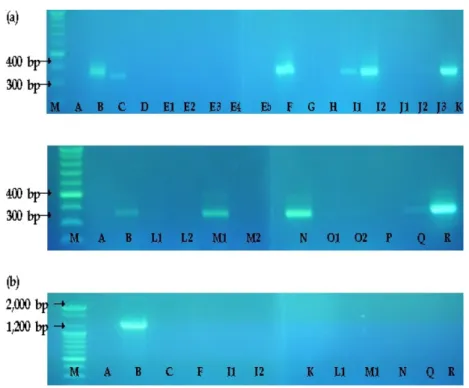
1. Prevalence of B. cereus in starch-based cooked foods From the experiments with 43 starch-based cooked foods, including ready-to-eat foods, 16 samples showed positive responses on the MYP medium. The PCR tests performed to confirm the generic B. cereus and emetic types showed that 32.6% of the samples (14 food items) contained generic B.
cereus, ranging from 0.5 to 1.95 log cfu/g. Emetic B. cereus was not detected in any of the samples <Table 3>.
For the levels of generic B. cereus, a cake made with cheese showed the highest levels of B. cereus at 1.95 log cfu/
g, followed in order by the fried rice dishes with seafood (1.35 log cfu/g) and ham and vegetables (1.30 log cfu/g).
Despite having lower levels of B. cereus, deopbap and
gimbap also contained B. cereus ranging from 0.5 to 1.0 log cfu/g. Steamed rice dishes, including mixed grains, juk, and rice cakes, were not contaminated with B. cereus. Lunch boxes, such as chicken mayonnaise, sanchae-bibimbap, and curried rice, also did not contain B. cereus. Three types of popular spaghetti (carbonara, meatball, and garlic and oil sauce), and bread (e.g., baguette and bagel) also did not contain B. cereus. PCR analyses for the cereulide synthetic gene showed that none of the 43 food samples contained B.
cereus generating the cereulide toxin substance <Figure 2>.
Few studies in Korea have examined B. cereus contamination in raw rice. In raw rice samples, B. cereus was detected in 25 out of 36 samples (69.4%); two of these samples carried the emetic B. cereus (Forghani et al. 2016). In a study of the prevalence of emetic toxin-producing B. cereus in Korea rice (Kim et al. 2014), 37 out of 65 white rice samples (57.8%) were contaminated with B. cereus spores, but the emetic toxin was detected in only one sample, showing a 2.7%
detection rate. Ankolekar et al. (2009) analyzed 178 raw rice samples from retail food stores for the presence of B. cereus spores. Spores of the bacillus species were found in 94 (52.8%) of the rice samples, showing a prevalence of hbl enterotoxin (56.6%) and nhe enterotoxin (89.1%). On the other hand, the cereulide synthetase (ces) gene was not identified in any isolates (Ankolekar et al. 2009).
In terms of levels of B. cereus contamination in cooked rice foods or ready-to-eat foods, B. cereus was detected in 16 out of 60 samples in a quantitative test (26.7%) (Kim 2016), and a very low percentage of samples were unsatisfactory with more than 4 log cfu/g of B. cereus. In the present study, 14 samples from 43 starch-based cooked foods (32.6%) were contaminated with generic B. cereus according to the PCR tests; the contamination level of B. cereus of the 14 samples ranged from 0.5 to 1.95 log cfu/g, but none of them was the emetic B. cereus. This shows that the limit of B. cereus for ready-to-eat food samples of 4 log cfu/g is appropriate (KMFDS 2018).
Table 2. MRM transitions and conditions of valinomycin and cereulide
Compound Q1 Q3 DP EP CE CXP
Valinomycin 1128.8 1083.9
121 10 51 30
343.3 83 18
Cereulide 1170.7 1125.7
131 10 53 30
357.2 85 18
Figure 1. Mass spectrum of valinomycin and cereulide (a) valinomycin (b) cereulide and (c) calibration curve for valinomycin.
2. Storage tests on the growth of B. cereus at different times and temperatures
In the delivered fried rice dishes stored at 7, 25, 35, and 57
oC for 96 h, none of the samples stored at 7 and 57
oC produced B. cereus colonies on the MYP plate. Some samples exposed to 25 and 35
oC for more than 20 h showed the presumptive B. cereus, but neither generic B. cereus nor emetic B. cereus was identified by the PCR assay. This
suggests that no emetic B. cereus existed on the delivered fried rice dishes after 96 h storage at 7, 25, 35, and 57
oC.
Although the data are not presented in the Table, the samples showed 4.91, 6.22, 6.65, and 4.62 log cfu/g of APC at 7, 25, 35, and 57
oC, respectively. Moreover, at those temperatures, the average pH was 7.68, 6.27, 5.94, and 7.24, respectively, and the salinity was 0.04, 0.05, 0.05, and 0.04%, respectively.
<Table 3> Prevalence of B. cereus in 43 starch foods (Unit: log cfu/g) (Mean ± SD)
Food Presumptive test Confirmed test Cereulide (ces gene) RemarkRice
Boiled rice (n=2) 1)ND1) ND ND Takeout
Steamed rice ND ND ND Cooking
Boiled barley ND ND ND Cooking
Brown rice ND ND ND Cooking
Boiled glutinous rice ND ND ND Cooking
Deopbap Spicy stir-fried pork- deopbap 1.00±0.00 1.00±0.00 ND Delivered
Squid deopbap ND ND ND Delivered
Gimbap
Gimbap (n=2) 1.82±0.74 ND ND Takeout
Kimchi Gimbap (n=2) 1.65±0.92 0.50±0.71 ND Takeout
Cheese Gimbap (n=2) 1.65±0.92 0.50±0.71 ND Takeout
Tuna Gimbap (n=2) 2.11±1.14 0.65±0.91 ND Takeout
Beef Gimbap (n=2) ND ND ND Takeout
Box lunch
Chicken mayo ND ND ND Takeout
Sanchae-bibimbap ND ND ND Takeout
Curried rice ND ND ND Takeout
Fried rice
Kimchi fried rice 2.18±0.00 1.09±0.00 ND Delivered
Fried rice with ham and vegetable 1.30±0.00 1.30±0.00 ND Delivered
Fried rice (n=2) 1.57±0.81 0.50±0.71 ND Delivered
Fried rice with seafood (n=2) 1.35±0.49 1.35±0.49 ND Delivered
Bread
Baguette ND ND ND Takeout
Grain bread ND ND ND Takeout
Bagel ND ND ND Takeout
Cake Whipped-cream cake ND ND ND Takeout
Cheesecake 1.95±0.00 1.95±0.00 ND Takeout
Spaghetti
Spaghetti with tomato sauce ND ND ND Takeout
Spaghetti carbonara ND ND ND Takeout
Spaghetti with garlic and oil sauce ND ND ND Takeout
Rice cake
Jeolpyeon ND ND ND Takeout
Injeolmi ND ND ND Takeout
Steamed rice cake ND ND ND Takeout
Rice cake with beans ND ND ND Takeout
Baekseolgi ND ND ND Takeout
Juk
Vegetable-juk ND ND ND Takeout
Beef and mushrooms-juk ND ND ND Takeout
Seafood-juk ND ND ND Takeout
1)ND: Not detected
Figure 2. PCR detection of B. cereus and cereulide-producing B. cereus (a) B. cereus and (b) cereulide producing B. cereus.
Lane M, size marker; lane A, negative; lane B, B. cereus NCCP 14796 used as the cereulide-producing reference strain; lane C, B. cereus isolated from spicy stir-fried pork-deopbap; lane D, B. cereus isolated from gimbap (a); lane E, B. cereus isolated from gimbap (b); lane F, B. cereus isolated from Kimchi gimbap (a); lane G, B. cereus isolated from Kimchi gimbap (b); lane H, B. cereus isolated from cheese gimbap (a); lane I, B.
cereus isolated from cheese gimbap (b); lane J, B. cereus isolated from tuna gimbap (a); lane K, B. cereus isolated from tuna gimbap (b); lane L, B. cereus isolated from Kimchi fried rice; lane M, B. cereus isolated from fried rice with ham and vegetable; lane N, B. cereus isolated from fried rice (a); lane O, B. cereus isolated from fried rice (b); lane P, B. cereus isolated from fried rice with seafood (a); lane Q, B. cereus isolated from fried rice with seafood (b); lane R, B. cereus isolated from cheese cake.
Figure 3. PCR detection of cereulide-producing B. cereus (a) 7
oC , (b) 25
oC , (c) 35
oC and (d) 57
oC .
Lane M, size marker; lane A, negative; lane B, B. cereus NCCP 14796 used as the cereulide-producing reference strain; lane C, B. cereus isolated from inoculated fried rice at 0 h; lane D, B. cereus isolated from inoculated fried rice at 4 h; lane E, B. cereus isolated from inoculated fried rice at 6 h; lane F, B. cereus isolated from inoculated fried rice at 8 h; lane G, B. cereus isolated from inoculated fried rice at 20 h; lane H, B. cereus isolated from inoculated fried rice at 24 h; lane I, B. cereus isolated from inoculated fried rice at 30 h; lane J, B. cereus isolated from inoculated fried rice at 48 h; lane K, B. cereus isolated from inoculated fried rice at 72 h; lane L, B. cereus isolated from inoculated fried rice at 96 h.
3. Growth of B. cereus and APC on the fried rice dishes after inoculating emetic B. cereus for different times and temperatures
The initial concentration of B. cereus NCCP 14,796 inoculated on the fried rice dishes at 0 h was 4.22 log cfu/g.
<Figure 3> presents the PCR detection of cereulide from the emetic B. cereus of the samples. The average levels of B.
cereus on the fried rice dishes at 7, 25, 35, and 57
oC were 4.38, 7.31, 7.88, and 3.82 log cfu/g, showing rapid growth at
25 and 35
oC and a peak curve around 48 h with gradually slower growth to 96 h <Figure 4a>. Two-way ANOVA (Analysis of Variance) showed that the growth of B. cereus was affected by the storage temperature (P<0.001) and time (P<0.05), with a significantly higher R
2value of 74.15%.
Therefore, B. cereus grew more rapidly at 25 or 35
oC than at 7 or 57
oC.
Under the same storage environment, the average level of
APC after 96 h at 7, 25, 35, and 57
oC was 4.24, 7.27, 7.74,
Figure 4. Changes in B. cereus, APC, pH, and salinity in the inoculation test of emetic B. cereus at different storage
temperatures and times (a) Growth of B. cereus NCCP 14796 on inoculated fried rice at 7
oC , 25
oC , 35
oC , and 57
oC .
Scatter diagram made by Minitab 16(Two-way ANOVA, Temp (F=33.80***), Time (F=2.49*) R2=74.15%) (b) Growth of APC on inoculated fried rice at 7oC
, 25oC
, 35oC
, and 57oC
. Scatter diagram made by Minitab 16 (Two-way ANOVA, Temp (F=28.27***), Time (F=2.87*) R2=71.67%) (c) Changes in pH on inoculated fried rice at 7oC
, 25oC
, 35oC
, and 57oC
. Scatter diagram made by Minitab 16 (Two-way ANOVA, Temp (F=15.72***), Time (F=2.96*) R2=61.29%) (d) Changes in salinity on inoculated fried rice at 7oC
, 25oC
, 35oC
, and 57oC
. Scatter diagram made by Minitab 16 (Two-way ANOVA, Temp (F=0.59), Time (F=2.57) R2=24.92%)and 3.60 log cfu/g <Figure 4b>, and the average pH was 7.28, 6.52, 6.27, and 7.15, respectively.
The pH of the sample <Figure 4c> decreased sharply with increasing storage time at 25 and 35
oC compared to 7 and 57
oC. The initial pH of 7.2 dropped to 5.7 at 35
oC and 6.0 at 25
oC for 48 h and then maintained pH 6.0 for 96 h (temperature effect P<0.001, time effect P<0.05). On the other hand, the saline concentration was stable at 0.05%
under different storage times and temperatures, not showing a significant difference <Figure 4d>.
The pH of the fried rice samples ranged from 6.61 to 8.09, depending on the ingredients, showing an average of 7.13 (Chang et al. 2011). Another study suggested that the Aw of the cooked rice samples ranged from 0.97 to 0.99, but there was no correlation between Aw and toxin production (Finlay et al. 2002)
4. Production of cereulide of B. cereus under different time and temperature conditions
The levels of B. cereus in the samples exposed to 4 h at 7, 25, 35, and 57
oC were 4.22, 4.78, 6.04, and 4.18 log cfu/g, respectively, and levels of cereulide production were 150.41, 1680.70, 2652.65, and 77.83 μg/mL, respectively. The samples exposed to 7 and 57
oC showed a significant decrease in cereulide production. The samples exposed at 25 and 35
oC showed a considerably higher level of cereulide production, even though the dilution factors increased with the incubated time.
McElroy et al.(2000) suggested that the emetic toxin is produced at a B. cereus level of 5 log cfu/g at 26.7
oC.
Another study pointed out that the emetic toxin was not produced below 12
oC. Finlay et al. (2002), however, detected more cereulide at low temperatures than at room temperature, and no toxin was detected at the levels of <4 log CFU/g at 15
oC. In contrast, the quantity of toxin increased to a 60 titer of cereulide when the mean viable count was 6.8 log cfu/g at 15
oC for 48 hr, whereas a 27 titer was observed
at 7.2 log cfu/g stored at 30
oC. This result is consistent with the present study, even though lower cereulide levels were detected at 7
oC than at 25 and 35
oC.
In summary, emetic B. cereus was not detected in the 43 starch foods examined, but there is still a possibility of risk on generic B. cereus contamination during delivery to consumers. Therefore, caution regarding B. cereus is still needed. This study identified the prevalence of the emetic B.
cereus and the concentration of the cereulide using a simulation experiment, depending on the storage temperatures and times. This study had some limitations. The study used convenient samples from a selling place near the laboratory and a franchise outlet having standard operation guidelines.
Therefore, the prevalence of general or emetic B. cereus could be higher in the real industry, considering the small scale of retailers or food service facilities. In addition, a one- time experiment under different storage scenarios was used to calculate the amount of cereulide. Thus, a larger database should be instituted with the quantitative analysis of cereulide depending on the time and temperature, and selling places. Despite these limitations, this study conveys valuable information.
IV. Summary and Conclusion
Fried rice samples showed higher levels of B. cereus among starch-, vegetable- and protein-based foods. Moreover, gimbap could be a major carrier of B. cereus. Under a mean viable level of 3 log cfu/g, there was no detection of the emetic cereulide toxin. In addition, fried rice contaminated with emetic B. cereus could contain cereulide at the exposed condition of 7 and 57
oC in the inoculation experiment, despite lower concentrations of emetic B. cereus cells being detected. This means that although the growth of B. cereus was stopped, the toxin could remain in the samples if they are contaminated with B. cereus at more than 4 log cfu/g.
Through the study, the blocking pathways of emetic B.
Table 4. Level of cereulide production depending on the time and temperature conditions (Unit: ng/mL)
7oC 25oC 35oC 57oC
Time DFSM1) Mean±SD DFSM Mean±SD DFSM Mean±SD DFSM Mean±SD
0 h 10-2 1883.25±241.90 10-2 1883.25±241.90 10-2 1883.25±241.90 10-2 1883.25±241.90 4 h 10-2 1504.10±79.480 10-3 1680.70±81.180 10-3 2652.65±86.480 10-2
0778.30±400.65
6 h 10-2 1609.10±299.53 10-3 2409.40±159.81 10-4 2740.95±357.10 10-2 1132.60±31.110 8 h2) 10-2 1504.15±172.04 10-4 3641.30±403.48 10-404845.40±2604.13
10-2 1116.70±111.30 1)Dilution factor on solid media2)F values were not calculated because of biomass taken from different dilution factors of solid media
cereus contamination could be suggested as the most critical control points: use of rice not contaminated with B. cereus, thorough cooking of rice, prevention of cross-contamination in the production process, consumption without holding the cooked foods at room temperature.
A future study, with more and varied sample types and small-scale food service facilities, will be needed to determine the prevalence of general and emetic B. cereus in samples and develop databases to generalize the results. In addition, the optimal production conditions for preventing the production of cereulide in higher risk B. cereus dishes should be identified to control the risk of emetic B. cereus foodborne illnesses. A future study is also needed to identify treatment methods for the inactivation of emetic B. cereus and cereulide.
Conflict of Interests
No potential conflict of interest relevant this article was reported.
References
Agata N, Ohta M, Yokoyama K. 2002. Production of Bacillus cereus emetic toxin (cereulide) in various foods. Int. J. Food Microbiol.
73:23-27.
Ankolekar C, Rahmati T, LabbÈ RG. 2009. Detection of toxigenic Bacillus cereus and Bacillus thuringiensis spores in U.S. rice. Int J Food Microbiol 128(3):460-466.
Bahk G, Todd ECD, Hong C, Oh D, Ha S. 2007. Exposure assess- ment for Bacillus cereus in ready-to-eat Kimbab selling at stores.
Food Control. 18(6):682-688.
Chang H, Lee J, Han B, Kwak T, Kim J. 2011. Prevalence of the levels of Bacillus cereus in fried rice dishes and its exposure assessment from Chinese-style restaurants. Food Sci. Biotechnol.
20(5):1351-1359.
Chang H, Lee J. 2009. Prevalence Bacillus cereus from fried rice dishes and monitoring guidelines for risk management. Korean J Food and Cookery Sci. 25(10):45-54.
Choi E. 2015. Development of polydiacetylene-based biosensor for rapid detection of Bacillus cereus toxins. Master's degree thesis, Korea University, Korea.
Dong QL. 2013. Exposure assessment of Bacillus cereus in Chinese- style cooked rice. J. Food Process Engineering. 36(3):329-336.
Ehling-Schulz M, Fricker M, Scherer S. 2004. Identification of emetic toxin producing Bacillus cereus strains by a novel molec- ular assay. FEMS Microbiology Letters. 232:189-195.
Finlay W, Logan N, Sutherland A. 2002. Bacillus cereus emetic toxin production in cooked rice. J Food Microbial 19(5):431-439.
Forghani F, Singh P, Seo K, Oh D. 2016. A novel pentaplex real time (RT)- PCR high resolution melt curve assay for simulta- neous detection of emetic and enterotoxin producing Bacillus cereus in food. Food Control 60:560-568.
Gadaga TH, Samenda BK, Musuna C, Chibanda D. 2008. The microbiological quality of informally vended foods in Harare, Zimbabwe. Food Control. 19:829-832.
Granum PE, Lund T. 1997. Bacillus cereus and its food poisoning toxins. FEMS microbiology letters. 157(2):223-228.
Haggblom MM, Apetroaie C, Andersson MA, Salkinoja-Salonen MS.
2002. Quantitative analysis of cereulide, the emetic toxin of Bacillus cereus, produced under various conditions. American Society for Microbiology. 68(5):2479-2483.
Jaaskelainen EL, H‰ggblom MM, Andersson MA, Salkinoja- Salonen MS. 2004. Atmospheric oxygen and other conditions affecting the production of cereulide by Bacillus cereus in food.
Int. Journal of Food Microbiology. 96(1):75-83.
Kang SH, Kim KJ, Kim WY, Chung SI. 2008. Usefulness of bacteri- ological tests and sspE PCR for identification of Bacillus cereus group. J Bacteriol & Virology. 38(2):61-75.
Kim HK, Lee HT, Kim JH, Lee SS. 2008. Analysis of microbiologi- cal contamination in ready-to-eat foods. J. Fd Hyg. Safety.
23(4):285-290.
Kim HS. 2016. Analysis and control measure of microbiological haz- ards in salad and fried rice at food service establishment. Kyung- hee University, Korea.
Kim MG, Choi JC. 2009. Biotoxins involved in foodborne disease and their control enterotoxins and emetic toxin of B. cereus. Food Science and Industry. 42(2):2-19.
Kim SH, Kim MG, Kang MC, Son YW, Lee CH, Kim IB, Lee YJ, Choi SY. 2004. Isolation and growth pattern of Bacillus cereus from ready-to-eat foods. Journal of Life Science. 14(4):664-669.
Kim TS, Km MJ, Kang YM, Oh G, Choi SY, Oh MS, Yang YS, Seo JM, Ryu MG, Kim ES, Ha DR, Cho BS. 2014. Molecular charac- terization and toxin profile of Bacillus cereus strains isolated from ready-to-eat foods. Korean J Food Sci Technol 46(3):1-7.
Korea Ministry of Food and Drug Safety. 2016. Foodborne Illness Statistics. Available from: https://www.foodsafetykorea.go.kr/por- tal/healthyfoodlife/foodPoisoningStat.do?menu_no=519&menu_grp
=MENU_GRP02, [accessed 2016.02.27.].
Korea Ministry of Food and Drug Safety. 2018. Food Code. Avail- able from: https://www.foodsafetykorea.go.kr/foodcode/01_03.jsp?
idx=12, [accessed 2018.11.20.].
Kotiranta A, Lounatmaa K, Haapasalo M. 2000. Epidemiology and pathogenesis of Bacillus cereus infections. Microbes Infect.
2(2):189-198.
Lake R, Hudson A, Cressey P. 2004. Risk profile: Bacillus spp. in rice. Acrown Research Institute. New Zealand. 1-40.
Lim HS, Hwang JY, Kim JI, Choi JC, Kim M. 2016. Validation and measurement uncertainty evaluation of the GC-MS method for the direct determination of hexamethylenetetramine from foods.
Food Sci. Biotechnol. 25:1305ñ1311.
McElroy DM, Jaykus LA, Foegeding PM. 2000. Validation and anal- ysis of modeled predictions of growth of Bacillus cereus spores in boiled rice. J. Food Prot. 63:268ñ272.
Yamada S, Ohash IE, Agata N, Venkateswaran K. 1999. Cloning and nucleotide sequence analysis gyrB of Bacillus cereus, B thurindi- ensis, B. mycoides and B. anthracis and their application to the detection of B. cereus in rice. Appl. Environ. Microbiol. 65:1483- 1490.
Author biography
Kim Heesun (Seoul Research Institution of Public Health and Environment, Researcher, https://orcid.org/0000-0002-1007-3903) Chang Hyeja (Dankook University, Professor, https://orcid.org/0000-0003-4871-3053)