Article Appl. Chem. Eng., Vol. 31, No. 1, February 2020, 57-60
https://doi.org/10.14478/ace.2019.1109
57
1. Introduction1)
During collection of food wastes in container, significant amount of odors or volatile organic compounds can be generated. Among various odor compounds from food wastes, acetaldehyde is the most difficult to decompose. Therefore, suitable methods to reduce acetaldehyde va- por should be developed. Until now, many methods to reduce volatile organic compounds including acetaldehyde vapor have been suggested [1-3]. For example, adsorption can be applied to capture acetaldehyde but periodic replacement of used adsorbent may be needed. Also, cata- lytic combustion can be applied to decompose acetaldehyde but this process requires high temperature above 300 ℃[4]. Because food wastes can be stored in a container more than two days, and collection of food wastes is collected at ambient temperature, a suitable odor re- moval process operated under high humidity and ambient temperature should be considered.
Recently many researchers propose a hybrid process comprised of catalyst and non-thermal plasma. The catalyst is introduced either in the discharge zone or downstream from the discharge zone (post plas-
† Corresponding Author: University of Seoul,
School of Environmental Engineering, Seoul 02504, Korea Tel: +82-2-6490-2870 e-mail: [email protected]
pISSN: 1225-0112eISSN: 2288-4505 @ 2020 The Korean Society of Industrial and Engineering Chemistry. All rights reserved.
ma-catalysis, PPC)[5-7]. The PPC system can form reactive oxygen species using O3 emitted from the NTP system, which can enhance ox- idation of VOCs. Therefore, the choice of the desirable catalyst is a crucial factor in the efficient decomposition of O3. Among the reported catalysts, manganese loaded catalyst is one of the best catalysts for ozone oxidation of volatile organic compounds. For example, recently, Zheng et al. have used a vertically-oriented graphenes supported man- ganese catalysts to remove toluene decomposition in PPC system[8]. In addition, Wang et al. have compared Mn, Ag and Ce modified HZSM-5 catalysts for plasma-catalytic oxidation of adsorbed toluene and found that Ag-Mn/HZSM-5 catalyst showed better catalytic ability in both complete oxidation of the adsorbed toluene and suppression of the byproducts[9]. Zhang et al. reported the catalytic performance of series of 10% MnOx/HZSM-5 catalysts with different SiO2/Al2O3 ra- tios toward toluene decomposition[10]. These papers were performed in dry conditions, comparing the activity of the catalyst for VOCs oxi- dation and did not consider the effect on humidity levels. Therefore, it is needed to find a suitable catalyst which shows good activity for VOCs oxidation under high humidity.
As a catalyst support, zeolite has a wide range of applications in in- dustry and in the laboratory with large specific surface area, long cata- lyst life and low cost[11-13]. Furthermore, zeolites are an important class of aluminosilicates and thus existing of wide range of SiO2/Al2O3
ratios. High-silica zeolites are known to be hydrophobic, while low
Mn 담지 미세기공 제올라이트를 이용한 악취오염물질인 아세트알데히드의 분해반응
이형원⋅이희진⋅박영권†
서울시립대학교 환경공학부
(2019년 12월 30일 접수, 2019년 12월 31일 심사, 2020년 1월 4일 채택)
Decomposition of Odor Pollutant Acetaldehyde Using Mn Loaded Microporous Zeolites
Hyung Won Lee, Heejin Lee, and Young-Kwon Park†
School of Environmental Engineering, University of Seoul, Seoul 02504, Korea (Received December 30, 2019; Revised December 31, 2019; Accepted January 4, 2020)
Abstract
An acetaldehyde, a representative food waste odor, was decomposed using a hybrid system comprised of a non-thermal plasma and catalyst at an ambient temperature under high humidity. A five wt.% Mn was impregnated on two differently structured microporous zeolites, namely Beta and ZSM-5, with a different molar ratio of SiO2/Al2O3. Under high humidity conditions, the acetaldehyde degradation was higher in zeolites with the high ratio of SiO2/Al2O3. Among studied catalysts, a five wt.%
Mn/Beta (SiO2/Al2O3 = 300) showed the highest acetaldehyde removal activity owing to its high hydrophobicity and reducibility. During long term stability test using the same catalyst for 110 hours, the acetaldehyde removal activity was rela- tively well-maintained.
Keywords: Acetaldehyde, Non-thermal plasma, Mn, Beta, Ozone
58 이형원⋅이희진⋅박영권
공업화학, 제 31 권 제 1 호, 2020
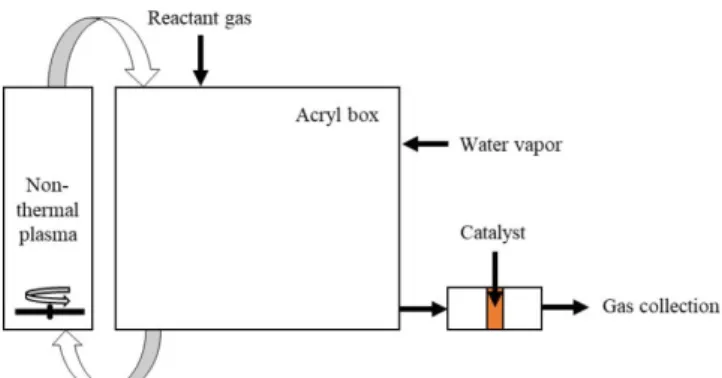
Figure 1. Schematic diagram of the experimental setup.
SiO2/Al2O3 ratios is essentially hydrophilic due to the presence of hy- droxyl groups on its surface. The hydrophilic zeolites can cause tox- icity by occupying active sites on the surface, where the water mole- cules can cover the catalyst surface. The high SiO2/Al2O3 molar ratio of zeolites provide more hydrophobicity of catalyst surface, and thus prevent adsorption of water on the catalyst. These zeolites are expected to show high activity for acetaldehyde degradation in the humid condition. In previous our study[14], we performed acetaldehyde re- moval using hybrid system comprised of plasma and Mn/Y catalysts.
Among different SiO2/Al2O3 ratio Y supports, Mn/Y (SiO2/Al2O3 = 80) having highest SiO2/Al2O3 ratio showed highest acetaldehyde removal activity. However, other representative microporous zeolites has not been applied to the removal of acetaldehyde using a hybrid system of plasma and catalysts under high humidity.
In this study, the effect of different zeolite structure (Beta and ZSM-5) and SiO2/Al2O3 ratio on the removal of acetaldehyde under high humidity was investigated.
2. Experimental
2.1. Catalyst preparation
Commercial ZSM-5 zeolites with different SiO2/Al2O3 molar ratios (SiO2/Al2O3 = 30 and 280) and Beta zeolites with different SiO2/Al2O3
molar ratios (SiO2/Al2O3 = 25 and 300) were supplied by the Zeolyst International. The detailed preparation method was described in our previous study[15].
2.2. Catalyst characterization
Brunauer-Emmett-Teller (BET) measurements were performed to de- termine the specific surface area of each catalyst. Temperature pro- grammed reduction (TPR) was performed using BEL-CAT under a gas mixture (10 vol% H2 in Ar) and the temperature of the catalysts was increased up to 600 ℃ at a heating rate of 10 ℃ min-1.
2.3. Experimental setup and activity tests
Figure 1 shows a schematic diagram of catalytic non-thermal plasma system for degradation of acetaldehyde degradation. It included an ace- taldehyde generator, plasma reactor, water vapor section and catalyst bed.
The detailed experimental procedure was described in literature[15,16].
SiO2/Al2O3 molar ratio Parent* Mn-loaded
Beta 25 680 m2/g 577 m2/g
300 620 m2/g 442 m2/g
ZSM-5 30 405 m2/g 366 m2/g
280 400 m2/g 335 m2/g
* provided by Zeolyst.
Table 1. BET Surface Area of the Catalysts
Figure 2. Acetaldehyde degradation of Mn/Beta with different SiO2/ Al2O3 molar ratios (SiO2/Al2O3 = 25 and 300) and Mn loaded ZSM-5 zeolites with different SiO2/Al2O3 molar ratios (SiO2/Al2O3 = 30 and 280), Conditions: 10 ppm acetaldehyde, under humid air.
3. Results and Discussion
3.1. Catalyst characterization
The BET surface area of parent and Mn-loaded zeolites are listed in Table 1. The order of surface area for the zeolites regardless of the SiO2/Al2O3 molar ratios are as follows: BETA (SiO2/Al2O3 = 25) >
BETA (SiO2/Al2O3 = 300) > ZSM-5 (SiO2/Al2O3 = 30) > ZSM-5 (SiO2/Al2O3 = 280). The decrease in surface area was observed in the 5 wt.% Mn-loaded zeolites. This can be related to partial blocking of some zeolite pores with manganese oxide formed on the surface of zeolite.
3.2. Catalyst activity
The effects of the acetaldehyde degradation efficiency were inves- tigated under humid air conditions after a 30 min plasma treatment with Mn-loaded Beta zeolites and Mn-loaded ZSM-5 zeolites, which have different SiO2/Al2O3 molar ratios (Figure 2). Mn/Beta(300) and Mn/ZSM-5(280) removed approximately 87% and 66% of acetaldehyde at 30 min, whereas Mn/Beta(25) and Mn/ZSM-5(30) removed 55% and 50% of the acetaldehyde after the same period of time, respectively.
In addition, Mn/Beta(300) and Mn/ZSM-5(280) removed the ozone completely after 30 min plasma treatment. For all zeolite, the samples exposed to more hydrophobic zeolite showed higher degradation effi- ciency than those exposed to lower SiO2/Al2O3 ratios (Figure 2).
Accordingly, the acetaldehyde removal efficiency increased with in- creasing hydrophobicity, which is considered a major factor for the ef- ficient decomposition of organic material under humid conditions. Also, Mn/Beta(300) showed higher acetaldehyde removal activity than
59 Mn 담지 미세기공 제올라이트를 이용한 악취오염물질인 아세트알데히드의 분해반응
Appl. Chem. Eng., Vol. 31, No. 1, 2020 Figure 3. TPR profiles of Mn/Y(80), Mn/Beta(300) and Mn/ZSM-5
(280).
Mn/Y(80) which showed good acetaldehyde removal activity in our previous study[14].
The catalytic properties according to the type of support can be ex- plained based on the reduction characteristics analyzed by H2-TPR.
Figure 3 shows the reduction behaviors of Mn/Y(80), Mn/Beta(300), and Mn/ZSM-5(280) catalyst. Mn/Y(80) showed broad reduction peaks centered at 335.1 ℃ and 498.4 ℃. Because of the strong interaction of Y with the large pores and MnOx, they could not be reduced easily and broad peaks were formed in the high temperature region[14].
Mn/Beta(300) showed a single reduction peak at 342.7 ℃. Two reduc- tion peaks were observed at 370.3 ℃ and 523.6 ℃ in Mn/ZSM-5(280).
A low-temperature peak below 400 ℃ was attributed to the reduction of MnO2 and Mn2O3 to Mn3O4[17]. These low-temperature hydrogen consumption peaks revealed highly dispersed and easily reducible MnOx species[18]. On the other hand, the peak at approximately 500
℃ in Mn/Y(80) and Mn/ZSM-5 catalysts indicates that Mn3O4 was re- duced to MnO. Kim et al. examined the removal of VOCs over man- ganese oxide catalysts and reported that the catalytic activity was re- lated to the oxygen mobility. The reduction temperature shifting to a higher temperature reduces the lattice oxygen mobility on the catalyst.
A higher oxygen mobility means higher catalyst activity[19]. This sug- gests that Mn/Beta(300), which had a single reduction peak at low temperatures compared to Mn/Y(80) and Mn/ZSM-5(280), showed high activity in the removal of acetaldehyde.
A long term stability test was carried out with 5 wt.% Mn/Beta (SiO2/Al2O3 = 300), which showed high activity for the acetaldehyde removal efficiency (Figure 4). The plasma system was repeatedly turned on for 20 min and turned off for 10 min during the reaction.
This is because the amount of ozone generated increased as the plasma apparatus was operated. Figure 8 shows the removal efficiency of ace- taldehyde and ozone for 110 h. The acetaldehyde removal efficiency was 100% and 67% at the highest and lowest, respectively, showing an average efficiency of 83% for 110 h. The acetaldehyde degradation efficiency was not constant because acetaldehyde removal was affected by the ozone generated in the plasma. The average concentration of ozone was 60 ppm in the plasma system in on mode and 35 ppm in
Figure 4. Long term stability test of Mn/Beta(300). Conditions, 10 ppm acetaldehyde, 12,000 mL g-1 h-1 WHSV, under humid air.
the system in off mode. The ozone generated was removed completely by the catalytic reaction.
4. Conclusion
The acetaldehyde removal by the hybrid plasma-catalyst system was performed. The catalysts were 5 wt.% Mn loaded zeolites (Beta and ZSM-5) with different SiO2/Al2O3 ratios. The acetaldehyde degradation efficiency was higher with higher SiO2/Al2O3 ratio under high humidity conditions owing to higher hydrophobicity of the zeolite surface. When the relative humidity was 60%, the acetaldehyde removal efficiency was the highest at 87% in the reaction over the 5 wt.% Mn/Beta (SiO2/Al2O3 = 300). This may be due to its highest hydrophobicity and reducibility. Also, a long term stability test showed that removal activ- ity of 5 wt.% Mn/Beta (SiO2/Al2O3 = 300) was relatively maintained well.
Acknowledgement
This research was supported by the Technology Development Pro- gram to Solve Climate Changes of the National Research Foundation (NRF) funded by the Ministry of Science, ICT (2017M1A2A2086839).
Reference
1. J. W. Jeon, D. H. Lee, Y. S. Won, and M. G. Lee, Characteristic of photocatalytic decomposition of individual and binary mixture vapors of some VOCs by a cylindrical UV reactor with helically installed TiO2-coated perforated planes, Korean J. Chem. Eng., 35, 744-749 (2018).
2. P. Kumar, E. Vejerano, A. Khan, G. Lisak, J. H. Ahn, and K. H.
Kim, Metal organic frameworks (MOFs): Current trends and chal- lenges in control and management of air quality, Korean J. Chem.
Eng., 36, 1839-1853 (2019).
3. P. Yang, M. Song, D. Kim, S. P. Jung, and Y. Hwang, Synthesis conditions of porous clay heterostructure (PCH) optimized for vol- atile orgnic compounds (VOC) adsorption, Korean J. Chem. Eng., 36, 1806-1813 (2019).
4. J. H. Jeong, S. Y. Kim, J. Kim, B. J. Cha, S. W. Han, C. H. Park, T. G. Woo, C. S. Kim, and Y. D. Kim, Adsorption and oxidative desorption of acetaldehyde over mesoporous FexOyHz/Al2O3, ACS Omega, 4, 5382-5391 (2019).
5. Z. P. Ye, J. M. Giraudon, N. De Geyter, R. Morent, and J. F.
Lamonier, The design of MnOx based catalyst in post-plasma cat-
60 이형원⋅이희진⋅박영권
공업화학, 제 31 권 제 1 호, 2020
alysis configuration for Toluene abatement, Catalysts, 8, 32 (2018).
6. L. J. Guo, N. Jiang, J. Li, K. F. Shang, N. Lu, and Y. Wu, Abatement of mixed volatile organic compounds in a catalytic hy- brid surface/packed-bed discharge plasma reactor, Front. Env. Sci.
Eng., 12, 12 (2018).
7. S. Sultana, Z. P. Ye, S. K. P. Veerapandian, A. Lofberg, N. De Geyter, R. Morent, J. M. Giraudon, and J. F. Lamonier, Synthesis and catalytic performances of K-OMS-2, Fe/K-OMS-2 and Fe-K-OMS-2 in post plasma-catalysis for dilute TCE abatement, Catal. Today, 307, 20-28 (2018).
8. Z. Bo, H. Hao, S. L. Yang, J. H. Zhu, J. H. Yan, and K. F. Cen, Vertically-oriented graphenes supported Mn3O4 as advanced cata- lysts in post plasma-catalysis for toluene decomposition, Appl.
Surf. Sci., 436, 570-578 (2018).
9. W. Z. Wang, H. L. Wang, T. L. Zhu, and X. Fan, Removal of gas phase low-concentration toluene over Mn, Ag and Ce modified HZSM-5 catalysts by periodical operation of adsorption and non-thermal plasma regeneration, J. Hazard. Mater., 292, 70-78 (2015).
10. C. Zhang, H. Huang, G. Li, L. Wang, L. Song, and X. Li, Zeolitic acidity as a promoter for the catalytic oxidation of toluene over MnOx/HZSM-5 catalysts, Catal. Today, 327, 374-381 (2018).
11. Y. You, Y. Park, J. Han, T. S. Kwon, D. Seo, M. Seong, and J.
K. Jeon, Synthesis of exo-tricyclopentadiene from endo-docyclo- pentadiene over mesoporous aluminosilicate catalysts prepapred from Y zeolite, Korean J. Chem. Eng., 36, 30-36 (2019).
12. M. Shen, Z. Wang, X. Li, J. Wang, J. Wang, C. Wang, and J.
Wang, Effects of regeneration conditions on sulfated CuSSZ-13
catalyst for NH3-SCR, Korean J. Chem. Eng., 36, 1259-1257 (2019).
13 B. Liu, E. Liu, X. Hu, and J. Fan, Methanol aromatization over CrZn-modified HZSM-5 catalysts, Korean J. Chem. Eng., 35, 867-874 (2018).
14. H. Lee, M. Y. Song, S. M. Ryu, and Y. K. Park, Acetaldehyde oxidtaion under high humidity using a catalytic non-thermal plas- ma system over Mn-loaded Y zeolites, Mater. Lett., 262, 127051 (2019).
15. M. Y. Song, H. W. Ryu, S. C. Jung, J. Song, B. J. Kim, and Y.
K. Park, A hybrid reactor system comprised of non-thermal plasma and Mn/Natural zeolite for the removal of acetaldehyde from food waste, Catalysts, 8, 389 (2018).
16. Y. Hwang, A. Farooq, S. H. Park, K. H. Kim, M. H. Lee, S. C.
Choi, M. Y. Kim, R. Park, and Y. K. Park, NH3-induced removal of NOx from a flue gas stream by silent discharge ozone gen- eration in a double reactor, Korean J. Chem. Eng., 36, 1291-1297 (2019).
17. W. Xu, G. Zhang, H. Chen, G. Zhang, Y. Han, Y. Chang, and P.
Gong, Mn/beta and Mn/ZSM-5 for the low-temperature selective catalytic reduction of NO with ammonia: Effect of manganese pre- cursors, Chin. J. Catal., 39, 118-127 (2018).
18. J. Trawczynski, B. Bielak, and W. Mista, Oxidation of ethanol over supported manganese catalysts-effect of the carrier, Appl.
Catal. B: Environ., 55, 277-285 (2005).
19. S. C. Kim and W. G. Shim, Catalytic combustion of VOCs over a series of manganese oxide catalysts, Appl. Catal. B: Environ., 98, 180-185 (2010).