교신저자 : 박지혁([email protected]) || 접수일: 2019.01.11 || 심사일: 2019.01.17
|| 게재승인일: 2019.01.31 재활치료과학 제 8 권 제 1 호
Therapeutic Science for Rehabilitation Vol. 8. No. 1. 2019.
https://doi.org/10.22683/tsnr.2019.8.1.051
Development and Usability of a Cognitive Rehabilitation System Based on a Tangible Object for the Elderly
Park, Sangmi*, B.H.Sc.,O.T., Won, Kyung-A*, B.H.Sc.,O.T., Shin, Yun-Chan*, B.H.Sc.,O.T., Park, Ji-Hyuk**, Ph.D.,O.T.
*Dept. of Occupational Therapy, Graduate School of Yonsei Univerisy
**Dept. of Occupational Therapy, College of Health Science, Yonsei University
Abstract
Objective: To develop and verify the usability of a cognitive rehabilitation system with diverse cognitive functional levels based on tangible objects for the elderly population.
Methods: A study was conducted to investigate the system's strengths and weaknesses by upgrading it with responses from two groups of 15 patients and 4 occupational therapists.
After undergoing three forms of training - regarding executive function, memory, and concentration for a total of 20–30 min, the participants were asked to answer a structured questionnaire about contents of the three forms of training, hardware including the tablet PC functioning as a CPU and display media and tangible objects, and satisfaction of experiential usage of the system.
Results: Both groups responded that the most interesting training area was executive function while the least interesting was concentration. Six participants reported that the size of the screen of the tablet PC was inappropriate, and five responded that the size of the tool was inappropriate. All therapists and 40% of the patients responded that they were satisfied with this system.
Conclusion: This system’s features include easy manipulation of tangible tools for performing training tasks, easy selection of and training in cognitive areas based on users’ needs, and automatic adjustment of difficulty level based on users’ performance. The training environment was designed to be similar to the natural environment by using tangible objects in both hands as input devices for the system, and the system was considered as an alternative to the lack of community cognitive rehabilitation specialists.
Key words: Community rehabilitation service, Computerized cognitive rehabilitation system, Elderly, Tangible objects
I. Introduction
The global age trend has revealed that the number of community-dwelling elderly individuals is increasing.
Therefore, the demand for cognitive rehabilitation programs is also increasing for people with cognitive impairment due to natural aging or brain damage such as dementia or stroke. According to the annual report (National Institute of Dementia & Ministry of Health and Welfare, 2018) issued by the Central Dementia Center, the number of patients with dementia nationwide is estimated to be 700,000 and will continue to increase to a million by 2024 and two million by 2041. As the elderly population increases, the prevalence of dementia and medical costs are expected to rise in parallel. The medical expenses of elderly people aged ≥65 years are 24.564 trillion won, which corresponds to 38.0% of total medical expenses in 2016 (Statistics Korea, 2017).
The number of elderly people who need cognitive rehabilitation services among the community-dwelling people is increasing due to increased incidence of dementia, natural cognitive health loss due to aging, and cerebral function loss directly associated with aging such as stroke. However, the organizations that provide cognitive rehabilitation services are limited to hospital-level medical centers or public-health centers and specialized services for elderly people with normal cognitive function.
Aging results in the natural deterioration of cognitive function in adults. However, considering that cognitive function is closely related to the quality of life in elderly people and the average age is showing an increasing trend, there is increased
emphasis on maintaining normal cognitive function for as long as possible to maintain the quality of life for elderly people and their caregivers.
The cognitive function of elderly people could be reserved using appropriate cognitive stimuli (Song, Kim, & Kim, 2018). However, there is a shortage of specialists to provide cognitive rehabilitation services in the community. Another problem is that cognitive rehabilitation therapy has not been systematically standardized for all services (Mo &
Lim, 2015). Therefore, it is easily influenced by the capacity of the therapist.
Computerized cognitive rehabilitation system is useful for delaying and preventing cognitive decline in elderly people with normal cognitive function. It is used as a cognitive rehabilitation approach in patients with cognitive impairment. In a study on the effects of computerized cognitive training on elderly people (Kim, Kang, Park, Park, & Park, 2016), its results on the four groups, i.e., the Alzheimer’s, mild cognitive impairment, stroke, and normal elderly, showed that the improvement in memory after the intervention in three studies in the normal elderly group and two studies among the three groups reported that the effect was maintained for 3 to 6 months.
Aside from the effects of cognitive improvement, computerized cognitive rehabilitation system has some advantages. It allows focused training and rehabilitation for desired areas from among the various training options categorized, because the contents for training sections are clearly classified by cognitive areas like memory, attention, calculation, and so on. Moreover, it can provide real-time feedback based on user performance. It can also
change the difficulty level of training according to the performance to provide challenging tasks for users (Park, Lee, Lee, Choi, & Kim, 2018). In addition, the training tasks offered in the form of games containing interesting factors have the advantage of motivating users to participate (Kueider, Parisi, Gross, & Rebok, 2012).
Currently, a couple of computerized cognitive training programs like RehaCom, Comcog, and Kotras are used in some medical centers. However, they have several inappropriate contents in the domestic culture, and the visual stimuli in the program are not closely related to everyday life. They contain an input device to help users answer the question by controlling a joystick or selecting and pushing buttons. Some programs are equipped with touchscreen systems for input without reliance on additional hardware for input. Familiarizing the operation methods of the input device takes time.
The touchscreen feature enables users to respond to the questions directly and intuitively, but it is not natural compared to the manual form of inputting in daily living. In other words, our hands can easily manipulate some tools to execute the activities of daily living; for instance, people use their hands to hold pencils when writing letters or hold spoons when they drink soup.
People are expected to use various tools according to the activity being performed; thus, practitioners can use this principle in therapeutic approaches.
Providing rehabilitation services in the natural context could be an effective approach with high ecological validity.
Therefore, this study aimed to develop a cognitive rehabilitation system with diverse cognitive function
levels based on tangible objects for elderly people and to verify its usability. A usability study was conducted to investigate the system's strengths and weaknesses in order to upgrade it using the responses from patients who require rehabilitation services and occupational therapists, professionals who mainly provide cognitive rehabilitation services (Lee, Kim, & Han, 2012).
II. Method
1. Summary of the rehabilitation system based on tangible objects
Tangible object tools were developed by focusing on various tools in everyday life. Since they have different functions in both hands, the program is designed to be successful only when the tangible object tools were properly selected and used in the task.
This is the same as making it easier to complete a task when using the right tools in everyday life.
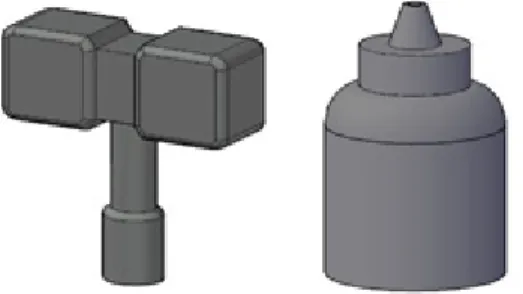
The function of the tangible object tool used as input devices in this system can be distinguished by putting a removable identification medium at the end of the tool when the training begins (Figure 1).
The cognitive rehabilitation system based on tangible objects for elderly people consists of a tablet PC (item model number: BGTAB-NV20A, Nabi Big Tab HD series) equipped with a cognitive rehabilitation raining program and two customized tangible object tools. The tablet PC provides the training contents and the results of the task performance, and the tangible object tools are devices used for inputting
the responses to the tasks. The tangible object tool is connected to the tablet PC through Bluetooth communication. When the training program is visually presented through the tablet PC screen, the user grasps two tangible object tools in both hands and selects a proper tool between the two. When the user touches a specific position on the screen with the selected tools, audiovisual information indicates whether the response executed was correct or incorrect.
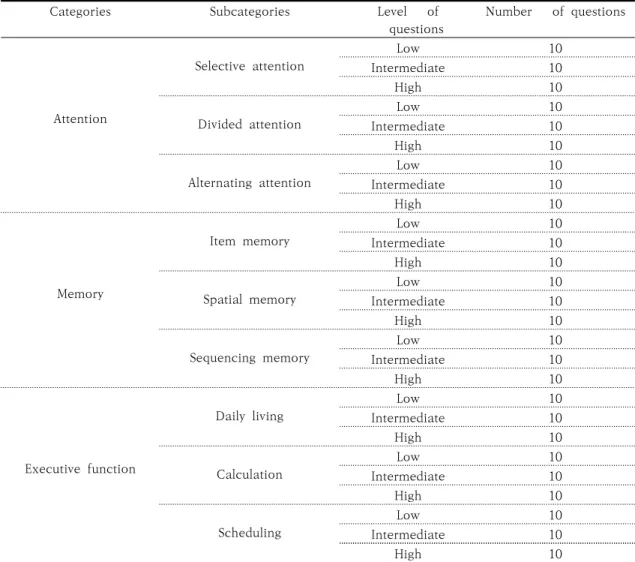
The training program includes three categories of training content divided into concentration, memory, and executive functions, and each category is subdivided into three subcategories(Table 1). The subcategories include 30 questions: 10 for each level of difficulty. If ≥7 tasks were successfully executed among the 10 questions in the lower difficulty level, the system automatically adjusted the difficulty level to the next level and provided the user with new questions. On the contrary, if the performances on the 10 questions belonging to the intermediate level or advanced level were <7, the difficulty levels were automatically adjusted to low and intermediate levels, respectively, and the system provided training tasks in the new level.
The information presented as a result of he training are average response time, average achievement and cumulative performance time, and the highest record from the most recent training per category. An additional category besides attention, memory, and executive function is optionally available for practice to learn how to use tangible object tools and adapt to execute the tasks, and the results of performance from practice category are not reflected in training results.
2. Subjects
The main users of the cognitive rehabilitation system can be divided into two groups: patients and therapists, who were the subjects of this usability study. The inclusion criteria in the patient group were as follows: 1) stroke patients with onset ≥6 months, 2) patients who had undergone the rehabilitation program before the study, and 3) those who could self-report on structured questionnaires or respond to them via interview. The inclusion criteria in the therapist group were as follows: 1) those who owned an occupational therapist license and 2) those with at least 3 years of clinical experience.
Figure 1. Examples of Tangible Object Identification Media
3. Structured questionnaire
The questionnaire used for the usability study consists of the general characteristics and usage patterns and the usability testing area. The usability testing area consists of 11 items on system contents, 6 items on system hardware (tablet PC and tangible object tool), and 1 item on satisfaction with use. The answer to the items was to check the best option of the 5-point Likert scale: 1 point, ‘very inappropriate,’ 3 points, ‘moderate’, and 5 points, ‘very appropriate’,
thus, a high score reflected a positive answer.
4. Procedure
The researchers provided sufficient explanation and obtained consent for voluntary participation from the participants. The same questionnaire was used for the patient and therapist groups.
The usability test for the patient group was conducted using self-reported structured questionnaires based on the three categories of cognitive rehabilitation system
Categories Subcategories Level of
questions
Number of questions
Attention
Selective attention
Low 10
Intermediate 10
High 10
Divided attention
Low 10
Intermediate 10
High 10
Alternating attention
Low 10
Intermediate 10
High 10
Memory
Item memory
Low 10
Intermediate 10
High 10
Spatial memory
Low 10
Intermediate 10
High 10
Sequencing memory
Low 10
Intermediate 10
High 10
Executive function
Daily living
Low 10
Intermediate 10
High 10
Calculation
Low 10
Intermediate 10
High 10
Scheduling
Low 10
Intermediate 10
High 10
Table 1. Categories and Questions of the System
for at least 30 min. Caregivers were allowed to assist patients who had difficulty in reading and writing independently.
The usability test for the therapist group was conducted after using each of the three categories of the cognitive rehabilitation system for more than 20 min for the training content, and responded to via self-report questionnaire. Moreover, for the content that assessed training, in addition to structured questionnaires, open-ended questionnaires were also allowed.
5. Statistical analysis
The general patient characteristics and the results of the questionnaires were analyzed using descriptive statistics.
III. Result
1. Participants
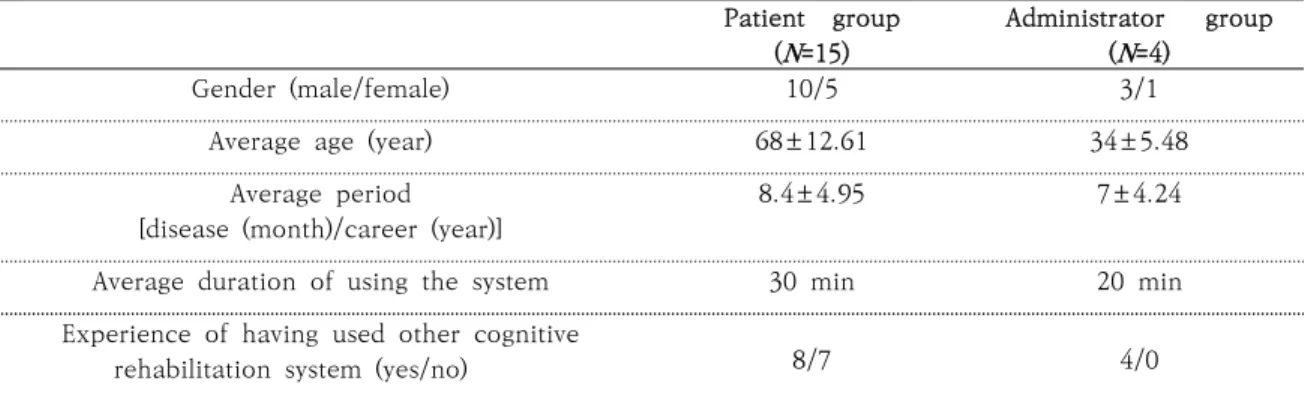
Table 2 shows the general characteristics of
participants.
2. Usability study
1) System usability
In the 11 questions about ‘system contents,’ opin- ions about ‘comprehension of items,’ ‘visual familiarity of contents,’ ‘interest of contents,’ ‘suitability of feed- back sound,’ ‘suitability of difficulty adjustments,’
‘effectiveness and necessity as a cognition rehabilitation training tool,’ ‘ease of operation (two items),’‘m- otivation according to training results,’and ‘usability compared to other systems’ were investigated. The re- sults are shown in Table 3. The patient group re- sponded that the most interesting content was execu- tive function (66.66%), followed by memory contents (33.33%) in the sub-question 1 of question (3).
Regarding sub-question 2, the most uninteresting con- tent was attention (60%) and memory (26.66%), fol- lowed by executive function (13.33%). In the admin- istrator group, executive function (75%) and memory (25%) were the order of interesting contents, and the uninteresting content was attention (100%).
Patient group (N=15)
Administrator group (N=4)
Gender (male/female) 10/5 3/1
Average age (year) 68±12.61 34±5.48
Average period [disease (month)/career (year)]
8.4±4.95 7±4.24
Average duration of using the system 30 min 20 min
Experience of having used other cognitive
rehabilitation system (yes/no) 8/7 4/0
Table 2. General Characteristics of the Participants
2) System hardware usability
The six questions about hardware including the tablet PC and tangible objects tool were used to investigate opinions about ‘appropriateness of the tablet PC (screen) and tangible objects tool size,’
‘screen configuration efficiency,’ ‘base of learning to use,’ ‘speed and accuracy of the system operation,’
‘convenience of moving between menus,’ and
‘convenience of manipulating the tangible object tools.’ The results are shown in Table 4. In the question (1) asking about the adequacy of size,
opinions such as ‘big’ or ‘small’ were considered as inappropriate reasons in this question. In the patient group, among the five patients who responded that the size of the screen was inappropriate, four reported ‘big’ and one ‘small.’ Moreover, among the three patients who reported that the size of the tool was inappropriate, two responded ‘big’ and one
‘small.’ In the administrator group, one therapist responded that the screen size was ‘big’ for inappropriate reasons, and two reported that the tool size was too ‘big’ to use appropriately.
Patient group (N=15)
Administrator group (N=4)
① ② ③ ④ ⑤ ① ② ③ ④ ⑤
(1) Were the items easy to understand? 0 3 3 8 1 0 0 2 2 0
(2) Was the image something common and
familiar in real life? 0 2 7 6 0 0 0 0 3 1
(3) Were the contents for each area
interesting? 0 2 7 6 0 0 0 1 2 1
(4) Did the sound provide adequate
feedback? 0 1 3 11 0 0 0 1 3 0
(5) Was the change in level of difficulty
appropriate to your level? 0 3 8 4 0 0 0 0 3 1
(6) Do you think this system is effective for
cognitive function training? 0 0 4 11 0 0 0 0 1 3
(7) Were the user registration and login
processes simple and easy? 0 5 4 5 1 0 0 1 2 1
(8) Was the training result menu easy to
operate and understand? 0 4 0 9 2 0 0 2 2 0
(9) Did the training results help determine the level of function, set up training plans in the future, and motivate training?
0 2 4 9 0 0 0 2 1 1
(10) Do you think this system is more useful
than other training systems? 0 2 9 4 0 0 0 1 2 1
(11) Do you think this system is necessary
for cognitive function training? 0 2 6 7 0 0 0 0 2 2
① Very inappropriate, ② Inappropriate, ③ Moderate, ④ Appropriate, ⑤ Very appropriate Table 3. Results from Questions about System Contents
3. Satisfaction with use
In response to user satisfaction, 40% of the patient group responded ‘satisfied’ and 60% responded
‘moderate.’ In the therapist group, 25% responded
‘very satisfied’ and 75% ‘satisfied.’
IV. Discussion
The cognitive rehabilitation system based on tangible objects for elderly people is designed to prevent cognitive decline by utilizing the advantages of computerized cognitive rehabilitation and to
provide a therapeutic approach in improving the cognitive function of those who need rehabilitation treatment. A group of 15 stroke patients and a group of four occupational therapists participated and responded to questions regarding system content, hardware, and satisfaction.
In the question about the interest of contents, both the patient and administrative groups responded that the most interesting content among the three training areas was the executive function area. This may be due to the fact that the content used for concentration training only consists of visual stimuli. Kueider et al. (2012) reported that content such as video games, including visual and Patient group
(N=15)
Administrator group (N=4)
① ② ③ ④ ⑤ ① ② ③ ④ ⑤
(1) -1 Was the size of the computer (screen)
appropriate? 1 4 1 9 0 0 1 0 1 2
(1) -2 Was the size of the tangible objects
tool appropriate? 1 2 2 10 0 0 2 0 0 2
(2) Did the configuration of the screen make it easy to understand the training questions and select the answers?
0 2 4 8 1 0 0 1 3 0
(3) Was the program easy to use? 0 6 4 5 0 0 0 1 2 1
(4) -1 Did the tangible object tools react
quickly when you touched the screen? 0 5 5 5 0 0 0 1 3 0
(4) -2 Did the tangible object tools react
correctly when you touched the screen? 0 1 8 6 0 0 0 1 2 1
(5) Were you satisfied with the convenience of
moving between menus? 0 2 5 8 0 0 0 1 2 1
(6) Were you satisfied with the convenience of manipulating the tangible objects tools?
1 0 6 8 0 0 0 0 3 1
① Very inappropriate, ② Inappropriate, ③ Moderate, ④ Appropriate, ⑤ Very appropriate Table 4. Results from Questions about System Hardware
auditory stimuli, can effectively improve the working memory areas and visual areas in a systematic review on computerized cognitive training in elderly people.
It also refers to studies on the usage of attention training modality using multisensory stimuli. Unlike studies addressed in the systematic review, only the visual stimulus was used in the concentration domain contents in this system and repeated presentation of similar visual stimuli might lower the interest of the concentration training contents.
The brain plasticity theory suggests that damaged brain function restores synapses through proper stimulation and training, which leads to functional changes in the cerebral cortex to recover the brain function. Moreover, this mechanism can also be applied to geriatrics (Jeong, Hwang, & Youn, 2010).
Attracting the interest of the elderly is necessary to motivate them to participate in cognitive training spontaneously and achieve the effects of stimulation and training in order to protect and finally improve the user’s cognitive function.
The concentration content was found to be the least interesting area in the usability study. To upgrade the concentration training contents, monotony should be avoided in order to upgrade the contents by applying various sensory stimuli or main concerns among elderly patients.
In the question related to the size of the hardware, some respondents in the patient group responded that the size of the tablet PC and the tangible object tools were inadequately large (Table 4). A 20-inch wide tablet PC was used for this system to effectively deliver visual information and to help users practice visual field extension, because the target population for the system was the elderly who might have
decreased vision or visual field deficit due to aging or diverse diseases.
However, considering that the average age of the patient group was 68 ± 12.61 years, it should be noted that responses about the size of the tablet PC were many. As the number of smartphone users among elderly people has increased recently, many contents for cognitive rehabilitation can be accessed using smartphone applications. Considering that elderly people are getting familiar to using smartphone applications and this system can be used not only for the purpose of cognitive rehabilitation but also prevention of cognitive decline in those with normal cognitive function, the system should be made smaller and modified as a smartphone application. If the system is easy to carry and download, a much broader target population is expected to benefit from the system.
Because the software of cognitive rehabilitation system based on tangible object run on Android- based tablet PC, they can potentially be converted to Android-based smartphone applications.
However, in order use the real object tool as an input device of this system in accordance with the original purpose, the development of smaller tangible object tools that can be held in both hands should be supported.
In the question regarding the satisfaction of using the system, the patient group responded to having very low satisfaction compared to that of the administrator group. This may be the result of the general characteristics of the patient group. Most of the subjects who responded to the questionnaire were likely to be more interested in the recovery of physical function than cognitive rehabilitation
service because they responded to the questionnaire via self-response or interview. Therefore, the sensitivity to motivate cognitive rehabilitation and the therapeutic effect may be low. On the contrary, the administrator group had satisfactory or very satisfactory responses. However, the number of managers who responded was small; therefore, the results in the manager group cannot be generalized.
In the future, the satisfaction of more participants in the administrator group should be assessed to reinforce additional systems according to the results.
In this study, we investigated the usability of verifying the feasibility of cognitive rehabilitation system based on tangible objects among elderly people living in the community. Based on the collected responses, further studies should be conducted to enhance the feasibility by upgrading the contents or modifying the hardware. In addition, the transfer effect should be investigated to acquire a cognitive strategy and change the activities of daily living.
Choi et al. (2017) reported evidence of the effects of the computerized cognitive rehabilitation program by examining the relationship between improvement of cognitive function and functional improvement for activities of daily living in stroke patients. Mo and Lee (2018) reported that the level of activities of daily living is also a factor in participants’ satisfaction with physical health, mental health, and economic factors in their study on factors affecting life satisfaction of the elderly people. Kim and Ghim (2015) reported a significant improvement in life satisfaction, depression, and anxiety program on the participants of a study on the effects of providing a program focusing on the
improvement of cognitive function, such as memory, attention, and executive function for elderly people using a community welfare center for elderly people.
Considering that the therapeutic effect on cognitive rehabilitation affects not only the improvement of the cognitive function but also the emotional health and life satisfaction and overall quality of life of elderly people, cognitive rehabilitation services should be provided in the community.
V. Conclusion
The features of this system are as follows. First, it is easy to manipulate tangible object tools to perform training tasks given in the system. Second, users can easily select and train in the area of cognition they wanted. Third, the level of difficulty is automatically adjusted according to the performance of the user.
The training environment should be constructed similarly to that of the natural environment using hand tools commonly used in everyday life as input devices in the system. This system has a great significance and can be utilized as an alternative with the lack of community cognitive rehabilitation specialists, because the system has individual log-in system and saves the training records individually.
It helps users and their caregivers track their state of improvement and deterioration. However, practical methods to improve the accessibility of the system to the elderly should be supported.
Conflict of interest statement None.
Acknowledgments
This research was supported by the Basic Science Research Program through the National Research Foundation of Korea (NRF) funded by the Ministry of Science, ICT, & Future Planning (2015R1C1A1A 01054159).
References
Choi, N. R., Kim, J. H., Kim, J. W., Kim, J. S., Park, S.
J. An, J. M. ... Choi, Y. S. (2017). Effects of Korean computer-based cognitive rehabilitation program (CoTras) on cognition, basic ‧ instrumental activities of daily living with community stroke patients. Journal of Korean Society of Cognitive Rehabilitation, 6(2), 65–82.
Jeong, W. M., Hwang, Y. J., & Youn, J. C. (2010). Effects of a computer-based cognitive rehabilitation therapy on mild dementia patients in a community. Journal of Korean Gerontological Society, 30, 127–140.
Kim, M. Y., Kang, J. W., Park, S. M., Park, H. Y., & Park, J. H. (2016). The effect of computer-assisted cognitive training for improving cognitive function in older adults: A systematic review. Journal of Korean Society of Occupational Therapy, 24(4), 81-94.
Kim, Y. K., & Ghim, H. R. (2015). The effects of a cogni- tive enhancement program for the elderly. Korean Journal of Developmental Psychology, 28(4), 87–108.
Kueider, A. M., Parisi, J. M., Gross, A. L., & Rebok, G.
W. (2012). Computerized cognitive training with older adults: A systematic review. PloS One, 7(7), e40588.
Lee, H. R., Kim, J. Y., & Han, D. S. (2012). A survey on the cognitive rehabilitation of occupational therapy in Korea. Journal of Korean Society of Occupational Therapy, 20(2), 73–84.
Mo, J. A., & Lee, K. H. (2018). Correlates of life satisfaction in the elderly: Systematic review and meta-analysis.
Journal of Korea Academia-Industrial Cooperation Society, 19(1), 517–526.
Mo, J. A., & Lim, J. Y. (2015). Effectiveness of commun- ity-based cognitive rehabilitation program on de- mented individuals: Systematic review and meta analysis. Journal of Korean Academic Society of Home Care Nursing, 22(2), 196–205.
National Institute of Dementia (2018). National institute of dementia annual report. Seongnam: Ministry of Health and Welfare. National Institute of Dementia.
Park, S. M., Lee, J. S., Lee, K. W., Choi, W. S., & Kim, J. R. (2017). A systematic review of effects of cognitive rehabilitation therapy for community dwelling adults with early dementia or mild cognitive impairment.
Journal of Korean Society of Cognitive Rehabilitation, 6(1), 39–61.
Park, W. K., Kim, D. J., Kim, B. J., Park, E. J., Park, J.
H., Boo, J. A., ... Heo. S. Y. (2018). Computerized cognitive rehabilitation programs in recognition rehabilitation..
Seoul, South Korea: Edu Factory.
Song, M. K., Kim, S. O., & Kim, C. S. (2018). The inter- vention effect of cognitive improvement program for elderly with mild cognitive impairment. Journal of Korean Public Health Nursing, 32(1), 81-95.
Statistics Korea (2017). 2017 Statistics of the elderly.
Daejeon: Statistics Korea.
국문초록
고령자를 위한 실감객체기반 인지재활 시스템의 개발과 사용성 연구
박상미*, 원경아*, 신윤찬*, 박지혁**
*연세대학교 일반대학원 작업치료학과
**연세대학교 보건과학대학 작업치료학과
목적: 본 연구의 목적은 다양한 인지기능 수준을 가진 고령자를 위한 실감객체 기반 인지재활시스템을 개발하고, 사용성을 검증하는 것이다.
방법: 사용성 연구는 시스템의 강점과 약점을 확인하기 위해 15명의 환자 집단과 4명의 작업치료사 집단에 설문조사를 실시하였으며 응답에 근거한 수정을 통해 시스템을 보완 및 개선하였다. 응답자들은 세 종류의 훈련-실행기능 훈련, 기억력 훈련, 집중력 훈련을 20분~30분간 경험해본 후, 구조화된 설문에 응답하였으며 설문의 영역은 각 훈련 영역별 콘텐츠, 중앙처리장치이자 화면 제시 매체인 태블릿 PC 및 실감객체를 포함하는 하드웨어, 시스템 이용에 따른 만족도로 구성되었다.
결과: 설문 응답 결과 환자 집단과 작업치료사 집단 모두에게 가장 흥미로웠던 영역은 실행기능으로 나타났고 가장 흥미롭지 않은 영역은 집중력으로 나타났다. 하드웨어 사용성 설문에서 태블릿 PC의 화면의 크기가 부적절하다는 응답이 6건, 실감객체의 크기가 부적절하다는 응답이 5건으로 나타났다. 시스템 이용에 대한 만족도 설문에서 전체 응답자의 40%가 시스템에 만족하는 것으로 응답하였다.
결론: 본 시스템은 훈련과제를 수행하기 위해 필요한 실감객체 도구의 조작이 용이하다는 점과 사용자의 요구에 따라 인지훈련의 영역을 쉽게 선택하여 훈련할 수 있다는 점, 사용자의 수행도에 의해 난이도가 자동으로 조정된다는 점을 특징으로 갖는다. 본 시스템에서 입력장치로 사용되는 실감객체도구는 양손에 쥐고 사용함 으로써 훈련환경을 자연스러운 일상에서의 도구 사용과 유사하도록 고안하였다. 본 시스템은 지역사회 인지 재활전문가 부족의 대안으로 사용가능 할 것으로 기대된다.
주제어: 고령자, 실감객체, 지역사회재활서비스, 컴퓨터 인지재활 시스템