Nonalcoholic Fatty Liver Disease and Sarcopenia Are Independently Associated With Cardiovascular Risk
Eugene Han, MD, PhD
1, Yong-ho Lee, MD, PhD
2,3, Young Dae Kim, MD, PhD
4, Beom Kyung Kim, MD, PhD
2,5,6, Jun Yong Park, MD, PhD
2,5,6, Do Young Kim, MD, PhD
2,5,6, Sang Hoon Ahn, MD, PhD
2,5,6, Byung-Wan Lee, MD, PhD
2,3,
Eun Seok Kang, MD, PhD
2,3, Bong-Soo Cha, MD, PhD
2,3, Kwang-Hyub Han, MD
2,5,6, Hyo Suk Nam, MD, PhD
4, Ji Hoe Heo, MD, PhD
4and Seung Up Kim, MD, PhD
2,5,6OBJECTIVES: Nonalcoholic fatty liver disease (NAFLD) and sarcopenia have a close association with an increased risk of atherosclerotic cardiovascular disease (ASCVD). This study investigated the influence of NAFLD and sarcopenia on ASCVD risk.
METHODS: Data from the 2008 –2011 Korean National Health and Nutrition Examination Surveys database were analyzed (n 5 7,191). The sarcopenia index was calculated using dual-energy x-ray absorptiometry.
Sarcopenia was defined as the lowest quintile sarcopenia index value (cutoffs 5 0.882 for men and 0.582 for women). NAFLD was defined as a comprehensive NAFLD score ‡40. Liver fibrosis was assessed using the fibrosis-4 (FIB-4) index. ASCVD risk was evaluated using American College of Cardiology/American Heart Association guidelines. High probability of ASCVD was defined as ASCVD risk >10%.
RESULTS: The prevalence rates of NAFLD and sarcopenia were 31.2% (n 5 2,241) and 19.5% (n 5 1,400), respectively. The quartile-stratified ASCVD risk scores were positively associated with NAFLD and sarcopenia (all P for trend < 0.001). Subjects with both NAFLD and sarcopenia had a higher risk for high probability of ASCVD (odds ratio 5 1.83, P 5 0.014) compared with controls without NAFLD and sarcopenia. Among subjects with NAFLD, FIB-4–defined significant liver fibrosis and sarcopenia additively raised the risk for high probability of ASCVD (odds ratio 5 3.56, P < 0.001) compared with controls without FIB-4–defined significant liver fibrosis or sarcopenia.
DISCUSSION: NAFLD and sarcopenia were significantly associated with an increased risk of ASCVD in the general population. In addition, NAFLD with significant liver fibrosis and sarcopenia were significantly associated with an increased risk of ASCVD in subjects with NAFLD.
SUPPLEMENTARY MATERIALaccompanies this paper athttp://links.lww.com/AJG/B435,http://links.lww.com/AJG/B436, andhttp://links.lww.com/AJG/B437 Am J Gastroenterol 2020;115:584–595. https://doi.org/10.14309/ajg.0000000000000572
INTRODUCTION
Nonalcoholic fatty liver disease (NAFLD) is one of the most common metabolic liver disorders, with an estimated prevalence of
;30% in developed countries (1–5), and its incidence is expected to rise rapidly in the future as the rate of obesity increases, populations age, and sedentary lifestyles prevail (2). Cardiovascular disease (CVD) is significantly linked to severity of liver fibrosis (6,7), and it is the leading cause of mortality in patients with NAFLD (8). This close association between NAFLD and CVD likely stems from the central role the liver plays in glucose and lipid metabolism, in- dependent of other cardiometabolic risk factors such as diabetes, obesity, hypertension, and dyslipidaemia (9–11).
Sarcopenia, which is defined as age-related loss of muscle mass, strength, and function (12), has become a serious medical issue in aging societies. It is known that sarcopenia is signifi- cantly associated with an increased risk of cardiovascular events or mortality in patients with metabolic phenotypes such as type 2 diabetes (T2D) or chronic kidney disease (CKD) (13,14). This close association between sarcopenia and car- diovascular events or mortality can probably be explained by the fact that patients with sarcopenia, especially those with chronic medical illnesses, are inevitably subject to increased risk due to decreased physical ability and functional impair- ment preventing exercise (15,16).
1Department of Internal Medicine, Keimyung University School of Medicine, Daegu, Korea;2Department of Internal Medicine, Yonsei University College of Medicine, Seoul, Korea;3Institute of Endocrine Research, Yonsei University College of Medicine, Seoul, Korea;4Department of Neurology, Yonsei University College of Medicine, Seoul, Korea;5Institute of Gastroenterology, Yonsei University College of Medicine, Seoul, Korea;6Yonsei Liver Center, Severance Hospital, Seoul, Korea. Correspondence: Yong-ho Lee, MD, PhD. E-mail: [email protected]. Young Dae Kim, MD, PhD. E-mail: [email protected]. Seung Up Kim, MD, PhD.
E-mail: [email protected].
Received June 29, 2019; accepted January 16, 2020; published online March 3, 2020
LIVER
Recently, the complex relationship between sarcopenia and NAFLD/nonalcoholic steatohepatitis has been a focus of clinical attention (17,18). A recent study showed a strong relationship between NAFLD and sarcopenia in the general population, sug- gesting sarcopenia as a novel risk factor for NAFLD (19). A sub- sequent study further confirmed this significant association, independent of obesity and insulin resistance, which are the common denominators linking NAFLD and sarcopenia (20). In addition, based on the concept that most patients with NAFLD have simple hepatic steatosis with a favorable prognosis (2), an- other recent study showed that a subgroup of patients with NAFLD and significant liver fibrosis had significantly increased risk for sarcopenia among those with the entire spectrum of NAFLD (21).
Although NAFLD and sarcopenia are independently associ- ated with increased CVD risk, the interactive influence of NAFLD and sarcopenia on CVD risk, supported by the independent as- sociation between NAFLD and sarcopenia, has not been fully determined. Thus, we investigated how, independent of other metabolic factors (e.g., central obesity, obesity, hypertension, T2D, CKD, and dyslipidaemia), NAFLD and sarcopenia in- teractively influence CVD risk in the general population and whether NAFLD with significant liver fibrosis has a similar in- dependent association with CVD risk in the subpopulation with NAFLD, using the data from the Korea National Health and Nutrition Examination Survey (KNHANES).
PATIENTS AND METHODS Study subjects
The KNHANES is a nationwide, population-based, cross- sectional health examination and survey that is annually con- ducted by the Division of Chronic Disease Surveillance of the Korea Centers for Disease Control and Prevention in the Ministry of Health and Welfare to monitor the general health and nutri- tional status of the general civilian population in South Korea (22). Subjects are randomly selected from 600 randomly selected districts in cities and provinces in South Korea to represent a sample of the Korean population.
As described in Figure 1, of the 37,753 subjects in the KNHANES 2008–2011, we initially selected 28,071 subjects aged
$20 years (12,160 men and 15,911 women). Of these, 20,880 were excluded, based on the following: (i) insufficient clinical and laboratory information to calculate body mass index (BMI), muscle mass, or degree of liver fibrosis or steatosis, (ii) insufficient data to calculate the risk of atherosclerotic CVD (ASCVD) or history of ASCVD, (3) positive serologic markers of hepatitis B virus, or hepatitis C virus, or hepatocellular carcinoma at en- rollment or history of it, or (4) heavy alcohol consumption (.210 g/wk for men and 140 g/wk for women) (21).
Written informed consent was secured from all subjects before the study began, and the KNHANES was conducted following ethical approval by the Institutional Review Board of the Korea
Figure 1.Flow diagram of subject inclusion and exclusion in the Korea National Health and Nutrition Examination Surveys (KNHANES IV and V). Of 37,753 subjects, 7,191 were finally included (2,671 men and 4,520 women). ACC/AHA, American College of Cardiology/American Heart Association;
ALT, alanine aminotransferase; AST, aspartate aminotransferase; BMI, body mass index; DXA, dual-energy x-ray absorptiometry; HBV, hepatitis B virus;
HCV, hepatitis C virus; HCC, hepatocellular carcinoma; KNHANES, Korea National Health and Nutrition Examination Survey; WC, waist circumference.
LIVER
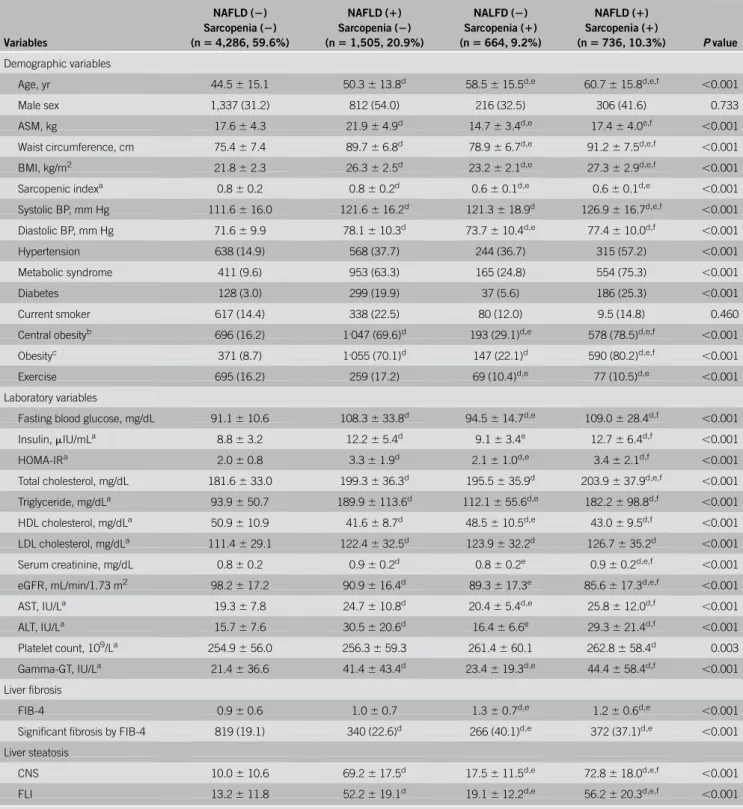
Table 1. Baseline characteristics of the study population
Variables
NAFLD (2) Sarcopenia (2) (n5 4,286, 59.6%)
NAFLD (1) Sarcopenia (2) (n5 1,505, 20.9%)
NALFD (2) Sarcopenia (1) (n5 664, 9.2%)
NAFLD (1) Sarcopenia (1)
(n5 736, 10.3%) P value Demographic variables
Age, yr 44.56 15.1 50.36 13.8d 58.56 15.5d,e 60.76 15.8d,e,f ,0.001
Male sex 1,337 (31.2) 812 (54.0) 216 (32.5) 306 (41.6) 0.733
ASM, kg 17.66 4.3 21.96 4.9d 14.76 3.4d,e 17.46 4.0e,f ,0.001
Waist circumference, cm 75.46 7.4 89.76 6.8d 78.96 6.7d,e 91.26 7.5d,e,f ,0.001
BMI, kg/m2 21.86 2.3 26.36 2.5d 23.26 2.1d,e 27.36 2.9d,e,f ,0.001
Sarcopenic indexa 0.86 0.2 0.86 0.2d 0.66 0.1d,e 0.66 0.1d,e ,0.001
Systolic BP, mm Hg 111.66 16.0 121.66 16.2d 121.36 18.9d 126.96 16.7d,e,f ,0.001
Diastolic BP, mm Hg 71.66 9.9 78.16 10.3d 73.76 10.4d,e 77.46 10.0d,f ,0.001
Hypertension 638 (14.9) 568 (37.7) 244 (36.7) 315 (57.2) ,0.001
Metabolic syndrome 411 (9.6) 953 (63.3) 165 (24.8) 554 (75.3) ,0.001
Diabetes 128 (3.0) 299 (19.9) 37 (5.6) 186 (25.3) ,0.001
Current smoker 617 (14.4) 338 (22.5) 80 (12.0) 9.5 (14.8) 0.460
Central obesityb 696 (16.2) 1,047 (69.6)d 193 (29.1)d,e 578 (78.5)d,e,f ,0.001
Obesityc 371 (8.7) 1,055 (70.1)d 147 (22.1)d 590 (80.2)d,e,f ,0.001
Exercise 695 (16.2) 259 (17.2) 69 (10.4)d,e 77 (10.5)d,e ,0.001
Laboratory variables
Fasting blood glucose, mg/dL 91.16 10.6 108.36 33.8d 94.56 14.7d,e 109.06 28.4d,f ,0.001
Insulin,mIU/mLa 8.86 3.2 12.26 5.4d 9.16 3.4e 12.76 6.4d,f ,0.001
HOMA-IRa 2.06 0.8 3.36 1.9d 2.16 1.0d,e 3.46 2.1d,f ,0.001
Total cholesterol, mg/dL 181.66 33.0 199.36 36.3d 195.56 35.9d 203.96 37.9d,e,f ,0.001
Triglyceride, mg/dLa 93.96 50.7 189.96 113.6d 112.16 55.6d,e 182.26 98.8d,f ,0.001
HDL cholesterol, mg/dLa 50.96 10.9 41.66 8.7d 48.56 10.5d,e 43.06 9.5d,f ,0.001
LDL cholesterol, mg/dLa 111.46 29.1 122.46 32.5d 123.96 32.2d 126.76 35.2d ,0.001
Serum creatinine, mg/dL 0.86 0.2 0.96 0.2d 0.86 0.2e 0.96 0.2d,e,f ,0.001
eGFR, mL/min/1.73 m2 98.26 17.2 90.96 16.4d 89.36 17.3e 85.66 17.3d,e,f ,0.001
AST, IU/La 19.36 7.8 24.76 10.8d 20.46 5.4d,e 25.86 12.0d,f ,0.001
ALT, IU/La 15.76 7.6 30.56 20.6d 16.46 6.6e 29.36 21.4d,f ,0.001
Platelet count, 109/La 254.96 56.0 256.36 59.3 261.46 60.1 262.86 58.4d 0.003
Gamma-GT, IU/La 21.46 36.6 41.46 43.4d 23.46 19.3d,e 44.46 58.4d,f ,0.001
Liver fibrosis
FIB-4 0.96 0.6 1.06 0.7 1.36 0.7d,e 1.26 0.6d,e ,0.001
Significant fibrosis by FIB-4 819 (19.1) 340 (22.6)d 266 (40.1)d,e 372 (37.1)d,e ,0.001
Liver steatosis
CNS 10.06 10.6 69.26 17.5d 17.56 11.5d,e 72.86 18.0d,e,f ,0.001
FLI 13.26 11.8 52.26 19.1d 19.16 12.2d,e 56.26 20.3d,e,f ,0.001
Variables are expressed as mean6 SD or n (%).
ALT, alanine aminotransferase; ASM, appendicular skeletal muscle; AST, aspartate aminotransferase; BMI, body mass index; BP, blood pressure; CNS, comprehensive NAFLD score; eGFR, estimated glomerular filtration rate; FIB-4, fibrosis-4 index; FLI, fatty liver index; GT, glutamyl-transpeptidase; HDL, high-density lipoprotein;
HOMA-IR, homeostatic model assessment of insulin resistance; LDL, low-density lipoprotein; NAFLD, nonalcoholic fatty liver disease.
aLog transformed.
bCentral obesity was defined as waist circumference$90 cm in men and $85 cm in women.
cObesity was defined as BMI$25 kg/m2.
dP , 0.05 by post hoc analyses when compared without sarcopenia and NAFLD.
eP , 0.05 by post hoc analyses when compared without sarcopenia, with NAFLD.
fP , 0.05 by post hoc analyses when compared with sarcopenia, without NAFLD.
LIVER
Centers for Disease Control and Prevention (No: 2008-04EXP- 01-C, 2009-01CON-03-2C, 2010-02CON-21-C, and 2011- 02CON-06C).
Appendicular skeletal muscle mass and the definition of sarcopenia
As described previously (21), appendicular skeletal muscle mass was measured using dual-energy x-ray absorptiometry (QDR 4500A;
Hologic, Bedford, MA). The sarcopenia index was calculated as follows: sarcopenia index 5 total appendicular skeletal muscle mass (kg)/BMI (kg/m
2). Sarcopenia was defined as the lowest quintile for sex-specific sarcopenia index cutoff values (,0.882 for men and ,0.582 for women), based on a modified recommendation from the Foundation for the National Institutes of Health (23).
NAFLD and liver fibrosis
NAFLD was defined using previously validated fatty liver pre- diction models (see Table 1, Supplementary Digital Content 3, http://links.lww.com/AJG/B437): the comprehensive NAFLD score (CNS) (1) and the fatty liver index (FLI) (24); a CNS $40 and a FLI$60 and were considered indicative of having NAFLD (1,24).
We further assessedfibrotic burden using previously validated liver fibrosis prediction model among subjects with NAFLD (n 5 2,236): the fibrosis-4 (FIB-4) index (25) (see Table 1, Sup- plementary Digital Content 3, http://links.lww.com/AJG/B437).
Assessment of ASCVD risk and cardiometabolic disease components
ASCVD risk was evaluated using the 10-year ASCVD risk score from the 2013 American College of Cardiology/American Heart Association (ACC/AHA) guidelines (26). Subjects exhibiting ACC/AHA ASCVD risk . 10% were considered as having high probability of ASCVD. Based on the criteria for the Asian-Pacific region (27), subjects were considered obese when their BMI was
$25 kg/m
2. Central obesity was defined based on waist circum- ference criteria from the Korean Society for the Study of Obesity ($90 cm for men and $85 cm for women) (27). T2D was defined based on the use of insulin or oral hypoglycaemic agents, fasting
plasma glucose $126 mg/dL, or glycated hemoglobin $6.5%.
Subjects were diagnosed as hypertensive when the systolic pres- sure was $140 mm Hg and the diastolic pressure was $90 mm Hg or if antihypertensive medications were currently used. Esti- mated glomerular filtration rate (eGFR) was calculated using the Chronic Kidney Disease Epidemiology collaboration equation (28), and CKD was characterized as eGFR ,60 mL/min/1.73 m
2(29). Hyper low-density lipoprotein (LDL) cholesterolaemia was characterized based on individual LDL cholesterol goals recom- mended in a 2004 update of the ATP III guidelines or current use of an anti-dyslipidemia drug (e.g., statin) for both sexes (30).
Hypo high-density lipoprotein (HDL) cholesterolaemia was de- fined as HDL ,40 mg/dL for men and ,50 mg/dL for women.
Hypertriglyceridemia was defined as serum triglycerides $150 mg/dL or use of triglyceride-lowering agents.
Clinical parameters and biochemical analysis
KNHANES data include medical history, smoking habits and al- cohol consumption, exercise level, and disease diagnosis and/or treatment, based on direct interviews and self-reporting, using standardized health questionnaires (21). Smoking status was cat- egorized by self-report as non- or current smoker. Regular exercise was defined as engaging in moderate or vigorous exercise on a regular basis ($20 min at a time, at least 3 times per week) (31).
After overnight fasting for at least 8 hours, blood specimens collected from each subject were processed and transported in cold storage to the Central Testing Institute (Neodin Medical Institute, Seoul, Korea). All blood samples were analyzed within 24 hours of transportation, as previously described (31). The homeostasis model assessment of insulin resistance (HOMA-IR) was assessed as previously described (32).
Statistical analysis
The characteristics of the study subjects were analyzed according to NAFLD and sarcopenia status using one-way analysis of var- iance to compare continuous variables and x
2tests for categorical variables, followed by post hoc analyses using the Bonferroni method. The association between NAFLD/sarcopenia and the
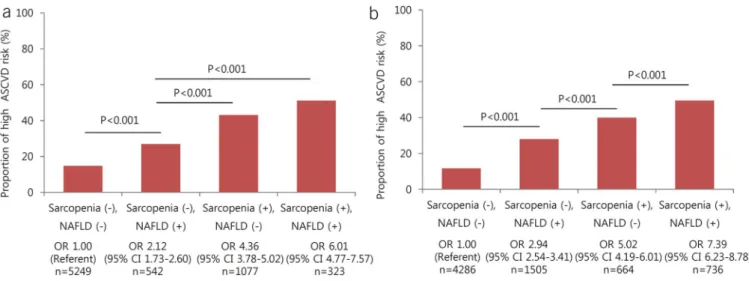
Figure 2.The relative risk for high probability of ASCVD according to NAFLD and sarcopenia status (a and b). Presence of CNS- (a) or FLI-defined (b) NAFLD and sarcopenia showed strong positive relationship with quartile-stratified ASCVD risk (allP for trend ,0.001). Relative risk for high probability of ASCVD was highest in subjects with CNS- (a) or FLI-defined (b) NAFLD and sarcopenia (allP , 0.001). ASCVD, atherosclerotic cardiovascular disease; CI, confidence interval; CNS, comprehensive NAFLD score; FLI, fatty liver index; NAFLD, nonalcoholic fatty liver disease; OR, odds ratio.
LIVER
ASCVD risk score was evaluated using a x
2test after trans- formation of the variables into quartiles.
The P value for the interaction between sarcopenia, fibrosis, and the ASCVD risk was 0.613. As the FIB-4 and the ASCVD risk score contain overlapping variables, the variance inflation factor was used to evaluate multicollinearity in the multivariate analysis. However, there was no evidence of multicollinearity (highest variance inflationfactor52.231).
Multivariate logistic regression analysis was applied to determine the independent association between NAFLD/sarcopenia and high ASCVD risk (ACC/AHA ASCVD risk .10%) after adjusting for age and sex in model 1. Variables in model 1, exercise, and smoking status were adjusted in model 2. Variables in model 2, hypertension, T2D, obesity, central obesity, HOMA-IR, CKD, hyper-LDL cholester- olaemia, and hypo-HDL cholesterolaemia were adjusted in model 3. In addition, to assess the impact of high ASCVD risk, the adjusted model 3 was applied for each factor including NAFLD, sarcopenia, hyperten- sion, T2D, smoking, exercise, CKD, hyper-LDL cholesterolaemia, and
hypo-HDL cholesterolaemia. Then, we selected subjects with NAFLD to evaluate whether NAFLD with liver fibrosis had an independent association with high ASCVD risk in the subpopulation with NAFLD.
As total cholesterol, triglyceride, HDL cholesterol, LDL cho- lesterol, insulin, and the HOMA-IR values were not normally distributed, analyses were performed using log-transformed data to achieve approximately symmetrical distributions. Continuous and categorical variables were expressed as mean 6 SD and numbers (%), respectively. A P , 0.05 was considered statistically significant. Statistical analyses were performed using SPSS ver- sion 23.0 for Windows (IBM, Armonk, NY).
RESULTS
Baseline characteristics of the study population
A total of 7,191 subjects were recruited (2,671 men and 4,520 women) (Figure 1). Baseline characteristics according to the status of NAFLD and sarcopenia are shown in Table 1. The
Table 2. ORs and 95% CIs of cardiometabolic and renal risk factors according to the status of NAFLD and sarcopeniaCardiometabolic and renal risk factors
NAFLD by CNS NAFLD by FLI
NAFLD (2) NAFLD (1) NAFLD (2) NAFLD (1) NAFLD (2) NAFLD (1) NAFLD (2) NAFLD (1) Sarcopenia
(2)
Sarcopenia (2)
Sarcopenia (1)
Sarcopenia (1)
Sarcopenia (2)
Sarcopenia (2)
Sarcopenia (1)
Sarcopenia (1)
Central obesitya 1.00 (ref.) 33.76
27.57–41.35 P , 0.001
1.66 1.35–2.04 P , 0.001
34.11 26.49–43.92
P , 0.001
1.00 (ref.) 26.95 20.93–34.70
P , 0.001
1.64 1.41–1.92 P , 0.001
36.70 24.82–54.26
P , 0.001
Obesityb 1.00 (ref.) 33.86
28.50–40.24 P , 0.001
4.38 3.48–5.50 P , 0.001
73.56 57.71–93.76
P , 0.001
1.00 (ref.) 22.32 17.55–28.38
P , 0.001
3.17 2.73–3.69 P , 0.001
40.18 27.70–58.28
P , 0.001
Hypertension 1.00 (ref.) 3.07
2.64–3.57 P , 0.001
1.49 1.21–1.82 P , 0.001
3.58 2.97–4.32 P , 0.001
1.00 (ref.) 3.49 2.82–4.31 P , 0.001
1.47 1.25–1.72 P , 0.001
3.99 3.07–5.19 P , 0.001
Diabetes 1.00 (ref.) 6.91
5.52–8.64 P , 0.001
0.94 0.64–1.39 P 5 0.754
5.63 4.37–7.26 P , 0.001
1.00 (ref.) 3.05 2.35–3.96 P , 0.001
1.08 0.86–1.36 P 5 0.489
2.99 2.25–3.97 P , 0.001
CKDc 1.00 (ref.) 1.92
1.36–2.73 P , 0.001
0.93 0.62–1.42 P 5 0.745
1.48 1.03–2.13
P 5 0.35
1.00 (ref.) 2.72 1.73–4.29 P , 0.001
0.96 0.69–1.33 P 5 0.797
1.60 1.01–2.53 P 5 0.047 Hyper-LDL cholesterolemiad 1.00 (ref.) 2.84
2.45–3.30 P , 0.001
1.47 1.20–1.81 P , 0.001
2.69 2.24–3.23 P , 0.001
1.00 (ref.) 1.84 1.49–2.27 P , 0.001
1.37 1.17–1.61 P , 0.001
1.96 1.53–2.51 P , 0.001 Hypo-HDL cholesterolemiae 1.00 (ref.) 3.97
3.47–4.54 P , 0.001
1.19 1.00–1.41 P 5 0.057
3.05 2.55–3.64 P , 0.001
1.00 (ref.) 3.83 3.13–4.67 P , 0.001
1.21 1.05–1.39 P 5 0.009
2.50 1.95–3.21 P , 0.001 Hypertriglyceridemiaf 1.00 (ref.) 8.40
7.31–9.66 P , 0.001
1.35 1.10–1.67 P 5 0.005
6.61 5.52–7.91 P , 0.001
1.00 (ref.) 13.88 11.11–17.35
P , 0.001
1.29 1.11–1.51 P 5 0.001
7.28 5.61–9.45 P , 0.001 Adjusted for age, sex, smoking, and exercise.
BMI, body mass index; CI, confidence interval; CKD, chronic kidney disease; CNS, comprehensive NAFLD score; eGFR, estimated glomerular filtration rate; FLI, fatty liver index; HDL, high-density lipoprotein; LDL, low-density lipoprotein; NAFLD, nonalcoholic fatty liver disease.
aCentral obesity was defined as waist circumference$90 cm in men and $85 cm in women.
bObesity was defined as BMI$25 kg/m2.
cCKD was defined if subjects had an eGFR less than 60 mL/min/1.73 m2.
dHyper-LDL cholesterolemia was characterized as the individual’s LDL cholesterol goal recommended by 2004 update of the ATP III guidelines or currently taking anti- dyslipidemia drug.
eHypo-HDL cholesterolemia was defined as serum HDL cholesterol,40 mg/dL for men and ,50 mg/dL for women.
fHypertriglyceridemia was defined as serum triglycerides$150 mg/dL or taking triglyceride-lowering agents.
LIVER
prevalence of NAFLD and sarcopenia was 31.2% (2,241 of 7,191) and 19.5% (1,400 of 7,191), respectively. Subjects with both NAFLD and sarcopenia were significantly older and had signifi- cantly greater waist circumference, BMI, systolic blood pressure, and total cholesterol levels than those of other groups (all P , 0.05), whereas eGFR was significantly lower in subjects with both NAFLD and sarcopenia (P . 0.001). In addition, the proportion of central obesity, obesity, and CNS/FLI-defined fatty liver was significantly higher in subjects with both NAFLD and sarcopenia than those of other groups (all P , 0.05).
The proportion of cardiometabolic phenotypes including hy- pertension, metabolic syndrome, T2D, central obesity, and obesity was significantly greater in subjects with either NAFLD or sarco- penia compared with those without NAFLD and sarcopenia and was
highest in subjects with both NAFLD and sarcopenia (all P , 0.05).
Liver-related laboratory results, including alanine aminotransferase levels, were significantly greater in subjects with NAFLD, regardless of sarcopenic status (all P , 0.05). Among subjects with NAFLD, fibrotic burden, assessed using FIB-4, was significantly greater when subjects had sarcopenia (mean 1.0 6 0.7 in subjects without sarco- penia vs 1.2 6 0.6 in subjects with sarcopenia, P , 0.001).
Association between ASCVD risk and the presence of NAFLD/
sarcopenia
We assessed the relative risk for high probability of ASCVD according to the presence of NAFLD, as defined by CNS (Figure 2a) and FLI (Figure 2b), stratified by sarcopenia. Subjects with CNS-defined NAFLD had a significantly increased
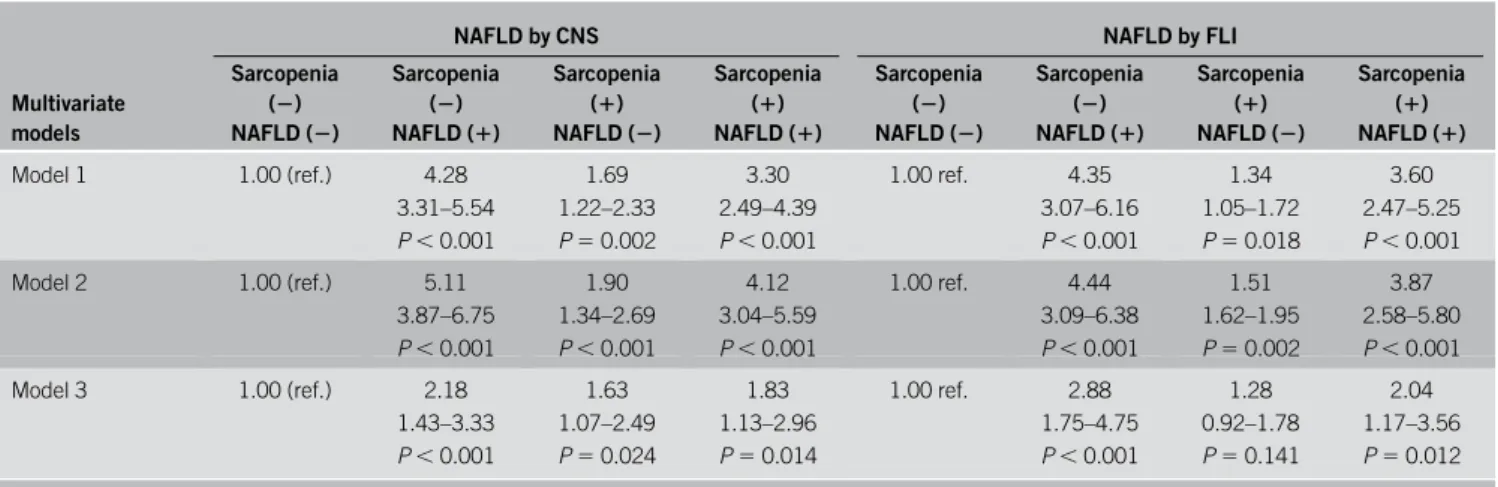
Table 3. OR and 95% CIs of high probability in ASCVD risk (>10%) according to the status of sarcopenia and NAFLD defined by different scoresMultivariate models
NAFLD by CNS NAFLD by FLI
Sarcopenia (2) NAFLD (2)
Sarcopenia (2) NAFLD (1)
Sarcopenia (1) NAFLD (2)
Sarcopenia (1) NAFLD (1)
Sarcopenia (2) NAFLD (2)
Sarcopenia (2) NAFLD (1)
Sarcopenia (1) NAFLD (2)
Sarcopenia (1) NAFLD (1)
Model 1 1.00 (ref.) 4.28
3.31–5.54 P , 0.001
1.69 1.22–2.33 P 5 0.002
3.30 2.49–4.39 P , 0.001
1.00 ref. 4.35
3.07–6.16 P , 0.001
1.34 1.05–1.72 P 5 0.018
3.60 2.47–5.25 P , 0.001
Model 2 1.00 (ref.) 5.11
3.87–6.75 P , 0.001
1.90 1.34–2.69 P , 0.001
4.12 3.04–5.59 P , 0.001
1.00 ref. 4.44 3.09–6.38 P , 0.001
1.51 1.62–1.95 P 5 0.002
3.87 2.58–5.80 P , 0.001
Model 3 1.00 (ref.) 2.18
1.43–3.33 P , 0.001
1.63 1.07–2.49 P 5 0.024
1.83 1.13–2.96 P 5 0.014
1.00 ref. 2.88 1.75–4.75 P , 0.001
1.28 0.92–1.78 P 5 0.141
2.04 1.17–3.56 P 5 0.012 Model 1: adjusted for age and sex.
Model 2: adjusted for age, sex, exercise, and current smoking.
Model 3: adjusted for age, sex, hypertension, diabetes, obesity, central obesity, HOMA-IR, CKD, hyper-LDL cholesterolemia, and hypo-HDL cholesterolemia.
ASCVD, atherosclerotic cardiovascular disease; CI, confidence interval; CKD, chronic kidney disease; CNS, comprehensive NAFLD score; FLI, fatty liver index; HDL, high- density lipoprotein; HOMA-IR, homeostasis model assessment of insulin resistance; LDL, low-density lipoprotein; NAFLD, nonalcoholic fatty liver disease; OR, odds ratio.
Table 4. Comparison of ORs and 95% CIs for high probability of ASCVD contributed by NAFLD, the degree of fatty liver, sarcopenia, and cardiometabolic/renal risk factors stratified by obesity status
Risk factors
Nonobese (n5 5,028)
P value
Obese (n5 2,163)
P value
OR OR
CNS-defined NAFLD 1.45 (1.15–1.86) ,0.001 1.72 (1.22–2.43) 0.002
Degree of fatty liver by CNS 1.39 (1.08–1.79) 0.012 1.67 (1.28–2.18) ,0.001
Degree of fatty liver by FLI 1.43 (1.13–1.80) 0.003 1.60 (1.30–1.98) ,0.001
Sarcopenia 4.32 (3.47–5.37) ,0.001 2.33 (1.82–2.96) ,0.001
Hypertension 8.64 (7.15–10.44) ,0.001 5.71 (4.46–7.30) ,0.001
Diabetes 5.36 (3.90–7.35) ,0.001 5.24 (3.83–7.17) ,0.001
Current smoking 3.15 (2.64–3.77) ,0.001 2.67 (1.97–3.62) ,0.001
Exercise 1.03 (0.80–1.33) 0.815 0.80 (0.57–1.10) 0.169
CKD 8.98 (5.57–14.48) ,0.001 9.21 (5.22–16.23) ,0.001
Hyper-LDL cholesterolemia 2.04 (1.66–2.51) ,0.001 1.76 (1.37–2.25) ,0.001
Hypo-HDL cholesterolemia 1.33 (1.11–1.59) 0.002 0.99 (0.77–1.26) 0.912
Adjusted for age, sex, hypertension, diabetes, CKD, hyper-LDL cholesterolaemia, and hypo-HDL cholesterolaemia.
ASCVD, atherosclerotic cardiovascular disease; CI, confidence interval; CKD, chronic kidney disease; CNS, comprehensive NAFLD score; FLI, fatty liver index; HDL, high- density lipoprotein; LDL, low-density lipoprotein; NAFLD, nonalcoholic fatty liver disease; OR, odds ratio.
LIVER
prevalence of high probability of ASCVD compared with those without CNS-defined NAFLD, independent of sarcopenia (26.9%
vs 14.8%; odds ratio [OR] 5 2.12, 95% confidence interval [CI] 5 1.73–2.60 among subjects without sarcopenia; and 51.1%
vs 43.1%; OR 5 1.38, 95% CI 5 1.08–1.77 among subjects with sarcopenia) (all P , 0.001). Compared with subjects without CNS-defined NAFLD and sarcopenia (considered as a control group), the presence of CNS-defined NAFLD and sarcopenia additively increased the relative risk for high probability of ASCVD (OR 5 4.36, 95% CI 5 1.90–3.32 among subjects with sarcopenia, but without CNS-defined NAFLD; and OR 5 6.01, 95% CI 5 4.77–7.57 among subjects with both CNS-defined NAFLD and sarcopenia) (all P , 0.001). Similar findings were observed, when NAFLD was defined using FLI.
Association between NAFLD/sarcopenia and cardiometabolic/
renal risk factors
As varying cardiometabolic and renal risk factors contribute to raise the ASCVD risk, we investigated the association between NAFLD/sarcopenia and cardiometabolic/renal risk factors with minimal adjustment using age, sex, smoking, and exercise (Table 2). When CNS was used to define NAFLD and subjects without NAFLD and sarcopenia were considered as a control group, the relative risk for central obesity (OR 5 33.76 vs 1.66), obesity (OR 5 33.86 vs 4.38), hypertension (OR 5 3.07 vs 1.49), T2D (OR 5 6.91 vs 0.94), CKD (OR 5 1.92 vs 0.93), hyper-LDL cholesterolaemia (OR 5 2.84 vs 1.47), hypo-HDL cholester- olaemia (OR 5 3.97 vs 1.19), and hypertriglyceridemia (OR 5 8.40 vs 1.35) was raised much more by NAFLD than by sarco- penia (all P , 0.001). Subjects with both NAFLD and sarcopenia showed much higher ORs for central obesity (34.11), obesity (73.56), and hypertension (3.58) compared with other groups with either NAFLD or sarcopenia (all P , 0.001). When FLI was used to define NAFLD, similar findings were observed.
Association between high probability of ASCVD and the presence of NAFLD/sarcopenia
The association between high probability of ASCVD and the presence of NAFLD/sarcopenia after multistep adjustments is shown in Table 3. When CNS was used to define NAFLD and the relative risk for high probability of ASCVD was assessed after sufficient adjustment (model 3), subjects with sarcopenia, but without NAFLD, were found to have a significantly higher OR for high probability of ASCVD (OR 5 1.63, P 5 0.024) compared with that in subjects without NAFLD and sarcopenia (used as a control group). In addition, subjects with NAFLD but without sarcopenia or those with both NAFLD and sarcopenia showed significantly higher ORs for high probability of ASCVD (OR 5 2.18 in subjects with NAFLD but without sarcopenia, P , 0.001;
and OR 5 1.83 in subjects with both NAFLD and sarcopenia, P 5 0.014). When FLI was used to define NAFLD, similar findings were observed (OR 5 2.88 in subjects with NAFLD but without
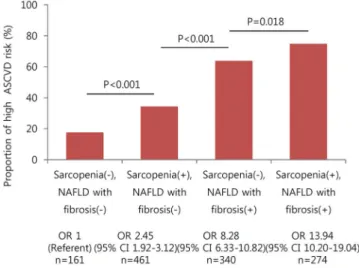
Figure 3.The relative risk for high probability of ASCVD according to FIB-4–defined significant liver fibrosis and sarcopenia. The relative risk for high probability of ASCVD was highest in subjects with FIB-4–defined significant liver fibrosis and sarcopenia (allP , 0.001). ASCVD, athero- sclerotic cardiovascular disease; CI, confidence interval; FIB-4, fibrosis-4 index; NAFLD, nonalcoholic fatty liver disease; OR, odds ratio.
Table 5. OR and 95% CIs of high probability of ASCVD according to the status of sarcopenia and FIB-4–defined significant liver fibrosis defined by different scores among subjects with NAFLD
Multivariate models
Sarcopenia (2) NAFLD with significant liver
fibrosis (2)
Sarcopenia (1) NAFLD with significant liver
fibrosis (2)
Sarcopenia (2) NAFLD with significant liver
fibrosis (1)
Sarcopenia (1) NAFLD with significant liver
fibrosis (1)
Model 1 1.00 (ref.) 1.10
0.78–1.55 P 5 0.579
1.35 0.93–1.95 P 5 0.111
1.71 1.13–2.59 P 5 0.011
Model 2 1.00 (ref.) 1.29
0.90–1.84 P 5 0.164
1.57 1.07–2.31 P 5 0.023
1.91 1.25–2.91 P 5 0.003
Model 3 1.00 (ref.) 1.53
0.98–2.39 P 5 0.063
2.38 1.48–3.84 P , 0.001
3.56 2.11–6.02 P , 0.001 Model 1: adjusted for age and sex.
Model 2: adjusted for age, sex, exercise, and current smoking.
Model 3: adjusted for age, sex, hypertension, diabetes, obesity, central obesity, HOMA-IR, CKD, hyper-LDL cholesterolaemia, and hypo-HDL cholesterolaemia.
ASCVD, atherosclerotic cardiovascular disease; CI, confidence interval; CKD, chronic kidney disease; FIB-4, fibrosis-4 index; HDL, high-density lipoprotein; HOMA-IR, homeostasis model assessment of insulin resistance; LDL, low-density lipoprotein; NAFLD, nonalcoholic fatty liver disease; OR, odds ratio.
LIVER
sarcopenia, P , 0.001; and OR 5 2.04 in subjects with both NAFLD and sarcopenia, P 5 0.012).
Association of NAFLD, sarcopenia, and cardiometabolic/renal risk factors with high probability of ASCVD
The adjusted relative risks of CNS-defined NAFLD, the degree of fatty liver by CNS and FLI, sarcopenia, and other cardiometabolic/renal factors for high probability of ASCVD were analyzed in nonobese and obese subjects (Table 4). NAFLD modestly raised the risk for high probability of ASCVD, regard- less of obesity (OR 5 1.45 in nonobese subjects and OR 5 1.72 in obese subjects; all P , 0.05), whereas the contribution of sarco- penia to risk of high probability of ASCVD was greater in non- obese subjects than in obese subjects (OR 5 4.32 in nonobese subjects and OR 5 2.33 in obese subjects; all P , 0.001). The degree of fatty liver by CNS and FLI also showed a significant positive association with the risk for high probability of ASCVD, irrespective of obesity (OR 5 1.39–1.43 in nonobese subjects and OR 5 1.60–1.67 in obese subjects; all P , 0.05). Other major risk factors such as hypertension, T2D, current smoking, and CKD had relatively higher ORs for risk for high probability of ASCVD compared with those of NAFLD and sarcopenia. Similar findings were observed when FLI was used to define NAFLD (data not shown).
Association between quartile-stratified ASCVD risk and significant liver fibrosis stratified by sarcopenia among subjects with NAFLD
Because fibrosis progression is significantly associated with an increased risk of liver-related events among subjects with NAFLD (2), we selected subjects with CNS-defined NAFLD for further statistical analysis (n 5 2,236). FIB-4–defined significant liver fibrosis and sarcopenia additively increased the relative risk for high probability of ASCVD among subjects with CNS-defined NAFLD (OR 5 13.94, 95% CI 5 10.20–19.04) (P , 0.05)
(Figure 3). When FLI was used to define NAFLD, similar findings were observed (data not shown).
Association between high probability of ASCVD and NAFLD with significant liver fibrosis/sarcopenia among subjects with NAFLD The association between high probability of ASCVD and NAFLD with significant liver fibrosis/sarcopenia among subjects with NAFLD according to multistep adjustments is shown in Table 5.
When CNS was used to define NAFLD and the relative risk for high probability of ASCVD was assessed after sufficient adjust- ment (model 3), sarcopenia alone did not raise the risk for high probability of ASCVD among subjects with NAFLD (OR 5 1.53, P 5 0.063). However, FIB-4–defined significant liver fibrosis and sarcopenia additively raised the OR for risk of high probability of ASCVD among subjects with NAFLD (OR 5 2.38, P , 0.001 in subjects with significant liver fibrosis but without sarcopenia, and OR 5 3.56, P , 0.001 in subjects with both significant liver fibrosis and sarcopenia). When 118 subjects with common ma- lignancies in South Korea (39 stomach cancer, 5 colon cancer, 32 breast cancer, 37 cervical cancer, and 6 lung cancer) were further excluded, similar findings were obtained (see Table 2, Supple- mentary Digital Content 3, http://links.lww.com/AJG/B437).
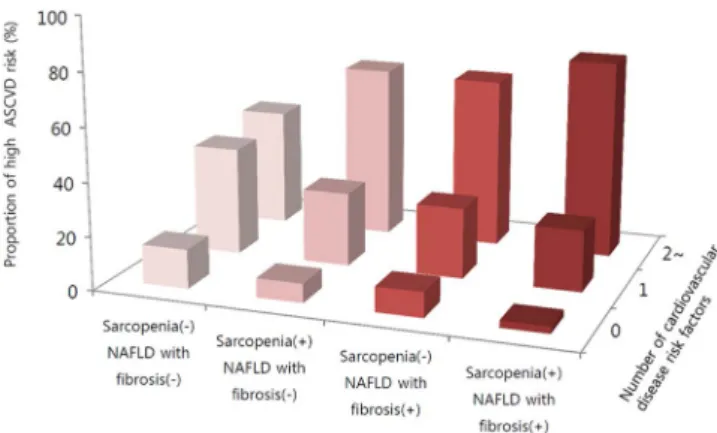
Similarly, the proportion of subjects with 2 or more ASCVD risk components was greatly increased in subgroups with FIB- 4–defined significant liver fibrosis (Figure 4), regardless of sar- copenia (P for trend , 0.001). When FLI was used to define NAFLD, similar findings were observed (data not shown).
Association between high probability of ASCVD and with significant liver fibrosis/sarcopenia in the general population Based on subgroup analyses in subjects with NAFLD, we further investigated the association between high probability of ASCVD and NAFLD with significant liver fibrosis/sarcopenia in the general population according to multistep adjustments (models 1, 2, and 3) (Table 6). When CNS and FIB-4 were used to define NAFLD and significant liver fibrosis, respectively, and the relative risk for high probability of ASCVD was assessed after sufficient adjustment (model 3), the relative risks were highest in subjects with NAFLD with significant liver fibrosis compared with sub- jects with NAFLD, but without significant liver fibrosis or those without NAFLD, regardless of sarcopenia status (OR 5 2.27, P , 0.001 in subjects without sarcopenia, and OR 5 2.95, P , 0.001 in subjects with sarcopenia). In addition, subjects with sarcopenia, but without NAFLD (n 5 664, OR 5 2.36), and those with NAFLD with significant liver fibrosis, but without sarcopenia (n 5 340, OR 5 2.27), showed similar relative risk for high probability of ASCVD compared with those without NAFLD and sarcopenia (n 5 4,286). When other models were used to define NAFLD, similar findings were observed (data not shown). When 118 subjects with common malignancies in South Korea (39 stomach cancer, 5 colon cancer, 32 breast cancer, 37 cervical cancer, and 6 lung cancer) were further excluded, similar findings were obtained (see Table 3, Supplementary Digital Content 3, http://links.lww.com/AJG/B437).
DISCUSSION
This study used nationwide, population-based, cross-sectional data to demonstrate a significant association between ASCVD and the presence of NAFLD and/or sarcopenia and significantly increased unadjusted risk of ASCVD in subjects with NAFLD and/or sarcopenia compared with the risk in those without
Figure 4.Proportion of subjects with CNS-defined NAFLD with individual ASCVD risk components according to FIB-4–defined significant liver fi- brosis. Risk factors included hypertension, diabetes, hyper-LDL choles- terolaemia, central obesity, and CKD. The number of cardiovascular risk factors was significantly greater in subjects with sarcopenia with liver fi- brosis than in subjects without sarcopenia without liver fibrosis (allP for trend, 0.001). ASCVD, atherosclerotic cardiovascular disease; CKD, chronic kidney disease; CNS, comprehensive NAFLD score; FIB-4, fibro- sis-4 index; LDL, low-density lipoprotein; NAFLD, nonalcoholic fatty liver disease.
LIVER
NAFLD and sarcopenia when subjects with metabolically un- healthy conditions (central obesity, obesity, hypertension, T2D, CKD, and dyslipidaemia) were selected. After appropriate ex- tensive adjustment, we found an approximately 2-fold increased adjusted risk of ASCVD in patients with NAFLD and/or sar- copenia (OR 1.83–2.18 using CNS-defined NAFLD and 2.04–2.88 using FLI-defined NAFLD). Furthermore, when subjects with CNS-defined NAFLD were selected, the risk of ASCVD was highest in subjects who had both sarcopenia and NAFLD with significant liver fibrosis, followed by those with sarcopenia or NAFLD with significant liver fibrosis, and lowest in those without sarcopenia and NAFLD with significant liver fibrosis, even after appropriate adjustment. Although the mechanisms underpinning this association between ASCVD and NAFLD and/or sarcopenia in the general population and between ASCVD and NAFLD with significant liver fibrosis and/
or sarcopenia in subjects with NAFLD could not be assessed, all these might indicate that sarcopenia, NAFLD, or NAFLD with liver fibrosis has detrimental effect on atherothrombotic risk, respectively or synergistically. Even after excluding subjects with the common malignancies in South Korea, similar findings were obtained.
The current study has several strengths. First, the selected cohort was large (n . 7,000) to ensure statistical reliability and to investigate the independent association between athero- thrombotic risk and sarcopenia, NAFLD, or NAFLD with liver fibrosis. Furthermore, the proportion of sarcopenic subjects in the cohort (19.5%) was similar to that in previous Asian studies (33).
This might indicate that subjects with sarcopenia in the current population-based cohort were selected appropriately and that our results may be applicable to most Asian populations, although validation is required for other ethnic groups. In addition, the prevalence of subjects with NAFLD (31.2%) was similar to that of other Asian countries (34). This suggests that our study pop- ulation based on a nationwide representative cohort was selected in an appropriate manner and was representative of the real world.
Second, we tried to determine the impact of coexisting NAFLD with/without significant liver fibrosis and NAFLD on ASCVD risk in this study. It is well known that NAFLD is a sig- nificant risk factor for cardiovascular events (8). Sarcopenia may also affect cardiovascular outcomes via enhanced atrial stiffness, chronic inflammation, or physical inactivity, despite some con- tradictory reports (35–39). In addition, recent studies suggested the presence of a potential link between NAFLD and sarcopenia (20,21). However, to our knowledge, this is the first study to demonstrate independent associations of ASCVD risk with sar- copenia and NAFLD. In addition, the synergistic unfavorable influence of coexisting NAFLD and sarcopenia (approximately 10% in our population) on ASCVD risk was identified. Because subjects with NAFLD and sarcopenia are most likely to be older and have more vascular risk factors such as hypertension, T2D, metabolic syndrome, central obesity, insulin resistance, and dyslipidaemia, the relationships among sarcopenia, NAFLD, and the increased ASCVD risk might be easily explained. For exam- ple, compared with controls without sarcopenia and NAFLD, subjects with both had a 74-fold higher risk of obesity; this was significantly higher than that in subjects with NAFLD alone (34-fold) or those with sarcopenia alone (4-fold), although this association was somewhat attenuated after adjusting for potential confounders.
Third, one may argue that the influence of NAFLD on ASCVD might have been biased because most subjects with NAFLD might have had simple hepatic steatosis, which has an extremely fa- vorable prognosis. Thus, we selected only subjects who were suspected of having NAFLD to determine whether the presence of significant liver fibrosis in subjects with NAFLD might have a significant association with ASCVD risk, based on the concept that liver fibrosis can be considered the sequela of the in- flammatory process of NAFLD, and is the single most important factor as well as a clinically relevant issue that correlates with poor outcomes, such as progression to liver cirrhosis and the de- velopment of hepatocellular carcinoma in subjects with chronic liver diseases (8,40). In the subgroup with NAFLD, around 20% of
Table 6. ORs and 95% CIs for high probability of ASCVD according to CNS-defined NAFLD with or without FIB-4–defined significant liver fibrosis in subjects with sarcopenia and subjects without sarcopeniaMultivariate models
Sarcopenia (2) Sarcopenia (1)
No NAFLD (n5 4,286)
NAFLD without significant liver fibrosis (n5 1,165)
NAFLD with significant liver fibrosis (n5 340)
No NAFLD (n5 664)
NAFLD without significant liver fibrosis (n5 463)
NAFLD with significant liver fibrosis (n5 273)
Model 1 1.00 (ref.) 3.00
2.29–3.92 P , 0.001
3.14 2.27–4.35 P , 0.001
2.29 1.75–3.00 P , 0.001
2.67 1.96–3.63 P , 0.001
3.67 2.57–5.26 P , 0.001
Model 2 1.00 (ref.) 2.97
2.25–3.92 P , 0.001
3.57 2.55–5.00 P , 0.001
2.46 1.86–3.25 P , 0.001
3.01 2.19–4.14 P , 0.001
3.88 2.70–5.59 P , 0.001
Model 3 1.00 (ref.) 1.41
0.96–2.09 P 5 0.080
2.27 1.45–3.55 P , 0.001
2.36 1.70–3.26 P , 0.001
1.60 1.02–2.52 P 5 0.041
2.95 1.81–4.83 P , 0.001 Model 1: adjusted for age and sex.
Model 2: adjusted for age, sex, exercise, and current smoking.
Model 3: adjusted for age, sex, hypertension, diabetes, obesity, central obesity, HOMA-IR, CKD, hyper-LDL cholesterolaemia, and hypo-HDL cholesterolaemia.
ASCVD, atherosclerotic cardiovascular disease; CI, confidence interval; CKD, chronic kidney disease; CNS, comprehensive NAFLD score; FIB-4, fibrosis-4 index; HDL, high-density lipoprotein; HOMA-IR, homeostasis model assessment of insulin resistance; LDL, low-density lipoprotein; NAFLD, nonalcoholic fatty liver disease; OR, odds ratio.
LIVER
subjects had significant liver fibrosis, which showed an in- dependent association with the increased ASCVD risk, together with sarcopenia. In addition, the concomitant presence of sar- copenia and significant liver fibrosis in this subgroup showed the highest ASCVD risk.
Last, variables related to demographic characteristics, labo- ratory findings, and metabolic factors were sufficiently adjusted.
In addition, we showed that the unfavorable influence of NAFLD, sarcopenia, or NAFLD with significant liver fibrosis on the in- creased risk of ASCVD was similarly maintained in subgroups with metabolically unhealthy conditions. All these might re- inforce the independent correlation between NAFLD/sarcopenia and ASCVD in the general population and between significant liver fibrosis/sarcopenia and ASCVD in subjects with NAFLD.
We are also aware of several issues that remained unresolved in the current study. First, although we used well-validated liver fibrosis (41,42) and steatosis prediction models (1,24), liver im- aging and histological information was not available because of the high cost of ultrasonographic examination and the ethical concerns regarding screening of a large national population- based cohort. KNHANES participants who gave informed con- sent only had serum tests. To validate our results, we recruited 68 patients with NAFLD who underwent liver biopsy with available bioimpedance analysis results to assess skeletal muscle mass and laboratory test results to calculate ASCVD in our institute from January 2017 to July 2019. When liver fibrosis was stratified as F0-2 vs F3-4 and sarcopenic status was defined according to a cutoff of 1.74 for men and 1.25 for women, a stepwise increase in the ASCVD risk was again detected. This is similar to the results from the KNHANES data set (P for trend 5 0.003, Figure 1, Supplementary Digital Content 1, http://links.lww.com/AJG/
B435). In addition, because KNHANSE was based on question- naire for cancer diagnosis, subjects with hepatocellular carcinoma were excluded, not based on ultrasound.
Second, because of the cross-sectional nature of the study design, we could not assess the longitudinal dynamic association between status changes in NAFLD and the amount of muscle mass and changing ASCVD risk. We were also unable to show the effects of therapeutic interventions, such as lifestyle modification, exercise, weight loss, medications, nutritional support, or protein supplements, on improvement of NAFLD, sarcopenia, and ASCVD risk. Nevertheless, our results showed the need for screening the population with NAFLD or sarcopenia to identify subjects with a high risk of ASCVD requiring intensive medical therapy. Actually, based on the US Preventive Services Task Force recommendations (43), our data indicated that over 50% of subjects with NAFLD and sarcopenia might need to start a statin or aspirin.
Third, we used a pooled cohort risk equation to assess ASCVD risk and did not examine the risk of real clinical events during follow-up. The 10-year ASCVD risk with primary prevention has been estimated by the ACC/AHA in their blood cholesterol guideline. However, because the equation for calculating ASCVD risk might have been overestimated in the Asian study pop- ulation, our findings should be interpreted cautiously (44). In addition, although we excluded subjects with previous ASCVD history, it was still possible that subjects with unrecognized ce- rebral infarction or hidden coronary artery disease might have been included in this study because silent brain infarction or myocardial infarction can be detected in up to 40% of an aged population with vascular risk (45,46).
Fourth, the overall predictive value of FIB-4 for assessing the fibrotic burden in the liver of subjects with NAFLD might be suboptimal (47). In addition, because the proportion of FIB-4–defined significant liver fibrosis (FIB-4 . 2.67) was small among subjects with CNS-defined NAFLD (n 5 39), we could not analyze the influence of significant liver fibrosis.
Nevertheless, the synergistic influence of sarcopenia and FIB-4–defined significant liver fibrosis on the ASCVD risk was maintained (see Figure 2, Supplementary Digital Content 2, http://links.lww.com/AJG/B436).
Finally, several serum markers, such as HbA1c, were available only for a small proportion of subjects (27.8% [621 of 2,236]).
Thus, the incremental influence on the final results, not simply the presence of diabetes, could not be assessed. In addition, de- tailed information regarding antihypertensive and antidiabetic drugs was not available, preventing analysis of their influence.
Furthermore, although we excluded subjects with known chronic liver diseases (such as viral hepatitis and alcoholic liver disease), subjects with other types of chronic liver diseases (such as Wilson disease, autoimmune liver disease, or primary biliary hepatop- athy) might have been included in the study, which may have biased the final results.
In conclusion, this nationwide survey of a representative sample of Korean individuals demonstrated that NAFLD and sarcopenia are significantly associated with increased ASCVD risk in the general population and that NAFLD with significant liver fibrosis and sarcopenia are significantly associated with in- creased ASCVD risk in subjects with NAFLD, independent of other metabolic and clinical factors, indicating that physicians need to evaluate the status of liver and skeletal muscle to identify subjects with high cardiovascular risk and provide appropriate therapeutic interventions to reduce the risk of cardiovascular events by improving NAFLD and sarcopenia. Prospective, well- designed, longitudinal studies are warranted to elucidate the complex relationship between NAFLD, sarcopenia, and cardio- vascular risk.
CONFLICTS OF INTEREST
Guarantor of the article: Yong-ho Lee, MD, PhD, Young Dae Kim, MD, PhD, and Seung Up Kim, MD, PhD.
Specific author contributions: Conception and design: E.H., Y.h.L., Y.D.K., and S.U.K. Development of methodology: E.H., Y.h.L., Y.D.K., and S.U.K. Analysis and interpretation of data: E.H., Y.h.L., Y.D.K., and S.U.K. Writing, review, and/or revision of the manu- script: E.H., Y.h.L., Y.D.K., B.K.K., J.Y.P., D.Y.K., S.H.A., B.W.L., E.S.K., B.S.C., K.H.H., H.S.N., J.H.H., and S.U.K. Administrative, technical, or material support: E.H., Y.h.L., Y.D.K., and S.U.K. Study supervision: Y.h.L., Y.D.S., and S.U.K.
Financial support: This study was supported by Basic Science Research Program through the National Research Foundation of Korea funded by the Ministry of Science, ICT and Future Planning (2019R1A2C4070136, NRF-2016R1A5A1010764), by Research of Korea Centers for Disease Control and Prevention (2016-ER5103-00, 2016-ER5103-01), and by the Korea Healthcare Technology R&D Project, Ministry of Health and Welfare (HI17C0913), Republic of Korea. The funders had no role in study design, data collection, and analysis, decision to publish, or preparation of the manuscript.
Potential competing interests: None to report.
Writing assistance: The English in this document has been checked by at least 2 professional editors, both native speakers of English (www.editage.co.kr).
LIVER
REFERENCES
1. Lee YH, Bang H, Park YM, et al. Non-laboratory-based self-assessment screening score for non-alcoholic fatty liver disease: Development, validation and comparison with other scores. PLoS One 2014;9:e107584.
2. Fan JG, Kim SU, Wong VW. New trends on obesity and NAFLD in Asia.
J Hepatol 2017;67:862–73.
3. Lee HW, Park SY, Kim SU, et al. Discrimination of nonalcoholic steatohepatitis using transient elastography in patients with nonalcoholic fatty liver disease. PLoS One 2016;11:e0157358.
4. Oh H, Jun DW, Saeed WK, et al. Non-alcoholic fatty liver diseases: Update on the challenge of diagnosis and treatment. Clin Mol Hepatol 2016;22:
327–35.
5. Korean Association for the Study of the Liver. KASL clinical practice guidelines: Management of nonalcoholic fatty liver disease. Clin Mol Hepatol 2013;19:325–48.
6. Kim D, Kim WR, Kim HJ, et al. Association between noninvasivefibrosis markers and mortality among adults with nonalcoholic fatty liver disease in the United States. Hepatology 2013;57:1357–65.
7. You SC, Kim KJ, Kim SU, et al. Hepaticfibrosis assessed using transient elastography independently associated with coronary artery calcification.
J Gastroenterol Hepatol 2015;30:1536–42.
8. Ekstedt M, Franzen LE, Mathiesen UL, et al. Long-term follow-up of patients with NAFLD and elevated liver enzymes. Hepatology 2006;44:
865–73.
9. Siddiqui MS, Fuchs M, Idowu MO, et al. Severity of nonalcoholic fatty liver disease and progression to cirrhosis are associated with atherogenic lipoprotein profile. Clin Gastroenterol Hepatol 2015;13:1000–8.e1003.
10. Villanova N, Moscatiello S, Ramilli S, et al. Endothelial dysfunction and cardiovascular risk profile in nonalcoholic fatty liver disease. Hepatology 2005;42:473–80.
11. Akabame S, Hamaguchi M, Tomiyasu K, et al. Evaluation of vulnerable coronary plaques and non-alcoholic fatty liver disease (NAFLD) by 64- detector multislice computed tomography (MSCT). Circ J 2008;72:
618–25.
12. Rosenberg IH. Sarcopenia: Origins and clinical relevance. J Nutr 1997;
127:990S–991S.
13. Hanatani S, Izumiya Y, Onoue Y, et al. Non-invasive testing for sarcopenia predicts future cardiovascular events in patients with chronic kidney disease. Int J Cardiol 2018;268:216–21.
14. Hamasaki H, Kawashima Y, Katsuyama H, et al. Association of handgrip strength with hospitalization, cardiovascular events, and mortality in Japanese patients with type 2 diabetes. Sci Rep 2017;7:7041.
15. Janssen I, Heymsfield SB, Ross R. Low relative skeletal muscle mass (sarcopenia) in older persons is associated with functional impairment and physical disability. J Am Geriatr Soc 2002;50:889–96.
16. Alexandre Tda S, Duarte YA, Santos JL, et al. Sarcopenia according to the European Working Group on Sarcopenia in Older People (EWGSOP) versus dynapenia as a risk factor for mortality in the elderly. J Nutr Health Aging 2014;18:751–6.
17. Bhanji RA, Narayanan P, Allen AM, et al. Sarcopenia in hiding: The risk and consequence of underestimating muscle dysfunction in nonalcoholic steatohepatitis. Hepatology 2017;66:2055–65.
18. Bhanji RA, Narayanan P, Moynagh MR, et al. Differing impact of sarcopenia and frailty in nonalcoholic steatohepatitis and alcoholic liver disease. Liver Transpl 2019;25:14–24.
19. Hong HC, Hwang SY, Choi HY, et al. Relationship between sarcopenia and nonalcoholic fatty liver disease: The Korean Sarcopenic Obesity Study. Hepatology 2014;59:1772–8.
20. Lee YH, Jung KS, Kim SU, et al. Sarcopaenia is associated with NAFLD independently of obesity and insulin resistance: Nationwide Surveys (KNHANES 2008-2011). J Hepatol 2015;63:486–93.
21. Lee YH, Kim SU, Song K, et al. Sarcopenia is associated with significant liverfibrosis independently of obesity and insulin resistance in nonalcoholic fatty liver disease: Nationwide Surveys (KNHANES 2008- 2011). Hepatology 2016;63:776–86.
22. Kweon S, Kim Y, Jang MJ, et al. Data resource profile: The Korea National Health and Nutrition Examination Survey (KNHANES). Int J Epidemiol 2014;43:69–77.
23. Studenski SA, Peters KW, Alley DE, et al. The FNIH sarcopenia project:
Rationale, study description, conference recommendations, andfinal estimates. J Gerontol A Biol Sci Med Sci 2014;69:547–58.
24. Bedogni G, Bellentani S, Miglioli L, et al. The fatty liver index: A simple and accurate predictor of hepatic steatosis in the general population. BMC Gastroenterol 2006;6:33.
25. Miyata H, Miyata S. Speculation of the time-dependent change of FIB4 index in patients with nonalcoholic fatty liver disease: A retrospective study. Can J Gastroenterol Hepatol 2018;2018:5323061.
26. Goff DC Jr, Lloyd-Jones DM, Bennett G, et al. 2013 ACC/AHA guideline on the assessment of cardiovascular risk: A report of the American College of Cardiology/American Heart association Task Force on practice guidelines. Circulation 2014;129:S49–73.
27. Oh SW. Obesity and metabolic syndrome in Korea. Diabetes Metab J 2011;35:561–6.
28. Levey AS, Stevens LA, Schmid CH, et al. A new equation to estimate glomerularfiltration rate. Ann Intern Med 2009;150:604–12.
29. National Kidney Foundation. K/DOQI clinical practice guidelines for chronic kidney disease: Evaluation, classification, and stratification. Am J Kidney Dis 2002;39:S1–266.
30. Grundy SM, Cleeman JI, Merz CN, et al. Implications of recent clinical trials for the national cholesterol education Program adult treatment panel III guidelines. Circulation 2004;110:227–39.
31. Lee YH, Kim JE, Roh YH, et al. The combination of vitamin D deficiency and mild to moderate chronic kidney disease is associated with low bone mineral density and deteriorated femoral microarchitecture: Results from the KNHANES 2008-2011. J Clin Endocrinol Metab 2014;99:3879–88.
32. Matthews DR, Hosker JP, Rudenski AS, et al. Homeostasis model assessment: Insulin resistance and beta-cell function from fasting plasma glucose and insulin concentrations in man. Diabetologia 1985;28:412–9.
33. Hiraoka A, Michitaka K, Ueki H, et al. Sarcopenia and two types of presarcopenia in Japanese patients with chronic liver disease. Eur J Gastroenterol Hepatol 2016;28:940–7.
34. Farrell GC, Wong VWS, Chitturi S. NAFLD in Asia—As common and important as in the West. Nat Rev Gastroenterol Hepatol 2013;10:307.
35. Chin SO, Rhee SY, Chon S, et al. Sarcopenia is independently associated with cardiovascular disease in older Korean adults: The Korea national health and nutrition examination survey (KNHANES) from 2009. PLoS One 2013;8:e60119.
36. Sanada K, Miyachi M, Tanimoto M, et al. A cross-sectional study of sarcopenia in Japanese men and women: Reference values and association with cardiovascular risk factors. Eur J Appl Physiol 2010;110:57–65.
37. Oterdoom LH, Gansevoort RT, Schouten JP, et al. Urinary creatinine excretion, an indirect measure of muscle mass, is an independent predictor of cardiovascular disease and mortality in the general population. Atherosclerosis 2009;207:534–40.
38. Neels JG, Olefsky JM. Inflamed fat: What starts the fire? J Clin Invest 2006;
116:33–5.
Study Highlights
WHAT IS KNOWN
3
CVD is significantly linked to severity of liver fibrosis, and it is the leading cause of mortality in patients with NAFLD.3
Sarcopenia is significantly associated with an increased risk of cardiovascular events or mortality in patients with metabolic phenotypes such as T2D or CKD.3
A strong relationship between NAFLD and sarcopenia in the general population suggests sarcopenia as a novel risk factor for NAFLD.WHAT IS NEW HERE
3
After appropriate extensive adjustment, we found an approximately 2-fold increased adjusted risk of ASCVD in subjects with NAFLD and/or sarcopenia compared with those without NAFLD.3
Among subjects with NAFLD selected, the risk of ASCVD was highest in subjects who had both sarcopenia and NAFLD with significant liver fibrosis, independent of other metabolic and clinical factors.3
NAFLD, sarcopenia, and cardiovascular risk are independently associated with each other.LIVER
39. Aubertin-Leheudre M, Lord C, Goulet ED, et al. Effect of sarcopenia on cardiovascular disease risk factors in obese postmenopausal women.
Obesity (Silver Spring) 2006;14:2277–83.
40. Kim HS, Kim BK, Kim SU, et al. Association between level offibrosis, rather than antiviral regimen, and outcomes of patients with chronic hepatitis B. Clin Gastroenterol Hepatol 2016;14:1647–56.e1646.
41. Vallet-Pichard A, Mallet V, Nalpas B, et al. FIB-4: An inexpensive and accurate marker offibrosis in HCV infection. Comparison with liver biopsy andfibrotest. Hepatology 2007;46:32–6.
42. Huang X, Xu M, Chen Y, et al. Validation of the fatty liver index for nonalcoholic fatty liver disease in middle-aged and elderly Chinese.
Medicine (Baltimore) 2015;94:e1682.
43. Bibbins-Domingo K; U.S. Preventive Services Task Force. Aspirin use for the primary prevention of cardiovascular disease and colorectal cancer:
U.S. Preventive Services Task Force recommendation statement. Ann Intern Med 2016;164:836–45.
44. Chia YC, Lim HM, Ching SM. Validation of the pooled cohort risk score in an Asian population—A retrospective cohort study. BMC Cardiovasc Disord 2014;14:163.
45. Vermeer SE, Longstreth WT Jr, Koudstaal PJ. Silent brain infarcts: A systematic review. Lancet Neurol 2007;6:611–9.
46. Valensi P, Lorgis L, Cottin Y. Prevalence, incidence, predictive factors and prognosis of silent myocardial infarction: A review of the literature. Arch Cardiovasc Dis 2011;104:178–88.
47. Jun DW, Kim SG, Park SH, et al. External validation of the non- alcoholic fatty liver diseasefibrosis score for assessing
advancedfibrosis in Korean patients. J Gastroenterol Hepatol 2017;32:1094–9.