한국전문물리치료학회지 제 10권 제 4호
KAUTPT Vo1. 10 No. 4 2003.
’Th e Imm ediate Effects of the Toe Spreader on the Gait of Children With Spastic Diplegic Cerebral Palsy
Shin Hwa-kyung, M.Sc., P.T.
Dept. of Rehabilitation Therapy, The Graduate School, Y onsei University Ko Myung-suk, B.H.Sc., P.T.
Seoul Community Rehabilitation Center Kim Duck-hwa
,
B.H.Sc.,
P.T.Dept. of Rehabilitation Therapy, The Graduate School, Y onsei University Kwon Oh-yun
,
Ph.D.,
P.T.Dept. of Physical Therapy, College of Health Science, Yonsei University
Dept. of Ergotherapy
,
The Graduate School of Health and Environment,
Y onsei niversity Institute of Health Science, Y onsei University국문요약
발가락 벌림 보조기가 양하지 뇌성마벼 아동의 보행에 미치는 영향
선화경
연세대학교 대학원 재활학과
고명숙
서울 장애인종합복지관
김덕화
연세대학교 대학원 재활학과
권오윤
연세대학교 보건과학대학 물리치료학과, 보건환경대학원 인간공학치료학과, 보건과학연구소
본 연구는 발가락 벌럼 보조기 (toe spreader) 가 긴장성 발가락 굽힘 반사 (Tonic
ToeFlexion Reflex:
TTFR) 가 있는 양하지 뇌성마비 아동의 보행에 미치는 영향을 알아보
고자 하였다. 12명의 TTFR 이 있는 양하지 뇌성마비 아동을 대상으로 같은 날에 맨발과 발가락 별림 보조기를 착용한 상태에서 보행분석을 실시하였다. 시간
•거리 보행변수로
·활보장 (step
length),보장 (step
length),보폭 (step
width),발가락 외 전각도(toe
out angle),활보시 간 (stride) , 입 각기
(stance phase),유각기
(swing phase),분속수 (cadence) , 보행속도 (speed) 를 측정하였다. 발가락 별림 보조기 착용 시 시간
•거리 보행변수는 통
Corresponding author: Shin
Hwa-셔ung !J.kshinl
(i4netsf!o.com껴 “
한국전문물리치료학회지 제 10권 제 4호
KAUTPT Vol. 10 No. 4 2003.
계적으로는 유의한 차이가 없었다 (p>.05). 양하지 뇌성마비 아동에서 TTFR을 억제하기 위한 발가락 별림 보조기의 즉시적인 효과는 유의하지 않다고 볼 수 있으며, 추후연구로 장기간 일상생활에서의 지속적인 착용을 통한 연구가 펼요하다고 본다.
핵심단어: 긴장성 발가락 굽힘, 뇌성마비; 발가락 별림 보조기; 보행 분석.
Introduction
Spasticity is a major cause of gait dis- turbance in cerebral palsy. Another im- portant clinical syrnptom that diminishes gait ability is tonic toe flexion reflex (TTFR), which may resu1t from the lack of primitive reflex control in the central nervous system (Cohen et al, 1967;
Manfredi et al, 1975)(Figure 1).
Tonic flexion of the toes is an abnor- mal reflex which can occur as a result of a cerebrovascular accident or brain injury (Brain, 1950; Cohen and Iannone, 1967).
For most primitive reflexes, retention of the reflex beyond the period when it shou1d no 10nger be elicited suggests a pathologic process within the central nerv- ous system (Zafeiriou
,
2000). Tonic toe flexion is considered abnormal after the age of 2 years and indicated damage to the contralateral잠ontal
lobe or tract de- scending from the frontal lobe, such as the corticospinal tract (Landou and Clare, 1966). In this study, the term "tonic toe flexion reflex" wi1l be used to describe a hollowing out of the sole and an ex- aggerated curvature of the foot due to the toe flexion and adduction with associated foot inversion, usual1y due to a cutaneous or proprioceptive stimulus (Manfredi et al,
1975). During the stance phase of gait, both cutaneous and proprioceptive stimuli applied to the plantar surface of the foot could elicit the TTFR (Manfredi et al, 1975).
Several types of tone-reducing
,
an- kle-foot orthoses have been reported (Ford et al, 1986). Because tonic toe flexion af- fects gait, toe spreader are sometimes used by physical therapists to inhibit tonic toe flexion during stance and gait.Evidence of a positive effect of the toe spreader is needed to justify the continued use of the device.
The effect of TTFR on gait is often treated by use of a toe spreader, a cus- tom-fabricated orthotic device usually made from moleskin and closed cell foam (Fisher and Ut1ey, Unpublished notes, 1998). The spreader is used to inhibit an excess of TTFR and pain (Fisher B and Ut1ey, Unpublished notes, 1998). Abduc- tion of the toes by a toe spreader made of foam rubber appears to inhibit toe clawing and extensor spasticity (ie.
Increased resistance to flexion of the proximal interphalangeal joints) of the foot and often inhibits extensor spasticity of the entire lower extremity in patients with hemiplegia (Bobath B
,
1978).Although clinical reports indicate the pos-
한국전문물리치료학회지 제 10권 저14호
KAUTPT Vo1. 10 No. 4 2003.
itive effects with the use of the toe spreader, data supporting the use of the device have not been reported in the spastic diplegic cerebral palsy.
The purpose of this study was to verify the immediate
eff농cts
of a toe spreader in improving gait in the children with spas- tic diplegic cerebral palsy with TTFR.Metbods
Subjects
Twelve children diagnosed with spastic diplegic cerebral palsy (CP)
v이unteered
for this study. To qualify for the study, the children had to be able to walk in- dependently with no assistive devices for more than 5 m; exhibit TTFR, have no previous use of a toe spreader; be able to follow commands and be medically stable.
Patients with fixed foot contracture were excluded. We obtained institutional ethics committee’s approval for the study. The characteristics of subjects who participated in this study are shown in Table 1.
Procedures
Subjects were evaluated for
πFR
byan author who was blinded to the gait analysis data. The evaluation was made while subjects stood barefoot for 1 minute and then walked barefoot a distance of 5 m. TTFR was diagnosed if tonic plantar flexion, flexion of the toes with hollow- ing of the sole, or occasional foot in- version were found at any time during the observation (Figure 1). The subject with TTFR then sat for 20 minutes while the toe spreader was fabricated and fitted.
The toe spreader was held in the foot by tape on the dorsum of the foot.
To investigate the effectiveness of the toe spreader, the toe spreader was used
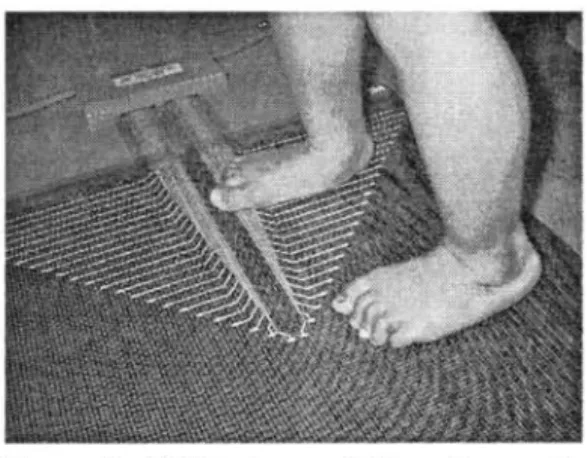
Figure 1. TTFR in a child with spastic diplegic cerebral palsy
Table 1. Descriptive characteristics of the subjects Variables
Mean age
土
SD (y) Male/femaleSpasticity of
plan때
flexorα{AS)
0/1/1 +/2/3/4
- 79 -
Subjects
6 .4土1. 9
7/5 0/5/4/3/0/0
한국전문물리치료학회지 제 10 권 제4호
KAUTPT Vo1. 10 No. 4 2003.
barefoot. The gait analysis consisted of a pre-test (barefoot) and a post-test (with toe spreader) at an interval of 30 minutes. For 30 minutes
,
subjects were allowed to play while standing or walking slowly freely while the toe spreader was adjusted to each subject’s feet.Gait was analyzed by MGI000 system2) (Figure 2). To eliminate acceleration and deceleration periods
,
subjects started and ended their laps 1 m before and beyond the walkway. The test was repeated 3 times,
and the data of the fastest walk was recorded. The Temporal-distance measurements were performed to de- termine stride, stance phase, swing phase, speed, cadence, stride length, step length,step width, and toe out angle. Gait analy- sis was performed before and after the toe spreader was attached.
The investigator contacted the subject
anψor the subject’s physical therapist after the data collection session for their com- ments regarding the effects of the toe spreader on the TIFR and gait after con- tinued use of the toe spreader.
Statistical analysis
The wilcoxon signed rank test was used to assess the differences of between walk- ing barefoot and with a toe spreader.
Data were analyzed by using SPSS 11.0 and the significance level was set at p<.05.
Figure 2. MGI000 system
2) Anina Inc. Japan.
한국전문물리치료학회지 제 10권 제 4호
KAUTPT Vol. 10 No. 4 2003.
Res띠ts
Mean and SEM for T -D gait variables between walking barefoot and with a toe spreader are presented in figure 3. The use of a toe spreader during gait
,
as compared with walking barefoot,
didn’t produce a statisticallysi맹ificant
increase in all temporal-distance gait variables (stride p=.07,
stance phase p=.9,
swing phase p=.07,
speed p=.44,
cadence p= 1. 00,
stride length p=.30,
step length p=.91,
step width p=.l6,
toe out angelp=.l3)(Figure 3). Although it was not statistically significant
,
the temporal-dis- tance (T-D) gait variable improved at a small rate.Discussion
The walking pattem of a children with spastic diplegic cerebral palsy is often ab- normal and inefficient. Increased tone in the lower extremity and pelvis is a factor in this abnormal gait pattem (Binder and Eng, 1989). Foot anlde orthoses are com-
50
Q@
.,.- -EQ Q%‘ 40
”
30
20
Swing phase Stride Stance phase
E 40
Q
30
20
10
0 Stride length Step length Step width
C그 Barefoot (n=12) IIIIBToe spreader (n=12)
Speed
드 E
Ea
”
25
Toe out angle 0 Cadence
F1gure 3. Comparison of the barefoot and with toe spreader in the T-D gait variables.
Error
bar경
represent mean土
SEM81 -
한국전문물리치료학회지 제 10권 제 4호
KAUTPT Vol. 10 No. 4 2003
monly used to prevent deformity, to sup-
poπ
normal joint alignment and mecha- nism and to facilitate function (Knutson and Clark, 1991). Although TTFR is con- sidered among the tonic reflexes, the pathogenesis of this symptom in patients with cerebral palsy has not been clarified.It appears similar to the toe-grasping re- flex in newboms. However
,
TTFR is ap- parent when a patient stands on hislher feet and take a steps forward, while toe grasp reflex is elicited by stimulating the sole.Increased curvature of the foot due to the TTFR may prevent normal plantar
뻐rface
contact with ground and weight transfer from the lateral border of the foot, across the metatarsal head, to the ball of the great toe during stance (Kapandji,
1970; Landau and Clare 1966).The TTFR may also prevent normal dor- siflexion of the toes and foot at the be- ginning of swing phase. Altered weight bearing and weight shift changes the tem- poral distance (T -D) characteristics of gait
,
commonly resulting in decreased stance time in the affected side, decreased contralateral step length,
decreased stride length and decreased cadence and velocity. De Saca et al (1994) analyzed the gait of hemiplegic patients with TTFR by using a toe spreader. Velocity and ca- dence increased significantly with the toe spreader, and De Saca attributed that to the altered foot mechanism. In terms of tone reducing AFO,
the structure of our toe spreader is similar to that of the in-hibition bar
,
the toe spreader appears to push the metatarsophalangeal joints into a neutral and slightly extended position,
thus preventing the interphalangeal joints from taking extreme flexion (Iwata et al
,
2003). The toe spreader may provide ad- ditional mechanical support and stability to the foot during stance phase as was evidenced by the results
당om
this study.The increased stabi1ity may, in turn, allow greater excursion of the non-weight-bear- ing limb. In addition, there was no sig- nificant correlation between the severity of spasticity and increase in the walking speed in a CP child with TTFR.
In this study, the gait analysis showed that the attachment of the toe spreader was not statistical1y significant in T-D gait variables. Because we studied the im- mediate effects of the attachment of the toe spreader
,
we could predict that its ef- fects increased at a small rate that was not statistically significant. When we compare the barefoot gait with the imme- diate effects of the atlachment of the toe spreader, the walking speed increased by 9.1 % and cadence increased 18%, as a result of the increment of stride length (4.2%) and steplen암h
(11.1%).Our study has several limitations. The efficacy of the toe spreader must be proved by its extended use in the daily life of each patient. Although this study showed immediate effects
,
it didn’t pro- duce statisticallysi맹ificant
increases in the T -D information. In addition,
future research is needed to investigate the한국전문물리치료학회지 제 10 권 제 4호
KAUTPT Vol. 10 No. 4 2003.
changes in actual translation and the amount of force across the plantar surface during the stance phase of the gait with the use of the toe spreader and the mus- cle activity of lower extremity.
Conclusion
A Toe spreader didn’t have the immedi- ate effects on the gait of children with spastic diplegic cereral palsy with TTFR.
References
Binder H. Eng GD. Rehabilitation man- agement of children with spastic di- plegic cerebral palsy. Arch Phys Med Rehabil, 1989;70:482-489.
Bobath B. Adult Hemiplegia: Evaluation and Treatment. 2nd ed. London, England
,
William Heinemann Medical Books Ltd,
1978.Brain W. The grasp reflex of the foot.
Med Clinic (Barc). 1950;15;293-296.
Cohen L, Iannone A. The tonic foot response. Arch N eurol. 1967; 17:
419-426.
De Saca LR
,
Catlin P A,
Segal RL.Immediate effects of the toe spreader on the tonic toe flexion reflex. Phys Ther. 1994;74:561-570.
Ford C, Grotz R, Shamp JK. The neuro- physiological ankle-foot orthosis. Clin Prosthet Orthot. 1986;10:15-23.
Iwata M
,
Kondo 1,
Sato Y,
et al. An an- kle-foot orthosis with inhibitor bar:Effect on hemiplegic gait. 2003;84:
924-927.
Kapandji C. The Physiology of the Joints.
2nd ed. London, England, Churchill Livinstone, 1970.
Knutson LM, Clark DE. Orthotic devices for ambulation in children with cere- bral palsy and myelomeningocele.
Phys Ther. 1991;70:946-960.
Landou W, Clare M. Pathophysiology of the tonic innervation phenomenon in the foot. Arch Neurol. 1966; 15;
252-263.
Manfredi M, Sccco G, Sideri G. The ton- ic ambulatory foot response: A clin- ical and electromyographic study.
Brain. 1975;98:167-180
Roger JP
,
Vanderbilt SH. Coordinated treatment in cerebral palsy; Where are we today? J Prosthet Orth. 1990;2:68-81.
Zafeiriou DI. Plantar grasp reflex in high-risk infants during the first the Ïrst year of life. Pediatr Neurol.
2000;22:75-76.
- 83 -