• 검색 결과가 없습니다.

Clinical Usefulness of Procalcitonin as a Predictive Marker in Accordance with the Severity of Female Patients with Uncomplicated Acute Pyelonephritis

N/A
N/A
Protected

Academic year: 2021

Share "Clinical Usefulness of Procalcitonin as a Predictive Marker in Accordance with the Severity of Female Patients with Uncomplicated Acute Pyelonephritis"

Copied!
5
0
0

로드 중.... (전체 텍스트 보기)

전체 글

(1)

Original Article Urogenit Tract Infect 2016;11(3):109-113

http://crossmark.crossref.org/dialog/?doi=10.14777/uti.2016.11.3.109&domain=pdf&date_stamp=2016-12-25

Clinical Usefulness of Procalcitonin as a Predictive Marker in Accordance with the Severity of Female Patients with Uncomplicated Acute Pyelonephritis

Young-Joo Kim

Department of Urology, Jeju National University Hospital, Jeju, Korea

Purpose: Acute pyelonephritis (APN) is accompanied by bacteremia and has a high incidence of mortality. Currently, there is a limited number of rapid diagnostic tests that can predict the severity of infection and suitable treatments for patients with APN. Herein, we determined whether serum procalcitonin (PCT) is a useful predictive and early cognitive marker according to the severity of APN.

Materials and Methods: Patients were divided into four groups according to the severity of infection: (1) No systemic inflammatory response syndrome (SIRS), (2) SIRS, (3) severe sepsis, and (4) septic shock. We measured the inflammatory biomarkers—PCT, C-reactive protein (CRP), and erythrocyte sedimentation rate.

One way ANOVA analysis was performed between the measured infection markers and the severity of infection. The p-value of less than 0.05 was considered by the post-hoc multiple comparisons.

Results: A total of 381 patients with APN were divided into four groups: (1) no SIRS (n=126, 33.1%), (2) SIRS (n=185, 48.6%), (3) severe sepsis (n=47, 12.3%), and (4) septic shock (n=23, 6.0%). PCT (p<0.001) and CRP (p=0.002) showed a significant difference among the group. Greater severity of infection grade was associated with higher PCT and CRP values. According to the multivariate analysis, there was a statistically significant difference of PCT among all grades.

Conclusions: The serum PCT was a helpful marker for predicting severity of APN.

Moreover, be a useful predictor of sepsis and septic shock.

Keywords: Procalcitonin; C-reactive protein; Pyelonephritis

Copyright 2016, Korean Association of Urogenital Tract Infection and Inflammation. All rights reserved.

This is an open access article distributed under the terms of the Creative Commons Attribution Non-Commercial License (http://creativecommons.org/licenses/by-nc/4.0) which permits unrestricted non-commercial use, distribution, and reproduction in any medium, provided the original work is properly cited.

Received: 25 October, 2016 Revised: 18 November, 2016 Accepted: 28 November, 2016

Correspondence to: Young-Joo Kim

http://orcid.org/0000-0001-5580-4338 Department of Urology, Jeju National University Hospital, 15 Aran 13-gil, Jeju 63241, Korea Tel: +82-64-717-1760, Fax: +82-64-717-1131 E-mail: [email protected]

INTRODUCTION

Acute pyelonephritis (APN) is usually accompanied by bacteremia, showing a variety of clinical courses. Bacteremia is a disseminated infection. As such, complications, in- cluding systemic inflammatory response syndrome (SIRS), severe sepsis, and septic shock, are common, showing a poor prognosis and rapid progression. It is clinically important to diagnose bacteremia as soon as possible.

Because it takes at least 24 to 48 hours—or more in some

cases—to get the results of blood culture from patients showing clinical symptoms of bacteremia, early diagnosis of bacteremia is a difficult challenge.

It is difficult to find the appropriate diagnosis and treatment for early stage bacteremia, since currently, there are limited methods for detecting early stage bacteremia.

There has been an effort to quickly predict early-staged

bacteremia to overcome the shortcomings of blood culture

test. Serum procalcitonin (PCT) increases in response to

bacterial infection; hence, it is expected to be useful in

(2)

the treatment and diagnosis of infectious diseases.

We only target uncomplicated APN. Complicated APN is associated with an underlying condition, such as diabetes mellitus, renal dysfunction, urinary tract obstruction, anatomic abnormality of the urinary tract, etc., which may increase the risk unsuccessful therapy. In the case of complicated APN, it has various biases depending on the underlying factor. Therefore, there is a possibility that the outcome of the infection process will be all one-sided.

We assessed the clinical application of PCT compared with erythrocyte sedimentation rate (ESR) and C-reactive protein (CRP) in accordance with the severity grade of APN. This study was performed to better understand the serum PCT and to determine if it is a useful predictive and early cognitive marker accordance with the severity of APN.

MATERIALS AND METHODS

This study was approved by the Institutional Review Board of Jeju National University (IRB no. JEJUNUH 2016-10-021).

SIRS is a widespread inflammatory response to a variety of severe clinical results. This syndrome is clinically re- cognized by the presence of two or more of the following:

(1) temperature >38

o

C or <36

o

C, (2) heart rate >90 beats/min, (3) respiratory rate >20 breaths/min or PaCO2

<32 mmHg, and/or (4) white blood cell (WBC) >12,000 cells/mm

3

, or >10 percent immature (band) forms. Severe sepsis is associated with organ dysfunction, hypo-perfusion, or hypotension. The manifestations of hypo-perfusion may include—but not limited to—lactic acidosis, oliguria, or an acute alteration in mental status. Septic shock is sepsis with hypotension despite adequate fluids resuscitation. It includes perfusion abnormalities, such as lactic acidosis, oliguria, or an acute alteration in mental status. Patients receiving inotropic or vasopressor agents may not be hypotensive at the time of measuring the perfusion abnormalities. Hypotension is defined as a systolic blood pressure of <90 mmHg or a reduction of >40 mmHg from the baseline, in the absence of other causes for the failure of blood pressure [1].

The inclusion criteria were as follows: (1) female patients, (2) age greater than 18 years, (3) body temperature greater than 38

o

C or the presence of fever and chills 24 hours, (4) acute onset with at least 1 sign and symptom of a

urinary tract infection (UTI) (dysuria, urgency, frequency, suprapubic pain, flank pain, or costovertebral angle tenderness on physical examination), and (5) a subsequently confirmed positive urine culture test result.

The exclusion criteria were as follows: (1) pregnant or breast feeding patients, (2) a history of functional or structural urinary tract abnormalities, (3) recent treatment for urolithiasis or hydronephrosis, (4) the present use of indwelling catheters or a history of nephrostomy, (5) renal dysfunction patients, such as azotemia, hemodialysis or peritoneal dialysis, (6) the presence of cancer, immuno- deficiency (diabetes mellitus, human immunodeficiency viral infection), and (7) a history of recent manual or instrumental urologic examination.

Blood culture result can be confirmed at least 24 hours from blood culture test. PCT was performed within the first 24 hours, and it confirmed the association between PCT value and the severity grade of infection. We tried to predict the early disease progression by performing PCT within the first 24 hours. We compared the PCT, CRP, and ESR concentrations in accordance with the severity grade of infection, using one way ANOVA. The post-hoc multiple comparison test (Turkey's standardization and Kruskal-Wallis test) was used to compare the statistical significance between each state; statistical significance was set at p<0.05. R Statistics ver. R-3.2.1 (The R Foundation for Statistical Computing) was used for statistical analysis.

RESULTS

A total of 381 patients were divided into four groups:

126 patients (no SIRS, 33.1%), 185 (SIRS, 48.6%), 47 (severe sepsis, 12.3%) and 23 (septic shock, 6.0%). A positive blood culture was observed in 186 (48.8%) patients. The most common organism isolated from the blood culture was Escherichia coli (73.6%); other organisms were Klebsiella species (8.1%), Proteus mirabilis (5.9%), Enterococcus species (4.8%), Pseudomonas aeroginosa (3.7%), Staphylo- coccus species (2.9%), Citrobacter freundii (0.5%), and Acinetobacter baumanii (0.5%). The average age was 52.49±

10.61 years old. Patient parameters showed different

characteristics, including age (p=0.854), temperature

(p=0.605), WBC (p=0.681), platelet (PLT) (p=0.136), PCT

(p<0.001), CRP (p=0.002), and ESR (p=0.816). Age,

temperature, WBC, PLT, and ESR did not show a significant

(3)

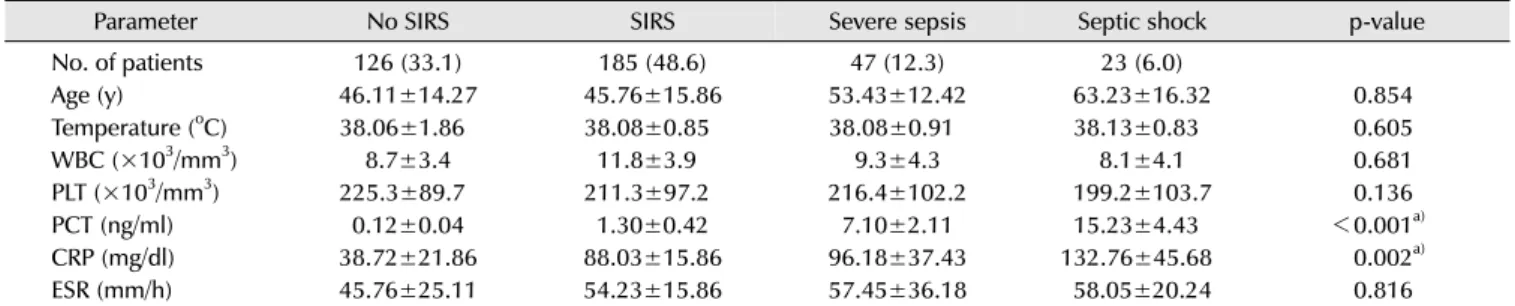
Table 1. Assessment of the severity grade of sepsis by related parameters (n=381)

Parameter No SIRS SIRS Severe sepsis Septic shock p-value

No. of patients 126 (33.1) 185 (48.6) 47 (12.3) 23 (6.0)

Age (y) 46.11±14.27 45.76±15.86 53.43±12.42 63.23±16.32 0.854

Temperature (

o

C) 38.06±1.86 38.08±0.85 38.08±0.91 38.13±0.83 0.605

WBC (×10

3

/mm

3

) 8.7±3.4 11.8±3.9 9.3±4.3 8.1±4.1 0.681

PLT (×10

3

/mm

3

) 225.3±89.7 211.3±97.2 216.4±102.2 199.2±103.7 0.136

PCT (ng/ml) 0.12±0.04 1.30±0.42 7.10±2.11 15.23±4.43 < 0.001

a)

CRP (mg/dl) 38.72±21.86 88.03±15.86 96.18±37.43 132.76±45.68 0.002

a)

ESR (mm/h) 45.76±25.11 54.23±15.86 57.45±36.18 58.05±20.24 0.816

Values are presented as number (%) or mean±standard deviation.

SIRS: systemic inflammatory response syndrome, WBC: white blood cell, PLT: platelet, PCT: procalcitonin, CRP: C-reactive protein, ESR: erythrocyte sedimentation rate.

a)
Statistical significance.

Fig. 2. C-reactive protein (CRP) increased depending on the infection severity (p=0.002). However, there was no difference in CRP between severe sepsis and septic shock (p=0.851). SIRS: systemic inflammatory response syndrome.

Fig. 1. Procalcitonin (PCT) increased depending on the infection severity (p<0.001). PCT did show all significant differences among four subgroups. SIRS: systemic inflammatory response syndrome.

difference among the groups. PCT and CRP did show significant statistical differences among the groups (Table 1). Greater severity of infection grade was associated with higher PCT and CRP values. Regarding the laboratory parameters, one-way ANOVA analysis was performed, and then a post-hoc multiple comparison (Turkey's and Kruskal-Wallis test) was used (Fig. 1, 2). PCT showed all significant differences at all grades. Moreover, the Turkey test using ranks for a post-hoc comparison showed all significant differences among the various severity grade groups: (1) no SIRS vs. SIRS (p=0.005), (2) no SIRS vs.

severe sepsis (p<0.001), (3) no SIRS vs. septic shock (p=0.001), (4) SIRS vs. severe sepsis (p=0.046), (5) SIRS vs. septic shock (p<0.001), and (6) severe sepsis vs. septic shock (p=0.036) (Fig. 1). CRP showed a significant difference among the severity grade groups: (1) no SIRS vs. SIRS (p=0.008), (2) no SIRS vs. severe sepsis (p=0.001), (3) no SIRS vs. septic shock (p<0.001), (4) SIRS vs. severe sepsis

(p=0.036), and (5) SIRS vs. septic shock (p=0.024), except between severe sepsis and septic shock by Turkey test using ranks for post-hoc comparison (p=0.851) (Fig. 2). Thus, CRP was not shown to be a significant difference between severe sepsis and septic shock, but PCT was shown a significant difference among all grade.

DISCUSSION

Confirmation of bacteremia in APN is important in predicting complications, prognosis, and treatment period.

Blood culture is difficult to evaluate for early-staged

bacteremia due to a long and extended time to get the

results from the culture. PCT is beginning to rise rapidly

from 2-4 hours after the injection of endotoxin of E. coli .

In addition, it has reached the maximum level after 6-12

hours. Conversely, CRP has started to increase from 12

(4)

hours after the endotoxin injection to 30 hours at the highest value [2]. PCT shows a value of less than 0.1 /L in a healthy person. The value is not increased in virus infection and non-infectious inflammatory response, but is increased only with a severe systemic inflammatory response such as sepsis [2,3]. The cut-off value of PCT showed various ranges (0.28-3.3 ng/ml) for prediction of sepsis [4,5].

CRP is a useful indicator of inflammatory reactions.

However, it is difficult to interpret in a severe infection, because the level is increased even just a simple inflammation [6]. Also, in our study, CRP did not show a statistical significance between severe sepsis and septic shock. ESR also increases its association with inflammation;

however, this is insufficient to itself for a diagnosis [7].

In our study, there was no statistical significance difference in accordance with the severity grade of infection. According to a previous report by Benador et al. [8], among the sixty patients with UTI, serum WBC, CRP, and PCT had shown a significant difference between the APN group and the lower UTI group. In our study, we only included patients with uncomplicated APN in the upper UTI. In addition, PCT showed a higher specificity than CRP for the diagnosis of APN. In 100 patients with UTI, there was a statistically significant difference with only CRP and PCT; but there was no difference with ESR and WBC [9]. Our result showed a statistically significant difference with CRP (p=0.002) and PCT (p<0.001). In SIRS, PCT allowed for an early diagnosis because PCT increased more rapidly than CRP [10]. The serum PCT value, which can reflect the severity grade of infection, can help to predict the prognosis of patients [11].

In our study, there were all significant differences between disease severity and PCT. However, there was no difference between disease severity and CRP (severe sepsis vs. septic shock, p<0.851) and ESR. PCT was associated with APN with statistical significance in accordance with the disease severity as (1) no SIRS vs. SIRS (p=0.005), (2) no SIRS vs. severe sepsis (p<0.001), (3) no SIRS vs. septic shock (p<0.001), (4) SIRS vs. severe sepsis (p=0.046), (5) SIRS vs. septic shock (p<0.001), and (6) severe sepsis vs. septic shock (p=0.036). Moreover, despite bacterial infection, the PCT level sometimes showed a normal range in the initial stage of the disease. Therefore, a follow up of PCT during the treatment period is necessary to assess disease progression. Because it does not increase via viral infection, it is a useful method for differential diagnosis, whether

bacterial infections or viral infections [12]. PCT enable the reduction of unnecessary use of antibiotics, hence reducing the likelihood of antibiotic resistance and side-effects [13].

Therefore, PCT was a helpful marker in predicting disease progression of APN. Moreover, if PCT and CRP can be used harmoniously, the PCT levels could especially be a useful predictor of sepsis and septic shock. This was done only for uncomplicated APN patients. Therefore, it did not reflect the influence of biomarker caused by other complex infectious factors. In addition, we used only PCT, ESR, and CRP, which were carried out at the beginning of hospitalization. This may be a limitation of this study; it may have minimized the accuracy in reflecting the changes associated with the clinical course of the disease.

CONCLUSIONS

PCT and CRP levels may be useful in distinguishing the severity of infection related to APN. The use of PCT as a prognostic factor for APN may be more helpful, especially between severe sepsis and septic shock. This clinical analysis was performed retrospectively. Therefore, careful interpretation of the results is necessary. Further research reports are needed in the future.

CONFLICT OF INTEREST

No potential conflict of interest relevant to this article was reported.

REFERENCES

1. Bone RC, Balk RA, Cerra FB, Dellinger RP, Fein AM, Knaus WA, et al. Definitions for sepsis and organ failure and guidelines for the use of innovative therapies in sepsis. The ACCP/SCCM Consensus Conference Committee. American College of Chest Physicians/Society of Critical Care Medicine. Chest 1992;101:

1644-55.

2. Dandona P, Nix D, Wilson MF, Aljada A, Love J, Assicot M, et al.

Procalcitonin increase after endotoxin injection in normal subjects. J Clin Endocrinol Metab 1994;79:1605-8.

3. Gendrel D, Raymond J, Coste J, Moulin F, Lorrot M, Guerin S, et al. Comparison of procalcitonin with C-reactive protein, interleukin 6 and interferon-alpha for differentiation of bacterial vs. viral infections. Pediatr Infect Dis J 1999;18:875-81.

4. Groselj-Grenc M, Ihan A, Pavcnik-Arnol M, Kopitar AN,

Gmeiner-Stopar T, Derganc M. Neutrophil and monocyte

(5)

CD64 indexes, lipopolysaccharide-binding protein, procalci- tonin and C-reactive protein in sepsis of critically ill neonates and children. Intensive Care Med 2009;35:1950-8.

5. Selberg O, Hecker H, Martin M, Klos A, Bautsch W, Kohl J.

Discrimination of sepsis and systemic inflammatory response syndrome by determination of circulating plasma concen- trations of procalcitonin, protein complement 3a, and interleukin-6. Crit Care Med 2000;28:2793-8.

6. Korppi M, Heiskanen-Kosma T, Leinonen M. White blood cells, C-reactive protein and erythrocyte sedimentation rate in pneumococcal pneumonia in children. Eur Respir J 1997;10:

1125-9.

7. Melbye H, Straume B, Brox J. Laboratory tests for pneumonia in general practice: the diagnostic values depend on the duration of illness. Scand J Prim Health Care 1992;10:234-40.

8. Benador N, Siegrist CA, Gendrel D, Greder C, Benador D, Assicot M, et al. Procalcitonin is a marker of severity of renal lesions in pyelonephritis. Pediatrics 1998;102:1422-5.

9. Tuerlinckx D, Vander Borght T, Glupczynski Y, Galanti L, Roelants V, Krug B, et al. Is procalcitonin a good marker of renal lesion in febrile urinary tract infection? Eur J Pediatr 2005;164:651-2.

10. Brunkhorst FM, Heinz U, Forycki ZF. Kinetics of procalcitonin in iatrogenic sepsis. Intensive Care Med 1998;24:888-9.

11. Ugarte H, Silva E, Mercan D, De Mendonça A, Vincent JL.

Procalcitonin used as a marker of infection in the intensive care unit. Crit Care Med 1999;27:498-504.

12. Viallon A, Zeni F, Lambert C, Pozzetto B, Tardy B, Venet C, et al.

High sensitivity and specificity of serum procalcitonin levels in adults with bacterial meningitis. Clin Infect Dis 1999;28:

1313-6.

13. Schuetz P, Christ-Crain M, Thomann R, Falconnier C, Wolbers

M, Widmer I, et al. Effect of procalcitonin-based guidelines vs

standard guidelines on antibiotic use in lower respiratory tract

infections: the ProHOSP randomized controlled trial. JAMA

2009;302:1059-66.

수치

Table 1. Assessment of the severity grade of sepsis by related parameters (n=381)

참조

관련 문서

Four circular bone defects with a diameter of 8mm were formed on each of the calvaria of rabbits. Each defect in the calvarium was allocated to 1) control group,.. 2)

Drug-intoxicated patients were predominantly male, with the highest incidence of intoxication among patients above the seventh decade of age(21.5%) and the

Methods: Eighty ASA physical status I and II pediatric patients (1~7 years) were randomly divided into four groups: Group I (Lactated Ringer`s solution, n=20), Group II

Results: In this research, in the group with fibromyalgia patients group, systemic lupus erythematosus patients group and without systemic autoimmune

Percentage of patients with portal systemic encephalopathy according to presence of small intestine

To assess the clinical usefulness of performing Q-PCR in practice as a diagnostic technique, we compared blindly the Q-PCR results using blood samples of the

Note: N means patients number according to each 4 severity grades in 112 scrub typhus patients without antibiotics treatment

(Background) Gallbladder wall thickening(GWT) and gallbladder contraction are often observed in patients with acute hepatitis.. The incidence of acute hepatitis A