• 검색 결과가 없습니다.

A Study on the Distribution of Plantar Pressure in Adult Hemiplegia during Gait with the Use of Cane

N/A
N/A
Protected

Academic year: 2021

Share "A Study on the Distribution of Plantar Pressure in Adult Hemiplegia during Gait with the Use of Cane"

Copied!
5
0
0

로드 중.... (전체 텍스트 보기)

전체 글

(1)

Yong-Jun Cha, PT, MS; Kyoung Kim, PT, PhD

1

Department of Rehabilitation Science, Graduate School, Daegu University;

1

Department of Physical Therapy, College of Rehabilitation Science, Daegu University

Purpose: The purpose of this study was to investigate the plantar pressure distribution between the affected and unaffected side in adult hemiplegia during gait with the use of a quad-cane.

Methods: Thirty-four stroke patients from 34 to 83 years of age were enrolled in this study, and in random order, all patients were asked to walk at their most comfortable speed three times along a walkway with the use of quad-cane over a period of three days. Plantar pressure distribution was measured with regard to foot contact pattern and center of pressure (CoP) trajectories during the stance phase, progressing from heel-strike to toe-off. The F-scan system was used to compare the foot pressure of the affected and unaffected sides.

Results: A significant reduction in the total contact area, the width of fore foot (FF) and hind foot (HF), and anterior/

posterior (AP) CoP trajectory of the affected side was found. However, contact pressure of the hind foot on the affected side during walking increased when compared to that on the unaffected side.

Conclusion: We demonstrated that plantar pressure distribution on the affected side of adult hemiplegia patients was generally poorer than that on the unaffected side when these patients walked with cane assistance. However, the use of a quad-cane was shown to increase contact pressure of the hind foot on the affected side because weight can be borne on the affected side during heel-strike with use of the cane.

Keywords: Quad-cane, Plantar pressure, Hemiplegia Received: May 13, 2010

Revised: June 9, 2010 Accepted: June 14, 2010

Corresponding author: Kyoung Kim, [email protected]

Hemiplegia during Gait with the Use of Cane

The Journal Korean Society of Physical Therapy
I. Introduction

Stroke is a common neurological disease and a leading cause of chronic disability worldwide.

1

Awareness of stroke warning symptoms and risk factors as well as knowledge of available treatment options may be considered in high-risk populations.

Among individuals who survive a stroke, the most frequent motor deficiency is hemiparesis or hemiplegia, with correspond- ing physical limitations.

2,3

The important issues in rehabilitation of stroke patients include activity and participation. Activity is the nature and extent of functioning in the personnel, which includes taking care of oneself, performing a job, and daily life activities, whereas participation is an individual’s involvement in life situations related to health conditions, bodily functions and

structures, and activities. After stroke, the general trend is toward decreased activity and participation.

4,5

Walking ability is important to the stroke patient because it

plays a crucial role in performing activities of daily living and

many tasks for independent lives. Unfortunately, the stroke

patients consequently perform abnormal gait and it was well

documented that 57% of patients with stroke are unable to walk

without human assistance.

6-8

A cane improves the hemiplegic

gait by assisting the affected limb to smoothly shift the center of

body mass toward the sound limb and to enhance inadequate

shock absorption at heel strike and push off to maintain forward

propulsion during preswing phase.

9,10

Mulley

11

described that

the use of long stick in the unaffected arm encourages the patients

to bear more weight through the affected side by producing a

(2)

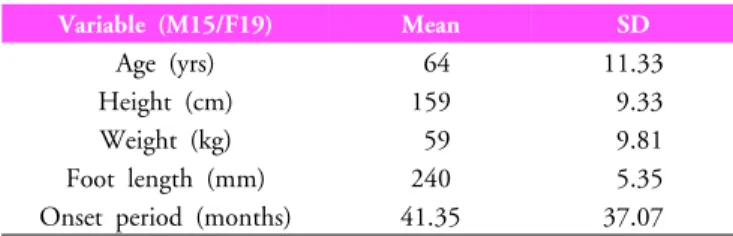
Table 1. Demographic data of the hemiplegic patients

Variable (M15/F19) Mean SD

Age (yrs) 64 11.33

Height (cm) 159 9.33

Weight (kg) 59 9.81

Foot length (mm) 240 5.35

Onset period (months) 41.35 37.07

better gait pattern. Chen et al.

12

also mentioned that one-point cane provides support and a braking function for people with hemiplegic stroke.

For proper usage of cane, there are several guidelines for measuring the length of cane in a clinical setting, investigating the efficacy for people who need assistance with everyday acti- vities.

9,13

However, there is no practical documentation that compares the aspects of plantar pressure between affected and unaffected side during stance phase of gait in hemiplegic patients with the use of quad-cane. Therefore, the objective of this study was to find out the distribution of plantar pressure between affected and unaffected side in hemiplegic patients with the use of quad-cane.

II. Materials and Methods

1. Subjects

Thirty-four stroke patients with no history of major injuries such as fracture or surgery to their lower extremity were included in this study. All of the patients performed immediately comprehensive rehabilitation after stroke and the subject who can independently walk over 10 m with using of cane were participated. The participants were excluded if they had vesti- bular impairment that could affects elements to arouse fall down, or were able to walk without usage of cane for the equal condition to compare. The subjects were instructed about the experimental procedure and requested to sign in consent form prior to participating in the experiment. The baseline demo- graphic characteristics of the subjects enrolled in the study are described in Table 1.

2. Experimental equipment

The quad-cane (four-point cane) as adjustable fitting length by the 1 cm was selected for what produces the wide base of support and makes hemiplegia increase postural control while walking.

14,15

The F-scan system (Tekscan, USA) was used to measure foot pressure. The pressure was recorded at 50 Hz with a pressure sensitive insole consisting of a 0.15 mm thick sensor with an embedded grid work of 960 pressure-sensing cells, evenly dis- tributed at 0.5 cm (0.2 inches) intervals. Before use, the dispo- sable insole was trimmed to fit into the shoes.

3. Procedure

The quad-cane was constructed to the patient who stood erect with wearing comfortable indoor shoes. Each height of the cane was adjusted so that the top of the cane corresponded to the top of the greater trochanter. The lower tip of the cane was placed at a point 6 inches lateral to the little toe. The subjects wore their own indoor shoes and were fitted with the portable equipment and the insoles, which were trimmed to their shoe size and the cuff unit is attached to the lower leg with a Velcrostrap. A 9.25 m cable connects the sensor and the sensor was set to collect data at 50 Hz for 4 sec. Because temperature changes of the insole might alter the data, temperature equilibration is essential. This was ensured by a pretrial 5-minute period during which the foot was in the shoe with the sensor in place: the system was then calibrated. Using their indoor shoes bilaterally, the subjects performed 3 walks of approximately 3 steps each with the use of quad-cane for three days. Plantar pressure was recorded for 3 steps in the middle of the test walk and the mean value was calculated. After the pressure was read and saved, they were processed with custom-made software, F-Scan version 4.19F.

To assess the plantar pressure distribution with the use of cane, both sides of foot were divided in three regions: forefoot (FF), midfoot (MF) and rearfoot (RF); that is 40%, 30% and 30% of the total foot length, respectively. The measurements of parameters were grouped into 2 categories: measurements of foot contact pattern and the measurement of centre of pressure (CoP) trajectories (antero-posterior (AP) and medio-lateral (ML) trajectory).

4. Data analysis

Foot plantar pressure distributions between affected and un-

affected side at the cane length of greater trochanter during

walking in hemiplegic patients were analyzed with independent

sample t-test of SPSS 12.0 package. The alpha level for signifi-

cance was set at 0.05.

(3)

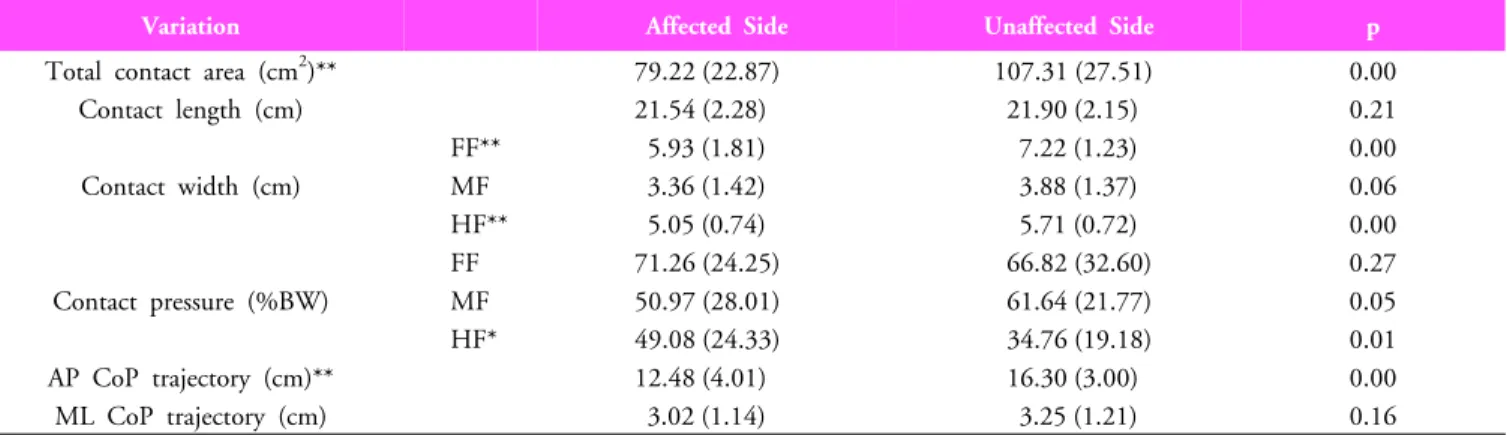
Table 2. Mean plantar pressure distribution of both sides with use of the quad-cane

Variation Affected Side Unaffected Side p

Total contact area (cm

2

)** 79.22 (22.87) 107.31 (27.51) 0.00

Contact length (cm) 21.54 (2.28) 21.90 (2.15) 0.21

Contact width (cm)

FF** 5.93 (1.81) 7.22 (1.23) 0.00

MF 3.36 (1.42) 3.88 (1.37) 0.06

HF** 5.05 (0.74) 5.71 (0.72) 0.00

Contact pressure (%BW)

FF 71.26 (24.25) 66.82 (32.60) 0.27

MF 50.97 (28.01) 61.64 (21.77) 0.05

HF* 49.08 (24.33) 34.76 (19.18) 0.01

AP CoP trajectory (cm)** 12.48 (4.01) 16.30 (3.00) 0.00

ML CoP trajectory (cm) 3.02 (1.14) 3.25 (1.21) 0.16

Mean (SD), *p<0.05, **p<0.01

FF: Fore foot, MF: Middle foot, HF: Hind foot

III. Results

1. Foot contact pattern

Table 2 shows the dynamic plantar pressure distribution at the cane length of greater trochanter between affected and un- affected side. There were significant differences in the total contact area, the width of FF, and HF between affected and unaffected side. Values of affected side were smaller than those of unaffected side. However the contact length and the width of MF did not have the significant differences. HF of contact pressure (%BW) did have significant difference on affected side rather than on unaffected side. There were not significant diffe- rences in FF and MF contact pressure (%BW) between affected and unaffected side in hemiplegic patients.

2. Center of pressure trajectory

The length of AP displacement of CoP did significantly differ between the affected and unaffected side. The trajectory of affected side was shorter than that of the unaffected side. The length of ML displacement of Cop was not significantly different.

IV. Discussion

Plantar pressure measurement systems are useful tools that obtain not only plantar pressure but force data while dynamic movements. Especially, the benefits of in-shoe pressure moni- toring by F-scan system are that pressures to specific areas of the foot can be investigated and visualized during walking while patients wear shoes or orthotics and it is also reported that the

parameters of F-scan have good reliability (ICC>0.94) and good linearity (r=0.96) and it is one of the most commonly used to measure plantar pressure distribution for gait analysis.14A normal gait pattern was composed of the sequence of heel strike, foot flat, mid-stance, and push-off. Heel strike is a loading response to absorb the vertical shock, and push-off provides a propulsive force at the end of stance phase. Hence, foot contact pattern can be a simple and reliable indicator of waling in hemiplegia and it is also related to patient’s neurologic status.

15

During walking, CoP is defined as the point at which there is no movement from all of the applied forces is only in the heel when the heel is in the first part of the step, after that, heel-off, it can be measured overly, then plotted over a picture of the foot and a pathway of the CoP is eventually produced.

16

Additionally, it also reflects accurately the topographical features of the plantar pressure dis- tribution, provides information specific to each lower extremity and the neuromotor fluctuations that are part of motor control, and the CoP displacement corresponded to 83% of the foot contact length and 18% of the forefoot contact width.

17

In this study, decrease of total contact area, decrease of the width of FF and HF, increase of the contact pressure of HF, and decrease of AP CoP displacement in the affected side indicated more differences than those of unaffected side during walking with the use of cane. Total contact area and contact width on the affected side decreased by shifting center of body mass toward the sound side. The reason for this still seems to bear more weight on the unaffected side even though they use the cane.

However, the significant increase of contact pressure of hindfoot

on affected side was shown when compared with the contact

pressure of hindfoot on unaffected side with the use of cane

(4)

during walking. The reason for that seems that weight shift to the affected side from inadequate to adequate heel strike due to the use of cane was appropriate to transmit the force on hind foot of the affected side. In addition, decrease of AP Cop displacement can be considered as the result of uncontrolled forward transition in hemiplegic patients on the affected side with the use of cane. The reason seems to be related with decrease of mobility on the affected side even though they use the cane. These results were similar to previous study

18

which has shown that the hemiplegic side indicated the shortened heel strike time support interval and major alterations in reception and propulsion dynamics with decreased force values compared to the unaffected side. These results can be based on findings of previous researches

9,19

which has indicated temporal, spatial and kinematic variables of hip, knee, and ankle of hemiplegic patients using a cane and has shown that when walking with a cane, less muscle force is needed because weight is taken on the cane, and thus less EMG activity is generated. In addition, Chen et al.

12

reported that stroke patient’s walking with cane assistance relies mostly on the sound limb for propulsion, while using the affected limb and cane for braking. This finding supports our results which indicate that the use of cane is able to harmonize heel strike and to bear the weights of HF to slow mobility. Accor- dingly, our present study will help the clinician to understand and to correct the imbalance of plantar pressure distribution between affected side and unaffected side of adult hemiplegia who walks using a cane.

The limitation of this study contains the small sample size and a recruited time. In addition, we couldn’t help using their own quad-cane in all tests, but we selected standardized quad-cane which length adjust is possible. Since the results cannot be generalized to the stroke patient due to these above reasons, we need to increase the number of subjects for generalization of plantar pressure regarding the effect of cane.

Further studies are necessary to examine the plantar pressures of their own one cane and quad-cane in hemiplegic patients.

V. Conclusion

The results of the present study indicate that quad cane may increase contact pressure of hindfoot on the affected side during stance phase and may decrease displacement of anterior/

posterior center of pressure trajectory. We need to plan about the study to increase of AP COP trajectory representing mobility on the affected side with the use of quad-cane in patients with stroke.

Author Contributions Research design: Kim K, Cha YJ Acquisition of data: Cha YJ

Analysis and interpretation of data: Cha YJ Drafting of the manuscript: Kim K, Cha YJ Research supervision: Kim K

References

1. Alexander LD, Black SE, Patterson KK et al. Association between gait asymmetry and brain lesion location in stroke patients. Stroke. 2009;40(2):537-44.

2. Willey JZ, Williams O, Boden-Albala B. Stroke literacy in Central Harlem: a high-risk stroke population. Neurology.

2009;73(23):1950-6.

3. Olaleye OA, Hamzat TK. Stroke rehabilitation: when should ambulation activities commence? Journal of the Nigeria Medical Rehabilitation Therapists. 2002;7(2):23-5.

4. O’Young BJ, Young MA, Stiens A. Physical medicine and rehabilitation secrets. 2nd ed. Philadelphia, Hanley and Belfus, 2001:504-12.

5. Kersten P. Principles of physiotherapy assessment and out- come measures. In: Stokes M, eds, Physical management in neurological rehabilitation. 2nd ed. Edinburgh, Elsevier, 2005:

31-2.

6. Friedman PJ. Gait recovery after hemiplegic stroke. Int Disabil Stud. 1990;12(3)119-22.

7. Skilbeck CE, Wade DT, Hewer RL et al. Recovery after stroke. J Neurol Neurosurg Psychiatry. 1983;46(1):5-8.

8. Chang JS, Lee SY, Lee MH et al. The correlations between gait speed and muscle activation or foot pressure in stroke patients. J Kor Soc Phys Ther. 2009;21(3):47-52.

9. Kuan TS, Tsou JY, and Su FC. Hemiplegic gait of stroke patients: The effect of using a cane. Arch Phys Med Rehabil.

1999;80(7):777-84.

10. Perry J. The mechanics of walking in hemiplegia. Clin Orthop. 1969;63:23-31.

11. Mulley GP. Walking sticks. Br Med J (Clin Res Ed). 1988;

296(6620):475-6.

(5)

12. Chen CL, Chen HC, Wong MK et al. Temporal stride and force analysis of cane-assisted gait in people with hemiplegic stroke. Arch Phys Med Rehabil. 2001;82(1):43-8.

13. Lu CL, Yu B, Basford JR et al. Influences of cane length on the stability of stroke patients. Journal of Rehabilitation and Development. 1997;34(1):91-100.

14. Mueller MJ, Sinacore DR, Hoogstrate S et al. Hip and ankle walking strategies: effect on peak plantar pressures and imp- lications for neuropathic ulceration. Arch Phys Med Rehabil.

1994;75(11):1196-200.

15. Wong AM, Pei YC, Hong WH et al. Foot contact pattern analysis in hemiplegic stroke patients: An implication for neurologic status determination. Arch Phys Med Rehabil.

2004;85(10):1625-30.

16. Fuller EA. Center of pressure and its theoretical relationship to foot pathology. J Am Podiatr Med Assoc. 1999;89(6):278- 91.

17. Han TR, Paik NJ, Im MS. Quantification of the path of center of pressure (COP) using an F-scan in-shoe transducer.

Gait Posture. 1999;10(3):248-54.

18. Gaviria M, D’Angeli M, Chavet P et al. Plantar dynamics of hemiplegic gait: a methodological approach. Gait Posture.

1996;4(4):297-305.

19. Buurke JH, Hermens HJ, Erren-Wolters CV et al. The effect

of walking aids on muscle activation patterns during walking

in stroke patients. Gait Posture. 2005;22(2):164-70.

수치

Table 1. Demographic data of the hemiplegic patients Variable (M15/F19) Mean SD Age (yrs)  64 11.33 Height (cm) 159  9.33 Weight (kg)  59  9.81 Foot length (mm) 240  5.35
Table 2. Mean plantar pressure distribution of both sides with use of the quad-cane

참조

관련 문서

• 이명의 치료에 대한 매커니즘과 디지털 음향 기술에 대한 상업적으로의 급속한 발전으로 인해 치료 옵션은 증가했 지만, 선택 가이드 라인은 거의 없음.. •

The main objective of the Bi Regional Center for SMES Development is oriented towards generating the conditions of cooperation among the countries which

Current Tokyo is rich in green compared to other metro cities. In some parts, the greenery has been contributed by the many inherited gardens from the Edo era to today which

In a statement to Kuwait News Agency (KUNA) on the sidelines of a meeting of the Arab Parliament's Foreign Affairs Political and National Security

The meeting was attended by Assistant Foreign Minister for GCC Affairs, Ambassador, Nasser Al-Muzayyen, and Deputy Assistant Foreign Minister for the Office of the

“ Sheikh Nasser has a written message from HH the Amir, Sheikh Sabah Al-Ahmad Al-Jaber Al-Sabah to the Chinese President, Chi Gen Beng related to enhancing mutual

On his part, CEO of Express Roads Authority, Saud Al-Naqqi said that the heavy rains of the previous day led to clogging parts of the express

Kuwait will celebrate on Sunday the fourth anniversary of the UN honoring and proclamation of His Highness the Amir, Sheikh Sabah Al-Ahmad Al-Jaber Al-Sabah as