Received:
Revised:
Accepted:
June 22, 2012 July 5, 2012 July 12, 2012
Corresponding Author: Jeong-Taek Woo, Department of Endocrinology and Metabolism, Kyung Hee University Hospital, #1 Hoekidong, Dongdaemoon-gu, Seoul 130-702, Korea
Tel: +82-2-958-8128, Fax: +82-2-968-1848, E-mail: [email protected]
JLA
Treatment Guidelines for Dyslipidemia: Summary of the Expanded Second Version
Jong-Il Son, Sang Ouk Chin, Jeong-Taek Woo
Department of Endocrinology and Metabolism, Kyung Hee University Hospital, Seoul, Korea
on behalf of The Committee for Developing Treatment Guidelines for Dyslipidemia, Korean Society of Lipidology and Atherosclerosis (KSLA)
KSLA published our first version of treatment guidelines for dyslipidemia in 1996, which was based on health examination data gathered by the National Health Insurance Corperation in 1994. A number of academic societies including the Korean Endocrine Society, the Korean Society of Cardiology, the Korean Society for Laboratory Medicine, the Korean Society for Biochemistry and the Korean Nutrition Society participated in the development of this guideline. In 2003, the second version of our guidelines was published based on the Korean National Health and Nutrition Survey (KNHANES) data which was collected in 1998. In 2006, the second version was modified and expanded with using KNHANES data collected in 2005. This article summarizes the recommendations included in the expanded second version of treatment guidelines.
The full version of treatment guidelines in Korean is available at the KSLA Homepage (http://www.lipid.or.kr).
Key Words: Dyslipidemia, Treatment, Guideline
EPIDEMIOLOGY OF DYSLIPIDEMIA IN KOREA
According to the World Health Organization, approxi- mately 12 million people die every year due to cardio- vascular diseases (CVD) and cerebrovascular (CV) diseases.
In Korea, the prevalence of CVD is rapidly increasing, with the mortality rate of 13.8 per 100,000 males in 1995, which increased to 17.7 in 2005. In women, the mortality rate increased more rapidly with 9.5 per 100,000 females in 1995, increasing to 16.1 per 100,000 in 2005. There are multiple causative factors for CVD such as smoking, lack of physical activity and change in dietary habits leading to the development of central obesity and deterioration of lipid profile, blood pressure and blood sugar.
The Korea Medical Insurance Corporation (KMIC) study
which included 115,000 Korean men with a follow-up period of six years demonstrated that hypertension, smoking, dyslipidemia and hyperglycemia were risk factors for CVD and CV disease in Korea (Table 1). However, in this study smoking and dyslipidemia were more associated with CVD than CV, while hypertension was more asso- ciated with CV than CVD. Obesity, alcohol, hyperglycemia and dyslipidemia were not found to have significant association with hemorrhagic CV.
Evidence from multiple randomized controlled trials (RCTs) showing that reducing total cholesterol (TC) and low density lipoprotein cholesterol (LDL-C) can prevent CVD is strong and compelling. In Korea, a cohort study of 310,000 patients with a mean follow-up period of 13 years was conducted in order to evaluate the association
Table 1. Relative risk of cardiac and cerebrovascular disease associated with various risk factors
Risk factor IHD CV CVD+CV
Smoking None 1.0 1.0 1.0
Current 2.1 1.1 1.3
Ex-smoker 2.2 1.6 1.6
Blood pressure Normal 1.0 1.0 1.0
High normal 1.4 1.5 1.5
Stage 1 hypertension 1.8 2.6 2.6
Stage 2 hypertension 2.9 4.3 4.3
Stage 3 hypertension 4.4 9.9 8.8
Total cholesterol <200 mg/dL 1.0 1.0 1.0
200-239 mg/dL 1.4 1.0 1.2
≥240 mg/dL 2.1 1.3 1.6
Fasting blood sugar <126 mg/dL 1.0 1.0 1.0
≥126 mg/dL 1.6 1.9 1.8
Abbreviations; IHD: ischemic heart disease, CV: cerebrovascular disease, CVD: cardiovascular disease
Fig. 1. Relative risk of ischemic heart disease associated with LDL(A) and HDL(B) cholesterol.
between lipid profile and CVD. In that study, CVD risk was 1.7 fold higher in patients with TC >230 mg/dL compared to patients with TC <160 mg/dL. The CVD risk was also associated with elevated LDL-C, triglycerides (TG), and low levels of high density lipoprotein cholesterol (HDL-C) (Fig. 1).
CARDIOVASCULAR RISK ESTIMATION
All current guidelines on the prevention of CVD in clinical practice recommend the assessment of total CVD or CV risk, because in most people atherosclerotic CVD is the product of a number of risk factors. Many risk assessment
<40 40-49 50-59 60-69 ≥70 <40 40-49 50-59 60-69 ≥70
<100 100-129 130-149 ≥150 <100 100-129 130-149 ≥150 1.2
1.0 0.8 0.6 0.4 0.2 0
1.2 1.0 0.8 0.6 0.4 0.2 0
1.6 1.4 1.2 1.0 0.8 0.6 0.4 0.2 0
1.6 1.4 1.2 1.0 0.8 0.6 0.4 0.2 0
1 0.9
0.8 0.7 0.7
1 1
0.9 0.8
0.7
1 1.1 1.2
1.5
1 1.1 1.1 1.2
(A)
(B)
mg/dL mg/dL
mg/dL mg/dL
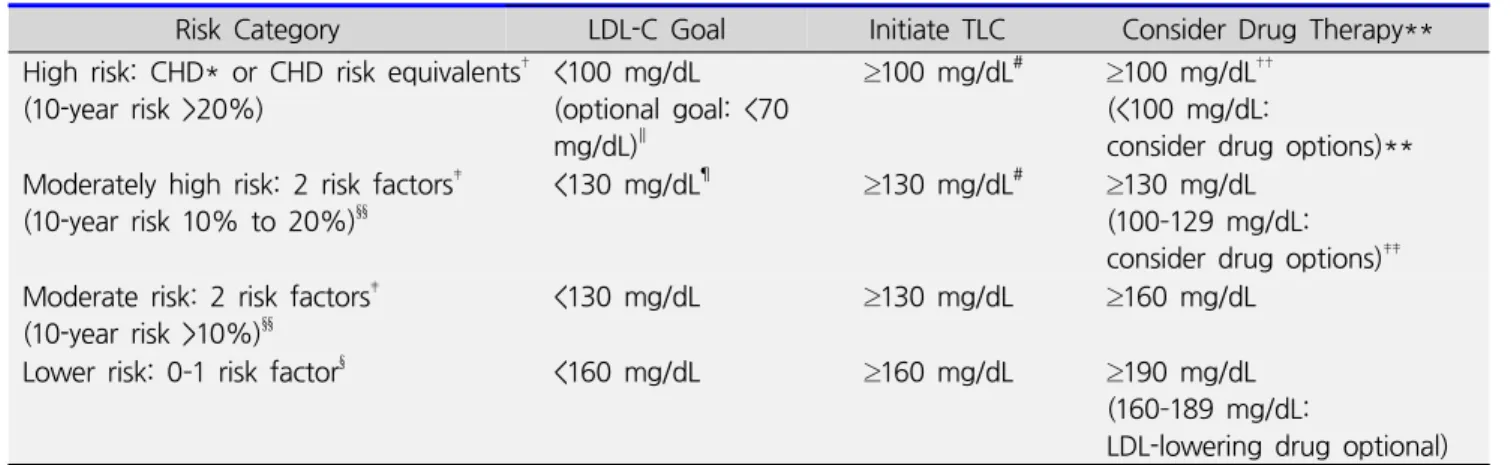
Table 2. ATP III LDL-C goals and cutpoints for TLC and drug therapy in different risk categories and proposed modifications based on recent clinical trial evidence
Risk Category LDL-C Goal Initiate TLC Consider Drug Therapy**
High risk: CHD* or CHD risk equivalents† (10-year risk >20%)
<100 mg/dL (optional goal: <70 mg/dL)ǁ
≥100 mg/dL# ≥100 mg/dL††
(<100 mg/dL:
consider drug options)**
Moderately high risk: 2 risk factors‡
(10-year risk 10% to 20%)§§ <130 mg/dL¶ ≥130 mg/dL# ≥130 mg/dL (100–129 mg/dL:
consider drug options)‡‡
Moderate risk: 2 risk factors‡
(10-year risk >10%)§§ <130 mg/dL ≥130 mg/dL ≥160 mg/dL
Lower risk: 0–1 risk factor§ <160 mg/dL ≥160 mg/dL ≥190 mg/dL (160–189 mg/dL:
LDL-lowering drug optional)
*CHD includes history of myocardial infarction, unstable angina, stable angina, coronary artery procedures (angioplasty or bypass surgery), or evidence of clinically significant myocardial ischemia.
†CHD risk equivalents include clinical manifestations of noncoronary forms of atherosclerotic disease (peripheral arterial disease, abdominal aortic aneurysm, and carotid artery disease transient ischemic attacks or stroke of carotid origin or >50% obstruction of a carotid artery), diabetes, and 2+ risk factors with 10-year risk for hard CHD >20%.
‡Risk factors include cigarette smoking, hypertension (BP ≥140/90 mm Hg or on antihypertensive medication), low HDL cholesterol (<40 mg/dL), family history of premature CHD (CHD in male first-degree relative <55 years of age; CHD in female first-degree relative <65 years of age), and age (men ≥45 years; women ≥55 years).
§§Electronic 10-year risk calculators are available at www.nhlbi.nih.gov/guidelines/cholesterol.
§Almost all people with zero or 1 risk factor have a 10-year risk <10%, and 10-year risk assessment in people with zero or 1 risk factor is thus not necessary.
ǁVery high risk favors the optional LDL-C goal of <70 mg/dL, and in patients with high triglycerides, non-HDL-C <100 mg/dL.
¶Optional LDL-C goal <100 mg/dL.
#Any person at high risk or moderately high risk who has lifestyle-related risk factors (eg, obesity, physical inactivity, elevated triglyceride, low HDL-C, or metabolic syndrome) is a candidate for therapeutic lifestyle changes to modify these risk factors regardless of LDL-C level.
**When LDL-lowering drug therapy is employed, it is advised that intensity of therapy be sufficient to achieve at least a 30% to 40% reduction in LDL-C levels.
††If baseline LDL-C is <100 mg/dL, institution of an LDL-lowering drug is a therapeutic option on the basis of available clinical trial results. If a high-risk person has high triglycerides or low HDL-C, combining a fibrate or nicotinic acid with an LDL-lowering drug can be considered.
‡‡For moderately high-risk persons, when LDL-C level is 100 to 129 mg/dL, at baseline or on lifestyle therapy, initiation of an LDL-lowering drug to achieve an LDL-C level <100 mg/dL is a therapeutic option on the basis of available clinical trial results.
systems are available, and most guidelines use risk estimation systems based on either the Framingham or SCORE (Systemic Coronary Risk Estimation) projects.
However, these systems are targeted towards Caucasians, and the validity of these risk estimation tools in Asian populations that have different lifestyles, social environ- ments, and genetic backgrounds is less clear.
A Korean cancer prevention study (KCPS) developed a CVD and CV risk assessment model, which was crafted from data for over 1.3 million Korean patients with 13
years of follow-up. This risk assessment model, which is similar to the SCORE system, estimates the ten-year risk for a fatal atherosclerotic event, whether heart attack, stroke, or other occlusive arterial disease, including sudden cardiac death. The KCPS model facilitates risk estimation not only in high risk persons who have had a clinical event such as CVD, but also in apparently healthy persons with no signs of clinical disease. Risk estimation charts are presented separately (Suppl. Fig. 1).
Table 3. Targets for dyslipidemia management in Japan Atherosclerotic Society Principle of therapeutic strategy
Category Lipid management goals (mg/dL)
Major risk factors
other than LDL-C* LDL-C HDL-C TG
Primary prevention
Lifestyle should be changed before Consideration of drug therapy
I (Low-risk group)
II (Intermediate-risk group) III (High-risk group)
0 1-2 3 or more
<160
<140
<120
≥40 <150
Secondary prevention
Both drug therapy and lifestyle modification are considered.
History of coronary artery diseases <100
Management of serum lipids as well as intervention of other risk factors (smoking, hypertention or diabetes) is necessary.
* Major risk factors other than LDL-C
Aging (male ≥45 years, female ≥55 years), hypertension, diabetes (including impaired glucose tolerance), smoking, family history of coronary artery disease, low HDL cholesterol (<40 mg/dL)
∙Category III, if complicated by diabetes mellitus, cerebral infarction or arteriosclerosis obliterans.
GUIDELINES OF OTHER COUNTRIES 1. NCEP ATP III
The Adult Treatment Panel III (ATP III) of the National Cholesterol Education Program (NCEP) issued an evidence- based set of guidelines on cholesterol management in 2001. Since the publication of ATP III, five major clinical trials of statin therapy with clinical end points have been published. These include the Heart Protection Study (HPS), the Prospective Study of Pravastatin in the Elderly at Risk (PROSPER), Antihypertensive and Lipid-Lowering Treat- ment to Prevent Heart Attack Trial—Lipid-Lowering Trial (ALLHAT-LLT), Anglo-Scandinavian Cardiac Outcomes Trial—Lipid-Lowering Arm (ASCOT-LLA), and the Prava- statin or Atorvastatin Evaluation and Infection—Thrombo- lysis in Myocardial Infarction 22 (PROVE IT–TIMI 22) trial.
NCEP issued new guidelines in 2004, based on these results. Proposed modifications to the treatment algorithm for LDL-C are shown in Table 2.
2. Guidelines in Japan
The first consensus for treating hyperlipidemia was developed in 1987, but it was largely based on expert opinions rather than clinical evidence. The treatment guideline for dyslipidemia in Japan was published in 1997,
and the treatment guideline for atherosclerotic CVD was published in 2002. This guideline was revised in 2007 based upon results of epidemiologic and clinical studies with Japanese population (Table 3). Since the prevalence of CVD in Japan was lower but that of atherosclerotic CV was two-fold higher when compared with western populations, the risk estimation model was designed to more greatly emphasize the importance of controlling LDL-C in preventing atherosclerotic CV.
DIAGNOSIS AND TREATMENT OF DYSLIPIDEMIA IN KOREA
1. Diagnostic criteria
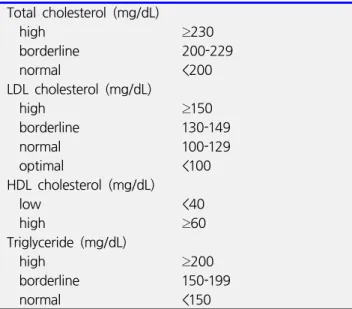
Screening is essential for monitoring dyslipidemia because dyslipidemia usually accompanies no specific symptoms. It is recommended that screening should begin at the age of 20 and continue at least once every five years. The diagnostic criteria of dyslipidemia is shown in Table 4.
2. Treatment targets
Treatment targets for dyslipidemia are primarily based on results from many clinical trials. However, there are few large RCTs that included Korean patients. In nearly
Table 4. Diagnostic criteria of dyslipidemia in Korea Total cholesterol (mg/dL)
high ≥230
borderline 200-229
normal <200
LDL cholesterol (mg/dL)
high ≥150
borderline 130-149
normal 100-129
optimal <100
HDL cholesterol (mg/dL)
low <40
high ≥60
Triglyceride (mg/dL)
high ≥200
borderline 150-199
normal <150
Table 5. Major risk factors of dyslipidemia (except LDL cholesterol)
Smoking Hypertension
Systolic blood pressure ≥140 or diastolic ≥90 or using anti-hypertensive drugs
Low HDL cholesterol (<40 mg/dL) Age
Men ≥45 years Women ≥55 years Family history of early CHD
CHD in male first-degree relative <55 years of age; CHD in female first-degree relative <65 years of age Abbreviations: LDL, low-density lipoprotein: CHD, coronary heart disease
Table 6. LDL and non-HDL cholesterol goals according to risk category
Risk category LDL cholesterol goal
(mg/dL)
non-HDL cholesterol goal (mg/dL)
High risk group <100 <130
CHD
Carotid artery disease, peripheral vascular disease, abdominal aortic aneurysm Diabetes mellitus
10-year CHD risk >20 percent
Moderate risk group <130 <160
2 or more risk factors
(10-year CHD risk ≤20 percent)
Low risk group <160 <190
0 to 1 risk factor ㅤ
all lipid-lowering trials, LDL-C level has been used as an indicator of response to therapy. Therefore, LDL-C remains the primary target of therapy in most dyslipidemia management strategies. Risk factors associated with dyslipidemia and the treatment targets regarding these risk factors are shown in Tables 5 and 6. For patients at high risk for CVD, the treatment target for LDL-C is less than 70 mg/dL. Patients are considered to be at very high risk if they have any of the following:
Established CVD
Type 2 diabetes, or type 1 diabetes with target organ damage
Moderate to severe chronic kidney disease
SCORE level ≥10%
LIFESTYLE MODIFICATIONS 1. Diet
Lifestyle modification interventions remain the corner- stone of chronic disease prevention, including CVD, obesity, type 2 diabetes, atherosclerosis, cancer, and neurodegenerative diseases. Dietary factors may influence atherogenesis directly or through effects on traditional risk factors such as lipid levels, blood pressure, or glucose levels. Major recommended interventions are:
Weight reduction to standard body weight
Table 7. Exercise guideline for improving dyslipidemia
Exercise pattern Frequency Intensity Duration
Aerobic exercise 3-5 days/week HRR or VO2R (40%/50-70%) 40-60 minute Active exercise of major muscle group
HRmax (55%/65-90%) 2000 kcal/week
ㅤ ㅤ Perceived exertion (12-16) 200-300 minute/week
Strength training
2-3 days/week Stop 2-3 times before maximum number of times can be lifted
3-20 times per set
Exercise should involve all major muscle groups
Stretching 2-3 days/week
(minimum) Should pain-free when maximal
stretching 15-30 seconds
5-7 days/week (optimal)
2-4 times
Abbreviations; HRR: heart rate reserve, VO2R: oxygen consumption reserve, HRmax: maximal heart rate
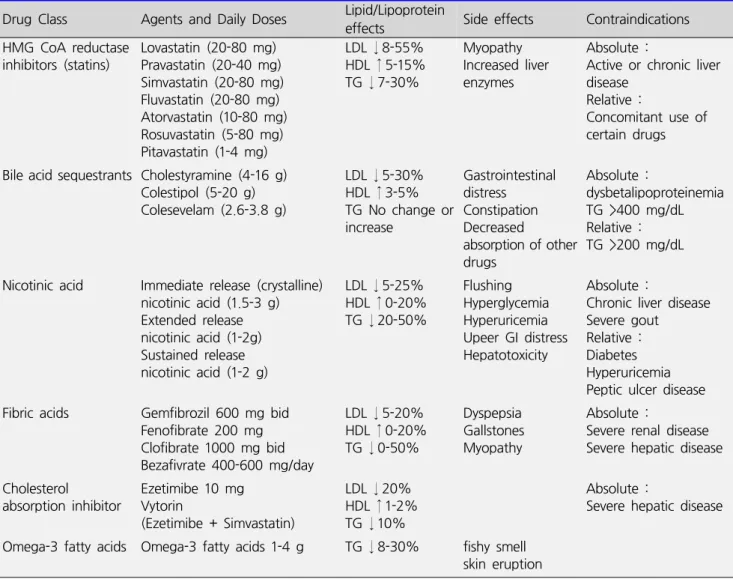
Table 8. Summary of the major drugs used for treatment of dyslipidemia Drug Class Agents and Daily Doses Lipid/Lipoprotein
effects Side effects Contraindications HMG CoA reductase
inhibitors (statins) Lovastatin (20-80 mg) Pravastatin (20-40 mg) Simvastatin (20-80 mg) Fluvastatin (20-80 mg) Atorvastatin (10-80 mg) Rosuvastatin (5-80 mg) Pitavastatin (1-4 mg)
LDL ↓ 8-55%
HDL ↑ 5-15%
TG ↓ 7-30%
Myopathy Increased liver enzymes
Absolute :
Active or chronic liver disease
Relative :
Concomitant use of certain drugs
Bile acid sequestrants Cholestyramine (4-16 g) Colestipol (5-20 g) Colesevelam (2.6-3.8 g)
LDL ↓ 5-30%
HDL ↑ 3-5%
TG No change or increase
Gastrointestinal distress
Constipation Decreased
absorption of other drugsㅤ
Absolute :
dysbetalipoproteinemia TG >400 mg/dL Relative : TG >200 mg/dL
Nicotinic acid Immediate release (crystalline) nicotinic acid (1.5-3 g) Extended release nicotinic acid (1-2g) Sustained release nicotinic acid (1-2 g)
LDL ↓ 5-25%
HDL ↑ 0-20%
TG ↓ 20-50%
Flushing Hyperglycemia Hyperuricemia Upeer GI distress Hepatotoxicity
Absolute :
Chronic liver disease Severe gout
Relative : Diabetes Hyperuricemia Peptic ulcer disease Fibric acids Gemfibrozil 600 mg bid
Fenofibrate 200 mg Clofibrate 1000 mg bid Bezafivrate 400-600 mg/day
LDL ↓ 5-20%
HDL ↑ 0-20%
TG ↓ 0-50%
Dyspepsia Gallstones Myopathy
Absolute :
Severe renal disease Severe hepatic disease
Cholesterol
absorption inhibitor Ezetimibe 10 mg Vytorin
(Ezetimibe + Simvastatin)
LDL ↓ 20%
HDL ↑ 1-2%
TG ↓ 10%
Absolute :
Severe hepatic disease
Omega-3 fatty acids Omega-3 fatty acids 1-4 g TG ↓ 8-30% fishy smell skin eruption
Cholesterol consumption of less than 200 mg/day avoiding high-cholesterol diets
Limit calorie intake from fat (less than 20-25% of total calorie intake), especially saturated fatty acids
Table 9. Secondary causes of increasing LDL cholesterol level Diabetes mellitus
Hypothyroidism
Obstructive lung disease Chronic kidney disease Nephrotic syndrome
Drugs - corticosteroid, anabolic steroid, progesterone
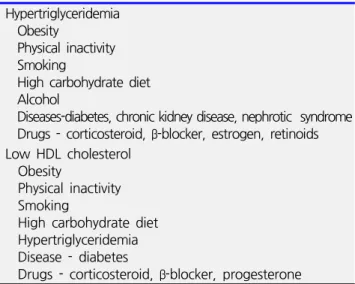
Table 10. Secondary causes of hypertriglyceridemia and low HDL cholesterol
Hypertriglyceridemia Obesity
Physical inactivity Smoking
High carbohydrate diet Alcohol
Diseases-diabetes, chronic kidney disease, nephrotic syndrome Drugs - corticosteroid, β-blocker, estrogen, retinoids Low HDL cholesterol
Obesity
Physical inactivity Smoking
High carbohydrate diet Hypertriglyceridemia Disease - diabetes
Drugs - corticosteroid, β-blocker, progesterone
Table 11. Drug selection according to type of dyslipidemia Only LDL elevation
statin, ezetimibe, nicotinic acid, resin, mono- or combination therapy
LDL + TG(<500 mg/dL) elevation primary- statin, nicotinic acid
secondary - primary drug + fibrate or nicotinic acid or omega-3 fatty acid
Cholesterol + TG(>500 mg/dL) elevation primary - fibrate, nicotinic acid
secondary - primary drug + fibrate or nicotinic acid or omega-3 fatty acid
Only TG elevation
statin, fibrate, nicotinic acid, omega-3 fatty acid
(less than 7% of total calorie intake) and trans-fatty acids (less than 1%)
High monounsaturated fat diet, which is known to decrease CVD risk and LDL-C level.
High polyunsaturated fatty acids (ω-3 and ω-6) diet.
In the case of ω-3 fatty acids, 2-4 g/day is the recommended dose.
High dietary fiber intake. ATP III recommends 5-10 g/day, but 10-25 g/day may be more beneficial.
Replace saturated fatty acids with carbohydrate foods rich in fibers. Carbohydrates are recommended to comprise less than 60% of total calorie intake.
Limit alcohol intake (up to 1-2 drinks/day, corre- sponding to 10-30 g/day of alcohol).
2. Exercise
Physical activity is another important component of
prevention. Regular exercise improves lipid profile, body fat mass, blood pressure, insulin resistance, and function of the vascular endothelium. In addition, exercise increases cardiorespiratory fitness and quality of life, and therefore regular physical exercise should be encouraged with a daily goal of at least 30 min/day. A general recommen- dation for healthy individuals is shown in Table 7.
PHARMACOTHERAPY 1. Selection of drugs
Drugs that are available for dyslipidemia are HMG CoA reductase inhibitors, nicotinic acids, bile acid sequestrants, fibric acids derivatives, cholesterol absorption inhibitors, and omega-3 fatty acids (Table 8). Before initiating therapy, possible causes of secondary hypercholeste- rolemia should be considered (Tables 9, 10), and general recommendations for the selection of drugs are as follows (Table 11):
Triglycerides
▪ 150-199 mg/dL: Weight reduction and physical exercise are recommended.
▪ 200-499 mg/dL: primary target is lowering LDL-C with statin or nicotinic acid. Fibrates, ω-3 fatty acids are also available.
Table 12. Drug information about statins
Drug : Lovastatin, Pravastatin, Simvastatin, Fluvastatin, Atorvastatin, Rosuvastatin, Pitavastatin
Lipid profile : LDL ↓18-55%, HDL ↑5-15%, TG ↓7-30%
Effects : Decrease mortality of CHD, stroke, CVD Contraindication
Absolute : active liver disease, pregnancy, lactation Relative : other drugs (cyclosporin, macrolide, antifungal,
cytochrome P-450 inhibitors) Side effects : hepatotoxicity, myopathy Dosing :
Lovastatin : 20-80 mg/day with evening meal Pravastatin : 5-40 mg/day before sleeping Simvastatin : 20-80 mg/day before sleeping Fluvastatin : 20-80 mg/day before sleeping Atorvastatin : 10-80 mg/day
Rosuvastatin : 5-40 mg/day Pitavastatin : 1-4 mg/day
▪ More than 500 mg/dL: prevention of acute pancre- atitis is primary target with fibrates and nicotinic acid.
HDL-C
▪ Smoking cessation, weight loss, exercise and moderate alcohol intake all increase HDL-C ▪ Nicotinic acid can increase HDL-C by 15% to 25%.
2. HMG CoA reductase inhibitors (Statins, Table 12)
HMG-CoA reductase is a key enzyme in cholesterol biosynthesis, and inhibition of this enzyme decreases cholesterol synthesis. By inhibiting cholesterol biosyn- thesis, statins lead to increased hepatic LDL receptor activity as a counter-regulatory mechanism, and thus accelerated clearance of circulating LDL-C, which results in a dose-dependent reduction in plasma levels of LDL-C and other apo-B containing lipoproteins including TG-rich particles.
Also, statins improve vascular endothelial function, and suppress various cytokines and inflammatory factors.
Statins are most effective at lowering LDL-C and they also
reduce plasma triglycerides in a dose-dependent fashion with a modest HDL-raising effect. The magnitude of LDL lowering associated with statin treatment varies widely among individuals and drugs.
Statins are contraindicated in patients with active and chronic liver disease, pregnancy and lactating women.
Co-administration of drugs that interfere with the metabolism of statins such as erythromycin and related antibiotics, antifungal agents, immunosuppressive drugs and fibric acid derivatives (particularly gemfibrozil) should be performed with caution.
Statins are well tolerated and can be taken in tablet form once a day. Potential side effects include dyspepsia, headaches, fatigue, and muscle or joint pains. Statin therapy can elevate liver transaminases [alanine (ALT) and aspartate (AST)], and thus these levels should be checked before starting therapy, at 6 and 12 weeks, and then semi-annually once on the drug. Substantial (greater than three times the upper limit of normal) elevation in transaminases is relatively rare and mild-to-moderate (one to three times normal) elevation in transaminases in the absence of symptoms does not warrant discontinuing the medication.
Severe myopathy and even rhabdomyolysis occur rarely with statin treatment. The risk of statin-associated myo- pathy is increased in patients with older age, frailty, renal insufficiency and co-administration of drugs that interfere with the metabolism of statins. Serum creatine kinase (CK) levels need not be monitored on a routine basis in patients taking statins, because a moderate (one to three times normal) elevation of CK does not necessarily suggest the need for discontinuing the drug.
3. Fibrates (Table 13)
Fibric acid derivatives are agonists of peroxisome proliferator-activated receptor (PPAR) α, a nuclear receptor involved in the regulation of lipid metabolism.
Fibrates stimulate lipoprotein lipase (LPL) activity (enhan-
Table 13. Drug information about fibrates
Drug : Bezafibrate, ciprofibrate, gemfibrozil, fenofibrate Lipid profile : LDL ↓5-20%, HDL ↑10-15%, TG ↓25-50%
Effects : Decrease incidence of CHD Contraindication
Absolute : severe liver disease, gallstone Should be cautious when used with statin Side effects : hepatotoxicity, myopathy Dosing :
Benzafibrate : 400-600 mg/day, 1-3 times per day Fenofibrate : 160-200 mg/day, just after meal Gemfibrozil : 600-1200 mg/day, 2 times per day, 30
minutes before meal
Table 14. Drug information about nicotinic acids Drug : Nicotinic acid, Acipimox
Lipid profile : LDL ↓5-25%, HDL ↑15-35%, TG ↓20-50%
Effects : Decrease incidence of CHD Contraindication
Absolute : severe liver disease, severe gout
Relative : diabetes, hyperuricemia, peptic ulcer disease Side effects : flushing, dyspepsia, hepatotoxicity (especially sustained released form), gout, hyperglycemia Dosing :
Immediate release (crystalline) nicotinic acid 1.5-3 g/day Extended release nicotinic acid 1-2 g/day
Sustained release nicotinic acid : 1-2 g/day
cing triglyceride hydrolysis), reduce apoC-III synthesis (enhancing lipoprotein remnant clearance), promote beta-oxidation of fatty acids, and may reduce VLDL production. They have variable effects on LDL-C such that in patients with hypertriglyceridemia they may rather increase plasma LDL-C levels. Fibrates are the most effective drugs available for reducing TG levels approxi- mately 20-50% and also raise HDL-C levels about 10-15%.
The clinical benefits of fibrates in monotherapy are primarily illustrated by four prospective, randomized, placebo-controlled, clinical trials: the Helsinki Heart Study (HHS), the Veterans Affairs High-density lipoprotein Intervention Trial (VA-HIT), the Bezafibrate Infarction Prevention study (BIP), and Fenofibrate Intervention and Event Lowering in Diabetes (FIELD). The data from these trials have shown consistent decreases in the rates of non-fatal MI. However, the data on other outcomes have remained equivocal, and the overall efficacy of fibrates on CVD outcomes is much less robust than that of statins.
Fibrates are a reasonable consideration for first-line therapy in patients with severe hypertriglyceridemia ( >500 mg/dL) to prevent pancreatitis. In patients with a TG level
<500 mg/dL, the role of fibrates is primarily in combination with statins in selected patients with mixed dyslipidemia.
Fibrates are not recommended for dyslipidemia with exclusively elevated LDL-C.
Fibrates are generally very well tolerated, and the most common side effect is dyspepsia. Myopathy and hepatitis occur rarely in the absence of other lipid-lowering agents.
Fibrates promote cholesterol secretion into the bile and are associated with an increased risk of gallstones. Thus, fibrates are generally contraindicated in patients with gallstones, severe liver disease, and kidney disease. Fibrates can raise creatinine levels and should be used with caution in patients with chronic kidney disease. Importantly, fibrates can potentiate the effect of warfarin and certain oral hypoglycemic agents, and therefore anticoagulation status and plasma glucose levels should be closely monitored in patients taking these agents.
4. Nicotinic acids (niacin, Table 14)
Nicotinic acid, or niacin, is a B-complex vitamin, and is the only currently available lipid-lowering drug that significantly reduces plasma levels of lipoprotein A (Lp(a)).
Nicotinic acid has been reported to decrease fatty acid influx to the liver and the secretion of VLDL by the liver.
It also suppresses transport of cholesterol from HDL to VLDL.
Nicotinic acid is most effective drug for increasing HDL-C. In addition, it reduces effectively not only TG levels but also LDL-C, reflecting its effect on all apo B-containing proteins. It is also the only currently available lipid-lowering
Table 15. Drug information about omega 3 fatty acids Drug : omega-3 fatty acid
Lipid profile : TG ↓8-30%
Effects : Decrease incidence of CHD Contraindication : none
Side effects : fishy smell, skin eruption Dosing :
omega-3 fatty acids 1-4 g/day
Table 16. Drug information about bile acid sequestrants Drug : cholestyramine, colestipol
Lipid profile : LDL ↓15-30%, HDL ↑3-5%, TG mildly increase Effects : Decrease incidence of CHD
Contraindication : TG >400 mg/dl
Side effects : constipation, dyspepsia, gallstone, inhibition of other drug absorption
Dosing :
Cholestyramine : 8-24 g/day, 2 times per day, with meal Cholestipol : 10-30 g/day, 2 times per day, with meal drug that significantly reduces plasma levels of Lp(a) up
to 40%.
The most frequent side effect of niacin is cutaneous flushing which can be reduced by formulations that slow the drug’s absorption and by taking aspirin prior to dosing.
Other side effects of nicotinic acid include hyperuricemia, liver toxicity and glucose intolerance, which occurs dose and time dependently.
5. Ezetimibe
Ezetimibe is a cholesterol absorption inhibitor by binding directly to NPC1L1 protein and blocks the intestinal absorption of cholesterol. The mean reduction in plasma LDL-C by ezetimibe (10 mg) is 18%, and the effect is additive when used in combination with a statin. Effects on triglyceride and HDL-C levels are negligible, and no cardiovascular outcome data have been reported. When ezetimibe is used in combination with a statin, monitoring of liver transaminases is recommended. Ezetimibe is contraindicated in pregnant or lactating women.
6. Omega 3 fatty acids (Table 15)
N-3 polyunsaturated fatty acids (n-3 PUFAs) are present in high concentrations in fish and in flaxseeds. N-3 PUFAs have been concentrated into tablets and in doses of 3–4 g/d are effective at lowering fasting TG levels. A lower dose of omega 3 (about 1 g) has been associated with a reduction in cardiovascular events in patients with CHD and is used by some clinicians for this purpose. In general, fish oils are well tolerated and appear to be safe except
for some reported instances of skin rash.
7. Bile acid sequestrants (Resins, Table 16)
Bile acid sequestrants bind bile acids in the intestine and promote bile excretion rather than reabsorption in the ileum. To maintain the bile acid pool size, the liver diverts cholesterol to synthesis of bile acids synthesis. The decreased hepatic intracellular cholesterol content results in upregulation of the LDL receptor and enhanced LDL clearance from the plasma. Resins primarily reduce plasma LDL-C levels but can cause an increase in plasma TG.
Since bile acid sequestrants are not systemically absorbed, they are very safe and are the cholesterol- lowering drug of choice in children and in women of childbearing age who are lactating, pregnant, or could become pregnant. Most of the side effects of resins are limited to the gastrointestinal tract and include bloating and constipation. Bile acid sequestrants have important drug interactions with many other commonly prescribed drugs and resins should therefore be administered either 4 hours before or 1 hour after other drugs that may have adverse drug-drug interactions.
DRUG COMBINATIONS
Although target levels of LDL-C can be reached with monotherapy in many patients, a proportion of high risk patients with very high LDL-C levels need additional
treatment. There are also patients who are statin intolerant or are subsequently not able to tolerate higher doses.
In these cases combination therapy should be considered.
1. Statin + Fibrate
Clinical trials have shown that the combination of a statin and a fibrate results in a significantly stronger reduction in LDL-C and TG as well as a greater elevation of HDL-C in comparison to monotherapy. Since both fibrate and statin monotherapy are associated with an increased risk of myopathy, the increase of this risk should be a serious consideration when these drugs are taken together. The following should be considered before combination treatment:
Assess whether dyslipidemia can be controlled with statin monotherapy
Start with a low dose when adding additional drugs.
Check creatinine, liver enzyme and CK levels before initiating combination therapy
Educate patients that have myalgia, myasthenia or black-colored urine to stop taking the drug and to visit a doctor.
Check for risk factors of rhabdomyolysis: old age, liver or kidney dysfunction, hypothyroidism, alcohol, trauma, surgery and vigorous physical activity.
Since gemfibrozil is the drug most associated with myopathy, avoid that drug when combination therapy is needed.
2. Statin + Niacin
The combination of nicotinic acid with moderate doses of a statin provides a significantly better increase in HDL-C and decrease in TG in comparison to a high dose of a statin monotherapy. In clinical trials, this combination therapy showed a decreased risk of CVD and athero- sclerosis, and the incidence of flushing was similar in patients with and without statin treatment.
3. Statin + Omega-3 fatty acids
Treatment with a combination of 4 g/day n-3 fatty acids and simvastatin caused a stronger reduction of TG concentration when compared with statin use alone. This combination may decrease small-dense LDL and improve the postprandial rise of TG.
MANAGEMENT OF DYSLIPIDEMIA OF SPECIAL CLINICAL SETTINGS
1. Diabetes mellitus
Management targets [A]
▪ LDL-C <100 mg/dL (70 mg/dL for those who have history of CVDs [B])
▪ TG <150 mg/dL ▪ HDL-C ≥40 mg/dL
Check lipid profile (total cholesterol, HDL-C, TG, and LDL-C) at time of diagnosis of diabetes mellitus and at least once a year. [D]
Patients should receive professional advice about lifestyle modification. [A]
In patients with diabetes, LDL-C lowering with statins as a first choice is recommended. [A]
For patients unable to reach LDL-C goals on statin monotherapy, ezetimibe can be added to the drug regimen. [C]
For patients unable to reach TG goals on statin monotherapy, other drugs (fibrates, nicotinic acids or omega-3 fatty acids) can be added to the drug regimen. [C]
When patients have severe hypertriglyceridemia (serum TG ≥400 mg/dL), serum glucose should be controlled before treatment of hypertriglyceridemia with fibrates. [C]
2. The elderly
The proportion of elderly people in society is increasing,
Table 17. Treatment of dyslipidemia for primary prevention of CVDs in elderly
ㅤ Targeted Patients Treatment Goal
NCEP 1. Absence of general weakness : LDL >190 mg/dL 2. 2 or more CVD risk factors : LDL >160 mg/dL Society of Geriatric
Cardiology 1. No history of CVD who aged 65-80 years : Total cholesterol >240 mg/DL 2. one or more risk factor of CVD : LDL >160 mg/dL
3. No history of CVD who aged more than 80 years + who have hyperlipidemia : consider dietary change or pharmacotherapy
1. Total cholesterol
<200 mg/dL 2. LDL <130 mg/dL ㅤ
and more than 80% of individuals who die of CVD are older than 65 years. The recommendation for the management of dyslipidemia in this population is shown in Table 17. Older adults often have co-morbidities, use multiple medications, and have altered pharmacokinetics and pharmacodynamics. Therefore, the safety and side effect profile of statins should be strongly considered, and lipid profile, liver enzymes and kidney function should be checked regularly. Since older individuals are less likely to receive lipid-lowering medications and but with poor adherance to statin therapy, understanding of CV risk, the medication regimen and potential benefits of persistence is necessary to enhance their compliance to statin therapy.
REFERENCES
1. Epidemiology of dyslipidemia in Korea
1. Avoiding heart Attacks and Strokes. 2005. World Health Organization (accessed 2007 January 16) Available from:
URL: http://www.who.int/cardiovascular_diseases/
resources/cvd_report.pdf.
2. Cause of death statistics. Statistics Korea 2004.
3. Jee SH, Park JW, Lee SY, Nam BH, Ryu HG, Kim SY, Kim YN, Lee JK, Choi SM, Yun JE. Stroke risk prediction model: a risk profile from the Korean study. Athero- sclerosis 2008;197(1):318-325.
2. Guidelines of other countries
1. Implications of recent clinical trials for the national cholesterol education program adult treatment panel III guidelines. Circulation 2004;110:227-239.
2. Executive summary of Japan Atherosclerosis Society Guideline for diagnosis and prevention of atherosclerotic cardiovascular disease for Japanese. J Atheroscler Thromb 2007;14:45-50.
3. Diagnosis and Treatment of dyslipidemia in Korea
1. Jun KR, Park HI, Chun S, Park H, Min WK. Effects of total cholesterol and triglyceride on the percentage difference between the low-density lipoprotein cholesterol con- centration measured directly and calculated using the Friedewald formula. Clin Chem Lab Med 2008;46:371-375.
2. Friedewald WT, Levy RI, Fredrickson DS. Estimation of the concentration of low-density lipoprotein cholesterol in plasma, without use of the preparative ultracen- trifuge. Clin Chem 1972;18:499-502.
4. Lifestyle modifications
1. Third report of the national cholesterol education program expert panel on detection, evaluation, and treatment of high blood cholesterol in adults. National Institutes of Health, National Heart, Lung, and Blood Institute. NIH Publication No. 02-5215, 2002
2. Weggemans RM, Zock PL, Katan MB. Dietary cholesterol from eggs increases the ratio of total cholesterol to HDL Cholesterol in humans: a meta-analysis. Am J Clin Nutr 2001;73:885-891.
3. Kris-Etherton PM, Yu S. Individual influences on serum lipid and lipoproteins: human studies. Am J Clin Nutr 1997;65:1628S-1644S.
4. Mensink RP, Katan MB. Effects of dietary fatty acids on serum lipids and lipoproteins: a meta-analysis of 27 trials.
Arterioscler Thromb 1992;12:911-919.
5. Katan MB, Zock PL, Mensink RP. Trans fatty acids and their effects on lipoproteins in humans. Annu Rev Nutr
1995;15:473-493.
6. Harris WS, Park Y, Isley WL. Cardiovascular disease and long-chain omega-3 fatty acids. Curr Opin Lipidol 2003;14:9-14.
7. U.S. Department of Health and Human Services. Food and Drug Administration. Food labeling: health claims:
soluble fiber from certain foods and coronary heart disease: final rule. Federal Register 1998;63:8103-8121.
8. Knopp RH, Walen CE, Retzlaff BM, McCann BS, Dowdy AA, Albers JJ, Gey GO, Cooper MN. Long-term chole- sterol-lowering effectsof 4 fat-restricted diets in hyper- cholesterolemic and combined hyperlipidemic men: the dietary alternatives study. JAMA 1997;278: 1509-1515.
9. Dufour MC. If you drink alcoholic beverages do so in moderation: what does this mean? J Nutr 2001;131:
552S-561S.
10. Dufaux B. order U. Muller R, et al. Delayed effects of prolonged exercise on serum lipoproteins Metabolism 1986;35:105-109.
11. Wood PD, et al, Changes in Plasma lipids and lipo- proteins in overweight men during weight loss through dieting and compared with exercise. N Engl J Med 1988;319:1173-1179.
12. Tran V. Weltman, et al. The effects of exercise on blood lipids and lipoproteins. MSSE 1983;15:393-402.
13. Berg A, Frey I, et al. Physical Activity and lipoprotein lipid disorders. Sports Med 1994;17:6-21.
14. Williams PT, Krauss RM, Changes in lipoprotein sub- fractions during diet-induced and exercise induced weight loss in moderately overweight men. Circulation 1990;81:1293-1304.
15. Debusk RF, et al. Traing effects of long versus shout bouts of exercise in health subjects, Am J Cardiol 1990;
65:1010-1013.
16. Tran ZV, Weltman A. Differential effects of exercise on serum lipid and lipoprotein levels seen with changes in body weight. JAMA 1985;254:919-924.
17. Thompson PD. Exercise & Sports Cardiology. McGraw- Hill, 2001.
18. Dowling EA. How Exercise Affects Lipid Profiles in Women. Physician and Sportsmedicine 2001;29:45-52.
19. Kraus WE, et al. Effects of the amount and intensity of exercise on plasma lipoproteins. N Engl J Med 2002;
347:1483-1489.
20. Durstine JL, Haskell WL. Effects of exercise training on plasma lipids and lipoproteins. Exercise and Sport Science Review 1994;22:477-521.
21. Kokkinos PF, et al. Miles run per week and high-density lipoprotein cholesterol levels in healthy, middle-aged men. Achives of Internal Medicine 1995;155:415-420.
7. Management of dyslipidemia of special clinical settings
1. Haffner SM, Lehto S, Rönnemaa T, Pyorala K, Laakso M.
Mortality from coronary heart disease in subjects with type 2 diabetes and in nondiabetic subjects with and without prior myocardial infarction. N Engl J Med 1998;339:229-234.
2. Evans JMM, Wang J, Morris AD. Comparison of cardio- vascular risk between patients with type 2 diabetes and those who had had a myocardial infarction: cross sectional and cohort studies. BMJ 2002;324:939-942.
3. Newman H, Colagiuri S, Chen M, Colagiuri R. Evidence Based Guidelines for Type 2 Diabetes: Macrovascular disease. Canberra: Diabetes Australia & NHMRC, 2004.
http://www.diabetesaustralia.com.au
4. Best J, Colagiuri S, Chen M, Colagiuri R. Evidence Based Guidelines for Type 2 Diabetes: Lipid Control. Canberra:
Diabetes Australia & NHMRC, 2004. http://www.
diabetesaustralia.com.au
5. Canadian Diabetes Association Clinical Practice Guide- lines Expert Committee. Canadian Diabetes Association 2003 Clinical Practice Guidelines for the Prevention and Management of Diabetes in Canada. Canadian Journal of Diabetes 2003;27(Suppl. 2):S58-S65.
6. McIntosh A, Hutchinson A, Feder G, Durrington P, Elkeles R, Hitman GA, et al. Clinical guidelines and evidence review for Type 2 diabetes: Lipids Manage- ment. Sheffi eld: ScHARR, University of Sheffi eld, 2002 http://www.nice.org.uk/ pdf/lipidsfull_guideline.pdf 7. Scottish Intercollegiate Guidelines Network. SIGN 55.
Management of Diabetes, 2001. http://www.sign.ac.uk 8. Rydén L, Standl E, Bartnik M, Van den Berghe G,
Betteridge J, de Boer MJ, Cosentino F, Jönsson B, Laakso M, Malmberg K, Priori S, Ostergren J, Tuomilehto J, Thrainsdottir I, Vanhorebeek I, Stramba-Badiale M, Lindgren P, Qiao Q, Priori SG, Blanc JJ, Budaj A, Camm J, Dean V, Deckers J, Dickstein K, Lekakis J, McGregor
K, Metra M, Morais J, Osterspey A, Tamargo J, Zamorano JL, Deckers JW, Bertrand M, Charbonnel B, Erdmann E, Ferrannini E, Flyvbjerg A, Gohlke H, Juanatey JR, Graham I, Monteiro PF, Parhofer K, Pyörälä K, Raz I, Schernthaner G, Volpe M, Wood D. Task Force on Diabetes and CardiovascularDiseases of the European Society of Cardiology (ESC); European Association for the Study of Diabetes (EASD): Guidelines on diabetes, pre- diabetes, and cardiovascular diseases: The Task Force on Diabetes and Cardiovascular Diseases of the European Society of Cardiology (ESC) and of the European Association for the Study of Diabetes (EASD). Eur Heart J 2007;28:
88-136.
9. Heart Protection Study Collaborative Group. MRC/BHF Heart Protection Study of cholesterol-lowering with simvastatin in 5963 people with diabetes: a randomized placebo-controlled trial. Lancet 2003;361:2005-2016.
10. Colhoun HM, Betteridge DJ, Durrington PN, Hitman GA, Neil HA, Livingstone SJ, Thomason MJ, Mackness MI, Charlton- Menys V, Fuller JH. CARDS investigators:
Primary prevention of cardiovascular disease with atorvastatin in Type 2 diabetes in the Collaborative Atorvastatin Diabetes Study (CARDS): a multicentre randomized controlled trial. Lancet 2004;364:685-696.
11. Stevens R, Kothari V, Adler AI, Stratton IM, Holman RR.
UKPDS 56: The UKPDS Risk Engine: a model for the risk of coronary heart disease in type 2 diabetes. Clin Sci 2001;101:671-679.
12. ETDRS Investigators. Aspirin effects on mortality and morbidity in patients with diabetes mellitus. Early Treatment Diabetic Retinopathy Study report 14. JAMA 1992;268:1292-1300.
13. Hansson L, Zanchetti A, Carruthers SG, Dahlöf B, Elmfeldt D, Julius S, Ménard J, Rahn KH, Wedel H, Westerling S. Effects of intensive bloodpressure lowering
and low-dose aspirin in patients with hypertension:
principal results of the Hypertension Optimal Treatment (HOT) randomised trial HOT Study Group. Lancet 1998;351:1755-1762.
14. Eccles M, Freemantle N, Mason J. North of England evidence based guidelines development project:
Evidence based clinical practice guideline: aspirin for the secondary prophylaxis of vascular disease in primary care.
BMJ 1998;316:1303-1309.
15. Antithrombotic Trialists’ Collaboration: Collaborative meta-analysis of randomised trials of antiplatelet therapy for prevention of death, myocardial infarction, and stroke in high risk patients. BMJ 2002;324:71-78.
16. Gaede P, Vedel P, Larsen N, Jensen GVH, Parving H-H, Pedersen O. Multifactorial intervention and cardiovas- cular disease in patients with Type 2 diabetes. N Engl J Med 2003;348:383-393.
17. Lim S. Symposium : Korean Longitudinal Study on Health and Aging, Korean society of lipidology and athero- sclerosis 2006.
18. Kreisberg RA, Kasim S. Cholesterol metabolism and aging. Am J Med 1987;82(1B):54–60.
19. Aronow W. Treatment of older persons with hyper- cholesterolemia with and without cardiovascular disease.
J Gerontol A Biol Sci Med Sci 2001;56A(3):M138–145.
20. Nicole Ducharme, Rani Radhamma. Hyperlipidemia in the Elderly. Clin Geriatric Med 2008;471-487.
21. Geriatric medicine. National teacher training center of college of medicine Seoul national university, 2003. p59.
22. Jackevicius CA, Mamdani M, Tu JV. Adherence with statin therapy in elderly patients with and without acute coronary syndromes. JAMA 2002;288:462–467.
23. Benner JS, Glynn RJ, Mogun H, et al. Long-term persistence in use of statin therapy in elderly patients.
JAMA 2002;288:455–461.
Men Women
Non-smoker Smoker Non-smoker Smoker
1 2 3 4 5 6 1 2 3 4 5 6 Age 1 2 3 4 5 6 1 2 3 4 5 6
180-199 8.3 8.2 11 11 12 13 11 11 14 14 14 17
70-79
6.3 6.7 7.5 8.8 9.8 11 8.5 10 9.9 13 16 12 160-179 6.2 7.0 8.2 8.8 10 11 8.1 9.5 11 12 13 15 5.2 5.7 6.6 7.2 8.0 8.8 8.0 8.4 9.2 10 12 12 140-159 5.1 5.6 6.4 7.7 8.2 8.7 6.7 7.8 9.1 10 12 12 4.2 4.7 5.3 5.8 6.4 6.9 6.0 7.0 7.5 8.4 9.5 9.7 120-139 3.8 4.5 5.2 5.9 6.9 6.8 5.4 6.1 7.0 8.1 8.8 9.9 3.3 3.7 4.1 4.4 5.0 5.5 4.9 5.3 6.0 6.7 7.2 8.4 100-119 3.1 3.8 4.1 4.7 5.0 6.0 4.2 5.0 5.7 6.3 6.9 7.9 2.5 2.8 3.3 3.6 4.1 4.5 3.7 4.7 4.6 5.4 5.9 6.5
180-199 5.2 6.4 7.3 8.3 8.0 10 7.4 8.5 9.8 11 13 15
60-69
4.6 5.4 5.8 6.4 7.0 8.0 6.6 6.6 9.4 9.7 10 12 160-179 4.3 5.2 6.0 6.5 7.0 8.4 6.1 7.0 8.2 9.3 10. 11 3.9 4.3 4.7 5.5 5.8 6.5 5.5 6.4 7.1 8.1 8.4 8.4 140-159 3.5 4.0 4.6 5.2 6.0 6.4 4.8 5.6 6.5 7.4 8.1 9.3 3.0 3.4 3.9 4.3 4.7 5.2 5.0 5.5 5.8 6.4 7.3 7.2 120-139 2.6 3.1 3.5 4.0 4.4 5.1 3.8 4.4 5.1 5.7 6.4 7.0 2.4 2.7 2.9 3.3 3.7 3.9 3.6 3.9 4.4 5.0 5.5 6.0 100-119 2.1 2.4 2.7 3.1 3.5 3.8 3.0 3.5 4.0 4.6 5.0 5.7 1.9 2.1 2.4 2.6 2.9 3.1 2.8 3.2 3.5 3.9 4.4 4.8
180-199 3.4 4.1 4.8 5.4 5.8 6.6 5.1 6.1 6.5 7.7 8.3 9.2
50-59
3.3 3.6 4.0 4.5 5.0 5.1 4.3 5.4 6.8 7.2 8.8 11 160-179 3.0 3.4 3.9 4.5 5.1 5.4 4.2 4.9 5.7 6.4 7.3 7.8 2.6 3.0 3.3 3.7 4.0 4.5 3.9 4.6 5.2 5.6 5.8 8.5 140-159 2.3 2.7 3.1 3.4 3.8 4.3 3.3 3.9 4.4 5.0 5.7 6.3 2.1 2.4 2.6 2.9 3.3 3.5 3.3 3.7 4.0 4.9 5.2 5.2 120-139 1.7 2.0 2.3 2.6 2.9 3.3 2.5 2.9 3.4 3.9 4.3 4.9 1.5 1.7 2.0 2.2 2.5 2.6 2.5 2.8 3.1 3.6 3.9 3.9 100-119 1.3 1.5 1.8 2.1 2.3 2.6 2.0 2.3 2.7 3.0 3.4 3.8 1.2 1.3 1.5 1.7 1.9 2.1 2.0 2.3 2.8 2.5 3.0 3.5
180-199 2.1 2.5 2.9 2.9 3.9 4.4 3.1 3.7 4.1 4.6 5.7 5.5
40-49
2.0 2.2 2.5 2.8 3.1 3.4 4.0 3.0 6.0 160-179 1.7 2.1 2.3 2.6 2.9 3.3 2.5 3.0 3.4 3.8 4.4 5.1 1.6 1.8 2.0 2.3 2.4 2.9 2.8 2.8 3.0 3.3 4.3 140-159 1.3 1.5 1.8 2.0 2.3 2.7 1.9 2.3 2.6 3.0 3.4 3.9 1.2 1.3 1.5 1.7 1.9 2.1 1.8 2.3 2.6 3.0 3.9 3.5 120-139 1.1 1.1 1.3 1.5 1.7 1.9 1.4 1.7 2.0 2.3 2.6 2.9 1.0 1.1 1.1 1.2 1.4 1.6 1.4 1.7 1.8 1.9 2.6 3.3 100-119 0.9 1.0 1.1 1.2 1.3 1.5 1.1 1.3 1.5 1.8 2.0 2.3 0.8 0.9 1.0 1.1 1.1 1.1 1.2 1.3 1.5 1.7 2.0 1.9
Total cholesterol (mg/dL)
1: 160-179, 2: 180-199, 3: 200-219 4: 220-239, 5: 240-259, 6: 260-279
<1% 1-3% 3-7%
7-15% 15-30% ≥30%
Supplement Fig. 1. 10 year risk of cardiovascular disease (CVD) in Korean population.